When twenty-two vehicles disappeared from Alden Mercer’s private property before dawn,
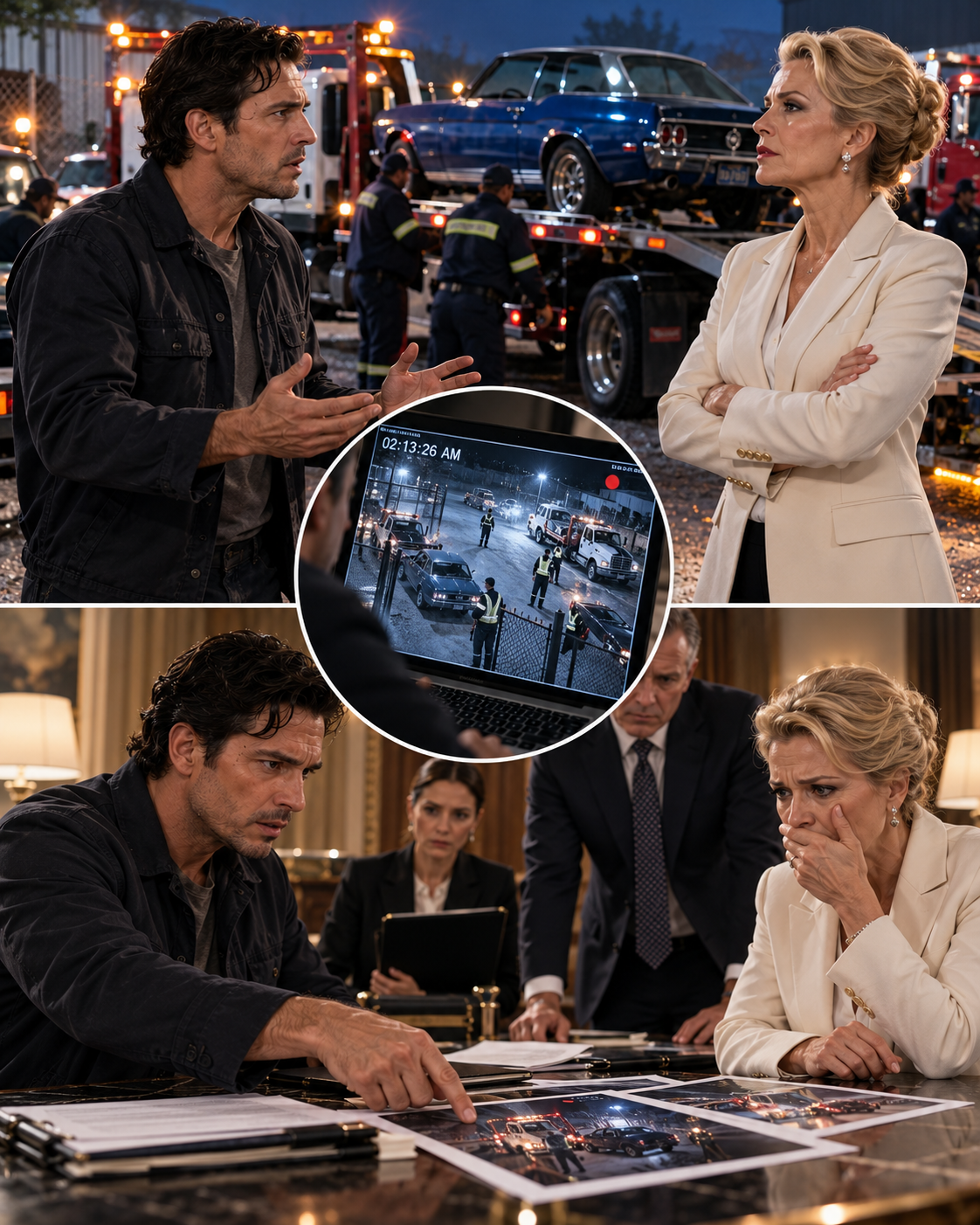
Part 2: Her campaign began with letters and ended with stolen livelihoods
Six weeks earlier, the first notice had arrived in an envelope heavy enough to resemble a court summons. It accused Alden of maintaining an unauthorized automotive operation within the community and demanded that he remove visible commercial vehicles. He read it at the kitchen table where his father had once spread engine diagrams beside overdue bills. The workshop had existed before Blackthorn Ridge had sidewalks, before its ornamental pond, before anyone decided the surrounding countryside needed matching mailboxes. Alden assumed someone had used an outdated map and wrote a polite correction.
At forty-three, he had learned that most disagreements became easier when people could examine the same facts. He attached the recorded survey, highlighted the boundary, and included the county letter confirming that his parcel was outside the association. His business permits were current, his deliveries stayed on the county road, and his customers never entered the development. There were practical matters he was willing to discuss, including keeping noisy work inside during early mornings. He offered Marceline his number and suggested they meet over coffee.
Her answer arrived three days later with a larger fine printed beneath the original allegation. This time she objected to the red transporter beside his fence, weekend visitors, and what she described as an excessive concentration of machinery. Alden photographed the neat rows of cars and wondered which part of restoring a vehicle she imagined could happen without a vehicle. He sent another response, asking for the covenant she believed applied to his property. She replied that cooperation would be more productive than technical arguments.
Across the fence, neighbors began acting differently. Foster Callahan, who used to bring his daughter over to admire the old convertibles, suddenly waved without stopping. A woman who had ordered Christmas cookies from Alden’s mother for years crossed the street when she saw him by the mailbox. At first, he blamed schedules and coincidence, until a customer forwarded a neighborhood message claiming his workshop created safety risks. The message carried Marceline’s name and urged residents not to encourage commercial traffic by patronizing his business.
That frightened him more than the fines. He employed Luis, who had a new baby, Beth, who could identify an engine problem from across the shop, and Owen, an apprentice still surprised that someone paid him to learn. Their wages depended on customers believing the vehicles would come back better than they arrived. Alden began saving every letter, every email, and every screenshot in a folder labeled Boundary Dispute. His father had taught him to keep receipts for expensive parts, and he applied the same instinct to expensive trouble.
Only once did he lose his temper before the towing. Marceline called while he was replacing a cracked fuel line and told him that refusing to cooperate could make remaining on the property uncomfortable. He asked whether she was threatening his home, and she laughed softly before saying he was being dramatic. Later that evening, he examined a vendor invoice a sympathetic resident had forwarded and noticed the name Voss Recovery Services. He printed it, underlined the surname, and put it in the folder without understanding how much danger fit inside those three words.
That Sunday, he visited his mother at the apartment she preferred to the farmhouse after his father died. She listened without interrupting while he described the letters as an aggravation he could manage. Before he left, she pressed the original purchase photograph into his hand, showing his parents smiling beside a collapsing shed. She said his father had looked frightened that day, too. Alden carried the photograph home, embarrassed by how badly he needed the reassurance hidden inside her memory.
Part 3: A forged signature turned the neighborhood dispute into something darker
The invoice sent after the raid demanded towing charges, storage fees, administrative costs, and payment of every disputed fine. Alden read the total three times, then set his phone down carefully because throwing it would accomplish nothing except another expense. By sunrise, he had copied his camera recordings to separate drives and photographed the damaged gate latch. When a deputy arrived, he handed over an inventory with ownership records and explained which vehicles belonged to customers. Saying their names aloud made the loss feel worse than counting empty spaces.
He called each owner before rumors could reach them. Some were angry, one cried, and the retired firefighter stayed silent long enough that Alden thought the connection had failed. He promised updates and told them he was notifying his insurer, but he refused to promise a return time he could not guarantee. Luis arrived carrying breakfast sandwiches and put them untouched on the workbench. For the first time since opening the business, Alden had employees ready to work and almost nothing left for them to work on.
Dorian Kesler came that afternoon carrying a worn leather briefcase and no comforting speech. He was fifty-two, practiced property litigation, and had represented Alden during the purchase of an industrial storage yard the previous winter. He watched the security footage without interruption, stopping only to note the moment Alden clearly withdrew any possible consent. When the recording ended, he asked for the original notices and the boundary documents. “We need the cars back quickly, and we need every explanation they give us preserved,” he said.
Dorian sent demands to the association and the towing company, requested preservation of their records, and began preparing an urgent court application. He warned Alden against treating the impound lot like a battlefield or trying to retrieve anything himself. That night, the towing manager emailed an authorization form as though it settled the matter. At the bottom, beneath the designation Property Owner, was a signature that vaguely resembled Alden’s name. Alden stared at the looping letters and felt a nausea entirely different from anger.
He had never seen the form before. The signature was wrong, the contact number belonged to the association office, and the space identifying the requesting party named Blackthorn Ridge. Dorian forwarded it to the investigator handling the complaint and asked the company to identify who had supplied it. The manager stopped answering questions after that, although automated storage charges continued arriving with astonishing punctuality. Every message reminded Alden that someone was billing him for the privilege of keeping his customers’ property away from him.
Before leaving, Dorian spread a business registration beside a copy of the industrial yard lease. Voss Recovery operated through another registered company, the same tenant whose removal from Alden’s newly purchased parcel they had already been pursuing for months. The prior owner’s correspondence, overdue notices, and recent court proceedings suddenly belonged to the same picture as the trucks on the security footage. Alden had bought the yard to expand his workshop, never realizing whose business occupied it under the older name. Dorian tapped the scheduled enforcement date on the file, and Alden understood that Marceline’s operation had a deadline she had apparently ignored.
He almost laughed, then stopped when he noticed the customer keys hanging behind the desk. Each tag represented someone who had trusted him before this dispute swallowed his week. A clever reversal would mean nothing if those people lost their savings or their irreplaceable family cars. He asked Dorian what would bring the vehicles home fastest, even if it meant surrendering a satisfying moment. The attorney nodded, and their conversation became useful again as they worked late into the evening.
Part 4: The trucks returned to land their victim already owned outright
The industrial yard stood two miles beyond Blackthorn Ridge, behind a feed warehouse and an abandoned rail spur. Alden had purchased it through his business after the seller disclosed a stubborn commercial tenant that had stopped paying regularly. He knew eviction and possession required patience, which was why Dorian had handled notices, hearings, and deadlines while Alden stayed out of arguments. A court order restoring possession was already in place before Marceline sent the first flatbed to his driveway. The scheduled enforcement would now happen while the towing company still held his cars.
Dorian insisted that the two disputes remain separate. Ownership of the land did not make Alden the owner of the tow trucks, and a locked gate would not give him permission to hold them for ransom. The possession order provided for controlled access so the company could remove its equipment under supervision. Alden would secure his parcel, document its condition, and follow those terms exactly. He listened, disappointed for one hot second, then relieved that someone was keeping his anger from becoming another person’s evidence.
The morning before enforcement, the court ordered the twenty-two vehicles released without the disputed payments while the underlying claims proceeded. Arrangements for inspection and transport took additional time because several cars could not safely be driven. Dorian sent the release order to the towing company and demanded a coordinated return schedule. Its manager responded that staffing and equipment were limited, a statement that became considerably more interesting when he ignored the scheduled yard handover. Alden slept badly that night, dreaming of chains tightening around painted metal.
At dawn, authorized personnel completed the possession turnover at the industrial parcel. A locksmith changed the entrance lock, a written access notice went beside the gate, and the trucks remained where the company had parked them after its shift. Alden walked the perimeter with Dorian, recording fuel stains, discarded parts, and the condition of the fencing. There was no victory speech and no demand for payment before equipment could leave. There was simply a gate that no longer opened because someone powerful expected it to.
Marceline arrived before the company manager. She stopped so abruptly that gravel struck the bottom of her SUV, then strode toward Alden with her phone already in her hand. “Open that gate and let my trucks out,” she snapped, loud enough for the locksmith to turn. Alden looked at Dorian, who had become very still beside him. “Your trucks,” Alden repeated, and for the first time since they had met, Marceline seemed to hear the danger in her own voice.
She corrected herself immediately, calling them the association’s contracted equipment, and threatened to report unlawful seizure. Dorian showed her the possession order and the supervised removal arrangements, then told her the company’s representative could schedule access through counsel. She called the sheriff anyway, describing Alden as a man stealing an entire fleet to settle a neighborhood grudge. When deputies arrived, he handed them documents instead of competing with her volume. A passing resident stopped near the road, recognized Marceline, and watched the woman who enforced every rule discover that rules also applied to her.
One driver approached Alden after the deputies finished reviewing the documents. He said he had been told the original removals were authorized and offered the dispatch messages saved on his phone. Alden accepted his contact information without promising that following instructions erased responsibility. Still, he recognized the difference between a worker answering questions and a manager refusing them. When supervised access began, he stepped aside and watched the trucks leave without touching a single one or demanding anything in exchange.
Part 5: A frightened former treasurer revealed what the land was worth
By lunchtime, photographs of the gate had reached half of Blackthorn Ridge. Some captions called Alden a hero, others accused him of retaliation, and several invented details neither side would have recognized. He refused interviews and asked his employees not to argue online while they prepared the workshop for the vehicles coming home. Dorian corrected the misleading claims in a short statement that distinguished court enforcement from the disputed towing. The truth sounded less thrilling than the rumors, but it had the advantage of surviving examination.
That evening, Ara Wyn knocked on Alden’s kitchen door. She was sixty-one, wore a raincoat despite the clear sky, and held a canvas bag pressed against her stomach. Alden recognized her as the association’s former treasurer, a quiet woman who had once brought his mother soup after surgery. She declined coffee, sat without taking off her coat, and asked whether Marceline would find out she had visited. Alden said he could not promise secrecy if she brought evidence that needed to be used.
Ara nodded as though she had expected that answer and feared it anyway. From the bag she removed an external hard drive, several paper statements, and an envelope bearing the date of her resignation. She had left the board eighteen months earlier after questioning towing invoices that never matched the amounts residents said they paid. Marceline called her confused in front of the other directors, then suggested that accusations could expose her to personal liability. Ara had taken copies of records she was responsible for maintaining, intending to ask an accountant for advice.
Instead, she put them in a drawer. Her husband became ill, the board stopped returning her questions, and months passed until silence seemed harder to break than it had been to begin. “I told myself somebody else would notice,” she said, looking at the empty chair across the table. Alden wanted to tell her that somebody else had finally noticed at the cost of twenty-two vehicles, but her shaking hands stopped him. He called Dorian and asked whether he could come back.
The records did not prove everything at once. They supplied invoice numbers, unexplained fee adjustments, emails discussing favored vendors, and enough discrepancies to justify demanding the underlying accounts. One message identified Marceline’s brother as the towing company’s operator, while another discussed payments to an entity connected to a second board member. Then Ara opened a development presentation with an aerial image of Alden’s land shaded gold. His workshop was absent from the proposed map, replaced by an entrance road and a row of expensive houses.
The projected value attached to assembling his parcel into the development exceeded eight million dollars. That was an estimate in a proposal, not a guaranteed price, but it explained a level of pressure no complaint about red trucks could justify. A later email from Marceline referred to making Mercer’s continued operation untenable and moving him toward a reasonable sale. Alden read it twice, remembering every late payment his father had survived to keep the land. Beside the glowing screen, Ara finally accepted a cup of coffee, although neither of them touched it.
Before she left, Ara asked whether coming forward so late made her help less valuable. Alden thought about the nights she could have spoken and the night she finally had. He told her that the delay mattered, but so did what she chose next. She looked relieved that he had neither absolved nor condemned her with an easy sentence. The following morning, she called Dorian herself and agreed to explain the records formally, including every question she had once abandoned.
Part 6: One crowded meeting shattered years of carefully enforced neighborhood silence
The cars came home over two days, inspected before loading and again inside Alden’s gate. Beth found a damaged brake line on one project, and Luis photographed fresh scratches along the firefighter’s pickup. Alden logged everything, relieved by each returning vehicle without pretending the ordeal had ended when its tires touched his gravel. Customers still needed explanations, insurers still needed records, and his employees still needed wages. He paid them from savings that had been intended for the industrial yard renovation and tried not to calculate how long the money would last.
Meanwhile, residents petitioned for a special meeting under the association’s procedures. Marceline sent a message warning that outsiders were spreading distorted information to undermine property values and destabilize the community. The word outsiders reached Alden while he was cleaning grease from his father’s tools. His family had lived beside that road before the development had a name, yet she had made him sound like a stranger at his own door. He forwarded the message to Dorian and went back to work until his hands stopped trembling.
The clubhouse filled early on meeting night. Homeowners stood along the walls, some holding invoices, others carrying nothing but the discomfort of discovering they had applauded something they had never understood. Alden sat beside Dorian near the front while Ara took a chair close to the aisle, where leaving would be easy. Marceline opened with a statement about maintaining standards and protecting everyone’s investment. She spoke smoothly until a resident asked why protecting their investments required forging the signature of a man who was not a member.
Dorian had supplied a documented chronology to the directors in advance, and Alden presented the parts he knew firsthand. He showed the boundary map, his unanswered letters, the footage of the removal, and the authorization form he had not signed. He described the industrial yard proceedings accurately, including the towing company’s right to retrieve its equipment under supervision. Then he explained what the development records showed and what remained subject to investigation. He wanted the room angry at the truth, not persuaded by an exaggeration Marceline could later dismantle.
Ara stood when he finished. Her first words were almost inaudible, but she steadied herself by placing one hand on the chair in front of her. She described the invoices she questioned, the warnings that followed, and the documents she should have brought forward sooner. “I was afraid of being embarrassed in a room like this,” she said, looking directly at Marceline. “Then I watched someone lose his livelihood because I had decided my discomfort mattered more than asking another question.”
Foster Callahan rose next with a receipt for a tow he had paid rather than contest. A nurse described her daughter’s car being removed during an approved overnight visit, and an older man asked why two administrative charges appeared on the same incident. Some complaints would require investigation, but the pattern of people being discouraged from asking was already unmistakable. When a director asked Marceline whether she had ordered Alden’s vehicles removed, she answered that she had acted for the community. This time, nobody applauded, and the silence forced her to hear how little that answer explained.
Near the back, a woman lowered the phone she had been using to record. She asked whether association money had paid for the operation against Alden and whether residents would bear its consequences. For the first time that evening, Marceline looked toward the other directors for help. They studied the documents in front of them instead of meeting her eyes. The question remained unanswered that night, but it changed the meeting from a spectacle into something every homeowner now owned.
Part 7: Losing her title was only the beginning of real accountability
The association followed its removal procedures rather than improvising a punishment in a crowded room. Notices went out, the required vote took place the following week, and Marceline lost her position by a margin she could not dismiss as a personal feud. Two directors stepped down before the independent review began, although leaving office did not remove their obligation to provide records. Interim leadership canceled unauthorized collection activity and retained outside counsel and an accountant. For once, residents received updates that included what remained unknown instead of declarations that everything was fine.
The financial review took months. It found inflated charges, undisclosed relationships, and approval practices so careless that several directors could not explain what they had authorized. Some refunds came quickly because the paperwork was clear, while other claims needed residents to provide missing records. Foster recovered a fee he had once regarded as the unavoidable cost of staying out of trouble. He brought the refund notice to Alden’s shop and admitted that he had avoided him because he feared becoming Marceline’s next project.
Alden wanted to forgive him instantly and discovered that generosity could arrive more slowly than its good intentions. He remembered the crossed streets, the hurried waves, and the customers who wondered whether the workshop really was unsafe. Foster did not offer excuses when Alden said the silence had hurt. He simply apologized, then came back the next Saturday with his daughter and asked whether they could look at the convertibles again. Alden opened the bay door, which was easier than finding the perfect answer.
The forged authorization and related records went to investigators. Alden cooperated, understood that charging decisions were not his to make, and refused to repeat rumors about arrests that had never happened. The civil claims moved on their own timetable, eventually producing a settlement covering documented damage, lost business, and substantial legal expenses. The agreement required specific corrections and payments, not a theatrical admission delivered on a clubhouse stage. He accepted it after Dorian explained the remaining risks, because rebuilding his business mattered more than keeping the fight alive indefinitely.
Marceline approached him once outside the workshop after a scheduled inspection connected to the settlement. Without the board table between them, she looked less commanding, though she still stood as if the world had made an administrative error. She asked whether he was satisfied now that the neighborhood was divided and her name had been dragged through it. Alden looked past her at Luis carrying a repaired fender toward the paint booth. “I wanted you to leave my property alone,” he said, and found that the sentence contained everything he needed.
She waited, perhaps expecting him to add a threat or accept part of the blame. Instead, he told her that any remaining communication should go through their attorneys and stepped back inside. Later, while locking up, he realized the encounter had not given him the satisfaction he once imagined. There was no version of winning that returned every sleepless night or made the people he trusted less capable of disappointing him. What it gave him was the chance to stop arranging his life around what Marceline might do next.
That weekend, he took his mother to breakfast and left his phone inside the truck. Halfway through the meal, he realized he had been listening to her story without calculating storage charges or imagining another letter. She noticed the change before he did and reached across the table to squeeze his hand. Nothing extraordinary had happened beyond eggs, burnt toast, and a waitress refilling their coffee. For months afterward, he remembered that morning as the first payment he actually enjoyed.
Part 8: The land remained his and the neighborhood learned to listen
In October, a development representative asked to meet with Alden about purchasing the parcel. This time the approach was direct, the offer written, and the proposed price high enough to make him sit quietly after reading it. He could pay every remaining debt, build a larger workshop elsewhere, and never spend another morning looking toward Blackthorn Ridge. Dorian told him that accepting a legitimate offer would not make Marceline right or turn his resistance into a fraud. Alden appreciated that more than any speech about refusing to surrender.
He walked the property alone before answering. Behind the workshop stood the maple tree his parents planted the spring they bought the land, its roots lifting one corner of an old concrete path. Inside, pencil marks on a doorframe recorded his height until he became too proud to stand there, and his father’s handwriting still labeled drawers of obscure fittings. None of those things made moving impossible, and he knew memory could become another form of pressure if he let it. But he still wanted to work there, which was reason enough to decline.
The industrial yard became useful the following spring. After repairs and improvements, Alden moved transport equipment and finished vehicles there, giving the original workshop room for larger restoration projects. He hired another technician and gave Owen a permanent position with an increase that made the young man stare at the offer twice. On the first afternoon, the crew ate barbecue from paper plates beside the freshly painted office. Alden looked at the gate that had once contained Marceline’s fleet and liked it better as an ordinary gate.
Blackthorn Ridge changed in less visible ways. The new board published clear fee schedules, disclosed vendor relationships, and created a process for residents to challenge enforcement decisions without having to perform courage in public. Meetings remained tedious, arguments over landscaping continued, and nobody transformed overnight into an ideal neighbor. Ara attended regularly, asked pointed questions, and refused invitations to become treasurer again. She preferred being a resident whose questions received answers, a position she had finally learned she was entitled to occupy.
Alden also kept the practical compromises he had offered before the dispute. Loud testing stayed inside when possible, deliveries followed predictable hours, and new screening softened the view from the nearest homes. He made those choices because neighbors shared a landscape even when they did not share a governing board. Cooperation felt different when it came from a conversation instead of a threat. When someone thanked him for the quieter mornings, he accepted the thanks without mentioning everything it cost.
On the anniversary of the towing, the firefighter returned to collect his finished pickup. He ran his hand along the restored blue hood and told Alden his father would have complained about the shine before showing every neighbor on the street. Alden laughed, then watched the man sit behind the wheel and grip it without starting the engine. Outside, Foster’s daughter waited with her father to see the truck leave, and Ara stood near the fence holding a container of cookies. Nobody mentioned the night it disappeared until the owner quietly thanked Alden for getting it back.
After everyone left, Alden closed the workshop and walked toward the house as evening settled over the rows of vehicles. The repaired entrance carried a plain sign identifying private property and requiring permission to enter, but he no longer checked the latch three times before bed. Beyond the fence, porch lights came on across Blackthorn Ridge, illuminating houses occupied by people who were finally learning to ask who benefited when they were told to stay quiet. He paused beneath the maple, listening to the ordinary stillness he had once mistaken for something guaranteed. Then he went inside, leaving his land, his work, and the night exactly where they belonged.
✓ Lynn R. Adams
Part 2: Her campaign began with letters and ended with stolen livelihoods Six weeks earlier, the first notice had arrived in an envelope heavy enough to resemble a court summons. It accused Alden of …