When my aunt told me I was…
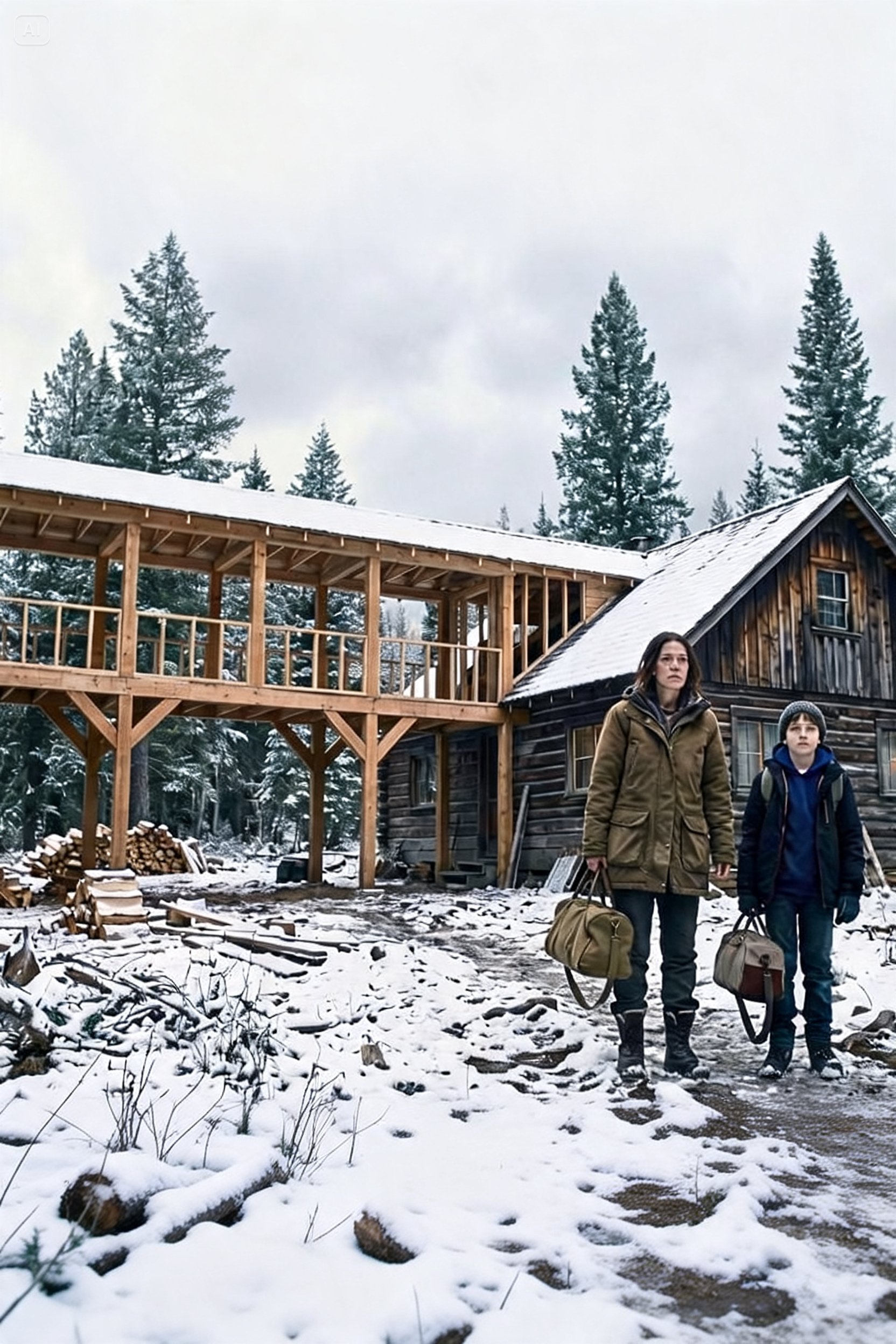
When my aunt told me I was old enough to fend for myself, I stepped into the cold with just $10. The next afternoon, I raised my hand at an auction nobody else seemed to want….
The night my aunt put me out, I was twenty years old. Everything I owned fit into a faded backpack and a small canvas bag, and the only money in my pocket was one wrinkled five-dollar bill and five singles. I stood on the sidewalk outside her house, trying to decide which direction a person was supposed to walk when she had nowhere to go.
Behind me, the windows glowed yellow. I could hear dishes being moved around and somebody laughing inside. That ordinary sound was almost harder to bear than the cold, because the evening was going on without me as though I had never lived there.
An hour earlier, my aunt had stood in the doorway and said, “We did what we could, Emily. But you’re an adult now.” She sounded tired and certain. I wanted to ask how being twenty was supposed to make me able to afford a room, but I could see that the conversation was over.
I didn’t shout or slam the door. I packed my clothes, pulled on my jacket, and left. As I reached the sidewalk, I looked back once, not because I expected her to call me inside, but because I had no idea when I would see that house again.
I started along streets I had known for years. I passed the grocery store where I’d worked part-time in high school and the little park that filled with children every summer. Light shone from living-room windows, and the smell of someone’s dinner drifted into the street. Everywhere I looked, people were settling in for the night.
I kept telling myself I could call a friend. Somebody might let me sleep on a couch for a few days. But I couldn’t bring myself to knock on another door that night and ask whether there was room for me, so I walked until the familiar houses gave way to old storefronts and empty roads.
At a streetlight, I took out my money and counted it again. Five dollars, then one, two, three, four, five. Ten dollars altogether. Not enough for rent or a motel, and not nearly enough to solve whatever was going to happen after sunrise.
The wind smelled of fallen leaves and distant chimney smoke. I tucked the bills back into my pocket, pulled my jacket tighter, and continued toward the edge of town. My feet hurt, but stopping outside in that weather didn’t seem much better than walking.
Near a quiet intersection, I saw a diner with a buzzing neon sign. I stepped inside mostly to get warm. A silver-haired waitress with her hair pinned into a loose bun looked at me for a moment, then set a cup of hot coffee in front of me before I’d worked up the nerve to order anything.
“You look like you could use something warm,” she said. I nodded and wrapped both hands around the mug. I must have looked exhausted, but she didn’t ask me to explain, and I was grateful for that.
I sat in a back booth while the windows changed from black to gray. The smell of bacon drifted from the kitchen. I watched the waitress wipe down tables, listened to the low hum of the refrigerator, and tried not to think about how quickly my life had narrowed to the things I could carry.
When morning came, I went outside again. The air felt even sharper, the kind of cold that warns you winter isn’t far away. I still had no place to sleep that night, and I knew I couldn’t spend all day sitting in a diner hoping an answer would arrive.
I wandered past the county office building and almost missed a crooked flyer on the bulletin board. It was partly covered by yard-sale notices and a missing-pet announcement. A few words at the top made me stop: “County auction. Unclaimed properties. Minimum bids starting at $10.”
I read it twice. Most of the listings were things I had no use for: old storage units, broken equipment, and parcels of land beyond town. Then I found one that made my stomach tighten. “Abandoned log cabin, northern ridge area. Minimum bid $10.”
I knew a price like that had to mean something was wrong. Maybe there was no proper roof. Maybe the floor was rotten. Maybe the cabin was so far into the woods that nobody wanted the trouble of reaching it. Still, for the first time all night, I was looking at the possibility of four walls that might belong to me.
I stood there with my hand over my pocket. Ten dollars could buy a little food, maybe enough to get through another day or two. If I bid on the cabin, I would have nothing left. If I didn’t, I would still have no idea where I was going to sleep.
I kept looking back at the words “abandoned log cabin.” I had never attended a property auction, and I knew nothing about repairing a building in the woods. I couldn’t even say for sure that I could find it. The more I thought about all the reasons not to do it, the more clearly I understood that sleeping outside again was the only alternative I could see.
I remembered the way my aunt had shut the door so quietly. I thought of that warm diner and the cold pavement outside it. The idea was foolish enough to frighten me, but the thought of trying for the cabin wouldn’t leave me alone.
That afternoon, I went into the county building where the auction was being held. The room smelled of stale coffee and old paper. A few older men in worn jackets sat in folding chairs, studying property lists, while I slipped into a seat near the back with my backpack still on my shoulders.
The auctioneer went through parcels of land, storage units, and farm equipment in a flat, practiced voice. I barely heard him. My fingers kept touching the folded money in my pocket, as though I needed to make sure it hadn’t disappeared.
Finally, he adjusted his glasses. “Next item: abandoned log cabin, northern ridge area. Property has been vacant for several years. Minimum bid is ten dollars.” He looked up, waiting for someone to speak.
Nobody did. I could hear the chairs creak as people shifted in their seats. The auctioneer glanced down at his paper and asked, “Do I have ten dollars?”
I lifted my hand. A couple of men turned around, and somebody gave a quiet chuckle. I wanted to lower my arm, but the auctioneer was looking directly at me now. “Ten dollars?” he repeated. I nodded.
“Going once.” The room stayed silent. “Going twice.” I held my breath as his gavel struck the table. “Sold.” With one sharp crack, my last ten dollars were gone, and I had become the owner of an abandoned cabin I had never even seen. Part 2…..
Outside the county building, I stood holding a thin sheet of paper with my name printed on it. The deed said the cabin belonged to me. I turned it over in my hands, wondering whether I’d just found somewhere to live or paid ten dollars for a pile of firewood.
The road to Northern Ridge was longer than I expected. Pavement gave way to a cracked country road and then to two narrow dirt tracks winding among pine trees. I carried my backpack, kept my eyes on the fading afternoon light, and walked until my legs felt as though they’d forgotten how to bend.
When I finally reached the clearing, I stopped. The roof sagged in the middle. Shingles were missing, one window was an empty hole, and vines climbed the walls. The porch leaned sideways, and the steps looked ready to give up under anyone’s weight. “So this is what ten dollars buys,” I said aloud.
I climbed the steps carefully and leaned into the swollen front door. It stuck, then scraped open with a long groan. Dust floated through the weak light coming from the roof and window. Floorboards were warped or missing; there was no furniture, no blanket, not a single sign that anyone had lived there for years.
I almost turned around. Then I ran my palm over one of the log walls and pressed against a beam. The wood was rough and weathered, but parts of it were still solid. I couldn’t repair everything that was broken, but perhaps the whole place wasn’t beyond saving.
My father had always been the one who fixed things when I was little. Cabinets, loose boards, doors that didn’t shut properly—he would work patiently and tell me, “You’d be surprised what you can fix. Most things just need patience.” I hadn’t thought about those words in a long time. Standing in that ruined cabin, I heard them again.
I set my bag in the driest corner and spent the night there, wearing every layer of clothing I owned. Wind pushed through cracks in the walls, branches scratched the roof, and an owl called somewhere in the trees. I slept in short stretches, waking each time the building creaked, but I stayed.
In the morning, frost sparkled across the clearing. My fingers were stiff and my back ached from the hard floor. I stood on the porch and looked at the roof in daylight. I had no tools or money, and certainly no experience rebuilding a house, but I had time and two working hands.
I started by carrying debris outside: rotten planks, leaves, shattered pieces of wood, and anything that made the floor unsafe to cross. Some boards crumbled in my grip; others were sound enough to save. By noon, my clothes were filthy and my stomach was growling, but there was finally a little more room to move inside.
Hunger settled the next question for me. I needed work. I walked back into town and entered Harrison’s Hardware, a small store that smelled of lumber, oil, and metal. Behind the counter stood an older man with a thick gray beard and a ledger open in front of him.
“Looking for something?” he asked. “Work,” I said. “Cleaning, carrying things, whatever you need.” He considered me for a moment, then pointed toward the back. A truck had arrived, and its shipment needed unloading.
The boxes were heavier than I expected. I carried nails, tools, and hardware into the storage room until my arms shook and my shoulders burned. When Mr. Harrison finally told me to stop, he handed me five dollars. I stared at those bills longer than I should have.
“You the girl who bought that cabin out by Northern Ridge?” he asked. I nodded. “Planning to fix it?” I looked down at my blistered hands. “I’m going to try,” I told him. He didn’t say much, and I thought that was the end of our conversation.
As I left, I noticed a bundle resting on the wooden step outside: a few nails, a coil of twine, and an old rusty hammer. Mr. Harrison leaned in the doorway. “Scrap pile,” he said. “You can have it.” I told him I couldn’t pay, and he answered, “Didn’t ask you to.”
I carried those things back through the woods at sunset. The hammer’s handle was smooth from years of use, and I held it carefully the whole way. It wasn’t much equipment, but it was the first time since leaving my aunt’s house that I had something I could use to change my circumstances.
Part 3 I began with the empty window because the wind blew straight through it at night. From the stack of salvaged boards, I found one that almost covered the opening. My first nail bent sideways, and I had to pull it out and start over. The next one went in straight, and the tapping sounded strangely hopeful inside that empty room.
The board was crooked, but it blocked the draft. After that I worked in whatever small pieces I could manage: clearing rotten wood, fitting usable planks into gaps, and making the door close a little better. Every morning I could see something I had done the day before, even if the cabin still looked terrible to anyone passing through.
I took odd jobs around town whenever I could find them. Some days I hauled lumber; other days I swept floors, stacked firewood, cleaned sheds, or carried deliveries. I went back to the cabin at dusk with aching muscles and whatever scraps of money and materials I’d earned. I learned more from doing those jobs than I ever could have learned just staring at the broken roof.
People began recognizing me. “You’re the girl fixing that old cabin, aren’t you?” a man asked while I was moving boxes behind the grocery store. I admitted I was. He said the place had been falling apart for years. “I guess it needed somebody stubborn,” I answered, and he laughed.
Soon some people simply called me the cabin girl. A few were amused, a few curious, and a few started offering help without making a big thing of it. I couldn’t always tell whether they believed I’d succeed. I knew I had to keep showing up for work either way.
One evening, I came around the last turn of the forest path and found a neat stack of dry firewood beside the clearing. It hadn’t been there that morning. I looked among the trees but saw no one. Whoever had left it was already gone, and I never learned who it was.
I carried the logs indoors and made a small fire in the stone ring I’d arranged in the cabin. Light moved across the rough walls as the wood caught. For the first time, I could sit beside a bit of warmth that hadn’t been borrowed from a diner or a stranger’s house.
The next day, Mr. Harrison called me over at his store. Some boards from a delivery were too warped to sell, he said, and I could have them if I could carry them. I borrowed a handcart and spent nearly two hours hauling the wood over the rough road. My arms trembled when I reached the clearing, but I had enough material to start closing more of the gaps in the walls.
The weeks took on a pattern. Work in town meant food and occasionally supplies. Work at the cabin meant replacing boards, strengthening what I could, and patching places where the wind got in. I was slow and made mistakes, but I was getting better with every repair.
Then winter came almost overnight. Snow covered the pines, piled against the walls, and settled on the roof I still worried about. Some nights the wind rattled the door so hard I woke thinking the whole cabin was about to come down. I lay there listening until I could convince myself the beams were still holding.
Every morning I shoveled snow away from the entrance and cleared what I could from the roof. Then I made the long walk into town, sometimes through snow nearly to my knees. People who had once laughed at the cabin now called me about loose gates, damaged steps, and fences needing attention. They began trusting me to finish the small jobs I said I would finish.
At home, the progress was visible in ways that mattered. The worst floorboards had been replaced. Strips of wood helped seal the walls; the door shut with a proper thud. The roof held through each snowfall, and every day it stayed up gave me another day to improve it.
In early January, I helped an elderly man repair a fence outside town. When we’d finished, he pointed toward a pile of things behind his shed and told me I could take what I wanted. Sitting there was a small wood-burning stove, old and rusty but still intact.
I asked twice whether he was sure. He said he had planned to throw it away. I spent two hours getting that heavy stove back to the cabin through the snow. By the time I reached the porch, my hands were stiff and I could barely feel my arms.
That evening, I positioned the stove in a corner and fitted its pipe through an opening near the roof. When I lit the fire inside, the wood caught slowly and then burned steadily. Warmth began to spread through the room, and I sat down on the floor, exhausted, watching the stove. I hadn’t realized how long I’d been shivering until, for once, I wasn’t.
Part 4 The rest of the winter passed in work and small improvements. My palms grew rough, and thin marks from splinters lined my fingers. The hammer that had felt awkward in my hand now moved naturally. I could replace a damaged board, repair a beam, and patch the roof without staring helplessly at the problem first.
The cabin was still modest, with rough walls and a porch that showed its age, but it was no longer the empty shell I had walked into that first afternoon. The door kept out the wind, the floor felt solid, and the stove made the worst nights bearable. Sometimes, as snow moved past the window, I would listen to the fire and think how close I’d come to walking away.
By late February, the days were beginning to lengthen. Snow slid from the roof in heavy sheets, and the first muddy patches appeared along the road into town. I kept taking repair jobs, and word about my work traveled farther than the story of the foolish girl who’d bought the cabin.
People called when a porch railing came loose or a window frame cracked. I learned to do a job carefully the first time because somebody had trusted me with part of their home. That trust mattered as much as the money they paid me. I hadn’t expected a falling-down cabin to teach me a trade, but that’s what was happening.
One afternoon, Mr. Harrison waved me over outside the hardware store. “You’ve been busy out there,” he said. I told him I was mostly trying to keep the roof from collapsing, and he chuckled. Then he said the town council was looking for someone to help with maintenance and small repairs around town.
I stared at him. “Me?” I asked. “I’ve never had a real job like that.” He shrugged and said, “Everyone has a first time.” Then he told me he’d recommended me because I worked hard and kept my word.
I thanked him, but the words felt too small for what he’d done. Months earlier, he’d handed a hungry stranger five dollars for unloading a truck and given her a hammer nobody wanted. Now he was telling people I could be trusted with work that mattered to the whole town. I walked home thinking about that, careful not to imagine anything was certain before the council actually spoke to me.
Spring arrived gradually. Snowmelt formed little streams across the forest floor, birds returned, and sunlight warmed the clearing again. I stood on my porch one afternoon and looked at the cabin’s walls. They were patched, imperfect, and solid—the same place, yet nothing like the wreck I’d first found.
One evening, a pickup truck eased into the clearing. A young couple climbed out, looking a little unsure of themselves. The man introduced himself by asking, “Are you Emily Carter?” When I said yes, he told me they’d heard about my cabin.
The woman explained that they hoped to build a small cabin for their family, nothing fancy, just a sturdy place that would last. They’d been asking around town, she said, and people kept sending them to me. I glanced at my own porch, remembering how the steps had creaked beneath me that first day.
A few months before, I could barely drive a nail straight. Now two people were standing in front of me, asking whether I could build something for them. I looked at the couple again and said, “I think I can help with that.”
Final That job led to another, and then another. People who had known me as the cabin girl began to know me as someone who could repair what was broken and build something that would last. I kept learning, kept working, and slowly made a life around the skills I’d gained in that clearing.
Years later, people still came out to see the little log cabin in the woods. Some knew the story of the ten-dollar auction. Others had only heard that a young woman once bought a place everyone else thought was worthless and brought it back with her own hands.
I never forgot what that first night felt like: the cold sidewalk, the warm windows behind me, and ten dollars folded into my pocket. I didn’t know how the story would end when I raised my hand in that auction room. I only knew I wanted a chance at having somewhere to belong.
The cabin didn’t change in one miraculous afternoon. It took a board, a nail, a day’s wages, a stranger’s kindness, and then the same things over and over again. As I worked, I changed too. I learned that I could do hard things, ask for work, accept help, and keep a promise to myself even when nobody was watching.
Sometimes I sit on that old porch at sunset and listen to the trees. Inside, the stove is warm; the roof is still standing. I think of my father’s words about patience and smile, because he was right: more things can be repaired than we imagine.
If all you had left was ten dollars, would you have raised your hand at that auction, or kept walking? I’d love to know what you would have done.
THE END. I’ve shared the complete story, and I truly hope it touched your heart. If this story moved you, please , like, and share the post. Thank you for reading! ❤️
✓ Lynn R. Adams
When my aunt told me I was old enough to fend for myself, I stepped into the cold with just $10. The next afternoon, I raised my hand at an auction nobody else seemed to want…. The night my aunt put …