When a process server brought foreclosure papers to my 126-acre ranch, the HOA president insisted I owed 14 years of dues, but a recorded document from 2012 raised a question her binder couldn’t answer…
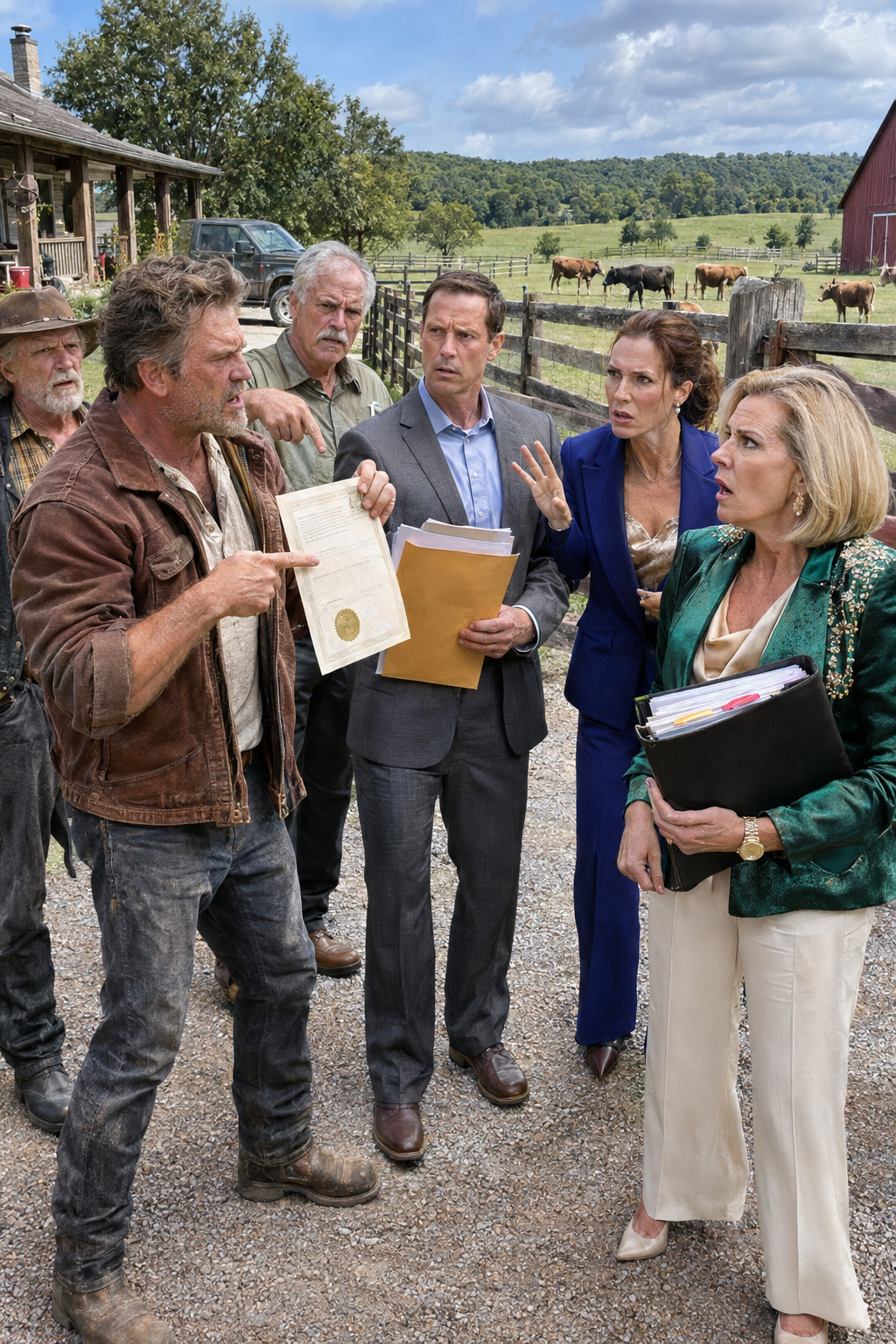
When a process server brought foreclosure papers to my 126-acre ranch, the HOA president insisted I owed 14 years of dues, but a recorded document from 2012 raised a question her binder couldn’t answer…
The process server asked me to confirm my name, handed over a thick packet, and drove away before I finished the first page. At the top were the words “Complaint to Foreclose Assessment Lien,” with my name, Ethan Cole, beneath them. Cedar Hollow HOA claimed I hadn’t paid dues in 14 years, although I’d never received a single statement.
I stood beside the gate reading the balance twice. There were annual assessments, late penalties, interest, collection charges, and attorney fees, all piled together into a number that could do real damage to a working ranch. Ten minutes later, a black SUV rolled up the drive and Dana Mercer stepped out carrying a binder.
Dana was Cedar Hollow’s president, dressed in a sharp deep-violet blazer that looked out of place beside my dusty fence posts. “This property was annexed years ago,” she told me. I lifted the papers between us and asked, “Then show me where I agreed to it.”
She didn’t look surprised, and that troubled me more than if she’d started shouting. Beyond her shoulder lay 126 acres of pasture and hay ground, my house, the calving barn, and the equipment shed. I had owned all of it before the year Cedar Hollow said my supposed debt began.
“You’re telling me I’ve owed your association money since 2012?” I asked. Dana nodded and said that notices had been issued according to the association’s records. I told her I’d never seen a bill, a meeting notice, or even a ballot bearing Cedar Hollow’s name.
She opened her binder to a tab marked “Supplemental Declaration of Annexation,” dated 2012. The document, she said, had been recorded with the county, and its legal description included my ranch. I asked to see my signature, but she closed the binder and repeated that the property was included.
“Then I’m starting with the county records,” I said. Dana glanced at the foreclosure packet in my hands. “You should start with the amount you owe.”
After she left, I went into the ranch office and opened the steel filing cabinet where I kept everything from the purchase. Working cattle doesn’t leave much room for careless records; I had deeds, surveys, tax receipts, insurance papers, and a title policy arranged in folders. I pulled out my recorded deed first.
The date confirmed what I already knew: I owned the ranch before Cedar Hollow’s 2012 annexation document. The legal description covered the same 126 acres, creek boundary, old county road, pasture, buildings, and hay ground I’d been caring for ever since. There was no later transfer to a developer or to Cedar Hollow.
Next came the tax statements, then the closing documents, then the easements and survey. I found ordinary restrictions and utility rights, the kinds of things that come with rural property. I did not find an HOA agreement, a signed annexation consent, or anything showing I’d volunteered to belong to Cedar Hollow.
That didn’t automatically settle the legal question, and I knew better than to tell myself it did. A paper can affect land even if the owner doesn’t remember signing it. But if someone was going to ask a court to sell my ranch, I needed to know exactly which paper gave them that right.
I called Rebecca Sloan, a real estate attorney who had handled association and land-use disputes. After I explained the process server, Dana’s binder, and the 14 years of charges, she asked me one question before anything else: “What date did you acquire the ranch?” I gave her the date and told her the annexation document was from 2012.
“And you already owned it then?” she asked. When I said yes, she told me to email my deed, not the collection ledger. Ten minutes later she called back and said, “You’re the record owner before their annexation date. Now we find out what authority they thought they had.”
She asked for my title policy, tax history, and every page the process server had delivered. She also wanted to know whether I had ever received association budgets or ballots, paid an assessment, or used Cedar Hollow facilities as a member. I hadn’t done any of those things.
“I repaired part of my calving barn three years ago,” I told her. “Nobody asked me for plans.” She didn’t laugh; she wrote that down along with the rest. Not receiving a bill wasn’t proof the ranch was outside the HOA, she explained, but 14 years without any of the ordinary signs of membership deserved a closer look.
That afternoon Rebecca sent Cedar Hollow a preservation and records request. She wanted the original declaration, the complete 2012 annexation supplement, the assessment history, proof of every notice sent, and whatever document the association relied on to bind my property. The last request was the one I kept thinking about while I fed cattle that evening.
Two days later, Cedar Hollow’s lawyer sent records instead of withdrawing the foreclosure. There was a ledger almost identical to the one in my packet, mailing information, and a certified copy of the 2012 supplement. Rebecca called and asked me to come to her office.
The certified copy lay open on her conference table when I arrived. It had a county recording stamp, a document number, and a notarized signature page. Nothing about it looked improvised, and for a moment I understood why Dana had sounded so certain at the gate.
Then Rebecca turned to the legal-description exhibit. I recognized the north line, the creek, the old county road, and the eastern pasture, right down to the acreage. My ranch wasn’t included because somebody had typed the wrong mailing address into an account; its actual boundaries were written into a recorded document.
“So Dana wasn’t bluffing,” I said. Rebecca shook her head. “The document exists. That doesn’t tell us yet whether it could bind your property.” I looked back at the county stamp, feeling that heavy foreclosure packet all over again.
I asked how an annexation could be recorded without a single person contacting me. Rebecca moved the exhibit aside and opened the signature pages. I saw the developer’s signature, but I couldn’t find mine.
She put my older deed next to the newer recorded document and drew her finger down the two dates. “Ethan, I don’t want to begin with why you didn’t pay,” she said. “I want to know who had the authority to put land you already owned into this association.”
For the first time since the process server arrived, I wasn’t staring at a frightening dollar amount. I was staring at the unanswered question underneath every charge, and Rebecca was already reaching for the next set of records. Part 2…..
IF FACEBOOK BROUGHT YOU HERE, HERE’S THE CONTINUATION YOU’VE BEEN WAITING FOR. ENJOY! 👇 Rebecca spread the assessment history, mailing records, and association files into three piles on the conference table. The first charge appeared shortly after the supplement was recorded in 2012, but the account wasn’t under my name. It was labeled “Cedar Hollow Expansion Tract C — 126 acres.”
The original assessment had been small. Then each new year brought another charge, and unpaid balances collected penalties and interest. Management companies changed, computer systems changed, and the old balance was carried forward every time, until an accounting entry for an expansion tract looked like a debt I had deliberately ignored for more than a decade.
I found myself comparing those charges with ranch expenses I could remember. There was a drought year when I bought replacement hay, a windstorm that tore metal from the shed, and the season the north fence gave way while I was busy with calving. I had paid for all of it myself while Cedar Hollow’s books claimed I belonged to a community I had never dealt with.
Rebecca picked up the mailing history next. The first statements had gone to Cedar Hollow Development Group at its old office, Suite 240, not to my ranch. Later statements went to a successor development post office box; some envelopes were marked undeliverable, and others had no delivery confirmation preserved at all.
She compared the address on every available notice with the one on my deed. Not one matched. When I said, “So they did send notices,” Rebecca answered, “They generated them, Ethan. But they weren’t trying to reach you.”
The membership records told much the same story. My land had an account number, but I wasn’t on the voting roster. There were no ballots, proxies, meeting registrations, homeowner contact details, or architectural files connected to me, even though the accounting department had treated my ranch as chargeable property year after year.
The third management company had inherited the same tract number and the same developer address from the previous two. Nobody appeared to have checked the current deed. I wasn’t an actual participant in Cedar Hollow’s affairs; I was a line in its accounts receivable system.
Nine months before the process server came to my gate, a new management firm performed a delinquency audit. A 126-acre tract with 14 years of unpaid assessments stood out, and the manager brought it to the board. The minutes showed Dana asking why such a large balance hadn’t been collected.
Management pointed to the recorded 2012 supplement and the long-standing account. Dana asked for the document, saw the description of my ranch, and concluded the association should collect like it would from any other delinquent property. Rebecca underlined the board minutes and asked me what was missing.
“My deed,” I said. Nobody had checked who owned the tract in 2012, why bills went to development addresses, or why the supposed member hadn’t voted in 14 years. The board authorized collection, and the file went to Benton and Shaw.
The foreclosure firm sent a demand letter to the wrong address and then another one to the wrong address. It finally ordered a current title search, which revealed my name. By then, instead of reconsidering the history of the account, the process had moved toward a lien foreclosure against the person who actually owned the land.
Driving home, I looked out at the cattle in the lower pasture and the open doors of the calving barn. Cedar Hollow had never sent a crew to fix my fence, repair a roof, or maintain that pasture. Its records recognized my ranch only when money was supposedly due.
The next morning Rebecca called about the original declaration. It gave the developer certain annexation powers, she said, but she wasn’t ready to say those powers reached my property. She had asked for the entire 2012 development file: ownership maps, draft plans, checklists, signature packets, and correspondence.
Meanwhile, the foreclosure case was still real. Rebecca had entered an appearance and obtained additional time to respond, but Cedar Hollow wouldn’t voluntarily abandon collection. Through counsel, Dana maintained that a recorded document and 14 years of accounting justified treating my ranch as an association parcel.
The development file arrived on a Thursday. Rebecca assembled a chronology from the original declaration, my deed, the expansion maps, and the recorded supplement. Across the top of her legal pad she wrote, “What did the developer own when it signed?”
The acquisition map showed Cedar Hollow Development Group’s land east of my ranch in solid blue. My 126 acres were crosshatched instead, with the legend “potential future expansion.” The distinction was plain enough for anyone who had ever read a pasture map: they had plans for my land, but they didn’t own it.
Another presentation showed a proposed Phase 3 with new streets, a western entrance, trails, drainage work, and houses extending over the ranch. I recognized the creek and the pasture boundaries beneath the proposed roads. It was strange seeing plans for homes drawn across ground where my cattle had been grazing.
The 2012 supplemental declaration combined the developer-owned parcels and my ranch in one legal exhibit. One developer signature and one county recording made the whole expansion appear finished. But near the back of the development file was a separate page headed “Owner Joinder and Consent,” with blank signature lines.
“Is that where I was supposed to sign?” I asked. Rebecca said it might be, but she wanted to see what the people preparing the recording understood at the time. She turned to a checklist dated less than two weeks before the document was recorded.
Most entries said complete: legal descriptions, board authorization, notary package, recording cover sheet. One line had been left unresolved: “Cole tract — obtain owner joinder — pending.” I read the last word several times, with Rebecca sitting quietly across from me.
Emails explained why the file moved ahead. The developer had a looming deadline tied to a planning approval for the proposed Phase 3, and the team wanted to record the broader expansion package quickly. One message said the remaining owner joinders could be completed afterward.
Three days after recording, the developer’s outside counsel wrote to the project manager about my tract. The letter confirmed that the Cole property was privately owned and that the file still lacked an executed owner joinder. It asked for the signed joinder to be returned for recording when available.
Rebecca checked the county index and the records produced by Cedar Hollow. There was no later consent, amendment, or ratification bearing my signature. We didn’t have evidence of forgery or some secret plan to steal a ranch; what we had was a rushed project file showing an unfinished step that apparently stayed unfinished.
I called Dana from the ranch office and asked her to send Rebecca my signed consent. She told me the association’s position hadn’t changed because the legal description was unambiguous and the instrument had been recorded. “Recorded covenants don’t disappear just because an owner says he didn’t know,” she said.
Rebecca arranged a meeting with Dana and Cedar Hollow’s attorney. On the table she placed my deed, the supplement, the checklist, the blank joinder page, and the lawyer’s post-recording letter. Dana insisted the county had accepted the document; Rebecca agreed that it had, then asked them to produce the missing owner consent.
Their attorney read the follow-up letter twice. Dana suggested that the signed page might have been lost, which Rebecca acknowledged was possible. But she asked them to search the actual records rather than assume a signature existed because everyone had behaved as though it did.
The following morning, Cedar Hollow’s counsel reported that no executed Cole owner joinder had been located. I phoned Rebecca and asked if that meant we’d won. “Not yet,” she told me, turning back to the original declaration. “Now we find out what that signature was legally required to do.”
Part 3 At our next meeting, Rebecca brought only three documents: the original Cedar Hollow declaration, my deed, and the 2012 supplement. She opened the declaration to its annexation provisions and divided the language into two categories. The first covered land the developer owned or later acquired within the defined expansion framework.
During the designated development period, the developer could bring that qualifying land into Cedar Hollow by recording a supplemental declaration. That explained how the parcels east of my ranch had been annexed. The developer had title to those parcels and could exercise the power its governing document reserved.
Then Rebecca pointed to the second category: land owned by someone else. For third-party property, the declaration required the record owner to join in the instrument or execute the required consent. The developer hadn’t purchased my ranch, and I had already owned it before that supplement was recorded.
“So the entire supplement was invalid?” I asked. Rebecca shook her head. It could still have operated on land the developer actually owned; our argument was narrower, that typing my legal description into the same exhibit hadn’t given the developer authority to bind my separate property.
She put the blank owner-joinder page beside the declaration. Its absence mattered because the governing document required owner participation in these circumstances. The checklist marked my joinder pending before recording, and outside counsel’s letter asked for it afterward, so this wasn’t just a signature line somebody forgot to label.
I asked about the county recording stamp, the piece of paper Dana had trusted from the beginning. Rebecca said recording made the instrument part of the public record, but the recorder hadn’t conducted a trial into whether the developer owned every tract listed in it. A recording stamp didn’t, by itself, supply a legal power that the signer lacked.
Rebecca drew a chain on her legal pad: valid annexation, assessment obligation, delinquency, lien, foreclosure. The last four steps depended on the first. “We don’t start by arguing about the interest,” she said, tapping the top of the page. “We ask whether the first assessment could ever have been imposed on your ranch.”
She sent Benton and Shaw a formal challenge with the deed, declaration language, missing-joinder records, checklist, and follow-up letter. She didn’t accuse anybody of fabricating a signature or deliberately stealing land. She simply asked Cedar Hollow to produce any other document establishing that my 126 acres had validly entered the association before anyone took another foreclosure step.
Dana’s response came through counsel. Cedar Hollow had relied in good faith on a recorded supplement and a long assessment history, the letter said. Rebecca answered that good faith could explain how the records had been maintained, but it couldn’t resolve the missing authority question.
Benton and Shaw took a different approach. The foreclosure firm acknowledged a genuine title and governing-document dispute and suspended further enforcement while reviewing the evidence. The lawsuit hadn’t disappeared and the lien was still in the county records, but for the first time since the process server’s visit, the push toward foreclosure had stopped.
Six business days later, the firm sent a new letter. Its lawyers acknowledged that no signed owner joinder had been located and the developer hadn’t held title to my ranch in 2012. But Cedar Hollow still argued that the supplement had been public for 14 years, that it had relied on the document, and that I hadn’t challenged it until the foreclosure began.
The letter raised delay and reliance arguments, including the equitable concept of laches, and reserved the right to seek a judicial determination. I read it at the kitchen table and called Rebecca. “They’re saying I waited too long to complain about something nobody ever told me existed?”
“That’s one of the things they’re trying to argue,” she said. “And the mailing records are why we have an answer.” We weren’t going to pretend public recording had no possible legal significance. We were going to show why 14 years of internal bookkeeping didn’t mean I had knowingly accepted membership.
At the settlement conference, Dana arrived in her violet blazer with Cedar Hollow’s attorney, while Benton and Shaw joined by video. The association’s lawyer explained that it had operated for years in reliance on a recorded instrument. He spoke carefully, as though the passage of time might fill in the blank on the owner-joinder page.
Rebecca let him finish and laid out the mailing history. The first notices had gone to the developer’s office, later ones to a development post office box, and some had come back undeliverable. None had gone to the address on my deed.
Then she put the membership records beside them. “You didn’t bill Ethan at his address,” she told them. “You didn’t put him on the voting roster, send him budgets, or invite him to meetings. His land existed as an expansion tract in the accounting system until you finally looked up the owner to collect.”
Dana said Cedar Hollow hadn’t created those records in bad faith. “I’m not saying it did,” Rebecca replied. “But good faith explains how an error can continue. It doesn’t create a missing property right.” Dana looked at the papers and, for once, didn’t try to close the discussion with the county stamp.
The lawyers took a recess and spoke privately for about 20 minutes. I sat beside Rebecca with the original foreclosure complaint in my bag, remembering how easily that first packet had made 14 years of charges look settled. Whatever else happened, I wanted the people threatening to sell my ranch to confront the actual ownership history.
When they returned, the Benton and Shaw attorney spoke first. The firm would not seek a foreclosure judgment or sale of the Cole property on the existing record without additional evidence establishing enforceability. It wasn’t a sweeping court ruling, but the lawyers responsible for pursuing the foreclosure were no longer willing to do it on the paperwork they had.
Rebecca asked about the pending complaint. Cedar Hollow’s attorney glanced at Dana, and she gave a small nod. “Dismiss it,” she said, quietly enough that I almost asked her to repeat herself.
Two days later, the voluntary dismissal was filed. No foreclosure judgment had been entered, and no sale of my ranch had been authorized. The association hadn’t necessarily surrendered every possible historical argument, but it had stopped trying to take my land on the record in front of us.
I printed the dismissal and laid it beside the first complaint. Then I opened the ledger, which still showed 14 years of assessments and fees, and checked the county index, where the lien still appeared. “They dropped the lawsuit,” I told Rebecca. “Now make them finish it.”
Final Rebecca wouldn’t accept a deal that merely left the foreclosure dormant. If Cedar Hollow kept my ranch in its assessment system, a future management company or board could inherit the same account and start the whole process over. The records had to be corrected in every place where the claim could resurface.
First, Cedar Hollow reversed the assessments, late charges, interest, collection costs, and attorney fees connected to the account. The balance went to zero. Then management removed the 126-acre tract from its membership and assessment records entirely, not as an inactive or delinquent member but as property the association would no longer treat as belonging to Cedar Hollow.
Next came the recorded lien. Benton and Shaw prepared a release identifying the lien against my ranch, and Rebecca checked the description before it went to the county. When the recording confirmation arrived, I held it in my hands for a long time, because a dismissed lawsuit and a cleared property record weren’t the same thing.
Rebecca insisted on one more document. Cedar Hollow recorded a separate notice referring to the 2012 supplemental declaration and stating that it was not asserting assessment authority over my 126 acres under that instrument. The old supplement would remain in the public record, but a future title examiner, buyer, or lender could now find the association’s recorded clarification as well.
The final signing was held at Cedar Hollow’s attorney’s office. Dana arrived wearing the same deep-violet blazer I’d seen on the day she came through my gate, although she carried herself a little differently. The document in front of her said the association would not treat my ranch as an HOA parcel under the disputed annexation.
She rested her hand on the page for a few seconds before signing. There wasn’t an apology or a grand speech, and I didn’t ask for either. I had spent enough mornings wondering whether somebody else’s file was going to cost me land I’d worked for years to maintain; seeing that signature was enough.
The board also adopted a verification rule for future accounts. Before adding a property to the assessment roll, management would have to check ownership, the governing-document authority, and any owner consent the documents required. Dana remained president, and I had no interest in making her resignation the measure of whether the problem had been fixed.
Cedar Hollow reimbursed the documented expenses of defending the foreclosure and correcting the records. There was no windfall and no courtroom spectacle. What I wanted was simpler: a dismissed complaint, a released lien, a corrected land record, and 14 years of charges erased from an account that never should have been billed to me.
A week later, I was back in the calving barn trying to replace a rusted hinge. One stubborn bolt took longer than the whole job should have, and through the open door I could see cattle moving beside the north pasture. The fence still needed work, and a roof panel still rattled when the wind came up.
The ranch hadn’t changed during those 14 years of Cedar Hollow carrying it on a spreadsheet. I had paid the taxes, bought the feed, fixed the fences, cared for the animals, and buried the ones I couldn’t save. The association had maintained an account, and it had mistaken that account for the authority to claim something much bigger.
I put the recorded lien release beside my deed in the steel filing cabinet. This time, the paperwork finally matched the ground beneath my boots. And if an HOA ever tells you that you owe years of dues you never knew about, don’t begin by arguing over late fees; ask what document first bound your property, and whether the person who signed it had the right to do so.
THE END. I’ve shared the complete story, and I truly hope it touched your heart. If this story moved you, please , like, and share the post. Thank you for reading! ❤️
✓ Lynn R. Adams
When a process server brought foreclosure papers to my 126-acre ranch, the HOA president insisted I owed 14 years of dues, but a recorded document from 2012 raised a question her binder couldn’t answe…