Thrown Out With Her Daughter, a Single Mom Inherited a Ruined Mountain Inn—Then They Found the Room No One Numbered
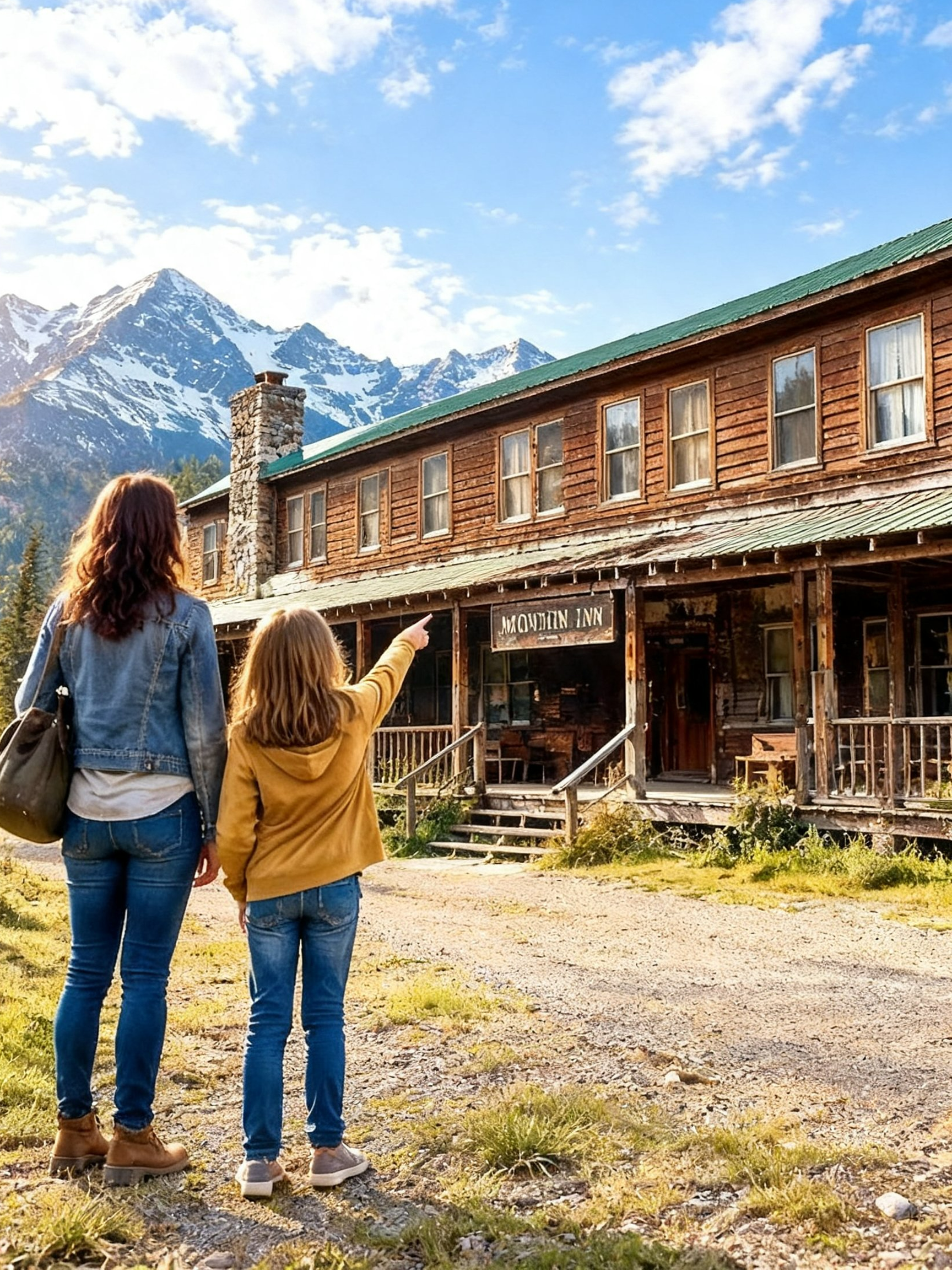
Thrown Out With Her Daughter, a Single Mom Inherited a Ruined Mountain Inn—Then They Found the Room No One Numbered
“You have three days to get yourself and your kid out of Mom’s house.”
Brooke Whitmore said it while Sarah was still holding the black dress she had worn to their mother’s funeral.
Then Brooke’s husband slid a cardboard box across the kitchen table and added, “And don’t take anything that belongs to the family.”
Sarah looked at the box.
Then at her older sister.
Then at ten-year-old Lucy standing barefoot in the hallway with her stuffed rabbit pressed against her chest.
Sarah did not cry.
That was the part Brooke would remember later.
She didn’t shout.
She didn’t demand to know how a house their mother had promised would remain available to both daughters had suddenly become Brooke’s alone.
She didn’t remind anyone that Sarah had spent the last fourteen months driving from Asheville to the little North Carolina mountain town of Elk Hollow every weekend to bathe their mother, cook her meals, change her sheets, organize her medications, argue with insurance companies, and sleep upright beside her hospital bed.
She didn’t mention that Brooke had visited six times.
She didn’t mention that Brooke had posted photographs from four of those visits.
She didn’t mention that Mason had once complained that the oxygen machine made too much noise during a football game.
Sarah simply folded the funeral dress.
Placed it into the box.
And said, “Okay.”
Brooke blinked.
She had prepared for a fight.
She had brought Mason because she expected a fight.
Their cousin Randall was sitting in his truck outside because Brooke expected a fight.
The new keypad lock for the front door was already sitting unopened on the counter because Brooke had planned to install it after the fight.
Sarah’s quiet agreement unsettled her more than anger would have.
“That’s it?” Brooke asked.
Sarah tucked a pair of shoes beside the dress.
“What else would you like me to say?”
Brooke crossed her arms.
At forty-three, she was four years older than Sarah and had turned superiority into something almost architectural. It was in the raised chin, the immaculate blond bob, the cream cashmere coat draped over a kitchen chair even though the room was warm.
“You could say thank you.”
Sarah stopped.
“For what?”
“For letting you stay here after Mom died.”
Sarah studied her sister for several seconds.
Their mother had been dead four days.
Sarah had slept in the house three nights.
The first night, she had not slept at all.
The second, Lucy had crawled into bed beside her and whispered that Grandma’s room smelled wrong without Grandma inside it.
The third, Brooke had arrived with Mason, a real estate folder, and the announcement that the property would be listed immediately.
Now Sarah nodded once.
“Thank you for the three days.”
Mason gave a short laugh.
There was victory in it.
That laugh would cost him millions.
But he did not know that yet.
Neither did Sarah.
Not completely.
She and Lucy left the Whitmore house the next afternoon with four boxes, two suitcases, a battered Honda Pilot, and eighty-seven dollars in cash.
Brooke stood on the porch while Mason changed the lock.
Lucy watched through the rear window.
“Why is Aunt Brooke doing that?”
Sarah pulled away from the curb.
“Because sometimes people confuse owning something with deserving it.”
Lucy thought about that.
Then she asked, “Are those the same thing?”
The answer came faster than Sarah expected.
“No, baby. They’re not.”
The Whitmore house disappeared behind bare maple trees.
Sarah kept driving.
She had no apartment.
Her lease in Asheville had ended two weeks earlier because she had planned to remain with her mother through hospice and then decide what came next.
Her job at a dental office had been reduced to part-time after months of emergency absences.
Her checking account contained $1,842.
Her daughter’s father, Eric, lived in Texas with a second wife and a new baby and had perfected the art of sending child support three weeks late while posting fishing photographs on social media.
Sarah had spent most of her adult life arranging herself around other people’s crises.
When Eric’s construction company failed, she worked double shifts.
When Lucy was born premature, she slept in a plastic hospital chair for twenty-three nights.
When her father died six years later, Sarah handled the probate paperwork because Brooke said legal documents gave her migraines.
When their mother developed pulmonary fibrosis, Sarah became the daughter who answered at two in the morning.
Brooke became the daughter who arrived wearing perfume and asking whether the doctor had given “any kind of timeline.”
Sarah had never considered herself a martyr.
She had simply been useful.
And useful people were rarely asked whether they were tired.
They were asked whether they could do one more thing.
At that afternoon, while Sarah was deciding whether the cheapest roadside motel outside Asheville looked safe enough for Lucy, her phone rang.
The caller ID read:
JONATHAN REEVES, ATTORNEY AT LAW.
Sarah almost ignored it.
Then she remembered the thin gray-haired attorney who had stood near the back of the church at her mother’s funeral.
She answered.
“Sarah Whitmore?”
“This is Jonathan Reeves. I represented your aunt Evelyn.”
Sarah frowned.
“My aunt Evelyn died eight years ago.”
Sarah remembered Evelyn Whitmore as her father’s older sister, a tall woman who wore men’s work boots, smoked one cigarette every Christmas Eve, and owned a mountain inn nobody in the family wanted to talk about.
Evelyn had never married.
She had lived most of her life outside Elk Hollow and had developed a reputation within the family as difficult, secretive, and possibly broke.
Brooke called her Crazy Evie.
Their father had not.
Their father had loved his sister.
“Why are you calling me now?” Sarah asked.
“Because a condition in your aunt’s estate has just been satisfied.”
Sarah glanced at Lucy, who was drawing shapes in the fogged passenger window.
“What condition?”
“Your mother’s death.”
The words landed hard.
Sarah gripped the steering wheel.
Reeves continued gently.
“Your aunt structured the inheritance so your mother held a life interest in certain assets without control over their disposition. Upon your mother’s passing, those assets transfer.”
“To Brooke?”
Sarah heard papers moving.
She almost laughed.
Not because it was funny.
Because the day had already become absurd.
“What assets?”
There was a pause.
“The Mountain Laurel Inn.”
Sarah remembered it immediately.
Everybody around Elk Hollow did.
Mountain Laurel Inn had once been a grand lodge built against the lower ridge of Blackwater Mountain. It had fifty guest rooms, a ballroom, a dining hall, stables, two cottages, and stone terraces overlooking a valley so beautiful postcards had been made from it in the 1960s.
By the time Sarah was a child, half the windows were boarded.
By the time she entered high school, the roof over the west wing had partially collapsed.
A fire damaged the kitchen in 2007.
The county condemned part of the property three years later.
Local teenagers broke into it to drink beer.
People said Evelyn had spent everything trying to save it.
Brooke once joked that inheriting Mountain Laurel would be worse than inheriting cancer.
Sarah closed her eyes.
“Mr. Reeves, I have a daughter in my car and nowhere to sleep tonight.”
“I understand.”
“No, I don’t think you do. You’re telling me I inherited a condemned hotel.”
“A mountain inn.”
“That distinction isn’t helping.”
“I also have a letter.”
Sarah opened her eyes.
“What letter?”
“From Evelyn.”
Eight years earlier.
Waiting for Sarah.
Reeves gave her an address.
His office sat above a pharmacy on Main Street, between an insurance agency and a diner where Sarah’s father used to take her for pancakes after Saturday morning soccer.
She arrived eighteen minutes before closing.
Jonathan Reeves was seventy-two now.
He wore suspenders beneath his navy jacket and moved slowly, but his eyes were sharp.
He looked at Lucy.
Then Sarah.
Then the boxes visible through the Honda’s windows.
“I heard what happened at your mother’s house.”
Sarah’s expression changed.
“From who?”
“Elk Hollow has twelve thousand residents, Mrs. Whitmore.”
“My apologies.”
He invited them inside.
Lucy sat on a leather chair with a hot chocolate from the pharmacy downstairs.
Reeves placed a brass key on his desk.
It was old and heavy.
A single capital letter had been engraved on one side.
Sarah picked it up.
“What does R stand for?”
“I was specifically instructed not to answer that.”
“Of course you were.”
Reeves almost smiled.
Then he handed her an envelope.
Evelyn’s handwriting covered the front.
SARAH ONLY.
IF SHE IS STILL THE GIRL WHO NOTICES WHO GETS LEFT BEHIND.
Sarah stared at it.
She suddenly remembered being nine years old at a Whitmore family reunion.
A thunderstorm had started.
Everyone rushed inside Evelyn’s cabin.
Sarah had noticed old Mr. Talbot from the neighboring farm struggling to cover hay bales alone.
She ran across a muddy field to help him.
Evelyn joined her without saying a word.
Later, Evelyn gave Sarah a dry sweatshirt and said, “Most people see rain. Some people see who’s still outside.”
Sarah opened the letter.
If you are reading this, your mother is gone, which means I have already failed in one important respect: I could not stay long enough to explain any of this myself.
You will hear that Mountain Laurel is worthless.
Let them believe it.
You will hear that the debts exceed its value.
Let them believe that too.
Most importantly, you will meet people who are very interested in helping you sell it quickly.
The inn has fifty-two numbered guest rooms.
Count them.
Then find the one that was never given a number.
When you find it, use the key marked R.
And before you trust any deed, tax bill, foreclosure notice, county map, bank officer, developer, relative, or elected official connected to that mountain, remember this:
Some thefts happen with a gun.
The better-organized ones happen with letterhead.
Do not sign anything until Jonathan Reeves tells you what it means.
Do not remove original documents from the room.
Do not tell the Whitmore family what you find.
If they suddenly become kind, be more careful, not less.
What I left you is not a hotel.
It is a choice.
Choose better than we did.
Sarah read the last line twice.
Then a third time.
Lucy leaned toward her.
“What does it say?”
Sarah handed the letter to Reeves.
He did not read it.
“I know what it says.”
“You wrote it?”
“No. But Evelyn read it aloud to me before sealing it.”
Sarah lifted the brass key.
“Did you know about the room?”
“I know that Evelyn believed you needed to find it yourself.”
“She believed discovery changes responsibility.”
Sarah stared at him.
“That sounds like something exhausting people say before they ruin your life.”
This time Reeves did smile.
“That also sounds like Evelyn.”
Mountain Laurel Inn stood eleven miles above town, beyond a switchback road partially swallowed by rhododendron.
Sarah had not seen it in twenty-one years.
She expected a ruin.
She found something worse.
It was magnificent.
Even broken.
Especially broken.
The three-story lodge rose from the mountainside in gray stone and dark timber, enormous chimneys framing a roof patched with rusting metal. Long verandas wrapped the main structure. Ivy had consumed one side. Several windows were missing. Wind moved through shattered glass.
But the building did not look dead.
It looked abandoned in the middle of a sentence.
Lucy climbed out of the Honda.
“This place is huge.”
Sarah stared at the dark windows.
“It’s also probably full of mold.”
Lucy considered that.
“Huge mold.”
They spent that night in one of the caretaker cottages because Reeves had confirmed the cottage was structurally safe and still connected to a well.
There was electricity in two rooms.
The heater made a noise like a helicopter attempting to start.
But the beds were dry.
There were canned vegetables in a cupboard, four mismatched plates, and an old deck of cards.
It was more than Sarah had possessed that morning.
At midnight, she stood by the window watching snow begin to dust the pine trees.
Lucy slept upstairs.
Sarah held Evelyn’s brass key.
For the first time since the funeral, she allowed herself to feel something.
Quiet, ancient anger.
At every hospital corridor where Sarah had waited alone because Brooke “couldn’t handle medical stuff.”
At every bill Sarah had paid because somebody else promised to reimburse her.
At every Thanksgiving where Brooke arrived late and received praise for bringing wine while Sarah had cooked for eleven people.
At the fact that even their mother, dying and frightened, had whispered two weeks before the end, “Try not to be hard on Brooke. She needs more reassurance than you do.”
Sarah had wanted to ask:
Who reassures me?
She had not.
Sarah had always been the stronger daughter.
Families often misunderstand strong women.
They think strength means an absence of injury.
They think reliability means infinite capacity.
They think the person who does not collapse can safely be given more weight.
Sarah looked at the inn.
Then at the letter.
Not this time.
The next morning she and Lucy began counting doors.
Mountain Laurel’s floor plan was chaotic because additions had been built over seven decades.
Rooms 1 through 18 were on the ground floor.
Nineteen through 37 were upstairs.
The third floor contained 38 through 52.
Fifty-two numbered rooms.
Exactly as Evelyn wrote.
Lucy carried a flashlight.
Sarah carried a pry bar because of snakes, raccoons, and the vague possibility that abandoned mountain hotels contained murderers.
They checked closets.
Storage rooms.
Maintenance corridors.
The old kitchen.
The ballroom.
A laundry room where rusted industrial washers stood in darkness.
At p.m., Lucy called from the second floor.
Sarah heard something different in her voice.
Lucy stood at the end of a hallway beside Room 31.
The wallpaper there was faded green.
A decorative wooden panel ran from waist height to the floor.
Lucy pointed.
“Look at the baseboard.”
Sarah crouched.
Most of the corridor’s molding had accumulated fifty years of scratches and dents.
One six-foot section had not.
It was newer.
Lucy tapped the wall.
Then she tapped three feet to the right.
Sarah’s heart beat faster.
They pulled aside a rotting linen cabinet.
Behind it was a narrow door painted the exact color of the wall.
Only a keyhole.
Lucy whispered, “R.”
Sarah inserted Evelyn’s key.
It turned once.
Then again.
Something heavy released inside the wall.
The door opened inward.
Cold air touched Sarah’s face.
The room beyond was windowless.
Twelve feet wide.
Maybe twenty deep.
Shelves lined three walls.
Metal filing cabinets stood beneath them.
There was a desk.
A reel-to-reel recorder.
Two locked fireproof document chests.
Dozens of labeled boxes.
And on the far wall hung a map of Blackwater Mountain.
Hundreds of colored pins covered it.
Lucy stepped inside.
“Is this treasure?”
Sarah moved toward the desk.
There was a photograph sitting beside a green banker’s lamp.
Six women stood on Mountain Laurel’s veranda sometime in the late 1970s.
Evelyn was among them.
So was Sarah’s grandmother Margaret.
The other women were unknown.
Written beneath the photograph in black ink were six names.
Under those names:
WE PROMISED NOBODY WOULD LOSE ANOTHER HOME ALONE.
Sarah felt the hair rise along her arms.
She opened the top drawer.
Inside sat a cassette recorder and another envelope.
THIS IS THE PART WHERE YOU WILL WANT TO CALL YOUR FAMILY.
She stared at it for a long moment.
Lucy said, “Aunt Evelyn really knew our family.”
Sarah laughed for the first time in days.
Then she opened the envelope.
Inside was one sheet.
If you have reached this room, call Jonathan.
Bring him here.
Do not take anything.
Especially not the red ledger.
Sarah looked across the room.
On the center shelf sat a thick red leather-bound book.
The words PROPERTY TRANSFERS, 1974–2009 had been stamped into its cover.
She called Reeves.
He arrived with another attorney.
Her name was Marisol Vega.
She was fifty, compact, serious, and unlike Reeves, moved as if the building were on fire and she intended to bill the fire by the hour.
The moment Vega saw the room, she exhaled.
“You knew?” Sarah asked.
“I knew documents existed. I didn’t know Evelyn kept everything.”
“Everything about what?”
Vega put on cotton gloves.
“Possibly the largest organized property fraud case this county has never investigated.”
Sarah thought she had misunderstood.
Vega opened the red ledger.
Inside were handwritten columns.
Parcel numbers.
Tax values.
Loan numbers.
Court docket references.
Then two columns labeled TARGET and TRANSFER.
“What am I looking at?”
Vega pointed.
“Mrs. Ada Jensen. Widow. Twenty-eight acres. Fell behind on county property taxes by six hundred forty dollars in 1982.”
Sarah waited.
“The county recorded a tax foreclosure. Property was purchased at auction by Blackwater Holdings for nine hundred dollars.”
“That’s terrible, but legal.”
“Except Mrs. Jensen paid the taxes six weeks before the auction.”
Sarah looked up.
Vega turned the page.
“Edward Pike. Disabled Korean War veteran. Eleven acres. Foreclosed for unpaid assessment.”
Another page.
“Linda Carver. Divorced mother. Forty-three acres.”
“Thomas Bell. Farmer.”
“Ruth Salazar.”
“Harold Greene.”
Names continued for pages.
Vega tapped the ledger.
“Evelyn believed a network of county officials, lawyers, lenders, and developers used fake delinquency notices, manipulated assessments, forged service records, and predatory loans to take mountain property from people who were old, poor, widowed, isolated, disabled, or simply unable to fight.”
Sarah looked at the wall map.
“How much land?”
“Originally?”
Vega glanced at Reeves.
“At least two thousand acres.”
Sarah felt cold.
“Who owns it now?”
Neither lawyer answered immediately.
That told Sarah more than words could.
Reeves said, “Several entities. But the largest current holder is Mercer Ridge Development.”
Sarah knew the name.
Everybody did.
Mercer Ridge had spent the last three years promoting a $180 million luxury resort development outside Elk Hollow.
Private homes.
A conference center.
Ski trails if artificial snow permits were approved.
The project’s public face was Dale Mercer, chairman of the county development authority and son of former county commissioner Raymond Mercer.
Sarah had met Dale once.
At Brooke’s Christmas party.
Because Mason worked for him.
Her stomach dropped.
“What exactly does Mason do at Mercer Ridge?”
Vega looked at her.
“Land acquisition.”
Sarah sat down.
Lucy, sensing the adults had crossed into something important, became very quiet.
Sarah looked at Reeves.
“And Brooke?”
“Your sister is a licensed real estate broker.”
“I know that.”
“She has represented Mercer-related entities in twelve purchases surrounding Mountain Laurel.”
Sarah closed her eyes.
Brooke had not thrown her out simply because she wanted their mother’s house.
Not entirely.
Something larger had already been moving.
Reeves spoke carefully.
“Two weeks before your mother died, Mason filed an option agreement with a company called Laurel Crest Partners.”
Sarah opened her eyes.
“For what?”
“For this property.”
“My property?”
“At the time, technically, your mother held the life interest.”
“But she couldn’t sell it.”
Sarah felt something settle inside her.
“And yet Mason had an option agreement.”
“Did Mom sign it?”
“There is a signature.”
“That isn’t what I asked.”
Reeves’s eyes met hers.
The room became silent.
Sarah remembered her mother’s final weeks.
Brooke controlling visitors.
Mason repeatedly asking whether “estate things” had been handled.
Sarah had assumed he meant funeral expenses.
Vega said, “Your aunt anticipated something like this.”
“She anticipated my brother-in-law forging my dying mother’s signature?”
“She anticipated that people connected to these properties would eventually attempt to acquire Mountain Laurel.”
Vega pointed to the map.
“Because the inn isn’t sitting beside the Mercer Ridge project.”
She removed several pins.
“It is sitting in the middle of it.”
Sarah walked toward the map.
The development parcels formed a massive crescent around Blackwater Mountain.
Mountain Laurel occupied the center.
A narrow strip of its property extended east along a ridge.
Another extended down into a valley.
Vega traced the boundaries.
“The only practical road access for the northern resort parcels crosses land belonging to Mountain Laurel.”
“So they need an easement.”
“And they thought they had one?”
Reeves almost looked amused.
“But Evelyn revoked it in 2008.”
Sarah stared.
“What about the southern side?”
Vega pointed to a blue line.
“What about it?”
“Mercer Ridge’s proposed resort needs approximately three hundred million gallons annually at full development.”
“The headwaters of Blackwater Creek originate on your land.”
Sarah turned.
“Approximately six hundred twelve acres are attached to the inn.”
Sarah had assumed the property was maybe ten.
“Six hundred twelve?”
“Plus certain legacy water rights.”
“How valuable?”
Vega’s expression remained neutral.
“Enough that Mercer Ridge cannot complete the project as currently designed without negotiating with you.”
Sarah thought of Mason laughing in her mother’s kitchen.
Then she remembered Evelyn’s letter.
Let them believe it is worthless.
“What would they pay?”
Reeves said, “That depends on whether you are willing to sell.”
Sarah looked at the red ledger.
“Is that why Evelyn kept all this?”
“No,” Vega said.
“Then why?”
The attorney removed a legal binder from one of the fireproof chests.
“Because Mountain Laurel owns something more dangerous than land.”
The explanation took four hours.
Evelyn had spent thirty years quietly purchasing dormant liens, disputed mineral rights, fractional interests, old easements, and legal claims connected to properties believed to have been stolen.
Whenever possible, she had purchased them from victims for one dollar while allowing those people to retain beneficial rights through private agreements.
In other cases, she had used income from the inn to fund lawsuits.
Most failed.
Powerful defendants outlasted poor plaintiffs.
Records disappeared.
Witnesses died.
Attorneys withdrew.
Judges dismissed cases on technical grounds.
So Evelyn changed strategy.
She stopped fighting each theft individually.
She started collecting evidence.
A tax clerk gave her copies of altered records.
A loan officer provided internal memos.
A former deputy recorded conversations.
Three county employees signed affidavits.
A title examiner documented forged transfers.
Victims gave Evelyn original receipts proving taxes had been paid before foreclosures.
She built the room.
She built the ledger.
And then she built something else.
The Blackwater Restitution Trust.
Sarah read the name twice.
“What is it?”
Vega opened the binder.
“A legal structure Evelyn created eighteen years ago.”
“Who owns it?”
“Not exactly the right question.”
“The trust holds Mountain Laurel’s underlying land, several claims, certain water rights, and a number of contingent interests.”
Sarah frowned.
“I thought I inherited Mountain Laurel.”
“You inherited control of the trust.”
Sarah sat back.
“You are successor trustee.”
“Can I sell the inn?”
“Can I sell the water rights?”
“Under specific circumstances.”
“Can I take the money?”
Sarah nearly smiled.
Vega finally smiled back.
“Evelyn did not trust anybody that much.”
Then she explained the trap.
If Sarah sold the property in an ordinary arm’s-length transaction, much of the money could become hers.
But if Mountain Laurel was acquired by any entity connected to a party named in Evelyn’s sealed schedule of suspected fraudulent beneficiaries, a different clause activated.
An automatic litigation reserve.
A document release.
Mandatory notice to state and federal agencies.
And funding for claims by the original victims or their descendants.
Sarah stared at her.
“So if Mercer Ridge tries to buy this…”
Vega nodded.
“They may finance the case against themselves.”
Lucy, who had been coloring quietly at the desk, looked up.
“That’s funny.”
Three adults turned toward her.
Lucy shrugged.
“A little.”
Sarah covered her mouth.
She began laughing.
It came out wrong at first.
Too close to crying.
Then it became real.
Brooke called that evening.
Her tone had changed.
“Hey, Sar.”
Sarah stood on Mountain Laurel’s veranda.
Snow was falling again.
“I heard you met with Reeves.”
“Small town.”
“Well, I wanted to check on you.”
Sarah looked through the window at Lucy eating grilled cheese beside an electric space heater.
“That’s nice.”
“I know things got emotional.”
“Did they?”
“After Mom. You know.”
Sarah said nothing.
Brooke continued.
“Mason and I talked. Maybe we were too abrupt about the house.”
Still Sarah said nothing.
“You could come back for a while.”
There it was.
If they suddenly become kind, be more careful, not less.
“No, thank you.”
Another pause.
“Where are you staying?”
“At Evelyn’s place.”
Brooke laughed.
Not warmly.
“Oh, Sarah.”
“That building is dangerous.”
“I’m in the cottage.”
“You can’t seriously be considering keeping it.”
“I haven’t decided anything.”
“Good. Because Mason knows people who can help.”
Of course he did.
“What kind of help?”
“There are liens, environmental problems, structural issues. Probably back taxes. You could end up owing hundreds of thousands.”
Sarah looked across six hundred twelve acres of snow-covered mountain.
“How awful.”
“I’m serious.”
Brooke lowered her voice.
“Mason says a group might take it off your hands.”
“That quickly?”
“They’ve been interested in that area for years.”
Sarah looked at Evelyn’s letter folded in her coat pocket.
“Would they pay?”
“Maybe two hundred thousand.”
Sarah almost admired it.
Six hundred acres.
Water rights.
Critical resort access.
Two hundred thousand dollars.
Brooke went on.
“And honestly, given the condition? You’d be lucky.”
“What company?”
“Just investors.”
“I don’t know all the details.”
Sarah smiled into the snow.
Her sister had forgotten something important.
Sarah had listened to Brooke lie since childhood.
Brooke lied faster when nervous.
“I’ll think about it.”
Relief entered Brooke’s voice.
“Good. Mason can bring paperwork tomorrow.”
“Tomorrow?”
“He’ll already be nearby.”
“How convenient.”
Sarah ended the call.
Then she called Marisol Vega.
The next morning Mason arrived in a black Range Rover with Grant Holloway, president of Elk Hollow Community Bank, and a county building inspector named Randall Price.
Three folders.
Three friendly smiles.
Sarah invited them into the old dining room.
Mason looked around with theatrical concern.
Grant shook his head.
“Lot of deferred maintenance.”
Inspector Price opened a clipboard.
“Frankly, I’m surprised you’re staying anywhere on site.”
“We’re in the cottage.”
“Could still be liability issues.”
Mason touched Sarah’s shoulder.
She moved just enough that his hand fell away.
“We’re trying to protect you.”
There were sentences Sarah would remember forever.
That became one.
Protect you.
The phrase used by people standing between someone weaker and the thing they wanted to take.
Grant Holloway opened a folder.
“There’s also a loan attached to the property.”
Sarah looked at him.
“What loan?”
“Original principal, four hundred twenty thousand. With penalties and interest, approximately six hundred eighty-one thousand.”
Mason exhaled as if receiving bad news for the first time.
“That’s worse than I thought.”
Sarah almost smiled.
“Who made the loan?”
“Our bank acquired it through merger.”
“Several years ago.”
“And you’re certain the debt is valid?”
Grant’s smile tightened.
“Of course.”
“What security instrument?”
“A deed of trust.”
“Signed by Evelyn?”
Sarah nodded slowly.
“Interesting.”
Grant watched her.
“Evelyn’s attorney told me she placed the land into an irrevocable trust in 2004.”
It lasted less than two seconds.
But Sarah saw everything happen inside those two seconds.
Grant’s eyes shifted to Mason.
Mason looked at the inspector.
The inspector stopped writing.
Then Grant smiled.
“I’d have to review the chain of title.”
“I thought you already had.”
“We have preliminary information.”
“Enough to tell me I owe $681,000.”
“Sarah,” Mason interrupted, “nobody is accusing anybody of anything. That’s why this offer is actually generous.”
He slid a document toward her.
Laurel Crest Partners.
PURCHASE PRICE: $240,000.
Sarah looked at the number.
Then Mason.
“Yesterday Brooke said two hundred.”
“We pushed them.”
“How kind.”
“They’ll assume the debt.”
“The debt that may not exist?”
Mason leaned back.
His friendliness disappeared.
The man beneath it.
“You’re not in a position to play games.”
Sarah lowered her eyes to the contract.
Mason interpreted that as fear.
He leaned forward.
“You have no job worth mentioning. You have no home. You have a kid depending on you. The building needs millions. Winter’s coming. County enforcement can make occupancy extremely difficult.”
Inspector Price said nothing.
He didn’t need to.
Mason continued.
“This is your chance to walk away with cash before that place destroys you.”
Sarah touched the signature line.
Grant relaxed.
Inspector Price closed his clipboard.
Mason almost smiled.
Sarah looked defeated.
That was intentional.
She asked softly, “What happens if I don’t sign today?”
Mason glanced toward Grant.
“The lender could begin foreclosure.”
“How quickly?”
Grant answered, “Thirty days.”
Sarah nodded.
“And the county?”
Inspector Price finally spoke.
“I can restrict access if conditions warrant.”
“To the cottage?”
“If conditions warrant.”
Lucy was upstairs.
Sarah thought about that.
Then she asked the question Evelyn had prepared her to ask.
It sounded weak.
Almost frightened.
“If I sign, can I keep a copy?”
Mason smiled.
“Of course.”
“An unsigned copy?”
“For my attorney?”
The smile changed.
But it was too late.
Sarah held out her hand.
Mason gave her the contract.
“Then I’ll call you.”
His face hardened.
“You’re making a mistake.”
“I make those.”
She opened the dining-room door.
“Drive safely.”
For the next eleven days, the pressure became relentless.
A county notice appeared on the inn gate.
Then a second.
Grant Holloway sent a default letter.
Brooke texted Sarah photographs of inexpensive apartments.
Mason called twice.
A Mercer Ridge attorney called once.
A woman from county health services appeared after receiving an anonymous report that Lucy was living in “an unheated condemned hotel.”
Sarah showed her the safe cottage.
The refrigerator full of food.
Lucy’s clean bedroom.
The smoke detectors Reeves had installed.
The woman apologized before leaving.
Someone called Lucy’s school.
Someone called Sarah’s former employer.
Someone reported an abandoned vehicle on the property that had been sitting there since 1989.
Someone else reported illegal commercial occupancy even though no guests existed.
Sarah documented everything.
Screenshots.
Photographs.
Voicemails.
She created folders.
Blue for county.
Yellow for bank.
Red for family.
Lucy drew a skull on the red folder.
Sarah left it.
Every evening she entered the hidden room.
The more she read, the worse it became.
She found letters from widows begging the county not to sell homes where they had raised children.
Receipts showing payments the county claimed never happened.
A handwritten note from a bank manager:
Mercer wants the Pike parcel. Do not accept partial cure after Friday.
Carver woman still fighting. Increase legal fees until she quits.
If Evelyn Whitmore keeps interfering, audit Mountain Laurel.
Sarah discovered that the inn’s decline had not been entirely natural.
After Evelyn began supporting property owners, county inspectors cited the hotel repeatedly.
The bank restricted credit.
Insurance premiums tripled.
A planned road project mysteriously rerouted.
Suppliers were warned Evelyn was insolvent.
Then came the 2007 kitchen fire.
Official cause: electrical.
In the hidden room, Sarah found a retired fire investigator’s affidavit stating the burn pattern suggested accelerant.
No criminal charges had ever followed.
Evelyn had not simply failed to save Mountain Laurel.
The mountain had punished her for refusing to cooperate.
Sarah also found her father’s name.
DAVID WHITMORE.
She stopped breathing.
The folder contained letters between her father and Evelyn.
Sarah sat at the hidden desk and read until midnight.
David knew.
Not everything.
He had helped Evelyn copy property records during the 1990s.
He had wanted to expose the scheme.
Then Sarah and Brooke’s grandfather became ill.
David needed money.
A Mercer company offered him work.
He accepted.
He stopped helping Evelyn.
One letter from Evelyn read:
David, I understand feeding children. I understand fear. But every year you stay silent, the silence becomes a decision.
His reply was handwritten.
I hate that you’re right.
I keep telling myself I’ll fix it when the girls are older.
Then they get older and I find another reason.
Please keep the records.
If I never become brave enough, maybe one of them will.
Sarah pressed the page flat with both hands.
Her father had died before he could fix it.
A heart attack at fifty-nine.
At his funeral, Dale Mercer had stood beside the casket and called him “one of the good ones.”
Sarah felt physically sick.
Then she opened another envelope.
Inside was a document signed by her mother.
Dated nine months before her death.
An affidavit.
Sarah read it once.
Then again.
Then she started crying.
No dramatic collapse.
Just tears hitting paper.
Her mother had known too.
Not until late.
Helen Whitmore wrote that Mason had approached her repeatedly about Mountain Laurel.
He claimed Sarah could not manage it.
He claimed Brooke deserved control because Brooke and Mason “understood development.”
He asked Helen to sign documents she did not understand.
She refused.
Then her illness worsened.
Helen had secretly contacted Reeves.
I have failed Sarah in many small ways because she made failure easy.
She always carried what I dropped.
I mistook competence for lack of need.
I protected Brooke because Brooke complained.
I leaned on Sarah because Sarah did not.
That was not fairness.
It was cowardice dressed as necessity.
Sarah stopped reading.
For twenty minutes she sat in the room without moving.
Her entire childhood rearranged itself around that paragraph.
I protected Brooke because Brooke complained.
I leaned on Sarah because Sarah did not.
There it was.
The mathematics of her family.
The louder child received help.
The quieter child received responsibility.
The fragile one received forgiveness.
The strong one received weight.
Her mother continued:
Mason believes I signed an option agreement on Mountain Laurel. I did not.
He brought papers to my room while Sarah was at the pharmacy.
Brooke became angry.
Later I found copies in my desk with what appeared to be my signature.
I am making this statement while competent, in the presence of Jonathan Reeves and Marisol Vega.
If anything bearing my signature transfers an interest in Mountain Laurel to Mason, Brooke, Laurel Crest Partners, Mercer Ridge Development, or an affiliated entity, it is not authorized by me.
Sarah read the final line.
I am sorry I waited until dying to stop asking Sarah to carry what belonged to all of us.
Her mother had signed it.
Two witnesses.
Sarah closed her eyes.
The secret was no longer land.
No longer money.
No longer even Evelyn.
It was generations of people knowing something was wrong and waiting for someone else to become brave enough.
That night Sarah made her decision.
She would not sell.
At least not yet.
But she would let Mason believe she might.
The call took four minutes.
“I can’t do this,” Sarah told him.
Then Mason’s voice softened.
“What do you mean?”
“The inspections. The bank. Lucy. I’m tired.”
Predators liked exhaustion.
“I want out.”
“How soon?”
Sarah heard him breathe.
“Good choice.”
“I want three hundred thousand.”
“Impossible.”
“Then never mind.”
“You said the project needs certainty. Certainty costs money.”
He was silent again.
She smiled.
He thought desperation had made her clever.
That was safer than letting him know evidence had made her dangerous.
“I’ll talk to them,” he said.
“Friday. Noon.”
“At the bank?”
“Mountain Laurel.”
Mason agreed.
Over the next three days, Marisol Vega did something Sarah had not expected.
She found people.
Not documents.
Ada Jensen had died in 1997.
Her son was alive in Tennessee.
Edward Pike’s granddaughter lived outside Boone.
Linda Carver was eighty-one and living in assisted care in Hickory.
Ruth Salazar’s two daughters owned a bakery in Charlotte.
Thomas Bell’s grandson taught high school science in Asheville.
One by one, they heard what Evelyn had preserved.
One by one, they agreed to speak.
Some cried.
Some cursed.
Some did both.
Vega also contacted the state attorney general’s public integrity division.
Reeves contacted federal investigators because several transactions involved federally insured banks and possible mail fraud.
Nobody promised arrests.
Nobody promised victory.
Old crimes were difficult.
Statutes of limitation mattered.
Dead witnesses mattered.
Destroyed records mattered.
But title fraud created continuing consequences.
False filings remained false.
Current beneficiaries could face civil claims.
Active attempts to use fraudulent instruments created new problems.
And Mason, Grant Holloway, and Laurel Crest had just handed Sarah something Evelyn never possessed.
Current conduct.
A current option agreement.
A current questionable loan.
Current pressure.
Current threats.
Current signatures.
Friday morning, Brooke arrived at Mountain Laurel wearing an emerald coat and carrying coffee.
Sarah almost laughed.
“If that contains poison, at least you bought the expensive kind.”
Brooke stared at her.
“What happened to you?”
“You’ve been weird.”
“I inherited a hotel.”
“You know what I mean.”
Sarah took the coffee but did not drink it.
Brooke followed her onto the veranda.
Snowmelt dripped from the roof.
Far below, Elk Hollow sat under a pale winter sky.
“Mason says you’re finally signing.”
Brooke’s shoulders relaxed.
“You’re doing the right thing.”
“For Lucy.”
Sarah looked at her sister.
Brooke immediately realized the answer had come too quickly.
She corrected.
“For both of you.”
Sarah nodded.
“Mom really signed that option agreement?”
Brooke looked away.
“Mason handled that.”
“That wasn’t my question.”
“Mom wanted things settled.”
“You were there?”
“Sarah, why are you doing this?”
“Doing what?”
“Interrogating me.”
“I asked one question.”
Brooke stepped closer.
Her face tightened.
“You always do this.”
Sarah waited.
“Act like you’re better than everyone because you suffer quietly.”
Sarah almost admired the sentence.
It was so close to truth that Brooke could hide inside it.
“I don’t think suffering makes me better.”
“You judge people.”
“I remember things.”
“Same difference.”
Brooke’s voice sharpened.
“You think because you took care of Mom, you get to rewrite the entire family.”
“You think you were the only one who loved her.”
“You think you deserve everything.”
Sarah looked at Mountain Laurel.
Then at her sister.
“No, Brooke. That was always your department.”
Brooke slapped her.
The sound cracked across the veranda.
Lucy was not there.
Sarah’s head turned with the blow.
She slowly faced her sister again.
Brooke looked horrified by what she had done.
Then anger returned to cover it.
“Say something.”
Sarah touched her cheek.
Brooke stared.
Sarah walked inside.
At 11:47, three vehicles climbed the mountain road.
Mason’s Range Rover.
Grant Holloway’s Mercedes.
A black Suburban carrying Dale Mercer and two attorneys.
At 11:54 came Inspector Price.
At 11:58 came Brooke.
She had left after the slap.
Now she returned.
They entered the ballroom together.
The building had not hosted a formal gathering in nearly twenty years.
Dusty chandeliers hung overhead.
Mountain light poured through tall windows.
A folding table stood in the center.
Mason placed the purchase contract on it.
Dale Mercer looked around.
He was sixty-four, silver-haired, broad, and so comfortable with authority that even his casual clothing looked official.
He smiled at Sarah.
“Your aunt and I disagreed about a lot of things.”
“So I’ve heard.”
“She loved this place.”
“It’s unfortunate what happened.”
“What happened?”
Mercer paused.
“To the business.”
Sarah nodded.
“I thought maybe you meant to the owners of all the land around it.”
Nobody moved.
Then Mercer smiled.
“I’m not sure what you mean.”
“Probably not.”
Mason pushed the contract forward.
“Three hundred thousand. As discussed.”
Sarah looked at Grant.
“And the loan?”
“Released upon closing.”
“The $681,000 loan.”
“So Laurel Crest is paying me three hundred thousand and assuming a debt of six hundred eighty-one thousand?”
“Nearly a million dollars total for a worthless property.”
Mason’s eyes hardened.
“We’ve been through this.”
Sarah picked up a pen.
Brooke exhaled.
Inspector Price looked toward Mercer.
Grant adjusted his cuff.
Sarah turned to the signature page.
Then stopped.
“Before I sign, I have one question.”
Mason’s jaw flexed.
Sarah’s voice became smaller.
Not dramatically.
Just enough.
The frightened single mother.
The woman with no house.
No powerful last name beyond the one they thought they had already neutralized.
“If my mother’s signature on your original option wasn’t real… would that be a problem?”
Nobody answered.
For one second, Mason’s face emptied.
Brooke whispered, “Sarah.”
Dale Mercer looked at Mason.
Grant looked at the attorneys.
Sarah set the pen down.
The ballroom doors opened.
Jonathan Reeves entered first.
Marisol Vega followed.
Behind them came two investigators from the North Carolina Attorney General’s Office.
Then an attorney representing the state banking regulator.
Then a federal investigator.
Then six people Sarah had never met until that week.
Descendants.
Owners of names recorded in Evelyn’s red ledger.
Mason stared at them.
“What the hell is this?”
Sarah looked at him.
“You told me to consult my attorney.”
Vega placed three binders on the table.
“I took his advice.”
Grant Holloway stood.
“I’m leaving.”
One investigator stepped forward.
“You’re free to leave, Mr. Holloway. We’d just like to preserve a copy of any documents you brought today.”
Grant stopped.
Nobody physically blocked him.
He sat back down.
Marisol opened the first binder.
“Helen Whitmore’s sworn affidavit, executed nine months before her death.”
Brooke went white.
Mason said, “She wasn’t competent.”
Reeves spoke.
“I was present.”
“So was I,” Vega added.
The second binder opened.
“Blackwater Restitution Trust.”
Dale Mercer stopped smiling.
Sarah saw it.
Not confusion.
Recognition.
“You know that name,” she said.
Mercer said nothing.
Vega continued.
“Established 2004. Amended 2008, 2011, and 2016. Successor trustee Sarah Whitmore.”
Mason looked at Sarah.
For the first time that day, he seemed to actually see her.
Not as Brooke’s younger sister.
Not as the divorced receptionist.
Not as the woman carrying boxes out of her mother’s house.
Vega opened the third binder.
“This contains preliminary evidence related to one hundred seventeen disputed property transfers involving entities associated with Blackwater Holdings, Mercer Land Company, Holloway Financial, and successor organizations.”
Dale Mercer stood.
“My attorney will respond to any legitimate inquiry.”
“I’m sure,” Vega said.
He turned toward Sarah.
“You have no idea what you’re getting involved in.”
Sarah nodded.
“That’s what everyone keeps telling me.”
“This mountain will eat you alive.”
“You think old paperwork changes anything?”
Sarah looked toward the windows.
Then toward the descendants standing near the ballroom wall.
Linda Carver’s daughter.
Edward Pike’s granddaughter.
Ada Jensen’s son.
People whose parents and grandparents had been called confused.
Delinquent.
Unreasonable.
Poor planners.
Bad borrowers.
People who had lost homes while officials toasted one another at charity dinners.
Sarah faced Mercer.
“No. I think current paperwork changes things.”
Mercer’s expression shifted.
There it was.
The mine Evelyn had planted decades earlier.
Marisol explained.
Laurel Crest Partners was connected through two holding companies to Mercer Ridge Development.
That relationship placed the proposed acquisition squarely within the trust’s restricted-party clause.
Because Laurel Crest had submitted a purchase agreement and asserted rights derived from Helen Whitmore’s allegedly forged option, the trust’s document-release condition had activated.
Copies of the evidence were no longer hidden in the inn.
They had been duplicated.
Authenticated where possible.
Distributed to counsel.
Delivered to investigators.
Evelyn’s dead hand had finally opened.
Not when Sarah discovered the room.
When the people Evelyn feared reached for the property.
That was the genius of it.
The villains had to believe they were winning.
They had to approach.
They had to make the offer.
They had to show their current structure.
They had to put names on paper.
Greed became authentication.
Mason understood before Brooke did.
“You set us up.”
Sarah looked at him.
“You called me here.”
“You were trying to buy this property before I knew I owned it.”
His face darkened.
“You deliberately negotiated.”
“You offered.”
“You demanded more money.”
“To lure us in.”
“No, Mason.”
Sarah’s voice remained calm.
“I asked for three hundred thousand because I wanted to see how badly you needed something you’d spent two weeks telling me was worthless.”
Even one investigator smiled.
Brooke stepped forward.
“What happens to us?”
Not what happens to the project.
Not what happens to the families.
Sarah looked at her sister.
“I don’t know.”
“You’re going to let them investigate Mason?”
“He’s Lucy’s uncle.”
“He forged Mom’s signature.”
“You don’t know that.”
“Then an investigation should make you feel better.”
Brooke stared at her.
“You would destroy our family over some dead strangers’ land?”
A woman near the wall began crying.
Sarah turned toward her.
She was Edward Pike’s granddaughter.
Her name was Melissa.
Her grandfather had spent the final seventeen years of his life renting a trailer less than four miles from the farm he once owned.
Sarah looked back at Brooke.
“They weren’t strangers to Evelyn.”
“They are to you.”
Brooke opened her mouth.
Nothing came out.
Sarah stepped closer.
“For years, everybody in this family taught me something.”
“That if a person suffers quietly enough, eventually everyone assumes the suffering is acceptable.”
Brooke’s face tightened.
Sarah continued.
“Evelyn watched that happen to these people.”
“This isn’t about you.”
And there was power in that answer.
Because for once, it truly wasn’t.
The investigation took fourteen months.
Justice did not arrive like lightning.
It arrived as subpoenas.
Depositions.
Forensic title reviews.
Bank examinations.
Continuances.
Old microfilm retrieved from county archives.
Signature experts.
Former employees suddenly remembering conversations they had spent thirty years forgetting.
Grant Holloway resigned from the bank six weeks after the ballroom meeting.
Regulators later determined that the $681,000 Mountain Laurel loan had been built from a modified instrument whose original collateral description did not include most trust property.
The foreclosure threat collapsed.
Inspector Randall Price retired while the county reviewed selective enforcement complaints.
No criminal charges were filed against him.
He admitted no wrongdoing.
Nobody needed a perfect ending.
Real justice rarely provided one.
Mason was indicted on charges connected to forged documents, attempted fraud, and conspiracy involving several recent property transactions.
His attorney insisted he had merely relied on information provided by others.
A jury eventually disagreed on two counts and agreed on three.
He did not receive the twenty years people online demanded after the story became national news.
He received four.
Brooke divorced him before sentencing.
Sarah did not celebrate.
She did not visit.
When Brooke called crying, Sarah listened for three minutes.
Then Brooke said, “I lost everything.”
Sarah answered quietly.
Brooke became silent.
“You lost the things you thought you owned.”
Sarah ended the call.
Dale Mercer was never criminally convicted.
He was too careful.
Too insulated.
Too experienced.
But the development empire around him began to fracture.
Civil claims reopened.
Title insurers refused coverage.
Investors withdrew.
The resort financing collapsed.
A state inquiry found significant misconduct in several historic county property cases, though responsibility was spread across decades and many participants were dead.
Mercer Ridge settled multiple claims without admitting wrongdoing.
More importantly, land moved.
Not all of it.
Some properties had been subdivided.
Some contained homes belonging to innocent current owners.
Nobody wanted to create new victims while correcting old thefts.
So the Blackwater Restitution Trust used settlements, development-right payments, conservation grants, and proceeds from water negotiations to compensate descendants.
Three families received portions of ancestral property back.
Seven obtained conservation ownership interests.
Twenty-one received financial settlements.
A community land fund was created for elderly homeowners facing tax foreclosure.
Legal aid offices received permanent funding.
Sarah insisted on one rule.
No person losing a home for less than $5,000 in delinquent taxes would face the process alone.
They would receive counsel.
Not advice.
The difference mattered.
Mountain Laurel itself became valuable almost overnight.
After Mercer Ridge collapsed, another development consortium approached Sarah.
They offered $16.4 million for land and water access.
She declined.
A conservation organization offered less money but proposed protecting most of Blackwater Mountain permanently while allowing limited restoration of the inn.
Sarah listened.
She negotiated.
She hired experts.
She stopped apologizing for asking questions.
Eventually a deal was reached.
Four hundred eighty acres entered a conservation easement.
Water rights remained with the trust under strict environmental conditions.
A limited section near the original road was leased—not sold—for carefully controlled development.
The money funded restitution work and restoration.
And Mountain Laurel Inn reopened twenty-eight months after Sarah first unlocked the unnumbered room.
Not as a luxury resort.
Not exactly.
Thirty-two guest rooms were restored.
The ballroom survived.
So did the stone fireplaces.
The old stable became a workshop center.
One caretaker cottage housed visiting legal-aid attorneys during monthly clinics.
Another became temporary housing for families facing emergency displacement.
Sarah kept fifteen profitable guest rooms at full commercial rates.
Tourists paid very good money to wake above Blackwater Valley.
She had finally learned that charity without income becomes another form of exhaustion.
The inn needed to survive.
So did she.
Lucy, now thirteen, ran the small front-desk gift shelf after school and told everyone she was “assistant management,” a title she had awarded herself.
Sarah never corrected her.
The hidden room remained.
They installed climate control.
Fire suppression.
Digitization equipment.
But Sarah refused to put a number on the door.
A small brass plaque was added instead.
THE EVELYN WHITMORE ARCHIVE FOR PROPERTY JUSTICE.
Underneath were six names.
The women in the old photograph.
And one sentence:
MOST PEOPLE SEE THE STORM. SOME PEOPLE SEE WHO IS STILL OUTSIDE.
Sarah added another name later.
HELEN WHITMORE.
That decision took her a year.
Forgiveness was not the same as pretending.
Her mother had failed her.
Her mother had known it.
Both things could be true.
One autumn afternoon, nearly three years after Sarah had been thrown out, Brooke came to Mountain Laurel.
She arrived alone.
No designer coat.
No perfect hair.
She stood in the lobby holding a cardboard box.
For a strange moment Sarah remembered the box Brooke had pushed toward her in their mother’s kitchen.
“What’s that?” Sarah asked.
“Things from Mom’s house.”
Brooke had sold the house after the investigation began.
Most of the proceeds disappeared into legal fees and debt.
She placed the box on the front desk.
“Letters. Pictures. Dad’s watch. Some recipes.”
Sarah opened the lid.
On top lay their mother’s blue ceramic mixing bowl.
The one she used every Christmas.
Sarah touched its chipped rim.
“I thought you sold this.”
“I almost did.”
“Why didn’t you?”
Brooke shrugged.
Then she started crying.
Sarah did not rush around the desk.
That was the old Sarah.
The woman who saw someone else breaking and immediately abandoned herself to hold the pieces.
She stayed where she was.
Brooke wiped her eyes.
“You hate me.”
“You should.”
That surprised both of them.
Sarah leaned against the desk.
“I don’t hate you.”
“I threw you and Lucy out.”
“I knew Mason wanted the inn.”
“I knew he was pressuring Mom.”
Sarah said nothing.
Brooke looked toward the floor.
“I didn’t know about the forgery.”
“I believe that.”
Brooke looked up quickly.
Relief appeared.
Sarah did not let it stay unqualified.
“But you also didn’t want to know.”
Relief disappeared.
That was harder.
Because it was true.
Brooke sat in a lobby chair.
For a while neither sister spoke.
Guests crossed the far side of the lobby.
A fire burned in the restored fireplace.
Lucy’s laughter came from somewhere upstairs.
Brooke looked around.
“You really saved it.”
Sarah followed her gaze.
“What do you mean?”
“I stopped it from being taken.”
“That sounds like saving it.”
Sarah thought about Evelyn.
About her father.
About Helen.
About the descendants.
About Marisol.
About Reeves.
About every person whose evidence had sat in darkness waiting for somebody capable of opening a door.
“I think those are different things.”
Brooke nodded.
Then she said, “I’m sorry.”
Sarah had imagined this moment more than once.
In some versions she delivered a speech.
In others she walked away.
Sometimes Brooke begged.
Sometimes Sarah laughed.
Reality was quieter.
Brooke looked wounded.
“That’s all?”
“For today.”
Brooke nodded.
At the door, she turned.
“Do you think we’ll ever be sisters again?”
Sarah looked at her.
There it was.
A question that sounded weak.
But Sarah had learned the power of weak-sounding questions.
They made people reveal what they expected to be given.
She could have said yes.
She could have said no.
Instead she answered carefully.
“We never stopped being sisters, Brooke.”
Brooke’s eyes filled.
Sarah continued.
“That was the problem. You thought being my sister meant I had to keep letting you hurt me.”
Brooke lowered her head.
Then she left.
That winter, Sarah received a letter from the attorneys administering the final phase of the Mercer settlements.
After legal expenses, victim restitution reserves, conservation funding, and restoration obligations, Sarah’s personal distribution from Evelyn’s estate and the trust would exceed $4.8 million.
She read the number.
Then placed the letter on her desk.
Three years earlier, four million dollars would have seemed like the ending.
Now it felt almost secondary.
She paid Lucy’s future college fund first.
Then she bought the caretaker cottage from the trust at independently appraised value so she and Lucy would own their home personally.
Not the inn.
Not six hundred acres.
A modest stone cottage with two bedrooms, a porch, and a kitchen where morning light entered through three old windows.
Something nobody could take with a forged development option.
On the first anniversary of Mountain Laurel’s reopening, the town held a ceremony.
Sarah hated ceremonies.
Lucy loved them.
So Sarah stood on the veranda while nearly two hundred people gathered below.
Former landowners.
Descendants.
Local officials who had come after the old administration.
Brooke stood near the back.
Sarah noticed her.
She did not wave.
Brooke did not expect her to.
Jonathan Reeves, now retired, stood beside Marisol.
He handed Sarah a small envelope.
“What’s this?”
“Evelyn left one final instruction.”
Sarah stared at him.
“You have got to be kidding.”
“Three years?”
“She specified that you receive it only after the inn reopened.”
Sarah opened the envelope.
If Mountain Laurel is open again, you did more than I had the right to ask.
By now somebody has probably told you I chose you because you were stronger than Brooke.
They are wrong.
I chose you because when you were nine years old, you saw an old man alone in a storm and went outside.
Strength can become pride.
Pain can become bitterness.
Money can become permission.
Do not worship any of them.
If you kept the inn, make it useful.
If you sold it, make the money useful.
If you exposed us all, good.
We deserved it.
And if you discovered that your father, your mother, and I were not heroes, better still.
Children should not inherit the obligation to pretend their elders were brave.
Sometimes we were afraid.
Sometimes we compromised.
Sometimes we waited.
You do not honor us by hiding that.
You honor us by going farther.
There is one final thing in the archive.
Drawer six.
False bottom.
That one is yours.
Sarah groaned.
Marisol laughed.
“You inherited drama.”
“I inherited a dead woman who refuses to stop assigning homework.”
That evening, after everyone left, Sarah and Lucy entered the hidden room.
Drawer six looked ordinary.
Lucy found the release in under thirty seconds.
A narrow false bottom lifted.
Inside lay no deed.
No diamonds.
No secret bank account.
Just a photograph.
Sarah at nine years old.
Mud to her knees.
Hair soaked with rain.
Standing beside Evelyn and old Mr. Talbot in a field beneath a black summer sky.
On the back Evelyn had written:
THE FIRST PROPERTY SHE EVER SAVED WASN’T PROPERTY.
IT WAS A MAN’S WINTER HAY.
SHE WILL THINK THIS STORY STARTED WITH AN INN.
Lucy read it.
Then looked at Sarah.
“You were tiny.”
“I was nine.”
“You look mad.”
“It was raining.”
“You still look like that when it rains.”
Sarah smiled.
Lucy studied the photograph again.
“Did you know Aunt Evelyn was watching you?”
“Did you know Grandma knew all that stuff?”
“Did you know Grandpa tried to help?”
“Did you know the inn was worth millions?”
“Definitely no.”
Lucy placed the photograph carefully on the desk.
Then she looked around the room with no number.
The room that had survived fires.
Foreclosures.
Family silence.
Decades of people telling vulnerable neighbors that official paper was more trustworthy than their own memories.
The room where an old woman had stored the truth because truth was sometimes too weak to win immediately but too stubborn to disappear.
Lucy slipped her hand into Sarah’s.
“When Aunt Brooke kicked us out, were you scared?”
Sarah considered lying.
Parents did that.
They converted terror into certainty after the danger passed.
She decided Lucy had inherited enough family silence.
“How scared?”
“But you didn’t look scared.”
Lucy frowned.
“Then why didn’t you cry in front of her?”
Sarah looked toward the unnumbered door.
She remembered Brooke on the porch.
Mason changing the locks.
Four boxes in the Honda.
Eighty-seven dollars in cash.
No job worth mentioning.
No permanent home.
A child depending on her.
She remembered the first brass key in her palm.
She remembered Evelyn’s warning.
She remembered her mother’s confession.
I protected Brooke because Brooke complained.
I leaned on Sarah because Sarah did not.
Sarah crouched so she and Lucy were eye level.
“Because being afraid doesn’t mean you owe the person frightening you a performance.”
Lucy absorbed that.
Then nodded with the solemnity only children could give to sentences they would understand differently ten years later.
They turned off the archive lights.
Closed the unnumbered door.
Outside, Mountain Laurel glowed against the dark ridge.
Cars moved along the valley highway far below.
The inn no longer looked abandoned in the middle of a sentence.
The sentence had continued.
It had simply waited for the right person to finish it.
Sarah and Lucy walked home toward the stone cottage.
Halfway across the veranda, Lucy stopped.
Sarah turned.
Lucy glanced back at the enormous inn, the restored windows, the mountain beyond it, and the archive hidden somewhere inside those walls.
Then she asked in the smallest voice imaginable:
“If everybody thought you were the one with nothing… how come they were all so desperate to make sure you signed it away?”
✓ Lynn R. Adams
Thrown Out With Her Daughter, a Single Mom Inherited a Ruined Mountain Inn—Then They Found the Room No One Numbered “You have three days to get yourself and your kid out of Mom’s house.” Brooke Whit…