Thrown Out at Twenty, She Bought a $10 Telegraph Office—Then the Battery Cabinet Revealed Who Her Family Had Robbed for Decades
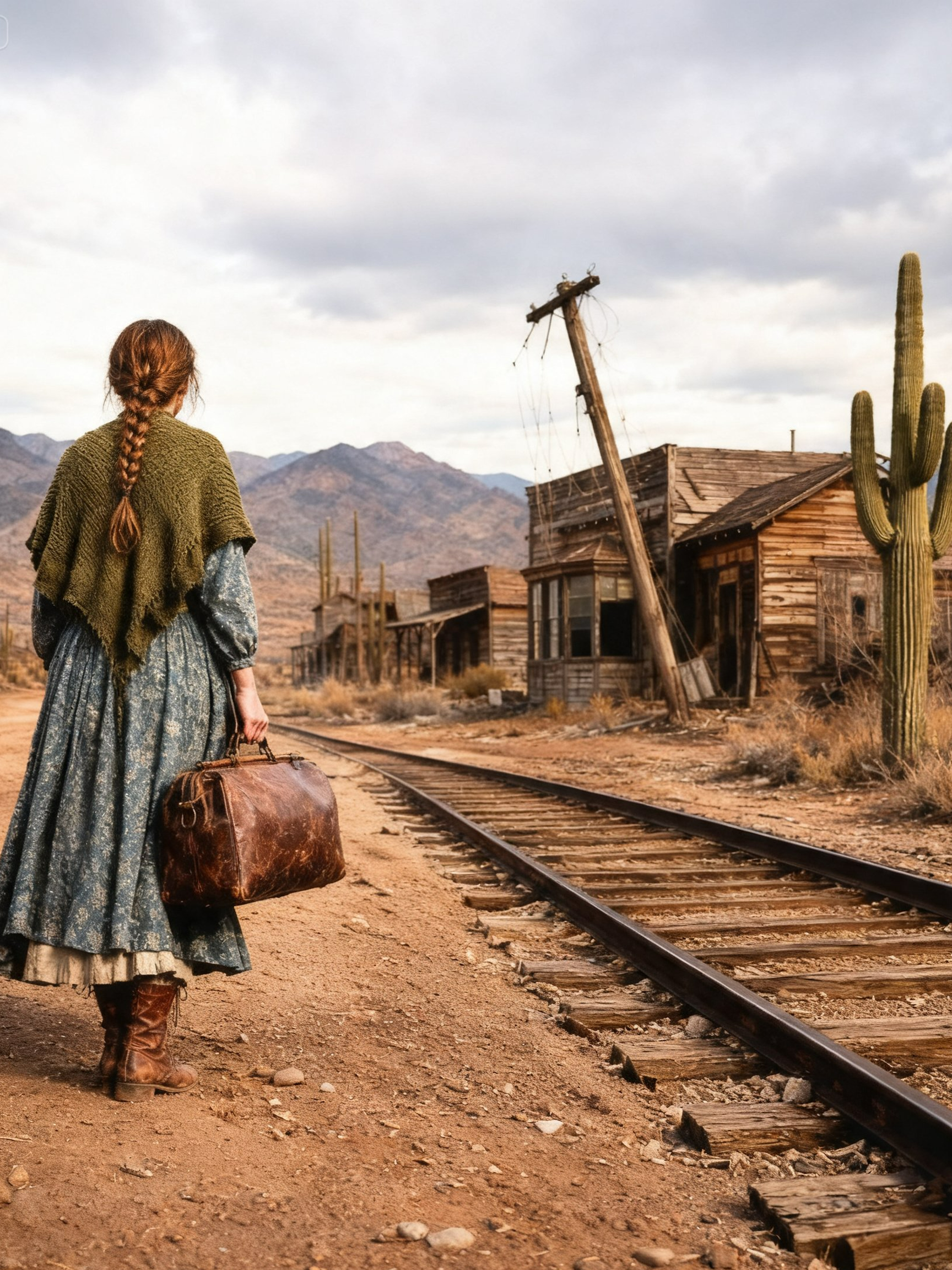
Thrown Out at Twenty, She Bought a $10 Telegraph Office—Then the Battery Cabinet Revealed Who Her Family Had Robbed for Decades
Three days after her grandfather’s funeral, Mara Hale’s uncle put two black trash bags on the kitchen table and told her to pack her life into them.
“You have until noon,” Preston Hale said. “After that, the locks change.”
His wife Diane stood beside the refrigerator with her arms folded, wearing the pearl earrings Mara’s mother had once polished before every Christmas dinner.
Mara looked at the earrings.
Then at the trash bags.
Then at Preston.
She did not cry.
That seemed to irritate him more than tears would have.
“You understand me?” he asked.
“I understand.”
Her cousin Blake leaned against the doorway, holding his phone low against his thigh.
Mara noticed the red light reflected in the oven door.
She noticed everything.
The cardboard box of probate documents on the counter.
The unfamiliar keys clipped to Preston’s belt.
The envelope from First Prairie Bank sticking out of Diane’s purse.
The muddy soles of Blake’s expensive loafers, though it had not rained in Red Creek for five days.
And, most important, the blue folder under Preston’s elbow.
Across the top, printed in block letters, were four words.
NORTH BASIN PURCHASE AGREEMENT.
Mara said nothing.
Preston mistook silence for defeat.
People often did.
“You lived here because Dad allowed it,” he continued. “You helped him toward the end, and everyone appreciates that. But appreciation doesn’t mean ownership.”
Diane gave a small laugh.
“Especially not when you’re twenty years old and have no degree, no job worth mentioning, and no idea how the real world works.”
Mara’s fingers tightened once around the back of a kitchen chair.
Then relaxed.
She had deferred college twice to care for Everett Hale after his stroke.
She had changed his dressings.
Measured his blood sugar.
Driven him eighty-six miles to a cardiologist in Billings when Preston said he had a meeting.
Sat beside him through four winter nights when pneumonia made every breath sound like paper tearing.
She had also worked four evenings a week at Red Creek Market because the twenty-dollar bills Everett slipped under her door made her feel like a beggar.
Preston had visited twelve times in eighteen months.
Diane had visited six.
Blake had visited once, stayed twenty-three minutes, and spent seventeen of them asking Everett when he planned to sign over voting control of Hale Ridge Holdings.
But none of that appeared in probate documents.
Care had no line item.
Exhaustion had no deed.
Love came without a certificate of title.
Preston tapped the table.
“Your grandfather’s will was simple. The house, ranch interests, company shares, equipment, mineral rights, all of it goes into the family holding structure.”
“Your structure,” Mara said.
His mouth tightened.
“The family structure.”
“And what did he leave me?”
Diane smiled.
There it was.
The moment she had been waiting for.
“One dollar.”
Blake’s phone shifted slightly.
Mara heard him suppress a laugh.
Diane reached into the probate box and removed a photocopied page.
“Technically, one dollar and any personal items already in your possession.”
Preston added, “Dad wanted to make sure you couldn’t claim you were forgotten.”
The insult was precise.
Designed by someone who knew that accidental rejection hurt less than intentional rejection.
Mara read the page.
Everett’s signature looked real.
The date was eight months old.
One dollar.
She thought of the man who used to tap two fingers against the arm of his recliner when he was trying not to say something in front of other people.
The man who had once told her, after Preston left the room, “Paper can lie even when the signature is honest.”
At the time, she had assumed the morphine was making him confused.
Now she looked toward the old mudroom door.
Above it hung a rusted brass telegraph key.
Her mother’s.
Rachel Hale had found it in an abandoned railroad building when Mara was nine.
She had cleaned it with vinegar, mounted it on walnut, and told Mara that messages used to cross entire states through little metal clicks.
“When people couldn’t say things face-to-face,” Rachel had explained, “sometimes they found another way.”
Rachel had died six years later.
Nothing dramatic.
Nothing suspicious.
Cancer was ordinary like that.
It took the kindest person in the room and left everyone crueler standing.
Preston followed Mara’s gaze.
“That junk goes with you too.”
Mara walked to the mudroom.
She lifted the telegraph key from its nail.
The wood beneath it had faded, leaving a dark rectangle on the wall.
She put it carefully into one of the trash bags.
Blake finally laughed.
“You know what’s funny?”
Mara looked at him.
“You’re getting kicked out of a twelve-million-dollar ranch carrying a broken telegraph thing.”
“Fourteen million,” Preston corrected.
Blake grinned.
“Right. Sorry.”
Mara looked again at the blue folder.
North Basin.
Fourteen million for the ranch.
Apparently much more for something else.
She folded the will copy.
“Can I keep this?”
Preston waved a hand.
“Frame it.”
She slipped it into her coat pocket.
Then she went upstairs and packed.
Not everything.
Only what mattered.
Her mother’s green wool coat.
Two pairs of jeans.
Three shirts.
Everett’s old field compass.
A shoebox of photographs.
Her birth certificate.
A spiral notebook filled with ranch expenses Everett had asked her to organize.
The telegraph key.
And a little ceramic horse Rachel had given her when Mara turned seven.
Everything else stayed.
The walnut bedroom set.
The quilt her grandmother had sewn.
The boots by the back door.
The coffee mug that still had a crack from the morning Everett dropped it during his first stroke.
Mara left those things because Preston wanted to watch her struggle beneath the weight of what she could not carry.
She refused to give him the picture.
At 11:48 a.m., she tied the two black bags shut.
Preston stood in the entryway.
Diane held out her hand.
“House key.”
Mara placed it in her palm.
Blake raised his phone openly now.
No reason to hide it.
“Any last words?”
Mara looked at him for a long moment.
Then she looked at Preston.
“Who’s buying North Basin?”
It lasted less than a second.
But she saw it.
The flicker.
Preston recovered.
“None of your business.”
Mara nodded.
“That’s what I thought.”
She picked up the bags.
Walked through the front door.
And did not look back.
She did not ask them to reconsider.
She did not remind them how many nights she had slept on the floor beside Everett’s bed.
She did not demand compensation.
She did not list every birthday she had missed, every college orientation she had postponed, every shift she had worked, every meal she had reheated for a dying man while the rest of the Hale family argued over acreage.
She did not tell Preston that Rachel had done the same thing before her.
She did not tell Diane that the pearl earrings had belonged to Rachel first.
She did not tell Blake that Everett once called him “a boy who thinks inheritance is the same thing as earning.”
She did not tell them anything.
Because silence was the only thing in that house they had never learned how to steal.
Mara drove away in her mother’s thirteen-year-old Subaru with both trash bags in the back and sixty-eight dollars in her checking account.
By sunset, she was sleeping in the car behind Red Creek Community Church.
The next morning, she bought coffee for $1.75.
The woman behind the counter, Mrs. Whitaker, had known Mara since kindergarten.
She slid two breakfast biscuits into a paper bag without charging her.
Mara started to object.
Mrs. Whitaker shook her head.
“Don’t insult an old woman before seven in the morning.”
Mara took them.
“Thank you.”
“You staying somewhere?”
It was not technically a lie.
A car was somewhere.
Mrs. Whitaker watched her for a moment.
“You have your mother’s face when you’re hiding trouble.”
Mara looked down at the coffee.
“And Everett’s when you’re planning trouble.”
That almost made Mara smile.
On the corkboard beside the register hung a yellow county notice.
SURPLUS MUNICIPAL PROPERTY AUCTION.
SATURDAY, 10 A.M.
Mara would have ignored it except for one line near the bottom.
Former Red Creek Telegraph Relay Office, Parcel 17-B.
Opening bid: $10.
She stopped chewing.
Mrs. Whitaker followed her eyes.
“Oh, that wreck?”
“You know it?”
“Everybody knows it. Little brick building past the old grain elevator. Roof leaks. Windows broken. County got stuck with it when the historical society folded.”
Mara stepped closer.
The building had been abandoned since before she was born.
She had seen it a hundred times from the highway.
Narrow chimney.
Three tall windows.
A faded WESTERN PLAINS TELEGRAPH sign barely visible beneath white paint.
Her mother had loved that building.
Rachel had taken Mara there twice when she was little.
They had never gone inside.
The door had been chained.
But Rachel had stood outside, hands in her coat pockets, staring through the dusty glass as if waiting for someone to answer.
The brass telegraph key hanging above the Hale mudroom had supposedly come from that building.
Mara read the notice again.
Ten dollars.
She had sixty-six dollars and twenty-five cents.
It was foolish.
She knew that.
A leaking ruin was not shelter.
A building could swallow money faster than hunger.
She needed a motel.
Not bricks.
Not ghosts.
Not some childhood memory with holes in the roof.
But Everett’s sentence returned to her.
Paper can lie even when the signature is honest.
And something else.
A night three months before he died.
Everett half asleep in his recliner.
Mara sorting tax receipts at the dining table.
His eyes suddenly opening.
“Your mother keep that key?”
Mara had glanced toward the mudroom.
Then he had closed his eyes.
She had assumed he was drifting.
Now her breakfast stopped tasting like anything.
Saturday came cold and bright.
Twelve people attended the county auction.
Most were there for trucks, snowplows, seized trailers, and a small parcel near the interstate.
Nobody wanted the telegraph office.
The county administrator cleared his throat.
“Parcel 17-B. Former telegraph relay office. Historic structure restriction applies. Buyer accepts all remediation obligations. Opening bid ten dollars.”
Someone coughed.
A contractor named Ray Donnelly said, “You paying us the ten?”
A few people laughed.
The administrator smiled tiredly.
Mara raised her hand.
Heads turned.
She felt them recognize her.
Rachel’s daughter.
Everett’s granddaughter.
The one Preston threw out.
News moved quickly in a town where nothing happened unless a family made it happen to someone.
The administrator waited.
“Any advance on ten?”
“Ten dollars once.”
Ray Donnelly shook his head.
“Kid, don’t do it.”
Mara kept her hand up.
The gavel tapped.
Just like that, she owned a telegraph office for ten dollars.
By noon, Blake had posted a picture of the building online.
He had driven past and taken it from the road.
His caption read:
GRANDPA LEFT HER $1 SO SHE INVESTED IT WISELY.
The comments came fast.
Some laughing.
Some cruel.
Some pretending concern was not another kind of entertainment.
Diane shared it.
Preston did not.
Preston was too busy with North Basin.
That told Mara more than the post did.
The county clerk gave her a heavy envelope containing the transfer documents and one iron key.
“You understand the historic covenant?” she asked.
“No demolition without review.”
“And there may be asbestos.”
“And the power was disconnected nineteen years ago.”
The clerk hesitated.
“You really plan to live there?”
Mara looked through the window toward Main Street.
“I plan to own it.”
At that afternoon, she unlocked the telegraph office.
The door moved three inches before catching against fallen plaster.
Mara leaned her shoulder into it.
Dust rose in a pale cloud.
Cold air smelled of brick, mouse nests, rust, and wet wood.
Sunlight entered through two broken panes and stretched across the floor in narrow white bars.
A long counter ran along one wall.
Behind it sat three operator desks, their drawers hanging open.
Porcelain insulators lined shelves beneath the windows.
Wires drooped from the ceiling.
A calendar from 1978 still hung beside a fuse panel.
The photograph on it showed a wheat field beneath a blue sky.
Mara stood still.
For one strange second, she felt nine years old again.
Her mother outside the glass.
Hands in pockets.
Mara set down her backpack.
The brass telegraph key was wrapped in a sweater inside it.
She carried it from room to room.
Front office.
Storage closet.
Tiny washroom.
Rear relay room.
That was where she found the battery cabinet.
It stood against the north wall.
Six feet high.
Painted gray-green.
Stamped with black letters almost erased by time.
BATTERY BANK C.
DANGER—ACID.
Its double doors had rusted shut.
Mara found a pry bar under an operator desk.
The first hinge screamed when she forced it.
Inside were rows of empty glass battery jars.
Some broken.
Some filmed white with mineral residue.
Copper bars ran along the back.
A dead wasp nest filled one corner.
Nothing shocking.
Nothing valuable.
Mara almost laughed at herself.
Of course there was nothing.
Her grandfather had been sick.
Her mother had loved old things.
A ten-dollar building was still a ten-dollar building.
She reached in to lift one of the battery jars.
It did not move.
She frowned.
The jar was empty.
But it felt anchored.
She tried the next one.
Same thing.
Mara crouched.
Dust coated the cabinet floor except for two faint semicircles near the rear bolts.
Scrape marks.
She took out her phone flashlight.
Behind the copper bus bar was a small brass plate.
Only a narrow rectangular hole.
The size of a key stem.
Mara’s breathing changed.
She unwrapped her mother’s telegraph key.
The mounting board came off with two screws.
She turned the brass mechanism in her hands.
At the bottom of the lever was a flat metal tongue.
Something she had seen her entire childhood and never considered.
It fit the slot.
Mara pushed.
She turned it clockwise.
There was a click deep inside the cabinet.
The false back released half an inch.
For several seconds, Mara did not move.
Then she pulled.
A steel compartment opened behind the batteries.
Inside sat a black metal dispatch box.
Oilcloth wrapped around it.
Someone had put it there recently.
Mara lifted it onto the floor.
Her hands were steady until she saw the handwriting across the top.
Below that:
ONLY AFTER THEY THINK THEY WON.
Everett Hale had written it.
She knew the blocky H.
The way his R looked almost like a K.
The uneven pressure caused by arthritis.
Mara sat on the cold concrete floor.
The building was silent except for wind passing through the broken window.
She opened the box.
The first thing inside was a photograph of Rachel.
Mara’s mother was twenty-seven in the picture.
She stood beside Everett in front of the telegraph office.
The building looked almost new.
Rachel held a manila folder against her chest.
Everett looked younger, heavier, uncomfortable.
On the back he had written:
SHE WAS RIGHT.
Under the photograph were five envelopes.
A leather document sleeve.
Three sealed evidence bags.
A flash drive.
A small ledger.
And an old Western Plains Telegraph Company stock certificate dated 1911.
Mara opened the envelope with her name.
Everett’s letter began without greeting.
If you are reading this, Preston has already used the will.
Mara stared at the sentence.
Then kept reading.
The will is genuine.
So is my signature.
Do not waste time trying to break it.
I signed it because I needed him to believe the probate estate was everything.
Mara looked up at the empty room.
A freight truck passed somewhere on the highway.
The windows trembled.
She continued.
The most important Hale property was removed from my probate estate before I died.
Your uncle does not know how much.
He believes North Basin belongs to Hale Ridge Holdings.
He is wrong.
Do not tell him yet.
Do not confront him.
Do not threaten him.
If he attempts the sale Rachel warned me about, let him sign.
The signature is the evidence.
Mara read the last line twice.
Then the next.
There is a reason your mother kept coming to this office.
There is a reason my father ordered it sealed.
And there is a reason I have spent the last eleven years trying to undo what our family did.
I was not innocent.
Do not make me innocent after I am dead.
That sentence hurt more than the one-dollar inheritance.
Mara set the letter down.
The leather sleeve contained deeds.
Some typed.
Some handwritten.
Several bearing county seals.
She recognized the Hale ranch legal description.
Section numbers.
Range lines.
North Basin.
The same words she had seen on Preston’s blue folder.
Another document was newer.
Sixteen pages.
THE RACHEL E. HALE RESTITUTION TRUST.
Executed eleven months earlier.
Trustee: Everett Samuel Hale.
Successor Trustee: Mara Rachel Hale.
Mara stopped breathing for a second.
Beneficiaries were listed on the next page.
Not just her.
Names filled the sheet.
Former ranch employees.
Widows of three men who had worked Hale land for decades.
Two families Mara knew from school.
A retired housekeeper.
A mechanic.
Rachel Hale’s estate.
And Mara herself.
At the bottom of the schedule was a percentage.
Fifty-one percent of Hale Ridge Holdings Class A voting interest.
Plus 1,840 acres identified as North Basin.
Plus all historic Western Plains Telegraph corridor rights, water conveyance easements, and associated surface access rights.
Mara whispered one word.
She pulled out the ledger.
The first page carried her grandmother Evelyn’s handwriting.
Mara had only seen it on birthday cards.
Hours worked.
Wages withheld.
Land transfers.
Beside several entries, Evelyn had written the same note.
Not authorized.
Page after page.
Year after year.
Men Mara had known as old cowboys when she was a child.
Women who had cleaned Hale houses.
Seasonal workers.
A foreman named Joseph Ruiz, whose widow still lived near the elementary school.
A mechanic named Walter Kim.
A cook named Lena Bell.
The numbers were not millions.
Not individually.
That made them worse.
Three hundred dollars.
Eight hundred.
Two thousand.
Five thousand.
Small thefts repeated over thirty years.
The kind wealthy people called bookkeeping.
The kind poor people called rent.
At the back of the ledger was a larger entry.
EVELYN MARIE HALE — SALE OF INHERITED PARCELS TO HALE RIDGE HOLDINGS.
Consideration listed: $10.
Fair market value: $1,420,000.
Signature questioned.
Mara’s skin went cold.
Her grandmother had inherited North Basin from her own father.
Family history always said Evelyn had voluntarily contributed it to the company.
The ledger said otherwise.
Attached to the page was a photocopy of a deed.
Evelyn’s signature appeared at the bottom.
Next to it, in red ink, Everett had written:
She never signed this.
Mara opened another envelope.
Inside was a notarized affidavit from Everett dated four months before his death.
I witnessed my father, Samuel Hale, instruct company counsel to prepare a transfer using my wife Evelyn’s signature after she refused to convey North Basin.
I did not stop him.
I benefited from the transfer.
For thirty-seven years, I allowed my wife’s property to be treated as Hale family property.
When Rachel discovered the original records, I told her to remain silent to protect the company.
She refused.
I punished her for that refusal by removing her from management.
What happened to Rachel after that was not my legal doing.
But the years she spent struggling were partly my moral doing.
The North Basin should have been hers.
Mara closed her eyes.
Rachel had worked payroll at Hale Ridge until Mara was ten.
Then, suddenly, she had left.
The family story was that Rachel was “emotional,” “difficult,” “bad with business.”
Preston used to joke that she could turn a spreadsheet into a moral crisis.
After Rachel left, she worked at a feed store.
Then a veterinary office.
Then cleaned vacation cabins on weekends.
Mara remembered overdue power bills.
Store-brand cereal.
Rachel sewing the same winter coat three times.
Meanwhile, the Hale ranch bought two new combines and a lake house.
Mara had never understood why her mother refused to ask Everett for money.
Now she did.
Rachel had asked for something else.
They had offered silence.
She had refused.
Mara opened the evidence bags.
One contained the original 1989 deed.
Another contained three canceled checks.
The third held a document titled NOTICE OF EQUITABLE CLAIM AND CHAIN OF TITLE DEFECT.
Nine months earlier.
Everett had already filed it.
Under an instrument number no one would notice unless they searched North Basin’s chain of title carefully.
Mara read the attached note.
Preston will use Sloan.
Sloan searches by company name, not historic tract.
He always has.
Mara knew Sloan.
Carter Sloan had been the Hale family attorney since before she was born.
Silver hair.
Perfect suits.
Voice like polished wood.
At Everett’s funeral, he had squeezed Mara’s shoulder and said, “Your grandfather made difficult choices.”
Apparently one of those difficult choices involved setting a trap for his own son.
The flash drive contained scanned records and one video.
Mara opened it on her laptop.
Everett appeared on screen.
Oxygen tube under his nose.
He was sitting in the same dining room Preston had thrown her out of.
The date in the corner showed six weeks before his death.
“If you’re watching this,” Everett said, “then either I ran out of time or courage.”
He looked off-camera.
Mara could hear herself in the background.
Everett continued.
“Rachel found Evelyn’s original deed in 2003. My father was dead by then. I told Rachel there was nothing we could do. That was a lie.”
He swallowed.
“There was plenty we could do. It was simply expensive.”
He leaned toward the camera.
“I chose the company.”
Another pause.
“My daughter chose the truth.”
His mouth trembled once.
“She paid more for my choice than I did.”
Mara shut the laptop.
She could not watch the rest yet.
Not because she was weak.
Because anger, if taken too quickly, could make a person stupid.
Rachel had taught her that.
When Mara was thirteen, a boy at school had shoved her books into a puddle.
She had come home furious.
Rachel made hot chocolate.
Then said, “Never spend anger before you know what you’re buying.”
Mara sat on the telegraph office floor until the sunlight shifted from one wall to another.
Then she began taking photographs.
Every page.
Every seal.
Every signature.
Every envelope.
She scanned the dispatch box interior.
Photographed the hidden compartment.
Recorded herself opening and closing it without removing anything else.
Then she put the originals back.
All except copies she could make later.
By dusk, Mara understood three things.
First, Preston Hale was preparing to sell property he did not cleanly own.
Second, Everett had known.
Third, whatever happened next depended on Mara resisting the one thing everyone expected from a twenty-year-old woman who had just been humiliated.
So Mara did nothing.
At least nothing visible.
She spent the night in the telegraph office wearing Rachel’s green coat.
The next morning, she went to the county recorder’s office.
She did not ask about North Basin.
That would be memorable.
Instead, she requested historical records for Parcel 17-B, the property she had legally purchased.
The clerk printed the chain of title.
Mara sat at a small table under fluorescent lights.
The original 1908 description was longer than the county auction notice.
Much longer.
The telegraph office parcel included the building footprint.
A maintenance yard.
A narrow service strip.
All appurtenant relay, pole, signal, wire, access, water conveyance, and utility corridor rights originally granted to Western Plains Telegraph Company between Mile Marker 44.2 and Mile Marker 51.8, unless separately extinguished by recorded instrument.
Mara read it three times.
She asked the clerk, “Were those rights extinguished?”
The clerk shrugged.
“You’d need title work.”
Mara smiled politely.
“Thank you.”
Then she drove forty miles to Laurel because no Hale regularly used attorneys there.
The office of Rebecca Shaw occupied the second floor above a dentist.
Rebecca was fifty-two, sharp-eyed, and known for suing insurance companies that underestimated farmers.
Mara placed copies of three documents on her desk.
The recorded title defect notice.
The telegraph office deed.
Rebecca read silently for nearly twenty minutes.
Then she looked up.
“Where did you get these?”
“From property I purchased Saturday.”
“For how much?”
“Ten dollars.”
Rebecca stared at her.
Mara waited.
Finally Rebecca removed her glasses.
“I need you to understand something. I am not saying you own what these papers suggest you own.”
“I understand.”
“I am saying if these originals authenticate, your family has a very serious problem.”
“How serious?”
Rebecca leaned back.
“Is Preston Hale negotiating the sale of North Basin?”
“How do you know?”
“I saw the purchase agreement.”
“With whom?”
“I don’t know.”
“Find out without asking him.”
Mara nodded.
Rebecca looked at the trust again.
“Everett transferred his voting shares here. If valid, they weren’t part of probate when he died.”
“That’s what he said.”
“This schedule claims fifty-one percent.”
“Your uncle thinks he controls Hale Ridge?”
Rebecca made a quiet sound.
Not quite a laugh.
“Then your uncle is attending meetings where he does not know who owns the chair he’s sitting in.”
Mara looked at the window.
It was the first mini-payoff.
No shouting.
No courtroom.
Just a fact.
Preston had thrown her out of a house while believing he owned the whole board beneath his feet.
He did not.
Rebecca tapped the telegraph deed.
“This is stranger.”
“Your ten-dollar parcel may include a historic utility corridor running directly across North Basin.”
Mara knew immediately why that mattered.
The Hale ranch had roads.
But North Basin sat behind a ridge.
Only one old corridor crossed it on a nearly level grade.
The abandoned telegraph line.
Rachel used to call it the straight road.
Rebecca continued.
“If a developer wants utility access, fiber, transmission, pipeline, or heavy construction routing, this corridor could be extremely valuable.”
“How valuable?”
“Depends who’s buying.”
Mara thought of Preston’s folder.
“Can we find out?”
Rebecca smiled.
“Now you’re asking useful questions.”
They found out two days later.
Solstice Infrastructure Partners.
A Denver-based company developing large data campuses across the Mountain West.
The proposed Red Creek project required 1,600 acres.
High-capacity transmission.
Industrial water.
And a straight utility corridor to a substation south of town.
North Basin had all of it.
The announced project value was $2.2 billion.
The Hale family’s expected land payment, according to a state development memo Rebecca found, exceeded $46 million.
Preston was not selling a ranch.
He was cashing out a corridor.
A corridor Mara had bought for ten dollars.
At least partly.
Rebecca warned her not to celebrate.
“Easement law is messy. Old railroad and telegraph grants are worse. They may challenge what passed with the parcel.”
“Can they win?”
“They can spend money.”
“That wasn’t my question.”
Rebecca’s eyes lifted.
Mara waited.
Rebecca smiled slightly.
“Your mother raised you, didn’t she?”
“They can challenge it. I wouldn’t bet my house they win.”
Mara returned to Red Creek.
By then, Blake’s post had gathered more than six hundred reactions.
Someone had edited Mara’s telegraph office into a meme.
WELCOME HOME, HEIRESS.
Diane commented with a laughing emoji.
Mara took a screenshot.
Then she started repairing the roof.
Ray Donnelly, the contractor who had warned her at the auction, arrived around noon.
He stood beside his pickup and watched Mara drag a tarp across the rear section.
“You’re going to break your neck.”
“Probably not.”
“You know roofing?”
“That was the wrong answer.”
He climbed the ladder.
Ray did not ask for money.
Mara tried to stop him.
He ignored her.
By sunset, half the roof was sealed.
Mrs. Whitaker brought soup.
Joseph Ruiz’s widow, Elena, brought blankets.
Walter Kim’s son brought a propane heater.
Mara did not understand why until Elena saw Evelyn’s ledger lying beneath a stack of copies.
The older woman stopped.
“That’s my Joe’s name.”
Mara looked at the open page.
Elena sat down slowly.
“My husband worked for your family twenty-nine years.”
“They cut his retirement after he hurt his back. Said he had been seasonal too many years for full benefits.”
Mara said nothing.
Elena touched the ledger.
“Your mother came to our house once.”
“Long time ago. You were little. She brought an envelope.”
Mara’s throat tightened.
“What was in it?”
“Four thousand dollars.”
Mara stared at her.
“She said Hale Ridge had made a payroll error.”
Elena gave a sad smile.
“There was no payroll error.”
“How do you know?”
“Because she said, ‘Mrs. Ruiz, if anybody asks, this was payroll.’”
Rachel had been paying restitution out of her own pocket.
While sewing her coat.
While buying store-brand cereal.
While working weekends.
Mara looked away.
Elena touched her hand.
“She told Joe she was fixing something.”
Mara swallowed.
“She didn’t get to.”
Mara looked around the ruined telegraph room.
The patched roof.
The cracked windows.
The dispatch box.
Maybe Rachel had gotten closer than anyone knew.
Three days later, Preston came.
He arrived in a black Silverado with Blake beside him.
Mara was replacing warped floorboards.
She heard the truck.
Did not hurry.
Preston entered without knocking.
Technically, the door was open.
She drove one final nail.
Then stood.
Blake surveyed the room.
“Wow. You really moved in.”
Mara brushed sawdust from her jeans.
“What do you need?”
Preston looked around.
His eyes paused on the battery cabinet.
Only briefly.
But Mara saw it.
Interesting.
“I’m trying to help you.”
“No, you aren’t.”
Blake snorted.
Preston’s jaw tightened.
“We heard you’ve been asking county questions.”
“I bought historic property. Historic property has records.”
“You’ve also hired Rebecca Shaw.”
Mara did not answer.
“So you are planning something.”
Preston stepped closer.
“You’re angry about the will.”
“That’s understandable.”
“I said I’m not angry about the will.”
“You should be careful who you let fill your head with ideas. Lawyers see grieving young women and imagine fees.”
Mara almost smiled.
Preston had spent twenty years surrounded by people who flattered his certainty.
He could not recognize danger without volume.
Mara reached for her water bottle.
Preston said, “I’ll give you fifty thousand dollars.”
Blake turned.
Preston ignored him.
“For what?” Mara asked.
“This building.”
Mara drank.
“You told everyone it was worthless.”
“Then why fifty thousand?”
“I’m trying to keep peace.”
“Peace is expensive.”
His eyes narrowed.
“One hundred.”
Blake’s expression changed.
Mara set down the bottle.
“What exactly do you think you have here?”
That was the first time Preston sounded afraid.
Not very afraid.
Just enough.
Mara looked toward the battery cabinet.
Then back at him.
“A leaking roof.”
He stared at her.
“You’re playing a dangerous game.”
“I’m replacing flooring.”
“I’m serious.”
He stepped closer.
“The Hale family has protected you your entire life.”
That almost broke her calm.
Not outwardly.
A tiny fracture.
Rachel cleaning cabins.
Past-due electric bills.
Twenty-year-old Mara sleeping in a Subaru three nights after burying the man she had nursed for eighteen months.
She let the word finish burning before she answered.
“My mother used to say a favor stops being a favor when someone keeps an invoice for it.”
Preston’s face changed.
Rachel’s words still had that power.
Mara noticed.
Blake shifted beside him.
Preston lowered his voice.
“You don’t know what your mother did to this family.”
Mara’s pulse slowed.
Not sped up.
“What did she do?”
“Nothing that matters now.”
“Then why did you bring her up?”
He realized the mistake.
Turned toward the door.
“Offer expires tonight.”
Mara said, “I won’t need that long.”
He looked back.
“To accept?”
“To forget it.”
Blake muttered something under his breath.
Mara watched the truck disappear.
Then she called Rebecca.
“He offered a hundred thousand.”
Rebecca was silent.
“For a ten-dollar structure?”
“That means they know there’s a problem.”
“Not how much of one.”
Mara looked at the battery cabinet.
“Can we find out how far the North Basin sale has gone?”
“We already did.”
Rebecca’s voice changed.
“Closing is Friday.”
Three days.
Mara said nothing.
“Did you hear me?”
“We can file an injunction tomorrow.”
Rebecca paused.
“Everett told me to let Preston sign.”
“That letter is not legal strategy.”
“No. But he knew Preston better than we do.”
“If the sale closes, unwinding it becomes harder.”
“He said the signature is evidence.”
Rebecca exhaled.
“You’re asking me to let a forty-six-million-dollar disputed transaction proceed because your dying grandfather left you a note.”
“I’m asking what happens if Preston signs a seller certification stating Hale Ridge owns North Basin free of undisclosed claims.”
Rebecca understood.
“He knows about Evelyn’s claim?”
“He was present when Rachel fought over it. Everett says so in the video.”
“And the recorded defect notice?”
“If Sloan missed it, Preston can claim the lawyer failed.”
“If Preston personally certifies no known adverse claims…”
“He can’t blame Sloan.”
Another silence.
Rebecca said, “You’re twenty.”
“You should be worse at this.”
“My family taught me.”
Friday morning, Mara wore Rachel’s green wool coat.
Not because it was stylish.
It was too big in the shoulders and shiny at the cuffs.
She wore it because Rachel had owned almost nothing when she died, and Mara wanted at least one room full of expensive men to contain something her mother had paid for honestly.
The closing took place at First Prairie Bank.
Mara was not invited.
She sat across the street in Mrs. Whitaker’s café.
At 10:06, Preston entered the bank.
Diane with him.
Carter Sloan.
Two executives from Solstice.
At 10:24, Rebecca texted.
Still no filing.
Draft deed received by escrow.
Seller affidavit uploaded.
Mara put down her coffee.
Her hands were cold.
At 11:26, Rebecca sent a photograph of one page.
SELLER REPRESENTS THAT NO UNDISCLOSED OWNERSHIP CLAIM, EQUITABLE INTEREST, REVERSIONARY RIGHT, EASEMENT DISPUTE, OR UNRECORDED BENEFICIAL INTEREST EXISTS…
PRESTON CHARLES HALE
Managing Member.
Mara stared at the signature.
There it was.
The evidence.
At 11:31, Rebecca called.
“We move now.”
Mara crossed the street.
She entered First Prairie Bank carrying a slim brown folder.
The receptionist stood.
“I’m meeting Rebecca Shaw.”
“I don’t have—”
The elevator opened.
Rebecca stepped out with another attorney and a process server.
“Right on time,” she said.
They walked together toward the conference room.
Through the glass wall, Mara could see Preston laughing.
A champagne bottle sat in an ice bucket.
Diane had one hand on his shoulder.
Blake was taking a photograph.
The Solstice executives were signing documents.
For one second, Mara stopped.
The scene was so perfect it looked staged.
Her family had believed they won.
The house was theirs.
The ranch was theirs.
The company was theirs.
North Basin was theirs.
Everett had left Mara one dollar.
Rachel had died irrelevant.
Evelyn’s name had vanished from the deed.
The workers would stay numbers in an old ledger.
And the Hale men would convert generations of silence into forty-six million dollars before lunch.
Rebecca touched Mara’s elbow.
Mara looked at her mother’s reflection in the conference-room glass.
Not literally.
Just the green coat.
The same color Rachel had worn in half Mara’s childhood memories.
The process server opened the door.
Conversation stopped.
Preston’s smile vanished first.
Sloan’s vanished second.
The Solstice attorney stood.
Rebecca spoke.
“Mr. Hale, Hale Ridge Holdings, First Prairie Bank, and Solstice Infrastructure Partners are being served with notice of disputed title, notice of controlling trust interest, demand to suspend closing, and petition for emergency injunctive relief.”
Blake whispered, “What the hell?”
Diane looked at Mara.
Mara said nothing.
Sloan grabbed the first document.
His face drained slowly.
Preston stood.
“What did you do?”
Mara placed the brown folder on the table.
“Nothing yet.”
“You’re trying to blackmail us.”
“You want money?”
Diane laughed sharply.
“Of course she wants money.”
Mara looked at her.
“Do you still have my mother’s pearl earrings?”
The question was so unexpected Diane touched one ear.
Sloan turned pages faster.
Sloan looked up.
“Did you know Everett created a trust?”
Preston froze.
Mara saw the answer before he spoke.
Not the whole answer.
But enough.
“I knew Dad talked about trusts. He talked about all kinds of things.”
“This was executed.”
“It holds Hale Ridge voting shares.”
Blake laughed.
“That’s impossible.”
Sloan ignored him.
“How many?”
Rebecca answered.
“Fifty-one percent.”
Nobody moved.
Diane sat down.
Preston looked at Mara.
Mara’s expression stayed calm.
“The original is authenticated.”
Sloan turned another page.
“This can’t—”
Rebecca slid over the corporate registry confirmation.
“It already did.”
One Solstice executive quietly closed his laptop.
The other whispered to counsel.
Preston’s neck reddened.
“You think some paperwork makes you owner of my company?”
“Not your company,” Mara said.
He slammed a hand against the table.
“You little—”
The Solstice attorney interrupted.
“Mr. Hale.”
His tone carried the warning Preston’s family never gave him.
Control yourself.
Preston did.
Rebecca continued.
“There is also a disputed chain of title concerning 1,840 acres of North Basin, based on the alleged unauthorized 1989 transfer from Evelyn Marie Hale.”
Sloan’s eyes snapped toward Preston.
“Did you know about that?”
Preston said nothing.
That was enough.
Sloan leaned back.
“Oh, Jesus.”
Mara watched him.
For the first time, she understood Carter Sloan’s role.
He might have been arrogant.
Loyal to the money.
But he had not known everything.
Systems did not require every participant to know the whole crime.
They only required each person to ignore the part that benefited them.
Preston finally said, “That was settled thirty years ago.”
“Where?” Rebecca asked.
“With Dad.”
“Evelyn owned the property.”
“She was my mother.”
“That is not a legal answer.”
“She put it into the company.”
“Her original deed has been examined by a forensic document specialist.”
Preston laughed.
Too quickly.
“You had three days.”
“Everett had eleven years.”
That stopped him.
Rebecca placed the affidavit on the table.
Then the original 1989 deed photograph.
Then Everett’s notarized statement.
Diane stared at Preston.
“You said Rachel lost those.”
Mara turned her head.
The room changed.
Only slightly.
But everyone felt it.
Preston looked at his wife with pure rage.
Diane realized what she had said.
Mara spoke quietly.
“Lost what?”
Diane looked away.
Preston said, “She doesn’t know what she’s talking about.”
Mara did not press.
Another mini-payoff.
Diane knew.
Maybe not everything.
But enough to be afraid of the wrong document.
Rebecca moved on.
“Finally, Parcel 17-B.”
Blake scoffed.
“The dump?”
Mara looked at him.
“The dump.”
Rebecca placed the county deed on the table.
“The historic legal description includes appurtenant Western Plains Telegraph corridor rights extending approximately 7.6 miles.”
The Solstice attorney stopped whispering.
His executive opened the laptop again.
Rebecca continued.
“Preliminary title analysis indicates that portions of Solstice’s proposed transmission, fiber, water, and heavy-access corridor intersect those rights.”
The executive looked at Preston.
“You represented corridor access as controlled by Hale Ridge.”
Mara spoke.
He turned on her.
Mara took the ten-dollar auction receipt from her folder.
Set it beside his forty-six-million-dollar sale contract.
“I bought it Saturday.”
Blake stared.
“The building?”
“And what came with it.”
His face went blank.
For the first time since Mara could remember, Blake had nothing clever to say.
The Solstice executive looked at the receipt.
Then at Preston.
“You didn’t disclose this.”
“It’s nonsense.”
“Your counsel appears not to think so.”
Everyone looked at Sloan.
Sloan was reading the legal description.
He did not defend Preston.
That was another small victory.
Maybe the sweetest one yet.
Preston walked around the table toward Mara.
Rebecca stepped between them.
He stopped.
“You planned this.”
Mara looked at him.
“You knew.”
“I knew what?”
“That property.”
“You laughed when I bought it.”
“You trapped us.”
Mara’s voice remained level.
“You threw me out Wednesday.”
His face hardened.
“So this is revenge.”
That was the moment Mara could have made it simple.
She could have said yes.
Could have turned the story into one wounded girl getting even with a cruel uncle.
But Rachel had not spent years documenting stolen wages so her daughter could settle for revenge.
Mara opened Evelyn’s ledger.
Placed it on the table.
Elena Ruiz’s husband.
Walter Kim.
Dozens of names.
Rebecca distributed copies of the restitution schedule.
Mara looked at Preston.
“This isn’t about you throwing me out.”
“Then what is it about?”
“My grandmother.”
He rolled his eyes.
“My mother died twenty years ago.”
“And you kept spending what she owned.”
“My mother spent years trying to repay people this family cheated.”
“Rachel was unstable.”
Mara’s eyes went cold.
Nobody in the room breathed loudly enough to be heard.
Preston realized he had crossed a line.
Still, he continued.
“She almost destroyed Hale Ridge over accounting complaints.”
“Whatever you want to call it.”
“She did not understand how a business survives.”
Mara leaned forward slightly.
“She understood how people survive.”
The sentence landed harder than shouting.
Rebecca slid another document to the Solstice attorney.
The restitution trust.
Twenty-two percent of certain sale proceeds designated for verified employee claims.
A further percentage for Evelyn’s estate.
Educational grants for descendants of long-term employees.
Medical hardship reimbursements.
Mara’s personal beneficial share was substantial.
Life-changing.
More money than she had ever imagined.
But less than the family expected her to demand.
Preston saw that.
And somehow it offended him more.
“You’re giving away Hale money?”
Mara answered, “It wasn’t all Hale money.”
“It belonged to the company.”
“It belonged to people before the company took it.”
“You’re a child.”
Mara nodded toward the seller affidavit.
“And you signed that.”
The Solstice attorney cleared his throat.
“We are suspending closing pending title review.”
Preston spun toward him.
“We don’t have a choice.”
“We have a deal.”
“We have representations we can no longer rely upon.”
“Talk to Sloan.”
Sloan said nothing.
Preston looked around the table.
His lawyer.
The system that had made him powerful was still present.
But systems are loyal only while the machinery works.
Mara had inserted one ten-dollar piece of metal into the gears.
Now everyone could hear them grinding.
The emergency hearing happened that afternoon.
Red Creek’s courthouse had two courtrooms, one metal detector, and a vending machine that swallowed dollar bills.
By p.m., half the town seemed to know.
Blake’s social-media post disappeared.
Screenshots did not.
Judge Lorraine Mercer issued a temporary restraining order blocking transfer of North Basin pending title review.
She also prohibited extraordinary disposition of Hale Ridge assets until ownership of the voting shares was resolved.
No grand speech.
No dramatic gavel.
Just paper.
Preston walked out looking older.
Diane did not walk beside him.
Sloan remained inside with Solstice counsel.
Mara stood on the courthouse steps in Rachel’s green coat.
Reporters from Billings had not arrived yet.
Only locals.
Mrs. Whitaker.
Ray Donnelly.
Elena Ruiz.
Walter Kim’s son.
Three Hale Ridge employees who pretended they happened to be nearby.
Elena approached Mara.
“Joe’s name is really in that trust?”
“For how much?”
“I don’t know yet.”
Elena’s eyes filled.
Mara braced for gratitude.
Instead Elena said, “Your mother would be mad you’re sleeping in that building.”
Mara laughed.
A real laugh.
The first in days.
“She would.”
“You need a shower.”
“And food.”
“Coffee isn’t food.”
Mrs. Whitaker shouted from behind them, “I’ve been telling her that.”
For a moment, standing on those courthouse steps, Mara felt something unfamiliar.
Not victory.
Different thing.
Maybe better.
But the legal fight had just begun.
Over the next two weeks, Preston did what wealthy men often do when facts stop cooperating.
He bought time.
Hale Ridge hired a Denver litigation firm.
They challenged the trust.
Challenged Everett’s capacity.
Challenged the telegraph corridor.
Challenged the old deed.
Challenged the authenticity of Evelyn’s signature dispute.
Challenged Mara as successor trustee.
They claimed undue influence.
That made Mara laugh privately.
For eighteen months, Preston had barely visited Everett.
Now he argued Mara had been too close to him.
He could not explain why closeness was suspicious only after the old man left someone else control.
Depositions were scheduled.
Forensic accountants arrived.
Title historians became involved.
A handwriting analyst concluded Evelyn’s 1989 signature showed “material inconsistency with twenty-three verified exemplars.”
Then something worse emerged.
The notary stamp on the 1989 deed belonged to a notary whose commission had expired eleven months before the document date.
The family’s position weakened.
Preston grew louder.
Mara grew quieter.
She moved fully into the telegraph office after Ray repaired one room enough to keep out weather.
She bought a used mattress.
A camp stove.
A secondhand desk.
Solstice paid for an independent survey of the historic corridor.
Orange flags appeared across North Basin.
Every flag was a reminder that the worthless building was connected to something enormous.
Blake stopped joking online.
Diane hired her own lawyer.
That was when Preston offered settlement.
Three million dollars.
Mara declined.
Five million.
Rebecca looked at her.
“You understand eight million dollars is eight million dollars.”
“You could secure the employee fund separately.”
“You could walk away from the company.”
“So tell me why we’re still here.”
Mara looked through the restored front window of the telegraph office.
Outside, the old corridor ran straight into the horizon.
“Because every offer says the same thing.”
“That they’ll pay me if I agree they did nothing wrong.”
Rebecca leaned back.
“My mother already refused that deal.”
Mara found Rachel’s notebooks in a box Diane finally released from the farmhouse.
Most were ordinary.
School schedules.
But one notebook contained names matching Evelyn’s ledger.
Beside them Rachel had written amounts.
Small repayments.
Thirty-seven families.
Rachel had spent nearly everything she earned correcting theft she had not committed.
At the bottom of one page:
If Dad ever decides to fix this properly, he has to fix the land first. Without North Basin they will never admit what happened.
Mara pressed the page against her chest.
Not because she needed comfort.
Because sometimes proof had weight.
The decisive hearing came six weeks after the funeral.
By then, Preston had moved from arrogance to desperation.
Hale Ridge could not refinance while control was disputed.
Solstice threatened to walk.
The bank froze development draws.
Employees began asking questions.
Former workers came forward with payroll records.
Two elderly men remembered Rachel interviewing them twenty years earlier.
A retired legal secretary remembered Samuel Hale ordering replacement deed pages.
Then Carter Sloan requested a private meeting with Mara and Rebecca.
He looked different without the Hale family behind him.
More tired.
He placed a file on Rebecca’s desk.
“I resigned as Hale Ridge counsel this morning.”
Rebecca did not touch the file.
“Because I was given incomplete information.”
Mara watched him.
“By Preston?”
“And my grandfather?”
Sloan’s face tightened.
“Everett gave me enough information to know there was a historic dispute. Not enough to know what he had done about it.”
“Did you prepare the one-dollar will?”
“Did you know about the trust?”
“Would you have helped him hide it?”
Mara waited.
Sloan met her eyes.
“I know you don’t believe that.”
“I didn’t say anything.”
“You didn’t have to.”
He pushed the file toward her.
“Rachel came to my office in 2004.”
Mara stopped breathing.
Sloan continued.
“She brought copies of Evelyn’s original documents.”
“What happened?”
“I advised her.”
Rebecca asked, “In what capacity?”
Sloan hesitated.
That answer mattered.
“As company counsel.”
Not Rachel’s lawyer.
The distinction was ugly.
Mara said, “You told Preston.”
“I told Everett and the board.”
“Which included Preston.”
“What did they do?”
“Everett wanted time.”
Mara almost laughed.
The luxury powerful people requested from people already bleeding.
“Rachel didn’t agree.”
“What’s in the file?”
“Copies I kept.”
Rebecca opened it.
Inside were letters.
Rachel to Everett.
Rachel to Preston.
Rachel to Sloan.
Mara recognized her mother’s handwriting.
One letter began:
I am not asking to inherit more.
I am asking you to stop calling stolen property tradition.
Mara looked away.
Sloan said quietly, “Your mother was very clear.”
“People called her emotional.”
He did not answer.
Mara had her answer.
The hearing lasted two days.
On the second afternoon, Judge Mercer ruled the trust presumptively valid pending final adjudication and recognized Mara’s authority as successor trustee.
The court also found substantial evidence supporting the North Basin title challenge and ordered no transfer without approval.
Hale Ridge’s disputed Class A voting shares would be treated as held by the trust.
Fifty-one percent.
Preston no longer ran the company.
Not legally.
Outside court, a reporter finally asked Mara the question everyone had been waiting to ask.
“How does it feel to go from being left one dollar to controlling a company worth tens of millions?”
Mara looked into the camera.
“I didn’t go from one dollar to anything.”
The reporter blinked.
Mara continued.
“My grandfather’s will left me one dollar. That part was true.”
“Then what changed?”
“Nothing changed.”
She looked toward Elena Ruiz standing near the courthouse railing.
“We just found the paperwork showing who had been ignored.”
The clip spread farther than Blake’s joke ever had.
Two days later, the Hale Ridge board met.
For the first time, Mara sat at the head of the table.
Not because she demanded it.
Because the chair represented the controlling vote.
Preston entered last.
He saw her.
Mara wore a navy sweater.
No designer suit.
No dramatic jewelry.
Rachel’s brass telegraph key lay on the table beside her notebook.
Blake did not attend.
Diane had filed for temporary separation from Preston three days earlier.
The board approved an independent audit.
A restitution administrator.
A freeze on executive bonuses.
A forensic review of thirty years of employee records.
And negotiations with Solstice under completely new terms.
Mara voted yes on all four.
Then came North Basin.
The board expected Mara to cancel the Solstice project out of spite.
She did not.
Red Creek needed jobs.
The county needed revenue.
Some Hale Ridge workers wanted retirement security.
Mara proposed a revised agreement.
Solstice could lease the land.
Not buy it.
The telegraph corridor would remain separately protected.
A percentage of annual revenue would fund former-worker claims, scholarships, and rural medical assistance.
North Basin would never again be transferred without independent trustee approval.
Solstice agreed to negotiate.
Preston stared at Mara across the table.
“You’re turning it into charity.”
Mara looked at him.
“What would you call it?”
“Accounting.”
That night, she returned alone to the telegraph office.
Rain tapped the repaired roof.
A new heater hummed in the corner.
The place had changed.
Clean floorboards.
Temporary wiring.
Still rough.
Still hers.
On the wall above the desk she had hung the photograph of Rachel and Everett outside the building.
SHE WAS RIGHT.
Mara heated soup.
Then opened Everett’s dispatch box again.
She had examined everything inside at least six times.
Every envelope.
Every certificate.
Every file on the flash drive.
But she had never removed the battery cabinet itself.
Ray wanted to take it out during renovation.
Mara had refused.
Something about it bothered her.
Everett’s note had said:
There is a reason your mother kept coming to this office.
But Rachel had found the original deed years before Everett created the hidden compartment.
So what had Rachel been looking for here?
Mara carried a flashlight to the rear room.
She opened Battery Bank C.
The hidden compartment was empty now except for oilcloth.
She ran her hand along the back panel.
Solid steel.
She crouched.
The floor beneath the cabinet had newer bolts than the rest of the room.
She fetched a socket wrench.
One bolt turned.
Then another.
The third fought her.
The fourth snapped loose with a crack that echoed through the building.
Mara pulled.
The cabinet moved half an inch.
Behind it was brick.
Nothing else.
She almost stopped.
Then her flashlight caught a straight vertical line in the mortar.
About three feet high.
Two feet wide.
Mara stared.
She grabbed the pry bar she had used the first day.
One brick loosened.
Then another.
Cold air touched her fingers.
There was a cavity behind the wall.
Mara removed six bricks.
Her flashlight beam entered darkness.
A metal box sat inside.
Smaller than Everett’s.
Its paint had blistered away.
Stamped across the lid were the words:
WESTERN PLAINS TELEGRAPH COMPANY CONFIDENTIAL RELAY RECORDS 1927–1946
Mara’s heart began beating harder.
Not because of the date.
Because of what lay on top.
An envelope.
Her mother’s handwriting.
MARA — IF YOU EVER FIND THIS, DO NOT TAKE IT TO THE HALES.
Mara sat on the floor.
For several seconds, she only listened to the rain.
Then she opened the envelope.
Rachel’s handwriting rushed and uneven.
Nothing like the calm letters in Sloan’s file.
If I am wrong, burn this and forgive me for being afraid.
If I am right, the North Basin deed is only the beginning.
Grandma Evelyn found records proving the Hale family did not originally purchase most of Red Creek Ridge.
Samuel knew.
Everett eventually knew.
Preston knows more than either of them ever admitted.
The telegraph company kept copies because the original land transfers affected its right-of-way.
I found references to a second ledger but not the ledger itself.
If somebody tells you this is only about our family, they are lying.
Mara stopped.
Below that, Rachel had written twelve names.
Not employees.
Names Mara knew.
Families who had lived in Red Creek for generations.
Beside them were parcel numbers.
Hundreds of acres.
Then one final line:
Ask who benefited when the county tax maps were redrawn in 1968.
Mara’s fingers went numb.
She opened the metal box.
Inside were bundled telegraph forms.
Survey sheets.
Carbon copies.
And a black ledger.
On the first page was a handwritten title.
LAND CONSOLIDATION — RED CREEK RIDGE.
Beneath it were columns of names.
Transfer method.
Several entries were marked:
DELINQUENT TAX.
VOLUNTARY SALE.
But next to dozens of them, someone had written the same two letters in red pencil.
Mara turned pages.
At the back she found a notation explaining the code.
NF — NOTICE FAILED.
Families had lost land for unpaid taxes without receiving legally required notice.
The parcels had then been purchased through intermediaries.
And eventually transferred to Hale-controlled entities.
Not one ranch.
Not one forged deed.
The Hale fortune had not merely grown around Red Creek.
Parts of Red Creek had been fed into it.
Mara found the Whitaker name.
Forty acres.
Notice failed.
Transferred to Plains Agricultural Company.
Plains Agricultural later merged into Hale Ridge.
She found Ruiz.
Eighty acres.
Notice failed.
One hundred sixty.
Some transfers were ancient.
Too old to reverse easily.
Some might be legally untouchable.
Some might not.
But Rachel had been right.
North Basin was only the beginning.
Mara kept turning pages until something slipped from between two maps.
A recent photograph.
It showed Everett standing outside the telegraph office.
Taken perhaps one year before his death.
Beside him stood Carter Sloan.
And Preston.
Mara stared at Preston’s face.
He had known the building mattered.
Of course he had.
His hundred-thousand-dollar offer had not been guesswork.
He had known enough to be afraid.
On the back of the photograph was a date.
And three words in Everett’s handwriting.
HE FOUND RACHEL’S COPY.
Mara rose too quickly.
The room tilted.
She caught the cabinet.
Rachel’s copy.
Preston had found it.
Before Rachel died?
The ledger?
Mara grabbed her phone.
She called Rebecca.
Mara photographed every page she could.
Then she heard tires outside.
Headlights moved across the front windows.
One vehicle.
It stopped beside the building.
Mara switched off her flashlight.
The heater hummed.
Rain struck glass.
A door opened outside.
Then closed.
Mara slipped the black ledger under her coat.
Her phone had one bar.
She texted Rebecca.
FOUND SECOND CACHE. PRESTON KNEW. SOMEONE JUST ARRIVED.
She pressed send.
Not delivered.
Footsteps crossed the gravel.
Mara moved quietly into the front office.
Through the rain-streaked glass, she saw a man standing beneath the broken old station awning.
No umbrella.
Just a white dress shirt darkening in the rain.
He did not knock.
He looked through the glass until he found Mara’s face.
For several seconds, neither moved.
Then Preston lifted both hands.
Mara unlocked nothing.
She spoke through the door.
“What do you want?”
His voice came muffled through glass.
“Tomorrow.”
“There may not be a tomorrow for this conversation.”
Mara almost laughed.
“Is that a threat?”
Something in his face made her believe that part.
Not trust him.
Never that.
But believe he was afraid of something other than her.
Mara kept the door locked.
“You knew about the second box.”
Preston closed his eyes.
Confirmation.
Mara’s grip tightened around the ledger beneath her coat.
“You knew.”
“I knew Rachel hid something.”
“I didn’t know.”
“You offered me a hundred thousand for a building you called worthless.”
“I wanted you away from it.”
Rain ran down his face.
He looked older than he had six weeks earlier.
Not humbled.
Fear did not automatically improve people.
Sometimes it only revealed them.
“You found the Red Creek ledger.”
Mara said nothing.
Preston looked toward the road.
“If you found it, you need to understand Everett was not the beginning of this.”
“My father wasn’t either.”
“You think this ends with Hale Ridge.”
His expression changed.
For the first time, Preston seemed uncertain what she knew.
Mara used that.
“My mother wrote that you found her copy.”
Preston stopped breathing.
A tiny thing.
But Mara saw it.
“Which copy, Preston?”
He stepped closer to the glass.
“Mara, listen to me.”
“You don’t understand what Rachel was doing near the end.”
“She was finding stolen land.”
“She was pulling records from three counties.”
“She thought the tax seizures were coordinated.”
“With who?”
He shook his head.
“Open the door.”
Preston looked over his shoulder again.
The road was empty.
“You think our family was the only family that got rich?”
Mara felt cold despite the heater.
“What are you saying?”
“I’m saying my father spent half his life making sure certain records stayed buried because the Hales were not the people who started it.”
“Who started it?”
Preston’s mouth tightened.
“You need to give me that ledger.”
There it was.
Not redemption.
Not confession.
Preston was still Preston.
“So I can protect you.”
Mara almost smiled.
“That line doesn’t work anymore.”
“Mara, Rachel thought exactly what you think right now.”
“And she kept digging.”
The rain seemed louder.
Mara stared at him.
“What happened?”
Preston said nothing.
A second set of headlights appeared far down the road.
Preston turned.
His face went pale.
Not metaphorically.
He stepped closer to the glass.
“Turn off the lights.”
Mara did not move.
The vehicle continued toward them.
Too far to identify.
Preston said, “Your mother came to me two weeks before she got sick enough to stop working.”
Mara’s heart thudded once.
“She asked me to help her get into the county archive.”
“Because I was a coward.”
The headlights grew brighter.
Preston looked back.
“I thought keeping quiet protected the family.”
“You mean protected you.”
It was the first honest answer Mara had ever heard him give.
The vehicle was less than half a mile away.
Preston looked directly at her.
“Rachel found a list of six men who approved those tax seizures.”
“Five are dead.”
“And the sixth?”
Preston’s voice lowered.
“He was at Dad’s funeral.”
Mara’s skin prickled.
Dozens of men had been at Everett’s funeral.
County officials.
Business owners.
One state senator.
The headlights turned into the telegraph office drive.
Preston stepped away from the glass.
Mara reached for her phone.
Still no signal.
The dark SUV slowed.
Its windshield reflected the porch light.
Preston whispered something she could barely hear.
“Don’t let him know what you found.”
The SUV stopped.
Mara saw the driver’s door opening.
She looked at Preston through the glass.
At the uncle who had thrown her out.
The man who had laughed at her mother.
The man who had signed away property he knew was disputed.
The man who had just arrived in the rain terrified of someone else.
Mara slid the black ledger deeper beneath her coat.
Then she remembered the sentence in Rachel’s letter.
If somebody tells you this is only about our family, they are lying.
A man stepped from the SUV.
Gray-haired.
Mara recognized him immediately.
And suddenly she understood why Everett had hidden one box from Preston—
and why Rachel had hidden another box from Everett.
The man started toward the door.
Mara did not unlock it.
She looked at Preston one last time and asked the quietest question she had asked all night.
“Uncle Preston… what exactly did my mother ask you the night before she decided she was afraid to come home?”
✓ Lynn R. Adams
Thrown Out at Twenty, She Bought a $10 Telegraph Office—Then the Battery Cabinet Revealed Who Her Family Had Robbed for Decades Three days after her grandfather’s funeral, Mara Hale’s uncle put two b…