Thrown Out at 18, She Bought a Forgotten Stone House for Ten Dollars—Then Discovered What Her Father Buried Beneath the Fireplace
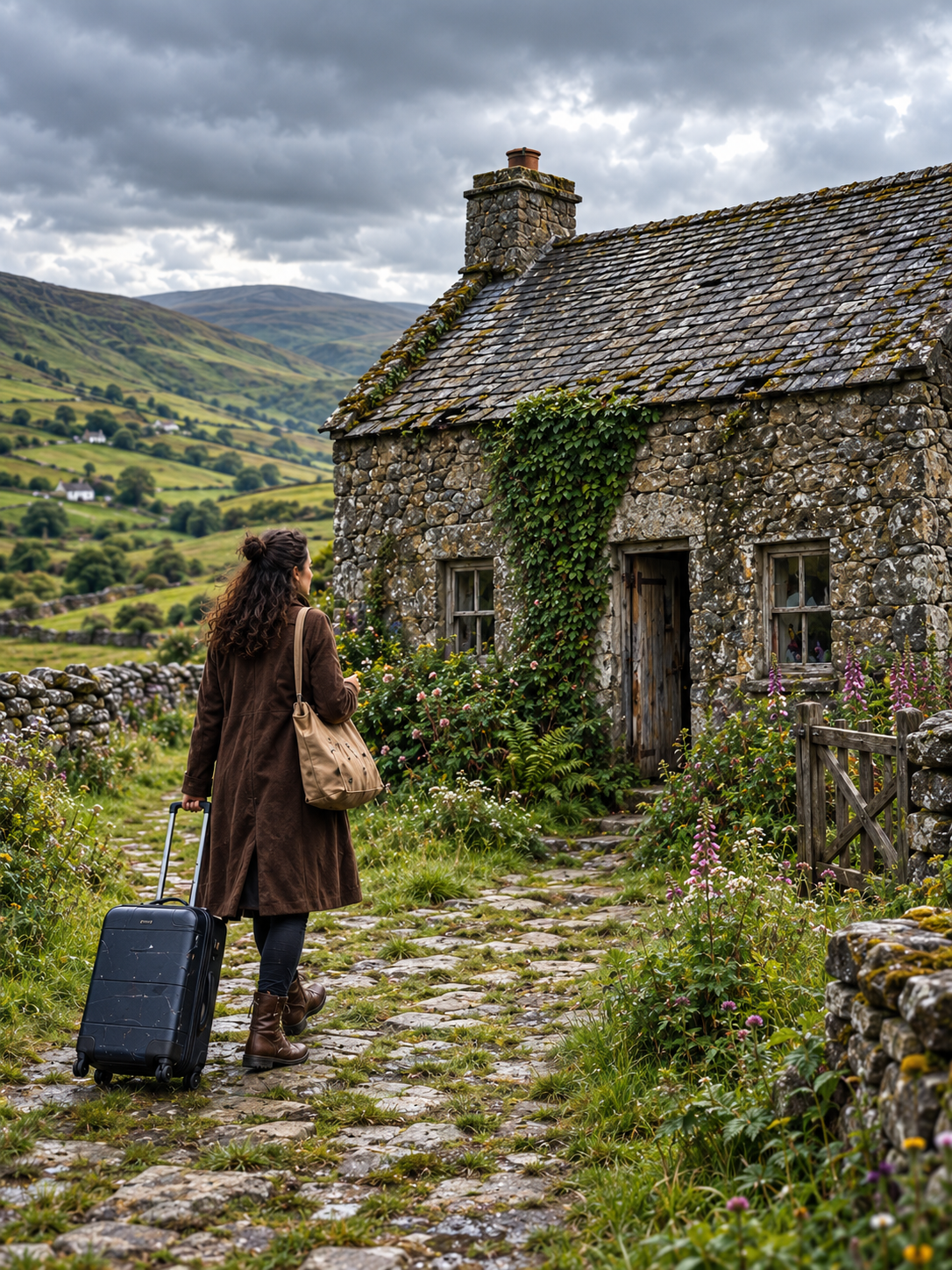
Thrown Out at 18, She Bought a Forgotten Stone House for Ten Dollars—Then Discovered What Her Father Buried Beneath the Fireplace “You have thirty minutes to get your things out of my house,” my stepmother said, dropping a black garbage bag at my feet. “And don’t bother taking anything your father paid for.” My father stood behind her, holding a glass of bourbon. He didn’t say a word. I had turned eighteen exactly forty-three minutes earlier. The birthday cake was still sitting on the kitchen counter, untouched. White frosting. Pink roses. My name written in blue icing. Except someone had already scraped the word “Happy” off the top. My stepmother, Vanessa, smiled when she noticed me looking at it. “Consider this your first lesson in adulthood, sweetheart. Nobody owes you anything.” I looked at my father. “Dad?” He lifted his glass. “Vanessa and I have talked about this, Emily. You’re old enough to make your own way.” I had spent three years caring for his mother while she was dying. I had cooked their dinners, cleaned their house, and worked weekends at a grocery store to help cover my own expenses. I had graduated high school with a 3.9 GPA. I had been accepted into Ohio State. And standing in that marble kitchen, with a garbage bag at my feet, I understood something that no teacher had ever explained. Sometimes the people who know exactly how much you love them are the ones most willing to use it against you. I didn’t scream. I didn’t beg. I bent down, picked up the garbage bag, and asked one question. “Where’s Grandma Ruth’s cedar box?” Vanessa’s smile disappeared. For one second, she looked toward my father. He set down his bourbon. “That belonged to my mother,” he said. “She gave it to me.” “It’s staying here.” I watched his fingers tighten around the glass. Then I nodded. “Okay.” Vanessa blinked. “That’s it?” “That’s it.” I walked upstairs, folded my clothes into the garbage bag, and took the sixty-three dollars hidden inside my biology textbook. I left my graduation photograph on the dresser. I left the necklace my father had given me when I turned sixteen. I left the birthday cake. But I took one thing they didn’t know existed. A small brass key Grandma Ruth had slipped into my hand three nights before she died. On a yellow strip of paper wrapped around it, she had written six words. The stone remembers what people forget. I had never understood what she meant. I was about to find out. And the truth waiting for me would make ten dollars the most important money I ever spent. What should I do next—beg the people who threw me away to take me back, or follow the one strange clue Grandma left me and risk everything on a house nobody wanted? I chose the house. But first, I had to survive the night. I didn’t know where I would sleep. I didn’t know how I would pay for college. I didn’t know why my grandmother had been so frightened during her last week. I didn’t know why my father refused to let me have her cedar box. I only knew that the woman who had raised me after my mother died had never lied to me. And I wasn’t going to start doubting her now. The November air hit my face the moment I stepped outside. We lived in a wealthy suburb outside Columbus, Ohio, where the houses sat behind perfectly trimmed hedges and the mailboxes cost more than some people’s monthly rent. Our driveway was nearly a hundred feet long. I walked every inch of it without looking back. At the sidewalk, my phone vibrated. A message from Vanessa. Don’t come crawling back when you realize how expensive the real world is. I read it once. Then I took a screenshot. Not because I wanted revenge. Because Grandma Ruth had taught me something important. “When people show you who they are, sweetheart, believe the evidence. Not the apology.” I put the phone away and kept walking. Two miles later, I reached a gas station beside Interstate 70. My hands were so cold I could barely open the door. The cashier was a woman in her late fifties with gray curls and a name tag that said LINDA. She looked at the garbage bag. Then at my face. “You okay, honey?” “Yes, ma’am.” She studied me for another second. “That’s a very polite lie.” I almost smiled. I bought a seventy-nine-cent bottle of water and asked if I could sit near the window. She told me the coffee was free after midnight. I sat in a plastic chair beneath a flickering fluorescent light and opened my phone. My college housing deposit was due in nine days. I had no car. No permanent address. No credit history. And sixty-two dollars and twenty-one cents. I opened a search for emergency housing. Then another for cheap rentals. Then another for abandoned properties. I wasn’t seriously expecting to buy a house. I was eighteen. I barely had enough money for a bus ticket. But desperation makes strange possibilities look reasonable. At in the morning, I found a county surplus property auction scheduled for the following afternoon. There were dozens of listings. Vacant lots. Condemned buildings. Properties with tax problems. And one small stone house in the hills outside Lancaster, about forty miles southeast of Columbus. Starting bid: $10. The photograph showed a crooked roof, a broken front window, and a chimney made of dark river stones. Something about that chimney made me stop scrolling. I enlarged the photograph. Then enlarged it again. Near the base of the chimney, half-hidden beneath ivy, was a pale rectangular stone. A stone marked with a five-pointed star. My breath caught. Grandma Ruth had worn a silver ring with that exact symbol. She never took it off. Not during church. Not while cooking. Not even when she was in the hospital. I remembered asking her what the star meant when I was eleven. She had smiled and said, “It means somebody remembered.” At the time, I thought she was being mysterious. Now I wasn’t so sure. I clicked the listing. The property was located at 114 Hollow Creek Road. Former owner: Eleanor Whitcomb. Status: County-owned after tax foreclosure. Building condition: Unsafe for occupancy pending inspection and repairs. The listing included a warning that the buyer would assume responsibility for outstanding code violations, cleanup, and future taxes. The county would convey the property through its standard surplus-sale process, subject to confirmation. Ten dollars wasn’t the real cost. Not even close. But the photograph wouldn’t leave me alone. I searched the address. There was almost nothing. No recent sales history. No rental listings. No neighborhood reviews. Just a short article from a local newspaper dated twenty-seven years earlier. “Historic Hollow Creek Residence Vacated Following Family Dispute.” The article was mostly unreadable behind the newspaper archive’s paywall. But one sentence appeared in the preview. Residents continue to question why the Whitcomb family abandoned the property shortly after the disappearance of local contractor Samuel Bennett. Bennett. My last name. I leaned closer to the screen. Grandma Ruth’s maiden name had been Whitcomb. And my father had once told me that his father, Samuel Bennett, died in a construction accident before I was born. Not disappeared. Died. I searched for Samuel Bennett. Nothing useful came up. I searched for Eleanor Whitcomb. A faded obituary appeared. She had died in 2008 at age eighty-six. Her surviving relatives included a daughter named Ruth Bennett. My grandmother. I stared at the screen until the fluorescent light above me buzzed like an angry insect. The abandoned stone house had belonged to my great-grandmother. Nobody had mentioned it. Not once. Not during Grandma’s stories about growing up in the country. Not when she told me about the old orchard where she learned to climb trees. Not even when she was dying. I took the brass key from my pocket. It was small and heavy, with a worn number stamped into the metal. 114. I didn’t sleep that night. By sunrise, I’d made a decision. I was going to Lancaster. And I wasn’t telling my father. At seven the next morning, Linda brought me a breakfast sandwich wrapped in foil. “I didn’t order this.” “I know.” “I can’t pay for it.” “Good thing I didn’t ask you to.” I looked up. Her expression softened. “I’ve got a daughter. She’s thirty-two now. But if she’d ever been alone in a gas station on her eighteenth birthday, I’d have hoped somebody fed her.” I stared at the sandwich. Then at the little clock behind the counter. “How did you know it was my birthday?” “You’ve still got a birthday ribbon stuck to the sleeve of your jacket.” I looked down. A small blue ribbon from the gift bag my school friends had given me was caught in the fabric. I hadn’t noticed. “Thank you,” I whispered. Linda nodded toward the door. “Whatever happened last night, don’t let it decide who you become.” I carried those words with me all the way to Lancaster. The bus fare cost twelve dollars. A county shuttle took another three. I walked the last mile to the administration building with forty-seven dollars in my pocket and one question pounding through my head. What had happened to Samuel Bennett? The auction wasn’t dramatic. No crowd of wealthy investors. No men shouting bids. Just a clerk, three county employees, and a handful of people looking at surplus property packets. I had called the auction office from the bus and learned that the stone house had attracted no registered bidders. It was far from town. The access road needed work. The roof was bad. And the county estimated that making it habitable could cost more than the property’s market value. The clerk explained that the ten-dollar figure was an administrative opening bid, not a promise of a clean, livable home. She also warned me that an accepted bid would require signed paperwork, identification, and a later deed transfer after payment and approval. I listened carefully. Then I asked whether there were any pending demolition orders. She checked the file. “No active demolition order, but the property has unresolved structural violations. You cannot live there until the county clears it.” “Any outstanding tax liens that survive the transfer?” She looked at me with new interest. “You’ve done some homework.” “Not enough.” She went through the packet with me. I took photographs of every relevant page. When she finished, I asked one final question. “Has anybody contacted the county about this property recently?” The clerk hesitated. “A real estate company requested information last week.” “Which company?” “Northfield Development Group.” I wrote the name down. Then I placed my bid. Ten dollars. No one else raised a hand. The clerk announced me as the successful bidder, subject to the county’s final approval. It was the smallest victory of my life. And somehow, it felt enormous. When I stepped outside, I had thirty-seven dollars left. I also had something I hadn’t possessed when I woke up. A direction. The clerk said the paperwork would take several days, but I was allowed to view the property from the road. She warned me not to enter the unsafe structure. I followed her instructions. The house sat at the end of a narrow gravel lane beyond a grove of bare maple trees. A rusted mailbox leaned beside the ditch. The wooden post was split. The numbers had fallen off. But the stone chimney rose above the roofline like a stubborn finger pointing at the clouds. Even in daylight, the house looked forgotten. The front porch sagged. The windows were cloudy with dirt. The roof had lost shingles in several places. Weeds grew through the cracks in the steps. And behind the house, an old apple orchard stretched toward the woods. I stopped at the gate. There was a chain across it. A faded county warning notice hung from the center. I didn’t cross. Instead, I took out my phone and photographed the exterior. The chimney was exactly as it appeared in the listing. Dark stones. Pale mortar. And that strange white block near the base. The star had been carved into the stone by hand. Not painted. Not scratched. Carved. I zoomed in. Below the star were two tiny letters. R.W. Ruth Whitcomb. My grandmother. I leaned against the gate. For the first time since I’d been thrown out, the tightness in my chest began to loosen. Grandma hadn’t left me a random key. She’d left me a place. Or perhaps she’d left me a warning. A pickup truck slowed behind me. I turned. An older man wearing a brown work jacket rolled down his window. “You looking at the Whitcomb place?” “Yes, sir.” “You from the county?” “No.” He glanced at my garbage bag. “Then I’d recommend staying away.” “Why?” His eyes shifted toward the chimney. “Some houses are empty for a reason.” He started to roll up the window. “Wait,” I said. He stopped. “Did you know Eleanor Whitcomb?” His hand froze on the steering wheel. “Who wants to know?” “Her great-granddaughter.” The man’s expression changed. Not gradually. All at once. He switched off the engine. “What’s your name?” “Emily Bennett.” He stared at me. Then he whispered, “Lord have mercy.” He got out of the truck. He was tall and thin, with a weathered face and hands marked by old burns. “My name’s Walter Hayes,” he said. “I worked with your grandfather.” I held still. “Samuel Bennett?” His eyes narrowed. “Who told you that name?” “I found an old newspaper article.” Walter looked back toward the house. Then down the gravel road. “Did somebody know you were coming here?” “No.” “You sure?” I thought of Vanessa. Of my father’s bourbon glass. Of the missing cedar box. “Yes.” Walter took a slow breath. “Listen to me, Emily. Whatever you think you know about that house, it’s not enough.” “What happened to my grandfather?” He looked at me for a long moment. “That’s a question your father should’ve answered years ago.” Then he reached into his jacket and took out a business card. His address was printed beside a small repair shop in Lancaster. “If you need a ride or a safe place to make a phone call, come see me.” “Why would you help me?” His jaw tightened. “Because I didn’t help your grandmother when I should’ve.” Before I could ask what he meant, he climbed back into the truck. He drove away without another word. I watched the taillights disappear. Then I looked at the house. Suddenly, ten dollars felt less like a bargain. And more like a door somebody had worked very hard to keep closed. I spent the next three nights at a low-cost youth shelter in Lancaster. The staff helped me apply for emergency assistance, find temporary work, and contact my college admissions office. I told Ohio State that my family circumstances had changed. They connected me with a financial aid counselor who explained my options. It wasn’t a magical solution. There were forms. Deadlines. Documentation. And more questions than I wanted to answer. But I had a plan. I started washing dishes at a diner on Main Street. The owner, Mrs. Cooper, paid me every Friday and let me take home leftover soup. I saved every receipt. I kept every email. I wrote down every conversation involving the house. Four days after the auction, the county approved the sale. The ten dollars purchased the county’s interest in a damaged, restricted property. It didn’t fix the roof. It didn’t pay for utilities. It didn’t make the structure safe. But it gave me the right to begin dealing with those problems. I signed the documents, obtained the deed paperwork, and arranged for a contractor to inspect the building. Walter Hayes recommended a retired structural engineer named Daniel Mercer, who agreed to perform a preliminary assessment at a reduced fee after hearing whose granddaughter I was. The inspection was sobering. Several floor joists were compromised. A section of roof framing needed replacement. The wiring was obsolete. The foundation, however, was surprisingly sound. And the chimney? Daniel studied it for almost twenty minutes. Then he ran his fingers along the mortar. “This chimney was partially rebuilt,” he said. “When?” “Hard to say. Maybe thirty years ago.” “Why?” He pointed to a section near the hearth. “See these joints? Different mortar. Different workmanship.” “Could something be hidden inside?” Daniel looked at me. “Anything’s possible. But don’t start pulling masonry apart. That fireplace supports more weight than you realize.” I nodded. “Understood.” He marked dangerous areas with red tape and gave me a list of repairs that needed professional attention before the house could be occupied. I continued sleeping at the shelter. During the day, I worked. After my shifts, I visited the property, clearing brush and sorting debris in the yard. On Saturday, Walter arrived with a trailer full of tools. He didn’t ask permission before he started fixing the gate. “You don’t owe me anything,” I said. “I know.” “Then why are you here?” He tightened a bolt. “Your grandmother used to bring me peach pie every Christmas.” “That doesn’t explain much.” “No,” he said. “It doesn’t.” I handed him a wrench. “Are you going to tell me what happened to Samuel Bennett?” His hands stopped moving. “Your grandfather was an honest man in a town that rewarded dishonest ones.” “That sounds like the beginning of a very bad story.” “It was.” Walter pulled the wrench from my hand and finished tightening the bolt. “He worked construction. Big projects. Roads, retaining walls, commercial buildings. He found something wrong with a county contract.” “What kind of wrong?” “Money going places it shouldn’t.” “Fraud?” Walter glanced up. “Yes.” “What happened?” “He started collecting proof.” “And then?” Walter looked toward the chimney. “And then he disappeared.” I felt the cold move through my jacket. “My father said he died in an accident.” “That’s what the official paperwork eventually said.” “Was there a body?” Walter didn’t answer immediately. “No body was ever found.” The silence that followed seemed to stretch across the entire orchard. I thought of my father raising his bourbon glass. Of Vanessa demanding Grandma’s cedar box. Of the county clerk mentioning Northfield Development Group. “What was the name of the company involved?” I asked. Walter frowned. “Why?” “Because I’d rather know what I’m dealing with.” He studied me. Then said, “Northfield Construction.” The air seemed to vanish from my lungs. Northfield Development Group. The same name that had recently asked about the property. “Are they connected?” Walter’s face darkened. “Same family. Different generation.” I took my notebook from my pocket. “Who owns it now?” He looked at me. “Emily, there’s something you need to understand about people with that kind of money.” “I understand that they can afford lawyers.” “They can afford more than lawyers.” “Then I should probably start documenting everything.” For the first time, he smiled. “Just like your grandma.” That evening, I received a text from my father. We need to talk. I didn’t answer. Five minutes later, another arrived. Where are you staying? Then a third. Emily, this is serious. Call me. I took screenshots. Then I checked my email. An unfamiliar address had sent me a message with the subject line: PROPERTY MATTER—114 HOLLOW CREEK ROAD. The sender identified himself as an attorney representing Northfield Development Group. The email claimed the company had a historical interest in the parcel and wished to discuss a voluntary acquisition. There was no threat. No demand. Just a polite request for a phone call. I saved the email. Then replied with two sentences. Please provide the legal basis for any claimed interest in the property, including recorded instruments or relevant documentation. I prefer to communicate in writing. I copied the message into my notebook. Within an hour, my father called six times. I didn’t answer. The seventh call came from Vanessa. I let it go to voicemail. Her voice was sharp. “Emily, your father is worried sick, and you’re behaving like a spoiled child. Whatever little stunt you’re pulling, stop it. Call him before this becomes embarrassing.” I played the voicemail twice. Not because I enjoyed hearing her voice. Because the word “stunt” bothered me. How did she know I was doing anything? I hadn’t told her about the house. I hadn’t told anyone in Columbus. Unless Northfield had called my father. Or my father already knew exactly where I was. The next morning, I visited the county recorder’s office. A clerk helped me locate historical deeds and maps. I photographed everything I was permitted to photograph and paid for certified copies of the most important pages. The parcel had belonged to Eleanor Whitcomb for decades. Before that, it had been part of a larger family property. In 1998, a proposed transfer to a corporation called H.C. Holdings had been prepared but apparently never completed. The associated memorandum included a name I recognized. Samuel Bennett. And another. Charles Northfield. The company founder. I went to Walter’s shop with the copies. He spread them across a workbench between two old carburetors. His face went pale. “Where’d you get these?” “Public records.” He pointed to a signature. “That’s Samuel’s.” “So he was involved in selling the house?” Walter shook his head. “No. He was trying to stop it.” “How do you know?” “Because he told me.” “What did he say?” Walter swallowed. “He said the land was being used to hide something.” “Money?” “At first, that’s what I thought.” “And later?” Walter folded the copy carefully. “Later, I stopped thinking it was only money.” I waited. He looked toward the shop window. Then said, “Your grandmother called me the night Samuel disappeared.” “What did she say?” “She said she’d heard shouting at the stone house. Two men. Maybe three. Samuel had driven out there after dinner.” “Did she name them?” “No.” “Why didn’t she call the police?” “She did.” “And?” Walter’s face hardened. “They searched the property. They found Samuel’s truck near the creek. His wallet was in the glove compartment. No blood. No signs of a struggle.” “What about the house?” “They searched it too.” “And found nothing?” “Nothing they reported.” Those last three words settled heavily between us. I looked down at the memorandum. At Charles Northfield’s signature. At Samuel Bennett’s name. Then I asked the question that had been growing inside me since the gas station. “Did my father know?” Walter closed his eyes. “He was twenty-two when Samuel disappeared.” “That wasn’t my question.” He opened them. “Yes. Your father knew there was a dispute.” “Did he know what it was about?” “I don’t know.” I nodded. Walter reached across the bench. “Emily, be careful.” “I am.” “No, I mean it. You’re eighteen. These people have been protecting themselves longer than you’ve been alive.” I folded the papers. “Then they’ve had a lot of practice.” He gave a humorless laugh. “And you’ve got your grandmother’s mouth.” “Is that good?” “Depends who’s listening.” Two days later, a black SUV appeared at the end of Hollow Creek Road. I noticed it while clearing fallen branches near the orchard. The vehicle stopped just beyond the mailbox. The driver didn’t get out. He remained there for eleven minutes. I timed him. I photographed the license plate from a safe distance. Then I called Walter. The SUV left before he arrived. But that night, somebody cut the chain on the gate. Nothing appeared stolen. The padlock lay in the mud. The link had been severed cleanly. I took photographs before touching anything. Then I reported the damage to the sheriff’s office. Deputy Sarah Collins arrived forty minutes later. She was in her early thirties, with dark hair pulled into a tight ponytail and a practical, no-nonsense expression. She studied the cut chain. “Any idea who’d want access?” “Someone contacted me about buying the property.” “Threatened you?” “Not directly.” “Then we’ll document it. If you see anyone trespassing, don’t confront them.” “I won’t.” She looked at my notebook. “You write everything down?” “Yes, ma’am.” “Good habit.” I hesitated. “Can I ask you something?” “Depends.” “Do you know anything about Samuel Bennett?” Her expression changed slightly. “Old missing-person case?” “Yes.” “Before my time.” “Can I request the records?” “Some records may be available. You can submit a public-records request, though portions of an investigative file may be withheld.” I nodded. She handed me her card. “Don’t go investigating dangerous people on your own.” I looked at the cut chain. “I wasn’t planning to.” But somebody else clearly had plans for me. The next morning, Northfield’s attorney sent another email. His client was offering forty thousand dollars for the property. Forty thousand. For a house the county had sold for ten. I read the message twice. Then I took out my calculator. The offer wasn’t proof of anything. A developer might want the land for legitimate reasons. But the timing was interesting. And the amount was far above what I expected for a condemned structure with access problems. I responded by asking for a written offer, proof of the buyer’s identity, and any known development plans affecting the parcel. I didn’t accept. I didn’t decline. I wanted information. The reply came three hours later. The offer increased to seventy-five thousand dollars. No explanation. I took a screenshot and sent it to Walter. He called immediately. “Don’t sign anything.” “I wasn’t going to.” “Emily, seventy-five grand is a lot of money.” “I know.” “You could start over.” “I already started over.” He was silent for a moment. Then he said, “You know what your grandmother told me once?” “What?” “She said people reveal what matters to them by what they’re willing to pay to make disappear.” I looked at the chimney through the kitchen window. Its dark stones had stood through more than a century of winters. “What did she mean?” Walter sighed. “I wish I’d asked.” The legal paperwork arrived the following Monday. The proposed purchase agreement included a broad confidentiality clause and a provision requiring me to waive potential claims relating to the property’s history. That wasn’t normal for an ordinary land purchase. At least, it wasn’t normal according to the attorney at a local legal aid clinic who agreed to review the document. Her name was Rebecca Shaw. She was forty-six, wore rectangular glasses, and spoke with the calm precision of someone accustomed to people who believed money could substitute for truth. She read the agreement. Then read it again. “Don’t sign this.” “I wasn’t planning to.” “Good.” She tapped the waiver clause. “They’re trying to buy more than the property.” “Why?” “I can’t tell you without more information. But this language is unnecessarily broad.” I told her about my grandfather. The old memorandum. The cut chain. The SUV. The key. And Grandma Ruth. Rebecca listened without interrupting. When I finished, she leaned back. “You need to separate what you know from what you suspect.” “I’ve been trying.” “Keep doing that. A photograph, a document, and an admissible record are not all the same thing.” She pulled out a legal pad. “First, let’s confirm your title and any surviving interests. Second, let’s check whether there are recorded easements or agreements affecting this property. Third, do not enter unsafe areas of the building without professionals.” I nodded. “Fourth,” she said, “if anyone offers you money in exchange for silence, send it to me.” “Can I afford you?” Rebecca looked at the battered garbage bag beside my chair. “Let’s worry about the basics first.” She helped me apply for pro bono assistance through a local program. For the first time, I felt like somebody was standing beside me who understood the danger of moving too quickly. That Friday, Walter brought an old photograph to the house. It showed five people standing in front of the stone chimney. A younger Ruth. A man I recognized from family albums as my grandfather Samuel. Eleanor Whitcomb. Walter. And a fifth man. Tall. Dark-haired. Wearing a pale suit. His smile was polished and cold. “Charles Northfield,” Walter said. I stared at the photograph. “What was he doing with them?” “It was taken before everything fell apart.” “Why?” “There was supposed to be a partnership.” “Construction?” Walter nodded. “Samuel had developed a way to stabilize old quarry sites for new construction. Northfield wanted it.” “Did Samuel sell it?” “No.” “Why not?” “He discovered Northfield was using falsified inspection reports.” I looked again at Charles Northfield’s smile. “Was anyone hurt?” Walter’s silence told me enough. “How many?” I asked. “Three workers were killed at a commercial site outside Columbus. The official report blamed an unexpected soil failure.” “And Samuel?” “He believed the failure had been predictable.” I turned the photograph over. On the back, Grandma Ruth had written: October 17, 1998. The last day before everything changed. Underneath was another line. Samuel knew where to look. I stared at the words. Then at the chimney. Suddenly, the brass key felt heavier in my pocket. “What did Grandma mean by the stone remembering?” I asked. Walter shook his head. “I don’t know.” “But you recognize the star?” His eyes moved toward the pale stone. “Yes.” “Tell me.” He rubbed his jaw. “Samuel used to mark his important work with a small star. Not officially. Just a habit. He said it helped him remember which stones he’d fitted himself.” “Why this one?” Walter stepped closer to the chimney. “Because that’s the strangest thing about it.” “What?” “Samuel didn’t build this chimney.” “Who did?” “Your great-grandfather. Long before Samuel came into the family.” I frowned. “Then why is Samuel’s mark here?” Walter lowered his voice. “That’s what I asked Ruth back in 1999.” “And?” “She told me it wasn’t Samuel’s mark anymore.” My skin prickled. “What did that mean?” “She said the stone belonged to someone who’d earned the right to use it.” I looked down at the carved letters. R.W. Ruth Whitcomb. A quiet woman who baked peach pies. Who taught me to sew buttons. Who never drove over the speed limit. Who held my hand through my mother’s funeral. Who spent her last days making sure I never forgot a small brass key. I had spent my entire childhood believing Grandma Ruth was ordinary. Now I was beginning to suspect she had been the bravest person in our family. That afternoon, Rebecca called. “Emily, I found something.” I stepped away from the work area. “What?” “The old property records include a recorded restriction involving the stone house and the original Whitcomb parcel.” “What kind of restriction?” “It’s unusual. Some of the language is tied to a dissolved family trust. I need more time to interpret it.” “Does Northfield have a claim?” “Not one I’ve established. But here’s the important part. There’s a reference to a secured archive associated with the original dwelling.” I stopped breathing for a moment. “An archive?” “Yes.” “Where?” “The document doesn’t say. It references a schedule that wasn’t included in the county copy.” I looked toward the fireplace. “Could the archive be inside the house?” “Possibly. But I don’t want you tearing anything apart based on a guess.” “I won’t.” “Emily?” “Yes?” “Someone contacted my office this morning asking whether I represented you.” “Who?” “They wouldn’t identify themselves.” I glanced toward the road. The black SUV wasn’t there. But for the first time, I wished it were. At least then I’d know where one of the threats was coming from. “Did you tell them?” “No.” “What did they say?” Rebecca paused. “They said the Whitcomb matter had been settled a long time ago.” I swallowed. “And?” “They said reopening it would be a mistake.” That night, my father finally came to Lancaster. I was finishing a shift at the diner when he walked through the front door. He wore an expensive charcoal coat and shoes that probably cost more than everything I owned. He looked tired. Older than he’d looked on my birthday. Mrs. Cooper glanced from him to me. “Emily?” “It’s okay.” My father stood beside the counter. “Can we talk?” I wiped my hands on my apron. “Here?” “Somewhere private.” “No.” He blinked. “Emily.” “We can talk here, or you can leave.” Mrs. Cooper quietly turned down the radio. My father glanced at the other customers. Then sat in a booth. I remained standing. “What do you want?” He looked at my apron. “Is this where you’re working?” “Yes.” “You don’t have to do this.” I nearly laughed. “You told me to make my own way.” “I was angry.” “You weren’t the one who was angry.” “Vanessa was upset.” “Vanessa is always upset when she doesn’t get what she wants.” He rubbed his forehead. “Come home.” The words landed strangely. A week earlier, I’d have given almost anything to hear them. Now they sounded like an offer with missing terms. “Why?” “Because I’m your father.” “That wasn’t enough on my birthday.” His face tightened. “I made a mistake.” “Which one?” He didn’t answer. “The garbage bag?” I asked. “The part where you watched her throw me out? Or the part where you kept Grandma’s cedar box?” His eyes flickered. “Forget the box.” “Why?” “It’s just old junk.” “Then why can’t I have it?” He leaned forward. “Emily, I know about the house.” There it was. I waited. “It’s dangerous,” he said. “The building is unsafe. I’m working on repairs.” “That’s not what I mean.” “Then say what you mean.” His eyes moved toward Mrs. Cooper behind the counter. “Please. Just sell it.” I looked at him for a long moment. “How did you know I bought it?” “It’s a small town.” “We don’t live in this town.” He lowered his voice. “Northfield contacted me.” “Why?” He hesitated. “Because they know our family.” “Through Grandpa Samuel?” His expression went rigid. “Don’t bring him into this.” “Why not?” “Because he died before you were born.” “Was there a body?” My father went pale. I watched the color drain from his face. For eighteen years, he’d controlled conversations by raising his voice. By ending them. By telling me I was too young to understand. This time, I said nothing. I let the silence do the work. Finally, he whispered, “Who have you been talking to?” “People who answer questions.” He looked toward the window. “Emily, you don’t understand what you’re getting involved in.” “Then explain it.” He rubbed his hands together. “Northfield is willing to make a generous offer. Enough for college. Enough for an apartment. Enough to start your life.” “What do they want?” “The property.” “Only the property?” He didn’t meet my eyes. I took a folded copy of the purchase agreement from my apron pocket. “Then why do they want me to waive claims involving its history?” His head snapped up. “You spoke to a lawyer?” “Yes.” He leaned back. And something in his face changed. Not anger. Fear. Real fear. For a few seconds, I saw the young man he might once have been. The twenty-two-year-old whose father disappeared. The son whose mother spent decades guarding a secret. Then he whispered, “You need to stop.” “Why?” “Because I can’t protect you if you keep going.” I felt a sharp ache behind my ribs. “You didn’t protect me when it was easy.” He closed his eyes. When he opened them, they were wet. “Your grandmother should’ve destroyed that key.” I went perfectly still. I hadn’t mentioned the key. Not to him. Not to Vanessa. Not to anybody outside Lancaster. My voice came out quiet. “How do you know about it?” He looked as if he’d been struck. “Emily—” “Did Grandma tell you?” He stood so quickly the booth rattled. “Sell the house.” “Answer me.” “Please.” I had never heard my father say that word like a frightened man. Then he turned and left. I watched him climb into his car. Only when the taillights disappeared did I realize my hands were shaking. Mrs. Cooper came over carrying a mug of tea. “Family trouble?” I nodded. She set the mug down. “You want to talk?” “Not yet.” She squeezed my shoulder. “All right, honey.” I took out my notebook. And wrote down every word my father had said. Especially the part about the key. Three days later, the chimney gave up its first secret. Not because I smashed it. Not because I pried loose a stone. Because a professional mason found something that didn’t belong. His name was Anthony Rivera. He was sixty-one, with thick forearms and a careful manner. Daniel Mercer had recommended him to assess the chimney before any stabilization work. Anthony spent most of the morning examining the masonry. Then he called me over. “Emily, take a look at this.” He pointed to a narrow seam beneath the hearth. “See that?” I crouched. A thin line ran horizontally across the stone base. It looked like an ordinary mortar joint. Except it ended beneath the edge of the fireplace rather than continuing around it. “Different material,” Anthony said. “What does that mean?” “Somebody installed a separate piece here.” “A repair?” “Maybe.” He tapped the stone gently. A hollow sound answered. He tapped again. Solid. Then hollow. My pulse quickened. Anthony studied me. “You expecting to find something?” “Possibly.” “Then I’d rather document this before touching it.” He photographed the seam. Measured it. Checked the surrounding masonry. Then examined the structural plans Daniel had prepared. “This section isn’t carrying the main load,” he said eventually. “But I’m not opening anything without proper support.” I called Daniel. By late afternoon, the two men had assessed the compartment and installed temporary bracing. Anthony removed a small section of later-added mortar. Behind it was a metal plate. About twelve inches wide. Rusty. Nearly invisible beneath decades of soot. And in the center was a keyhole. I stopped breathing. “That’s not part of a normal fireplace,” Anthony said. “No,” I whispered. I pulled Grandma Ruth’s brass key from my pocket. Anthony raised his eyebrows. “You’ve got to be kidding.” The key fit. Perfectly. I turned it. At first, nothing happened. Then a small metallic click echoed inside the stone. Anthony stepped back. Daniel held a flashlight. I pulled gently. The plate shifted outward. A narrow compartment appeared behind it. Inside was a black metal box. It was about the size of a shoebox. Its corners were wrapped in tarnished brass. And scratched across the lid were the initials: S.B. Samuel Bennett. My grandfather. I didn’t touch it immediately. I looked at Anthony. Then Daniel. “Can we take it out safely?” Anthony checked the edges. “Yes.” He carefully lifted it onto a clean workbench we’d set up in the kitchen. I photographed the compartment before it was empty. Then the box from every angle. The lid was secured with a small clasp. No second key. I opened it. Inside were three items. A sealed envelope. A leather-bound notebook. And a photograph. I reached for the photograph first. It showed Grandma Ruth standing beside Samuel. They were smiling. Behind them was the stone house. And between them stood a little boy. He was perhaps six years old. Dark hair. Serious eyes. A crooked smile. My father. I turned the photograph over. In Ruth’s handwriting were five words. Before they made him choose. I read the sentence three times. Before they made him choose. Choose what? I opened the notebook. Most of its pages were filled with dates, measurements, financial figures, and handwritten notes. Samuel had been meticulous. There were references to construction sites. Inspection reports. Payments. And a company name repeated throughout. Northfield Construction. Some entries were technical enough that I couldn’t understand them. Others were plain. March 14, 1998. Charles knows the soil reports were altered. April 2. Three men dead. They will blame the hillside. April 11. Ruth says I should take this to the state. May 6. Walter warned me about the deputy. August 19. Copies secured. Then the handwriting changed. The later entries were shorter. More hurried. October 10. They know about the archive. October 12. Do not trust the transfer documents. October 15. Ruth has the second key. I froze. The second key. I had Grandma’s key. What second key? I turned the page. The final entry was dated October 17, 1998. If I don’t come home tonight, the house must remain in the family. The chimney protects the first truth. The second belongs to the child. There was no entry after that. I looked at the photograph of my father as a little boy. The child. Was Samuel talking about him? Or somebody else? I picked up the sealed envelope. Across the front, in Samuel’s handwriting, were the words: For Ruth, if they tell you I am dead. I stared at those words. The house seemed to go silent around me. Slowly, I slid a letter opener beneath the flap. The paper inside had yellowed at the edges. I unfolded it. My grandfather’s handwriting was careful, almost painfully controlled. Ruth, If you’re reading this, they have decided the safest story is that I died. Do not believe it without proof. Charles has friends in places I underestimated. I thought the documents would be enough. I thought honest people could force dishonest people to answer questions. I was wrong about how far they would go. But I was not wrong about what I found. The money matters, but it is not the worst of it. The worst of it is what happened at Hollow Creek before the construction contracts began. I have preserved the first set of evidence beneath the chimney. The second set is somewhere Charles cannot reach without revealing himself. Protect the children. Do not trust a man simply because he carries our name. And remember what you promised me beside the orchard. Whatever happens, the truth must outlive us. I love you. Samuel. I lowered the letter. Protect the children. Plural. Not child. Children. I looked at the notebook. At the photograph. At the white stone carved with Grandma’s star. Something was missing. A final explanation. A name. A place. But I had enough to prove something important. Samuel Bennett had expected people to lie about his death. And the story my father had told me my entire life was no longer something I could accept without question. I called Rebecca. She listened carefully. Then told me not to alter the documents. She arranged for a professional to create high-resolution copies and advised me to preserve the originals in a secure location while we documented their discovery. Anthony and Daniel agreed to provide written statements about opening the compartment. For the next two days, I barely slept. Rebecca brought in a forensic document examiner to assess the handwriting and materials. Walter identified Samuel’s handwriting from several independent letters he’d kept. None of this automatically proved every accusation in the notebook. Rebecca reminded me of that repeatedly. But it gave us a starting point. And someone wanted that starting point erased. The first warning came on Thursday morning. A handwritten note had been pushed beneath the diner’s back door. Mrs. Cooper found it beside the delivery invoices. There were only seven words. Ten dollars was your last good offer. No signature. No letterhead. I handed it to Deputy Collins. She sealed it in an evidence bag. “Don’t handle anything like this without gloves next time,” she said. “Understood.” “Any new visitors?” “Not that I’ve seen.” She studied me. “Emily, are you staying somewhere safe?” “The youth shelter.” “Does anyone know which one?” “My employer. My attorney. A few people helping me.” She nodded. “Keep your movements predictable to people you trust and unpredictable to people you don’t.” Then she gave me a look I wouldn’t forget. “And don’t mistake being brave for being bulletproof.” The second warning came that afternoon. Northfield’s offer increased to one hundred and fifty thousand dollars. The email included a deadline. Forty-eight hours. Rebecca read it. Then looked at me. “They’re applying pressure.” “Can they force me to sell?” “Not based on anything we’ve seen. But we’re still checking the title history.” “Then I’m not selling.” She nodded. “That’s your decision.” I thought of Grandma Ruth’s final days. How she had gripped my wrist with surprising strength. How she’d whispered that strange sentence about stone. How she’d seemed afraid every time my father visited. I remembered one afternoon in particular. I was sitting beside her hospital bed, reading a paperback mystery novel. She had been staring out the window. Then she said, “Emily, if a person spends their whole life trying to bury something, what does that tell you?” I had smiled. “That they’re hiding something bad?” “Perhaps.” She’d turned toward me. “Or perhaps they’re afraid of what happens when someone finds something good.” At the time, I thought she was talking about buried treasure. Now I wondered whether she had been talking about me. The night before Northfield’s deadline, I received a call from an unfamiliar number. I answered because the caller ID showed a local area code. “Emily Bennett?” “Yes.” “My name is Michael Northfield.” I said nothing. “I understand you’ve acquired a family property.” “Yes.” “I’d like to resolve this directly.” “Please contact my attorney.” He gave a soft laugh. “Of course. But surely two reasonable people can have a conversation.” “Then send your proposal in writing.” A pause. “You’re very young.” “That doesn’t change who owns the property.” Another pause. “I knew your grandfather.” My pulse quickened. “Then perhaps you could tell the authorities what you know about his disappearance.” Silence. Then he said, “Your grandfather was a complicated man.” “I’m sure he was.” “He caused a great deal of pain.” “Did he?” “Not everything is what it appears to be, Miss Bennett.” I glanced at the notebook lying on Rebecca’s conference table in front of me. “I’ve been learning that.” His tone cooled. “One hundred and fifty thousand dollars is an extraordinary offer for a condemned house.” “Then you shouldn’t have trouble finding another one.” He stopped speaking. I waited. Finally, he said, “I strongly suggest you think about your future.” “I am.” Then I ended the call. Rebecca had listened on speakerphone with my permission. She wrote down the time. “Good,” she said. “Did I say too much?” “No. You gave him nothing useful.” I looked at her. “Do you think he’s dangerous?” “I think we should take precautions and let the evidence guide us.” “That’s not quite an answer.” She closed the notebook. “It’s the most responsible one I can give you.” The next morning, Walter arrived at the diner looking as though he hadn’t slept. He took a seat in the back booth. “Emily, I need to tell you something.” I poured him coffee. “What?” “I wasn’t honest about the night Samuel disappeared.” I sat across from him. “Which part?” “The part where I said Ruth called me afterward.” I waited. Walter stared into his coffee. “I was there.” The noise from the kitchen seemed to fade. “At the house?” “Yes.” “Why didn’t you tell me?” “Because I’ve been ashamed for twenty-eight years.” I folded my hands. “Tell me now.” Walter took a slow breath. “Samuel asked me to meet him there. He’d found out that someone was moving records out of a county storage facility. He thought he could stop them before the evidence vanished.” “Who?” “I didn’t know.” “What happened?” “When I got there, Samuel’s truck was parked by the creek. The house was dark. I heard voices inside.” “How many?” “Three men.” “Did you recognize any of them?” “One.” “Who?” Walter looked up. “Your father.” For a moment, I couldn’t speak. “My father was there?” “Yes.” “He was twenty-two.” “I know.” “Why?” Walter shook his head. “I don’t know what he was doing. I only know I heard him arguing with Samuel.” “What were they saying?” “Your father kept saying, ‘You promised this would be over.’” I felt cold. “And Samuel?” “He said, ‘It’s over when the children are safe.’” Children. Again. “Then what?” Walter’s hands trembled. “I heard a crash. Glass breaking. Somebody shouted. I panicked.” “You left?” He nodded. “I drove half a mile down the road. Then I turned back.” “What did you find?” “Samuel’s truck was gone from the driveway. I saw headlights near the creek. By the time I reached the house, everybody had disappeared.” “Did you tell the police?” “Yes.” “Everything?” Walter looked away. “No.” “Why not?” “Because the deputy who took my statement told me to forget what I thought I’d heard.” “Which deputy?” “Harold Mercer.” The name sounded familiar. Daniel Mercer. The retired structural engineer. I leaned forward. “Any relation to Daniel?” Walter nodded. “His uncle.” I felt the ground shift beneath me. Daniel had inspected the house. Helped open the hidden compartment. Been present when we found the evidence. Did that mean he knew? Walter saw the change in my expression. “Daniel’s not Harold,” he said quickly. “He was a teenager back then. He’s a good man.” “Maybe.” “Emily—” “I’m not accusing him. I’m being careful.” Walter lowered his eyes. “You really are Ruth’s granddaughter.” I looked down at the coffee cup between my hands. For eighteen years, I’d thought family meant the people who shared your home. Now I understood it could mean something else. A woman who left you a key. An older mechanic who carried guilt for decades. A stranger in a gas station who bought you breakfast. And perhaps even a house that waited through twenty-eight winters for someone stubborn enough to ask the right questions. “Walter,” I said. “Yes?” “Why did Samuel keep saying children?” He stared at me. “I don’t know.” “Did my father have siblings?” “No.” “Are you certain?” “As far as I know.” “Then who were the children?” He didn’t answer. But something in his expression told me he had wondered the same thing. That afternoon, Rebecca arranged a meeting with a retired state investigator named Margaret Flynn. Margaret was seventy, with silver hair cut just below her ears and a voice that made people sit straighter without understanding why. She had spent more than thirty years investigating financial crimes and public corruption. Rebecca showed her copies of the notebook. The property records. The purchase agreement. And Walter’s written account. Margaret read everything. Then removed her glasses. “Do you know what this looks like?” “Fraud?” I asked. “Possibly. But we need records that connect the entries to actual transactions.” She tapped one of Samuel’s notebook pages. “Look at these numbers.” I leaned closer. There were dates, amounts, and short strings of letters. “What are they?” “Could be invoice references. Could be bank records. Could be internal project codes.” “Can we find out?” “Perhaps. Some records survive much longer than people expect.” She studied another page. “What’s this?” I looked. A handwritten entry near the bottom read: HC-114 / R.W. / EAST / . “That’s the house address,” I said. “Maybe.” “And R.W. is Grandma.” Margaret pointed at EAST. “Does the house have an east-facing wall?” “Yes.” “And the time?” “Six twenty.” “Or a measurement. Or a reference number.” I felt a spark of excitement. “Could it be another hiding place?” “Possibly. But don’t jump to conclusions.” She smiled slightly. “Your attorney tells me you’re good at listening.” “I’m trying.” “Then listen to this. People hiding evidence usually worry about two things: discovery and destruction. If Samuel expected someone to search his home, he may have separated the records.” “The chimney protects the first truth,” I whispered. Margaret looked up. “What?” I repeated the sentence from the letter. Her expression sharpened. “And the second?” “Belongs to the child.” She sat back. “Interesting.” I showed her the photograph of my father. She studied it. Then turned it over. Before they made him choose. Margaret’s eyes narrowed. “Emily, was your father adopted?” The question startled me. “No.” “Are you certain?” I opened my mouth. Then closed it. I had never seen my father’s birth certificate. I had never met any relatives from Samuel’s side. Grandma Ruth didn’t talk much about his childhood. My father refused to discuss the years before he married my mother. “I don’t know,” I admitted. Margaret nodded. “Then that’s another thing to verify.” I felt suddenly exhausted. Every answer seemed to create three more questions. But Margaret wasn’t finished. She pulled a county map toward her. “Tell me about the stone house.” I described the chimney, the orchard, and the old road. She studied the map. Then pointed to a narrow strip of land beside the creek. “What’s here?” “An old pump house, I think.” “Who owns it?” I checked the parcel numbers. “Not me. It was separated from the original property years ago.” “Who owns it now?” I searched the county database on my phone. The owner was listed as Hollow Creek Utilities LLC. Rebecca looked at Margaret. Margaret looked back. I felt my stomach tighten. “What?” I asked. Margaret spoke carefully. “Hollow Creek Utilities was one of the entities investigated during the original Northfield inquiry.” “Was anyone charged?” “No.” “Why not?” “The investigation lost its primary witness.” Samuel Bennett. I didn’t need her to say his name. I looked at the map. The old pump house stood less than five hundred feet from my chimney. And according to the county’s records, it had been maintained continuously for decades. A utility structure serving no known active customers. Beside a condemned house. On land connected to a missing man’s investigation. I wrote down the parcel number. Then made another decision. I wasn’t going anywhere near that pump house without legal guidance. Instead, I asked Rebecca to request the public utility filings and historical ownership records. She smiled. “Exactly right.” The next week brought a victory I hadn’t expected. A small newspaper in Lancaster published a story about the county’s surplus property sale. The headline read: “Local Teen Acquires Historic Stone Home for $10.” Mrs. Cooper had mentioned my situation to a reporter who often ate at the diner, and the reporter contacted me for an interview. I agreed only after speaking with Rebecca. I didn’t discuss the hidden box. I didn’t discuss my grandfather. I didn’t accuse anyone of wrongdoing. I talked about the house. The repairs. My plans to preserve it. And the difficulty of finding affordable housing after a sudden family separation. The story included a photograph of me standing outside the gate in my old winter jacket. By noon, the article had been shared hundreds of times. By evening, local tradespeople were offering help. A roofing company offered donated materials. A retired electrician offered a consultation. A community group started organizing volunteers to clear debris and restore the orchard. The county building department still required proper permits and inspections. Nobody could simply wave those rules away. But for the first time, the house’s future looked possible. I stood in the diner kitchen reading the messages on Mrs. Cooper’s phone. People I didn’t know were cheering for an eighteen-year-old girl they’d never met. Mrs. Cooper put a hand on my shoulder. “See? The world’s bigger than that fancy house you came from.” I nodded. But the attention had another effect. Northfield stopped emailing. My father stopped calling. Vanessa stopped sending messages. And the black SUV disappeared. For six days, there was silence. I should have enjoyed it. Instead, I became more cautious. Because people who had offered one hundred and fifty thousand dollars to buy a ruined house did not simply lose interest because a teenager got featured in the local paper. Something had changed. I wanted to know what. On the seventh day, Rebecca called me to her office. She had a folder on the table. “Emily, sit down.” I sat. She opened the folder. “We found the second page of the 1998 memorandum.” My pulse quickened. “What does it say?” “It describes a proposed transfer of development rights involving the property and adjacent land.” “Northfield?” “Yes.” “Was it completed?” “Not according to the recorded deed history. But there’s a handwritten notation in the supporting file.” She slid the page toward me. At the bottom were four words. Subject to child protection agreement. I stared at them. “What does that mean?” “That’s what we’re trying to determine.” “Is there a copy?” “The document references an attachment that isn’t in the county’s archive.” I looked at the page. Then at Rebecca. “Could it have something to do with Samuel’s letter?” “Possibly.” She hesitated. “There’s more.” I felt my shoulders stiffen. “We located an old civil complaint filed in 1999. It was dismissed before trial.” “Who filed it?” “Ruth Bennett.” My grandmother. “Against whom?” “Northfield Construction and two individuals.” I leaned forward. “Which individuals?” Rebecca turned the page. The first name was Charles Northfield. The second made my chest tighten. Thomas Bennett. My father. For a moment, the letters blurred. My own father had been named in a lawsuit filed by his mother. A lawsuit connected to the house. A lawsuit nobody had ever mentioned. “What did Grandma accuse him of?” Rebecca watched me carefully. “The complaint alleged that Thomas had participated in an unauthorized attempt to transfer family property and suppress certain records.” I stared at the paper. “How was it dismissed?” “Ruth voluntarily dismissed it. We haven’t found the reason.” “Did she settle?” “There’s no public settlement document.” I sat back. My father had spent years telling me Grandma Ruth was confused. Stubborn. Forgetful. He’d complained when she insisted on keeping her own bank account. He’d argued with her about her medical decisions. And in her final months, he’d tried repeatedly to move her into a nursing home she didn’t want. At the time, I’d thought they were ordinary family disagreements. Now they looked different. Not proof of a crime. But part of a pattern I could no longer ignore. “Rebecca,” I said. “Yes?” “I want to know everything about that lawsuit.” She nodded. “That’s what we’re working on.” I took the copy. Then remembered something. “The cedar box.” Rebecca looked up. “What about it?” “Grandma gave it to me. My father refused to let me take it.” “What was inside?” “I don’t know. She always kept it locked.” “Did it have a key?” I shook my head. “Not that I ever saw.” Rebecca wrote it down. “Let’s see whether we can establish ownership and request its return.” I looked at the courthouse photograph hanging behind her desk. For the first time, I wondered whether Grandma had known exactly what my father was capable of. And whether she’d trusted me with the key because I was the only person left who would still ask questions. That Friday, a registered letter arrived at the diner. It came from my father’s attorney. The letter claimed that several items removed from the Bennett household were family property and demanded their return. It specifically mentioned a brass key. I read that line twice. They knew. They knew about the key. And they wanted it. Rebecca responded. She requested identification of the property, evidence of ownership, and an explanation of the legal basis for the demand. She also notified the attorney that the key had been given to me by its prior owner. There was no immediate reply. But something happened that evening that proved the conflict wasn’t over. I was finishing my shift when a young woman entered the diner. She looked about twenty-five. Dark hair. Gray coat. No makeup. She took a seat at the counter and ordered coffee. I poured it. She stared at my name tag. “Emily Bennett?” “Yes.” She looked toward the front window. Then back at me. “Your grandmother Ruth used to come here?” I frowned. “No. She lived near Columbus.” The woman swallowed. “I’m sorry. I thought—” She stopped. I waited. She reached into her purse and placed a folded piece of paper on the counter. “I was told to give you this.” “By whom?” She shook her head. “I can’t say.” “Why?” Her eyes filled with fear. “Because I don’t know who you can trust.” I didn’t touch the paper. “What is it?” “Something your grandmother wanted you to have.” My heart began to pound. “Did you know her?” The woman looked at me. For one strange second, her expression was almost tender. “Yes.” “What’s your name?” She hesitated. Then whispered, “Anna.” I looked at her face more carefully. There was something familiar about her eyes. The shape of her mouth. The little crease between her eyebrows. Before I could place it, she stood. “I have to go.” “Wait.” She stepped backward. “Please don’t follow me.” Then she turned and walked out. I watched her cross the parking lot. She climbed into a small blue sedan and drove away. I immediately called Rebecca. She told me to photograph the paper before unfolding it and to preserve the original. Inside was a short message written in blue ink. The orchard is not the beginning. Ask Walter what happened on October 18. And don’t let Thomas touch the second photograph. There was no signature. I read the message three times. October 18. The day after Samuel disappeared. The second photograph. I had only found one. Unless Grandma’s cedar box contained another. I looked toward the road where Anna had disappeared. For the first time, I wondered whether the most important secret beneath the chimney hadn’t been the documents. Maybe it had been the identity of the person Grandma was protecting. I called Walter. No answer. I tried again. Still nothing. I drove to his shop in the old pickup he’d helped me buy from a neighbor for a few hundred dollars, using my wages and a small community grant for transportation. The shop was closed. The lights were off. Walter’s truck wasn’t there. A sign hung crookedly on the door. BACK MONDAY. But it was Friday. And Walter never closed early without telling me. I called again. Voicemail. I sent a text. Are you okay? Please call. Then I stood in the parking lot, holding Grandma’s key so tightly its teeth pressed into my palm. The woman named Anna had known about October 18. She’d known about the second photograph. And she’d known my father’s name. I drove back toward Hollow Creek Road. The sun was setting behind the hills. Bare trees cast long shadows across the gravel. When I reached the stone house, I saw fresh tire tracks near the gate. My heart accelerated. I stopped well back from the property. The gate was open. Not broken. Open. I had locked it that morning. I took photographs from the truck and called Deputy Collins. She advised me to remain in my vehicle at a safe distance. I did exactly that. Twenty minutes later, she arrived with another deputy. They checked the property. No one was inside. Nothing obvious was missing. But someone had entered the kitchen. And on the workbench where the black metal box had rested, a single object had been placed. A child’s red mitten. Small. Faded. Worn through at the thumb. I recognized it instantly. Not because it was mine. Because Grandma Ruth had kept it in her cedar box. I’d seen it dozens of times as a child. Whenever I asked whose mitten it was, she’d tell me it belonged to someone she loved. Someone she hadn’t been able to keep warm. I had always assumed it belonged to my father. Now I wasn’t so sure. Deputy Collins photographed the mitten and collected it. “Do you know what this means?” she asked. “No.” But I knew someone had taken an item from Grandma’s cedar box. Someone who wanted me to see it. And that person knew how to enter the house. I went back to the shelter that night and didn’t sleep. At in the morning, my phone vibrated. A message from an unknown number. You found the first box. I sat upright. Another message arrived. Stop looking for the second. Then a photograph appeared. It showed the stone house from the rear. The orchard in the foreground. And a dark opening beneath the old pump house. The photograph had been taken recently. I could tell because the trees were bare and the ground was covered with frost. Below it was one final message. Samuel didn’t disappear alone. I stared at the screen. My heart hammered. I took screenshots and forwarded everything to Rebecca and Deputy Collins. Then I called the shelter’s night supervisor and told her what had happened. She helped me move to a room farther from the front entrance. I stayed awake until sunrise. Not shaking. Not crying. Thinking. Someone wanted me frightened. Someone wanted me to stop. But they had also revealed something useful. The second hiding place might be connected to the pump house. And whoever sent the messages believed Samuel hadn’t been the only person who vanished. At eight the next morning, I met Rebecca. Margaret Flynn was already there. They had both read the messages. Margaret spread the old maps across the table. “This opening,” she said, pointing to the photograph, “may be part of a service tunnel.” “Where does it lead?” “We don’t know.” “Could it connect to the house?” “Possibly. The original property had water infrastructure dating back to the 1920s.” Rebecca looked at me. “We are not entering it.” “I know.” Margaret nodded approvingly. “But we can research who built it, who maintained it, and whether there are records of later modifications.” She placed another document on the table. “We also checked October 18, 1998.” My stomach tightened. “What happened?” “A woman filed a missing-person report.” “Who?” Margaret looked at Rebecca. Then back at me. “Her name was Caroline Whitcomb.” I frowned. “I’ve never heard of her.” “She was Eleanor Whitcomb’s youngest daughter.” Grandma Ruth’s sister. “My great-aunt?” “Yes.” “What happened to her?” “She disappeared the day after Samuel.” I stared at Margaret. “Two people?” “Two missing-person cases. Different reports. Same area.” “Why didn’t Grandma ever tell me?” “We don’t know.” “Did they find Caroline?” Margaret shook her head. “The case was closed years later without a confirmed recovery.” I thought of the message. Samuel didn’t disappear alone. My hands were cold. “Was Caroline married?” Margaret nodded. “She had a daughter.” I leaned forward. “What happened to the daughter?” Margaret hesitated. “The records are incomplete.” “What’s her name?” “Elizabeth.” I repeated it silently. Elizabeth Whitcomb. “Was she one of the children Samuel was protecting?” “We can’t establish that yet.” I looked at the red mitten photograph on Deputy Collins’s incident report. The child in Grandma’s cedar box. The person she couldn’t keep warm. Suddenly, a terrible possibility took shape. “What if Grandma wasn’t protecting a secret about money?” I whispered. Rebecca said nothing. “What if she was protecting a person?” Margaret looked at me with an expression I couldn’t read. “That,” she said quietly, “is a question worth investigating.” The next breakthrough came from a place none of us expected. A box of old newspaper clippings in the Lancaster Historical Society. One of the volunteers had read the article about my ten-dollar house and contacted me through Rebecca. Her name was Helen Watkins. She was eighty-three and had worked at the county courthouse in the 1990s. She remembered Grandma Ruth. She remembered Samuel. And she remembered a little girl who used to visit the stone house. We met in a quiet room at the historical society. Helen brought a blue folder. Inside were photographs from community picnics, church events, and local construction projects. She placed one photograph in front of me. It showed an apple harvest celebration. Several adults stood beside wooden baskets. Three children sat on a blanket. One was my father, perhaps seven or eight years old. Another was a girl with curly dark hair. The third was a toddler holding a red mitten. I leaned forward. My breath caught. “Who are they?” Helen pointed. “That’s Thomas.” My father. “And that’s Elizabeth.” The dark-haired girl. “And the baby?” Helen’s expression softened. “That was Elizabeth’s little sister.” I stared at her. “Her sister?” Helen nodded. “Caroline had two daughters.” “But Margaret only found records for one.” “The younger girl’s birth wasn’t registered locally. Caroline had her while staying with relatives out of state.” “What was her name?” Helen looked at the photograph. “Anna.” The room seemed to tilt. Anna. The woman at the diner. Dark hair. Gray coat. Familiar eyes. I looked at the toddler. She had the same small crease between her eyebrows. The same shape of mouth. But the toddler in the photograph would have been in her thirties now. The woman at the diner had looked younger. Or perhaps I’d misjudged her age. “Are you sure?” I asked. Helen nodded. “I’m sure.” “What happened to her?” Helen’s hands trembled slightly. “After Caroline disappeared, there were rumors that the girls had been taken away.” “By whom?” “Nobody knew.” “Did anyone investigate?” “Yes. But things were complicated.” “What does that mean?” Helen looked down. “People were afraid.” I studied the photograph. The red mitten. The orchard. The children. Then I noticed something behind them. A man standing near the edge of the frame. Most of his face was hidden by a tree. But I recognized his jacket. The pale suit. Charles Northfield. He was watching the children. Not smiling. Watching. I pointed to him. “Was he at the harvest celebration?” Helen’s face changed. She looked at the photograph. Then at me. “Yes.” “Why?” “Charles sponsored the event.” “Did he know Caroline?” Helen swallowed. “Very well.” “How well?” She pressed her lips together. For several seconds, I thought she wouldn’t answer. Then she whispered, “Caroline worked for him.” I felt the pieces shifting again. Samuel. Caroline. Northfield. The missing children. The house. The letters. There was something much larger than a real estate dispute here. Something Grandma Ruth had spent decades trying to keep alive. I turned the photograph over. There was writing on the back. Harvest Day, 1989. Below it, another note. Keep the girls together. I looked up. “Who wrote this?” Helen shook her head. “I don’t know.” The handwriting wasn’t Grandma Ruth’s. It wasn’t Samuel’s. And it wasn’t Eleanor’s. At least not according to the samples I’d seen. But the instruction was clear. Keep the girls together. Which girls? Elizabeth and Anna? Then why had only Elizabeth appeared in the official records we’d found? And where had they gone? I left the historical society with copies of the photograph and a new set of questions. But I wasn’t the only one looking for answers. At four that afternoon, Vanessa called. I almost ignored it. Then I remembered something. She had lived with my father for twelve years. She had access to his files. His phone. His old photographs. And Grandma’s cedar box. I answered. “What do you want?” Her voice was unusually gentle. “Emily, honey.” I almost laughed. She hadn’t called me honey since I was thirteen. “Your father and I have been worried.” “I’m fine.” “I know things got out of hand.” “Yes.” She paused. “Maybe we could start over.” I looked out at the orchard. “What changed?” “Nothing changed. We’re family.” “That’s interesting, considering what you said on my birthday.” “People say things they don’t mean.” “Did you mean it when you told me not to take anything Dad paid for?” Silence. “Emily, don’t be difficult.” There she was. The real Vanessa. I leaned against the truck. “What do you want?” She sighed. “Your father says you’ve been talking to people about his father.” “Yes.” “That isn’t healthy.” “Why?” “Old family matters should stay in the past.” “Like Grandma’s cedar box?” Her breathing changed. I continued. “Did you open it?” “No.” “Then why did you keep it?” “Because it belonged to this household.” “It belonged to Grandma.” “Emily—” “Did you take the red mitten out?” Silence. Long enough that I checked the screen to make sure the call was still connected. Then Vanessa whispered, “Where did you see that?” I closed my eyes. There it was. Confirmation that she knew exactly what I was talking about. “Did Dad send you to ask?” “Listen to me carefully.” Her voice had lost every trace of sweetness. “You are playing with things you don’t understand.” “Then explain them.” “You think that little house makes you important?” “No.” “You think a few old papers can change what happened?” “I think facts can.” She gave a bitter laugh. “You sound just like Ruth.” “Thank you.” “That’s not a compliment.” “It is to me.” She exhaled sharply. “Your father spent years trying to keep this family safe.” “By throwing me out?” “You were supposed to leave things alone.” My pulse quickened. There was a pause. I didn’t fill it. Vanessa seemed to realize what she’d said. “That’s not what I meant.” “Then what did you mean?” “Just come home.” “No.” “Emily—” “Goodbye, Vanessa.” I ended the call. Then I sent the recording I’d made with her knowledge earlier in the conversation’s opening statement? No—I hadn’t recorded her, and I wasn’t going to pretend I had. Instead, I wrote down every sentence immediately. I preserved the call log. And I sent Rebecca a summary. The next morning, my father’s attorney withdrew the demand for the brass key. No explanation. Just a letter stating that the matter would not be pursued at that time. I read it twice. Then placed it in the folder marked FAMILY. It was becoming a very thick folder. Meanwhile, the house was changing. The roof repairs had begun. Volunteers cleared the orchard. The old porch was rebuilt according to approved plans. An electrician replaced dangerous wiring. A plumber assessed the water lines. The walls still smelled of dust and old wood, but the kitchen began to look like a room people might actually use. Mrs. Cooper donated a small table. Linda from the gas station mailed me a set of curtains. Walter brought an old rocking chair he’d restored. Even Deputy Collins stopped by one Saturday to drop off a box of books from a community donation drive. I placed them on a temporary shelf near the fireplace. The house was still officially uninhabitable. I still slept at the shelter. I still worked at the diner. But every repaired board felt like a promise. Every cleared branch revealed another piece of the orchard. Every day I spent there made it harder to imagine selling. The only thing that remained untouched was the chimney’s original stonework. Anthony had secured the compartment. Daniel had inspected it. And Rebecca had advised me to preserve it until the historical and legal questions were resolved. One Sunday afternoon, I stood before the hearth and looked at the pale stone marked R.W. I thought about Grandma Ruth. About her hands. Her laugh. The way she used to hum while making biscuits. I imagined her standing in that same room twenty-eight years earlier, holding a key and wondering whether the people she loved would survive. I reached out and touched the stone. “I’m trying, Grandma,” I whispered. The house answered with silence. Then my phone rang. It was Walter. I answered immediately. “Where have you been?” His voice sounded strained. “Emily, I’m sorry.” “Are you okay?” “Yes. But we need to talk.” “Where are you?” “Not at the shop.” “Walter.” He took a breath. “I went to see somebody.” “Who?” “Someone who was there in 1998.” My pulse accelerated. “Who?” He hesitated. Then said, “Your father.” I went still. “What did he say?” “More than I expected.” “Tell me.” “Not over the phone.” “Where should I meet you?” He named a public restaurant in Lancaster. “Bring Rebecca,” he added. That frightened me more than anything else. Walter had always been cautious. But he had never insisted I bring my attorney to a conversation about family history. I called Rebecca. She agreed to meet us. When we arrived, Walter was sitting in a booth near the back. He looked ten years older than he had the previous week. His coffee sat untouched. Rebecca took the seat beside me. “Walter,” she said, “what happened?” He looked at both of us. Then placed a small envelope on the table. “Thomas gave me this.” I stared at it. My father’s handwriting covered the front. For Emily. I didn’t reach for it. “Why didn’t he give it to me?” Walter swallowed. “Because he’s afraid you won’t believe him.” “Should I?” Walter looked away. “I don’t know.” Rebecca examined the envelope. Then slid it toward me. I opened it carefully. Inside was a single sheet of paper. My father’s handwriting was uneven. Emily, I know you think I betrayed you. You’re right about more than you know. I was at Hollow Creek the night my father disappeared. I have lived with that night every day since. I cannot explain everything in a letter. But I need you to understand one thing. Ruth did not give you the key because she thought you would find money. She gave it to you because she knew someone would eventually come looking for the truth. The house was never supposed to be sold. When Vanessa found out you had purchased it, she contacted people I hoped never to hear from again. I tried to make you leave because I believed staying would put you in danger. That doesn’t excuse what I did on your birthday. I was a coward. I am still afraid. But I will not lie to you about one more thing. Samuel Bennett was not my biological father. I stopped reading. The restaurant seemed to recede around me. I forced myself to continue. Ruth and Samuel raised me as their son, and I loved them. But the circumstances of my birth were never what I believed. There are records you need to see. They are not in the house. They are with someone Ruth trusted. Ask Walter about the child who came home on October 18. I’m sorry. Dad. I lowered the paper. Walter stared at the table. Rebecca said nothing. I read the final sentence again. Ask Walter about the child who came home on October 18. I looked up. “Walter.” His eyes filled. “Emily—” “Tell me.” He pressed his hands against the table. “After Samuel disappeared, Ruth received a phone call.” “From whom?” “We never found out.” “What did they say?” “They told her to come to an old church outside town.” “Why?” Walter swallowed. “Because somebody had left a child there.” I stared at him. “A child?” He nodded. “A little girl.” My pulse thundered. “How old?” “About four.” “Who was she?” Walter closed his eyes. “Ruth believed she was Caroline’s youngest daughter.” Anna. I whispered the name. Walter opened his eyes. “Yes.” “What happened to her?” “She was frightened. Wouldn’t speak. Ruth brought her home.” “Then where is she?” Walter stared at me with grief written across his face. “That’s the part I never understood.” “What?” “The next morning, she was gone.” I felt cold spread through my chest. “Gone?” “Ruth said someone came for her during the night.” “Who?” “She wouldn’t tell me.” I thought of the young woman at the diner. The folded note. The familiar eyes. Had she been Anna? Or was she someone connected to her? “And my father?” I asked. Walter looked at the letter. “Thomas was twenty-two. He lived at the house with Ruth and Samuel then.” “Did he see the little girl?” Walter nodded. “Yes.” “What did he do?” Walter’s voice became very quiet. “He drove her away.” I stared at him. “Where?” “I don’t know.” “Why?” Walter shook his head. “That’s what Thomas needs to explain.” I looked down at my father’s letter. For eighteen years, I’d believed he was weak. Then selfish. Then frightened. Now I was beginning to understand that he might have been carrying a secret far more terrible than anything I’d imagined. But he still hadn’t told me the truth. Not all of it. And until he did, I couldn’t trust him. Rebecca gently touched my arm. “Emily, we need to preserve the letter and verify what we can.” I nodded. Walter stared at me. “I’m sorry.” “For what?” “For not telling you sooner.” I folded the paper carefully. “Then help me find her.” He blinked. “Who?” “Anna.” Walter’s face changed. “Emily—” “She came to the diner. She gave me a note. She knew about Grandma.” His mouth fell open. “You saw her?” “I saw a woman who said her name was Anna.” “What did she look like?” I described her. Dark hair. Gray coat. The way she watched the windows. The way she seemed frightened of being followed. Walter gripped the table. “Oh, my God.” “What?” He looked at Rebecca. Then back at me. “Emily, the little girl Ruth brought home had a birthmark.” “Where?” “Just below her left ear.” I remembered the woman at the diner. Her hair had been tucked behind one ear when she turned to leave. And beneath it, I had noticed a small dark mark. Like a crescent. I had assumed it was a mole. Now I knew it might have been something else. “Yes,” I whispered. Walter leaned back. For a moment, he looked almost relieved. Then his face tightened again. “Then she’s alive.” I nodded. “Maybe.” He covered his mouth. And the old man who had carried guilt for twenty-eight years began to cry. Not loudly. Not dramatically. Just one hand across his face and a quiet shaking of his shoulders. I reached across the table. Took his other hand. And waited. For the first time, I understood something Grandma Ruth had tried to teach me. You can spend years thinking you’re protecting someone by staying silent. But silence doesn’t make a secret disappear. It only passes the weight to someone younger. Someone who wasn’t there. Someone who doesn’t know why everyone is afraid. Someone like me. I wasn’t going to carry that weight forever. I was going to find out what happened. And I was going to decide what to do with the truth. Three weeks later, the house passed its final round of occupancy inspections. The county lifted the restriction after the required repairs were completed. The electrician signed off on the wiring. The plumbing was cleared. The structural engineer certified the repaired framing. The fireplace itself remained closed and unused pending further specialist review. But the rest of the house was safe. I moved in on a Saturday morning. I owned almost nothing. A bed donated by a church. Two mismatched chairs. A table from Mrs. Cooper. Some dishes. A lamp. And a bookshelf built by Walter. Linda drove from Columbus with a box of groceries. Mrs. Cooper brought a chocolate cake. Anthony and Daniel helped carry furniture. Rebecca arrived with a framed copy of the deed. She placed it on the mantel. “Your name,” she said. I looked at the document. Emily Bennett. Owner. Ten dollars. Plus months of labor, donated materials, professional repairs, legal assistance, and enough paperwork to fill a cabinet. Nobody could honestly call the house free. But I had earned my way into it. That evening, after everyone left, I stood alone in the kitchen. The new light above the sink glowed warmly. The windows were clean. The front door closed without sticking. Beyond the glass, the orchard stood quiet beneath a clear winter sky. I thought of my eighteenth birthday. The garbage bag. The scraped cake. My father’s silence. I had walked away with sixty-three dollars and a key. Now I had a home. Not a mansion. Not a fortune. But a place nobody could take from me with a cruel sentence and a garbage bag. I sat in Grandma Ruth’s rocking chair beside the silent fireplace. For a few minutes, I allowed myself to feel proud. Then my phone vibrated. Unknown number. A text. Congratulations on the house. I stared at it. Another message appeared. Your grandmother would be proud. I sat forward. Then a third. But you need to stop searching for Anna. My blood went cold. I typed: Who is this? The reply came immediately. Someone who knows what Samuel did. I stared at the screen. Then typed: If you know something, tell the police. Three dots appeared. Disappeared. Appeared again. Finally, a message arrived. The police were there the first time. I felt a chill crawl up my spine. Before I could respond, another photograph appeared. It showed the stone house at night. Not the current house. The old house. The porch was intact. The chimney was black with soot. And parked beside the gate were three vehicles. A pickup. A sedan. And a county sheriff’s cruiser. The timestamp in the corner read: October 17, 1998. 11:42 PM. The night Samuel disappeared. I enlarged the photograph. A man stood beside the pickup. Samuel. I recognized him immediately from the old family photographs. Another man stood near the sedan. Charles Northfield. And beside the sheriff’s cruiser stood a third man. My father. But there was someone else. A woman in a dark coat. Holding a little girl’s hand. I zoomed in. The woman’s face was blurred. The child was turned away. But the little girl wore a red mitten. Only one. Her other hand was bare. My chest tightened. I typed: Where did you get this? The reply arrived. Ask your father why the photograph was never entered into evidence. Then another. Ask him who took the little girl. I stared at the phone. My grandmother had preserved letters. My grandfather had hidden a notebook. Walter had carried a confession. And someone had kept this photograph for twenty-eight years. Someone who knew exactly what had happened at the stone house. Someone who had waited until I moved in to reveal it. I forwarded the messages to Rebecca and Deputy Collins. Then I locked the front door. Checked the windows. And called my father. He answered on the second ring. “Emily?” I didn’t waste time. “I’ve seen the photograph.” Silence. “The night Grandpa disappeared. The sheriff’s cruiser. Charles Northfield. You.” My father made a sound like someone struggling to breathe. “Where did you get that?” “Who was the woman holding the child?” He didn’t answer. “Dad.” “Emily, listen to me.” “Who was she?” His voice cracked. “Please don’t do this.” “Tell me.” Another silence. Then he whispered, “Your mother.” The words made no sense. My mother? My mother, Laura Bennett, had died when I was six. She’d been a nurse. She’d married my father in 2006. She couldn’t possibly have been involved in something that happened when she was a young woman in 1998. Or could she? I gripped the phone. “What are you talking about?” My father was crying. Not the angry, impatient sound I’d heard when I was little. This was different. Broken. Terrified. “Emily, there are things about your mother you don’t know.” My mouth went dry. “What things?” He took a shaking breath. Then said the sentence that would change everything again. “Laura wasn’t her real name.” I couldn’t move. “Dad?” “Your mother was Caroline’s daughter.” I stared into the darkness beyond the window. Elizabeth. The dark-haired girl from the harvest photograph. My mother’s name had been Elizabeth Whitcomb. My grandmother’s niece. And the family I’d grown up believing I understood had been built around a secret someone was still trying to protect. “Why did she change her name?” I whispered. My father didn’t answer immediately. Then he said, “Because she witnessed what happened to Samuel.” I felt the floor beneath me. Solid. Cold. Real. “What did she see?” His breathing quickened. “Emily, you need to leave the house.” “Why?” “Right now.” I stood. “Dad, tell me what happened.” “Please. Take the truck. Go to Rebecca’s. I’ll meet you there.” I looked toward the mantel. The framed deed. The little brass key. The pale stone with Grandma Ruth’s star. Then I heard something outside. A vehicle. Slowly rolling over gravel. Headlights passed across the kitchen window. My father heard the change in my breathing. “Emily?” I moved away from the glass. The vehicle stopped. An engine idled. Then cut off. I whispered, “Someone’s here.” My father’s voice rose. “Don’t open the door.” I backed into the hallway. A car door closed outside. Then another. Two people. Maybe more. I called 911 on the house phone I’d had installed as part of restoring service, keeping my father on my cell. I gave the dispatcher my address and explained that unknown people had arrived after threatening messages. She told me to stay inside, avoid the windows, and remain on the line. I did. Through the front door, I heard footsteps on the porch. Slow. Deliberate. Then three knocks. I stood near the hallway wall, out of sight. “Emily Bennett?” A woman’s voice. Calm. Familiar. I recognized it instantly. Anna. The woman from the diner. My father’s voice crackled through the phone. “Emily, who’s there?” I whispered, “Anna.” He stopped breathing. Outside, the woman spoke again. “Emily, I know you’re in there.” I didn’t move. She continued. “Your grandmother told me you would come here one day.” My heart pounded. Then she said something that made my entire body go cold. “She also told me what your father would do when you found the first box.” My father shouted through the phone. “Don’t believe her!” I stared toward the door. Anna’s voice remained steady. “I don’t have much time.” “What do you want?” I called. “To give you something.” “Leave it on the porch.” “No.” “Then I’m not opening the door.” A pause. Then she said, “You sound exactly like your mother.” I closed my eyes. The words hurt more than I expected. My mother had been gentle. Funny. Always singing in the kitchen. She had died in a car accident on a snowy highway. That was what I’d been told. But now I wasn’t certain what to believe. Anna spoke again. “Emily, listen carefully. The box beneath the chimney wasn’t the secret Samuel died protecting.” My grip tightened on the phone. “It was a warning.” I stared at the dark hallway. “About what?” Anna didn’t answer. Instead, she said, “Look at the date on the back of the photograph.” My throat went dry. “Which photograph?” “The one in the box.” I looked toward the table. Samuel and Ruth. The little boy. My father. The note. Before they made him choose. “What about it?” I asked. “That’s not Thomas.” I felt a strange pressure behind my eyes. “What?” “The little boy in that picture isn’t your father.” My father’s voice erupted through the phone. “EMILY, HANG UP!” I barely heard him. Outside, Anna continued. “Your father was already twenty-two when Samuel disappeared. That photograph was taken years earlier, yes. But the boy isn’t Thomas.” I leaned against the wall. “Then who is he?” A long silence. Then she whispered, “My brother.” I stared into the dark. Her brother. Caroline’s son? There had been only two daughters in the records we’d found. Elizabeth and Anna. No son. “What are you saying?” Anna’s voice trembled. “I’m saying Ruth raised a child who belonged to someone else, and the man who calls himself your father knows why.” My father’s phone went silent. The call had ended. I stared at the screen. Then at the front door. Anna knocked once more. “Emily, please.” I didn’t open it. I told her the police were on their way. “I know,” she said. Something in her tone changed. She sounded relieved. Then she slipped a thick envelope through the mail slot. It landed on the hallway floor. “Give that to your attorney,” she said. “Don’t let Thomas take it.” I heard footsteps retreat. A car door slammed. The engine started. And the vehicle drove away. The dispatcher remained on the line until Deputy Collins arrived. Only after she checked the property and confirmed the visitors were gone did I move toward the envelope. I didn’t open it. I photographed it. Handed it to Deputy Collins. And asked that it be documented with the other incidents. But something had fallen partly out of the flap. A photograph. Not the same one we’d found beneath the chimney. This one was newer. Color. Sharper. Taken in a hospital room. A woman lay in bed holding a newborn baby. The woman was my mother. I recognized her instantly. Her dark hair. Her tired smile. The tiny scar near her eyebrow. My breath stopped. Beside the hospital bed stood Grandma Ruth. And on the other side stood a man whose face was partly hidden. At the bottom of the photograph, someone had written: June 12, 2008. My supposed birth date was June 12, 2008. But that wasn’t what terrified me. It was the second line. Written beneath the first in Grandma Ruth’s handwriting. Emily and her twin brother. Both alive. I stared at the words. My twin brother? I had never been told I had a brother. Not once. Not in eighteen years. Not by my father. Not by my mother before she died. Not even by Grandma Ruth. My hands went numb. There were two infants in the hospital photograph. One in my mother’s arms. The other lying in a bassinet partly hidden behind Grandma Ruth. I leaned closer. Attached to the bassinet was a small identification card. The name was clearly visible. Baby Boy Whitcomb. I looked at Deputy Collins. She was speaking quietly into her radio. I looked back at the picture. Below the names was one final sentence. Thomas was told to keep only one. My knees nearly gave way. I caught myself against the wall. All those years. All those birthdays. All those Christmas mornings when I wished I had a sibling. All those nights when I felt like the only person in the world who didn’t belong anywhere. And somewhere, perhaps, there was a boy who had been born beside me. A boy who might have spent eighteen years wondering the same thing. My phone vibrated. A new message. Unknown number. No greeting. No explanation. Just a photograph. A young man stood outside a building I recognized. The diner where I worked. He had dark hair. Brown eyes. And a crooked smile. My smile. The caption beneath the photograph contained nine words. Your brother knows where you are. He is coming. Then another message arrived. But he isn’t coming to save you. I stared at the screen as headlights appeared again at the end of Hollow Creek Road. This time, they belonged to three black vehicles. They stopped across the lane. Their doors opened. And a young man stepped out. I recognized his face from the photograph. He was my age. My height. With my mother’s eyes. And in his hand, he carried a black metal box identical to the one we had found beneath the chimney. He looked straight toward my front door. Then raised his phone. Mine rang. I answered without speaking. For a moment, all I heard was his breathing. Then my twin brother said: “Emily, don’t trust the woman who called herself Anna.” I gripped the phone. “Why?” His voice broke. “Because Anna died eighteen years ago.” The line went silent. And from the stone fireplace behind me came three slow, deliberate knocks. From inside the sealed wall. “THE END”
✓ Lynn R. Adams
Thrown Out at 18, She Bought a Forgotten Stone House for Ten Dollars—Then Discovered What Her Father Buried Beneath the Fireplace “You have thirty minutes to get your things out of my house,” my stepm…