Three winters after a widowed diner owner let three broke, half-frozen
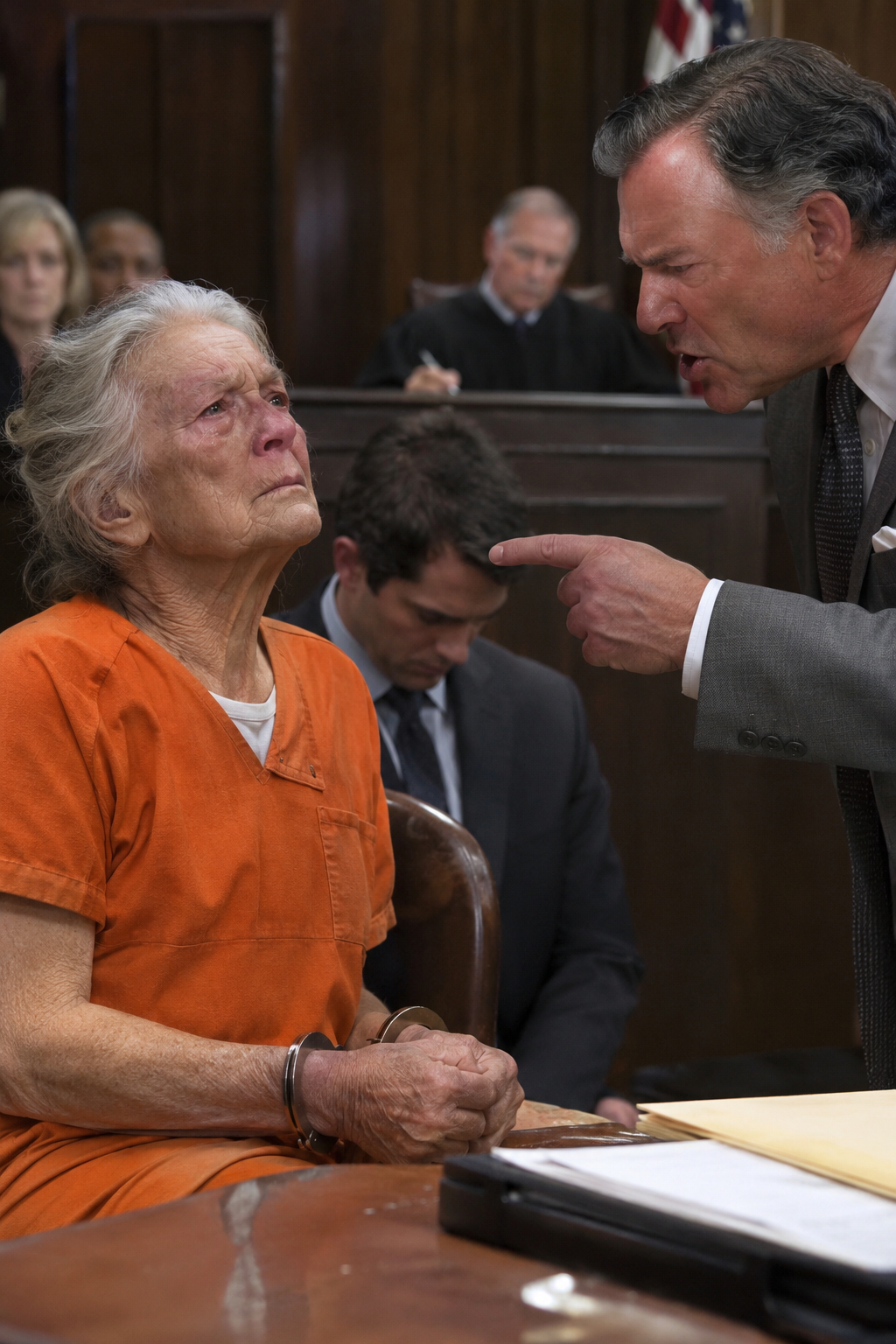
Three winters after a widowed diner owner let three broke, half-frozen motorcyclists in from an Ohio snowstorm, I learned a developer was trying to take everything her late husband had left her; by the time we reached the courthouse, the 71-year-old woman was sitting in handcuffs, her neighbors were too frightened to speak, and the judge was reaching for his pen…
The first time I met Mabel Hartigan, my hands were so cold I could barely work the clasp on my helmet. It was January, the highway was closed by a storm, and my two riding buddies and I had pulled off near Caldwell, Ohio, looking for somewhere to get warm. A little neon sign on an old county road showed only three working letters: EAT.
The diner was supposed to be closed. We saw a woman moving inside, though, and when she noticed us standing at the glass, she unlocked the door without asking what three big men in leather jackets wanted. She was small, gray-haired, and wearing an apron that had seen a thousand breakfasts.
“Get over by that heater,” she said. “You boys look about frozen through.” She put coffee in front of us, then eggs, bacon, and biscuits, while the wind rattled the windows. Between the three of us, we didn’t have enough money for one proper meal.
I tried to pay what I could, but she rested her hand on my wallet. “Your money’s no good here tonight.” My friends called me Preacher, though I hadn’t been inside a church in some time, and even I couldn’t come up with a suitable reply to that.
My big friend Tiny heard the heater rattling and fixed it before dawn. Cole, the youngest of us, made friends with a fat, one-eyed tabby named Biscuit, who slept beside the register. When the roads cleared, I told Mabel that most people looked at our jackets and saw trouble, but she had seen three cold men.
“It’s just breakfast,” she said. I told her it wasn’t just breakfast to us, and I meant it. We stopped again when our travels took us through town, sometimes with a little repair to make before we left, and she never asked us for anything in return.
I learned that Mabel had run that diner for forty years. Her husband, Earl, had built the counter himself, and eleven winters had passed since she’d buried him. She still opened at five each morning, served truckers and townspeople, and kept an old coffee can near the register for folks who couldn’t pay.
If someone came in hungry, she’d feed them. To keep her books straight, she’d sometimes put a dollar of her own into that can. She had rescued Biscuit from the parking lot years earlier, too, and somehow the old cat had decided the diner belonged to him.
We didn’t know what was happening around that place until trouble had already found her. The county had approved a new highway interchange, and Mabel’s corner lot was exactly where a Columbus developer named Dalton Cruz wanted to put a truck plaza and gas station. He offered to buy her out, then came back with a higher offer.
Mabel refused both times. On his third visit, Cruz sat at Earl’s counter and told her she was getting old, that winters were hard, and that she ought to take care of herself. He pushed a check toward her that could have paid for a comfortable retirement.
She looked at the number, picked up her coffee pot, and asked whether he wanted a refill. When he realized she meant no, he put on his hat and told her she’d regret it. Mabel had no idea yet how much effort he was willing to spend making those words come true.
Two weeks before her court date, a deputy arrived during the breakfast rush and asked her to step outside. He said she’d been identified in a hit-and-run on Route 7 three nights earlier: a damaged parked car, a witness, and a photograph of a blue pickup wearing her license plate. The repair bill was $11,000.
Mabel’s own blue truck was sitting in the gravel outside, just as it had been all week. The transmission was failing, and she said it could hardly manage thirty miles an hour. She offered to show the deputy, but he relied on the photograph and a signed statement from a man named Gary Pruitt.
She knew Pruitt as a nervous customer who came through the diner now and then. What she didn’t know was that he did odd jobs for Cruz, or that the damaged car belonged to a company Cruz controlled. By the time those connections came out, someone had already piled a second claim onto her troubles.
A company tied to Cruz produced a promissory note saying Earl had borrowed $40,000 before his death and never repaid it. There was a signature resembling his at the bottom. Mabel insisted Earl had never borrowed the money, but staring at his name on paper shook her more than the deputy’s accusation.
Cruz’s representatives came to the diner with a proposed settlement and a good pen. They said that if she signed over the lot, the debt claim and the criminal trouble could be made to go away. Mabel refused to surrender the counter Earl had built, even with all those papers stacked against her.
On Tuesday, deputies arrested her behind that very counter. She asked to turn off the griddle before they took her away, and a deputy let her do it. Her neighbor Ruth gathered up the keys and Biscuit, promised to look after the place, and watched the patrol car pull away.
Mabel spent two nights in the county jail because she couldn’t afford bail. Later she told me she’d lain awake worrying about Walt, a widower who always arrived at because his own house had gotten too quiet. That was Mabel: facing the loss of everything, still wondering who would pour somebody else’s coffee.
Her court-appointed lawyer was young and overwhelmed, with about forty other cases to manage. He spent eleven minutes with her and warned that a photograph, a witness, and a signed note made her situation dangerous. He urged her to accept a deal rather than gamble on what the court might believe.
“I didn’t do it,” she told him. “And Earl didn’t owe that money.” But she had no document proving that a loan had never existed, and no one had seriously examined the pickup. It seemed to her that everyone with authority had decided what the truth would be before asking her about it.
The judge, Harlan Ellery, knew Cruz socially. They had golfed together, and Cruz had donated to Ellery’s campaign. Around Caldwell, people also whispered that standing up for Mabel might bring trouble with permits or inspections, though I don’t know who first started that talk.
When Thursday came, her regulars stayed away. I don’t think they stopped loving her; I think they were scared, which can leave a person every bit as alone. The courtroom gallery was nearly empty, and Mabel sat beside her lawyer with cuffs around her thin wrists.
The prosecutor described the photograph, Pruitt’s statement, and the supposed debt as though they fit together neatly. Her lawyer made a couple of weak objections. When Judge Ellery asked whether she had anything to say, she looked around at all those empty seats and answered, “No, Your Honor. I guess I don’t.”
That was when Tiny, Cole, and I reached the courthouse doors. We’d heard enough about what was happening to come back, and Cole carried a thick envelope beneath his arm. We pushed through the doors just as the judge reached for his pen, and Mabel looked up at three familiar leather jackets.
I had never seen her so tired. Then she recognized us, and her eyes filled as if she couldn’t quite believe we’d crossed that room for her. The bailiff stepped into our path, so I raised my empty hands and said, “We’re not here for trouble. We’re here because there’s evidence this court needs to see.” Part 2…..
✓ Lynn R. Adams
Three winters after a widowed diner owner let three broke, half-frozen motorcyclists in from an Ohio snowstorm, I learned a developer was trying to take everything her late husband had left her; by th…