Three weeks after I buried the aunt who raised me, her son told me to move out, and I bought an abandoned Vermont house for $94 because it was the only roof I could afford. The county said nobody had lived there for seven years, but when my old brass key opened the kitchen door, the cast-iron stove was still warm…
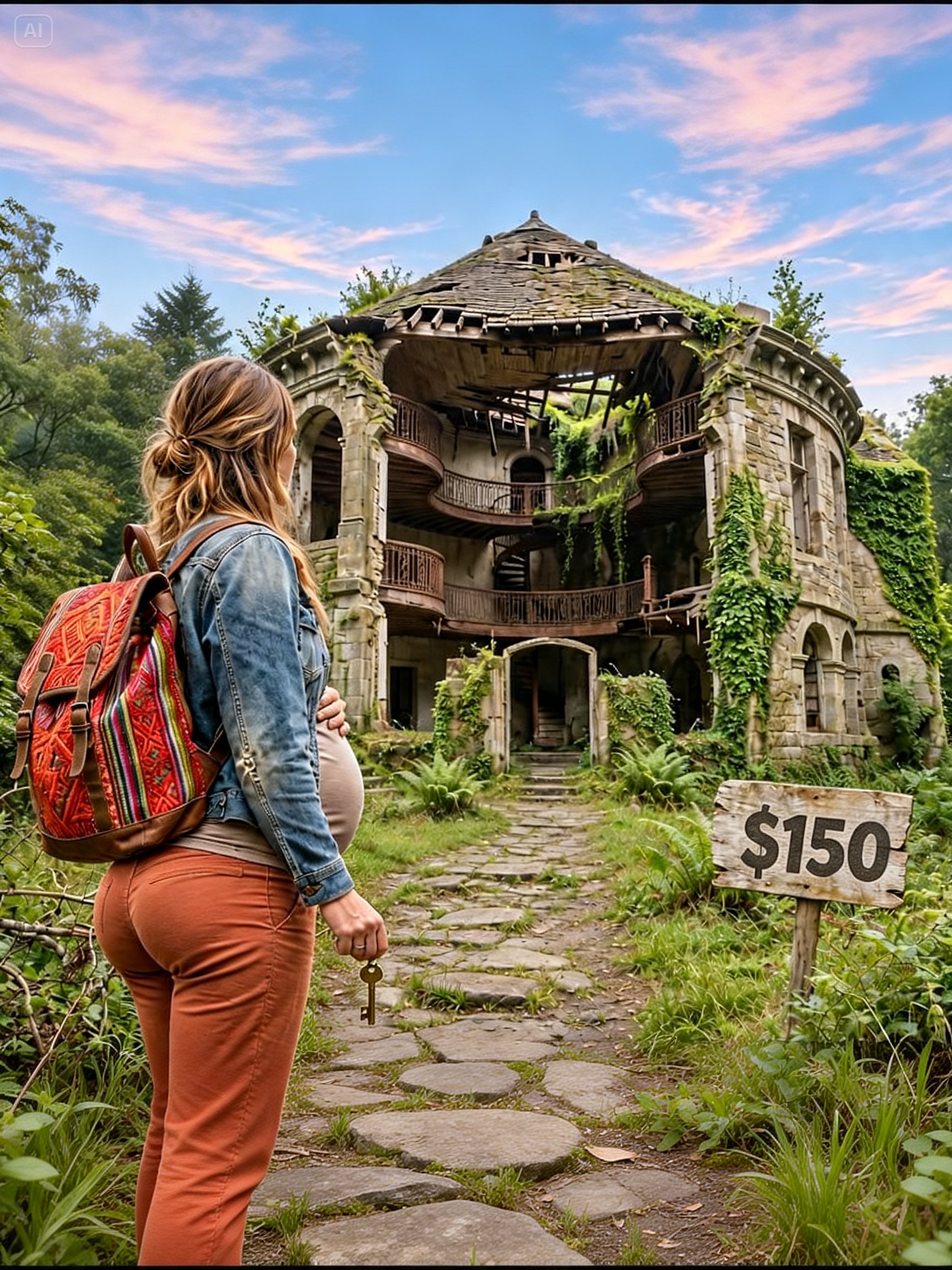
Three weeks after I buried the aunt who raised me, her son told me to move out, and I bought an abandoned Vermont house for $94 because it was the only roof I could afford. The county said nobody had lived there for seven years, but when my old brass key opened the kitchen door, the cast-iron stove was still warm…
At twenty-six, I cleaned out the homes of people who had died alone. My name is Lana Hogland, and for three years I’d spent my days sorting dishes, folding clothes, and deciding what could be donated. I was seven months pregnant that October, and every empty home reminded me how abruptly a life could change.
My aunt Hildy had taken me in when I was fifteen, after my mother left Vermont for Idaho with a man named Dale. Hildy didn’t make speeches about family; she showed me the sheets, gave me the back bedroom, and put oatmeal on the table the next morning. Eleven years later, she was sixty-eight and dying of pancreatic cancer, and I was still living in the little cottage behind her Barton farmhouse.
Four months before my last big estate job, Hildy promised that cottage would be mine. She said it at the kitchen table in front of Alban, a pastor, and Edna, who ran the feed store. She meant it, but never wrote a will.
Around that time, my supervisor, Trish, sent me to clear a trailer outside Pittsburg, New Hampshire. Its owner, Werner Olsen, had died at sixty-seven without anyone to take charge of his belongings. The bank wanted it empty by Friday; I needed the $480.
The trailer smelled of stale coffee and cedar. I packed his skillets, old eyeglasses, Bibles, and a green toolbox full of sharpening stones, working room by room as I always did. In a drawer beneath his bed, labeled KEEP in blue pencil, I found an unsealed envelope addressed to whoever was reading it.
Inside was a heavy old brass key with a four-leaf-clover-shaped bow. Tiny letters on its shank said THISTLE, KITCHEN. A folded note explained that the key opened the kitchen door of Thistlebury, near Starksboro, Vermont, where a woman named Vera Hensarling had fed Werner when he was fourteen and had nowhere else to go.
The last line caught me: if Vera was gone, I should trust the house, because it knew its people. I tucked the note and key into my mason jar.
That jar held little things left behind by people with no one to remember them: reading glasses, a thimble, a chipped porcelain bird, a ribbon. I wrote Werner’s name on the strip of masking tape around it. I couldn’t bear every trace of a life going into trash bags.
Hildy died on September 16, just as the maple leaves began turning yellow. I helped wash her body before the hospice nurse arrived, then spent the funeral doing what needed doing. Three days later, her estranged son Terrence came from Phoenix, hugged me without quite looking at me, and called a lawyer.
Without a will, Terrence claimed the farmhouse and cottage as Hildy’s surviving child. He planned to sell the entire property together and handed me a fourteen-day notice to leave. He signed it at the same kitchen table where Hildy had promised me I’d always have a place.
Alban and Edna were witnesses, but I couldn’t afford a long fight. Edna and Hildy’s friends at the Grange pressed $400 into my hands for the child. I cried in my car outside the feed store, wiped my face on my denim sleeve, and went home to pack.
I took my clothes, an unassembled crib, Hildy’s sewing machine, and the mason jar. My husband Levi had died in a wreck on Route 2 before he could meet our baby. By the time I drove away from Barton, I had $420 in the bank and Edna’s $400 in an envelope.
At a Panera off the interstate in Montpelier, I opened my laptop and asked Trish for every estate job she could give me. She had three, each paying $480. Rentals near a hospital required thousands up front.
I closed the rental listings and pulled Werner’s envelope out of the jar. I searched for Thistlebury in Addison County’s property records.
It did: eleven acres, an enormous stone house built in 1889, a historic listing, and years of unpaid taxes. The records said Vera had died in 2019 and the property was headed for its sixth unsuccessful-looking auction. The minimum bid was $94.
For a full minute, I thought I’d found a miracle. Then I read the delinquent-tax amount: $93,100. The packet also described a possible historic-preservation arrangement that, if approved, could forgive seventy percent and spread the rest over fifteen years without interest.
I did the arithmetic on a napkin: about $155 a month toward the old taxes. That excluded insurance, heat, repairs, and any guarantee of approval. Still, I wrote down the auction date, nine days away, and closed my fist around Werner’s key.
I worked those nine days wherever Trish sent me. In Lebanon, I waited with two abandoned cats until animal control arrived; in Middlebury, I packed the belongings of a man who had died at his kitchen table. At a third house in Addison County, I boxed decades of Christmas ornaments and added a broken wooden angel to my jar.
Some nights I slept in my Chevy to avoid paying for a motel. I ate gas-station sandwiches, rubbed my aching back, and reminded myself that I needed a roof before the baby arrived. I thought about Levi, who had always said yes to unreasonable possibilities, and about Hildy putting that first bowl of oatmeal in front of me.
On Tuesday morning, I went into the Addison County courthouse wearing my faded blue denim jacket and terracotta-colored pants. Nine other people sat in the basement auction room, several with laptops. When the auctioneer asked for $94 for Thistlebury, I was the only person who raised a hand.
He said sold, and I signed the paperwork before I could talk myself out of it. The clerk gave me a receipt and a packet about the preservation process, but no house key; the county didn’t have one. I walked outside, touched my belly, and told my sleeping baby we’d bought a house.
I drove toward Starksboro, turned onto Highmore Lane, and parked where the dirt road disappeared into trees. Through the mist stood something stranger than I’d imagined: a round gray-stone front, two smaller towers, broken slate roofing, rusted curved balconies, and ivy swallowing the right wall. The grass reached my knees, and I wondered if I’d bought a ruin.
But someone had built it with care, and it was mine, at least as far as the auction receipt and unpaid obligations went. I found the north-side kitchen door, its dark-green paint almost gone, and took Werner’s brass key from the jar. It fit the ancient lock, and the bolt slipped back with three heavy clicks.
When I pushed the door open, I smelled fresh wood smoke. There was a scrubbed farm table, split birch stacked neatly beside a black cast-iron cookstove, bread in a paper bag, instant coffee, and a kettle. I put my hand near the firebox and felt warmth; behind the iron door, embers still glowed.
The house had supposedly stood empty for seven years. Yet a handwritten note beneath a mug, dated three days earlier, described a sticking flue damper and the next oil delivery. Somebody was tending this place, and whoever it was might believe it belonged to them.
I was still at the table when the kitchen door opened behind me. A man of about forty-four stood there with a toolbox and a worn canvas work coat, looking as startled as I felt. He lowered the box carefully and introduced himself as Orin Benvdz, the man who delivered firewood on Tuesdays.
I told him I’d bought Thistlebury for $94 that morning. He stared at the floor, let out a quiet laugh, and said, “Oh, Vera.” Then he looked at me and said we needed to call the others, because three more people had been keeping this house alive since Vera died.
My hand settled over the baby as he stepped outside with his flip phone. I sat beside my mason jar and watched the light catch Werner’s brass key, wondering how many people still had keys to the home I’d just bought, and what they would do when they found me inside. Part 2…..
I made instant coffee and listened to Orin speaking quietly outside. I caught two names, Perry and Garrett, and the unmistakable urgency in his voice. Whatever arrangement I’d interrupted, it had been working without my knowledge for years.
Perry Takahashi arrived first, a compact thirty-eight-year-old nurse with short black hair, hospital scrubs under her fleece, and grocery bags in both hands. She set down chicken soup, cornbread, apples, and a deli chicken, then asked how far along I was and when I’d last eaten. When I admitted I didn’t have a local prenatal provider yet, her expression tightened, then she said, “We’ll fix that.”
Garrett Hensarling came through the front hall carrying his familiar-looking clipboard. He was thirty-six, tall, dark-haired, and exhausted in a way I recognized from working too long without stopping. He told me Vera had legally adopted him in 2001, when he was eleven, and he’d been trying for years to find a way to keep the property.
He didn’t blame me for the auction; the county records hadn’t explained who was looking after the place. But when I showed him Werner’s envelope and clover-shaped key, his face changed completely. “Werner Olsen,” he said, almost to himself. “He was the first.”
Before Garrett could explain, a twenty-nine-year-old woman stepped in from the woods carrying a duffel. Sedoni Hensarling had dark hair with dull-red ends, a nose stud, and a black peacoat, and she looked at me as though I’d walked off with something irreplaceable. “I live here,” she said, setting her bag on the stone floor.
I told her my name, but she wanted to know whether I understood what I had bought. She told me Vera had lost a baby boy, Ellis, in 1988, and had opened her kitchen to children who had nowhere safe to stay. Over the following decades, seventy-three young people had eaten, slept, and found help here; Garrett and Sedoni were among them, though only Garrett had been formally adopted.
“And you came along with ninety-four dollars and a key you didn’t earn,” Sedoni said. I felt myself stiffen, but shouting would not make the past any less painful for her or the present any safer for me. I told her I’d learned all of this only that afternoon, and asked what she expected me to do now.
That night, I said, I’d sleep on the kitchen bench; tomorrow I’d walk the safe rooms with Orin and find out what needed fixing. I would pursue the preservation paperwork before the tax debt swallowed the place, and then we could discuss what the house meant. I held up Werner’s key and told them one thing I knew for certain: I wasn’t surrendering control of the door before I understood who else could open it.
Perry served the chicken, Orin tended the stove, and Garrett sat quietly at the table. Sedoni went upstairs and returned with a worn blue-and-yellow quilt for my bench. It wasn’t peace, exactly, but it was a meal and a place to sleep.
The next morning I found Orin in his pickup at the end of the road. He’d slept there so he could check the stove during the night if the temperature fell, and when I offered breakfast, he accepted without making a fuss. He walked me through the building afterward, warning me about rotten flooring, loose window frames, and stair treads that could no longer be trusted.
Only three areas were reasonably usable: the kitchen, the round library, and one tower bedroom. The rest had broken windows, leaking roofing, and floors that demanded careful feet. Garrett spread original 1889 drawings over the farm table and showed me how the towers and central drum had been built around bedrock.
The well still supplied water through a hand pump, but the electric service had been disconnected years earlier. We lived by wood heat, portable lamps, and a little propane stove in the pantry. I wasn’t pretending this was a safe, finished home; I was taking stock before winter made my decisions for me.
Perry found me a prenatal appointment with a midwife named Lorine in Middlebury and drove me there after a hospital shift. The baby was healthy, but I needed better nutrition and regular care. Perry listened to the instructions with the severity of a woman who planned to hold me to every one.
Garrett and I wrote down the first essential expenses: specialty insurance, fuel, plumbing checks, the preservation application, and basic winter supplies. I estimated that I’d need about $3,100 to make it into December; after the auction and immediate costs, I had only a few hundred dollars available. When I said I couldn’t afford much help, Garrett told me he was helping the house, just as his mother would have wanted.
Then he said something that made me put down my pencil. Vera had left a letter in a safe behind the law books in the library, addressed to whoever came after her. He admitted he’d known about it since before I arrived and had been deciding when to tell me.
I stared at him across the table. “You’re deciding what I get to know about a safe in my own library?” He lowered his eyes, then stood and showed me where it was.
Part 3 Behind an old volume of Vermont statutes was a small wall safe. Garrett gave me the combination based on his adoption date, July 15, 2001, and I opened it myself. Inside lay a clothbound ledger marked T, a cream-colored letter in Vera’s handwriting, and $8,400 in carefully bundled cash.
I asked for ten minutes alone and took the envelope to the kitchen. Vera’s letter told me she’d bought Thistlebury with her husband Charles in 1986, and that their baby Ellis had been stillborn in February 1988. After his burial she’d stood outside, unable to make herself enter, until a fourteen-year-old boy appeared and asked if she had work.
His name was Werner Olsen. He was hungry and frightened, and Vera fed him, made up a cot in the library, and eventually helped him reunite with an aunt in Omaha. She wrote that seventy-two more children followed him through that door, and that she had kept their stories in the ledger.
Vera wasn’t offering the place as an official shelter or claiming those children as property. She had simply kept a kitchen door open when somebody needed it. She described Garrett as her legal son, the others as people she loved without owning, and the house as belonging, in spirit, to whoever would continue caring for it.
She also named her attorney, Immani Beauchamp, who had instructions about a small trust connected to the house. The $8,400 was meant to help the next caretaker believe they were allowed to stay. At the bottom Vera had written, “Welcome home.”
I read those two words again with the paper flat under my palm. Hildy had once offered me a bed without demanding an explanation, and I recognized what Vera had tried to leave behind. Still, a letter about belonging did not cancel the tax liens or repair a dangerous roof, and I knew I had work to do.
Outside, I told Garrett I wanted time and a say in every decision. No architects, inspections, or contractors without my permission, and no walking in without knocking just because he’d grown up here. He said he’d try, and I asked him to try harder.
I used Vera’s money for the preservation filing fee, the first month of insurance, a well inspection, and a locksmith’s assessment. I recorded every dollar in the back of her ledger rather than treating the cash as a gift for myself. As I read the seventy-three entries, I found brief accounts of children arriving, relatives being contacted, and sometimes people leaving without saying where they went.
There was humor among the hard parts. One boy had worked a month splitting firewood to pay for a window he broke while playing ball, and a woman who’d once stayed here still telephoned at Christmas. I turned to the blank page after the last entry from 2019 and wrote a heading: “74 and after.” I left the space below it empty.
The people around me cared deeply, but they were used to helping first and asking later. One evening Perry installed a baby monitor in the tower bedroom and connected it to her phone, certain she was keeping me safe. I thanked her for the intention and told her to unplug it because I had never agreed to a listening device in my room.
She left angry and stayed away three days. When she returned with lemon bars, neither of us revisited the argument, but she didn’t plug the monitor back in. It was a small boundary, yet the silence it cost us was real.
Then Garrett brought a restoration architect named Fay Morelis without asking. I was pricing propane when I heard them discussing the library dome, and I stopped their inspection in the front hall. Fay accepted my request to reschedule, but Garrett was embarrassed and frustrated; he said he hadn’t wanted to lose an opening in her calendar.
“Whose time were you saving?” I asked. He couldn’t answer, and he stayed away for four days before sending me her number. I called Fay myself when I was ready.
A letter from the historic-preservation office arrived soon afterward. Someone had questioned whether I was fit to maintain the preservation covenant, and an inspection would be scheduled. The complainant’s signature was Sedoni’s.
I found her drinking coffee the next morning and laid the notice on the table. She didn’t apologize, so I asked what she feared I would do to the house. At first she told me I didn’t understand Thistlebury, but when I said I was trying to learn, she stared into her cup for a long while.
After Vera died, Sedoni had returned from graduate school in Boston and tried to run the place herself. Four young people needed help that first winter; she fed them, found relatives when they allowed it, split the wood, and paid bills until her money and strength were gone. One morning she couldn’t get up from the kitchen floor, and Orin and Perry took her away to recover.
She’d spent two years away while Garrett, Orin, and Perry kept things running, and coming home had felt like discovering she’d been replaced. I told her I couldn’t replace her, and wasn’t trying to. Then I asked whether she’d stand beside me during the upcoming inspection because she knew this building better than I did; she said she’d think about it.
A few days later, in a damaged tower room with sailboat wallpaper, I found Garrett’s childhood composition notebook. The first page said that Vera had taught him a house could be kept open without belonging to any one person. I read that page, then put the notebook in the safe, realizing I, too, had begun keeping secrets.
Part 4 By December 14, the sky had turned the flat gray that usually meant trouble. Perry called from Porter Hospital with a blizzard warning: deep snow, fierce wind, and a road the county was unlikely to plow promptly. Worse, the big stove’s chimney hadn’t been swept in two years, and the flue damper sometimes stuck.
She wanted Garrett and Orin to come clean it before the storm. I wanted the chimney safe, especially with my baby on the way, but I was weary of people making themselves managers of my life. I asked for one hour to think and hung up.
I sat beside Werner’s jar and wrote one page by hand. I called it the Thistlebury House Agreement, and its heart was simple: nobody would enter without knocking, bring professionals without asking, or make decisions in my name. All existing keys were to be returned, and I alone would choose who received new ones.
I also promised quarterly gatherings for everyone in Vera’s ledger, with work on the house, dinner, and time to talk. The north pantry might become a sewing room if I wanted that, not because anyone said I ought to earn my place. I left room for four signatures and asked Perry to bring everyone at the next evening.
Orin came with his toolbox, Garrett came without his clipboard, and Perry arrived from work carrying coffee. Sedoni came down from the upstairs room she’d been using, still wearing her peacoat as if she might leave at any moment. I set five chairs around the farm table and read the agreement slowly.
I told them I wanted their help, but freely given on terms we all understood. Orin could tackle the chimney, and I would alter his mother’s funeral coat in exchange. I asked Garrett for help with preservation paperwork, Perry to stand beside me as a friend when I delivered the baby in February, and Sedoni to plan our first April gathering with me.
Perry read the agreement twice before signing. Orin signed next, then Garrett, who said his mother would have made him sign it years ago. They placed their old brass keys on the table beside the mason jar, one after another.
Sedoni wouldn’t sign or surrender hers. Her voice stayed controlled, but I could hear how much it cost her to say that I couldn’t take the key to her childhood just to feel in charge. I told her she would always be welcome, but if she kept the key, I’d have the locks changed before the blizzard.
She pointed out that it would cost nearly $400 I didn’t have to spare. I agreed, and when she asked why, I told her losing control of my home cost more. At the door she paused to warn me that the flue stuck when the wind came from the east, then said she might come for the April gathering if I still wanted her.
“I do,” I said, and she closed the door gently behind her. I called the locksmith and left a shaky voicemail. The three returned keys stayed in a neat row on the table all night.
The next morning, a locksmith named Royce arrived through the first snow and replaced the locks on the usable entrances. He cut new keys and gave me a handwritten receipt for $395, which I paid from the money in the safe. Whatever else this arrangement meant, nobody could claim I hadn’t meant it.
Meanwhile, Garrett and Orin had been clearing the chimney since dawn. They spread a tarp below the stove, worked from the roof and firebox, and finished before the snow turned heavy. Perry arrived with bagels and prenatal vitamins and looked out at the road as it disappeared under white.
By afternoon none of them could leave safely. I offered Perry the library couch, asked Orin to stay, and was relieved when Garrett stayed too. For the next thirty-six hours we fed the stove, checked the flue, kept water available, and listened to the wind batter the damaged roof.
The storm tore slate from the right tower and buried its broken windows in snow. But the warmth held, the chimney drew properly, and I slept in my tower room knowing people were downstairs by invitation rather than assumption. In the middle of one night I saw Orin tend the fire with the care of someone looking after a living thing.
On Sunday, when the sky cleared over three feet of snow, we dug paths through the yard. Perry left for her hospital shift, and Garrett stayed to review the preservation checklist with me. Before Orin finally drove home, I placed a new kitchen-door key in his palm and told him it was given, not loaned.
He closed his fingers around it and nodded once. I trusted him to use it for the stove when I needed him, and he understood the difference between being welcomed and assuming the right to enter.
Part 5 The preservation inspector, Marguerite, came after the storm, when Garrett and I had organized the application and listed what still needed repair. She walked through the three usable rooms, documented the hazards, and warned me that preserving the property would take years. Garrett stood nearby but let me answer her questions.
She signed a preliminary recommendation, not a magic certificate that everything was solved. Eleven weeks later, in the first week of February, written approval of the proposed seventy-percent back-tax relief arrived. I still owed the remainder on a long payment plan and had a ten-year preservation commitment to honor, but the future looked possible on paper.
That same week, I went into labor. At Porter Hospital in Middlebury, Perry stood beside me while the medical team helped me through delivery, and at in the morning I met my daughter. I named her Hildigard Lenora Hogland: Hildy for the woman who raised me, and Lenora for the home Vera had made possible.
Orin drove us home three days later with a car seat he’d found through a Middlebury consignment shop. He drove so slowly I could count the snowbanks, and stopped twice to check the straps. Perry later told me he’d read the car-seat manual more than once.
I recovered while the house gradually found a new routine. Garrett helped arrange repairs with my approval, Perry brought meals when she could, and Orin kept the firewood coming. Sedoni was still difficult to read, but now I knew that silence didn’t necessarily mean she had stopped caring.
For the first gathering in April, I wrote invitations by hand to the people whose addresses I could confirm from Vera’s old ledger. Thirty-one came: adults with children of their own, people carrying coolers of food, others arriving quietly and stopping at the kitchen threshold. One woman named Lacy Teague, who’d stayed here in 1996, touched the stove as if greeting an old friend.
Sedoni came from Boston with Omar, the man she was seeing. She helped without trying to direct me, and left a wrapped parcel that I opened after the last guest had gone. Inside was a blue-and-yellow quilt she’d sewn at seventeen, with her initials stitched into one corner.
I put it over baby Hildy’s crib. Sedoni hadn’t said she was sorry, and I didn’t ask for those words; she’d come back and made something useful with her own hands. We had started there.
The second gathering drew forty-two people and the third fifty-eight. Some cleared brush, some carried food, and others helped with careful repairs; the house never became new, but fewer places were unsafe each season. In the north pantry I set up Hildy’s old sewing machine and began making bibs, swaddles, and bonnets to sell online.
I made $211 in March, $480 in April, and $620 in May. It wasn’t a fortune, but it was money I’d earned without leaving my baby for days to clean a stranger’s house. I kept a cot by the library stove, not as the beginning of an unlicensed institution, but because I couldn’t forget what Werner’s key had shown me.
That July, a woman named Marisol arrived with a six-year-old boy and a baby in a sling. They needed a safe place to rest, food, clean clothes, and help reaching family, and I did what I could while we worked out what would keep them safe. Marisol stayed eleven nights, then asked me to contact her sister in Albany, who came to take them in.
Marisol called that October to say they were safe. I opened Vera’s ledger and wrote the first new entry under my heading: Marisol Dela Cruz, twenty-nine, Hinesburg, eleven nights, sister in Albany, safe. I gave the entry the number seventy-four.
In September, two sisters from New Hampshire, fourteen-year-old Adrien and twelve-year-old Jules, stayed while we helped arrange care with their grandmother in Keene. Garrett drove them there when she was ready to receive them. They became entry seventy-five.
I had learned that opening a door wasn’t the same as being able to solve every problem. With children especially, safety meant making calls, involving the right caregivers, and knowing my limits. I couldn’t become a whole social-service system simply because Vera had once made space for someone.
Final In December, a fifteen-year-old boy named Jace came up the road wearing a thin hoodie and sneakers split at the toes. He had $78 in an envelope and asked whether there was work, or somewhere he could sleep. I brought him inside, gave him soup, and made up the library cot.
He stayed thirty-one days, splitting wood, shoveling paths, reading the children’s books, and teaching Hildy to clap. He wasn’t ready to tell me what he’d run from, and I didn’t press him beyond what was necessary to make sure he was safe. At last he asked me to call his mother in Keene to let her know he was all right.
I wrote his entry in the ledger, number seventy-six. His story didn’t neatly fix everything he’d been through, but he had found a way to make that first call. I remembered Vera writing about Werner and an aunt in Omaha, and understood why she’d recorded outcomes in plain little sentences.
By the following February, Hildy was one. One afternoon she slept beside my sewing machine beneath Sedoni’s quilt while sunlight reached across the pantry floor. I took down the mason jar, which still carried thirteen names from my estate-cleaning days, and unscrewed the lid.
I wasn’t collecting the belongings of strangers anymore. On a small piece of parchment, I wrote things I wanted my daughter to know: that her father Levi had been a baker, that Hildy had offered me a home, that Orin hummed while he worked, that Perry’s hands were always cold, that Garrett checked the door latches, and that Sedoni had returned. I included the ordinary sound of the stove at four in the morning when it was just my daughter and me.
I rolled the paper and tucked it into the jar. I took off the strip with the thirteen names, burned it in the stove, and wrote a new label: H. Hogland. The glass sat in the sunny window, holding memories meant for someone who would one day be old enough to ask.
Werner’s brass key was in my hand again. I kept it in my pocket, but mailed his original envelope and note to Garrett with a message that it belonged to his family longer than it had belonged to me. When he called to thank me, we didn’t need a long conversation.
At our fifth gathering, on the last Sunday in May, fifty-six people came. Orin worked the grill, Perry held Hildy, and Garrett and several others repaired the old sailboat-wallpaper room in the right tower. Sedoni and I pulled trays of rolls from the pantry oven and carried them out together.
I told her I meant to keep the sewing business, the single cot in the library, and the quarterly gatherings. She said she’d already figured that out. When I asked if she’d help me organize the gatherings for as long as she wanted, she said yes without looking up from the rolls.
At dusk I stood near the trestle table with Hildy on my hip and said a short grace for those who had come before us, those who had come that day, and the kitchen door that still opened. After the cars left, I watched the last headlights disappear between the trees and carried my sleeping daughter inside.
The roof was patched where we could manage it, the ivy was cut back, and the house still needed work. I locked the kitchen door that night, not because I wanted to shut people out, but because I’d finally learned that a home could be openhearted and still have boundaries. In the morning I would unlock it again, on my own terms.
THE END. I’ve shared the complete story, and I truly hope it touched your heart. If this story moved you, please , like, and share the post. Thank you for reading! ❤️
✓ Lynn R. Adams
Three weeks after I buried the aunt who raised me, her son told me to move out, and I bought an abandoned Vermont house for $94 because it was the only roof I could afford. The county said nobody had …