They Threw Her Out Days After Her Father Died—Then His “Worthless” Mountain Cabin Opened a Tunnel to the Truth
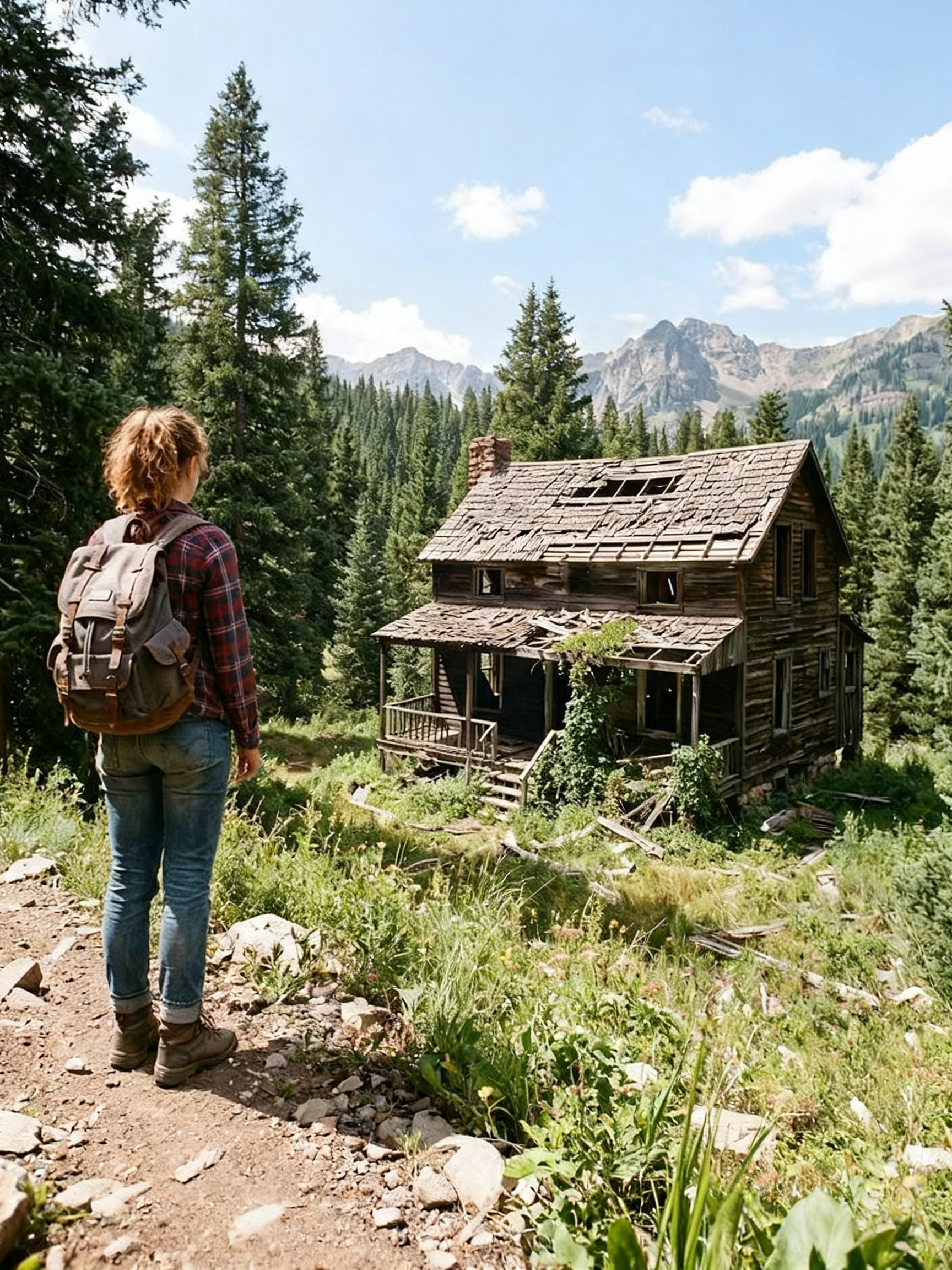
They Threw Her Out Days After Her Father Died—Then His “Worthless” Mountain Cabin Opened a Tunnel to the Truth
Four days after her father was buried, Laura Bennett’s brother slid her suitcase across the kitchen floor and told her she had until sunset to get out.
Her aunt stood behind him holding their father’s silver coffee service like she had already inherited the right to touch it.
And Laura, who had spent eleven years changing their father’s bandages, driving him to Denver for treatments, paying the property taxes when his pension fell short, and sleeping in a chair beside his hospital bed during his last week, did something that frightened them more than screaming would have.
She smiled.
Not warmly.
Not bitterly.
Just enough to make her brother stop pushing the suitcase.
“You heard me, Laura,” Mark said. “The house belongs to me now.”
Laura looked around the kitchen.
The yellow pine cabinets her father had built by hand.
The burn mark beside the stove from the Thanksgiving turkey fire of 2007.
The window over the sink where Richard Bennett used to stand every morning, coffee in hand, watching snow gather on the foothills outside Golden, Colorado.
His coat was still hanging beside the mudroom door.
His work boots were still underneath it.
His reading glasses still rested on yesterday’s newspaper.
Dead people left behind an astonishing amount of evidence that they had once expected tomorrow.
Laura folded her hands.
“I heard you.”
Mark seemed disappointed.
He had dressed for the occasion.
Navy sport coat. White shirt. Expensive watch. Brown leather shoes that had probably never touched anything rougher than an airport carpet.
At forty-three, he had spent most of the last fifteen years selling commercial real estate in Denver and describing himself online as a “legacy asset specialist.”
Laura privately thought there were few phrases more ridiculous.
Beside him stood Aunt Diane, their father’s younger sister, sixty-eight, pearl earrings already transferred from the bedroom upstairs to her ears.
Behind them were Mark’s wife, Celeste, and a man Laura recognized from the funeral.
Grant Holloway.
Tall, carefully silver-haired, carrying a leather folder.
That was when Laura understood this had been planned before the dirt settled over her father’s casket.
Grant cleared his throat.
“The probate documents are straightforward.”
“Are they?”
He looked at her.
Laura’s voice had no edge.
That was the strange part.
She sounded curious.
Grant opened the folder.
“Your father left the Golden residence and its contents to Mark.”
Aunt Diane touched one pearl.
“The investment account is divided between Mark and Diane.”
Celeste’s mouth softened into something resembling sympathy.
“The vehicles transfer to Mark. Richard’s ownership interest in Bennett Survey and Land Holdings transfers according to the corporate succession papers.”
Laura nodded once.
Mark leaned against the counter.
That was the moment he had been waiting for.
“You got Black Ridge.”
Aunt Diane gave a tiny laugh.
Celeste looked at the floor, but not quickly enough.
Grant removed a page.
“The cabin and surrounding parcel known as Black Ridge Tract Seven. Approximately thirty-eight acres.”
Mark smiled.
“You remember it?”
Everyone in the family remembered it.
Her father had bought the mountain parcel outside Silverthorne in 1989 after a failed development company abandoned several lots around an old logging road.
The cabin had no reliable power.
No municipal water.
No winter road maintenance.
No usable septic system according to the county file.
The roof leaked.
The chimney leaned.
A pine tree had punched through the rear porch during a storm eight years earlier.
Mark had once called it “Dad’s raccoon palace.”
Aunt Diane preferred “the mold museum.”
Laura had not been there since she was seventeen.
Her father had stopped taking anyone with him after that.
He would disappear there two or three weekends every year, usually alone.
When Laura asked why, he always said the same thing.
Some places are worth more when people think they’re worthless.
She had assumed he was joking.
Mark spread his hands.
“So congratulations.”
Aunt Diane laughed again.
Thirty-eight acres of steep Colorado rock.
A collapsing cabin.
And according to the county assessor’s website, twelve thousand eight hundred dollars in total assessed value.
That was Laura’s inheritance after eleven years of sacrifice.
Mark had once visited their father twice during a seven-month chemotherapy cycle.
Diane had come once, stayed forty minutes, and complained that the hospital parking garage charged nine dollars.
Laura had been there for every infusion.
Every scan.
Every midnight fever.
Every insurance appeal.
Every frightened moment their father disguised with bad jokes.
She had reduced her hours as a civil engineer.
Then reduced them again.
Then left her project-management position entirely when Richard began falling.
She had burned through most of her savings.
She had sold her Subaru and bought an older Honda because the payments were lower.
She had never presented her father with a bill.
Mark knew all of that.
Which was why he wanted a reaction.
He wanted rage.
He wanted accusations.
He wanted Laura to give him something ugly enough that he could remember this afternoon as proof that she had deserved less.
Laura picked up her suitcase.
“How long did you know?”
Mark’s smile weakened.
“Know what?”
“That Dad was leaving you the house.”
Grant shifted slightly.
Mark noticed.
That movement told Laura more than an answer would have.
“A while,” Mark said.
Celeste folded her arms.
Laura looked at Grant.
“Before the hospital?”
The attorney closed the folder.
“These documents were executed lawfully.”
That was not an answer either.
Laura nodded.
There were times when silence meant surrender.
There were times when silence meant shock.
And there were times when silence was what happened when an engineer walked into a room, saw a crack in a load-bearing wall, and decided not to touch anything until she knew where the weight was going.
Laura carried the suitcase toward the hallway.
Mark called after her.
“You can take your clothes. Personal stuff. Nothing Dad owned.”
She stopped beside the mudroom.
Her father’s green canvas jacket hung six feet away.
For eleven winters she had watched him pull it on before going outside to clear snow.
The left cuff was torn.
One pocket sagged.
It probably belonged to Mark now.
Laura reached instead for her own gray coat.
When she lifted it from the peg, something hard struck the floor.
Everyone looked down.
A brass object lay beside Laura’s boot.
A small cylindrical token, slightly larger than a quarter, with deep grooves around the edge.
One side had been stamped with the letters R.B.
The other showed a mountain crossed by a horizontal line.
Mark stepped forward.
“What’s that?”
Laura bent and picked it up.
“I don’t know.”
Aunt Diane extended her hand.
“If it belonged to Richard—”
“It fell out of my coat.”
“Because he put it there.”
Laura looked at her aunt.
Diane lowered her hand.
That was Laura’s second smile.
Still small.
Still calm.
She slipped the brass piece into her pocket.
“Then I suppose we’ll have to find out.”
Mark’s face changed.
Only for a second.
But Laura saw it.
Recognition.
Then it disappeared.
Interesting.
Very interesting.
She lifted the suitcase again.
Mark walked ahead of her and opened the front door.
Cold October air moved through the house.
She paused.
Her brother lowered his voice.
“Don’t make this harder than it has to be.”
She studied him.
The expensive watch.
The confident posture.
The little tremor in his right thumb.
Mark had done that as a child whenever he lied.
“You’re right,” Laura said. “We shouldn’t.”
For eleven years, she had been the one who stayed.
For eleven years, she had been the one who paid.
For eleven years, she had been the one they called when Dad fell, when Dad forgot, when Dad needed a ride, when Dad woke afraid at three in the morning.
For eleven years, they had called her life small because it happened close to home.
For eleven years, they had mistaken sacrifice for weakness.
Laura stepped onto the porch.
She did not ask Mark why their father had rewarded absence.
She did not ask Diane why the pearls were already in her ears.
She did not ask Grant why a probate attorney had attended a family eviction.
She asked only one question.
“When are you selling?”
Mark blinked.
“The house?”
Celeste answered before he could.
“Thursday.”
Mark shot her a look.
Laura noticed.
“There’s no point hanging on to it,” Mark said. “The market’s strong.”
“No one you know.”
Laura tilted her head.
“Is that so?”
Grant stepped closer.
“Laura, I really think it would be healthier for everyone to treat today as closure.”
She looked at the attorney.
Then at Mark.
Then at Celeste.
“Thursday,” she repeated.
She walked to her Honda and put the suitcase in the trunk.
No one helped.
No one said goodbye.
Her father had been dead ninety-six hours.
His family had already divided his rooms into assets.
Laura sat behind the wheel but did not start the car.
Through the windshield, she watched Mark return inside.
Diane closed the door.
Three seconds later, the curtain in the living room moved.
Someone was watching to make sure she left.
Laura took the brass token from her pocket.
She rubbed dirt from one groove with her thumbnail.
There was something else along the rim.
Her pulse changed.
Because Laura knew her father’s habits.
Richard Bennett had spent forty-two years as a surveyor.
He labeled everything.
Coordinates.
Reference monuments.
Benchmarks.
Even leftovers in the refrigerator had dates written in block letters.
17–3–9 was not random.
She opened the glove compartment and removed a small notebook.
On the last page she wrote:
BRASS TOKEN.
MOUNTAIN / HORIZONTAL LINE.
MARK RECOGNIZED IT.
HOUSE SALE THURSDAY.
Then she started the car.
She did not drive to a friend’s house.
She did not drive to a hotel.
She drove west.
Two hours later, dusk settled purple across the Rockies as Laura’s Honda climbed toward Black Ridge.
The paved highway became county road.
County road became gravel.
Gravel became a narrow lane under lodgepole pines.
The final half mile looked barely passable.
She stopped twice to move fallen branches.
The temperature dropped below freezing.
There was no cell signal.
Then the cabin appeared.
If someone had wanted to design the least impressive inheritance in Colorado, they could hardly have done better.
The structure leaned uphill as though exhausted.
Rusting metal roof.
One broken shutter.
A stone chimney streaked black.
Weeds had swallowed what remained of the porch.
One side of the building disappeared into the slope.
Laura parked and sat looking at it.
“Nice one, Dad.”
Her voice sounded very loud in the empty car.
For the first time since the funeral, grief pressed hard enough against her ribs that breathing hurt.
Not because of the money.
She had lived without money.
She knew how.
It was the possibility that she had been wrong about him.
Richard had never been sentimental.
But he had been fair.
Painfully fair.
If Mark ate the last cookie, Richard broke the next one in half.
If Laura got twenty dollars for an A, Mark got twenty for making varsity.
If Diane borrowed money, Richard wrote it down and refused to forgive it simply because they shared blood.
Fairness had been his religion.
So why had he left the house to the son who barely visited?
Why the accounts?
Why the vehicles?
Why everything liquid, valuable, convenient?
And why leave Laura the one thing everyone considered a burden?
She unlocked the cabin using the key attached to the probate envelope.
The door resisted.
She pushed harder.
Dust moved in the beam of her flashlight.
The front room smelled of pine resin, cold stone, and mice.
An iron stove sat against one wall.
A narrow table.
Two chairs.
Shelves filled with old survey manuals.
A couch with a horse blanket over it.
Nothing valuable.
Nothing obvious.
Laura found a lantern and shook it.
A box of matches lay beside it.
Her father had been here recently.
Not weeks ago.
Maybe months.
There were canned beans dated that year.
Fresh batteries sealed in plastic.
A first-aid kit that had not expired.
She found stacked firewood under a tarp and started the stove.
Then she searched.
Not recklessly.
Methodically.
Floorboards.
Under the mattress.
Inside drawers.
Behind photographs.
Richard had taught her how to read a site.
You don’t look for what belongs, he used to say.
You look for what doesn’t.
Laura stood in the center of the cabin and slowly turned.
Everything belonged.
The rear wall troubled her.
The cabin’s outside dimensions did not match its interior.
She had noticed it the instant she arrived but had blamed the mountain slope.
Now she paced.
Twenty-one feet from front wall to rear wall inside.
Approximately twenty-six outside.
Five feet missing.
She smiled without humor.
“Okay, Dad.”
The rear wall held a bookcase.
Built from rough timber.
Laura emptied three shelves and found bolts at the base.
She removed them using a socket wrench from the cabin toolbox.
The bookcase moved an inch.
Behind it sat a narrow steel door painted the same brown as the logs.
No visible lock.
Only a circular indentation at chest height.
Exactly the diameter of the brass token.
Laura took it from her pocket.
For the first time that day, her hand trembled.
The token fit.
She pushed.
Turned left.
Turned right.
A mechanism moved deep inside the wall.
Laura pulled.
The steel door opened.
Cold air touched her face.
Behind it was a passage.
Not a room.
Stone on one side.
Poured concrete on the other.
Electric conduit ran along the ceiling.
Twenty feet ahead, darkness swallowed everything.
Laura stood perfectly still.
Her father had owned this cabin for thirty-seven years.
Her brother had mocked it for three decades.
Her aunt had begged Richard to sell it at least six times.
No one had known.
Or no one had admitted knowing.
She lifted the lantern.
On the inside of the steel door, written in her father’s familiar block handwriting, were six words.
IF YOU FOUND THIS, LOCK THE DOOR.
Below the message was another.
DON’T CALL MARK.
Laura stared at it for a long time.
Then she laughed once.
It came out broken.
“All right.”
The tunnel sloped downward.
The cabin disappeared behind her.
The air became colder but dry.
Steel ribs reinforced sections of rock.
Old electrical boxes suggested the tunnel had existed long before her father purchased the property.
After roughly eighty feet, it widened into a concrete chamber.
Laura stopped in the doorway.
Shelves lined both walls.
Metal document cases.
Survey tubes.
File boxes.
Two old computers.
A compact generator.
A drafting table.
Three locked cabinets.
And in the center of the room sat her father’s red toolbox.
The one that had vanished from the garage eighteen months earlier.
Laura set the lantern down.
On the drafting table lay a manila envelope.
Her name was written on it.
LAURA ANN BENNETT.
She opened it.
Inside was a letter.
If Mark gave you time to read this in peace, then I misjudged him.
If he pushed you out quickly, I didn’t.
Laura stopped.
She sat down.
The concrete chair was cold beneath her.
She continued.
You are probably angry with me.
Anger is useful when you make it wait.
You learned that better than I did.
The things I left Mark were things he could see.
The things I left you were things he never bothered to understand.
That distinction matters.
Do not contact Grant Holloway.
Do not discuss the tunnel with Diane.
Do not sign any release connected to my estate, Bennett Survey and Land Holdings, Northstar Ridge Development, Black Ridge Water Cooperative, or Holloway Mountain Partners.
Especially Holloway Mountain Partners.
Laura read that line twice.
Grant Holloway.
Same surname.
She turned the page.
Twenty-two years ago, I found something while resurveying parcels around Black Ridge.
At first I thought it was a boundary error.
It was theft done with paperwork.
The original plat contained a protected access corridor, water easements, and thirty-one privately held mountain parcels belonging mostly to families who had lived in Summit and Clear Creek counties for generations.
A development group began consolidating land through forged releases, altered survey monuments, tax notices sent to wrong addresses, and foreclosures that should never have occurred.
Different company names appeared over the years.
Different attorneys.
Different officers.
Same people.
I made copies.
I raised questions.
The county told me the records were old.
The bank told me the signatures were valid.
A lawyer told me to worry about my own property.
I bought the cabin.
Laura looked around the chamber.
Her father had not bought a cabin.
He had bought an observation post.
She continued.
This tunnel predates the cabin. Old mining prospect, later used as a Cold War geological survey station.
Most maps lost it.
I began storing originals here because records kept disappearing elsewhere.
I thought proof would be enough.
I was wrong.
Proof is only useful if it survives the people it threatens.
Laura’s throat tightened.
A second envelope was clipped behind the letter.
LEGAL CONDITIONS.
Inside was a copy of a trust agreement.
She read slowly.
Richard Bennett had placed Black Ridge Tract Seven into something called the Bennett Land Integrity Trust six years earlier.
Laura was named successor trustee.
But that was not the shock.
The trust did not contain thirty-eight acres.
Attached schedules listed controlling interests, easements, water rights, dormant claims, mineral reservations, road corridors, and conditional ownership interests spread across more than four thousand eight hundred acres.
Some were tiny strips.
Some were access rights.
Some were water infrastructure.
One parcel contained only seventy feet of road.
Another was a triangular wedge beside a reservoir.
Individually, they seemed almost meaningless.
Together, they wrapped around something.
Laura opened an old county development map pinned beneath the trust documents.
Northstar Ridge.
A proposed luxury mountain community.
Three hundred and twelve homes.
Private lodge.
Retail village.
Estimated development value: $620 million.
The trust did not own the development.
It controlled the arteries.
Road access.
Utility crossings.
Emergency easements.
A reservoir inlet.
And, according to one highlighted paragraph, an unextinguished original title corridor running directly beneath the planned commercial center.
Her father had spent decades quietly buying abandoned rights and preserving disputed ones.
Not to become rich.
To prevent the people manipulating the records from sealing the fraud forever.
Laura returned to the letter.
You are wondering why I did not expose this publicly.
The first time, a recorder’s office fire destroyed three boxes of archived plats six days before a hearing.
The second time, a witness changed his statement after his daughter’s mortgage was suddenly called due.
After that, I stopped announcing my moves.
You do not fight people like this by telling them where you stand.
You let them think you stepped away.
Laura whispered the next line before reading it.
“You let them think they won.”
Her father had underlined the following sentence.
That was almost funny.
Then Laura found the warning.
Mark knows pieces.
Enough to be dangerous.
Her stomach went cold.
She kept reading.
He came to me sixteen months ago with a proposal from Northstar.
They offered twelve million dollars for several interests they believed Bennett Survey still controlled.
Mark called it life-changing money.
I called it payment for silence.
He told me I was choosing dead neighbors and dusty paper over my own family.
I told him some families are still alive because dusty paper proves where home begins.
After that, he began asking about my estate.
Laura lowered the page.
A sound came from the tunnel.
She switched off the lantern.
Darkness swallowed the chamber.
Another sound.
The outer door?
Laura’s breathing slowed.
She reached into her coat for her phone.
The chamber had another door at the rear.
She had noticed it earlier.
This one was painted red.
She moved quietly toward it.
Behind her, somewhere up the tunnel, a faint yellow light appeared.
Someone had opened the cabin passage.
Laura unlocked the red door.
She descended.
The stairs ended at an older stone passage barely tall enough to stand in.
Cold air flowed from her right.
Her father had built or preserved a second way out.
Of course he had.
Laura moved quickly.
The passage rose through rock and ended behind a steel hatch disguised with brush and stones.
She pushed it open.
Night air hit her face.
She emerged seventy yards uphill from the cabin.
Below, through the trees, headlights glowed.
A black SUV.
One man stood on the porch.
Another was inside.
Laura crouched behind a fallen pine.
She recognized the man outside.
Grant Holloway.
Probate attorney.
The man handling her father’s estate.
Grant checked his watch.
Then looked toward the road.
A second vehicle approached.
Mark’s Range Rover.
Laura did not feel heartbreak.
That would come later.
What she felt now was clarity.
Mark stepped out wearing a down jacket.
“You said she left.”
“She came here.”
“I can see that.”
Mark stared at the cabin.
“Did she open it?”
Grant said nothing.
That silence answered him.
Mark swore.
“You told me Dad never gave her the key.”
“He didn’t give her a key.”
Laura touched the brass token in her pocket.
Mark walked onto the porch.
“What did she find?”
“We don’t know.”
“You said the chamber was sealed.”
“I said we never located the mechanism.”
Not hadn’t.
Grant knew about the chamber.
At least generally.
Laura remained still.
Her brother kicked something from the porch.
“We need those files before Thursday.”
The house sale.
Why would files inside Black Ridge matter to the sale of a suburban house in Golden?
Grant lowered his voice.
“If Richard placed originals here, transferring the Golden property may trigger a title objection.”
“Then move faster.”
“That is exactly how you create problems.”
“You think we don’t already have one?”
Grant turned toward him.
“Keep your voice down.”
“My sister is wandering around a freezing mountain with documents that could destroy Northstar. I’m allowed to be irritated.”
There it was.
No confession.
No dramatic speech.
Just a sentence spoken by a man who believed nobody was listening.
More powerful than any confession could have been.
Laura backed away from the ridge.
Her father had taught her something else.
When you find evidence, don’t celebrate where it can see you.
Thirty minutes later, she reached a dirt service road on the back side of the mountain.
Her car remained at the cabin.
She left it.
Two miles downhill, she found enough signal to make one call.
Not to the police.
She called Melissa Crane.
Melissa had worked with Laura at an engineering firm in Denver twelve years earlier and now handled land-use litigation.
They had remained friends, though adulthood had reduced their friendship to birthday texts, occasional lunches, and promises to do better next year.
Melissa answered on the fourth ring.
“I need a lawyer.”
“Are you safe?”
“That wasn’t the question I expected you to answer first.”
“Can you pick me up?”
Laura looked around at black trees and moonlit snow.
“Near Silverthorne.”
Another pause.
“Laura, it’s almost ten.”
“What happened?”
“My dead father left me a worthless cabin.”
Melissa waited.
Laura added, “It owns the throat of a six-hundred-million-dollar development.”
“Send me your location.”
By one-thirty in the morning, Laura was sitting in Melissa’s guest room in Lakewood with three scanned documents, a copied trust schedule, her father’s letter, and a legal pad filled with everything she had heard outside the cabin.
Melissa read until nearly three.
Then she removed her glasses.
“Your father was terrifying.”
Laura almost smiled.
“He was five foot nine.”
“That’s not what I mean.”
Melissa tapped the trust.
“This is sophisticated. Annoyingly sophisticated.”
“On its face.”
“Can Mark break it?”
“Maybe pieces. Not easily.”
“Can Grant?”
Melissa gave her a look.
“Grant Holloway is one of the name partners at Holloway, Price and Mercer.”
“That means something to you.”
“It should mean something to everyone in Colorado real estate. His firm represents banks, developers, title insurers, municipalities.”
“And Northstar?”
“I’ll check.”
“No email from your office.”
Melissa nodded.
“You’re learning.”
“My father taught me.”
She leaned back.
“Laura, you need to hear something before we go further.”
“All right.”
“If your notes are accurate and Grant entered that property without authorization while serving as estate counsel, this is bigger than a family dispute.”
“And if Mark has a financial agreement with Northstar that conflicts with estate interests, we may be dealing with fraud.”
“And if the land records were altered—”
Melissa stopped.
Laura looked through the dark window.
Snow had begun falling.
“I don’t care about beating Mark,” she said.
Melissa studied her.
“That’s usually the sentence people say right before explaining how much they care about beating Mark.”
Laura shook her head.
“I care about what Dad spent twenty-two years protecting.”
She unfolded one page from the letter.
At the bottom, Richard had written a list of names.
Evelyn Soto.
Harold Pike.
The Nguyen family.
Marshall Webb.
Daniel Ruiz.
Twenty-seven names.
“Who are they?” Melissa asked.
“People whose land was taken or threatened.”
“How do you know?”
“Because Dad wrote notes.”
Beside several names were words like TAX SALE VOID, EASEMENT REMOVED, NOTICE RETURNED, MONUMENT MOVED.
One note beside Evelyn Soto’s name said:
WIDOW. DO NOT LET THEM BURY THIS.
Laura folded the paper again.
“My father had lung cancer. He could barely walk last winter. He still drove up there.”
Melissa’s expression changed.
The case had just stopped being interesting.
It had become personal.
By nine the next morning, Melissa had confirmed three things.
Northstar Ridge Development was represented by a subsidiary of Grant Holloway’s firm.
Grant’s older brother, Stephen Holloway, was an early investor in the project.
And Mark Bennett’s real-estate company had received a consulting payment of $180,000 from a Northstar affiliate seven months earlier.
Laura sat very still.
Melissa rotated her laptop.
“Still don’t care about beating him?”
Laura looked at the payment.
Then she smiled.
“I care about letting him finish.”
Melissa frowned.
“What does that mean?”
“Thursday.”
“The house sale?”
“What about it?”
“My father mentioned the Golden house specifically.”
Laura took out Richard’s letter.
“If Mark gave you time to read this in peace, I misjudged him. If he pushed you out quickly, I didn’t.”
Melissa read it again.
Laura continued.
“Dad expected Mark to remove me immediately.”
“He knew Mark planned to sell.”
“Probably.”
“And he knew Grant was involved.”
“So why leave Mark the house?”
Melissa slowly leaned back.
“Because the house is bait.”
Laura nodded.
That afternoon they checked title records.
The answer was better than bait.
The Golden property sat inside an old holding company Richard had dissolved on paper eighteen years earlier.
But one recorded deed contained a reversion clause tied to fraudulent conveyance or conflicted fiduciary transfer.
Ancient-looking language.
Easy to miss.
Possibly unenforceable.
Except Richard had cross-referenced the clause into the Bennett Land Integrity Trust.
Melissa stared at the screen.
“He built a tripwire.”
“What happens Thursday?”
“If Mark transfers the property to a prohibited affiliated buyer while concealing a material conflict, the trust gains standing to challenge the sale, demand accounting, and potentially force discovery into connected entities.”
Laura looked at her.
“Connected entities like Northstar.”
“Grant knows?”
“He should.”
“But maybe he thinks the original supporting documents are gone.”
Melissa looked toward the mountains.
“Or in a tunnel.”
They did not contact Mark.
That was the hardest part.
For the next forty-eight hours, Mark texted Laura repeatedly.
At first, polite.
Hope you got settled.
Then concerned.
Car still at Black Ridge. Everything okay?
Then sharper.
You need to remove the car or I’ll have it towed.
Interesting wording.
As though the cabin belonged to him.
Then, Wednesday night:
Grant says there are some estate acknowledgments you need to sign. Routine. We can meet tomorrow morning.
Laura showed Melissa.
“Do we answer?”
Laura typed:
I’m still sorting through Dad’s things. Thursday afternoon okay?
Mark replied in less than thirty seconds.
He believed she was tired.
He believed the cabin had disappointed her.
He believed he still controlled the pace.
Thursday arrived clear and cold.
At ten in the morning, Laura walked into Holloway, Price and Mercer’s downtown Denver office wearing the same gray coat she had worn when Mark threw her out.
Not because she had nothing else.
Because she wanted him to remember.
Mark sat in a conference room beside Celeste.
Aunt Diane was there.
So was Grant.
At the far end sat another attorney Laura had never met and a man introduced as Paul Mercer, representative for Northstar Ridge Development.
Melissa entered beside Laura.
Grant’s face tightened.
“Laura, I wasn’t aware you had retained counsel.”
“I wasn’t aware I needed it until Monday night.”
Mark looked at her.
Grant looked away first.
Grant pushed several pages across the table.
“These are acknowledgments regarding distribution of personal property, non-contest provisions, releases related to preliminary estate administration—”
Melissa lifted one page.
Grant smiled.
“You haven’t read it.”
“I read the first paragraph.”
She slid it back.
Mark rubbed his forehead.
“Laura, can we not turn this into a thing?”
She looked at him.
“You know what I mean.”
He leaned forward.
“You got your property. I got mine. Diane got hers. Dad made his choice.”
Laura nodded.
“Then why bring a lawyer?”
Melissa started to speak.
Laura touched her arm lightly.
Laura looked at her brother.
“Who bought the house?”
Mark hesitated.
“Private buyer.”
“Why does it matter?”
“You told me I should accept Dad’s choice. I’m accepting it. I’m curious who gets the kitchen.”
Celeste’s mouth tightened.
Paul Mercer moved a pen between his fingers.
Laura noticed.
She noticed everything now.
Grant answered.
“An investment entity.”
“What entity?”
“What entity?”
Mark exhaled.
“FrontRange Residential Partners.”
Melissa opened her laptop.
She already knew.
FrontRange Residential Partners had been incorporated eleven months earlier.
Its registered agent was an attorney at Grant’s firm.
Its majority owner was a holding company with financial ties to Northstar.
Richard’s house was not being sold because Mark wanted cash.
It was being moved into the same network his father had warned about.
A tripwire waiting for a foot.
Melissa looked at Grant.
“Has the deed recorded?”
He did not answer.
Paul Mercer stopped moving his pen.
Laura repeated softly:
“Has the deed recorded?”
Mark’s thumb began trembling.
There it was.
The childhood lie.
Grant folded his hands.
“It was submitted this morning.”
Melissa closed her laptop.
Laura felt something loosen inside her chest.
Not revenge.
Something quieter.
Her father had been right.
Grant noticed.
Laura looked at him.
“What do you mean?”
“You’re smiling.”
“I was thinking about my father.”
Mark pushed back his chair.
“For God’s sake, Laura.”
She turned to him.
He had spent years telling everyone she was too emotional.
Too attached.
Too willing to waste her life caring for an old man.
Now she looked calmer than anyone in the room.
“I have one question,” she said.
Mark laughed once.
“Of course you do.”
“When Dad offered you twelve million dollars’ worth of access rights to walk away from Northstar, why didn’t you take it?”
The room died.
Not went quiet.
Celeste turned toward Mark.
Aunt Diane’s mouth opened.
Paul Mercer looked directly at Grant.
And Grant, the polished attorney who had maintained perfect control from the funeral onward, whispered one word.
Laura heard everything she needed in the way he said it.
Mark’s face reddened.
“I don’t know what you’re talking about.”
Laura nodded.
That frightened him more than accusation.
“Don’t do that.”
“Act like you know something.”
“I do know something.”
“You found a letter?”
Grant closed his eyes for half a second.
Mark realized the mistake immediately.
Laura saw it land.
She did not move.
Melissa did not move.
Even Aunt Diane understood.
Laura had never mentioned a letter.
Mark stood.
“Dad wrote letters all the time.”
“Which letter did you mean?”
He looked at Grant.
Grant stared at the table.
Laura let the silence grow.
Five seconds.
No one rescued him.
Finally Grant said, “This meeting is over.”
Melissa’s voice came smoothly.
She placed a document on the table.
“But you should take this.”
Grant did not touch it.
“What is it?”
“Notice of the Bennett Land Integrity Trust’s claim under the reversion and conflicted-conveyance provisions associated with the Golden property.”
Paul Mercer stopped breathing for a beat.
Mark looked blank.
Diane whispered, “What trust?”
Melissa continued.
“Also preservation demands covering Northstar Ridge Development, FrontRange Residential Partners, Bennett Survey and Land Holdings, three related title entities, and your firm.”
Grant’s skin turned gray.
Laura had never seen color leave a human face that way.
Mark pointed at her.
“You don’t own Northstar.”
“You don’t own the land.”
“Some of it.”
“Thirty-eight worthless acres.”
Laura smiled.
Her brother finally understood that something fundamental had changed.
“Thirty-eight acres is what the tax card says.”
“What does that mean?”
She looked at Paul Mercer.
Laura saw it in his eyes.
“Tell him.”
Mercer did not.
“Tell me what?” Mark demanded.
Laura folded her hands.
“The cabin parcel controls the trust that holds or contests four thousand eight hundred and six acres of easements, corridor rights, water interests, utility crossings, mineral reservations, and original title claims surrounding Northstar Ridge.”
Diane sat down hard.
Celeste stared at Mark.
He whispered, “That’s impossible.”
“It’s inconvenient.”
“You’re lying.”
Laura shook her head.
Mark turned to Grant.
“Tell her.”
Grant did not speak.
Mark looked back at his sister.
“You think Dad left you half a billion dollars?”
“Then what are you saying?”
“That’s your problem, Mark.”
“You still think this is about money.”
Melissa pushed another document forward.
A petition seeking emergency preservation of records.
Then another.
Notice to title insurers.
Request for temporary restraint against destruction or transfer of disputed instruments.
And finally, a list of twenty-seven names.
Retired miners.
Small ranch owners.
People who had lost land, access, water, or rights through transactions Richard Bennett had spent two decades documenting.
Laura tapped the list.
“Dad didn’t build this trust so I could become rich.”
Mark laughed harshly.
“He built it so these people could get hearings.”
Aunt Diane spoke for the first time.
“Richard never told me.”
Laura turned.
“He stopped telling people when records started disappearing.”
Diane touched the pearls at her ears.
For once, she looked ashamed.
Grant stood.
“Anything allegedly discovered on the Black Ridge property must be inventoried as part of the estate.”
Melissa smiled.
“There it is.”
Grant’s jaw tightened.
“The sentence we were waiting for.”
“You have estate property.”
“No,” Laura said. “I have trust property.”
“We’ll see about that.”
Her voice remained soft.
He leaned toward her.
“You have no idea how complicated this becomes.”
Laura looked at the man who had entered her inheritance before she did.
The man who had gone into the mountain at night.
The man whose family was financially connected to the development her father had opposed.
“Actually,” she said, “I think complicated is why Dad chose me.”
Three hours later, the county clerk placed a temporary hold on several disputed filings pending judicial review.
It was not victory.
Not even close.
But Northstar could not close its next financing round while title insurers were asking questions.
FrontRange’s purchase of Richard’s house stalled.
A preservation order was issued that evening covering relevant estate and development records.
The next morning, two investigators from the Colorado Attorney General’s office contacted Melissa after receiving documentation tied to historical land-record irregularities.
By Friday afternoon, Grant Holloway had withdrawn as estate counsel.
By Monday, his firm announced an internal review.
Mark stopped texting.
For six days.
On the seventh, he called.
Laura answered while standing outside the Black Ridge cabin.
Snow covered the roof.
A contractor Melissa trusted had repaired the chimney and installed temporary security cameras.
Laura had spent three days cataloging files with a retired title examiner and a forensic surveyor.
Original notarized releases.
Photographs of moved survey pins.
Tax notices returned as undeliverable.
Copies of checks.
Handwritten meeting notes.
A lifetime of stubbornness stored in metal drawers beneath a mountain.
Laura answered.
Mark’s breathing filled the line.
“Did you do this to punish me?”
She looked across the valley.
“You froze everything.”
“I challenged it.”
“My commissions are locked up.”
“That sounds like something to discuss with your attorney.”
“My company is being audited.”
“Celeste left.”
Laura closed her eyes briefly.
That one hurt, despite everything.
“I’m sorry.”
“No, you’re not.”
“You destroyed my life.”
Laura leaned against the porch rail.
“When he said no to Northstar. Did he destroy your life then?”
Mark said nothing.
Laura continued.
“You had choices.”
“You don’t understand.”
“Then explain it.”
“I had debt.”
She waited.
“My company was underwater. Commercial deals dried up. I borrowed against the house. I borrowed from Celeste’s family.”
“Northstar knew.”
“They offered to solve it.”
“In exchange for Dad’s rights.”
There it was.
Not cartoon greed.
A man who could not bear to look unsuccessful after spending twenty years telling everyone else he was winning.
That did not excuse him.
But it made him human.
“I never thought they were stealing from anyone,” Mark said. “Grant said the old claims were nuisance claims. Paper problems. Dead files.”
“Dad disagreed.”
“Dad disagreed with everybody.”
“Sometimes he was right.”
“He could’ve helped me.”
Laura’s voice changed.
Not louder.
Mark stopped.
“He offered you a way out.”
“How do you know?”
“He wrote it down.”
“He wanted me to walk away from the only deal that could save me.”
“He wanted you to walk away from a deal built on other people losing their homes.”
“They lost those properties decades ago.”
“Some did.”
Laura opened one metal file box.
“Some didn’t.”
Mark said nothing.
She removed a photograph.
A survey marker beside an old creek.
Then a second photograph taken years later.
Marker gone.
Fence shifted.
Same cottonwood tree.
Same ridge line.
Different boundary.
“Dad told me once,” Laura said, “that people think land gets stolen with guns and fences. He said most of the time it gets stolen with envelopes nobody understands.”
Mark’s voice broke slightly.
“You always were his favorite.”
“You were.”
“No, Mark.”
“You got the secret.”
Laura looked into the open doorway of the cabin.
“I got the work.”
That silenced him.
Because that was the truth neither sibling had wanted to say.
Mark inherited things that could be sold.
Laura inherited the work their father had not finished.
“I don’t know what happens to you,” she said.
“Are you going to testify?”
“If I’m asked.”
“Against me?”
“I’m going to tell the truth.”
He laughed bitterly.
“Same thing.”
She ended the call.
Winter came early that year.
By December, Northstar Ridge had suspended development.
Not collapsed.
Lawyers fought over every filing.
Experts challenged signatures.
Three title companies hired outside counsel.
County employees who had worked decades earlier were interviewed.
Some remembered nothing.
Some remembered too much.
One former recorder, eighty-one years old and living in Arizona, gave a sworn statement saying Richard Bennett had brought her copies of altered plats in 2004.
She had warned him that “people upstairs” wanted the matter gone.
Evelyn Soto was still alive.
Seventy-six.
She lived in a small duplex outside Frisco.
When Laura visited, Evelyn opened the door only three inches.
“Mrs. Soto?”
“Who are you?”
“My name is Laura Bennett.”
The door stopped.
Evelyn looked at her face.
Then past her.
“Richard’s girl?”
Laura swallowed.
Evelyn opened the door.
Inside were knitted blankets, family photographs, and a ceramic bowl filled with peppermint candies.
She brought Laura coffee.
They sat at a small dining table.
“My father wrote your name in a file.”
Evelyn gave a tired smile.
“I bet he did.”
“What happened?”
Evelyn’s fingers tightened around the mug.
“My husband died in 2001. We had twenty-three acres off Miller Creek. Not much. But his father built the house.”
She looked toward a framed photograph on the wall.
“A year after Tom died, I got a notice saying back taxes hadn’t been paid.”
“Were they?”
“What happened?”
“County said they couldn’t locate the payment. Then an investor bought the lien.”
Laura listened.
“They gave me thirty days to fix something I’d already fixed. Richard came by because he was surveying next door.”
“What did he do?”
“He got mad.”
Laura almost smiled.
“That sounds right.”
“He found the receipt. Found the bank stamp. Found the county deposit record. But by then the parcel had been transferred.”
Evelyn’s eyes sharpened.
“That was the question.”
Laura waited.
“Richard fought them eighteen months. Finally they offered me enough money to leave.”
“You accepted.”
“I was sixty-one and tired.”
No apology.
“They built?”
“Not then.”
“Richard bought the road.”
Laura stared.
Evelyn laughed.
“He was mean when he wanted to be.”
That laugh carried twenty years of gratitude.
“He couldn’t give me the land back. So he bought eleven feet of access they needed to develop it. Told them if they wanted through, they could prove in court how they got mine.”
Laura looked down.
That was her father.
Not powerful enough to stop an entire system.
Just stubborn enough to put a rock in its shoe.
Evelyn reached across the table.
“He ever tell you why he kept going?”
Laura shook her head.
Evelyn squeezed her hand.
“Your mother.”
Laura froze.
“My mother died when I was nine.”
“Dad never said she was involved.”
“He didn’t like talking about her.”
Evelyn looked surprised.
Then troubled.
“Your father didn’t start this twenty-two years ago.”
Laura’s skin prickled.
“That’s what his letter says.”
Evelyn slowly stood.
She walked to a closet.
From a high shelf she removed an old shoebox.
Inside were Christmas cards.
Tax receipts.
Photographs.
She found one and handed it over.
Laura knew her mother instantly.
Margaret Bennett.
Thirty-six years old.
Brown hair pulled into a ponytail.
Denim shirt.
Standing beside Richard near a survey truck.
Between them stood Evelyn and her husband Tom.
The date written on the back was June 14, 1994.
Twelve years before Richard claimed to have discovered the land scheme.
On the back, in Margaret’s handwriting, were five words.
WE FOUND WHERE THEY MOVED IT.
Laura stared.
“Moved what?”
Evelyn’s smile disappeared.
“The line.”
“What line?”
“The original Black Ridge line.”
Laura felt the brass token in her pocket even though she no longer needed it.
Horizontal line.
“What happened after this photo?”
Evelyn sat.
“I don’t know all of it.”
“Tell me what you know.”
“Your mother and father found old monuments up on the mountain. Richard thought they proved the modern plats were wrong.”
“Wrong how?”
“Not acres.”
Evelyn hesitated.
“Ownership.”
Laura went still.
“Your mother wouldn’t tell me.”
“She said if she was right, some very important people had built very expensive things on land they never actually owned.”
Laura remembered the tunnel.
The old survey station.
Her father’s warning.
Twenty-two years.
But if her mother had known in 1994, this was older.
“Mrs. Soto, my mother died in a car accident in 1999.”
Evelyn did not answer.
Laura saw it immediately.
“Why are you looking at me like that?”
“Because Richard never believed it was an accident.”
The room seemed to tilt.
Laura’s voice stayed controlled only because control had become instinct.
“What are you saying?”
“I’m saying your father came here three days after Margaret died.”
Evelyn’s eyes filled.
“He sat where you’re sitting.”
Laura could hear the refrigerator humming.
A truck passing outside.
Her own heartbeat.
“What did he say?”
“He asked me to keep something.”
Evelyn reached into the bottom of the shoebox.
She removed a small envelope.
LAURA was written across it.
Her mother’s handwriting.
Laura did not touch it.
Not immediately.
She stared at the letters.
Twenty-seven years disappeared.
Her mother at the kitchen sink.
Her mother tying Laura’s shoes.
Her mother singing badly in the car.
Her mother leaving one rainy November morning and never coming home.
Richard had barely spoken about the accident afterward.
Whenever Laura asked, he said grief had no bottom and children should not be forced to live inside it.
“Why didn’t you give me this before?”
Evelyn’s voice shook.
“Richard told me not to.”
“Until when?”
“He said you’d know.”
“Know what?”
Evelyn looked at the envelope.
“When the mountain opened.”
Laura took it.
Inside was not a letter.
It was a small hand-drawn map.
Black Ridge.
A line running beneath the ridge.
At the bottom, Margaret had written:
RICHARD THINKS THE LOWER CHAMBER IS EMPTY.
Below that:
IF HE EVER TELLS LAURA THE TRUTH, GIVE HER THIS.
And beneath those words was a symbol.
A mountain crossed by a horizontal line.
The same symbol stamped on the brass token.
Laura drove back to Black Ridge before sunset.
Melissa told her not to go alone.
Laura agreed.
Then brought Melissa, a retired sheriff’s investigator named Roy Chandler, and a bonded locksmith who had been helping catalog the underground rooms.
Snow reached halfway up the cabin steps.
Inside, the repaired stove snapped with heat.
Laura pulled the bookcase aside.
Inserted the brass token.
Opened the steel door.
They entered the tunnel.
The main chamber looked exactly as she had left it.
Metal cases.
Red toolbox.
Nothing suggested another room.
Laura unfolded her mother’s map.
The lower chamber.
The old emergency passage descended behind the red door.
They followed it.
Halfway down the stone corridor, the map showed a mark on the left wall.
Laura stopped.
Old timber brace.
Roy aimed his flashlight.
One stone was not stone.
Painted concrete.
The locksmith tapped it.
They cleared dust and found an iron ring recessed at ankle height.
Roy pulled.
A rectangular section of wall opened inward.
Cold, stale air escaped.
Behind it was another chamber.
Older than the first.
No shelves.
No electrical conduit.
Only a steel desk.
A wooden chair.
And a large military-style storage trunk.
Laura entered first.
Dust covered everything except one place.
The floor beside the trunk.
A footprint.
Roy crouched.
“That’s not ours.”
Melissa looked back toward the hidden door.
Laura’s pulse slowed again.
The strange calm.
The dangerous calm.
Someone had been here.
Roy drew his sidearm.
Laura did not argue.
They backed into the corridor.
Nothing moved.
No footsteps.
After a full sweep of the tunnel and exterior exits, Roy allowed them to return.
The trunk was locked.
The brass token did not fit.
Laura studied the desk.
One drawer was empty.
One contained yellow carbon paper.
The third held a Polaroid.
Laura picked it up.
Her parents stood beside the Black Ridge cabin.
Behind them was another man.
Laura recognized him after several seconds.
Grant Holloway.
Not Grant as she knew him.
Grant at maybe twenty-five.
The date was 1995.
On the back Richard had written:
G.H. BROUGHT BY MARGARET.
CLAIMS HE WANTS OUT.
Melissa stared.
“Grant knew your mother?”
Laura turned the photograph over again.
“Apparently.”
Roy moved the trunk away from the wall.
Behind it was a metal plaque.
Three names had been engraved.
MARGARET BENNETT.
RICHARD BENNETT.
CHARLES HOLLOWAY.
Melissa whispered, “Charles?”
“Grant’s father.”
Roy aimed his flashlight lower.
Under the names were coordinates.
Laura entered them into an offline mapping app.
The point appeared eleven miles east.
Not Northstar.
Not the Golden house.
A ridge beyond an old reservoir.
Property currently occupied by a private residential enclave called Summit Crown.
Twenty-four estates.
Some valued above ten million dollars.
Melissa stared at the screen.
“That cannot be coincidence.”
Laura looked at the locked trunk.
The locksmith worked for six minutes.
The lid rose.
Inside were survey journals sealed in plastic.
Cassette tapes.
Photographs.
And a compact black safe.
On top sat one envelope.
Placed recently.
Laura’s name was printed on the front.
Not handwritten.
ROY saw it too.
“Don’t touch it.”
He photographed everything first.
Evidence bag.
He opened the envelope carefully.
Inside was a single sheet.
Five sentences.
Laura read them.
Then read them again.
Melissa watched her face.
Laura handed her the paper.
Melissa’s lips parted.
The message said:
YOUR FATHER WAS RIGHT TO HIDE THE ORIGINALS.
HE WAS WRONG ABOUT WHO STARTED THIS.
DO NOT TRUST THE STATE FILES.
DO NOT TRUST THE HOLLOWAYS.
AND BEFORE YOU OPEN THE SAFE, ASK YOURSELF WHY RICHARD BENNETT’S DEATH CERTIFICATE LISTS THE WRONG TIME.
Nobody spoke.
The tunnel seemed suddenly much colder.
Laura thought of the hospital.
Her father dying just after midnight.
Mark arriving hours later.
Grant already having the probate documents prepared.
The rushed funeral.
The rushed eviction.
The rushed sale.
She took out her phone.
No signal underground.
Roy looked at her.
“We’re leaving. Now.”
Laura remained beside the safe.
Her father’s death certificate.
Wrong time.
Her mother’s accident.
Grant Holloway in a photograph from 1995.
A fresh footprint in a chamber supposedly hidden for decades.
Somebody had entered this room after Richard died.
Maybe after Laura inherited it.
Maybe while she was sleeping twenty yards away in the cabin.
Melissa touched her arm.
She nodded.
They began backing toward the passage.
Then Laura noticed something beneath the steel desk.
A red light.
Once every three seconds.
She crouched.
“Don’t touch it.”
It was a modern digital recorder.
Still running.
Someone had placed it there recently.
Someone had been listening.
Laura looked toward the dark corridor.
Then at the sealed safe.
Then at the page warning her about her father’s death certificate.
And for the first time since Mark had thrown her suitcase across the kitchen floor, she understood that the inheritance had never been the cabin.
It had never been the four thousand eight hundred acres.
It had never been Northstar.
Those were only the outer walls.
The real inheritance was a question her father had spent nearly thirty years keeping alive.
Laura stood.
Her face had gone completely calm.
Melissa recognized that expression now.
It was the look Laura wore when everyone else thought the structure was about to collapse and she had finally figured out which beam was carrying the load.
Roy pointed toward the exit.
Laura obeyed.
But before she stepped into the corridor, she looked once more at the blinking recorder.
Someone had expected her to find the room.
Someone had expected her to open the trunk.
Someone might even have expected her to read the warning.
Laura reached for the steel door.
Then stopped.
A tiny mark had been scratched into the inside edge.
Fresh metal.
Three numbers.
The same numbers engraved on her father’s brass token.
Except now Laura understood what she had missed.
They were not coordinates.
They were a date.
March 17, 2009.
She turned toward Melissa.
“What happened on March seventeenth, 2009?”
“I don’t know.”
Roy’s expression changed.
They looked at him.
The retired investigator swallowed.
“That was the night the Summit County evidence warehouse burned.”
Laura said nothing.
Roy continued.
“Three people were under investigation for title fraud. Most of the physical records were destroyed.”
“Who were they?”
He hesitated.
Laura’s voice became almost gentle.
That made the question worse.
He looked at her.
“One was Charles Holloway.”
“And the others?”
Roy’s gaze shifted to the locked safe.
“One was a county commissioner.”
Laura waited.
“And the third?”
Roy looked directly at her.
“Your father.”
The recorder beneath the desk continued blinking.
Three times.
Laura looked toward the darkness where the tunnel disappeared beneath the mountain.
Then she asked the weakest question anyone in that room could possibly have expected.
“Are you absolutely sure my father was the one being investigated?”
From somewhere beyond the hidden wall, a steel latch clicked.
✓ Lynn R. Adams
They Threw Her Out Days After Her Father Died—Then His “Worthless” Mountain Cabin Opened a Tunnel to the Truth Four days after her father was buried, Laura Bennett’s brother slid her suitcase across …