They Mocked Her Scarred Hands as Ugly and Clumsy — Until a Coast Guard Pilot Called Her by the Call Sign Only Heroes Knew
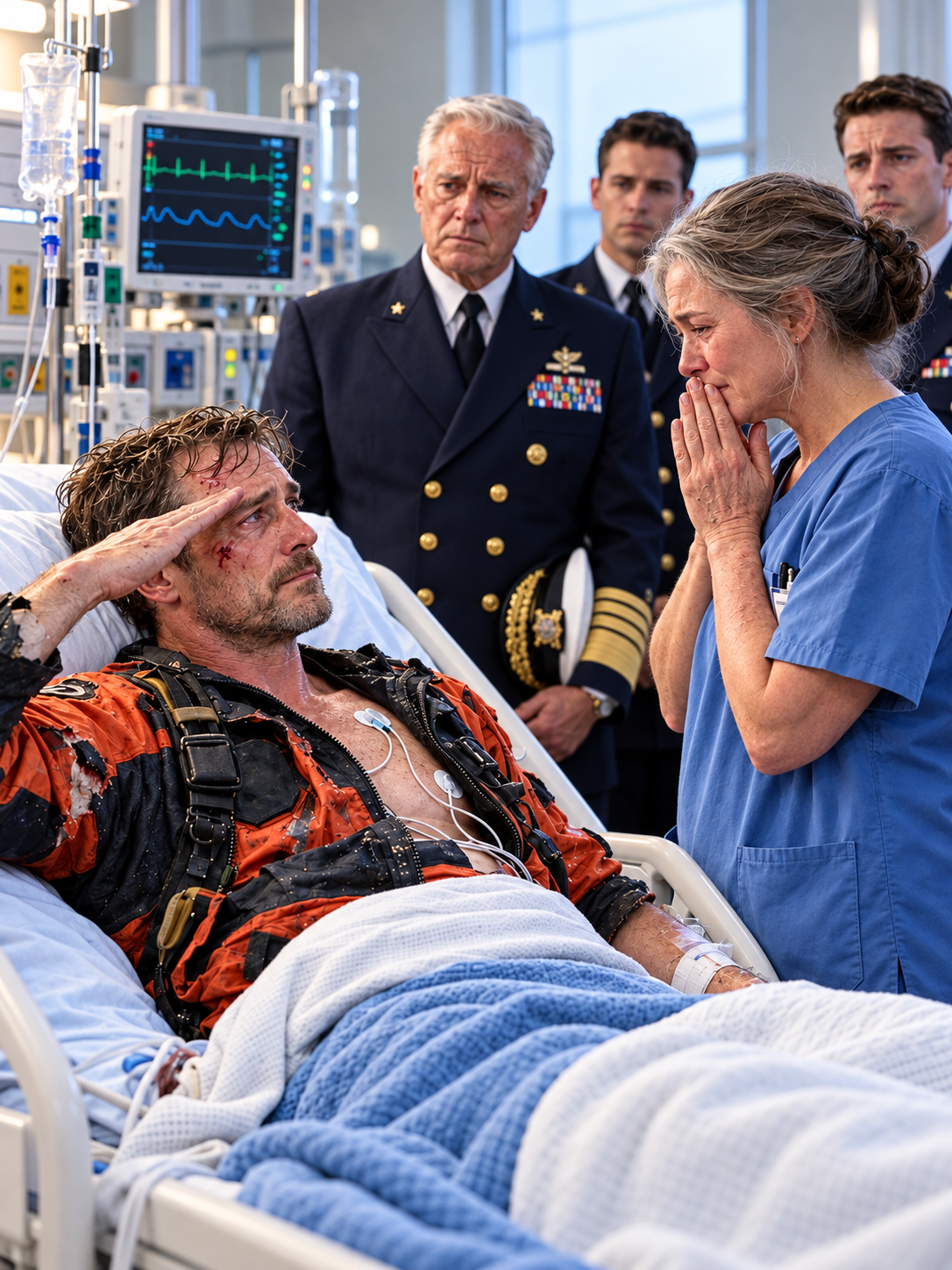
They Mocked Her Scarred Hands as Ugly and Clumsy — Until a Coast Guard Pilot Called Her by the Call Sign Only Heroes Knew
What would you do when the people laughing at the marks on her skin have no idea those hands once saved more lives than they can count?
The breakroom went quiet the moment she reached for the mug. “Good heavens, Eleanor,” the charge nurse said, loud enough for everyone to hear. “Don’t you think it’s time you wore gloves? Those hands are dreadful to look at.” A few people snickered. I kept my head down and poured my coffee slowly. I was sixty‑two, quiet, soft‑spoken, and my hands were crisscrossed with thin silver scars from wrist to knuckle. They called me “Old Burned Hands” when they thought I couldn’t hear. They said I was clumsy. Too old. Too damaged. And I never said a word.
I did not slam my mug down and list the names of the people I had pulled from storm‑torn waves. I did not roll up my sleeves and tell them each scar was a story of someone who got to go home to their family. I did not raise my voice and demand respect from people who had never stood in gale‑force wind and held a life line steady. I did not explain that these hands had stopped bleeding hearts, tied tourniquets in pitch black, and guided lost souls to safety when all hope was gone. I did not let their small cruelty make me small too. I simply went back to work.
I wrapped my hands in bandages when the cold bit too deep. I adjusted my grip so the scars stayed out of sight. I did my job well—steady, careful, kind—because that was what mattered. I did not need them to know who I had been. I only needed to be who I was now. I did not know the past was about to walk through our doors and speak the name I had buried thirty years ago.
I kept my head down. I kept moving forward. And I waited. I did not know that waiting was nearly over.
My name is Eleanor Voss. For thirty years, I have been just “Nurse Eleanor” at this small coastal hospital. I tend to scraped knees and fevers and broken hearts. I keep to myself. I live in a cottage by the dunes. And I have never told a soul what I did before I came here.
That changed on a stormy Tuesday in October.
The call came over the radio loud and urgent. A fishing vessel had gone down in the outer banks. Three crew members lost. One rescued by helicopter, critical—severe hypothermia, head trauma, broken ribs. The doors burst open and they rolled him in. The room snapped into motion. Nurses ran. Monitors beeped. The lead flight paramedic spoke fast, sharp, giving vitals. And there he was—pilot’s wings still pinned to his flight suit, face streaked with rain and fatigue, watching as they wheeled his crewman into trauma.
I stepped forward to help. I adjusted the blanket. I warmed the IV line. I reached to check the patient’s hand. And my sleeve rode up.
The pilot’s eyes locked on my wrists. He went still. Completely silent. The room kept moving around us but he did not. He took a slow step closer. “No,” he whispered. “It can’t be.”
I pulled my sleeve down fast. “Excuse me, sir. Please step back.”
He did not move away. He looked at my face—really looked—searching. “Stillwater?”
The name hit me like a wave to the chest. No one had called me that in thirty‑two years. I had not heard it spoken aloud since the day I walked away from the station and never looked back.
The room went dead quiet. The charge nurse frowned. “Sir, this is Nurse Eleanor. I’m afraid you’re mistaken.”
He did not take his eyes off me. “I am not mistaken. I would know those hands anywhere. I would know that name anywhere. Stillwater. You’re alive.”
My throat tightened. “That’s not my name.”
“It is the name you answered to,” he said, voice steady now, ringing through the room. “It’s the name every single person who served at Station 42 answered to when the wind howled and the boats went out. It’s the name they called when the waves were too high and everyone else said it couldn’t be done.”
He turned to the others. “You see those scars? She got them pulling three men from burning wreckage in ’94. She got them working on frozen rig lines when the air was forty below zero. She got them hauling a drowning boy to shore when everyone else said the current was too strong. You call her clumsy? You call her damaged? Those hands have saved ninety‑seven lives. Ninety‑seven. More than anyone in the history of this district.”
No one breathed. The charge nurse’s mouth opened and closed. The young nurses stared. The pilot turned back to me, eyes soft now. “We never knew what happened to you. One day you were there. The next you were gone. The station never filled your post. They couldn’t. No one could match you.”
I finally found my voice. “I didn’t leave because I wanted to. I left because they told me I couldn’t stay.”
I pulled my sleeve up then—all the way up—and showed them every mark. “The new commanding officer said I looked ‘unprofessional.’ Said patients would be frightened. Said a nurse with hands like mine didn’t belong in public. He gave me a choice: cover them forever or leave. I left. I’ve covered them ever since.”
The pilot—Commander Cole—shook his head slowly. “They erased you. They crossed your name off the citations. They said you’d moved away and lost contact. But we remembered. Every storm, every rescue, we remembered what you taught us: the job isn’t about how you look. It’s about who shows up.”
He reached into his pocket and pulled out a folded, faded photograph—me, twenty‑nine years old, standing on the dock, wind in my hair, grinning, hands resting on a rescue buoy. “We kept this taped inside the ready room. All these years. To remind us that the bravest person we ever knew didn’t care what anyone thought of her hands.”
A murmur rippled through the room. A young nurse stepped forward, eyes wet. “I… I always thought they were sad. I didn’t know.”
I nodded. “Most people don’t see the story. They only see the scars.”
The charge nurse looked away, face burning. She did not apologize. Not then. But I saw the shame settle heavy in her shoulders.
Commander Cole stayed while we treated his crewman. I worked beside him—calm, steady, as I always had. He watched me move. He watched how I spoke to the patient, how I anticipated needs before they were spoken. When the shift ended, he walked me out to the porch.
“Why now?” I asked. “Why come looking?”
“I didn’t know I was looking,” he said. “Until I saw your hands. And everything came rushing back. The station’s being decommissioned. The old logs are being audited. And we found something. A letter. Left in the captain’s desk, sealed, dated the week you left.”
He pulled it from his bag. I recognized the handwriting instantly—the man who had pushed me out, the man who had said I wasn’t good enough.
I knew she was the best we had. I was afraid. Afraid people would look at her and see only damage. Afraid the brass would see her scars and question our judgment. I was wrong. Every day since she left, rescues have taken longer. Response times have slipped. I destroyed her records. I erased her name. And I have carried the weight of it ever since.
I folded it carefully. “He never told anyone?”
“He told no one but the letter,” Cole said. “And now—now we’re finding out it wasn’t just him. There’s more. Other names erased. Other stories buried. And someone’s been covering it up for decades.”
I looked out at the ocean—gray, churning, endless. “What do you need from me?”
“The truth,” he said. “Your name back. Your record restored. And help. Because the same people who pushed you out are still making decisions. Still cutting corners. Still letting good people vanish. And tonight—tonight isn’t the first rescue that’s gone wrong because of it.”
He handed me a thick manila folder. “These are the files. Incidents that were written off as ‘weather’ or ‘human error.’ But they aren’t. Patterns. Deliberate delays. Equipment that failed because it was never inspected. And every single one traces back to the same names.”
I opened it. The first name I saw was the man who had replaced me—now a high‑ranking official in the regional division. The man who had told my charge nurse to keep me “out of sight.”
My blood ran slow and cold. “He’s still here.”
“He’s everywhere,” Cole said. “And he knows we found you. That’s why I came in person. He didn’t just erase you. He made sure no one would ever believe you if you came back.”
A car pulled up at the curb. Dark windows. Engine idling. It did not drive past. It just sat there.
Cole’s jaw tightened. “They followed me. I thought I lost them.”
I stood up straighter. The old feeling rose in my chest—the one I had tried to bury. Focus. Assess. Act. “They’re not here for you,” I said. “They’re here for me.”
The car door opened. A man stepped out. Not someone I knew. But his eyes—hard, sharp, familiar in the way they stayed fixed on me—belonged to the same world I had left behind.
He did not approach. He just held up a folded piece of paper. A retirement offer. Generous. Immediate. Sign it, and everything goes away. Refuse, and the stories start. The lies. The accusations. The erasure all over again.
I looked at the paper. Then at my hands—scared, marked, strong. I had hidden them long enough. I had stayed quiet long enough.
I did not reach for the pen. I reached for the letter and the files instead. “Tell your boss I’m not going anywhere. And tell him ‘Stillwater’ remembers everything.”
The man’s expression hardened. He got back in the car—but he did not drive away. He just sat there, watching, waiting. And I knew then: the fight wasn’t about restoring my name. It was about stopping them before someone else got hurt. Before someone else was pushed out and silenced and forgotten. And the first secret wasn’t even the worst one.
I turned to Cole. “There’s something I never told anyone. Something I saw the night I left. A boat that went out when it should have stayed in. Orders that were wrong. And someone who paid to keep it quiet.”
He leaned in. “What did you see?”
I looked back at the car. The driver was checking his phone. Typing. Sending.
“I saw who signed the order,” I said quietly. “And it wasn’t just one man. It was three. And one of them is sitting on the board of this very hospital. Watching me every single day.”
My phone buzzed once. An unknown number. A single message appeared on the screen: Stop digging. Or the next rescue fails because of you.
I looked at the message. Then at the ocean rolling dark and restless in the distance. They had been waiting for me to stay quiet. They hadn’t counted on me coming back. And now they were running out of time.
✓ Lynn R. Adams
They Mocked Her Scarred Hands as Ugly and Clumsy — Until a Coast Guard Pilot Called Her by the Call Sign Only Heroes Knew What would you do when the people laughing at the marks on her skin have no i…