They Laughed When the Homeless Heir Bought a Farm for Seven Dollars—Then She Found the Locked Room Beneath the Barn
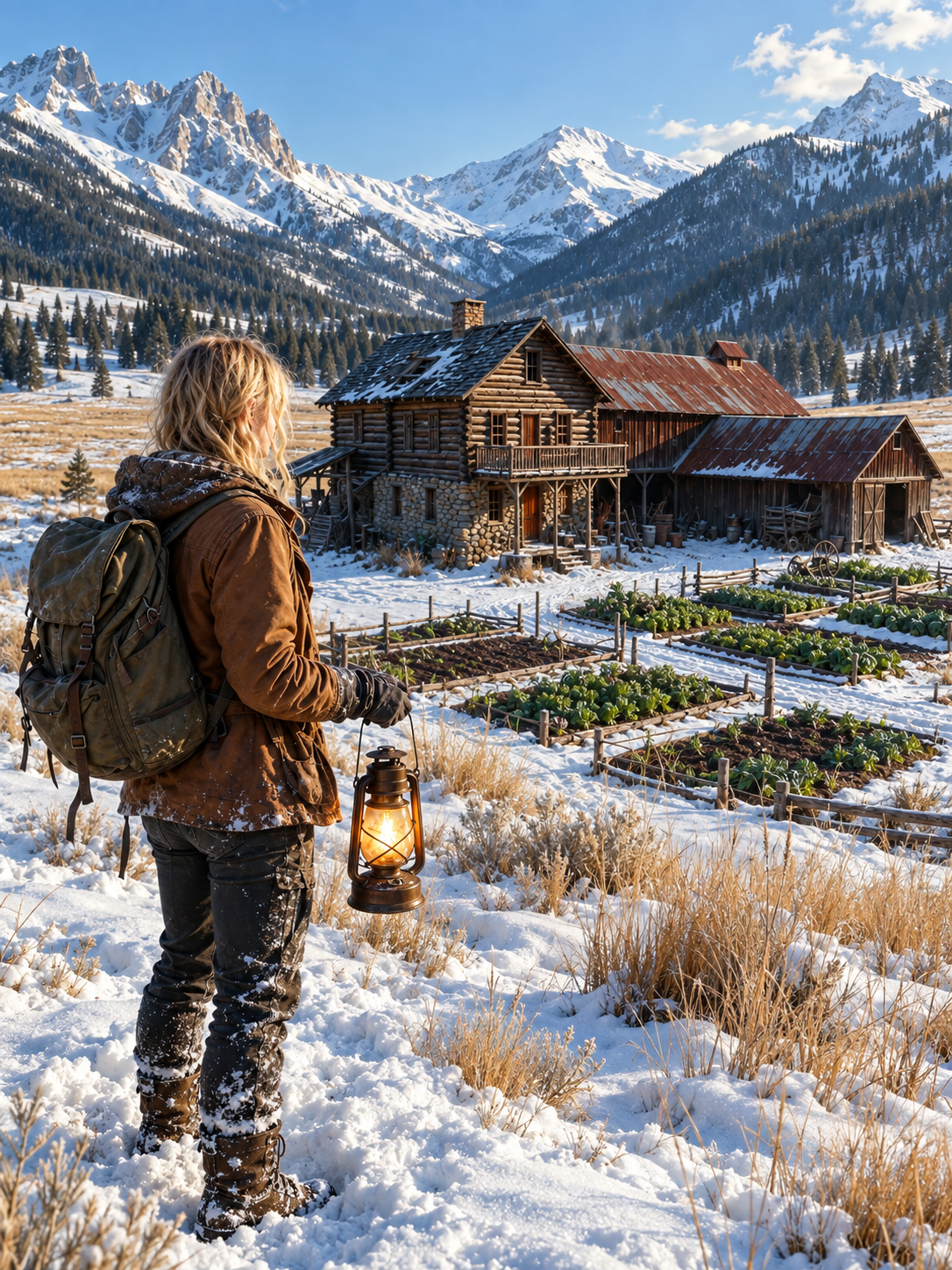
They Laughed When the Homeless Heir Bought a Farm for Seven Dollars—Then She Found the Locked Room Beneath the Barn
The county clerk actually laughed when twenty-eight-year-old Hannah Cole slid seven dollars across the counter and asked for the deed to the abandoned Mercer farm.
Outside, two local men joked that she had just bought “a roofless barn, forty acres of weeds, and enough debt to ruin whatever life she had left.”
They did not know Hannah had spent the previous six weeks sleeping in a borrowed minivan with her nine-year-old son.
They did not know the dead owner named her as his only heir.
And none of them knew that beneath the collapsing barn floor was a sealed concrete room containing something people in Cedar Ridge had spent thirty years making sure no one ever found.
Hannah knew only one thing when she drove through the rusted farm gate that evening.
Seven dollars was the last money she had.
The farmhouse had broken windows.
The barn leaned east.
The well pump did not work.
The mailbox hung from one hinge.
And someone had painted one sentence across the barn doors in white spray paint.
NOTHING HERE IS YOURS.
Her son, Eli, read it from the passenger seat.
“Is that for us?”
Hannah killed the engine.
“Who’s it for?”
She looked across the dying farm.
“I think it’s for whoever was afraid somebody might come back.”
Eli was quiet.
“Are we staying?”
Hannah looked at him.
He had been asking that question for forty-three days.
Parking lots.
A church shelter.
Her friend Megan’s couch.
Every answer had been temporary.
Tonight Hannah looked at the sagging farmhouse, the wind-torn roof, the waist-high grass, and the dead orchard beyond the fence.
Eli studied her face.
“For how long?”
“As long as we want.”
That was the first promise she had made him in months that she intended to keep.
Hannah Cole had not planned to inherit anything.
Her mother, Rebecca, died when Hannah was sixteen.
Her father left when she was six and never returned.
After that came foster relatives, scholarships, retail jobs, one rushed marriage, one divorce, and years of trying to build a stable life from small pieces.
By twenty-eight, she worked as an office coordinator for a regional construction supplier outside Kansas City.
Not glamorous.
Then the company closed.
Two weeks later, her landlord sold the duplex.
Her ex-husband was already six months behind on child support and living somewhere in Arizona.
Savings disappeared quickly.
Storage unit.
One emergency room bill after Eli developed bronchitis.
By August, Hannah had $312.
By September, $47.
Then attorney Paul Whitaker called.
“Are you Hannah Rebecca Cole?”
“Depends who wants to know.”
“I represent the estate of Samuel Mercer.”
The name meant nothing.
“Your maternal grandfather.”
Hannah nearly hung up.
“My grandfather was dead before I was born.”
“That is not correct.”
She remembered her mother saying the Mercer family wanted nothing to do with them.
Samuel Mercer, according to Rebecca, had called her irresponsible, cut her off, and told her never to return.
Hannah had never questioned it.
Children rarely investigate family mythology.
Paul continued.
“Mr. Mercer died last month.”
“And he left me something?”
Hannah looked through the minivan windshield at the grocery-store parking lot where she had planned to sleep that night.
“Is this some kind of scam?”
“Worth how much?”
“Depends how you measure worth.”
That answer irritated her immediately.
“Try dollars.”
“The farm is in poor condition.”
“How poor?”
“Significantly.”
“Property taxes are current.”
“Mortgage?”
“Then what’s the catch?”
“The property was placed under an old agricultural preservation agreement. If you accept inheritance, the transfer price is seven dollars under terms established by your grandfather.”
“Symbolic consideration.”
Hannah stared at the seven dollars she had left in her wallet.
Fate occasionally lacked subtlety.
Three days later, she arrived in Cedar Ridge, Missouri.
Population 1,842.
One grocery store.
Two churches.
A grain cooperative.
And enough gossip to travel faster than any cell signal.
Everyone seemed to know why she was there.
The county clerk, Patricia Moore, looked at the transfer papers.
Then at Hannah.
Then at the seven dollars.
“You sure about this?”
Patricia laughed.
Not cruelly.
“That place hasn’t produced anything in years.”
“Still mine?”
“Once you sign.”
“Then I’m sure enough.”
A farmer waiting behind her said, “Lady, you’d make more money setting those seven bucks on fire.”
His friend chuckled.
Hannah signed.
The clerk stamped the deed.
Just like that, she owned forty-eight acres, one farmhouse, one barn, two sheds, an old well, and whatever problems Samuel Mercer had left behind.
If Hannah had only seven dollars left and the entire town believed the farm was worthless, should she sell the land immediately—or stay long enough to discover why somebody had warned her away before she even slept there one night?
She stayed.
The first night, they slept on camping pads in the farmhouse dining room because the upstairs ceiling looked unsafe.
The second night, Hannah repaired one window with clear plastic and duct tape.
The third, she got the woodstove working.
The fourth, Tom Alvarez from the hardware store arrived with a used well-pump motor.
“I heard you need water.”
“How much?”
Hannah shook her head.
“I pay my bills.”
“It came out of a house we remodeled. Owner was throwing it away.”
“How much for your time?”
Tom smiled.
“Coffee someday.”
“That’s suspiciously cheap.”
“Town’s bored. I want to know if you survive.”
Tom got the pump running.
Water came through the kitchen faucet brown for thirty seconds.
Then clear.
Eli yelled like they had discovered gold.
Hannah laughed.
That was mini-payoff number one.
Running water.
No fortune.
No miracle.
Just water.
It felt enormous.
She found Samuel’s old pickup in the equipment shed.
Dead battery.
Cracked windshield.
Registration expired.
But mechanically sound.
Tom helped her start that too.
Then came a freezer in the basement.
Still working.
Then shelves of canned vegetables.
Then three cords of dry firewood beneath a tarp.
Samuel had prepared more than a dead man with no heirs should have prepared.
That bothered Hannah.
He knew she might come.
Maybe long before she knew he existed.
On the fifth day, a black Ford F-250 stopped at the gate.
The man who climbed out wore polished boots, a navy vest, and a smile that looked expensive.
“Ms. Cole?”
“Evan Caldwell.”
“Should I know you?”
“Caldwell Development.”
That name she knew.
They built distribution warehouses along interstate corridors.
He looked toward the farm.
“I’ve been speaking with Mr. Mercer for several years about this property.”
“Then you’ve had bad luck.”
He laughed.
“I respect direct people.”
“I respect direct offers.”
He handed her a folder.
Hannah read it twice.
For land everyone called worthless.
“What do you want it for?”
“Long-term industrial development.”
“Forty-eight acres?”
“Potentially combined with neighboring parcels.”
“How long is the offer good?”
“Three days.”
Hannah closed the folder.
“Then it probably isn’t your best offer.”
His smile changed.
Only slightly.
“Most people in your position would consider one hundred ten thousand life-changing.”
She looked at his truck.
“My position?”
He realized the mistake.
“I mean financially.”
“How do you know my finances?”
“Small town.”
“I arrived five days ago.”
Another slight pause.
“Public records.”
“My bank balance isn’t public.”
He recovered smoothly.
“Of course not.”
Hannah handed back the folder.
“I’ll think about it.”
He did not take it.
“Keep the copy.”
He walked away.
Eli appeared behind the screen door.
“Is that man rich?”
“Probably.”
“Are rich people always that shiny?”
Hannah smiled.
That evening she inspected the deed.
Then survey maps.
Then Samuel’s tax records.
Why would a development company offer $110,000 for supposedly useless farmland twenty miles from the interstate?
Maybe expansion.
Maybe future highway.
Maybe utilities.
Hannah made a list.
Development.
Then she wrote one word at the bottom.
Because the spray-painted warning was on the barn.
NOTHING HERE IS YOURS.
The barn was sixty feet long and forty wide.
Built from heavy timber.
Roof damaged on one side.
Old milking stalls removed years ago.
Hay loft mostly empty.
The concrete floor showed cracks.
Hannah spent two days clearing junk.
Rusty chains.
Feed sacks.
Broken fencing.
An old cream separator.
Then she noticed something.
One stall had a different floor texture.
Not concrete.
Thick oak planks.
That made no sense.
Barn floors rot.
Especially near old livestock stalls.
Yet these boards were surprisingly solid.
Eli knelt beside one.
“There’s metal.”
Hannah brushed dirt away.
A recessed ring.
Maybe old cellar.
Maybe manure pit.
She pulled.
Locked from below or swollen shut.
She searched surrounding walls.
No hinges visible.
Then found a small triangular mark carved into one board.
Same mark appeared in Samuel’s ledger beside several entries.
Hannah went inside.
Found ledger.
Pages of ordinary farm expenses.
Then strange entries.
March 12 — Room checked.
May 7 — Humidity 44%.
July 19 — Caldwell returned.
August 1 — Do not sign.
September 8 — Hannah must decide.
Hannah sat down.
September 8 was eleven years ago.
She would have been seventeen.
Samuel had been thinking about her long before his death.
She turned pages.
Rebecca called.
Hannah located.
Do not contact yet.
He had found her.
And chosen not to contact her.
Rebecca lied but was scared.
Need proof before telling Hannah.
Proof of what?
The last page contained only numbers.
14 — 22 — 31.
BENEATH THE THIRD STALL.
Hannah returned to the barn.
Counted stalls.
Wood floor.
She searched carefully.
Found three small metal depressions.
Combination?
She pushed one bolt inward fourteen times?
Maybe old safe mechanism.
Then Eli pointed.
“Mom, those nails have numbers.”
Three brass nail heads near the wall.
Tiny stamped numbers.
Hannah pressed 14.
The floor released.
The wood panel lifted half an inch.
Hannah stared at Eli.
“Go outside.”
He recognized that tone.
Hannah pulled.
A hidden steel frame lifted with the floor.
Beneath it:
Concrete stairs.
Going down.
Cold air rose.
The smell was not rotten.
Maintained.
Hannah switched on her flashlight.
Then twelve.
At the bottom stood a steel door.
No graffiti.
A modern keypad installed into concrete poured decades earlier.
She did not open it.
Smart people do not walk into unknown underground rooms alone with a child upstairs.
She took photos.
Closed the trapdoor.
Called Paul Whitaker.
The attorney went silent when she described it.
“You knew?”
“Don’t lie.”
“I knew Samuel referred to secured storage.”
“That is not a room under a barn.”
“What did he tell you?”
“Only that you might find it.”
“Did he give you a code?”
“Instructions?”
Another pause.
Hannah waited.
“If you found a room beneath the barn, I was supposed to give you an envelope.”
“My office.”
“Bring it.”
“I can be there tomorrow.”
“Someone already painted a warning on my barn. Caldwell offered me six figures before I unpacked. You’re bringing the envelope tonight.”
Paul arrived at .
Sixty-three.
Brown coat.
He looked exhausted.
The envelope was sealed with Samuel’s signature across the flap.
Hannah opened it.
One key card.
One letter.
If you are reading this, then you found the room.
Before you open it, understand that nothing inside will make your life simpler.
Your mother spent years believing the room contained money.
It does not.
Caldwell believes it contains land records.
It does, but not the records he fears most.
The town believes this farm is worthless because several people worked very hard to make everyone believe that.
They succeeded.
Do not sell.
Do not trust the first appraisal.
Do not let Caldwell onto the property.
And do not believe anyone who tells you Rebecca abandoned you willingly.
Your mother tried to come back.
She never made it here.
Hannah stopped reading.
Her breathing changed.
“My mother died in St. Louis.”
Paul looked at her.
“That’s what you were told?”
“Your mother did die.”
“Then what does he mean?”
“I don’t know.”
She kept reading.
The room contains the reason I stayed quiet too long.
I am sorry.
Hannah looked at Paul.
He shook his head.
“This is yours.”
“You’re coming.”
“If there’s something illegal down there, I want a witness.”
Paul sighed.
They opened the trapdoor.
Paul stared at the stairs.
“I expected a cellar.”
“So did I.”
At the steel door, Hannah used the key card.
Green light.
She opened it.
The room was twenty by thirty feet.
Dehumidifier.
Metal cabinets.
File boxes.
No treasure.
Just documents.
Thousands of them.
Hannah almost laughed.
“All this for paperwork?”
Paul looked around.
“Sometimes paperwork is more expensive than gold.”
One wall held county maps dating from the 1960s.
Another contained aerial photographs.
Parcel boundaries.
Water lines.
Rail surveys.
Old property deeds.
Hannah opened a cabinet.
Inside were mineral reports.
Then she found a map marked MERCER FARM — SUBSURFACE.
Colored bands crossed the acreage.
She read the legend.
Industrial clay.
Nothing spectacular.
Then another folder.
GROUNDWATER.
Aquifer tests.
Well yields.
One page had a red stamp:
CONFIDENTIAL — CALDWELL INDUSTRIAL SITE STUDY.
Hannah looked at Paul.
“Why does Samuel have Caldwell’s study?”
Paul shook his head.
The proposed development required high-volume groundwater use.
Caldwell’s neighboring properties had poor wells.
The Mercer aquifer produced far more.
The farm was not valuable because of dirt.
It controlled water.
Potentially millions of gallons annually under old water rights.
Hannah felt the first twist click into place.
Caldwell wanted access.
Not farm acreage.
She found a valuation memo.
Estimated industrial water-rights value under projected development:
$3.8 million to $7.1 million.
Not $110,000.
Hannah laughed quietly.
Paul said, “That explains the offer.”
But Samuel said land records were not what Caldwell feared most.
Water explained greed.
Not the warning.
Hannah kept searching.
Cabinet three.
Old photographs.
Hannah as a baby.
Hannah at six.
Hannah at twelve, taken from far away at a school event.
Private investigator photos.
Samuel had watched her grow from a distance.
Then an envelope labeled:
REBECCA — 2009.
Her mother died in 2010.
Inside were letters.
Rebecca wrote:
I was wrong.
I signed what they asked because Mark said you were trying to control everything. I believed him. Caldwell paid him. I didn’t know the easement could take the water rights too.
I want to fix it.
I have the original agreement.
If I can get back to Cedar Ridge, we can stop them.
Do not contact Hannah yet.
Mark watches everything.
Hannah read the page twice.
Her father’s name was Mark Cole.
The man who disappeared when Hannah was six.
The man her mother blamed for everything.
Hannah’s hands trembled.
Not dramatically.
Just enough that the paper moved.
Paul said nothing.
Next letter.
Mark found out I copied the records.
He says he’ll take Hannah if I contact you.
I’m leaving anyway.
I’ll call from St. Louis.
Then nothing.
No final letter.
Samuel’s note beneath:
Rebecca called October 17.
Said she had proof.
Never arrived.
Police said accident.
I never believed timing.
Hannah went cold.
Her mother’s death had been called a car accident outside St. Louis.
One-car crash.
No mystery.
At least according to family.
Now Samuel clearly had doubts.
This was the second major twist.
The farm secret was connected to Hannah’s mother.
And possibly her father.
Hannah opened the next drawer.
Except one USB drive.
IF HANNAH FINDS THIS — PLAY FIRST.
There was a laptop on the desk.
Old but functional.
Hannah inserted the drive.
Video opened.
Samuel Mercer appeared.
Sitting in the same room.
Hearing him say her name made her chest tighten.
“If you are watching this, then I failed to tell you in person.”
He coughed.
“I spent too many years believing silence protected people.”
Hannah stared.
“Your mother and I fought after she married Mark. I thought he wanted our land. Rebecca thought I was controlling. We were both partly right.”
Samuel looked tired.
“Mark worked for Caldwell Development before he married her.”
Hannah stopped breathing.
Her father.
“Rebecca discovered that Mark had persuaded her to sign documents giving Caldwell future access rights across portions of the farm. She thought she was signing temporary survey permission.”
Samuel looked directly into the camera.
“She was not.”
Hannah looked at the map.
Samuel continued.
“When she learned what happened, she came back to me. We started undoing the agreements.”
“Then she died.”
His voice broke slightly.
“I do not know whether the accident was anything more than an accident. Do not let grief turn suspicion into certainty. I made that mistake.”
Even dead, Samuel refused to manufacture villainy.
“After Rebecca died, Mark disappeared. Caldwell claimed the signed documents remained valid.”
Samuel held up a deed.
“I spent ten years fighting them quietly.”
“Why quietly?” Hannah whispered.
The video answered.
“Because they did not know I had the originals.”
Samuel had let Caldwell believe he might lose.
Maybe evidence.
“The room contains enough to prove the water easement was obtained through misrepresentation. But that is still not the most important thing.”
Hannah leaned closer.
Samuel looked toward something off-camera.
“In 2018, I discovered Caldwell had been using an abandoned neighboring quarry to store industrial waste from three processing sites.”
Hannah stared.
Now it grew.
“The drainage flows toward the Mercer aquifer.”
Caldwell wanted the farm because its wells could reveal contamination.
Not merely for access.
Control the land.
Control testing.
Control the evidence.
Samuel continued.
“I collected samples.”
Hannah looked at the room.
“Do not handle them yourself.”
“Use the environmental lab information in Cabinet Four.”
Hannah opened Cabinet Four.
Sealed evidence coolers.
Chain-of-custody records.
Elevated solvents.
Heavy metals.
Multiple dates.
Enough for regulatory investigation.
Paul whispered, “My God.”
Samuel continued.
“Caldwell does not know how much I found.”
“If they learn you have this room, do not negotiate alone.”
Video ended.
Hannah sat.
Forty-eight acres.
Seven dollars.
Worthless farm.
Except it controlled high-value water rights and possibly evidence of environmental violations affecting surrounding wells.
No wonder somebody painted the barn.
Paul looked at her.
“What are you going to do?”
“Make copies.”
They scanned only critical documents that night.
Photographed boxes.
Logged filenames.
Did not touch sample containers.
The next morning Hannah called the Missouri Department of Natural Resources.
Not Caldwell.
Not town gossip.
Regulators.
She also hired an independent environmental attorney using a legal-aid referral Paul arranged temporarily through the estate.
Attorney Dana Brooks arrived two days later.
Former state regulator.
She read documents.
Then looked at Hannah.
“Do you understand what you have?”
“Good answer.”
“What do I have?”
“Potential evidence of groundwater contamination and potentially fraudulent easement acquisition.”
“Potentially.”
“What happens?”
“We verify independently.”
Facts first.
Dana arranged new water tests.
Chain-of-custody.
Certified lab.
Separate samples from farmhouse well, barn well, creek edge, and monitoring points Samuel installed.
Results took nine days.
Hannah spent those nine days fixing the farm.
Because life does not pause while secrets mature.
She found part-time bookkeeping work online.
Tom hired her two mornings a week at the hardware store.
Eli started school.
The principal arranged bus pickup.
Neighbor Clara Jenkins brought eggs.
Another farmer, Ray Donovan, lent Hannah a mower.
People who laughed at the $7 farm slowly stopped laughing.
Then Evan Caldwell returned.
Not smiling this time.
“I understand you’re reconsidering my offer.”
“Who told you?”
He looked toward the barn.
“Have you been cleaning?”
“Find anything?”
There it was.
Too casual.
“Old barns usually have worse.”
Hannah looked at him.
“What do you actually want, Evan?”
“The land.”
“Development.”
“What development?”
“Long-term logistics.”
“Where’s the road?”
He hesitated.
“There are infrastructure plans.”
Another pause.
She had him.
“How much water do you need?”
His expression changed.
“Who have you been talking to?”
“You offered me $110,000.”
“For water rights worth several million?”
He stopped pretending.
“Those rights aren’t worth that without development.”
“Then why do you want them?”
“You need money.”
“You have a child.”
“I’m aware.”
“This farm needs more repair than you can afford.”
“All true.”
He stepped closer.
“Take the offer.”
“Then counter.”
“Because I haven’t finished finding out why you’re nervous.”
That was the moment Evan looked toward the barn.
Only for a second.
But enough.
He knew something was there.
Maybe not the room.
Hannah smiled.
“Have a good day.”
That evening the lab called.
Preliminary results showed contamination in two monitoring wells near the northern boundary.
Farmhouse drinking well remained within safe standards.
The contaminant signature matched historical solvents documented in Samuel’s older tests.
Dana immediately notified state regulators.
Now it was official.
Inspectors came.
The abandoned quarry became a site of interest.
Caldwell Development issued a statement denying knowledge of improper disposal.
Reasonable.
No guilt assumed yet.
Records were subpoenaed.
Former contractors interviewed.
Then one name surfaced.
Hannah’s father.
He had worked as an environmental compliance coordinator for Caldwell’s predecessor company.
Until 2009.
The year before Rebecca died.
Hannah sat at Dana’s office reading the employment record.
“Was Dad involved?”
“We don’t know.”
“He might have been helping them.”
“Or exposing them.”
Hannah hated maybes.
But maybes were better than lies.
Then police records showed something else.
Mark did not disappear after Rebecca’s death.
He changed his name legally in Oklahoma.
Marcus Cole became Marcus Hale.
Still alive.
Living in Arizona.
Hannah stared.
Her father had been alive the entire time.
Eli asked that evening:
“Is Grandpa alive?”
Hannah had told him only enough to explain the phone calls.
“Do you want to meet him?”
Then she reconsidered.
“I don’t know.”
That was better.
Dana located contact information.
Hannah did not call.
Instead, a letter arrived first.
No return address.
Hannah opened it at the kitchen table.
One sentence.
Samuel should have burned the room.
No signature.
Inside was a photograph.
Samuel standing beside a younger man.
Her father.
Taken three years ago.
Hannah stared.
Samuel had met him.
So Mark had returned secretly.
She searched the underground files again.
Found nothing at first.
Then Eli noticed one cabinet had a false back.
“This sounds hollow.”
Hannah froze.
“Do not touch.”
She removed it herself carefully.
A small metal safe.
But Samuel’s ledger had one unexplained date repeated.
Rebecca’s final call.
Hannah entered 101709.
One recorder.
Three envelopes.
One labeled MARK.
Another REBECCA.
Third HANNAH.
She opened HERS first.
If Mark contacts you, listen before deciding what he is.
He abandoned you.
That part is true.
But why he left is not what Rebecca believed.
Hannah closed her eyes.
Another family myth collapsing.
She played the recorder.
Samuel’s voice.
Then Mark’s.
Conversation dated three years earlier.
“I should have come sooner.”
“You should have come thirty years sooner.”
“They would have watched Hannah.”
“They did anyway.”
“I have the disposal manifests.”
Hannah stared.
Mark had evidence.
Samuel asked:
“Caldwell know?”
“They know I copied something. Not what.”
Then Samuel:
“Why did Rebecca die?”
Long silence.
“I don’t know.”
“You were following her.”
“To protect her.”
“From who?”
“Caldwell’s security contractor.”
Hannah’s hands went cold.
“Did they cause the accident?”
“I never proved it.”
No easy answer.
No melodramatic confession.
Only uncertainty.
Mark continued:
“I panicked after she died. I knew they’d blame me or use Hannah. I left.”
Samuel sounded disgusted.
“So you protected your daughter by abandoning her.”
At least he admitted it.
“I was a coward.”
Hannah stopped the recorder.
That sentence mattered.
Not absolution.
She played again.
“The manifests show quarry dumping from 1998 through 2007.”
“Enough to shut them down?”
“Enough to investigate.”
“Why not turn them over?”
“Because one county official was on their payroll.”
Then a name.
Sheriff Raymond Pike.
Former sheriff.
That explained thirty years of silence.
But Mark said something else.
“Raymond was not the top.”
“Evan’s father.”
Hannah’s eyes narrowed.
Robert Caldwell.
Dead six years.
The conspiracy, if any, belonged mostly to the previous generation.
Evan might have inherited knowledge.
Maybe not full guilt.
Important distinction.
Then Samuel:
“Why come back now?”
“Because Evan’s buying the farm.”
“He can try.”
“If Hannah inherits, he’ll pressure her.”
“She’s stronger than you think.”
Mark laughed.
Hannah stopped the recorder again.
That hurt unexpectedly.
Her father had known things about her from afar too.
Everyone watched.
Nobody showed up.
She hated that.
The final recording segment:
“There’s one thing you still don’t know.”
“The room under the barn was not built by you.”
Samuel went silent.
“What are you talking about?”
“It existed before Grandpa bought the farm.”
“What for?”
“I found old blueprints.”
Then static.
Recording ended.
Hannah stared.
Another layer.
She did not want another layer.
One major secret was enough.
But the user requested cliffhanger. We can keep it focused by tying same thread.
The room itself predates Samuel and may hold original county records.
Hannah searched the walls.
Foundation blocks looked older than interior finish.
She brought a structural engineer, Mike Benton, because she refused to pry into concrete herself.
He inspected.
“This chamber is probably 1940s.”
“Samuel bought farm when?”
“Your records say 1962.”
“So someone else built it.”
“For storage?”
Then Mike noticed a sealed doorway behind shelving.
Not modern.
Bricked over.
He photographed it.
“No opening until permits.”
Professionals.
The state investigation expanded.
Quarry soil samples confirmed buried industrial residues.
Several neighboring wells were tested.
Two required treatment.
Caldwell Development announced it would cooperate with cleanup.
Evan stopped visiting Hannah.
Then surprisingly, he called.
“I need to talk.”
“With my attorney present.”
They met at Dana’s office.
Evan looked exhausted.
He placed a file on the table.
“My father lied to me.”
Hannah said nothing.
“I knew about the water rights.”
“Obviously.”
“I did not know about illegal disposal.”
“You don’t believe me.”
“I don’t need to decide yet.”
“My father left this.”
Old acquisition files.
Instructions to buy Mercer Farm “before groundwater disclosure affects northern expansion.”
Evan had found them after regulators arrived.
“Why give me this?”
“Because if I hide it now, I become him.”
That was believable.
Self-preservation too.
Both could be true.
Dana asked, “Did you know Hannah’s father worked for Caldwell?”
“How much?”
“Only that he was an employee who disappeared after a dispute.”
“You knew Rebecca?”
“Did your father tell you why Samuel refused every offer?”
“He said Mercer was paranoid.”
Hannah almost laughed.
Maybe Samuel was.
He was also right.
Evan slid another document forward.
“Your farm isn’t worth seven million.”
Hannah looked at him.
“I didn’t say it was.”
“The water-right estimate you found is outdated.”
“How do you know what I found?”
“My father’s copy.”
“What’s current value?”
“With regional industrial expansion?”
He looked at Dana.
“Potentially twelve to eighteen million.”
Hannah sat back.
Seven dollars.
Twelve million.
Maybe eighteen.
But money had stopped being the strangest part.
Evan continued.
“The water rights can also be leased.”
“So you don’t need to sell.”
He almost smiled.
“I figured you’d learn.”
“What do you want now?”
“To settle our access dispute and cooperate on remediation.”
Reasonable.
Not friendship.
They negotiated for months.
Hannah retained farm ownership.
Caldwell paid for monitoring.
Funded neighboring well filtration where necessary.
Agreed to lease limited industrial water only after independent sustainability studies.
No transfer of permanent ownership.
Hannah received enough upfront money to rebuild the farmhouse, repair the barn, create a college account for Eli, and invest the remainder.
Not instant billionaire fantasy.
The state cleanup order forced the old quarry into remediation.
Several executives from predecessor entities were investigated.
Some records were too old for easy enforcement.
Others resulted in civil penalties.
The town learned what Samuel had been protecting.
And attitudes changed.
The same men who laughed at Hannah’s seven-dollar deed began calling her “smart.”
She disliked that.
She had not become smart after value was discovered.
She had been smart while broke too.
People simply notice intelligence more readily when it controls something valuable.
The barn was repaired carefully.
Not demolished.
The underground room became a secure archive while regulators copied relevant documents.
Hannah preserved Samuel’s maps.
Rebecca’s letters.
The recorder.
Then she finally called Mark.
Her father.
He answered on the first ring.
She almost hung up.
“You know my number.”
“How long?”
“That was the wrong answer.”
She waited.
“What do you want?”
“To see you.”
“I understand.”
“I can explain.”
“I have your recording.”
Another silence.
“Samuel kept it?”
“Then you know.”
“I know you left.”
“I know you were afraid.”
“I know you convinced yourself leaving protected me.”
“It didn’t.”
His voice cracked.
Hannah stared out at the farm.
“What do you have that Samuel wanted?”
“The disposal manifests.”
“Send copies to Dana Brooks.”
“I already did.”
“Because I heard the investigation started.”
“Anything else?”
Long pause.
“The blueprints.”
“The room?”
“Why was it built?”
Mark exhaled.
“During World War II, the property was used as a private records storage site by a regional defense contractor.”
Hannah frowned.
“What kind of records?”
“Land and mineral surveys. Federal procurement storage. Nothing dramatic now.”
Keep grounded.
“Then why brick a doorway?”
“Because the original archive extends beyond the room you found.”
Hannah went still.
“I don’t know.”
“You said you have blueprints.”
“Where do they show it going?”
“Under the old north foundation.”
The barn’s oldest section.
“What’s there?”
Mark paused.
“One more chamber.”
Hannah almost laughed.
“What is with this family and chambers?”
For the first time, Mark laughed too.
It sounded strange.
Familiar somehow.
He continued.
“Samuel told me never to open it.”
“He said the door had been sealed before he bought the farm.”
“What did he think was inside?”
“He didn’t know.”
Hannah looked toward the barn.
“Then why did he protect it?”
“Because Robert Caldwell searched for it.”
Same conflict.
Not a new random twist.
Maybe old survey originals prove aquifer ownership extends farther.
“Why did Caldwell care?”
“I think the original federal surveys map groundwater across the entire north basin.”
Hannah’s chest tightened.
Entire basin.
Not just forty-eight acres.
If true, farm’s water rights could affect thousands of surrounding acres.
That was bigger than the current valuation.
“Do not open anything until federal archivists are there.”
That was the first piece of advice from him she respected.
“Can I come?”
He accepted it.
Maybe someday.
The following spring, Hannah’s life looked nothing like the one she had when seven dollars sat in her wallet.
The farmhouse had a new roof.
Eli had a bedroom painted blue.
Hannah planted a vegetable garden beside the kitchen.
She leased fifteen acres to Ray Donovan for hay while learning farm management slowly.
She did not pretend one inheritance turned her into an expert farmer.
Tom Alvarez still came by every Friday pretending he needed coffee.
Eventually Hannah stopped pretending she didn’t notice why.
That relationship moved slowly.
She had enough sudden things in her life.
Caldwell’s cleanup crews worked north of the farm under state supervision.
Evan resigned from the development company’s CEO role during restructuring but remained on the board.
He and Hannah became business adversaries who occasionally respected each other.
No romance.
Not everything needed romance.
One morning, Hannah stood in the barn while a federal archivist named Dr. Lena Ward examined the sealed brick doorway.
The wall had been scanned.
There was a room behind it.
Contained metal shelving.
No dangerous readings.
Permits secured.
State representative present.
County recorder present.
Dana present.
Paul present.
Hannah present.
Nobody doing secret midnight digging.
The wall was opened carefully.
Inside were old steel cabinets coated with dust.
1940s labels.
Survey books.
Procurement ledgers.
Most historically interesting.
Not financially explosive.
Then Dr. Ward opened one cylindrical map case.
“Ms. Cole?”
Hannah approached.
A 1943 federal hydrology survey.
Far more detailed than anything Samuel possessed.
Underground water boundaries.
Recharge zones.
Spring networks.
Then property overlays.
The Mercer aquifer was not isolated.
It connected through a limestone formation extending beneath nearly 4,600 acres.
Hannah whispered, “That can’t mean I own water under all of it.”
“No,” Lena said immediately.
No magical overclaim.
“But this map could affect how rights, contamination responsibility, and pumping permits are interpreted.”
Dana leaned closer.
“Which could affect Caldwell’s entire proposed industrial corridor.”
That was huge.
Not because Hannah suddenly owned everything.
Because she held historical evidence nobody knew existed.
Then Lena found an attached memorandum.
Regional groundwater reserve designated strategic agricultural supply.
Never formally rescinded in the attached records.
Dana’s eyes sharpened.
“If still legally relevant, large industrial withdrawals may face restrictions.”
Evan’s entire development plan could change.
The $12–18 million valuation?
Maybe meaningless.
The farm might be more valuable protected than exploited.
Hannah smiled.
Samuel’s real legacy was not money.
Control over one decision.
Sell water.
Lease water.
Protect water.
All required understanding first.
She chose protection as default.
Not absolute.
Future science could change.
But no rushed extraction.
She placed 300 acres? Wait only 48 acres. Could acquire nearby? Better: conservation easement on 30 acres around recharge zone.
Hannah placed thirty acres under a conservation agreement.
Retained farmhouse, barn, orchard, and productive fields.
Created monitored well access for county testing.
Signed a modest agricultural lease.
The settlement and water lease options gave her enough financial security without turning the property into an industrial zone.
People called that foolish too.
First they mocked seven dollars.
Then they mocked refusing millions.
Hannah had learned people love judging decisions when they bear none of the risk.
Two years later, Cedar Ridge held a county heritage fair.
Someone displayed a photograph of the old Mercer barn.
THE SEVEN-DOLLAR FARM THAT CHANGED THE NORTH BASIN WATER CASE.
Hannah disliked the drama.
Eli loved it.
He was eleven now.
He told classmates:
“My mom bought our house for seven bucks.”
Hannah corrected him every time.
“Transfer price.”
“Still seven dollars.”
“Technicality.”
One evening, she and Eli sat on the repaired barn steps.
Sunset turned fields gold.
Tom’s truck disappeared down the road.
“Were we really homeless?”
“Do you hate that?”
She thought.
“I hated being scared.”
“Same thing?”
She looked at him.
“Having no house was a problem. Thinking it meant we had no future would’ve been worse.”
Eli nodded as though storing that.
“Are we rich?”
“Define rich.”
“Can I get a dirt bike?”
She laughed.
They were secure.
That was richer than she had ever imagined.
Money in investments.
No mortgage.
Legal ownership.
Water lease income.
Work she chose rather than begged for.
Not $265 million.
Not fantasy.
More than enough.
Yet one question remained unresolved.
Her father.
For two years he sent birthday cards.
No demands.
Just cards.
Then one Christmas, Hannah agreed to a thirty-minute video call.
She did not.
Then another.
Eventually he visited Cedar Ridge.
Public diner.
Tom two tables away pretending not to watch.
Mark was sixty-one.
He looked like Eli around the eyes.
That bothered Hannah.
They spoke for an hour.
At the end Mark said:
“You don’t have to forgive me.”
“I loved you.”
“That doesn’t fix leaving.”
“You should have come back.”
“You should have told the truth.”
She appreciated that he stopped defending himself.
Before leaving, Mark handed her a small envelope.
“Something Rebecca gave me the night before she left for St. Louis.”
Hannah froze.
“You kept this?”
“I was afraid.”
She almost refused it.
Then took it.
A letter from her mother.
If anything happens, Hannah goes to Dad.
Not my sister.
Not foster care.
Tell him I was wrong.
Tell Hannah I did not leave her.
I am trying to fix what I helped break.
Hannah stared until the words blurred.
For thirty years she had believed her mother died thinking Samuel was the enemy.
She had been wrong.
Rebecca had changed her mind.
But changed.
That healed something.
Not everything.
Hannah sat alone in the diner.
Tom eventually moved into the seat across from her.
He did not ask what the letter said.
He simply slid coffee toward her.
“Complicated.”
“Always is.”
She smiled.
“Your coffee is terrible.”
“Family discount.”
“Still terrible.”
No dramatic rescue.
No marriage proposal.
Just presence.
Another kind of wealth.
Three years after Hannah bought Mercer Farm, state officials completed the first major groundwater remediation phase.
The contaminated monitoring wells improved.
Caldwell’s company paid substantial cleanup costs.
Several old land deals were reviewed.
No criminal empire toppled.
No town was destroyed.
Some people were fined.
Some companies settled.
Some records were too old to prosecute meaningfully.
Reality rarely gives perfect justice.
But wells were cleaner.
Records were public.
People knew.
That mattered.
One autumn morning, Paul Whitaker arrived unexpectedly.
He carried a package.
“Found in my storage archive.”
“You’re still finding Samuel’s secrets?”
“I’m beginning to resent him.”
Hannah smiled.
“What is it?”
“Sealed instructions.”
“Triggered by?”
Paul looked embarrassed.
“Your third anniversary of ownership.”
“Of course.”
Hannah opened it.
Samuel’s handwriting.
If you stayed three years, then you made the farm yours rather than simply inheriting mine.
There is one final thing I owe you.
Your mother’s accident was investigated privately.
I never had enough evidence to accuse anyone.
Do not confuse suspicion with proof.
But the investigator found one detail police never recorded.
The car that passed Rebecca five minutes before the crash belonged to Caldwell Development.
Hannah stopped.
Samuel emphasized that.
The driver was not Robert Caldwell.
It was Mark.
Her father.
Hannah’s stomach dropped.
Mark told Samuel he was protecting Rebecca.
Maybe true.
Mark claimed he followed her because he believed someone else was following them both.
My investigator found evidence of a second vehicle.
I never identified it.
If Mark is ever willing to tell you the whole truth, ask him about the blue Buick.
Hannah stared.
Blue Buick.
One loose thread.
Not enough to undo the ending.
Enough cliffhanger.
Paul said, “You okay?”
“Want me to call Dana?”
She looked toward the barn.
The farm people laughed at.
Everything had started with seven dollars and a warning painted on wood.
Hannah took out her phone.
Found Mark’s number.
Did not call immediately.
Instead she walked outside.
Eli was repairing a bicycle near the porch.
Tom was fixing a fence.
Wind moved through the field.
This was her life now.
No secret got to take that away.
Then her phone buzzed.
Unknown number.
DO NOT ASK MARK ABOUT THE BLUE BUICK.
Hannah stopped.
A second message arrived.
SAMUEL WAS WRONG ABOUT WHO WAS DRIVING IT.
Then a photograph.
Rebecca’s car at a gas station.
A pale blue Buick.
A woman stood beside the driver’s door.
Hannah zoomed in.
Her breath stopped.
She knew the woman.
Not personally.
From family photographs.
Her aunt Linda.
The same aunt who raised Hannah for two years after Rebecca died.
The same aunt who told Hannah Samuel wanted nothing to do with her.
The same aunt who swore Mark disappeared before the accident.
Hannah looked at the date printed on the photograph.
October 17, 2009.
The day Rebecca made her final call to Samuel.
Then one last message appeared.
LINDA KNOWS WHAT REALLY HAPPENED ON THE ROAD TO ST. LOUIS.
Hannah slowly lowered the phone.
She had spent three years uncovering what Samuel hid under the barn.
Maybe the most dangerous secret had never been beneath the farm at all.
Maybe it had been sitting at family Christmas dinners her entire childhood, smiling across the table and teaching her exactly who she was supposed to blame.
Hannah looked toward the farmhouse.
Then at Eli.
Then back at the photograph.
She did not scream.
She did not panic.
She saved the image.
Forwarded it to Dana.
Forwarded it to Paul.
And typed one message to Mark.
We need to talk about Linda.
Three dots appeared almost immediately.
Then disappeared.
Appeared again.
Then one reply.
DO NOT CALL HER ALONE.
Hannah stared at those words as the wind moved through the old Mercer fields.
The farm had given her shelter.
Then money.
Then history.
Then truth.
But apparently it was not finished with her yet.
✓ Lynn R. Adams
They Laughed When the Homeless Heir Bought a Farm for Seven Dollars—Then She Found the Locked Room Beneath the Barn The county clerk actually laughed when twenty-eight-year-old Hannah Cole slid seven…