They Laughed When She Inherited Nothing but Rocks — Then She Unlocked the Iron Door Dated 1893
They Laughed When She Inherited Nothing but Rocks — Then She Unlocked the Iron Door Dated 1893
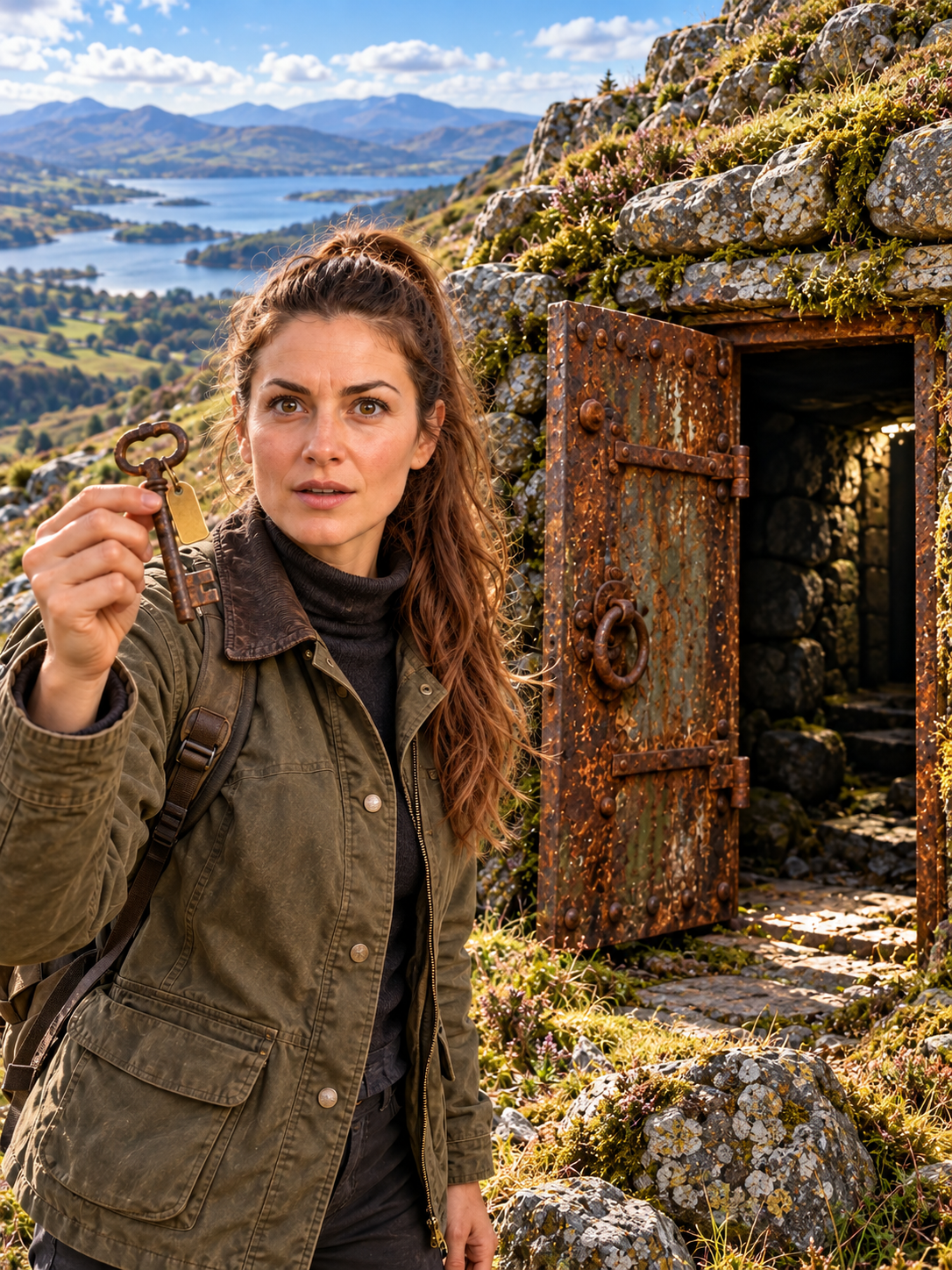
The lawyer cleared his throat and handed me the crumpled deed like it was an apology — “Your grandfather left you the north ridge,” he said, and the whole room chuckled. My own cousins snickered right in front of me. “All rocks and rattlesnakes,” one called out. “Good luck growing air.” They thought they’d gotten the farm, the house, every acre worth a dime — and I’d been handed nothing but a scrap of wilderness nobody wanted. They didn’t know Grandfather had whispered to me on his deathbed: The stones aren’t worthless. They’re a wall. And the door waits for you. I drove out that same afternoon, boots sinking into loose shale, and spotted it almost at once — heavy iron, half‑buried in moss, stamped deep with the year 1893.
I did not storm back to the house and scream that it wasn’t fair. I did not beg anyone to trade me something better or tell them they’d stolen my birthright. I did not let their laughter make me small or foolish or ashamed. I did not kick the stones or curse the ground or turn away before I’d seen what lay beneath. I did not assume the joke was on me — I wondered if they were the ones who didn’t know the truth. I did not ask permission to look. I just found the key he’d left and stepped forward.
I ran my hand over the cold metal and felt the faint carving beneath my fingers — initials, a compass rose, a warning worn thin but still legible. I remembered every evening Grandfather sat on the porch telling me stories of people who came before, of things hidden to keep them safe, of promises kept across generations. I realized he hadn’t given me scraps by accident. He’d chosen me because he knew I was the only one who would not be satisfied with what was easy or obvious. I did not know what I would find — only that it was meant for me alone.
I brushed away the dirt and leaves, traced the rusted keyhole, and took a slow steady breath. I was not about to open a storage shed or an old root cellar. I was about to unlock a secret that had held fast for one hundred and thirty years. And I had a feeling once the door swung open, nothing in this valley would ever be the same again.
If everyone believes the land is empty, what will you do when you discover it has been guarding the truth all this time?
My name is Elara Moore. I’m twenty‑seven. I grew up listening to Grandfather’s stories while other kids chased balls and watched TV. He taught me to read the land — where water ran hidden, where stone lay solid beneath the soil, where the trees grew thickest to shield something precious. When he died, the family circled like crows. They’d always looked at me as the quiet one, the dreamer, the girl who wouldn’t fight. They were wrong.
The ridge sat at the edge of the property — jagged, scrubby, dismissed by every surveyor for decades. “Solid granite,” they’d say. “Not worth clearing.” But Grandfather had marked a spot on the map with a tiny X and written: When the world judges it useless, remember — useless is just a word for what they haven’t understood yet.
I found the key tucked in the lining of his old wool coat — heavy brass, tarnished, warm as if he’d held it only hours before. It fit perfectly. The lock groaned. The door swung outward slow, dust billowing in golden shafts of afternoon light. A tunnel led downward, stone steps worn smooth by hands and feet long gone. I pulled my phone light steady and started walking.
It opened into a wide dry chamber carved straight into the rock. Shelves lined the walls — jars, books, rolled documents. In the center stood a sturdy oak table holding a single leather‑bound journal and a heavy iron box bound with three separate locks. On the first page, written in bold slanted ink from 1893: This land hides what no one must find for as long as greed rules above. We do not hoard it — we protect it. The water flows pure and strong beneath these hills. It feeds the valley, but it can also be poisoned. Keep the map. Guard the source. Tell no one until you must.
My breath caught. Water. Beneath the driest, rockiest ridge in the county lay a vast untouched aquifer — enough to supply every home, every field, every town for generations. And the journal revealed something more: the very family who’d laughed loudest at my inheritance had known all along. Their ancestors had signed the original protection agreement in 1893 — then tried to destroy it when they realized what the land was worth. They’d spent over a century calling it barren to keep anyone else from looking too deep.
I took photos of every page. I did not move the journal or open the box. I closed the iron door and walked back up into the golden evening light, my mind racing. They hadn’t tricked me out of a share — they’d hidden the prize itself, confident I would never bother to check.
By sunset, my cousin Jared was driving up the dirt road. He leaned against my truck, casual and smug. “Still out here? Everyone’s packing up. You should come inside — we’re finalizing the division tomorrow.”
“Division of what?” I asked quiet. “The house? The pastures? The land you’ve known about all along?”
His smile faltered just a little. “What are you talking about?”
“The water,” I said. “The source beneath the ridge. The agreement your great‑great‑grandfather signed in 1893.”
He went pale. Then his jaw tightened. “You don’t know what you’re messing with. Keep quiet, Elara. Walk away. We’ll buy the ridge from you — fair price. More than it looks like it’s worth. Take it and go.”
“Why hide it?” I said. “Why lie to everyone?”
“Because once it’s known,” he said, voice dropping low, “developers swarm. They drill. They drain. They pollute. They pay us a fortune and leave the valley dry. We keep it quiet until we’re ready — that’s how it’s been done.”
“Or until you’re ready to sell to them,” I said. “Not protect it.”
He didn’t answer. He turned and walked back to his car. I knew then — Grandfather hadn’t just left me land. He’d left me the only thing standing between the valley and ruin.
That night I read deeper. The journal named names, dates, threats — how in 1927 the original door had been sealed and buried to stop a mining company. How in 1961 Grandfather’s own father had been pushed off the road and silenced when he tried to speak up. The pattern was clear: whoever held the secret carried the danger too.
I found the first key to the iron box tucked in the journal’s back cover — with a note: Trust none. Verify all. The second was hidden in a crevice beside the door. The third… it said simply: Where the fire once burned bright, look for what remains.
I drove to the old homestead at dawn — the place that had burned to the ground in 1978, the fire everyone called an accident. I sifted through cold ash and twisted metal until my fingers found it — the third key, fused but whole, tucked where the hearth had stood. I carried it back to the ridge with a heavy heart.
Inside the box lay the original hand‑drawn map showing the full extent of the aquifer, plus letters revealing the true plan — Jared and his partners weren’t just selling water rights. They were diverting the flow entirely, channeling it to a private development fifty miles away. Our wells would run dry. Our crops would fail. Our families would have to leave. And they’d scheduled the first test drilling — tomorrow.
I posted the map and excerpts from the journal publicly before sunrise. By mid‑morning the story spread. Neighbors shared it. Farmers called each other. People drove out to the ridge just to stand there — staring at the rocks they’d mocked their whole lives, realizing they’d been fooled.
Jared arrived with two men before noon. He didn’t smile now. “Take it down. Delete everything. You don’t understand who you’re fighting.”
“I understand perfectly,” I said, standing between them and the door. “You’re not just stealing. You’re condemning this whole place.”
“It’s already decided,” one of the men said, stepping forward. “The permits are signed. The money’s transferred. Nothing you post changes that.”
“Permits issued to people who lied on every application,” I said. “I sent copies to the state department this morning. They’re frozen pending investigation.”
They hesitated. Glanced at each other. “You’re making enemies,” the man said. “People don’t like being exposed.”
“Then tell them to stop breaking the law,” I said. “And tell them I’m not leaving.”
They drove away fast, tires kicking up dust. But I knew this was only beginning. That evening I received an anonymous message: You found the surface truth. There is deeper down. The 1893 group didn’t just guard water. They hid something else — something dangerous. Something that can’t be drilled or disturbed. Look at the last page.
I pulled the journal open to the final entry, one I’d barely skimmed. It was written in a different hand, newer but still old: The water lies above a fault line no one mapped. If they drill too deep, the ground shifts. The valley sinks. We sealed the door to save lives as much as secrets. The men coming now know. They don’t care. They say the risk is worth the fortune. They are wrong.
My blood turned to ice. They weren’t just greedy — they were reckless. And they knew exactly what could happen.
I called the state geologist immediately. He listened, silent and grave, then said: “I’ve seen these unrecorded fault lines elsewhere. If they punch into the wrong stratum… catastrophic collapse. Entire sections of land can go.”
I ran back to the ridge at dusk. The iron door stood ajar. Footprints led inside. The journal was gone. The box stood open and empty. A folded scrap of paper lay on the ground: Back off. We have what we need. And no one will believe a girl who talks to rocks.
My phone buzzed — a video from an unknown number. Night‑vision footage of heavy machinery rolling toward the valley edge. The voiceover was Jared’s, calm and cold: We start drilling at midnight. Nothing stops us now. The ridge falls or we get rich — your choice.
I looked at my watch. Eleven‑twenty.
Then my phone buzzed again — a separate message, no name, no number: Don’t stop the drill — stop the location. They’re not aiming for water. They’re drilling directly into the fault itself. The old maps show the true safe path — your grandfather marked it in invisible ink on the back of the deed. Hold it up to firelight.
I snatched the crumpled deed from my pocket. Held it close to the dashboard light — no. I lit a match, cupped it gentle beneath the paper. Faint lines bloomed — a hidden map, a second door, a deeper chamber, and scrawled at the very edge in Grandfather’s familiar handwriting: The lever is inside. It seals the access from below. Get there first. Or there will be no valley left to fight over.
I looked up. Headlights cut through the dark, converging on the ridge from three directions. They were early. And they were coming prepared to do whatever it took to keep me out.
✓ Lynn R. Adams
They Laughed When She Inherited Nothing but Rocks — Then She Unlocked the Iron Door Dated 1893 The lawyer cleared his throat and handed me the crumpled deed like it was an apology — “Your grandfather…