They Laughed When He Dug Wells and Said It Would Never Pay — Five Years Later He Bought Every Acre They Owned
They Laughed When He Dug Wells and Said It Would Never Pay — Five Years Later He Bought Every Acre They Owned
What do you do when the people who mock your quietest dream hold the deeds to everything you plan to claim?
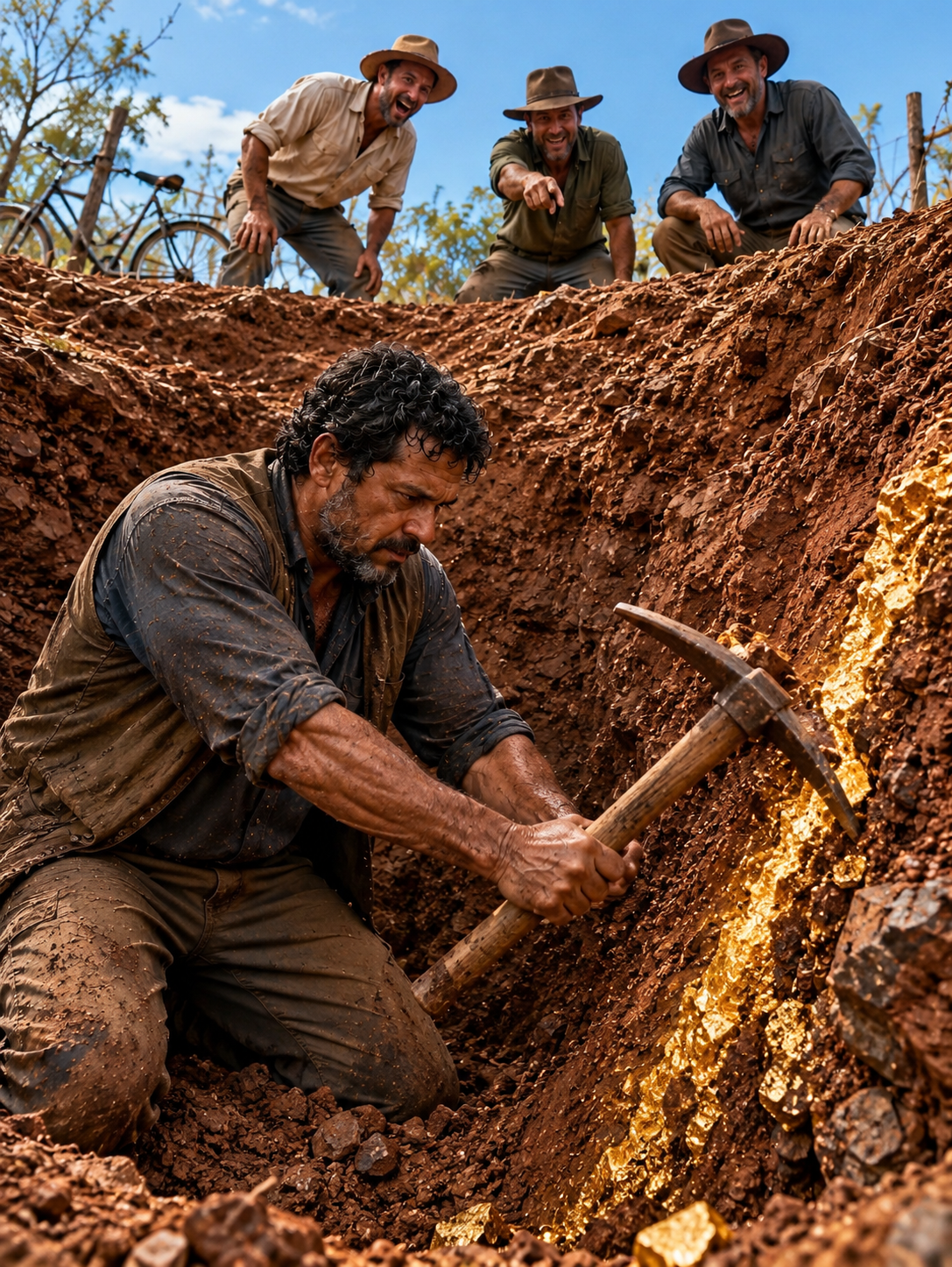
The shovel bit into hardpan with a dull, unyielding thud. “Still digging for water, Elias?” Jenson called from his pickup window, laughing so hard he could barely steer. “You’ll go broke before you find a drop on this dust-blasted ridge!” The others hooted in agreement. They drove past every morning, kicking up clouds of choking dust, while I stood in the hole, blisters burning, and kept going. They had fine wells on their land, deep and reliable, and they swore mine was dry forever. They were wrong.
I did not throw down my shovel and march up to their trucks. I did not shout that I would show them all. I did not let their laughter make me doubt the map my grandfather left me. I did not waste a single breath arguing with people who looked only at the dirt and never at the land. I did not spend my days complaining about being laughed at. I spent them digging.
I struck rock and I kept digging. I hit hard clay and I kept digging. My canteen ran low and I kept digging. My back ached and my hands bled and I kept digging. Because I knew what they did not know: water does not always show where the sun shines brightest. It hides where the ground remembers how to keep a secret.
I measured. I mapped. I marked the line where the ancient creek bed ran buried beneath the sagebrush. I trusted the old notes and the faint telltale dampness that rose only at dawn. I did not guess. I knew.
My name is Elias Thorne. I inherited forty acres at the edge of the valley—thin soil, scrub oak, dry as bone according to every neighbor. Grandfather had said, “The water’s there, Elias. Deep. Pure. And it moves. You just have to meet it where it waits.” He’d drawn the map by hand, marked the contours, noted the place where the rock formation pinched and the water pooled. No one believed him. No one but me.
I dug for three months. Six feet down. Ten. Twelve. The neighbors grew louder. “Wasting your life,” they said. “Throwing money into a hole.” Jenson and his brother Cole owned the two largest spreads in the valley. They controlled the main irrigation ditch. They set the water rates. They’d told me from day one: If you want water, buy it from us. Otherwise, dry up and blow away.
I refused. I kept digging.
At sixteen feet, the clay changed color. Darker. Cooler. At twenty, the shovel sank without resistance. Damp earth clung to the blade. By dawn the next day, clear water pooled at the bottom—rising slow, steady, pure as rain. I knelt and touched it. It was real. It was mine. And it was more than enough.
I did not run to the road and wave them down. I did not post a sign or shout the news. I hauled the bucket up, smoothed the edge, and covered the opening with a heavy board. I needed time. I needed plans. And I needed them to keep thinking I was still digging in the dust.
I drilled two more test holes over the next month—quietly, at night, with equipment I rented under a different name. Every one hit water. Abundant. Cold. Untapped. The aquifer ran beneath my land in a broad, deep vein—untouched by the valley’s overdrawn wells. Grandfather had been right. And they had been blind.
I started small. I installed solar pumps. I laid drip lines. I planted drought-resistant orchard trees—pistachios, olives, pomegranates—crops that thrived on less water and brought higher prices. I built a small packing shed. I sold at farmers’ markets three counties away. I kept my business quiet. When neighbors asked, I said I was “making do.” They nodded, pitying, and turned away.
Year one: the orchard rooted. Year two: first harvest. Year three: I added a cold-storage unit and began supplying specialty grocers. Year four: I leased an additional eighty acres nearby—land no one else wanted, because “it’s too dry.” I knew better. I knew exactly where to sink the wells.
Meanwhile, the valley changed. The main aquifer dropped fast. Jenson and Cole pumped deeper and harder. Their wells slowed. Their crops browned. Their irrigation ditch ran thin. They raised rates. They fought among themselves. And still the water fell.
They came to me in late summer of the fourth year—Jenson, Cole, and three other landowners, standing on my porch like men asking for a favor. “We see your trees,” Jenson said, trying to sound casual. “Green when everything else is burning. What’s your secret?”
“Good roots,” I said. “Careful planting.”
Cole narrowed his eyes. “You’ve got water. More than you should. We want to lease it. Ten thousand a month. More later.”
I shook my head. “I’m using it.”
“Twenty thousand,” Cole said, stepping closer. “Don’t be greedy. This is a community.”
“This is my land,” I said. “And I’m not selling.”
They left angry. I watched them drive away and made the next call—to a land broker, to an attorney, to the financial advisor who’d helped me reinvest every dollar I’d earned. The moment was coming. I could feel it.
By spring of the fifth year, the valley was in crisis. Wells failed entirely. The county declared a drought emergency. Property values collapsed. Farms that had been in families for generations were suddenly for sale—cheap, desperate, no one buying.
I began to make offers. Quietly. Through a third party. First the small plot at the crossroads. Then the hayfield on the ridge. Then the pasture that bordered my northern line. Each time, the owners signed fast, relieved to salvage something. None of them knew who the buyer was.
Until the day the deed to Jenson’s land came through.
He drove up as I was nailing the final post into the fence line—my fence, along the new property boundary. He skidded to a stop, face red, eyes wild. “What is this? They said an investor bought it!”
“I did,” I said, hammering one last nail.
He stared. “You? You can’t afford this. You were digging holes five years ago!”
“I was finding water,” I said. “Everything else followed.”
He stepped closer, voice rising. “This is a mistake! You think you won? Without us, you’re nothing!”
“Your wells ran dry,” I said. “Yours. Your brother’s. Half the valley. Mine didn’t.”
He went pale. “You knew. All along.”
“My grandfather knew,” I said. “He left me the map. The knowledge. And the promise that the land would provide if you listen instead of just taking. You laughed. You drained the valley dry. And you never once looked down to see what was right beside you.”
Cole arrived minutes later, breathless, having heard the news. “You can’t own both sides of the ditch! That’s monopoly!”
“I own the land,” I said. “The water that originates on it. And the rights to manage it responsibly. The law is clear.”
They threatened lawsuits. They called friends. They spread stories about me—how I’d cheated, how I’d lied, how I’d stolen. But the deeds were recorded. The surveys were filed. The wells ran clear and steady for anyone who came to see.
I did not gloat. I did not evict them. I did not shut the gate.
Instead, I sent each of them a letter. I would not sell water. But I would share it—on new terms. Sustainable usage. Restricted pumping. Repair of the ditch. Restoration of the stream banks. A cooperative managed by all of us, not dictated by two. And if they refused, the land would be restored to native grass and woodland, and the water would flow where nature intended.
Jenson called within an hour. “You’re blackmailing us.”
“I’m offering you a future,” I said. “Take it or leave it. But the water stays.”
Cole showed up at dusk, angry but broken. “Why didn’t you tell us? Why let us waste five years?”
“I tried,” I said. “You laughed. You drove past. You said I was digging in the dirt. You never asked what I was building.”
Slowly, reluctantly, they signed. The valley shifted. I hired local hands. I shared the harvest. I taught the water conservation methods Grandfather had written down decades earlier. Fields greened not because we pumped harder, but because we used less. The ditch ran clear. The land began to heal.
But not everyone was happy.
One evening, I returned from checking the upper wells to find my main gate pried open. Tracks led toward the orchard. I ran. The irrigation lines had been cut—slashed, severed, leaking precious water into the dust. My heart sank. This was not anger. This was sabotage.
I checked the trail cameras I’d installed along the perimeter. The footage showed two figures—Cole and a man I didn’t recognize—working fast, in and out in minutes. But as I reviewed the clip, something else caught my eye. A third person, standing back in the shadows, watching. Not Cole. Not Jenson. Someone else.
I froze. The face was partially hidden, but the posture was unmistakable. It was the county water administrator—the man who’d signed off on Jenson and Cole’s pumping permits year after year, who’d looked the other way when they exceeded limits, who’d publicly dismissed my well as “a fluke.”
Why would he be there?
I pulled Grandfather’s old journals from the safe that night—pages I’d read a dozen times, but never fully understood. Near the end, written in shaky script: They won’t let the water stay with us. They’ll claim it belongs to the valley. To the county. To anyone but the one who holds it. And they have been planning this for longer than I’ve been alive.
Beneath the words was a name—same last name as the administrator. Same family.
I cross-referenced old records. Permits from twenty years ago. A contested well that had been capped by county order. Grandfather’s well. The one he’d dug and then been forced to abandon. The one I’d reopened.
They knew. They had always known. They’d let him build. Then they’d taken it. And they’d been waiting for me to fail so they could take it again.
The vandalism was not a tantrum. It was the first step. They would claim my wells were improperly constructed. That my water rights were invalid. That I was diverting a public resource. And they would use the damage they caused as proof I could not be trusted to manage it.
I looked up to see headlights sweep across the porch. A vehicle pulled up fast, engine idling. A shadow stepped out and stood at the gate. Not Jenson. Not Cole. The administrator.
He didn’t come closer. He didn’t shout. He just held up a folded paper—bright orange, official. A cease-and-desist order. And then he smiled. Slow, cold, certain.
They weren’t coming for the water. They were coming for the land. And they’d been waiting fifty years to finish what they started.
✓ Lynn R. Adams
They Laughed When He Dug Wells and Said It Would Never Pay — Five Years Later He Bought Every Acre They Owned What do you do when the people who mock your quietest dream hold the deeds to everything …