Their Son Threw Them Out After Four Days—Then the $11 Stone Cottage Exposed the Inheritance He Thought He Owned
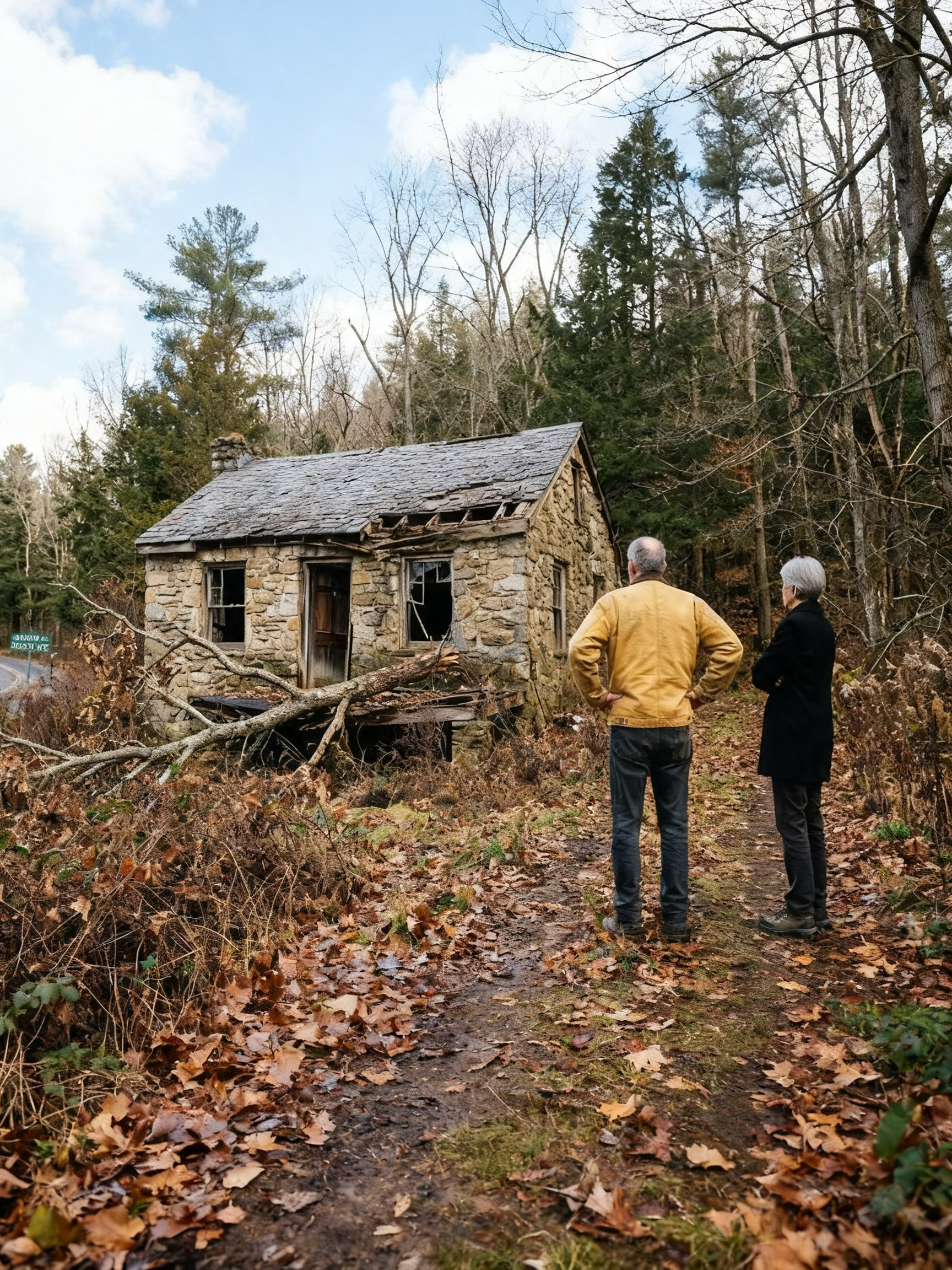
Their Son Threw Them Out After Four Days—Then the $11 Stone Cottage Exposed the Inheritance He Thought He Owned
“You’ve had four days, Mom. That’s four days longer than Tessa wanted you here.”
Derek Vale said it from the doorway of the guest room while his seventy-two-year-old mother folded her husband’s shirts into a grocery-store box.
Then he set two black trash bags beside her suitcase.
“For anything that doesn’t fit.”
Margaret Vale looked at the bags.
She looked at her son.
And she said nothing.
That silence unsettled him more than tears would have.
Derek had prepared himself for tears.
He had prepared himself for accusations, for his mother reminding him who had paid his community-college tuition when he dropped out the first time, who had wired him eight thousand dollars when his first business failed, who had taken his twins every weekend for nearly three years while he and Tessa “got back on their feet.”
He had prepared himself for guilt.
What he had not prepared for was Margaret calmly folding one of Henry’s flannel shirts, smoothing the sleeves, and laying it inside the box as though they were simply packing for a trip.
Behind Derek stood Tessa, his wife, arms folded across a cream-colored sweater.
Farther down the hall, Margaret could see Derek’s sister, Alison, pretending to look at something on her phone.
Even Margaret’s younger brother Calvin had come.
That was when she understood.
This was not a family argument.
It was a meeting.
They had all been invited.
Everyone except her.
Henry sat at the edge of the bed wearing his old brown work jacket. At seventy-five, his shoulders had narrowed, but there was still something solid about him. He had spent forty-two years repairing electrical systems in paper mills, schools, churches, and half the municipal buildings in Fayette County, Pennsylvania.
He looked at Derek once.
“You changing your mind?” Henry asked.
Derek shifted his weight.
“This isn’t personal.”
Henry almost smiled.
“Usually means it is.”
Tessa stepped forward.
“We simply don’t have room.”
Margaret looked past her toward the enormous upstairs hallway of the five-bedroom house.
One bedroom was a home gym.
One was a dressing room.
One was used for storage.
The room they had occupied for four days had been empty for eleven months.
Margaret still said nothing.
Derek cleared his throat.
“There’s something else.”
Of course there was.
Calvin finally entered the room.
He was sixty-eight, silver-haired, broad around the middle, still wearing the expensive charcoal sport coats he had begun buying after their mother died.
He carried a blue folder.
Margaret’s eyes moved to it.
Calvin noticed.
“This would make everything easier.”
He offered it to her.
She did not take it.
“What is it?” Henry asked.
“Just an acknowledgment,” Calvin said. “About Mom’s estate.”
Margaret slowly raised her eyes.
Their mother, Lydia Mercer, had been dead eighteen months.
The estate had become Calvin’s favorite subject.
According to him, Lydia had left the Mercer farmhouse, 427 acres of wooded ridge, several outbuildings, an old limestone quarry, and approximately $640,000 in investment accounts to him and his two children.
Margaret had received a box of photographs.
A cedar chest.
Her mother’s sewing machine.
And an envelope containing a handwritten recipe for apple butter.
She had not contested the will.
Everyone called that proof Margaret had accepted it.
Nobody mentioned why.
For eleven years before Lydia died, Margaret had driven forty-three miles each way, five days a week, to care for her.
She cleaned the house.
She managed prescriptions.
She cooked.
She changed dressings after Lydia’s hip surgery.
She sat beside her through chemotherapy.
She paid the property taxes twice when Calvin claimed he was “between liquidity events.”
She canceled a trip to Yellowstone with Henry because Lydia fell in the bathroom.
She missed her granddaughter’s school play because Lydia had pneumonia.
She left a nursing supervisor position three years before retirement because her mother could no longer live alone.
Calvin visited on Christmas.
Sometimes Easter.
He sent flowers on Mother’s Day.
And after Lydia died, he inherited nearly everything.
Margaret had not challenged him.
Not because she believed it was fair.
Because Lydia had spent her final week confused and frightened, and Margaret could not bear the thought of turning her mother’s funeral into the opening scene of a family war.
So she walked away.
The family interpreted silence as surrender.
They had made that mistake many times.
Calvin tapped the blue folder.
“A developer’s interested in the ridge. This just confirms you have no continuing claim through Mom.”
Henry stood.
“Why would she have a continuing claim if she already got nothing?”
Calvin’s face tightened.
“Standard title work.”
Tessa spoke quickly.
“Derek told us it’s routine.”
Margaret looked at her son.
He avoided her eyes.
There it was.
The real reason they had been invited into his house four days earlier.
Their apartment building had been sold, and Derek had insisted they stay with him until they found something permanent.
Margaret had thought her son was helping.
Now she understood.
They had wanted her under the same roof long enough to put papers in front of her.
When she had delayed signing, the hospitality ended.
Margaret finally spoke.
“How much?”
Derek blinked.
“The developer.”
Calvin laughed too quickly.
“It isn’t relevant.”
“How much?”
“Fourteen point eight million,” Alison said from the hallway.
Every head turned toward her.
She lowered her phone.
“What? She was going to find out.”
Margaret nodded once.
Calvin’s mouth hardened.
“It’s a complex deal. Gross numbers mean nothing.”
“And this paper?”
“Relinquishes any potential heirship objections.”
“Potential?”
“Margaret, don’t play games.”
Henry stepped toward him.
Margaret touched her husband’s wrist.
He stopped.
Then she took the blue folder.
Calvin relaxed.
So did Derek.
Tessa exhaled.
They thought the scene was over.
Margaret opened the folder.
She read the first page.
Then the second.
Then the signature line.
Her name had already been typed beneath it.
MARGARET ELAINE VALE.
A yellow tab showed her where to sign.
She closed the folder.
“Do you have a pen?” she asked.
Calvin smiled.
Derek looked relieved.
Tessa actually glanced at the trash bags as though the unpleasant part was finished.
Calvin handed Margaret a silver pen.
Margaret turned it over once between her fingers.
Then she slipped it into the folder.
Closed the folder.
And placed both on the dresser.
“I’ll have someone read it.”
Calvin’s expression changed.
“It has to be signed today.”
“Margaret.”
Derek’s face flushed.
“Mom, why are you making this difficult?”
For the first time that afternoon, something passed across Margaret’s face.
Something colder.
“I’m making you wait.”
“That’s the same thing.”
“No,” she said softly. “It isn’t.”
Tessa stepped forward.
“Then I think you need to leave.”
Henry looked toward Margaret.
Margaret simply nodded.
Thirty-seven minutes later, everything they owned that mattered was packed into the back of Henry’s fourteen-year-old Ford Explorer.
Two suitcases.
Three boxes.
A framed photograph from their wedding.
Henry’s tools.
Margaret’s sewing basket.
A coffee can containing forty-two dollars in quarters.
Her mother’s cedar chest.
And a small brass key Margaret had found three weeks earlier inside the lining of Lydia’s old winter coat.
Nobody knew she had it.
Not Calvin.
Not even Henry.
As Henry closed the tailgate, Derek stood beneath the porch light.
“Where are you going?”
Henry looked at him.
“Thought you wanted us gone.”
“I mean tonight.”
Margaret climbed into the passenger seat.
Derek walked closer.
She lowered the window.
For half a second, he looked like the little boy who used to come into her room during thunderstorms.
Then he said, “You’re being dramatic.”
Something in her finally settled.
She looked at the beautiful house she and Henry had helped him buy by loaning him the down payment.
She looked at the son who had asked them to leave because his uncle needed a signature.
Then she said, “Your father’s cold.”
And rolled up the window.
They drove away.
Margaret did not cry.
Not when the porch disappeared.
Not when Henry pulled into a twenty-four-hour diner because they had nowhere else to go.
Not when he ordered one coffee and stirred it for five minutes without drinking.
Not when he finally said, “I can call Rick. We can stay in his basement.”
Margaret shook her head.
“No basements.”
“We need somewhere.”
Henry studied her.
“You got something in mind?”
Margaret reached into her purse.
From a side pocket, she removed a folded newspaper clipping.
The headline was small.
FAYETTE COUNTY REPOSITORY PROPERTIES — PUBLIC SALE.
One property had been circled.
Parcel 18-07-114.
Abandoned stone cottage.
No municipal water.
No active electrical service.
Severe structural deterioration.
Minimum repository bid: ten dollars.
Administrative recording fee: one dollar.
Henry read it twice.
Then looked at her.
“Eleven dollars?”
Margaret nodded.
“You want to buy a condemned cottage?”
“It isn’t condemned.”
“It has a tree growing through the porch.”
“Only a small tree.”
Henry stared at her.
Margaret took a sip of his coffee.
“It has walls.”
“So does the county jail.”
“It has a fireplace.”
“So did the Titanic probably.”
She almost smiled.
Henry leaned back.
“How long have you been thinking about this?”
“Three weeks.”
That changed his expression.
“Three weeks?”
Margaret removed the brass key.
It looked old.
The bow was oval and worn smooth. Three tiny letters were stamped along one side.
Henry picked it up.
“What does that stand for?”
“I don’t know.”
“Where’d you get it?”
“Mom’s coat.”
He stared at her.
Margaret told him.
Three weeks earlier, while sorting the cedar chest, she had found Lydia’s dark green winter coat folded beneath several blankets.
The coat had not been worn in years.
Margaret remembered it because Lydia had worn it every winter from 1989 until the lining tore.
Margaret had been preparing to donate it when she felt something hard sewn inside the hem.
She opened a two-inch section with a seam ripper.
A brass key fell out.
So did a strip of paper.
Only five words were written on it.
STONE HOUSE. WEST WALL. WAIT.
The handwriting was Lydia’s.
Henry looked again at the repository listing.
“Stone cottage.”
Margaret nodded.
“You think this is the stone house?”
“I think my mother wanted me to think about it.”
“Why wouldn’t she just tell you?”
Margaret folded the clipping.
“Maybe she tried.”
The next morning, at , Margaret and Henry Vale submitted an eleven-dollar bid for the abandoned cottage.
At 11:40, the clerk called to tell them no other bids had been received.
By Friday afternoon, subject to the county’s repository-sale conditions and title processing, the little stone house belonged to them.
News traveled fast.
Calvin heard by Saturday.
Derek heard ten minutes later.
By Sunday, half the family knew.
At that night, Margaret received a group text.
Alison: Is this true???
Brooke: Grandma bought that ruin by the old ridge road LOL.
Tessa: Please tell me you didn’t spend your last money on that place.
Derek: Call me.
Calvin: Margaret, that parcel is worthless. You’re embarrassing yourself.
Then Calvin sent a photograph.
It had been taken from the road.
The cottage looked even worse than Margaret remembered.
The roof dipped toward the center.
One shutter hung sideways.
Vines covered half the eastern wall.
The stone chimney had split near the top.
A young maple had rooted beside the front steps and pushed one of the stones out of place.
Under the photograph, Calvin wrote:
You traded family for this?
Margaret read the message.
Then locked her phone.
Henry watched her.
“No response?”
“Not even one?”
They moved into the cottage two days later.
Technically, “moved into” was generous.
The first night they slept inside the Explorer because the cottage smelled like wet plaster, mouse droppings, and seventy years of rain.
The second night Henry patched enough roof to keep water out of the back room.
The third day Margaret scrubbed the kitchen floor until the original slate appeared beneath the grime.
On the fourth morning, Henry restored the fireplace.
On the fifth, an electrician friend connected temporary service.
On the sixth, Margaret found the west wall.
There were several west-facing walls, but only one looked wrong.
The back room had probably once been a pantry.
Its western wall was made of gray fieldstone like the rest of the cottage, except for a waist-high section where the mortar seemed slightly newer.
Margaret stood before it for nearly a minute.
Henry came in carrying a bucket.
She pointed.
He set the bucket down.
“You think that’s it?”
Margaret handed him the brass key.
“No keyhole.”
“Maybe we make one.”
Henry fetched a cold chisel.
They removed the first stone at 10:17 in the morning.
Behind it was darkness.
The second revealed a cavity.
After the third stone came free, Henry reached inside.
His fingers touched metal.
He pulled out a rectangular iron box about sixteen inches long.
Neither of them spoke.
The box was black with rust.
A small brass lock sat beneath the handle.
Margaret inserted Lydia’s key.
Inside lay several envelopes wrapped in waxed cloth.
A leather ledger.
Two survey maps.
A sealed glass jar containing old brass survey pins.
A packet of canceled checks.
And a cream-colored envelope with Margaret’s full name written across it.
Margaret Elaine Mercer Vale.
Henry sat down on the floor.
Margaret remained standing.
She touched the envelope but did not open it immediately.
Henry watched her.
“You all right?”
“Want me to?”
She broke the seal.
The letter inside was six pages long.
My dearest Margaret,
If you are reading this inside the Stone House, then you have finally done the one thing I was afraid you would never do.
You chose something for yourself.
Margaret stopped.
Henry looked away.
She kept reading.
Lydia’s words were not those of the confused woman from her final days.
They were precise.
Almost angry.
She wrote that the Mercer family had spent generations rewarding whoever demanded the most and depending on whoever complained the least.
She wrote about Calvin.
About Margaret’s father.
About Lydia herself.
I taught you to be useful and called it goodness. I let your brother be selfish and called it ambition. When he needed money, we helped him. When you needed rest, we praised your strength. I am ashamed of how often we confused your silence with permission.
Margaret’s hands began to shake.
Henry placed his palm against her back.
She continued.
The Stone House, Lydia wrote, had been built in 1911 by Margaret’s grandfather, Samuel Mercer.
It had once served as the office for Mercer Ridge Limestone Company.
When the quarry closed in 1958, the family divided much of the land.
But Samuel had retained several interests separately from the surface property.
Water rights.
Mineral rights.
An access corridor running from County Road 6 to the old quarry.
And, most importantly, a tract described in the original survey as the Stone House Reserve.
The county’s modern tax map showed the cottage parcel as 1.9 acres.
The legal description did not.
According to Lydia, the original deed and subsequent recorded transfers described a boundary beginning at an iron pin beside Black Laurel Creek, following the ridge north, crossing the old quarry road, and returning along the spring line.
One hundred eighty-seven acres.
For decades, the tax map had shown most of those acres as part of the larger Mercer estate.
But tax maps were administrative tools.
The deeds controlled ownership.
And Lydia believed Calvin knew there was a problem.
Margaret lowered the letter.
Henry whispered, “One hundred eighty-seven acres?”
She kept reading.
That was not the real secret.
In 1998, Lydia had discovered that Margaret’s father had used the Stone House Reserve as collateral for a business loan without Lydia’s knowledge.
Margaret had quietly paid the delinquent taxes and loan balance after his death because she feared the family would lose the property.
The canceled checks were in the box.
Thirty-eight thousand four hundred dollars.
Margaret remembered every payment.
She had never told Calvin.
He had been going through his second divorce.
Lydia had promised to repay her.
She never did.
At least, not directly.
In 2004, Lydia executed a codicil to her will.
The letter named the attorney.
Jonathan Reed.
Not Owen Price, the attorney now representing Calvin.
Jonathan Reed had died six years earlier.
But his firm still existed in Uniontown.
The codicil contained a strange condition.
Lydia knew the cottage might someday fall out of the family because its taxes had become entangled with an old dissolved corporation.
She therefore left Margaret all of Lydia’s retained mineral, spring, access, and reversionary interests associated with the Stone House Reserve if Margaret ever lawfully acquired title to the Stone House parcel.
If the condition was never met, the interests would remain dormant in Lydia’s residual estate.
If it was met, the probate estate was to be reopened and the transfer completed.
Henry read that paragraph twice.
“That sounds impossible.”
“So did buying a house for eleven dollars.”
“There’s more?”
Margaret turned the page.
Lydia had anticipated a fight.
Calvin may tell you there is nothing left. He may tell you the ridge belongs to him. He may have Owen prepare papers designed to make you waive rights you do not yet know you possess. Sign nothing.
Margaret stopped breathing for a moment.
Henry looked at her.
The blue folder.
The yellow tab.
The silver pen.
Sign nothing.
Lydia continued:
If a developer is ever involved, assume they will try to move faster than the records can be examined. Do not threaten them. Do not argue. Do not tell Calvin what you have found. Let him believe the land is his until he puts that belief in writing.
Henry slowly sat back.
“Your mother knew.”
“She suspected.”
“She knew enough.”
Margaret looked toward the iron box.
At the bottom lay one last envelope.
On it, Lydia had written:
FOR WHEN CALVIN SAYS I GAVE HIM EVERYTHING.
Margaret opened it.
Inside was a photocopy of a recorded memorandum of interest from 2004.
Fayette County Recorder of Deeds.
The document referenced the Stone House Reserve and Lydia’s retained interests.
It did not state Margaret’s name.
It did not disclose the beneficiary.
But it put the world on notice that those interests existed.
Calvin had inherited the mansion.
Much of the surface acreage.
But not everything.
And if the developer buying his property had failed to examine the memorandum, someone had made an expensive mistake.
Henry let out a slow breath.
“What now?”
Margaret folded Lydia’s letter carefully.
“We get a lawyer.”
“Calvin’s going to know.”
Margaret stared at the name on Lydia’s letter.
“Jonathan Reed’s firm.”
The firm was now called Reed, Holloway & Finch.
Its offices occupied the second floor of an old brick building across from the Fayette County courthouse.
Margaret and Henry arrived the next morning wearing the cleanest clothes they owned.
Margaret carried the iron box.
At reception, she asked whether anyone there remembered Jonathan Reed.
A woman in her fifties looked up sharply.
Her name was Ellen Finch.
She had started as Jonathan Reed’s associate twenty-seven years earlier.
Now her name was on the door.
When Margaret showed her Lydia’s letter, Ellen closed the office door.
When Margaret showed her the memorandum, Ellen stopped taking notes.
When Margaret showed her the survey, Ellen whispered one word.
For three hours, Ellen examined the papers.
Then she made calls.
She sent an associate to the recorder’s office.
She requested the old probate file.
She contacted a title examiner.
At , she returned to the conference room.
“Mrs. Vale, I need to be careful.”
Margaret nodded.
“Some of this is complicated. Some of it may be challenged. We need a licensed surveyor. We need the complete chain of title. And the probate court will have to determine whether your mother’s conditional bequest can now be administered.”
“So Calvin might be right?”
“About what?”
“That I have nothing.”
Ellen’s expression changed.
She placed several copies on the table.
“He’s wrong about that.”
One was the 2004 memorandum.
One was a 1976 mineral deed.
One was a 1989 water-rights agreement.
And one was an access easement.
All referenced the same legal description.
The Stone House Reserve.
Ellen tapped the last page.
“Your brother’s proposed sale includes land he may own on the surface. But the developer’s project appears to require this road.”
She tapped another.
“And this spring.”
“And this old quarry bench.”
“What’s on the quarry bench?” Henry asked.
Ellen turned her laptop around.
A website filled the screen.
MERCER RIDGE.
COMING SOON.
A luxury mountain community.
Eighty-four homes.
Event lodge.
Private lake.
Hiking trails.
Projected investment: thirty-two million dollars.
The architectural rendering showed stone villas climbing the ridge.
Margaret recognized the old quarry road.
“You’re kidding,” Henry said.
Ellen shook her head.
“They’re already marketing preliminary reservations.”
Margaret stared.
Ellen continued.
“The access road shown in their county submission crosses the reserve. Their planned water system draws from Laurel Spring.”
“Which belongs to—”
“Possibly you, once the estate issue is resolved. Or Lydia’s estate until then. Either way, not Calvin.”
Henry gave a low whistle.
Ellen held up a finger.
“But we do not contact him yet.”
Margaret looked at her.
“My mother said the same thing.”
Ellen smiled faintly.
“Your mother was usually difficult.”
Margaret almost laughed.
“That sounds like her.”
“She was also careful.”
For the next six weeks, Margaret and Henry repaired the cottage while Ellen built the case.
They patched the roof.
Repointed stone.
Replaced broken windows.
Henry found an old oak door at a salvage yard and spent two days fitting it to the original frame.
Margaret planted herbs beneath the kitchen window.
Every morning at seven, she made coffee on a single electric burner.
Every night, they sat near the fireplace while the October wind moved through the trees.
For the first time in years, nobody asked Margaret for money.
Nobody asked her to babysit.
Nobody asked her to cook Thanksgiving dinner for twenty-three people.
Nobody asked her to mediate someone else’s marriage.
Nobody asked Henry to repair a furnace for free because “family helps family.”
Their phones, however, stayed busy.
The family laughed.
Calvin sent updates about his development deal.
Brooke posted a photograph beside a Mercer Ridge sign with the caption:
BIG THINGS COMING FOR OUR FAMILY.
Alison texted Margaret privately.
Uncle Calvin says you’re living without plumbing.
Margaret replied:
We have plumbing.
Alison answered:
That’s good.
It was the first non-hostile exchange.
Derek called twice.
Margaret let both calls go to voicemail.
On the third attempt, Henry answered.
Derek sounded irritated.
“Can I talk to Mom?”
Henry looked toward Margaret.
She shook her head.
“With what?”
Henry looked around the little stone room.
Then he hung up.
By November, Calvin was convinced the property sale was complete except for final title clearance.
That was precisely what Ellen wanted.
She obtained a copy of the purchase agreement through the probate proceeding.
Calvin had represented that he owned or controlled all interests necessary for the project.
He had also signed an indemnification clause.
More interestingly, the agreement referenced Margaret.
Ellen called her immediately.
“You need to come in.”
Margaret and Henry drove to Uniontown.
Ellen slid the document across the table.
Section 14.6.
Seller represents that no heir, beneficiary, family member, third party, trust, estate, prior owner, or claimant holds any undisclosed right affecting access, water, minerals, development, or title.
Beneath that, Calvin had initialed.
Then another section.
Seller further represents that Margaret Elaine Vale has relinquished or will relinquish any potential claim arising through Lydia Mercer.
Margaret stared at the words.
“He signed this before I signed anything.”
“He told them I would.”
“Three days before Derek asked you to stay with him.”
Henry’s jaw hardened.
That explained everything.
The guest bedroom.
The blue folder.
Calvin’s visit.
Derek’s sudden cruelty.
It had not been spontaneous.
They had coordinated it.
Margaret remained quiet for so long that Ellen asked if she wanted water.
“Mrs. Vale—”
“Did Derek get paid?”
Ellen hesitated.
“We don’t know.”
Margaret looked at the contract.
“How can you tell?”
“He hates confrontation.”
She pushed the document back.
“He wouldn’t throw his father out unless somebody made it worthwhile.”
Two weeks later, they learned the amount.
Fifty thousand dollars.
Calvin had signed a “family title consulting agreement” with Derek.
Twenty-five thousand upfront.
Twenty-five thousand when Margaret signed.
The first payment had already been made.
Henry read the bank record obtained in discovery.
Then he walked outside.
Margaret found him behind the cottage splitting firewood far harder than necessary.
The axe came down.
A log split in half.
She stepped closer.
He finally stopped.
“For fifty thousand dollars.”
Margaret said nothing.
“He sold us for fifty thousand dollars.”
“He sold a signature.”
“He threw you out.”
“You know what I mean.”
Margaret picked up one half of the split log.
Henry’s eyes were wet.
Hers were not.
That frightened him sometimes.
Not because she felt nothing.
Because she felt everything and had learned long ago to store pain where other people could not use it against her.
She carried the log toward the cottage.
Henry followed.
“Say something.”
Margaret stopped at the door.
“My son thought I would sign because I was homeless.”
Henry stared at her.
“He thought fear would make me obedient.”
She went inside.
That night, Margaret opened her mother’s letter again.
One passage kept returning to her.
I taught you to survive by making yourself smaller. If there is any justice left for me to give you, let it be this: take up space.
Three days later, Margaret authorized Ellen to file.
The petition requested reopening Lydia Mercer’s estate.
It sought judicial determination of the conditional bequest.
It requested declaratory judgment regarding the Stone House Reserve.
And it named Calvin Mercer, Mercer Ridge Development LLC, and several related entities as interested parties.
The filing landed at on a Monday morning.
By , Calvin called Margaret.
She did not answer.
At , Derek called.
At , Tessa.
At , Calvin sent:
WHAT THE HELL ARE YOU DOING?
Margaret placed her phone facedown and buttered toast.
Henry looked at it.
“You gonna answer?”
At another message arrived.
YOU ARE DESTROYING A $15 MILLION DEAL OVER AN ABANDONED SHACK.
CALL ME NOW.
YOU DON’T UNDERSTAND WHAT YOU SIGNED AT THE COUNTY SALE.
Margaret smiled at that one.
Because for once, Calvin was right about something.
She had not understood when she bought the cottage.
Now she did.
At noon, three SUVs came up the gravel drive.
Calvin arrived first.
Derek second.
Owen Price third.
Tessa came with Derek.
Brooke came with Calvin.
Five people.
A delegation.
Henry stood on the porch.
Margaret stayed inside long enough to pour coffee into her blue ceramic mug.
Then she stepped outside.
Calvin looked at the repaired cottage.
The new windows.
The cleared vines.
The rebuilt steps.
For a second, he seemed disappointed it no longer looked ridiculous.
Then anger returned.
“You filed against me.”
Margaret sipped her coffee.
“I filed something.”
“Withdraw it.”
“Do you understand what happens if the buyer walks?”
“Everyone loses.”
Calvin pointed toward her.
“Do not do that.”
“That calm little act.”
Margaret tilted her head.
“What would you prefer?”
“Mom,” Derek interrupted, “can we just go inside and talk?”
His face tightened.
“I’m trying to fix this.”
Margaret looked at him.
“No, you’re not.”
Derek glanced at Tessa.
Tessa stepped forward.
“We made a mistake.”
Margaret waited.
“Things got heated.”
Still Margaret waited.
“We shouldn’t have made you leave that night.”
Henry let out a short laugh.
“That night?”
Tessa ignored him.
“We’ve talked. You can come back.”
Margaret looked toward the cottage behind her.
Then back at Tessa.
Derek seemed genuinely confused.
“Because you’re my parents.”
Henry folded his arms.
“Wasn’t true six weeks ago?”
Owen Price stepped in.
“This isn’t productive.”
Margaret looked at him.
He was fifty-seven, smooth-faced, silver tie, polished shoes that already had mud along the edges.
He held a leather portfolio.
“Mrs. Vale, your petition raises several theories that are, frankly, speculative.”
“Then you shouldn’t be worried.”
His smile thinned.
“The county repository sale does not automatically validate the survey in your possession.”
“And probate conditions can fail.”
“And even if certain interests remained in Lydia’s estate, there are limitation issues, notice issues, tax issues—”
Owen paused.
Calvin exploded.
“Then what do you want?”
Margaret looked at him.
There it was.
Not What is true?
Not What did Mom intend?
Not Did we hurt you?
What do you want?
The language of people who believed every problem had a buyout price.
Margaret set her mug on the porch rail.
“What are you offering?”
Derek’s eyes widened.
Calvin glanced toward Owen.
They thought they had found the door.
Owen opened his portfolio.
“Without admission of liability, my clients are prepared to offer you two hundred fifty thousand dollars.”
Henry’s eyebrows rose.
Tessa looked relieved.
Brooke smiled.
Margaret said, “No.”
“Three hundred.”
“Margaret,” Calvin snapped, “you paid eleven dollars.”
“You are trying to extort millions out of land you never cared about.”
Margaret stared at him.
“You visited Mom eleven times in her last three years.”
His face changed.
“That has nothing to do with this.”
“I counted.”
“Three Christmases. Two Easters. One birthday. Five other visits.”
“Margaret—”
“I changed her sheets every morning after the cancer reached her bladder.”
Calvin looked away.
“I crushed her pills because she couldn’t swallow them.”
“I washed her hair in the kitchen sink because she was too weak to stand in the shower.”
Brooke’s smile disappeared.
“I paid the taxes on the ridge while you were in Scottsdale telling everyone your business was about to close a major deal.”
Calvin’s face turned red.
“You’re making this about caregiving.”
Margaret’s voice remained quiet.
“I’m telling you why I won’t let you rewrite history simply because you hired an attorney.”
Owen closed his portfolio.
“This conversation is over.”
Margaret nodded.
They left angry.
Derek was the last to walk toward the cars.
At the bottom of the steps, he stopped.
She waited.
“I really was going to let you come back.”
Margaret studied her son’s face.
For one dangerous second, she wanted to believe him.
Then she remembered the trash bags.
The fifty thousand dollars.
The signature tab.
She asked one question.
“Before or after I filed?”
Derek said nothing.
Margaret picked up her coffee.
That answer was enough.
The case accelerated in December.
A court-appointed surveyor located three of the original boundary pins.
One was beneath a fallen oak.
One stood beside Black Laurel Creek.
The third was twenty yards from a new Mercer Ridge promotional sign.
The original 1911 description matched them.
The Stone House parcel was not 1.9 acres.
Its historic reserve encompassed approximately 186.4 acres.
The modern county tax map had gradually absorbed portions into neighboring parcels, but the underlying deed history had never been cleanly corrected.
That did not automatically resolve every title issue.
But it was enough to stop construction.
Then came the water rights.
Those were clearer.
Lydia’s estate still held them.
So were the mineral interests.
And the project’s only proposed emergency access crossed an easement that Calvin did not control.
The developer suspended closing.
Calvin panicked.
His partners blamed him.
The bank froze a bridge loan.
Deposits from prospective buyers had to be held rather than released.
And Owen Price began distancing himself from everyone.
That was when Ellen found the second betrayal.
During discovery, Lydia’s old probate file produced an intake memorandum.
Owen had seen the 2004 memorandum of retained interests before probate closed.
He had not informed Margaret.
He claimed he believed the rights had no value.
But an email showed Calvin asking him:
Do we really have to bring Maggie into this if she’s not contesting anything?
Owen replied:
Not unless someone triggers the Stone House language, which seems unlikely.
The email was seven months old.
Long before Margaret bought the cottage.
Long before Derek invited her into his house.
Calvin knew.
Not everything.
But enough.
He knew there was “Stone House language.”
He knew Margaret mattered.
And when he learned the abandoned cottage had entered the repository sale, he had not bought it.
That confused everyone.
Until Ellen found another email.
Calvin had asked Owen whether purchasing the cottage himself might “create the condition.”
Owen advised him not to touch it until title questions were resolved.
Calvin thought nobody else wanted the ruin.
He believed it would sit there forever.
Then Margaret paid eleven dollars.
The entire scheme turned on eleven dollars and a woman everyone had trained themselves not to notice.
Christmas came.
Margaret and Henry spent it alone by choice.
They bought a six-foot pine tree from a roadside lot.
Henry complained that twenty-eight dollars was highway robbery.
Margaret bought it anyway.
They hung twelve ornaments.
Nothing matched.
Half were decades old.
One was a paper star Derek had made in first grade.
Margaret held it for a long time.
Henry watched her.
“You want me to put that one away?”
“You sure?”
“He was six when he made it.”
“That boy’s gone.”
Margaret looked at the crooked red star.
“No. He’s still in there somewhere.”
Henry sighed.
“You always do that.”
“Leave people one more door.”
She placed the star near the top of the tree.
“Doors can be closed later.”
On Christmas Eve, someone knocked.
It was Alison.
She stood outside with a casserole dish.
Margaret’s daughter looked exhausted.
“I brought lasagna.”
Henry peered around the corner.
Alison almost smiled.
“Possibly.”
Margaret stepped aside.
Alison entered.
She had been part of the hallway that night.
She had watched.
She had said nothing.
For twenty minutes, nobody mentioned it.
Then Alison put down her fork.
“I’m sorry.”
Margaret looked at her.
“I should have stopped Derek.”
Alison flinched.
Margaret did not soften the truth.
“You should have.”
“I told myself it wasn’t my house.”
Margaret waited.
“I told myself you and Dad would figure something out.”
Still Margaret waited.
“I told myself Calvin knew what he was doing.”
Henry leaned back.
“That one was especially stupid.”
Alison looked at Margaret.
“I was a coward.”
Margaret finally nodded.
Tears filled Alison’s eyes.
“Are you ever going to forgive me?”
Margaret studied her daughter.
“I don’t know.”
Alison looked down.
Then Margaret added, “But I’m glad you came.”
They ate Christmas Eve lasagna beneath a roof that had leaked two months before.
It was the first crack in the family’s wall.
The next came from Brooke.
Calvin’s daughter.
She had been heavily involved in Mercer Ridge marketing and had repeated her father’s claim that Margaret was trying to steal family property.
Then she discovered the fifty-thousand-dollar agreement with Derek.
She called Margaret.
“I didn’t know.”
Margaret replied, “You didn’t ask.”
Brooke went quiet.
Three days later, she resigned from the development company.
Calvin called her ungrateful.
Brooke forwarded the voicemail to Ellen.
In January, the probate judge held the first major evidentiary hearing.
The courtroom was small.
Fluorescent lights.
A faded Pennsylvania seal behind the bench.
Margaret wore a navy dress she had owned for fourteen years.
Henry wore the suit from Alison’s wedding.
Calvin arrived with two attorneys.
Owen had retained separate counsel.
Derek sat behind Calvin.
Tessa sat beside Derek.
Reporters from two local papers occupied the back row after word spread that a fourteen-million-dollar development might be derailed by an eleven-dollar tax-sale cottage.
The judge, Marian Holt, was sixty-three and unimpressed by drama.
She listened to six hours of testimony.
The surveyor testified.
The title examiner testified.
Ellen introduced Lydia’s letter only after establishing supporting records.
The judge read the 2004 codicil.
Calvin’s attorney argued that the condition was ambiguous.
Ellen argued it was precise.
If Margaret lawfully acquired the Stone House parcel, Lydia’s retained interests passed to her.
The judge asked:
“Did she acquire it?”
“Was the transaction lawful?”
“Were the retained interests part of Lydia Mercer’s estate?”
“Then what exactly is ambiguous?”
Calvin’s attorney began discussing testamentary intent.
Judge Holt raised one hand.
“Counsel, testamentary intent is usually difficult. Here, the decedent appears to have written six pages explaining exactly what she intended.”
A few people in the courtroom laughed.
Calvin did not.
The final order took another three weeks.
When it came, Margaret read it at the cottage kitchen table.
The probate estate was reopened.
Lydia’s conditional bequest was valid.
Her retained water, mineral, access, and reversionary interests associated with the Stone House Reserve transferred to Margaret.
The 186.4-acre boundary dispute would require separate quiet-title proceedings as to some portions, but the historic survey was recognized as substantial evidence.
More importantly, the Mercer Ridge development could not proceed as designed without Margaret’s consent.
Calvin’s fourteen-point-eight-million-dollar sale collapsed the same afternoon.
He blamed Margaret publicly.
Then privately.
Then legally.
None worked.
The developer eventually approached Margaret directly.
They offered six million dollars for her interests.
She declined.
Eight million.
Henry finally asked, “You planning to turn down numbers until I have a heart attack?”
Margaret smiled.
“I’m thinking.”
“Think faster. I’m seventy-five.”
But Margaret had learned something from Lydia’s letter.
If she sold everything, the story would end exactly where her family expected.
With a number.
Margaret wanted something else.
She wanted the land protected.
She wanted the spring protected.
She wanted some of the money Lydia’s property generated to go toward people who had spent their lives doing invisible work.
Caregivers.
Grandparents raising grandchildren.
Older people pushed out of homes because relatives decided they were inconvenient.
So Margaret proposed a different arrangement.
The developer could purchase sixty-one acres already disturbed by old quarry activity.
It could build a smaller project.
No private lake.
No commercial extraction of Laurel Spring.
No construction on the upper ridge.
No gated closure of the historic road.
The remaining land would enter a conservation easement.
A portion of the sale proceeds would establish the Lydia Mercer Care Fund.
Henry read the proposed name.
“You’re naming it after your mother?”
“She made plenty of mistakes.”
“So did I.”
The fund would provide emergency housing grants for elderly caregivers and displaced seniors in three western Pennsylvania counties.
Margaret contributed the first $1.2 million.
The developer agreed to contribute another $600,000 as part of the settlement.
The smaller land transaction still made Margaret and Henry wealthier than they had ever imagined.
But the money mattered less to Margaret than what happened next.
The old quarry office was restored.
The creek was protected.
A public walking path was established along part of the ridge.
And the stone cottage remained exactly where it was.
Margaret refused three offers to sell it.
The highest was $740,000.
“No,” she told the realtor.
“It’s an extraordinary offer.”
“You bought it for eleven dollars.”
“I remember.”
“Then help me understand.”
Margaret looked toward the west wall.
“It’s the first home I ever bought after learning I was allowed to choose myself.”
The realtor did not ask again.
Calvin’s consequences were harsher.
The collapsed development exposed the inaccurate representations he had made to investors.
He was sued.
His partnership dissolved.
He sold the Mercer farmhouse to cover obligations.
Owen Price faced a professional-conduct investigation over his handling of estate information and conflicts among family members.
Derek lost his second twenty-five-thousand-dollar payment.
The first payment became part of separate litigation over damages and inducement.
Tessa stopped posting photographs from restaurants.
Brooke found work in Pittsburgh.
Alison began visiting the cottage every Sunday.
And Derek disappeared for almost three months.
Margaret noticed.
She did not call.
That may have been the hardest thing she ever did.
She had spent forty-six years rescuing her children from consequences.
Forgotten lunch?
Mom drove to school.
Overdrawn bank account?
Mom transferred money.
Broken-down car?
Failed business?
Mom helped.
Marriage trouble?
Mom babysat.
Mortgage shortfall?
Mom loaned.
Mom answered.
She had mistaken constant rescue for love because nobody had taught her the difference.
So when Derek stayed away, she let him.
February became March.
Snow melted around the cottage.
Laurel Creek rose with cold brown water.
Henry built bookshelves.
Margaret started seedlings by the south window.
The first grant from the Lydia Mercer Care Fund went to a seventy-nine-year-old woman named Joanne who had been evicted after her nephew sold the house she had helped pay for.
When Margaret read the file, she sat very still.
Henry knew better than to interrupt.
The fund paid Joanne’s deposit and six months of rent.
The second grant helped a sixty-eight-year-old man caring for his wife with dementia after their furnace failed.
The third helped grandparents raising three children after their daughter died.
Margaret kept every thank-you note in Lydia’s cedar chest.
The box that had once represented everything she had inherited became the place where she stored evidence of what inheritance could mean.
Not revenge.
Proof that being overlooked did not make a life small.
One rainy afternoon in April, a truck came slowly up the cottage road.
Margaret recognized it.
He parked beside the maple tree.
He stayed inside for almost a minute.
Then he walked toward the house.
No attorney.
Margaret opened the door before he knocked.
Derek looked older.
“Dad here?”
“Workshop.”
Rain fell from his jacket.
Margaret stepped aside.
Derek entered the cottage for the first time since the confrontation.
He looked around.
The place had changed.
White curtains.
Bookshelves.
A braided rug.
Copper pans above the stove.
The west wall had been repaired, but Margaret had left one original stone slightly recessed.
A reminder.
Derek noticed the paper star from Christmas sitting on a shelf.
His face changed.
“You kept that?”
“I made that in Mrs. Kendall’s class.”
He rubbed his hands together.
“I saw the article about the fund.”
Margaret waited.
“That was a good thing.”
Another pause.
“I didn’t know Grandma planned any of this.”
“I didn’t know Calvin had lied about some of the estate stuff.”
“You knew enough.”
He closed his eyes briefly.
Margaret sat at the table.
Derek remained standing.
Finally, he said, “I spent the money.”
She looked up.
“The twenty-five thousand.”
“I assumed you did.”
“Tessa wanted to redo the kitchen.”
Margaret almost laughed at the absurdity.
Their parents had been carrying boxes into a fourteen-year-old Explorer while twenty-five thousand dollars of betrayal waited to become quartz countertops.
Derek swallowed.
“I thought you’d sign.”
“I thought you’d be upset for a few days and then…”
“And then what?”
“You always forgive people.”
Margaret stared at him.
There it was.
The ugliest truth he had spoken.
Not You always loved us.
Not You always understood.
You always forgive people.
As though forgiveness were a subscription the family had paid for years ago.
Derek sat opposite her.
“I’m ashamed.”
Margaret said nothing.
“I don’t expect you to believe me.”
Still nothing.
“I was angry at Calvin after everything happened. Then I realized I was more angry at myself.”
Rain clicked against the windows.
“Dad won’t answer my calls.”
“He’s angry.”
Derek looked at his hands.
The speed of the answer surprised him.
Margaret continued.
“I’m not screaming because I’m angry. I’m not refusing to speak to you because I’m angry. I’m not trying to ruin your life because I’m angry.”
She leaned slightly forward.
“But do not confuse my behavior with the absence of anger.”
Derek nodded.
Tears appeared in his eyes.
Margaret felt the old reflex.
Reach across.
Touch his hand.
Tell him it would be all right.
She did not.
He needed to sit in it.
Not forever.
But long enough to know its weight.
“I’m sorry,” he whispered.
“I believe you are.”
His face lifted.
It was not forgiveness.
But it was a door.
A small one.
Derek breathed.
“What can I do?”
Margaret considered that.
“Pay the money back.”
He nodded immediately.
“I can make payments.”
He hesitated.
“To the fund.”
His mouth opened.
Then closed.
“All twenty-five?”
“All twenty-five.”
“That’ll take me a while.”
Margaret nodded.
He stared at her.
Then something like a weak smile appeared.
“You planned that answer.”
“I planned a worse one.”
He laughed.
One short, broken laugh.
From the workshop came Henry’s voice.
“Who’s here?”
Derek went pale.
Margaret almost enjoyed that.
“Your son.”
“Which one?”
“You only have one.”
“Was hoping for a surprise.”
Derek laughed again despite himself.
Henry entered wiping his hands on a rag.
He stopped when he saw Derek.
Father and son looked at each other.
Henry’s face became hard.
Derek stood.
Henry said nothing.
“I’m sorry.”
Still nothing.
Derek’s eyes filled again.
Henry looked at Margaret.
She did not rescue either of them.
Finally Henry said, “Twenty-five thousand.”
Derek nodded.
“Damn cheap.”
“You throw your mother out for money again, make it enough that I can at least respect the business decision.”
“Henry,” Margaret said.
“What? Too early?”
Derek covered his face.
He was laughing and crying now.
Henry lasted another ten seconds.
Then he crossed the room and hugged his son.
Not gently.
Derek held on.
Margaret looked toward the west wall.
She thought of Lydia.
For years she had believed justice would feel like watching the people who hurt her lose.
Calvin losing the deal.
Owen facing consequences.
Derek losing money.
But that was only punishment.
Justice felt different.
Justice was having a home no one could order her out of.
Justice was having enough money without needing anyone to envy it.
Justice was giving Joanne a key to an apartment.
Justice was a protected spring running down a mountain long after everyone who fought over it was gone.
Justice was her son standing in an eleven-dollar cottage and finally understanding that kindness was not weakness.
By summer, the cottage became locally famous.
People slowed down on the road.
Some took photographs.
Margaret hated that part.
Henry loved it.
He installed a small mailbox at the road and painted only the number on it.
No clever name.
No tourist sign.
“This is a house,” Margaret said whenever someone suggested turning it into a museum.
“Not a monument.”
The developer’s revised project broke ground in August.
Much smaller.
Much quieter.
Margaret attended the ceremony only because the conservation agreement was being announced at the same event.
Calvin did not attend.
She had not spoken to him in seven months.
Then, three days after the ceremony, a certified letter arrived.
It was from Calvin’s attorney.
Calvin wanted a private settlement meeting concerning several personal items from Lydia’s estate.
Margaret almost declined.
Ellen advised her to go.
“Because people sometimes tell the truth when they’ve run out of leverage.”
Margaret agreed.
The meeting took place at Ellen’s office.
Calvin arrived alone.
He looked smaller.
Not physically.
Something else had gone out of him.
He placed Lydia’s old jewelry box on the table.
“This was supposed to go to you.”
Margaret stared at it.
“I found a note in Mom’s desk.”
He opened the box.
Inside were Lydia’s pearl earrings.
A silver bracelet.
Her wedding ring.
Margaret did not touch them.
Calvin cleared his throat.
“I should’ve given them to you.”
“I was angry.”
“At everything.”
His face twisted.
“Because she needed you.”
Margaret had not expected that.
Calvin stared at the table.
“She always needed you.”
“She needed you too.”
“No. She wanted me.”
He laughed bitterly.
“She needed you.”
Margaret slowly sat back.
Calvin continued.
“You were the good one.”
“I was the available one.”
“She trusted you.”
“She depended on me.”
“Same thing.”
Calvin looked at her.
Margaret realized something then.
Her brother had spent his life mistaking attention for love.
She had spent hers mistaking usefulness for love.
They had both been shaped by the same house.
Just in opposite directions.
Calvin pushed the jewelry box toward her.
“I’m sorry.”
Margaret looked at the pearls.
Then at him.
“Are you asking me to forgive you?”
Calvin swallowed.
He seemed startled.
“Because I’m your brother.”
“That explains why it hurt.”
“It doesn’t explain why I should pretend it didn’t.”
“I’m not asking you to pretend.”
Calvin nodded.
His eyes dropped.
Margaret closed the jewelry box.
“I’ll take Mom’s things.”
“But I’m not fixing this for you.”
“No, Calvin. Listen to me.”
He looked up.
“For most of our lives, whenever you created a disaster, somebody called me.”
He said nothing.
“When Dad died, I handled the paperwork.”
“When you divorced Karen, I kept your kids.”
“When your business failed, Henry and I loaned you money.”
“I paid some of it back.”
His face reddened.
Margaret did not raise her voice.
“When Mom got sick, you said hospitals made you uncomfortable.”
Calvin looked away.
“They made me uncomfortable too.”
That landed.
Margaret stood.
“I hope you build a decent life from whatever is left.”
He stared at her.
“But I am not going to build it for you.”
She picked up the jewelry box.
At the door, Calvin spoke.
She turned.
“Was it worth it?”
“All of this.”
He gestured vaguely.
“The lawyers. The family splitting apart. Losing the sale.”
Margaret studied him for a long moment.
Then she understood.
He still believed the conflict had begun when she filed the petition.
Not when he hid the estate issue.
Not when he paid her son.
Not when they put trash bags beside her suitcase.
To Calvin, consequences were the injury.
Actions were merely events.
Margaret gave him the only answer she had.
“You mean was it worth finally saying no?”
Calvin did not respond.
“Yes,” she said.
Then she left.
A year after Margaret and Henry bought the Stone Cottage, they held a small anniversary dinner.
Not a party.
Margaret disliked parties thrown in her honor.
Just dinner.
Alison came.
Derek and Tessa came with the twins.
Brooke drove down from Pittsburgh.
Ellen Finch came with her husband.
Joanne, the first woman helped by the care fund, brought a peach pie.
Henry grilled too much chicken.
Margaret complained.
Everybody ate it anyway.
Near sunset, Derek walked out toward the repaired stone wall bordering the property.
Margaret joined him.
He had repaid four thousand dollars to the fund so far.
Every month, on the fifteenth, the payment arrived.
He had not missed one.
“You happy?” he asked.
Margaret looked toward Laurel Ridge.
The protected upper slopes glowed gold beneath the evening sun.
The spring ran somewhere below the trees.
Children shouted near the cottage.
Henry was arguing with Alison about charcoal.
Ellen was laughing.
Joanne had already started cutting her own pie because nobody else moved quickly enough.
Margaret considered the question.
Derek nodded.
“I keep thinking about that night.”
“I keep wishing I could change it.”
“You can’t.”
They stood silently.
Then Derek reached into his pocket.
He held out a key.
Margaret recognized it instantly.
The spare key to his house.
He had given her one years ago.
The night he threw them out, Tessa had asked for it back.
Derek held it toward her now.
“I thought maybe you should have this again.”
Margaret looked at the key.
Then at her son.
Something almost tender passed through her.
But she did not take it.
Derek’s face fell.
Margaret reached into her own pocket.
She removed a newly cut brass key.
Not the old one from Lydia’s coat.
She placed it in Derek’s palm.
He frowned.
“What’s this?”
“Front door.”
His eyes lifted.
“To the cottage?”
He stared at it.
Margaret smiled.
“You don’t need to give me a key to prove I’m family.”
Derek’s hand closed around the brass.
“But if you ever come here,” she said, “you knock first.”
He laughed.
They started back toward the house.
Halfway there, a black sedan pulled slowly onto the gravel road.
Margaret recognized the driver.
A representative from the development company.
He had called that morning asking whether she would reconsider their latest proposal.
The company still wanted an additional twelve acres near the spring for a wellness lodge.
Their latest offer was two million dollars.
Margaret had already said no.
The man stepped out holding a folder.
Henry saw him and groaned.
“He brought papers.”
Ellen laughed.
“Of course he brought papers.”
The representative approached.
“Mrs. Vale, I apologize for interrupting. I was nearby and thought I’d leave the revised offer.”
Margaret accepted the folder.
“We spoke this morning.”
“I know. The board increased the number.”
Henry’s eyebrows rose.
“How much?”
Margaret gave him a look.
“What? I’m old. Numbers entertain me.”
The representative smiled nervously.
“Two point four.”
Derek looked at his mother.
A year earlier, two point four million dollars would have sounded like a miracle.
Now Margaret barely glanced at the first page.
The twelve acres included the meadow above Laurel Spring.
She knew exactly where.
Her mother used to take her there when she was little.
Margaret remembered lying in tall grass and counting hawks.
She remembered Lydia young.
Before illness.
Before resentment.
Before wills and lawyers and blue folders.
She closed the offer.
The representative sighed.
“I was afraid you’d say that.”
“You can tell them the meadow isn’t for sale.”
“They may ask me to return.”
“You can return.”
“Still no?”
“Still no.”
He went back to his car.
Everyone watched him leave.
Brooke shook her head.
“Aunt Margaret, I would at least pretend to think about two point four million.”
Margaret laughed.
“You still think the important part is the number.”
Brooke looked toward the ridge.
Henry slipped an arm around Margaret.
The sun disappeared behind the trees.
Lights came on inside the cottage.
Warm yellow squares against gray stone.
One year earlier, people had called it a ruin.
A desperate eleven-dollar purchase by two old people who had nowhere else to go.
Now the roof was straight.
The chimney was rebuilt.
Flowers grew beside the steps.
The west wall was strong.
But Margaret knew the most important thing inside the cottage was not Lydia’s hidden box.
It was not the old surveys.
Not the water rights.
Not the land.
Not even the money.
The real inheritance had been the warning Lydia left behind.
You chose something for yourself.
For seventy-two years, Margaret had believed dignity meant enduring whatever came without becoming bitter.
She still believed part of that.
But she had learned something else.
Dignity was not only what you endured.
Sometimes dignity was the moment you stopped volunteering to endure it.
The family had mistaken her quietness for weakness.
Calvin had mistaken sacrifice for stupidity.
Derek had mistaken forgiveness for guaranteed immunity.
The developer had mistaken eleven dollars for the value of a property.
And Margaret herself had spent most of her life mistaking being needed for being cherished.
The stone cottage corrected all of them.
Not with revenge.
With boundaries.
With records.
With patience.
With one stubborn old woman willing to read before she signed.
As darkness settled over Laurel Ridge, everyone moved toward the house.
Margaret stayed outside one moment longer.
She touched the rough stone beside the door.
Henry called from inside.
“Maggie, Joanne’s threatening to take the rest of the peach pie home.”
Joanne shouted, “It’s my pie!”
Margaret laughed.
“I’m coming.”
Then Derek appeared in the doorway holding the new key.
He hesitated.
For the first time in a long time, he looked uncertain around her.
Respectfully uncertain.
“Can I come back next Sunday?”
It sounded like such a small question.
Almost childish.
Almost weak.
Margaret looked at the son who had once believed he could throw her out and still count on her returning whenever he wanted.
Then she looked past him at the house everyone had laughed at.
The eleven-dollar house.
The house that had given her back her mother’s truth, her family’s history, her land, her money, her anger, and finally her right to decide who crossed her threshold.
Margaret smiled.
And asked the quietest question of all.
“Will you remember to knock?”
✓ Lynn R. Adams
Their Son Threw Them Out After Four Days—Then the $11 Stone Cottage Exposed the Inheritance He Thought He Owned “You’ve had four days, Mom. That’s four days longer than Tessa wanted you here.” Derek…