Their Children Threw Them Out in a Snowstorm—Then an Attic Safe Revealed the $265 Million Inheritance They Couldn’t Steal
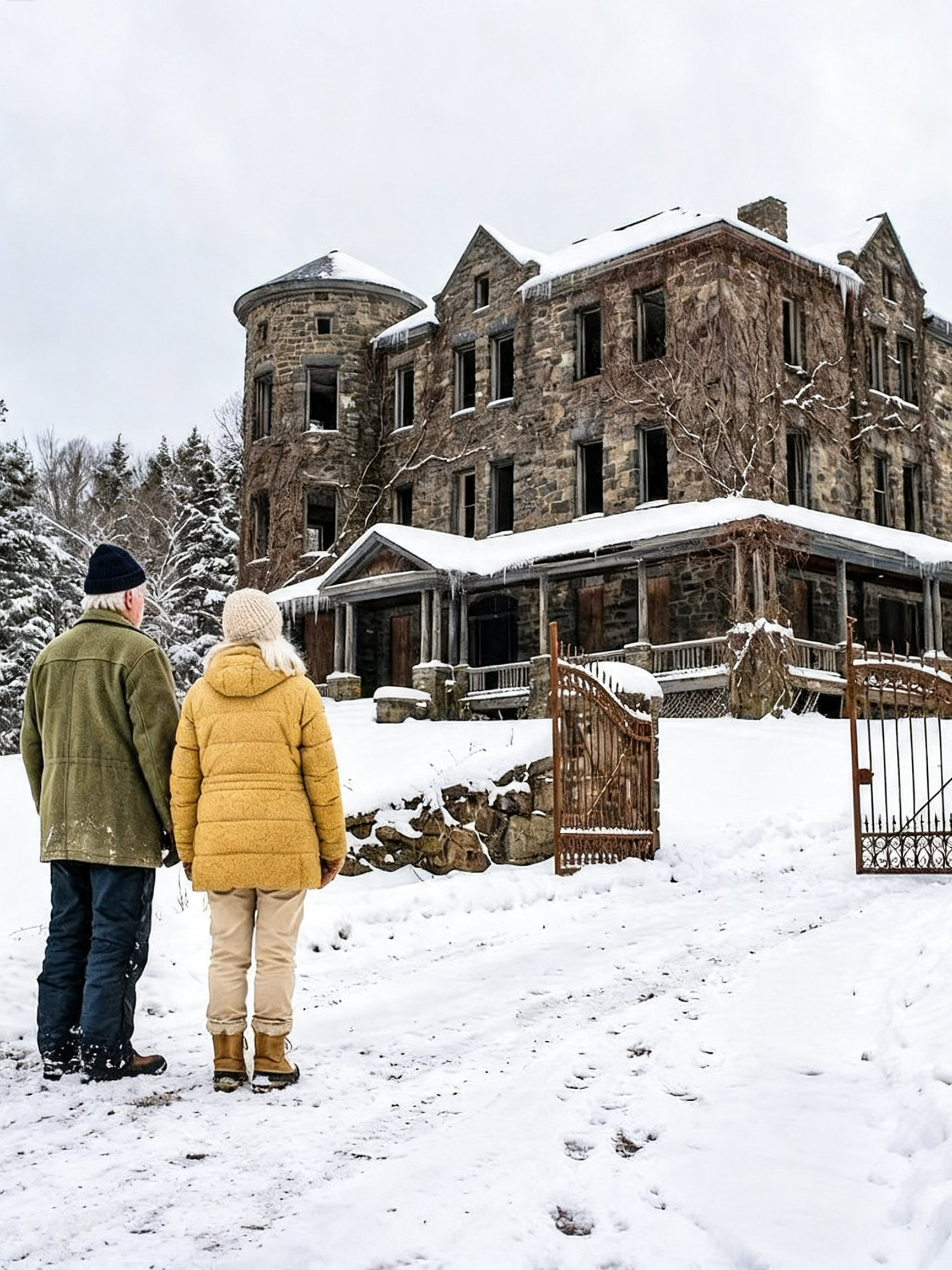
Their Children Threw Them Out in a Snowstorm—Then an Attic Safe Revealed the $265 Million Inheritance They Couldn’t Steal
“Your bags are already in the garage.”
Margaret Hayes looked at her son for a long moment, then at the snow hammering the windows behind him.
David did not look ashamed.
That was the part she would remember.
Not the two suitcases sitting beside the mudroom door.
Not her seventy-four-year-old husband gripping his cane so hard his knuckles had gone white.
Not even Lauren, her daughter-in-law, standing beside the kitchen island with Margaret’s house keys looped around one perfectly manicured finger.
It was David’s face.
Businesslike.
Almost relieved.
“We talked about this, Mom,” he said. “You and Dad can’t stay here anymore.”
Walter Hayes slowly turned his head.
“This is our house.”
Lauren gave a tiny laugh.
“No, Walter. Technically, it’s David’s.”
The words landed harder than a slap.
Six years earlier, Margaret and Walter had transferred the deed to their only son after David insisted it would simplify estate planning.
“It protects the house,” he had told them.
“You’ll never lose it.”
“We’re family.”
Margaret had believed him because mothers spend decades training themselves to believe the best thing their children say and ignore the worst thing they do.
David folded his arms.
“You signed it over.”
Margaret said nothing.
There was something about her silence that made Lauren uncomfortable.
Lauren shifted against the marble island.
“Margaret, please don’t make this dramatic.”
Still nothing.
Outside, a January storm was swallowing the Connecticut neighborhood one driveway at a time.
The weather service had predicted fourteen inches.
By noon, there were already nine.
Walter took one slow step forward.
“Where are we supposed to go?”
David exhaled sharply, as if his father had asked an unreasonable question.
“The Fairmont Senior Residence has openings.”
Margaret finally looked at him.
The Fairmont.
She knew the place.
Everybody over sixty-five in three counties knew the place.
It was the kind of assisted-living facility families chose when they wanted to tell themselves beige carpeting and a television in every lounge counted as love.
Margaret’s eyes moved toward the dining room.
On the wall hung a framed photograph from David’s college graduation.
Walter had worked two jobs that year.
Margaret had sold the diamond bracelet her mother left her to pay the final tuition balance.
Neither had ever told David.
Another picture showed Rebecca, their daughter, on her wedding day.
Margaret had sewn pearls onto that wedding dress by hand after the boutique alteration bill came in too high.
Rebecca was not in the kitchen now.
She was on speakerphone.
Her voice came from David’s cell phone on the counter.
“Mom, it’s not personal.”
Margaret’s eyes hardened.
Rebecca continued.
“It’s just practical.”
Margaret almost smiled.
Practical had become the favorite word of people doing cruel things they wanted to sound intelligent.
David needed a larger house.
Lauren wanted to renovate.
Rebecca thought their parents should sell their car.
Walter’s pension should help cover the senior residence.
And when Margaret had received a certified envelope four days earlier informing her that her late aunt Vivian Mercer had left her an abandoned mansion in Vermont, something inside the family had changed with astonishing speed.
Suddenly David had started asking questions about deeds.
Rebecca wanted to know whether the property could be sold.
Lauren had spent two hours searching county records.
And a lawyer named Nolan Price—who handled David’s development business—had arrived the next morning carrying documents he described as “routine.”
Margaret had not signed them.
That was when her children’s kindness began evaporating.
Now, four days later, her bags were packed.
Margaret reached into the pocket of her wool coat.
Her fingers closed around a small brass key.
Nobody saw it.
Vivian’s attorney had sent it separately.
Wrapped in cotton.
No explanation.
Only a handwritten line in Vivian’s unmistakable script.
When they begin rushing you, Margaret, slow down.
When they begin flattering you, listen carefully.
When they begin threatening you, say almost nothing.
And whatever they tell you to sign, ask yourself who benefits if you disappear.
Margaret slipped her hand from her pocket.
“All right,” she said.
David blinked.
Walter looked at her.
Rebecca went silent on the phone.
Lauren frowned.
“All right?” David repeated.
Margaret nodded.
“You want us gone.”
It was not a question.
David seemed suspicious of how easily she had accepted it.
“We just think this is best.”
“For whom?”
Lauren jumped in.
“For everyone.”
Margaret studied each face.
Then she picked up her purse.
Her husband stared at her.
“Margaret—”
“Get your coat.”
“Where are we going?”
She walked toward the mudroom.
“Somewhere we were invited.”
Twenty minutes later, David stood in the open garage watching his elderly parents load two suitcases into their thirteen-year-old Buick while snow spun beneath the security lights.
He did not help.
Lauren remained inside.
Rebecca had already hung up.
Margaret lifted the trunk.
As Walter placed his bag inside, he leaned close.
“Do we have somewhere to go?”
Walter stared at her.
“You mean that old house?”
Margaret closed the trunk.
“In this weather?”
“Margaret, you haven’t even seen it.”
She looked toward the kitchen window.
Behind it, Lauren was already measuring the wall with her hands, probably imagining where the renovation would go.
Margaret’s voice became almost gentle.
“Neither have they.”
They drove north.
For the first hour Walter barely spoke.
The interstate became a tunnel of gray snow and red taillights.
Margaret kept both hands steady on the wheel.
She had always been like that.
Stillness confused people.
For forty-eight years of marriage, Walter had watched strangers mistake her quietness for submission.
He knew better.
When Margaret became frightened, she talked.
When she became angry, she cleaned.
When she became hurt, she cried privately.
But when she became completely silent, she had usually made a decision.
Walter looked at the woman beside him.
“You knew they might do this.”
Margaret watched the road.
“I knew they were capable of it.”
“That isn’t the same thing.”
“Why didn’t you tell me?”
“Because I kept hoping I was wrong.”
Walter looked out the window.
That hurt more than admitting she had known.
They had not been foolish people.
Walter had spent thirty-eight years repairing industrial equipment.
Margaret had worked twenty-nine years in hospital administration.
They had paid their bills.
Saved carefully.
Raised two children.
Helped with college.
Helped with first houses.
Paid for three rounds of fertility treatment when Rebecca and her husband, Grant, were trying to have a baby.
Covered David’s payroll once when his construction company nearly collapsed during the recession.
They had never called those things loans.
They had called them family.
But family, Margaret was beginning to understand, had a dangerous weakness.
If you give long enough without keeping score, eventually someone may decide your giving was not generosity.
It was your job.
They crossed into Vermont after dark.
Snow thickened.
The highway narrowed.
Margaret’s GPS directed them along a county road, then a smaller road, then something that hardly deserved the name road at all.
Walter peered through the windshield.
“Your aunt lived out here?”
“She stopped living here twenty-three years ago.”
“Why keep the place?”
“She never told me.”
Margaret had not seen Vivian Mercer in fourteen years.
Not because they had quarreled.
Because life had a way of turning a year into five and five into fourteen while people promised themselves they would visit next summer.
Vivian was her father’s younger sister.
Sharp-tongued.
Wealthy once, according to family stories.
Then supposedly not wealthy.
She had worked inside the Mercer family manufacturing company before women were welcomed into boardrooms.
Family legend said she left after a bitter fight with Margaret’s uncle Thomas.
What happened afterward depended on who told the story.
Thomas claimed Vivian had become unstable.
Vivian claimed Thomas had become dishonest.
Margaret’s father avoided discussing either of them.
The Mercer family had mastered the art of burying conflict beneath manners.
Two miles later, their headlights found two stone pillars.
Between them hung a rusted iron gate.
Beyond it was darkness.
Margaret got out.
Snow reached halfway up her boots.
She pushed the gate.
It resisted.
Walter lowered his window.
“Need help?”
She pushed harder.
The gate shrieked open.
They followed a winding drive through enormous pines.
Then the mansion appeared.
Walter actually laughed.
Not because it was funny.
Because he had no other reaction available.
Black Pine House rose from the hillside like something abandoned by another century.
Three stories of gray stone.
Gables loaded with snow.
Tall windows dark with age.
A circular tower on the eastern corner.
Four chimneys.
A deep front porch.
The building was enormous.
And apparently frozen solid.
“Well,” Walter said, “at least Fairmont probably has heat.”
Margaret smiled for the first time that day.
They found the key beneath a loose stone where Vivian’s letter said it would be.
Inside, the mansion smelled of cedar, dust and cold iron.
Their footsteps echoed.
Furniture crouched beneath white sheets.
Margaret located the electrical panel.
Walter found an oil furnace in the basement.
Also nothing.
They eventually discovered a wood-burning stove in what had once been the servants’ kitchen.
There was dry firewood stacked beneath a covered porch.
By midnight, they had one warm room.
Two blankets.
And canned tomato soup heated in a saucepan older than their marriage.
Walter sat beside the stove wearing his winter coat.
“Well,” he said, “we’ve been thrown out of better places.”
Margaret laughed.
Then she surprised herself by crying.
Not dramatically.
No sobbing.
No collapse.
Just tears running silently down her face while she held the soup bowl between both hands.
Walter moved beside her.
She leaned her head against his shoulder.
“I gave him everything I knew how to give.”
Walter kissed her hair.
“I thought if you loved children enough when they were small, they remembered it when you became old.”
“I don’t even want the house back.”
Walter pulled away slightly.
“You don’t?”
Margaret wiped her face.
“Because I don’t ever want to sleep somewhere people can decide I’m inconvenient.”
Walter nodded.
The fire cracked.
For several minutes, neither spoke.
Then Margaret reached into her coat and placed the brass key on the table.
Walter stared at it.
“What is that?”
“I don’t know yet.”
The following morning, the storm had sealed them in.
Three feet of snow leaned against the front porch.
The power remained dead.
Margaret’s phone had one bar of service.
At a.m., David called.
She watched the screen until it stopped.
Then Rebecca called.
Then David again.
Walter raised an eyebrow.
“That didn’t take long.”
At , a text arrived.
MOM CALL ME. URGENT.
WE NEED TO DISCUSS THE VERMONT PROPERTY.
NOLAN SAYS THERE’S A DEADLINE.
Margaret placed the phone facedown.
Walter looked amused.
“Slow down when they rush you?”
Margaret nodded.
At nine, they began exploring the house.
Black Pine was far stranger than either expected.
The first floor had a ballroom.
A library two stories high.
A formal dining room with twenty-four chairs.
The second floor contained seven bedrooms.
The third had four more and a locked staircase.
Margaret tried the brass key.
Walter looked at her.
The staircase climbed steeply.
At the top was an unfinished attic stretching nearly the entire length of the mansion.
Old trunks.
Rolled rugs.
Crates marked with dates.
Margaret moved slowly between them.
At the far end, beneath the tower, stood a cedar wardrobe.
It was empty.
But the floor beneath it showed scratches.
Walter noticed first.
“That thing’s been moved.”
Together, they pushed.
Behind it was a small steel door built into the wall.
Only a keyhole.
Margaret’s breathing changed.
She inserted the brass key.
Walter examined the frame.
“Try pushing.”
Margaret pushed.
A panel clicked.
Behind it was another mechanism.
A numbered dial.
Taped above the dial was a faded photograph.
Margaret pulled it loose.
Four people stood outside a factory.
Her father, Samuel Mercer.
Her aunt Vivian.
Her uncle Thomas.
And a twenty-two-year-old Margaret.
She remembered the photograph.
Summer of 1974.
She had spent three months helping her father reorganize the company’s inventory system because the bookkeeping staff had fallen behind.
She had been studying accounting at night.
She had also redesigned a parts-tracking method that reduced waste dramatically.
Her uncle Thomas had presented the system to the board as his own.
Margaret had complained once.
Her father told her not to cause trouble.
“You know how Thomas is.”
She had swallowed the humiliation.
Women of Margaret’s generation had swallowed many things and been complimented for having good manners afterward.
On the back of the photograph, Vivian had written four numbers.
Margaret turned the dial.
A heavy internal lock released.
Walter whispered, “Jesus.”
Margaret opened the door.
The compartment behind it was not really a safe.
It was a vault.
Steel shelving ran six feet deep into the wall.
Boxes sat inside.
Leather document cases.
Three fireproof cases.
A small reel-to-reel recorder.
And a letter on top bearing Margaret’s name.
Her hands trembled only once.
She opened it.
My dear Margaret,
If you found this room, then I am dead, and people who ignored me while I lived are probably suddenly very interested in what I owned.
Do not mistake their interest for affection.
Walter read over her shoulder.
Margaret continued.
You were always the quiet one.
That is why Thomas underestimated you.
That is why your father failed you.
And that is why I chose you.
Before you open anything else, remember this:
Nothing in this vault belongs to anyone who demanded it from you.
Nothing may be transferred through a power of attorney.
Nothing may be disclaimed during the first ninety days following my death.
And if anyone presents a document claiming otherwise, call Harold Benton before you call the police.
Because if I know our family, the document will look legitimate.
That does not mean it is.
Margaret stopped.
Walter stared at her.
“Who is Harold Benton?”
“The estate attorney.”
“Call him.”
The storm had weakened their signal, but after four attempts Margaret connected.
A man answered immediately.
“Mrs. Hayes?”
There was a pause.
“Are you alone?”
“My husband is here.”
“Anyone else?”
“Have you opened the attic vault?”
Margaret looked at Walter.
Benton exhaled.
“What is all this?”
“Mrs. Hayes, I want you to listen carefully. Your aunt did not leave you an abandoned house.”
Margaret waited.
“She left you control of the Mercer Preservation Trust.”
Margaret frowned.
“I’ve never heard of it.”
“You weren’t supposed to.”
“What does it own?”
Another pause.
“Among other assets, forty-one percent of Mercer North American Industries.”
Walter sat down on an old trunk.
Margaret leaned against the wall.
“That company was sold.”
“No,” Benton said. “A controlling subsidiary was sold. The holding structure was never dissolved.”
“I don’t understand.”
“You will.”
“Mr. Benton, how much is this trust worth?”
“Based on the valuation completed six weeks before your aunt’s death?”
“Approximately two hundred sixty-five million dollars.”
Margaret said nothing.
Walter stared at her.
Benton continued.
“That figure may move substantially depending on the pending acquisition.”
“What acquisition?”
“The acquisition your son’s attorney appears to be trying to complete without your consent.”
The attic seemed to become colder.
Margaret’s voice changed.
“Someone submitted a preliminary beneficiary disclaimer yesterday morning.”
Margaret closed her eyes.
Walter stood.
“What does that mean?”
Benton answered even though the question had not been directed toward him.
“It means someone represented to the trust administrator that Margaret Hayes declined her inheritance.”
Walter’s face drained.
Margaret asked only one thing.
“Whose signature?”
She did not raise her voice.
“Mr. Benton.”
“I did not sign anything.”
“Your aunt anticipated this possibility.”
Walter stared toward the open steel vault.
Margaret asked, “What exactly did she do?”
Benton’s tone became almost grimly satisfied.
“She designed a trap.”
Over the next hour, he explained.
Vivian Mercer had spent thirty-two years quietly rebuilding ownership in the company her brother Thomas once controlled.
After Thomas forced her out in 1978, she bought shares through trusts, holding companies and distressed debt conversions.
She never regained public control.
She did not want it.
She wanted leverage.
More importantly, she had discovered what Thomas had done to Margaret.
The inventory system Margaret designed at twenty-two had become the foundation of Mercer’s first computerized logistics model.
Thomas later used portions of Margaret’s work in licensing agreements.
Millions were earned.
Margaret received nothing.
Her name disappeared.
Vivian kept copies.
Then came something worse.
In 1983, Margaret’s father created a private family trust.
Margaret had been entitled to fourteen percent.
Thomas persuaded Samuel to amend it while Samuel was recovering from a stroke.
Margaret’s share disappeared.
For forty-three years, nobody told her.
Vivian had spent decades acquiring enough of the old company to correct it.
The $265 million was not simply an inheritance.
It represented what Vivian believed the family had denied Margaret, multiplied through decades of growth.
But the trust contained conditions.
No beneficiary could control it through a power of attorney.
No disclaimer was valid for ninety days.
Any fiduciary, relative, attorney or corporate officer who knowingly attempted an unauthorized transfer triggered an automatic forensic audit of every related transaction.
That clause was Vivian’s warning from the grave.
And somebody had triggered it.
Margaret listened without interruption.
Benton finally said, “Mrs. Hayes, I need to ask you something.”
“Has anyone pressured you recently to sign documents?”
“My son’s lawyer.”
“Nolan Price?”
Benton went quiet.
“Do not meet him alone.”
“I wasn’t planning to.”
“Do not tell your children what is in the vault.”
“I wasn’t planning to do that either.”
Walter almost smiled.
Benton continued.
“The family believes Black Pine is just real estate. Based on emails we recovered this morning, Price appears to believe your aunt’s corporate interests passed through the house deed.”
“Did they?”
“But they think they did.”
Margaret looked around the attic.
Decades of records.
The forgotten woman of the Mercer family had spent half a lifetime creating a room full of consequences.
“Then perhaps,” Margaret said softly, “we should let them keep thinking that.”
By afternoon, Margaret’s children were frantic.
David sent seventeen messages.
Rebecca sent eleven.
Grant called twice.
Lauren sent a surprisingly warm text.
We’re worried about you. Please come home so we can work this out as a family.
Walter read it and laughed so hard he started coughing.
“They threw us out yesterday.”
“People discover family values quickly when property records get interesting.”
Walter looked at his wife.
There she was.
The Margaret he had first fallen in love with.
Not vindictive.
For years, everybody had treated her kindness like a permanent natural resource.
Now the well had closed.
She did not become bitter.
She became exact.
The next morning a county plow cleared the road.
By noon, an electrician restored partial power.
The furnace needed repair, but Black Pine slowly began resembling a house again.
Margaret and Walter slept in Vivian’s old bedroom beneath three quilts.
They ate grilled cheese beside the stove.
They cataloged boxes.
And with every document Margaret opened, another piece of her own life returned under a different light.
There were letters she had written her father in 1974.
Copies of spreadsheets drawn by hand.
Meeting minutes.
Her proposed inventory model.
Licensing agreements.
Patent correspondence.
Even an internal memo from Thomas Mercer.
M. Hayes’s system is considerably more advanced than our current procedure. Adapt where useful, but keep her involvement informal. Samuel does not want a family disagreement.
Margaret read the sentence twice.
Then folded the paper carefully.
Walter watched her.
“You all right?”
It was the first time she had answered honestly.
“I spent fifty years believing I was silly for being hurt.”
“You weren’t.”
“My father told me I misunderstood.”
Walter said nothing.
“My brother told everyone I was jealous.”
Still nothing.
“And when I finally left the company, my mother said I was being dramatic.”
Margaret looked at the boxes.
“All these years, I thought maybe they were right.”
Walter reached across the table.
“They weren’t.”
Margaret’s eyes filled, but she did not cry.
That night Benton emailed her documents from the forensic audit.
The betrayal had expanded.
David’s company, Hayes Development Group, was deeply in debt.
Far more deeply than Margaret knew.
Grant, Rebecca’s husband, had invested.
Lauren’s father had invested.
Nolan Price had guaranteed a bridge loan.
The group was attempting to acquire several parcels surrounding a new distribution campus owned partly by a Mercer subsidiary.
The deal could make them millions.
Or destroy them.
Vivian’s death created an unexpected opportunity.
If Margaret disclaimed the trust and the assets passed to the secondary family beneficiaries, voting control would temporarily consolidate under another branch of the Mercer family already aligned with the acquisition.
David apparently learned this through Price.
That explained the sudden urgency.
The “routine papers.”
The questions.
The eviction.
They had not simply wanted Margaret out of the Connecticut house.
They wanted her frightened.
Uninformed.
People signed things when they were afraid of losing a bed.
Margaret stared at that sentence in Benton’s report.
Then another detail appeared.
David had emailed Price:
Once they’re at Fairmont, Mom will sign whatever we put in front of her. Dad doesn’t understand financial stuff anymore.
Walter read it silently.
For once, Margaret watched him become completely still.
“What?” she asked.
He pointed.
“Dad doesn’t understand financial stuff anymore.”
Margaret waited.
Walter smiled without humor.
“I repaired control systems in power plants for thirty-eight years.”
“I remember.”
“I balanced our investment accounts every Sunday.”
“I remember that too.”
“Our son thinks I’m senile.”
Margaret closed the laptop.
“He needs you to be senile.”
That distinction changed something in Walter.
A week later, David drove to Vermont.
He brought Lauren.
Rebecca and Grant came separately.
And Nolan Price arrived in a black Mercedes.
Margaret had expected all five.
She had not expected the flowers.
Lauren carried them.
White lilies.
Margaret nearly admired the nerve.
They gathered in Black Pine’s library.
A fire burned behind the iron grate.
Walter sat in a leather chair near the window.
Margaret poured coffee.
Nobody mentioned the fact that seven days earlier these same people had put them outside during a snowstorm.
David tried first.
“Mom, I think emotions got out of control.”
Margaret handed him coffee.
David paused.
“All of ours.”
Lauren looked down.
Rebecca sighed.
“Mom, can we please not do this?”
“Punish everybody.”
Margaret sat.
“I haven’t punished anyone.”
“You’re refusing to cooperate.”
“With what?”
Nolan Price opened his briefcase.
He removed a document.
Margaret glanced at it.
“What is it?”
“A confirmation of your intention regarding Vivian Mercer’s Vermont estate.”
“What intention?”
“To transfer the property for liquidation.”
Margaret looked puzzled.
“I thought you said this was about emotions.”
Nobody answered.
She turned to David.
“You drove three hours through snow because you’re worried about my feelings?”
“Or because Mr. Price has a document?”
“Why are you acting like this?”
Margaret leaned back.
“How am I acting?”
David’s jaw tightened.
Walter watched silently.
Rebecca stepped in.
“Aunt Vivian’s place is huge. It needs millions in work. You and Dad can’t manage it.”
“We’ve managed so far.”
“For one week.”
Margaret nodded.
“One week is longer than you let us stay in the house we paid for.”
There it was.
No shouting.
No accusation.
Just the fact, laid gently on the table where nobody could move it.
Lauren looked at the fire.
David rubbed his forehead.
“I apologized.”
“No, you didn’t.”
“I said things got out of control.”
“That is not an apology.”
“Fine. I’m sorry.”
“For what?”
David stared at her.
Margaret waited.
He could not say it.
Because saying it required naming the act.
Throwing out your elderly parents during a snowstorm sounded uglier than “things got out of control.”
Nolan cleared his throat.
“Perhaps we should separate the family issue from the estate issue.”
Margaret turned toward him.
“Yes. Let’s.”
He pushed the document across the table.
“This allows us to negotiate a sale without repeatedly inconveniencing you.”
“How considerate.”
Price smiled faintly.
“This mansion is probably worth somewhere between three and four million, depending on restoration liabilities.”
Rebecca glanced at Grant.
Margaret noticed.
Price continued.
“We already have interested parties.”
“How fortunate.”
David leaned forward.
“We can get you something smaller. Easier. Maybe a condo near us.”
“Near the house you removed us from?”
Lauren’s face reddened.
“Margaret, how long are you going to keep using that against us?”
Margaret’s gaze moved to her.
“Seven days feels excessive?”
Lauren stopped speaking.
Price tapped the paper.
“If you sign, I can take the burden off your shoulders.”
Margaret looked down.
Then she did something that made every person in the room relax.
She picked up the pen.
Walter did not move.
He knew her too well.
Margaret held the pen above the signature line.
“Mr. Price?”
“This gives you authority to negotiate?”
“And sign certain preliminary documents?”
“Limited documents.”
“And speak to the trust administrator?”
Price hesitated.
“To relevant estate parties.”
Margaret looked almost uncertain.
David saw it.
The weak moment he had been waiting for.
He softened his voice.
“Mom, just let us handle it.”
Margaret looked at him.
“You’ll take care of us?”
“Of course.”
The lie came easily.
That made it worse.
Margaret put down the pen.
“I need one night.”
David’s expression changed.
“One night.”
Price said, “There are timing concerns.”
Margaret looked at him.
“Then I’m sure one night won’t destroy a responsible transaction.”
Price’s smile disappeared.
The family left angry.
They believed Margaret was wavering.
That was exactly what she wanted.
That night, she called Benton.
“Do we have enough?”
“We have enough to stop the transaction.”
“That isn’t what I asked.”
Benton paused.
“What are you asking?”
“Do we have enough to prove they knew?”
Another pause.
“All of them?”
“Price definitely. David probably. Grant appears involved. Rebecca received emails but her level of understanding is unclear. Lauren appears to have participated in discussions about getting you into Fairmont before the documents were presented.”
Margaret closed her eyes.
Walter sat across from her.
“And the bank?”
“Two officers may have facilitated improper certification.”
Benton sounded surprised.
Margaret opened her eyes.
“I’d hate to discover my children betrayed us all by themselves.”
Three days later, the system that had formed around Margaret began collapsing.
First came the trust injunction.
Then subpoenas.
Then a court-ordered hold on the acquisition.
Then the bank suspended two officers.
Then Mercer North American Industries announced an internal compliance investigation.
Hayes Development Group’s lender froze additional credit.
Grant’s investors demanded disclosures.
Nolan Price withdrew from two transactions before the state bar received a complaint supported by Vivian’s audit records.
David called Margaret thirty-two times.
She answered the thirty-third.
“What did you do?” he shouted.
Margaret stood at Black Pine’s kitchen window, watching Walter show a furnace technician where the old fuel line entered the foundation.
“What do you mean?”
“My accounts are frozen.”
“I’m sorry to hear that.”
“Don’t do that.”
“Act innocent.”
Margaret’s voice remained calm.
“I haven’t accused you of anything.”
“You triggered an investigation.”
“No, David.”
She looked at the snow-covered lawn.
“Your paperwork triggered an investigation.”
Then he said something Margaret would never forget.
“You were supposed to sign.”
Not “We were trying to help.”
Not “This is a misunderstanding.”
Not “I’m sorry.”
You were supposed to sign.
Margaret closed her eyes.
When she opened them, the last piece of hope she had been carrying for her son was gone.
“Goodbye, David.”
“Mom, wait—”
She hung up.
Walter entered ten minutes later.
He found her standing in the same place.
“Was that him?”
“You okay?”
Margaret thought carefully.
Walter nodded.
She appreciated that he did not tell her she would be.
Some wounds did not need optimism.
They needed respect.
Two weeks later, Harold Benton came to Black Pine in person.
He was seventy himself.
Silver-haired.
He carried a leather case that looked older than David.
Margaret served him tea in the library.
Walter sat nearby.
Benton opened the case.
“Your aunt wanted me to wait until the audit began before giving you this.”
He placed a sealed envelope on the table.
Margaret opened it.
Inside was another letter.
If you are reading this, someone tried to take it.
I am sorry.
Not because I doubted our family.
Because I knew them well enough not to.
I spent most of my life angry at Thomas.
Then I realized Thomas was only one man.
The real problem was the room that protected him.
The father who stayed quiet.
The lawyer who explained.
The banker who approved.
The wife who said not to make trouble.
The relatives who enjoyed the money.
That is how decent people lose things.
Rarely to one villain.
Usually to a collection of respectable people who each decide one small wrong is not their responsibility.
Margaret stopped reading.
Benton looked away.
She continued.
Your father loved you.
He also failed you.
Both can be true.
Do not spend what remains of your life simplifying people so forgiveness becomes easier.
Forgive if you wish.
But do not confuse forgiveness with access.
The trust is yours because you were the only person in our family who repeatedly chose people over money.
Do not let anyone shame you for finally choosing yourself.
And one more thing.
The assets in the vault include something I think matters more than the money.
Open case seventeen.
Walter stood.
They returned to the attic.
Case seventeen was heavy.
Inside were corporate records.
Margaret quickly realized they were not about her.
They concerned hundreds of former Mercer employees.
During the 1980s and 1990s, workers had participated in a profit-sharing plan.
When Thomas restructured the company, parts of that plan had been improperly terminated.
Lawsuits followed.
Most failed.
Records disappeared.
Former employees received a fraction of what they claimed.
Vivian had spent years reconstructing the original accounts.
She had also funded a reserve.
Almost forty-one million dollars.
Not included in Margaret’s personal $265 million valuation.
The money was designated for verified former employees and surviving spouses if Margaret chose to activate the restitution fund.
She was not legally required to.
Vivian had left the decision to her.
Walter read the documents.
“You know what you’re going to do.”
Margaret looked at him.
Within three months, the Vivian Mercer Restitution Fund began contacting former workers.
Some were dead.
Their widows received checks.
Their children received checks.
Retired machinists in Ohio.
A toolmaker in Pennsylvania.
A bookkeeper in Massachusetts.
A warehouse supervisor who had spent twenty-five years insisting his pension calculation had been wrong.
He was ninety-one.
When Margaret called him personally, he cried.
Not because of the amount.
Because someone had finally said:
You were right.
That sentence became more important to Margaret than anything else Vivian left behind.
You were right.
Sometimes justice was money.
Sometimes justice was land.
Sometimes justice was a court order.
And sometimes justice was learning at seventy-two that the younger version of yourself had not been oversensitive, difficult or foolish.
She had simply been surrounded by people who benefited from her doubting herself.
News of the fund spread.
Then news of the trust leaked.
By spring, reporters had discovered that the quiet elderly woman living at Black Pine controlled assets worth roughly $265 million.
Suddenly relatives Margaret had not heard from in decades discovered her phone number.
Cousins wrote.
Old friends called.
David sent flowers.
Rebecca sent photographs of the grandchildren.
Lauren mailed a handwritten letter.
Grant stayed silent.
Nolan Price hired his own attorney.
Margaret answered almost nobody.
Instead, she restored Black Pine.
Not into a palace.
Into something useful.
The west wing became offices for the restitution foundation.
The old servants’ quarters became guest rooms for families visiting during winter.
The ballroom remained mostly empty except for community charity events.
Walter converted one carriage house into a workshop.
For the first time in years, he looked ten years younger.
One afternoon in May, Margaret found him repairing an antique bench.
“You know we can buy a new bench,” she said.
Walter looked offended.
“What kind of attitude is that?”
“You’re worth at least a hundred million dollars by marriage.”
“And that means I should throw away good oak?”
Margaret laughed until she had to hold the doorframe.
That was how they survived.
Not by pretending the betrayal did not hurt.
By refusing to let it occupy every room.
David’s situation deteriorated.
The investigation found that Nolan Price had prepared the false disclaimer after receiving information from one of the bank officers.
David claimed he believed Margaret had verbally agreed.
Emails suggested otherwise.
Grant had forwarded valuation estimates.
Rebecca had participated in discussions about moving her parents to Fairmont but denied knowing a signature would be forged.
Lauren had sent David one message that prosecutors later considered particularly damaging.
Once they’re out of the house and scared about where they’re living, she’ll stop being stubborn.
Margaret read it only once.
That was enough.
No one went to prison immediately.
Real legal consequences were slower than movies.
There were hearings.
Civil claims.
Professional reviews.
Regulatory inquiries.
Insurance disputes.
But their lives changed.
Price’s license was suspended pending further proceedings.
The bank settled confidentially with the trust.
Grant lost his largest investor.
David’s development company entered restructuring.
The Connecticut house—the house Margaret and Walter had paid for over twenty-seven years—became collateral in David’s business bankruptcy dispute.
Rebecca called the day she heard.
“Mom, you have to help him.”
Margaret sat at Vivian’s old desk.
Rebecca sounded stunned.
“Because he could lose the house.”
Margaret almost admired the sentence.
“Which house?”
“You know which house.”
“The house he said was his?”
“I’m asking.”
“You lived there for decades.”
“Doesn’t it mean anything to you?”
Rebecca began crying.
“He has children.”
“So did I.”
“That’s not fair.”
Margaret’s voice remained soft.
“Which part?”
“You’re enjoying this.”
Margaret looked out at the newly green mountains.
“No, Rebecca. That’s the tragedy. I’m not enjoying any of it.”
“Then help him.”
“I offered David help his entire life.”
“This is different.”
“This time helping him would require me to pretend he didn’t deliberately make us homeless so I would be easier to control.”
Rebecca stopped.
There was no vocabulary for that.
Margaret continued.
“I can forgive your brother someday.”
“I didn’t say I would finance him.”
“Mom, family helps family.”
Margaret closed her eyes.
There it was again.
The old magic phrase.
For decades it had opened Margaret’s wallet, her guest room, her weekends, her patience, her retirement account.
Now it sounded different.
“When your father stood in David’s garage with a cane while snow fell outside, were we family?”
Rebecca began crying harder.
Margaret did not rescue her from the question.
That was new too.
Eventually Rebecca whispered, “I’m sorry.”
Margaret waited.
Rebecca continued.
“I knew they wanted you out.”
“You helped.”
“You told me it wasn’t personal.”
A long pause.
Margaret breathed in.
That was the first real apology anyone had given her.
Not because Rebecca said sorry.
Because she stopped editing the truth.
Six months after the eviction, Rebecca came to Black Pine alone.
No children.
She stood on the porch with a small overnight bag.
Margaret opened the door.
Rebecca looked older.
Not physically.
Some consequences aged the face from behind.
“Can I come in?”
Margaret moved aside.
They drank coffee in the kitchen.
Rebecca apologized again.
This time properly.
She admitted that David had convinced everyone their parents were becoming financially vulnerable.
She admitted she liked the idea of preserving the Connecticut house for “the family.”
She admitted she had begun thinking of her parents’ property as future property.
She admitted she had chosen convenience over decency.
Then she said something Margaret respected.
“I don’t expect you to trust me.”
Margaret nodded.
Rebecca cried.
Margaret did not.
But she reached across the table and held her daughter’s hand.
Forgiveness, Margaret learned, did not always arrive as a door swinging open.
Sometimes it was a chain lock.
You could see the person.
You could speak.
You could even love them.
But they no longer entered every room.
David took longer.
He fought the civil case for nearly a year.
Then discovery produced a voice recording.
Vivian’s trap had been more thorough than anyone knew.
The trust administrator automatically recorded certain verification calls.
Three days before the eviction, Nolan Price had called to discuss Margaret’s “anticipated disclaimer.”
David was with him.
On the recording, Price asked:
“You’re confident she’ll cooperate?”
David answered:
“She always does eventually.”
Price said:
“And if she doesn’t?”
David laughed.
“Then she needs somewhere to sleep, doesn’t she?”
That ended most of the dispute.
Not legally.
Even David’s own attorney advised settlement.
The forged disclaimer was withdrawn permanently.
The acquisition collapsed.
Financial penalties followed.
The house entered foreclosure proceedings.
One snowy morning almost exactly a year after Margaret and Walter had been expelled from it, David arrived at Black Pine.
No expensive SUV.
He drove a rented sedan.
Margaret saw him through the library window.
Walter saw him too.
“What do you want to do?”
Margaret looked at her husband.
“What do you want?”
Walter thought.
“Let him knock.”
David knocked.
Margaret opened the door.
He looked tired.
“Can I come in?”
Margaret stepped aside.
He walked into the same library where he had once tried to convince her to surrender Vivian’s estate.
For a while, he stood near the fireplace.
Finally he spoke.
“I lost the house.”
Margaret said nothing.
“The bank took it last month.”
She waited.
“Lauren left.”
Still Margaret said nothing.
David turned.
“Are you going to say anything?”
“What would you like me to say?”
“I don’t know.”
Margaret nodded.
Neither did she.
“I was angry at you for months.”
“I blamed you.”
“I told myself you destroyed everything.”
Margaret folded her hands.
He looked toward the fire.
“Now I know I did.”
Walter remained by the window.
David swallowed.
“I heard the recording.”
“So did I.”
“I don’t remember saying it.”
Margaret’s face did not change.
His eyes filled.
“I was under a lot of pressure.”
There it was.
Not quite an excuse.
Not quite accountability.
A bridge between them, unfinished.
Margaret waited.
David shook his head.
“No. That’s not fair.”
He tried again.
“I used pressure as permission.”
Margaret looked at him more closely.
That was better.
“I knew you trusted me,” he said. “And instead of being grateful, I used it.”
Margaret felt something deep inside her loosen.
David wiped his eyes.
“I don’t want money.”
“That’s good.”
He almost smiled.
“I deserve that.”
“I just… I wanted to see you.”
“You’re seeing me.”
“I want my parents back.”
Walter finally spoke.
“We didn’t go anywhere.”
David turned toward him.
Walter’s voice was calm.
“You stopped treating us like your parents. There’s a difference.”
David looked down.
Margaret sat across from her son.
For the first time, she noticed gray at his temples.
She remembered him at four.
At seventeen.
At twenty-two, crossing a graduation stage in a borrowed gown while Walter cheered too loudly.
Love was cruel that way.
It kept every version of a person alive inside you, even when the adult version broke your heart.
“I love you,” Margaret said.
David covered his face.
“But you are not getting the old version of me back.”
He lowered his hands.
Margaret continued.
“The woman who confused peace with surrender is gone.”
David nodded through tears.
“The woman who thought loving you meant never letting you suffer a consequence is gone.”
Another nod.
“The woman who believed being a good mother required making herself smaller every year so her children could take up more space?”
Margaret shook her head.
“She’s gone too.”
David looked toward her.
“What does that mean for us?”
“It means we start with coffee.”
He blinked.
“That’s it?”
“That is not a small thing.”
Walter walked over.
“I’ll make it.”
They drank coffee.
David left two hours later.
He received no check.
No business rescue.
No promise regarding inheritance.
But Margaret hugged him at the door.
And when he drove away, she cried against Walter’s chest.
Not because she regretted anything.
Because justice did not erase love.
That was the part revenge stories usually forgot.
Winning did not mean you stopped wishing nobody had forced you to fight.
Over the following years, Black Pine changed again.
The restitution foundation recovered additional records and distributed millions more.
Margaret created scholarships for children of former Mercer workers.
Not prestigious scholarships designed to put her name on buildings.
Trade-school grants.
Nursing tuition.
Community college.
Certification programs.
The sort of opportunities ordinary families actually needed.
Walter established a mechanical apprenticeship program in the carriage house.
He insisted on interviewing applicants personally.
Rebecca rebuilt a cautious relationship with her parents.
Grant did not.
Their marriage ended two years later.
Margaret never celebrated that.
The grandchildren began spending one winter weekend each year at Black Pine.
David worked for another construction company.
Then started a small repair business.
This time without investors.
Without family money.
Without shortcuts.
It took three years before Margaret trusted him enough to let him repair the mansion’s west porch.
When he sent her an invoice, she paid it the same day.
He called afterward.
“You didn’t have to pay full price.”
“Yes, I did.”
“I would’ve done it for free.”
“Then why?”
“Because I want your work to be work.”
David was quiet.
“And our relationship to be our relationship,” Margaret added.
He understood.
That Christmas, the family gathered at Black Pine.
Not everyone.
Margaret had stopped measuring happiness by attendance.
Walter carved the turkey.
Rebecca brought pie.
David brought his teenage sons.
Snow fell beyond the tall library windows.
The same kind of snow that had fallen the night Margaret and Walter lost their home.
Only now Margaret understood they had not lost a home that night.
They had lost permission to remain inside an illusion.
The illusion that sacrifice guaranteed gratitude.
The illusion that blood guaranteed loyalty.
The illusion that silence kept families together.
Sometimes silence merely kept the wrong people comfortable.
After dinner, Walter and Margaret climbed slowly to the attic.
Age had made the stairs harder.
The vault door remained open now.
Most documents had been moved to secure archives.
The old photograph still hung near the entrance.
Samuel Mercer.
Young Margaret.
Margaret touched the corner.
Walter stood behind her.
“You ever wish you’d known at twenty-two?”
“About the money?”
“About all of it.”
She thought.
Then she shook her head.
Walter laughed.
Margaret smiled.
“I wish that girl knew she wasn’t wrong. I don’t know if I wish she knew how everything would end.”
“She might have spent her whole life waiting to be vindicated.”
Walter nodded.
“And instead?”
Not perfectly.
Not always bravely.
But she had lived.
She had raised children.
Loved a husband.
Been foolish.
Been strong.
Been invisible in rooms that later made fortunes from her ideas.
And finally, when a mansion buried beneath Vermont snow opened its attic to her, she had found more than wealth.
She found evidence.
Evidence that memory had not betrayed her.
Evidence that her pain had once had a cause.
Evidence that the people who called her difficult had needed her to doubt herself.
And evidence that one overlooked woman named Vivian Mercer had spent decades making certain another overlooked woman would someday receive an answer.
Margaret closed the safe.
Downstairs, voices drifted upward.
Her grandchildren laughing.
Walter complaining that someone had moved his pie.
Rebecca telling David to stop stealing whipped cream.
Ordinary sounds.
Precious precisely because Margaret no longer needed them at any cost.
She and Walter returned downstairs.
Near the front door, David was putting on his coat.
He stopped.
“I meant to ask something.”
He hesitated.
“Do you ever think about the old house?”
Margaret looked outside.
Snow covered the drive.
“Almost never.”
David nodded.
“I’m sorry.”
He started to leave.
Then Margaret remembered the kitchen island.
The suitcases.
Lauren’s finger hooked through her keys.
Walter asking where they were supposed to go.
David saying Fairmont had openings.
She remembered how frightened she had been and how carefully she had hidden it.
For years, she had imagined that if justice ever came, it would feel loud.
Instead, it felt like this.
A warm house.
A clear conscience.
A husband waiting beside the fire.
Money she no longer feared losing.
Children she could love without surrendering to them.
And a locked attic that had finally returned her own history.
David opened the door.
Cold air swept inside.
Margaret called his name.
For one second, uncertainty crossed his face, as if some old part of him still feared she might produce an accusation, an invoice, a list of everything he owed.
She did not.
Margaret Hayes smiled gently at the son who had once believed homelessness would make his mother easier to control.
Then, in the quietest voice in the room, she asked him one simple question.
“David, do you still think I needed your permission to have somewhere to belong?”
✓ Lynn R. Adams
Their Children Threw Them Out in a Snowstorm—Then an Attic Safe Revealed the $265 Million Inheritance They Couldn’t Steal “Your bags are already in the garage.” Margaret Hayes looked at her son for …