The Widow’s Table That Changed Iron Cross Ranch and Her Future _064
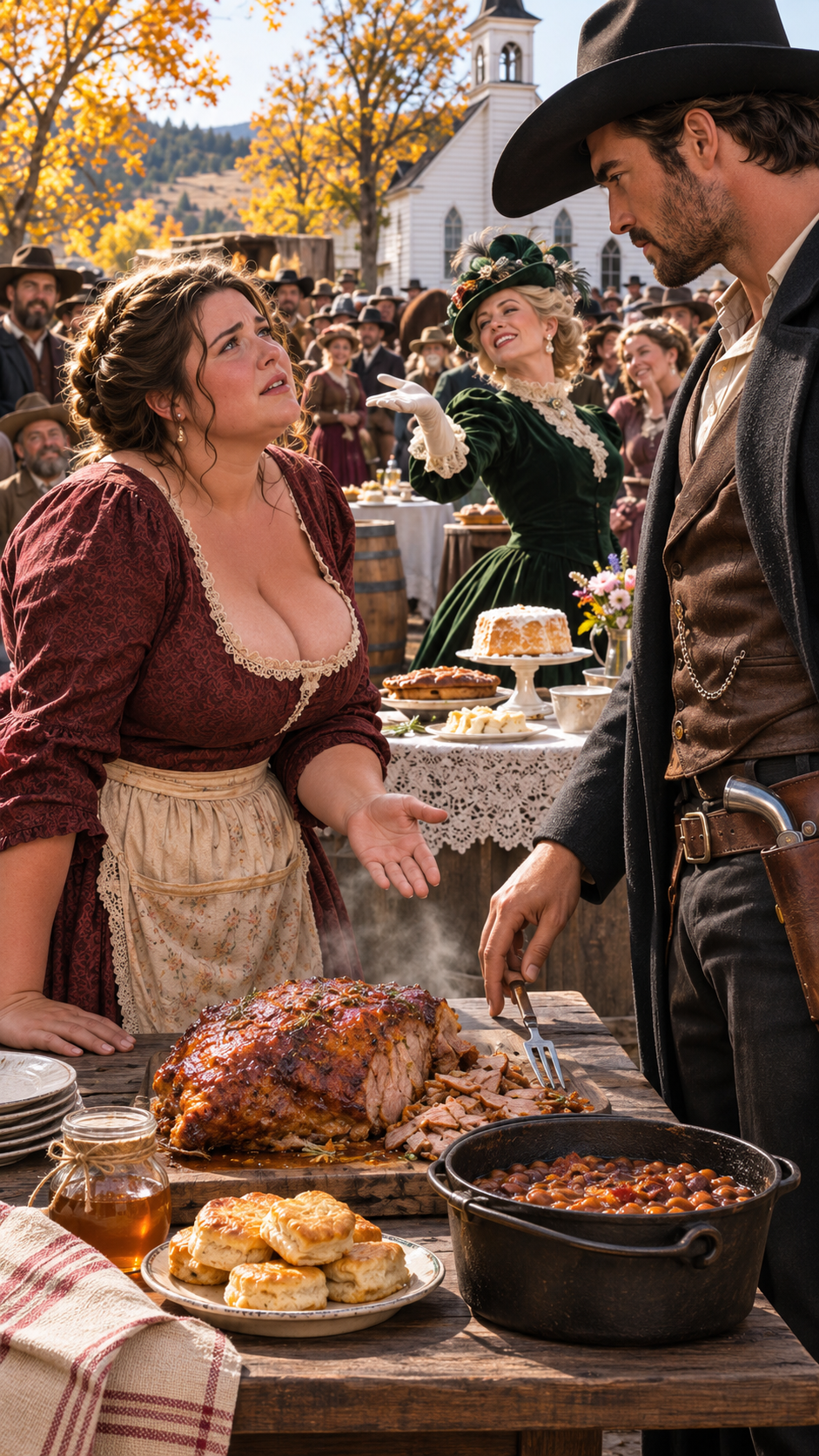
## **Part 5 – The Proposal Mabel Made and the Ranch They Refused to Let Marriage Own**
Mabel waited four more months.
Not to test Caleb.
Not to punish him.
Because waiting had become something she could choose rather than something life imposed.
Her business grew.
Slowly.
Higgins Kitchen Goods supplied two boardinghouses, the general store, and eventually the stage station.
Mrs. Gable became one of her customers.
The irony amused them both.
Mabel hired Lily full-time.
Then a second woman, **Ruth Allen**, a widow with two children.
Ruth arrived one morning apologizing for needing flexible hours.
Mabel stopped her.
“You are telling me your availability. You are not confessing a crime.”
Ruth stared.
Then smiled.
Mabel remembered being made to feel burdensome for needing anything.
She refused to build that into her own business.
At Iron Cross, Mabel shifted from full-time cooking into kitchen manager and supplier.
Ben Foster eventually became capable enough to run breakfast.
His biscuits were still inferior.
Everyone agreed.
Caleb teased him mercilessly.
Ben claimed workplace injustice.
Life became ordinary.
Good.
Mabel and Caleb courted through ordinary things too.
Repairing a porch step together.
Sitting beside the creek.
Attending a church social and leaving early because both hated crowded rooms.
Caleb learned not to order for Mabel at restaurants.
Mabel learned Caleb went silent when worried instead of speaking.
She disliked that.
One evening, after he missed supper without sending word, she told him:
“I will not marry a man who disappears into responsibility and expects me to call it strength.”
He stared.
“I was helping with a sick calf.”
“You have ranch hands.”
“Yes.”
“You forgot.”
“Yes.”
“Then say that.”
He looked ashamed.
“I forgot.”
“Better.”
The relationship improved because neither treated every disappointment as betrayal.
Some things were simply habits needing work.
Then Jeb Miller returned.
He had paid penalties associated with the forged debt note and lost much of his local collection business.
Not ruined.
Changed.
He now worked as clerk for a freight office in Cheyenne.
He came to Mabel’s store counter one afternoon.
She almost did not recognize him.
He removed his hat.
“I owe you an apology.”
Mabel waited.
He looked around at the jars.
“Seems you did all right.”
“That is not part of your apology.”
Jeb flinched.
“No.”
Good.
He continued.
“I told myself everybody exaggerated debts.”
Mabel stared.
“What?”
“That if people could not pay, adding pressure made them pay faster.”
“That explains nothing.”
“I know.”
He swallowed.
“I forged Thomas’s note because Grant told me the fund claim would never be paid anyway. I thought you would lose the cabin eventually, and I could collect before anyone else.”
There it was.
Ugly.
Small.
Not grand evil.
Self-interest.
“I’m sorry.”
Mabel looked at him.
“Do you understand why I don’t forgive you yet?”
“Yes.”
“Good.”
He nodded.
Then left.
Years earlier, Mabel might have needed either revenge or immediate forgiveness to make sense of the moment.
Now she needed neither.
Some apologies become information.
That is enough.
That night she went to Iron Cross.
Caleb sat on the porch.
“You look serious.”
“I am.”
“What happened?”
“Jeb apologized.”
Caleb’s jaw tightened.
“Did he—”
“Do not go find him.”
“I wasn’t.”
“You were thinking it.”
“I was thinking loudly.”
She sat beside him.
After a while, Caleb said:
“Do you forgive him?”
“I don’t know.”
He nodded.
“Fair.”
Mabel looked toward the pasture.
“Caleb?”
“Yes?”
“Do you still have the ring?”
He turned.
“What?”
“The one I told you to put away.”
His expression changed.
“Yes.”
“Where?”
“Safe.”
“Good.”
She took a breath.
“Would you like to marry me?”
Caleb stared.
Mabel waited.
Then he laughed once.
Not mockery.
Shock.
“You’re proposing?”
“Yes.”
“I have a ring.”
“I know.”
“I’ve had it nearly five months.”
“I know.”
“You are impossible.”
“Do you want to marry me?”
“Yes.”
The answer came so quickly she laughed.
Caleb stood.
Then sat again.
“What?”
“I don’t know what to do now.”
“Apparently you expected choreography.”
“I expected to kneel.”
“You still may.”
He did.
Mostly because it pleased him.
He took out the ring.
Simple gold.
No enormous jewel.
Mabel liked it.
“May I?”
She nodded.
He slid it onto her finger.
Then asked:
“Are you sure?”
“Yes.”
“Why now?”
Mabel thought.
“Because if you fired me tomorrow, I would still have a home.”
He laughed.
“Romantic.”
“I’m serious.”
He quieted.
“If your ranch failed next year, I would still know who I am.”
His eyes softened.
“If you changed your mind, I would be hurt. Not destroyed.”
Caleb took her hand.
“That is why?”
“Partly.”
“And the rest?”
Mabel smiled.
“I love you.”
There.
No grand rescue.
Just truth.
Caleb’s eyes filled.
“I love you too.”
They married the following spring.
Mabel did not sell her cabin.
People assumed she would.
She did not.
She leased it to Ruth Allen at a fair rate, with an option to buy later.
Caleb initially offered to purchase it from Mabel so she would “not have to manage it.”
She stared.
He corrected himself.
“Bad sentence.”
“Very.”
He laughed.
“Your decision.”
“Yes.”
The ranch house became their shared home.
But they drew up property agreements.
Iron Cross remained Caleb’s ranch.
Higgins Kitchen Goods remained Mabel’s business.
Shared household money went into a joint account.
Separate savings stayed separate.
Some people in Bitter Creek called that unromantic.
Mabel considered financial clarity highly romantic.
Marriage did not swallow business.
That was important.
Their first year included arguments.
Caleb was accustomed to deciding quickly.
Mabel was accustomed to surviving without asking anyone.
When the kitchen roof needed replacement, Caleb ordered materials without consulting her.
She was furious.
“It’s my business kitchen.”
“It’s on ranch property.”
“That does not make every decision yours.”
He stopped.
Then canceled the order.
They chose materials together.
Another month, Mabel hired a supplier without mentioning the contract’s effect on ranch storage space.
Caleb objected.
She realized he was right.
She changed the arrangement.
No one won every argument.
That helped.
They did not have children.
At first, neither minded.
Then Mabel experienced one late pregnancy that ended early.
The grief surprised both of them.
Not because they had planned a child.
Because possibility had appeared and vanished.
They mourned privately.
Caleb did not say they could try again immediately.
Mabel did not pretend she was fine.
Months later, they talked.
“Do you want children?” she asked.
Caleb thought.
“I think I wanted one because I assumed that was next.”
“And now?”
“I want our life.”
“So do I.”
No promise about the future.
Just present truth.
Their family still grew.
Lily married Ben Foster.
Mabel catered the wedding.
Ben insisted his biscuits had surpassed hers.
Nobody agreed.
Ruth eventually bought Mabel’s old cabin.
That pleased Mabel more than keeping it as a monument.
Homes should be lived in.
Higgins Kitchen Goods expanded to a proper storefront in Bitter Creek.
Above the door:
**HIGGINS & COMPANY — BAKED GOODS, PRESERVES, SUPPERS**
Caleb asked why his surname was not included.
Mabel replied:
“You do not bake.”
Fair.
He invested no money unless through formal terms.
She wanted the business to succeed on its own books.
It did.
Eventually she supplied meals for stage routes and winter crews.
Not an empire.
A durable enterprise.
Then, eight years into their marriage, the Silver Queen mine finally closed.
The company sold its remaining properties.
Old records were boxed for county archives.
Arthur Bell, retired now, volunteered to help sort them.
He found something.
A sealed envelope.
Addressed to Mabel.
From Thomas.
She sat at the Iron Cross kitchen table with Caleb when she opened it.
Thomas had written it days before the fatal collapse.
**Mabel,**
**I keep thinking I should leave the mine.**
Her throat tightened.
He wrote about fear.
Exhaustion.
The west shaft.
Then:
**I know I call you my sturdy anchor. I hope I never made that sound like you were meant to stay in one place while I made every decision.**
Mabel covered her mouth.
Caleb remained silent.
Thomas continued.
**If I get out of this work, I want you to cook somewhere people pay you properly. I have watched neighbors eat your food for years and call it hospitality when they should have called it skill.**
Tears slid down her face.
Then:
**I don’t know what our life will become. I only know I hope you get more choices than we have had lately.**
Mabel stopped reading.
Caleb touched the table, not her hand.
Waiting.
She reached for him.
Only then did he take it.
Thomas had not predicted Caleb.
Had not blessed a future marriage.
Had not left a mystical path.
He had simply wanted Mabel to have choices.
She had them now.
Then Arthur called from the doorway.
“There’s another page.”
Mabel turned it over.
A list of mine workers.
Beside several names were amounts Thomas believed the emergency fund still owed their families.
Not only Mabel.
Seven widows.
Three injured miners.
Two elderly parents.
Some had moved away.
Some still lived nearby.
Caleb looked at the list.
“The fund closed years ago.”
Mabel studied the names.
“Then we find out whether the claims did.”
That became their next work.
Not vengeance.
Accounting.
And it would lead Mabel back to the very families Bitter Creek had forgotten when grief became inconvenient.
**–END OF PART 5– CLICK “NEXT” AT THE BOTTOM OF THE PAGE TO CONTINUE READING**
✓ Lynn R. Adams
## **Part 5 – The Proposal Mabel Made and the Ranch They Refused to Let Marriage Own** Mabel waited four more months. Not to test Caleb. Not to punish him. Because waiting had become something she…