The Wedding Feast That Revealed the Widow Everyone Had Misjudged _064
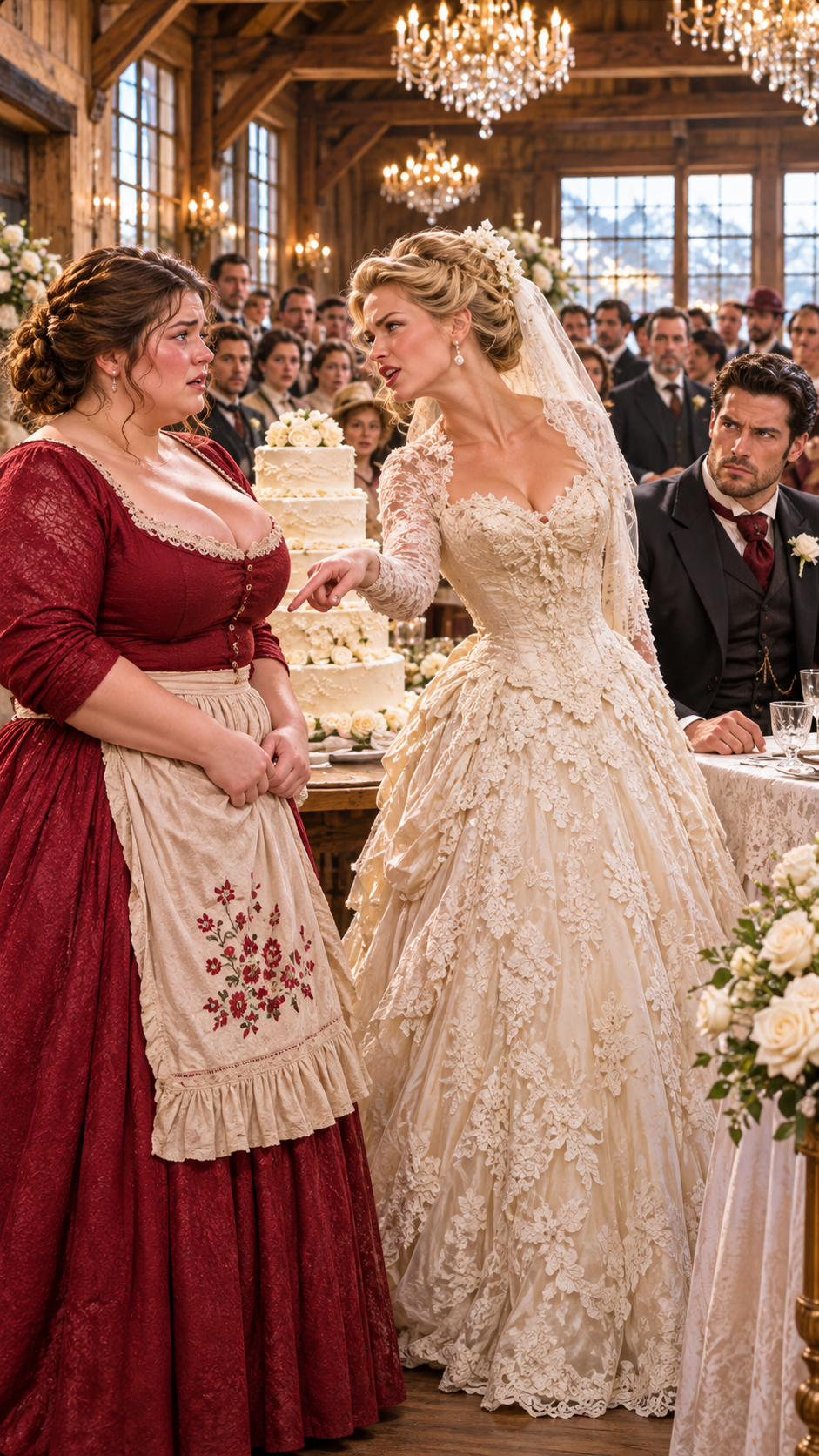
## **Part 3 – The Paid Debt and the Brother Anna Had Been Told Was Dead**
Anna did not show Henry the bank note immediately.
That choice mattered.
For years, poverty had trained her to hand frightening papers to whichever man seemed most capable.
Her husband.
The merchant.
The banker.
Now she wanted to understand before surrendering the problem.
She took the note to **Rebecca Hale**, Sweetwater Bend’s schoolteacher, who kept records for several widows who could not easily travel to Cheyenne.
Rebecca read it twice.
“This says paid.”
“I can read.”
Rebecca smiled.
“Good.”
Anna almost laughed.
“Is it real?”
“Looks real.”
The bank seal matched old notes Rebecca had seen.
Payment date:
Eighteen months earlier.
Amount:
Thirty-six dollars and seventy cents.
Anna had paid twenty-two dollars since then.
Small payments.
Painful ones.
Money that could have fixed the roof sooner.
Bought meat.
Bought coal.
“Samuel Bell,” Rebecca murmured.
Anna nodded.
“Thomas said Samuel died when they were young.”
“How young?”
“I don’t know.”
That now seemed strange.
Thomas rarely spoke about family.
He had arrived in Sweetwater Bend seven years before they married.
Claimed little remained behind.
Rebecca asked:
“Who collected your payments?”
“Mercantile account.”
“Who owns the debt now?”
“Mr. Garrison said the bank transferred it.”
“Let’s see.”
They went together.
Not Henry.
Not some dramatic protector.
Two women with a receipt.
The mercantile owner, **Ezra Garrison**, was sixty and nervous by nature.
He read the note.
Then frowned.
“This can’t be right.”
Anna’s stomach tightened.
“Why?”
“My ledger says balance remaining.”
“Show me.”
He did.
Original debt.
Payments.
Interest.
No record of Samuel’s payoff.
Rebecca asked:
“Where did you acquire the note?”
“Baxter Bank.”
“When?”
“Two years ago.”
The payoff had happened six months later.
So if the bank received money, Ezra should have been notified.
He had not.
Possible administrative failure.
No villain yet.
They wrote Baxter Bank in Cheyenne.
Response arrived a week later.
The bank had indeed received full settlement from Samuel Bell.
But the payment was applied to the wrong account.
Another Thomas Bell.
A freight operator.
Different county.
Same name.
Anna stared.
“So my debt wasn’t paid?”
The banker’s letter continued.
Samuel’s accompanying note specified:
**Thomas Elias Bell, formerly of Red Creek, now Sweetwater Bend.**
That was Anna’s husband.
The bank had made an error.
They acknowledged it.
The payment should have cleared Anna’s debt.
They reimbursed Ezra directly for the outstanding principal and interest.
Anna would receive refund for all payments made after payoff.
Twenty-two dollars and forty cents.
Not fortune.
Enough to matter.
But the larger mystery remained.
Samuel.
Alive eighteen months ago.
Why did Thomas say he was dead?
The bank included a forwarding address from Samuel’s payment slip.
**Red Creek, Nebraska Territory.**
Anna wrote.
No response.
Then another letter came.
From a woman named **Martha Bell**.
Samuel’s wife.
Samuel had died six months ago.
Not years.
Martha’s handwriting was careful.
**Mrs. Bell,**
**I received your letter addressed to my husband. I am sorry to tell you Samuel passed in July. Before his death, he asked me to keep certain papers in case you ever wrote.**
Anna’s hands shook.
**He knew Thomas had died. He knew about you. He regretted not contacting you sooner.**
Why?
Then:
**Thomas and Samuel were estranged because of land.**
Anna frowned.
Land?
Thomas had owned no land when they married.
At least none she knew.
Martha continued:
**Their father left each son one-half interest in a small property outside Red Creek. Thomas left after a dispute and told Samuel never to contact him. Samuel respected that longer than he should have.**
Then:
**After Thomas died, Samuel learned you were paying old debts. He settled the bank note anonymously because he believed Thomas would have wanted that, though I told him secrecy was foolish.**
Anna almost laughed.
Martha sounded sensible.
Then the sentence that changed everything:
**The Red Creek property remains half in Thomas’s estate. As his widow, you may have a legal interest.**
Anna sat down.
Another inheritance?
Not enormous.
Maybe a few acres.
But Thomas had never mentioned it.
Why?
She wrote for details.
Martha replied with copies.
Forty acres.
Old farmhouse.
Water access.
Samuel’s family had used it.
Thomas never signed away his share.
Value modest.
But real.
Anna brought the papers to Rebecca.
Rebecca said:
“You need a lawyer.”
Anna groaned.
“Of course.”
Sweetwater Bend had one.
**Elias Monroe**.
He reviewed.
Thomas’s half likely passed under territorial inheritance rules partly to Anna because they had no children, though formal probate was needed.
No magical automatic windfall.
Paperwork.
Travel.
Fees.
Anna asked:
“How much is it worth?”
“Maybe six hundred dollars total property value. Your husband’s half perhaps three hundred before expenses.”
Anna stared.
Three hundred.
To a wealthy rancher, small.
To Anna, unimaginable.
Then Monroe said:
“Before you get excited, there is another issue.”
Of course.
“What?”
Samuel had mortgaged the full property fifteen years earlier.
Not just his half.
Thomas disputed authorization.
That caused estrangement.
Loan later paid.
But title remained clouded.
So Anna’s interest needed quiet legal resolution.
She wrote Martha.
Martha agreed.
No feud.
No contest.
Just two widows trying to untangle decisions made by brothers who had refused to speak.
That theme felt painfully familiar.
Meanwhile, life at Caldwell Ranch changed.
Vivian and Henry remained married.
But not happily.
Not yet.
They lived in separate rooms.
Attended counseling with Reverend **Josiah Reed**, one of the few people Henry trusted to keep private matters private.
Anna avoided gossip.
Still, servants talked.
Vivian had not wanted ranch life.
She wanted Denver.
Henry had assumed marriage would eventually make her adapt.
Vivian had assumed Henry would eventually sell part of the ranch and move nearer the city.
Neither had said this clearly before the engagement.
Their wedding had been built partly on assumptions.
Not betrayal.
Not fraud.
But incompatibility dressed as optimism.
One evening Vivian entered the kitchen while Anna was sorting beans.
“Can I ask you something?”
“Depends.”
“Do you think I’m terrible?”
Anna looked up.
“Why does my opinion matter?”
Vivian smiled sadly.
“Because you saw me at my worst.”
“That doesn’t mean I know you best.”
Vivian absorbed that.
Then:
“I don’t think Henry loves me.”
Anna returned to the beans.
“Ask Henry.”
“I have.”
“And?”
“He says he doesn’t know.”
That sounded painful.
Vivian continued:
“I thought marriage would make him choose me over the ranch.”
Anna looked toward her.
“Did you tell him that before you married?”
“No.”
“Then you were waiting for him to fail a test he didn’t know existed.”
Vivian sat.
“You make everything sound simple.”
“It isn’t simple.”
Anna pushed aside a bad bean.
“It’s just clearer when it belongs to someone else.”
Vivian almost laughed.
Then she said:
“Do you love him?”
Anna went still.
“No.”
Too fast.
Vivian noticed.
“Anna.”
“I respect him.”
“Yes.”
“He is my employer.”
“Yes.”
“And your husband.”
“Yes.”
Vivian nodded.
“Good.”
No accusation.
Just information.
Then she left.
Anna stood alone.
Heart beating too quickly.
Because the answer had not been entirely true.
She did not love Henry.
Not yet.
But she had begun waiting for his footsteps in the hall.
Not healthy.
Not acceptable while he remained married.
So Anna made a decision.
The next morning, she asked for a meeting.
Henry listened.
“I’m resigning.”
He stared.
“Why?”
“I have business in Nebraska.”
“That’s not enough reason to resign.”
“It is when combined with another.”
He waited.
Anna looked at him directly.
“I need distance from this house.”
His expression changed.
“Because of Vivian?”
“Partly.”
“Because of me?”
Anna did not answer.
That answered.
Henry stood very still.
“I haven’t—”
“I know.”
He had not behaved improperly.
Neither had she.
That was why now mattered.
Anna continued:
“I won’t become someone’s secret.”
His face tightened.
“You aren’t.”
“I don’t intend to become one.”
Silence.
He nodded.
Respecting that cost him something.
Good.
“When do you leave?”
“End of week.”
“I’ll pay through the month.”
“No.”
“You earned it.”
“Then calculate actual days.”
He almost smiled.
“Of course.”
On her final day, Sadi cried.
Anna promised to write.
Vivian came to the kitchen.
“You’re leaving.”
“Yes.”
“Because of Henry?”
“Because of myself.”
Vivian looked toward her.
Then said:
“Thank you.”
Anna frowned.
“For what?”
“For not making my marriage easier to blame on you.”
That was remarkably honest.
Anna nodded.
Then traveled to Red Creek.
Not with Henry.
Rebecca accompanied her halfway.
Then Anna joined a commercial stage.
Martha Bell met her at the station.
Older.
Kind eyes.
They embraced awkwardly.
Two women connected by brothers who had hidden too much.
At the farmhouse, Anna found Thomas’s childhood initials carved into a doorframe.
T.B.
S.B.
One above the other.
Martha said:
“They loved each other once.”
“What happened?”
“Pride.”
Simple.
Then she produced Samuel’s final letter.
Addressed to Anna.
He had written but never mailed it.
**Anna, Thomas left because he believed I mortgaged his future without asking. He was right to be angry. I kept expecting him to come back first. He kept expecting me to apologize first. Years became a habit.**
Anna’s eyes filled.
Then:
**He wrote me once after marrying you.**
She stopped.
Thomas had contacted Samuel?
**He said you made the best bread in Wyoming and laughed when angry. He said he had finally found a home.**
Anna cried.
The husband she had buried had spoken about her to the brother she thought dead.
Then:
**He asked me never to tell you about Red Creek because he feared you would think he married you while carrying debts and unfinished claims. He wanted to solve them first. He never did.**
That hurt.
Thomas had loved her.
And hidden things because he wanted to appear capable.
Again, secrecy dressed as protection.
Then Samuel’s final line:
**I paid the bank because I was tired of letting dead men’s pride cost living women money.**
Anna laughed through tears.
The Red Creek title was resolved over several months.
Martha bought Anna’s share.
Fair appraisal.
After fees, Anna received two hundred seventy-four dollars.
Not fortune.
Independence.
She returned to Sweetwater Bend in spring.
Roof repaired.
Debt cleared.
Savings real.
Then she found an envelope waiting.
From Vivian Caldwell.
Inside:
**Henry and I have petitioned for an annulment?** No, not likely after marriage consummation uncertain. Better divorce or legal separation in territory. Let’s make mutually agreed separation leading divorce.
Vivian wrote:
**Henry and I have agreed to separate. Not because of you. Please believe that. We wanted different lives and expected marriage to correct the disagreement. It did not.**
Then:
**I am moving to Denver. Henry is keeping the ranch. We are dividing property according to our marriage settlement. I am sorry for how I treated you. I don’t expect friendship. I wanted the apology written somewhere permanent.**
Anna folded the letter.
Then found a second page.
Not from Vivian.
From Henry.
Only one sentence.
**When I am legally free to ask you anything, may I come to Sweetwater Bend?**
Anna stared.
For the first time in months, she smiled.
Then she turned the page over and wrote:
**When you are legally free, you may ask. I am also free to say no.**
And mailed it back.
**–END OF PART 3– CLICK “NEXT” AT THE BOTTOM OF THE PAGE TO CONTINUE READING**
✓ Lynn R. Adams
## **Part 3 – The Paid Debt and the Brother Anna Had Been Told Was Dead** Anna did not show Henry the bank note immediately. That choice mattered. For years, poverty had trained her to hand frighte…