The night my disabled younger sister called me with blood in her mouth and begged
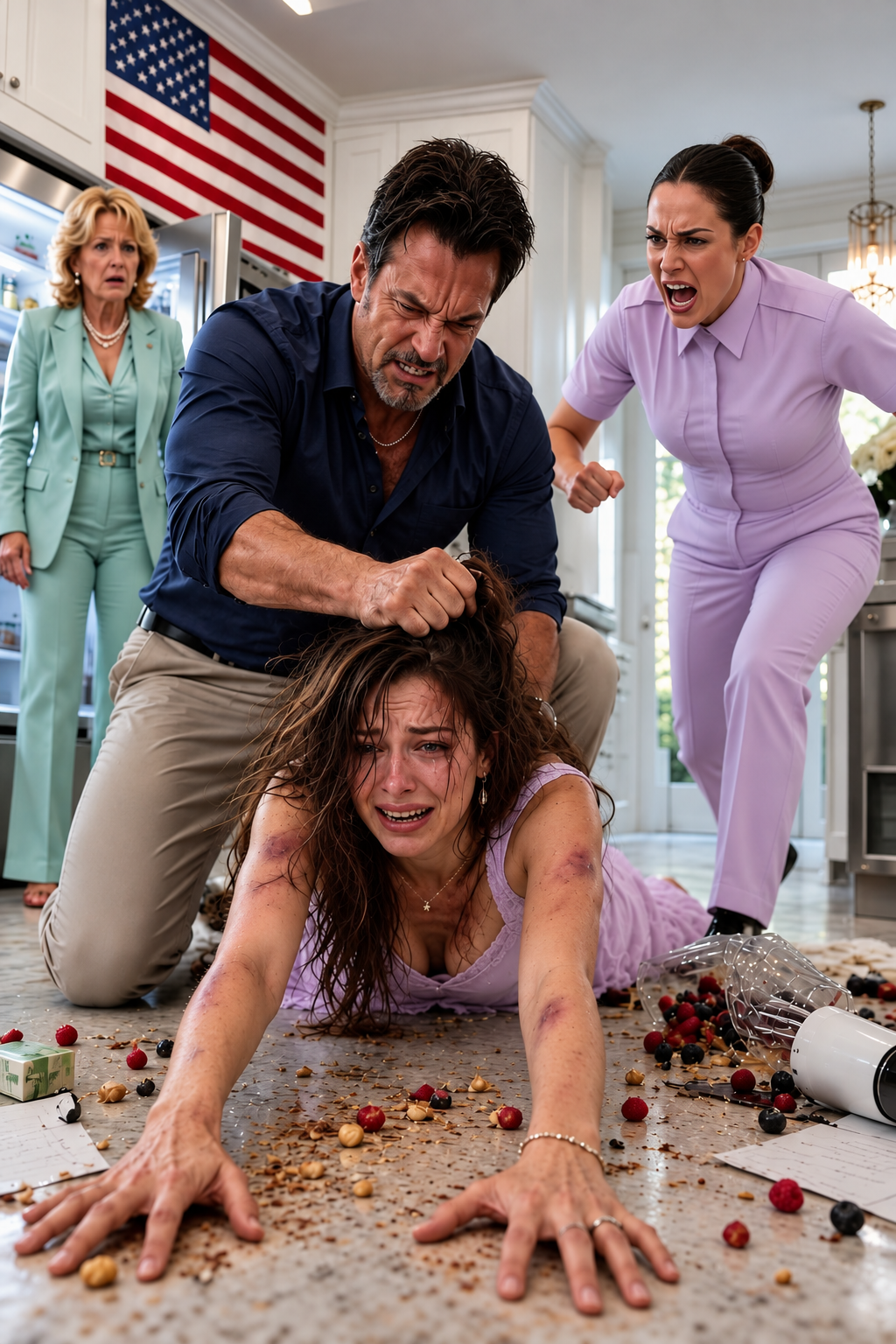
Part 2: A silver cuff link connects our family to missing women.
Jonah’s confidence lasted until Sheriff Aaron Collins entered the kitchen with two deputies and Investigator Lena Brooks from my division. He had expected local officers who knew him from charity events and fishing trips, not a state investigator carrying forensic equipment. Brooks stepped through the doorway, recognized me immediately, and addressed me as Commander Hayes. My mother’s mouth fell open, and Jonah slowly lowered his bourbon glass. For the first time that night, both of them appeared to realize that the daughter they had dismissed as an unimportant government employee actually supervised some of the state’s most serious criminal investigations.
“Commander?” Marian repeated, looking at me with disbelief.
I reminded her that I had mentioned my promotion nearly two years earlier during Thanksgiving dinner. She had responded by asking whether I had met anyone worth marrying. Even now, surrounded by blood and shattered furniture, she seemed more offended that she didn’t know my rank than concerned about Chloe’s injuries. Brooks ignored the exchange and began photographing the kitchen. When I showed her the cuff link, she examined it under a portable light before giving me a look that confirmed she recognized the emblem.
She quietly requested a forensic collection kit.
Sheriff Collins studied the refrigerator and asked Jonah to explain what happened. Jonah repeated his story about Chloe falling, but Collins noticed the damage to the appliance and the broken crutch lying several feet away. The physical evidence didn’t support an ordinary household accident. Jonah grew irritated when Brooks began taking measurements, accusing us of transforming a private family disagreement into a criminal investigation. I watched Collins carefully because Jonah had addressed him by his first name as though they shared an unusually familiar relationship.
Then the hospital called.
Chloe had suffered two fractured ribs, a broken forearm, substantial facial bruising, and injuries around her throat. A physician also identified older fractures and bruises that required further medical evaluation. Marian immediately insisted that Chloe bruised easily because of cerebral palsy. Brooks asked whether she could explain the patterned marks consistent with forceful gripping. My mother stopped speaking.
One deputy returned from Chloe’s bedroom carrying an empty medication organizer.
The prescription labels indicated that several medications had been refilled only two days earlier. Jonah claimed Chloe misplaced them, but the deputy had also found a surveillance camera disguised as a phone charger. Its lens had been pointed directly toward Chloe’s bed. The discovery made the entire room fall silent. Chloe had often complained that Jonah somehow knew what she did while alone, including when she wrote letters or contacted friends, and now there was a possible explanation.
I felt sick remembering every time I had suggested she was simply being anxious.
Brooks asked everyone to remain outside Chloe’s bedroom while she documented the camera and the surrounding area. Jonah protested that he had installed it for safety because Chloe sometimes fell. But the device was positioned to monitor her private activities rather than provide emergency assistance. A deputy also discovered that the bedroom window had been fitted with an exterior locking mechanism. I remembered Chloe once joking that her room felt more like a hospital than a bedroom.
I hadn’t understood how close she was to the truth.
When Brooks examined the silver cuff link, she noticed a tiny fracture running through one wing of the engraved bird. That fracture closely resembled the damaged fragment recovered eleven years earlier. The older evidence had been preserved in a sealed forensic archive, and a laboratory comparison would be necessary before anyone could establish a connection. Nevertheless, the possibility alone transformed the investigation. If Jonah possessed an item matching the missing-women evidence, the case could extend far beyond domestic assault.
Jonah apparently understood that too.
He moved toward the back door, claiming he needed fresh air, but a deputy calmly asked him to remain available for questioning. Marian began accusing us of humiliating a hardworking man in his own home. I turned toward her and asked a question that had been growing inside me throughout the night. “When Chloe told you Jonah hurt her, did you ever actually believe her?”
My mother looked away.
“Your sister doesn’t always understand what happens.”
The cruelty of that sentence struck harder than any insult Jonah could have delivered.
Outside, lightning illuminated the muddy backyard. Beyond the kitchen window stood an old storage shed with a recently installed steel padlock. Jonah noticed me looking at it, and his face tightened. He told Collins there was nothing inside except contracting equipment and dangerous chemicals. Brooks quietly noted the structure’s location while investigators prepared to seek judicial authorization for a broader search.
Then a deputy discovered a loose floorboard in Chloe’s closet.
Beneath it was a stack of letters, each sealed inside a carefully folded envelope.
Every envelope had my name written across the front.
Part 3: My sister’s hidden letters expose a calculated campaign of abuse.
The oldest letter was dated almost four years earlier, when Chloe was twenty-two and still trying to convince our mother that Jonah’s behavior frightened her. I recognized her distinctive handwriting immediately, with its slightly slanted letters and uneven spacing. The first sentence made me grip the kitchen counter for support. “Evie, if something happens to me, please don’t believe them when they say I fell.”
I had investigated hundreds of abuse cases, but reading those words from my own sister felt like swallowing broken glass.
Chloe described Jonah withholding medication whenever she disagreed with him, locking away her mobility equipment, and threatening to place her in a residential facility if she complained. He repeatedly told her that police would consider her unreliable because of her disability. Marian reinforced the fear by insisting that Chloe misunderstood ordinary discipline and that Jonah sacrificed more for her than anyone appreciated. Over time, Chloe began documenting incidents, hiding written descriptions beneath the floorboards because she believed someone might eventually need proof.
Some letters contained dates, times, and names.
Others described details that made Brooks increasingly concerned.
One mentioned Jonah carrying heavy bags into the basement after midnight. Another described photographs of unfamiliar women scattered across the desk in his private office. A third recalled overhearing Jonah argue with a man about a river crossing where something had supposedly been buried years earlier. Chloe didn’t understand what those conversations meant, but she knew enough to preserve them. She wrote that Jonah kept a blue leather ledger hidden inside a locked cabinet and became furious whenever she entered the office.
Then I found a letter about our father.
Daniel Hayes had disappeared nineteen years earlier, when I was nineteen and Chloe was seven. Our mother claimed he abandoned the family because raising a disabled daughter had become too difficult. I spent years hating him for leaving Chloe, even carrying the goodbye letter he supposedly wrote inside my wallet as a reminder of what kind of person I never wanted to become. Now Chloe’s letter described discovering an old photograph of our father inside Jonah’s private belongings.
She had asked our mother why Jonah kept it.
Marian slapped her.
I read that sentence three times.
Brooks contacted the prosecutor’s office to obtain search warrants covering the farmhouse, vehicles, outbuildings, financial records, and electronic devices. The assault evidence already supported immediate investigative steps, while the letters and visible discoveries established additional grounds requiring judicial review. Sheriff Collins stood near Jonah, who had stopped drinking and begun watching the officers with a cold intensity. Marian sat at the dining table, repeatedly insisting that we were making a terrible mistake.
At a.m., the search team received authorization.
The basement contained a locked steel cabinet filled with cash, prescription bottles bearing Chloe’s name, unfamiliar driver’s licenses, and documents transferring property between several businesses. Investigators also recovered photographs of women whose faces matched victims from the old Black Hawk disappearance investigation. Brooks carefully documented everything before removing it. The backyard shed contained more personal belongings, several old telephones, jewelry, and containers of industrial chemicals. A forensic specialist identified equipment that required assessment by a hazardous-materials team.
Jonah suddenly shoved a deputy and ran.
He knocked a chair aside, crashed through the back entrance, and sprinted into the rain toward the shed. Collins pursued him with two deputies while I remained near the porch, fighting the impulse to join the chase. Jonah reached into his pocket and pulled out a small electronic device. Before he could use it, a deputy tackled him against the muddy ground.
The device was secured by investigators.
Later examination showed that Jonah had apparently prepared a mechanism capable of starting a fire inside the shed. If activated, it might have destroyed evidence and endangered anyone nearby. He had been willing to burn the entire structure rather than let investigators examine its contents.
They dragged him back toward the house in handcuffs.
He looked directly at me, blood running from a small cut near his eyebrow.
“You think this is about your precious little sister?” he asked.
I said nothing.
His smile widened.
“Ask your mother what really happened to Daniel.”
My chest tightened so violently that I could barely breathe.
Marian stood in the doorway behind me, her face drained of color. She had heard him. For nineteen years, she had insisted that our father walked away from us voluntarily. Now she was staring at Jonah with the unmistakable expression of someone terrified that a secret was about to escape.
I turned toward her.
“Mom, what does he mean?”
She began crying before I finished the question.
Part 4: My father’s disappearance becomes the center of a deadly conspiracy.
I reached Chloe’s hospital room shortly before sunrise, after ensuring that investigators were handling the evidence without my personal involvement compromising their work. She was lying beneath a white blanket with her injured arm immobilized, bruises covering one side of her face. An oxygen tube rested beneath her nose, and every breath appeared painful. When she saw me, her expression changed from fear to disbelief.
“You really came,” she whispered.
I sat beside her and carefully held her uninjured hand.
“There was never a chance I wouldn’t.”
She started crying, and I let her because there was nothing I could say that would erase what had happened. I wanted to apologize for every bruise I hadn’t recognized, every suspicious explanation I had accepted, and every time my mother convinced me that Chloe was exaggerating. Instead, I promised her that no one would force her to return to that house. She looked at me for a long time before asking whether Jonah was in custody.
When I nodded, she finally closed her eyes.
A few minutes later, Investigator Brooks entered carrying preliminary photographs of the recovered evidence. She wanted Chloe’s permission to ask several questions, and my sister agreed after requesting that I remain beside her. Brooks began with the blue ledger. Chloe explained that Jonah used it to record payments, addresses, and details about women connected to a charity called Haven House. She remembered seeing photographs of some women alongside documents containing bank information and guardianship records.
Then she mentioned Sheriff Collins.
According to Chloe, Jonah had once shown our mother a photograph of himself standing beneath an old railway bridge with Collins and an unfamiliar older man. The photograph had been taken near Briar Glen, a town associated with the Black Hawk disappearance investigation. Chloe remembered the name because Jonah warned her never to repeat it. She also recalled seeing a document bearing our father’s signature among Jonah’s records.
Brooks and I exchanged a look.
That afternoon, retired detective Marcus Vale arrived at the hospital.
Marcus had supervised the original Black Hawk investigation before leaving law enforcement under controversial circumstances. He had long suspected that the missing women were connected through a financial exploitation operation, but several leads disappeared or were closed without explanation. He explained that the first disappearance might actually have occurred nineteen years earlier, before the cases were formally linked.
The missing woman was Rebecca Ward.
She had reportedly discovered irregular financial transfers involving a charitable organization serving vulnerable adults. Our father, who worked as a bank auditor, had been assigned to examine several suspicious accounts. Three weeks after Rebecca vanished, Daniel disappeared too.
I felt the room tilt.
Marcus asked whether I still possessed Dad’s goodbye letter.
I removed the folded page from my wallet and handed it over.
He held it beneath a bright examination light, revealing a faint watermark shaped like a black hawk.
The symbol matched the emblem on Jonah’s cuff link.
For nineteen years, I had carried that letter and treated it as proof my father willingly abandoned us. Now a retired detective was telling me the stationery might connect directly to a criminal network. Marcus pointed out that the language was unusually formal and unlike anything he had seen in Daniel’s previous correspondence. He believed the document had been manufactured.
I couldn’t stop staring at it.
My mother entered the consultation room shortly afterward, accompanied by an officer.
She looked exhausted, but I felt no sympathy.
“Did Dad leave us?” I asked.
Marian lowered her head.
“Evelyn, you need to understand that I was frightened.”
“Did he leave?”
She shook her head.
I felt something inside me break.
“Jonah told me Daniel was dead,” she whispered.
“Before we were married.”
My blood went cold.
“How did Jonah know Dad?”
She hesitated.
Then she admitted that they had known each other before Daniel disappeared.
What followed was a confession so disturbing that I began questioning every memory of my childhood.
Marian had worked with Haven House, a charity providing assistance to disabled adults and financially vulnerable women. Jonah performed maintenance and transportation work for the organization. My father discovered suspicious transactions involving the charity’s accounts and confronted several people connected to it.
Soon afterward, he vanished.
Marian accepted Jonah’s explanation that Daniel had abandoned us, even though Jonah later admitted he knew something terrible had happened. She continued associating with him, eventually marrying the man who might have participated in her husband’s disappearance.
When I asked why, she whispered that Jonah promised he could keep us safe.
I looked toward Chloe’s hospital room.
“Safe from whom?”
My mother couldn’t answer.
Part 5: The charity that promised protection was stealing entire lives.
The investigation into Haven House began with financial records recovered from Jonah’s basement, but within forty-eight hours, investigators realized they were looking at something far more extensive than a fraudulent charity. The organization had established relationships with assisted-living facilities, medical providers, guardianship attorneys, and property management companies across several states. On paper, its mission was to protect vulnerable adults from exploitation and neglect. In reality, a growing body of evidence suggested that certain people within the organization were using that mission to obtain control over clients’ money, property, and personal decisions.
Chloe had nearly become their next victim.
Investigators discovered documents requesting emergency guardianship over her finances and medical care. The applications alleged that she suffered severe cognitive impairment, even though every legitimate evaluation showed normal intellectual functioning. Jonah intended to use the fabricated claims to gain access to a trust established by our grandparents. The account contained nearly nine hundred thousand dollars designated for Chloe’s long-term independence and support.
My sister had never been told about the application.
She had always assumed her financial arrangements were secure because Dad originally helped establish them. Marian knew about the trust, but she claimed Jonah handled the paperwork because she found legal matters overwhelming. That excuse no longer carried any weight. Investigators recovered records indicating that Marian had signed several documents supporting the false guardianship claims.
When Chloe learned what they had planned, she didn’t cry.
She stared at the hospital ceiling and asked one question.
“Were they going to take my money and lock me away?”
I couldn’t promise that every detail had been established, but the documents indicated that institutional placement had been considered.
She nodded slowly.
“That’s why he kept telling me I couldn’t survive without him.”
The cruelty of it made my hands shake.
Then Chloe remembered the hidden camera in her bedroom.
Several weeks earlier, she had noticed a tiny memory-card slot on the device and managed to remove the card while Jonah was away. She concealed it beneath the rubber grip of one crutch, hoping to preserve evidence if he tried to erase the recordings. Investigators retrieved the card and discovered months of footage documenting medication interference, threats, and conversations about her finances.
One recording changed everything.
Three nights before Chloe called me, Jonah had been sitting at the kitchen table with a woman named Helena Ward, the director of Haven House. Helena was elegant, silver-haired, and highly respected in local charity circles. She had attended fundraising dinners, received community awards, and spoken publicly about defending the dignity of disabled adults.
In the recording, she spoke about me.
“Evelyn rarely comes home anymore,” Helena observed.
Jonah replied that I wouldn’t return unless something serious happened.
Helena smiled.
“Then give her a reason.”
I watched the footage twice before forcing myself to stop.
It suggested Chloe’s beating had not simply resulted from Jonah losing his temper. Someone had discussed creating a crisis severe enough to bring me back to the farmhouse. The possibility that my sister’s suffering had been deliberately used to lure me into the investigation was almost unbearable.
But why would Helena want me involved?
Marcus believed the answer was connected to my father.
Before disappearing, Daniel had apparently copied financial records exposing the network’s activities. Investigators suspected those original records had never been recovered. If Helena believed I possessed them, she might have wanted to draw me home and observe what I knew.
That afternoon, search warrants were executed at Haven House offices and affiliated properties.
Investigators recovered suspicious financial records, false identification documents, and evidence of improperly controlled guardianships. Several clients were located and offered independent protection and legal assistance. Others remained missing, and investigators began reopening old disappearance reports that had never been connected.
Helena vanished before officers reached her office.
But Jonah’s recovered ledger contained an address near Lake Maren.
It belonged to Helena’s private estate.
I recognized the address immediately.
When we were children, my mother had taken us there every summer. Helena had welcomed us, organized picnics, and comforted me whenever I asked why Dad had left. She had once told me that some men simply weren’t strong enough to remain fathers.
Now I knew she might have helped manufacture the lie.
And I remembered something even worse.
During one of those summer visits, I had heard a man calling for help beneath the house.
Part 6: A hidden estate reveals the horrifying price of silence.
The memory returned while I studied photographs of Helena’s estate with Marcus and Brooks. I had been twelve or thirteen, wandering through the house while the adults prepared dinner, when I heard a faint voice coming from behind a locked basement door. I told my mother, but she said the sound came from an old television in the storage room. Later, Jonah warned me never to enter the basement because the building contained dangerous electrical equipment. I believed him because children often trust adults who speak with confidence.
Now I wondered whether someone had been imprisoned beneath our feet.
A state tactical team approached the Lake Maren property shortly before sunset. Federal investigators coordinated with local authorities while Brooks and Marcus reviewed the search plan. I had been removed from command of the operational decisions because of my personal connection to the suspects, but I remained available to provide information. The estate stood beside dark water, its windows glowing warmly against the evening sky. It looked like a place built for wealthy people to forget the rest of the world existed.
Helena was waiting in the library.
She sat beside a fireplace with a cup of tea and a blue leather ledger resting on the table before her. When officers entered, she appeared neither surprised nor afraid. Her gaze settled on me, and she smiled with the affectionate familiarity of someone greeting a child she had once helped raise.
“Evelyn,” she said softly. “You’ve become exactly what your father feared.”
I stepped closer but remained behind the officers.
“What happened to him?”
Helena stirred her tea.
“Your father was a stubborn man who couldn’t understand the difference between doing good and preserving order.”
“Where is he?”
She looked toward the window.
“Alive, as far as I know.”
The words hit me so hard that I momentarily forgot how to breathe.
For nineteen years, I had believed Daniel Hayes abandoned his daughters. Then I believed he had been murdered. Now the woman connected to his disappearance was suggesting he might still be alive.
Brooks immediately asked Helena to clarify her statement.
Helena refused.
Investigators arrested her while other teams searched the estate. Beneath the main house, they discovered several concealed rooms containing medical files, identification documents, financial records, and surveillance equipment. Some records referred to clients transferred between facilities under altered names. Others documented suspicious deaths and disappearances requiring immediate investigation.
Then a technician discovered an active tracking system.
A vehicle associated with Jonah’s contracting company was moving toward an abandoned railway bridge near Briar Glen. Investigators initially believed Jonah had no access to outside communications while detained, but the tracking record led them to a second vehicle controlled by one of his associates.
Moments later, my phone received an image.
It showed a thin elderly man sitting beneath the bridge, his wrists secured to a chair. His hair was white, and his face was deeply lined. Standing beside him was Sheriff Aaron Collins, holding a weapon.
I recognized the man’s eyes.
“Dad,” I whispered.
The message beneath the photograph instructed me to bring the original financial ledger to the bridge alone.
Helena watched my reaction.
“Jonah always believed family was the easiest way to control you.”
I looked at her.
“You were wrong about us.”
She smiled faintly.
“We’ll see.”
The operation moved quickly after that. Investigators established surveillance positions around the bridge, prepared tactical containment, and arranged for an evidence case to be carried into the meeting. I wasn’t permitted to approach without operational approval, but the commanders recognized that the suspects specifically demanded my presence.
At dawn, I walked toward the bridge carrying a black case.
The river moved beneath the rusted structure, swollen from the previous night’s rain. Cold mist hung between the concrete supports. Collins stood near the entrance, his weapon held low but visible. Farther inside, another man watched from behind a damaged support beam.
Then I saw my father.
He lifted his head.
For a moment, he looked confused.
Then his eyes filled with tears.
I hadn’t heard that voice in nineteen years.
He began crying.
I wanted to run toward him, but Collins raised his weapon and ordered me to stop.
“Put down the case,” he said.
My father struggled against the restraints.
“Don’t give them anything,” he pleaded.
Collins told him to be quiet.
But Daniel looked directly at me and said something that shattered the last piece of my childhood.
“Evelyn, your mother knew I was alive.”
Part 7: My father returns as every betrayal finally faces justice.
The standoff beneath the bridge lasted less than six minutes, but I remembered every second with painful clarity. Collins appeared exhausted and frightened, while the armed associate near my father kept glancing toward the river access road. Investigators later discovered that Collins had been helping the Haven House network conceal evidence for years after Jonah threatened to frame his son for serious financial crimes. His fear was real, but so were the choices he had made. He had allowed vulnerable people to remain in danger to protect his own family.
My father knew the truth about him.
Daniel had spent nineteen years moving between private facilities and isolated properties under false identities because Helena’s associates believed he retained knowledge of financial records capable of exposing the entire operation. At first, they kept him alive to obtain account information. Later, they apparently feared that killing him would bring unwanted attention to unresolved financial investigations. During those years, he had escaped twice and been recaptured, leaving behind messages that never reached us.
He had tried to come home.
Marian had received proof of his survival years earlier.
She remained silent.
My father explained that Jonah initially threatened to harm Chloe and me if Marian revealed anything. He understood her first period of silence because she believed the threats were immediate. But over time, she began helping Jonah conceal documents and providing information about our lives. She accepted money, signed false statements, and allowed everyone to continue believing Daniel had abandoned us.
When he tried to say more, Collins ordered him to stop.
The armed associate raised his weapon.
Then everything happened at once.
Collins suddenly stepped sideways and struck the man’s arm, causing a shot to hit the bridge railing. Tactical officers moved from their concealed positions and ordered both men to surrender. The associate attempted to flee toward the riverbank, but officers intercepted him before he reached the trees. Collins dropped his weapon and raised his hands.
I ran toward my father once the area was secured.
He looked much older than the man I remembered, and his body showed the consequences of years of deprivation. But when I wrapped my arms around him, he held me with the same fierce tenderness I remembered from childhood. For several seconds, neither of us could speak. I had spent nineteen years rehearsing angry questions for a father I believed abandoned us.
Now all I could say was, “I’m sorry.”
He pulled back and touched my face.
“You didn’t do anything wrong.”
I shook my head.
“I hated you.”
His eyes filled again.
“You were supposed to believe what your mother told you.”
At the hospital, Chloe’s reaction to seeing him was even more devastating.
She was sitting upright in bed when he entered, leaning on a cane provided by medical staff. For several seconds, she stared as though she had forgotten how to speak. Then she whispered the word she hadn’t used for nineteen years.
Daniel crossed the room and knelt beside her bed.
“My little girl.”
Chloe touched his face with trembling fingers.
“Mom said you left because I was too difficult.”
He broke down.
“Never, sweetheart. Not for one second.”
She cried against his shoulder while I stood beside the window, unable to move.
Later that day, Marian was brought into a separate consultation room under supervision. Investigators had found evidence linking her to medication tampering, falsified guardianship documents, and concealment of information about Daniel’s captivity. She asked to apologize to both daughters.
Chloe agreed to hear her.
Our mother entered trembling.
When she saw Daniel sitting beside Chloe, she nearly collapsed.
“I’m sorry,” she whispered.
Dad looked at her with an expression I couldn’t interpret.
“You had nineteen years to tell them.”
Marian began explaining that Jonah threatened us, that she felt trapped, and that she feared losing everything.
Chloe listened without interrupting.
Then she asked a single question.
“When Jonah was hurting me, why didn’t you choose me?”
Marian covered her face.
“I was scared.”
Chloe nodded.
“So was I.”
There was nothing left to say.
The prosecutions took nearly eighteen months. Investigators dismantled a network of shell companies, fraudulent guardianships, illegal confinement arrangements, and financial exploitation schemes operating through multiple states. Helena faced convictions related to kidnapping, conspiracy, fraud, and exploitation. Jonah faced additional charges involving Chloe’s assault, medication interference, surveillance, and evidence linking him to several disappearances.
Sheriff Collins admitted participating in obstruction and evidence concealment.
My mother eventually cooperated with prosecutors and received a prison sentence reflecting both her involvement and assistance.
Several missing women were located alive.
Others were not.
The discovery of remains on a rural river property provided painful answers to families who had spent years searching. No courtroom victory could reverse those losses, and nothing about my father’s rescue erased what had happened to him.
But Chloe survived.
And that changed everything.
Part 8: The sister they called helpless becomes everyone’s unexpected hero.
The first year after my father’s rescue was not the happy reunion people imagined when they heard our story. Daniel had missed nineteen birthdays, graduations, holidays, and ordinary afternoons that could never be recovered. He needed extensive medical care, counseling, and time to adjust to a world that had changed dramatically during his captivity. Sometimes he treated me like a teenager because that was the last version of me he remembered. Other times he became so protective of Chloe that she had to remind him she was an adult.
“Helping me doesn’t mean deciding everything for me,” she told him one afternoon.
Dad apologized.
Then he asked how she wanted him to help.
That small exchange meant more than all the emotional speeches people had made about our miraculous reunion.
Chloe’s recovery progressed slowly but steadily. Her fractured bones healed, although some injuries required ongoing therapy. She moved into an accessible apartment near Dad’s new home, choosing her own furniture and learning how to manage her medical care without someone monitoring every decision. For the first time in years, she could close her bedroom door without wondering whether someone was watching.
She also returned to school.
Chloe enrolled in an online digital-forensics program because she had discovered a genuine talent for identifying patterns in documents, timestamps, and electronic records. The habits she developed while secretly documenting Jonah’s abuse became useful professional skills. She noticed inconsistencies others overlooked and remembered tiny details from conversations long after everyone else forgot them.
Brooks occasionally asked her to review training materials about accessibility and victim interviewing.
Eventually, Chloe became a paid consultant on improving investigative procedures involving disabled adults. She insisted that officers address victims directly rather than automatically speaking to caregivers. She also advocated for accessible reporting methods, independent communication assistance, and clearer safeguards when guardianship claims were used to discredit someone reporting abuse.
Her message was simple.
“A body that needs assistance doesn’t mean a mind that can’t tell the truth.”
Meanwhile, investigators continued identifying people harmed through Haven House. Survivors described years of being denied control over money, medication, housing, and personal relationships. Some had been falsely labeled incompetent. Others had been threatened with institutionalization whenever they questioned suspicious financial transactions.
Chloe listened to their stories and began planning something ambitious.
She wanted to create an independent support center for people escaping coercive care arrangements and financial exploitation.
She called it The Open Door.
With assistance from survivor advocates, attorneys, disability organizations, and community donors, the project secured a renovated building that had once belonged to a Haven House affiliate. The new organization offered temporary accessible housing, independent advocacy, legal referrals, financial counseling, and transportation assistance.
Unlike Helena’s operation, The Open Door was designed around informed choice.
No visitor surrendered control over personal decisions simply because they needed help.
My father volunteered in the garden behind the building, constructing raised planting beds accessible to wheelchair users. Marcus Vale helped review historical records for families still seeking answers about missing relatives. Brooks developed training partnerships between the organization and investigators.
I eventually accepted leadership of a new statewide unit focused on violence and exploitation involving disabled and dependent adults.
But I agreed only after securing one important commitment.
Chloe would help design the department’s victim-interviewing procedures.
She took the responsibility seriously, challenging assumptions that experienced officers sometimes didn’t realize they carried. Her work influenced how investigators documented coercion, evaluated caregiver explanations, and protected victims’ independence during investigations.
One afternoon, she surprised me with something else.
She had legally changed the name of the new center’s main meeting room.
A small plaque beside the entrance read:
Daniel Hayes Room — For Everyone Who Refused to Disappear.
Dad cried when he saw it.
I almost did too.
Our mother continued writing letters from prison. Some contained apologies, while others still attempted to explain her choices through fear and financial dependency. I read a few but eventually stopped responding. Chloe chose to read even fewer.
Neither of us promised forgiveness.
That decision belonged to us.
On the first anniversary of The Open Door, hundreds of people gathered outside the renovated building. Survivors, families, nurses, attorneys, investigators, and volunteers filled the courtyard while photographers prepared to record the ceremony.
Chloe walked toward the microphone using a new pair of silver forearm crutches.
She looked nervous but determined.
Then she began speaking.
“For most of my life, people talked about me as if I wasn’t standing in the room.”
The crowd grew quiet.
“They discussed my body, my money, my medicine, and my future without asking what I wanted.”
She looked toward Dad.
“Some people told me needing help meant I was helpless.”
Then she looked at me.
“One night, I finally called someone and said four words.”
Her voice trembled.
“He hurt me again.”
I felt tears gathering in my eyes.
“My sister believed me, and that decision changed everything.”
Applause began, but Chloe raised one hand.
“I’m not here because somebody rescued a helpless woman.”
She paused.
“I’m here because people finally listened to a woman who had been telling the truth for years.”
The applause that followed seemed to shake the entire courtyard.
Part 9: Our family’s darkest secret becomes a legacy of courage.
Five years after Chloe’s desperate phone call, I returned to the road leading toward our childhood farmhouse for the first time since the night Jonah was arrested. The property had been sold after the criminal proceedings, and the new owners had renovated the building so extensively that I barely recognized it. Fresh white paint covered the exterior, flowers lined the front walkway, and the old shed had been demolished. I parked across the road and sat quietly, watching sunlight fall across a place that once seemed capable of swallowing everyone who entered.
Chloe sat beside me.
Dad was in the back seat.
For several minutes, none of us spoke.
We hadn’t come to reclaim the house or confront the people who lived there. Chloe wanted to see the place one final time before leaving the state to begin a new position with a national disability-rights organization. Her work at The Open Door had attracted attention from advocates across the country, and she had been offered an opportunity to help develop financial-abuse prevention programs for vulnerable adults.
I was proud of her.
I was also terrified of letting her go.
Not because I believed she couldn’t care for herself, but because the memory of nearly losing her had changed something inside me. I sometimes caught myself checking whether she arrived safely at appointments or asking too many questions about people she trusted. Chloe always noticed.
“You can’t protect me from having a life,” she reminded me.
She was right.
Dad understood that better than I expected. He had spent nineteen years dreaming about returning home, only to discover that his daughters had become adults with lives of their own. Loving us meant accepting that the years he lost couldn’t be restored through control. He learned to ask before helping, listen before advising, and celebrate independence even when it frightened him.
As we watched the farmhouse, Chloe reached into her bag.
She removed a small display case.
Inside was a reproduction of the black hawk cuff link that had helped connect Jonah to the disappearance investigation. The original remained preserved according to the relevant evidence and court procedures, but Chloe had commissioned a replica for the educational exhibit at The Open Door.
On the reverse, four words were engraved.
EVERY VOICE DESERVES BELIEF.
I held the case carefully.
“For years, I hated that symbol,” Chloe said.
“Why keep it?”
“Because I want people to remember what happens when powerful people decide whose stories matter.”
I understood.
Jonah believed Chloe’s disability made her easy to manipulate. Helena believed vulnerable adults were safest when someone else controlled their choices. Marian believed keeping the family together justified overlooking cruelty. Sheriff Collins believed protecting his own child gave him permission to betray other families.
Every one of them made decisions based on fear, power, or convenience.
And every one of them underestimated the person who had the least control inside that house.
She was the one who hid the letters.
She saved the recordings.
She remembered the ledger.
She made the call.
My badge allowed me to bring professional resources into the investigation, but it didn’t create the evidence. Chloe had been gathering the truth long before I recognized the danger.
Eventually, Dad asked whether we were ready to leave.
Chloe nodded.
As I started the engine, I glanced at the farmhouse one last time. I thought about the mother who had taught us that family loyalty meant keeping secrets and the father who spent nearly two decades refusing to forget us.
I thought about the women who never returned home, the survivors who rebuilt their lives, and the countless people whose suffering had been dismissed because someone in authority decided they weren’t credible.
Then I looked at my sister.
She was watching the road ahead.
The afternoon light caught the silver handles of her crutches, and she smiled as she talked about her new apartment, her future colleagues, and the independent life she was building.
There was no fear in her voice.
That evening, we gathered for dinner at Dad’s apartment with Brooks, Marcus, and several friends from The Open Door. Someone ordered far too much pizza, Marcus complained about the music, and Chloe insisted that everyone stop treating her departure like a funeral.
When Dad asked whether she would visit often, she promised she would.
Then she looked at me.
“You’re going to call every day, aren’t you?”
“Probably.”
She laughed.
For a moment, I remembered her voice during that terrible storm, the words forced through pain as she begged me not to hang up. I remembered the blood on the refrigerator, Jonah’s bourbon glass, my mother’s indifference, and the silver object beneath the dining table.
I had believed I was driving home to save my sister.
In many ways, she had saved all of us.
She brought our father back from a grave that existed only in our minds. She exposed a criminal network that had hidden behind charitable language and respectable reputations. She helped create a place where people could seek support without surrendering their independence.
And she taught me something no police academy had ever managed to explain.
Authority is not the same as wisdom.
Protection is not the same as control.
And surviving abuse does not make someone weak.
Later that night, as I walked Chloe to her car, a gentle rain began falling. She stopped beneath the streetlight and looked up at the sky.
“Remember when Jonah told me nobody would ever believe me?”
She smiled.
“He was wrong.”
I hugged her carefully, mindful of the injuries that had healed but left memories neither of us would ever completely forget.
“Yes,” I whispered. “He was.”
Then my sister opened her car door, placed her crutches beside the driver’s seat, and prepared to leave for the next chapter of her life.
This time, nobody tried to stop her.
And for the first time in our family’s history, freedom didn’t mean someone disappearing.
It meant someone finally getting the chance to go wherever she wanted—and knowing she could always come home.
✓ Lynn R. Adams
Part 2: A silver cuff link connects our family to missing women. Jonah’s confidence lasted until Sheriff Aaron Collins entered the kitchen with two deputies and Investigator Lena Brooks from my divis…