The night a delivery truck sent me to Riverside Hospital, I called my parents with a broken arm,
Part 2: My brother’s arrival uncovers an inheritance stolen in plain sight
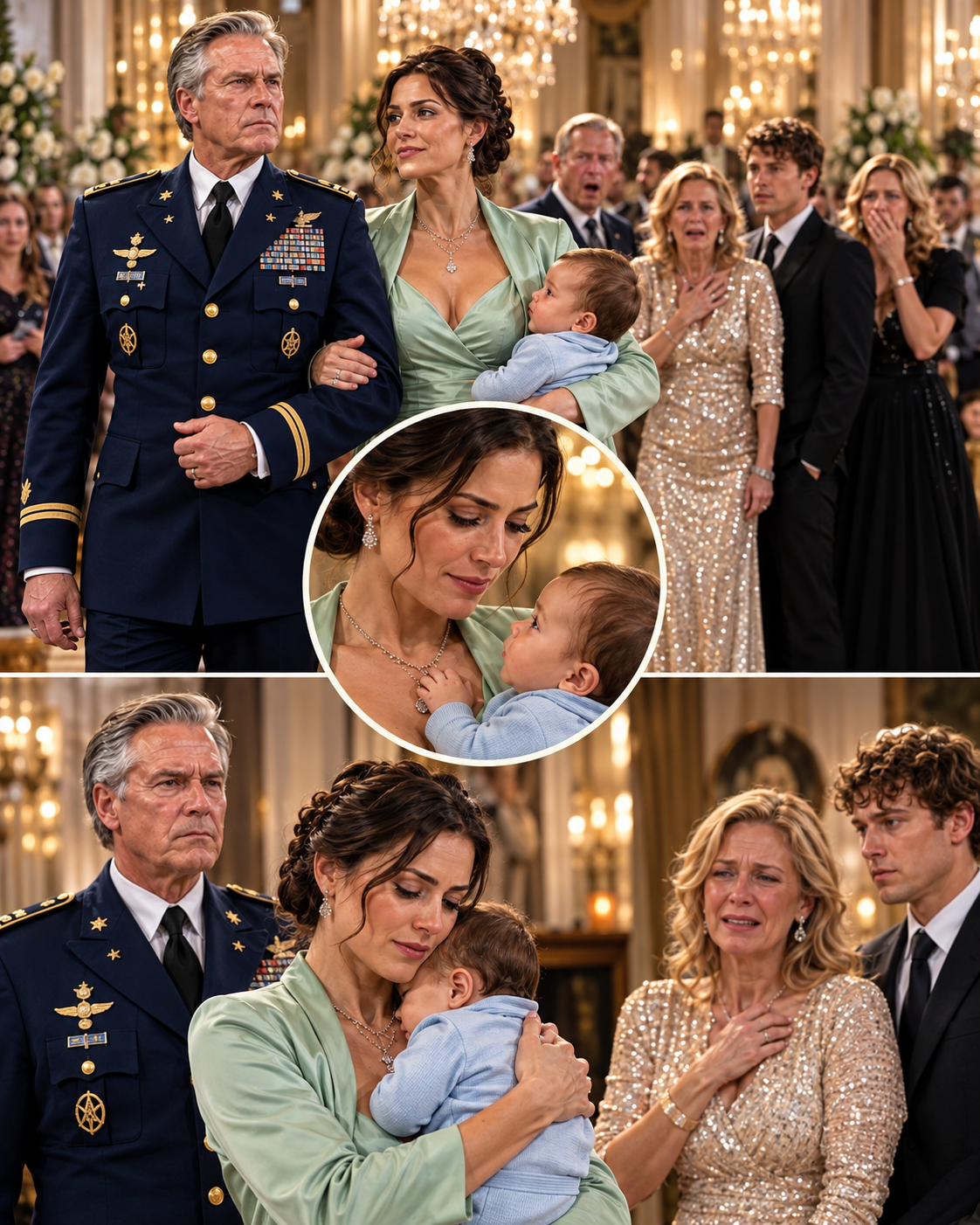
By six the next morning, Robert, Diane, Whitney, and Whitney’s fiancé, Daniel, arrived at the hospital still wearing pieces of the previous night’s celebration. Robert demanded to know why Richard had embarrassed him in front of the entire family. Diane looked briefly shaken by my cast and bruised face, then asked everyone to stop turning private matters into a public drama. Whitney complained Daniel’s parents were reconsidering the wedding because Richard had made the Morgans look cruel. I stared at her and said I had been hit by a truck. “You always manage to make important days about yourself,” she replied, and the sentence summarized thirty years of my family’s rules.
Daniel took off Whitney’s engagement ring and placed it on the table beside my bed. He said one phone call had not ended their relationship, but it had forced him to see a pattern he had politely ignored. Whitney called him disloyal. Diane urged everyone to calm down. Then Daniel mentioned that Whitney had told him I recently contributed three thousand dollars toward the wedding from an account our grandmother created. I had transferred nothing; hospital bills from Noah’s birth had already strained my savings. Whitney glanced at Diane, and Richard noticed. Diane admitted our grandmother Margaret had created savings for both girls, but Robert said the money was always meant to benefit the family as a whole.
Daniel showed me a screenshot Whitney had sent him. It listed a trust in my full name with a balance above four hundred eighty thousand dollars and years of withdrawals I had never authorized. The records showed tuition at Whitney’s private university, her car, credit-card bills, family vacations, Robert’s failing business, Diane’s home renovation, and transfers to accounts I had never seen. I remembered working late through college while Whitney posted photographs from Paris. I had bought used textbooks and paid my own apartment deposit because Diane said independence would teach me responsibility. Robert called the spending necessary and accused me of becoming selfish. Diane said parents had to put money where it was most needed.
I asked whether “most needed” meant money held in my name. Diane looked afraid. Nurse Melissa ordered everyone but Richard and Evelyn out when my heart rate rose, and security escorted the Morgans into the hall. Robert shouted that Richard had always wanted to turn me against my parents. Richard answered that he had spent thirty years hoping they would never give him a reason. I left the hospital three days later for Richard and Evelyn’s quiet Virginia home. They had already turned the guest room into a nursery, with a bassinet beside the bed and diapers stacked under a changing table. Neither complained when I needed help showering, dressing, or feeding Noah. Their ordinary kindness embarrassed me because I had learned to treat every favor as a debt.
Part 3: Grandma’s sealed letter reveals I was never their daughter
On the fourth morning, attorney Elena Ruiz arrived with the original papers establishing Margaret’s trust. She explained that my guardians were required to disclose it when I turned eighteen and could use its money only for my education, housing, health, and independence. Margaret had left a sealed letter that could be opened if Robert and Diane tried to terminate the trust, transferred substantial assets to Whitney, or abandoned me during a medical emergency. Elena placed the envelope on the dining table. I recognized my grandmother’s handwriting, then saw the instruction on its back: Richard Lawson must be present when Claire opens this; he knows why. Richard said Margaret once told him Robert had lied about the night I was born.
Inside were a letter, an old hospital photograph, and a certified birth record naming Anna Louise Hayes as my mother and Jonathan Reed Hayes as my father. The photograph showed Diane in a hospital bed holding a newborn beside a bassinet card marked WHITNEY MORGAN. That could not fit the childhood story we had been told: Whitney was two years younger than me. Margaret’s letter said I had never legally been given to Robert and Diane. After Anna and Jonathan supposedly died in a house fire, the Morgans were asked to protect six-month-old me for three days while Richard returned from overseas. Instead, they changed my surname, falsified records, and told Richard the baby died with her parents.
Richard began to cry. Robert had shown him records that convinced even military contacts that Jonathan, Anna, and their infant daughter were dead. Margaret discovered the truth when I was six, but Robert intimidated her with photographs of Whitney and me asleep and suggested that curious grandmothers sometimes caused accidents. She preserved evidence quietly, hoping to protect me without provoking the people who had taken me. The letter’s last revelation was that Jonathan had named Richard as the person he trusted to raise me if anything happened to both parents. Robert and Diane had not only taken my inheritance; they had taken me from the man who had expected to bring me home.
Before we could absorb the letter, a black sedan pulled up outside carrying Robert, Diane, and a scarred man holding a battered military file and one of my baby photographs. Richard looked through the window and lost all color. “Jonathan Hayes,” he whispered, naming the man he believed had been dead for nearly three decades. Special Agent Mara Bennett arrived after Elena contacted federal investigators about the falsified birth record. Officers searching Robert’s car found packed suitcases, cash, passports, and another document bearing my forged signature, authorizing transfer of the remaining trust balance to an offshore account. When Bennett said Robert was not leaving, he pointed at Diane and claimed the original fire had been her idea.
Under questioning, Robert described Anna as a civilian financial analyst attached to military procurement. She had discovered millions disappearing through shell contractors connected to Colonel Samuel Voss, Richard’s former commanding officer. Jonathan remembered Anna planning to send evidence to Richard. That night, a false emergency briefing pulled Jonathan away from home. He returned to flames, found Anna alive near the stairs, heard me crying upstairs, and reached for me before someone struck him from behind. The story he had told himself for years—that his family had died—had been built from lies someone else placed in front of him.
Part 4: My father declared dead arrives carrying proof
Jonathan stood in the rain, silver threaded through his dark hair and a scar running along one cheek. When Richard opened the door, Jonathan’s first word was “Claire,” spoken with the uncertainty of a man afraid I might disappear if he moved too quickly. Robert called him unstable, but Jonathan showed us an old photograph of himself in uniform beside Richard and Anna, who held a baby wrapped in yellow. On the back was a message: Claire and I are waiting for you. He remembered the fire only in fragments. He had awakened six months later in a private rehabilitation clinic with a fractured skull and burns, under a different name. Robert visited twice and told him Anna and I were dead.
Jonathan had lived as John Hale ever since, believing he had no family left. An archived military photograph eventually triggered memories, and a former records officer contacted him after Richard requested information about Jonathan Hayes. Robert had known he survived. The realization frightened me more than the trust account because it proved my childhood deception had required constant maintenance. Special Agent Bennett questioned Robert, Diane, and Jonathan separately. Their stories contradicted each other, but each pointed toward Voss, Paul Mercer, and a network that used military records to hide financial crimes. Robert and Diane had access to administrative systems; Paul ran a charitable foundation that secretly paid for Jonathan’s rehabilitation and kept him isolated.
Investigators learned the Morgans discovered my insurance settlement and military death benefits after the fire. Keeping me alive while controlling my identity was more profitable than leaving me connected to Richard. Jonathan approached me carefully after the questioning and asked permission to see Noah. When I introduced my sleeping son as his grandson, Jonathan started to cry. He said Noah had Anna’s chin. He described my biological mother as brilliant, stubborn, and prone to laughing when she was angry because she hated giving cruel people proof they had hurt her. I laughed through tears and asked if he had loved her. He said he had spent twenty-nine years feeling an absence his damaged memory could not name.
That night investigators searched Robert and Diane’s attic and found cassette tapes recorded by Margaret. On one, she explained that she discovered my true identity after finding an old hospital bracelet hidden in Diane’s jewelry box. Margaret hired a private investigator and confirmed there had been no legal adoption. She planned to expose the truth, but Robert intimidated her again. Near the end, Margaret said Diane had kept me not only for the inheritance; Anna had hidden evidence of the procurement fraud inside an object belonging to me as a baby. Jonathan immediately looked at the unfinished wooden bird he had brought to Richard’s house. He vaguely remembered carving it for my nursery before the fire. A thin seam in one wing opened beneath Richard’s knife.
Part 5: An unfinished wooden bird holds the evidence my mother hid
Inside the bird’s wing, we found a tightly rolled strip of microfilm. Before Agent Bennett could secure it, the lights went out and glass shattered downstairs. Someone dragged me from the bed while Noah began crying in the dark. “You should have stayed ignorant,” the voice whispered. It belonged to Whitney. I bit her hand, and Richard and Jonathan reached the hallway with flashlights. Whitney said she had cut the power because Paul Mercer had followed her to the house. He threatened to kill Noah and me unless she retrieved the microfilm first. She handed over documents stolen from Diane’s dressing room, showing Robert and Diane planned to drain my trust, flee overseas, and leave Whitney looking responsible.
Whitney finally understood that being favored had never meant being loved more. She had remained useful because her spending, entitlement, and need for parental approval made her easy to manipulate. Before we could question her further, a rifle shot shattered the bedroom window. Jonathan threw himself across me while Bennett’s agents pursued Paul’s vehicle into the rain. Paul was captured before sunrise. Faced with federal charges, he identified Voss as the senior official who approved the false briefing that lured Jonathan away. Robert had helped access military records, Diane had altered identity documents, and Paul had moved Jonathan into the rehabilitation clinic after the fire.
The developed microfilm contained payment trails supporting Anna’s investigation and a photograph of Anna standing beside Diane, Robert, and Voss. On the back, Anna had written: If I die, ask Diane why she called me her sister. DNA testing established that Anna was Diane’s older half sister. I had been taken from my own aunt after jealousy, greed, and fear collided with Voss’s criminal network. Whitney admitted she knew about the trust for almost a year and had accepted money, but insisted she never knew I had been taken or that Jonathan was alive. I believed that part of her confession without pretending it erased the rest. When she asked if we could someday become sisters again, I told her I hoped she became someone better, but I would not let myself be the training ground where she practiced becoming decent.
Diane requested an interview, offering to reveal where Anna’s original files were hidden if prosecutors considered leniency for Whitney. I agreed only after Elena, Bennett, Richard, and Jonathan promised I could leave whenever I wanted. Without makeup or jewelry, Diane looked smaller in detention clothes, but she still spoke as if controlling the conversation were her right. She said Anna had always been the admired sister: intelligent, legitimate, and successful in ways that reminded Diane of everything their father had withheld from his second family. When Anna found Voss’s laundering scheme, she trusted Diane with the discovery. Diane told Robert, Robert told Voss, and Voss ordered an operation she claimed she thought would only frighten Anna into silence.
I asked why she falsified records if she had not expected anyone to die. “By then everything had already happened,” she answered, turning another choice into something inevitable. Diane admitted she sometimes cared for me, then explained I had always been too watchful, too questioning, too difficult to comfort. I told her children become watchful when love feels unsafe. She looked away before saying, “Whitney was mine.” The sentence did not break me. It ended the competition I had spent my childhood trying to win. Diane’s rejection had never measured my worth; she had decided that one child was hers and the other was evidence.
Part 6: I discover why my mother could never love me
The federal investigation expanded. Voss was arrested in retirement, Robert faced charges for conspiracy, kidnapping, fraud, identity falsification, attempted theft, and obstruction, while Diane faced those charges plus responsibility for altering guardianship and death records. Whitney received limited consideration for cooperating, but she still owed restitution for the money she knowingly accepted. Daniel ended their engagement. Accountants found more than seven hundred thousand dollars diverted from my trust over nearly three decades. Jonathan rented a small house near Richard instead of demanding immediate father-daughter intimacy. He visited when I invited him, learned how Noah liked to be held, and brought letters he had written during deployments before the fire.
One letter described Anna saying that baby Claire smiled whenever Jonathan’s name was spoken. I asked what I should call him. He answered that any name would be enough if it felt honest. I chose “Jonathan” for now, and he smiled as though a temporary truth were more precious than a permanent title taken without permission. My legal story became national news, and reporters began calling me the stolen heiress. I hated the phrase. It turned kidnapping, military corruption, and twenty-nine stolen years into entertainment about money. Then one afternoon, a black vehicle stopped outside Richard’s house. Ethan Cole, Noah’s biological father, stepped out holding flowers.
Ethan had disappeared during my pregnancy and refused meaningful contact after Noah’s birth. I almost believed regret had finally reached him until a television crew emerged from another vehicle. The reporter admitted Ethan had called that morning to announce an emotional reunion with his child. He claimed fear made him leave and said Noah deserved both parents. When I reminded him he had not visited once in four weeks, his language shifted toward custody rights and media misunderstandings. Elena arrived with the notarized acknowledgment in which Ethan declined parental involvement and the message threatening to deny paternity if I contacted him again. The reporter’s sympathy changed when Ethan realized his redemption story had become evidence of opportunism.
I gave the cameras my name: Claire Hayes, daughter of Anna and Jonathan, mother of Noah, and survivor of people who treated identity, inheritance, children, and love as property. I said the most dangerous label used against me had been “dramatic,” because it appeared whenever I noticed something people needed hidden. Ethan abandoned his custody campaign once the court required genetic testing, financial disclosure, and supervised visitation. Attention had interested him more than fatherhood. I expected the television story to bring only another headache, but a message from retired nurse Helen Brooks changed everything. She had worked at the clinic where Jonathan regained consciousness and remembered another badly burned patient arriving after the same fire.
The woman was listed as Jane Doe, survived long enough to be transferred to neurological care, and then vanished from the records. Investigators followed payments through a Voss-controlled charity across three states. They found a partially paralyzed woman named Anne Hill in a long-term care facility with no family listed. Jonathan and I went together, carrying the old photograph and the wooden bird. I expected disappointment; nearly three decades of neurological injury might have erased everything recognizable. Anna stared blankly at Jonathan until I placed the repaired bird in her lap. Her scarred fingers traced the unfinished wing. Tears appeared in her eyes, and one word escaped: “Baby.” Then she touched my cheek and said my name.
Part 7: The woman I mourned is found under another name
Anna’s memories returned in fragments: smells, songs, Jonathan’s habits, old photographs, and recorded interviews. Eventually she remembered Diane arguing near the stairs, Paul striking Jonathan, Voss demanding the evidence, and smoke filling the house while I cried upstairs. Anna had hidden me in a laundry cabinet before collapsing. Diane found me not because maternal instinct overcame the conspiracy, but because she was searching for the microfilm. Paul removed Anna under Voss’s orders, placed her in the same clinic as Jonathan, then transferred her once doctors believed her memory loss might keep her silent. For almost thirty years, my parents had lived less than a thousand miles apart, each believing the other dead and their daughter lost.
That truth changed every family photograph I had ever seen. Robert accepted a federal plea when financial and military records made conviction almost certain. Diane went to trial in respectable navy suits and pearls, the same presentation that once let charity committees confuse appearance with character. Richard testified about the false casualty records. Jonathan described waking under another name. Anna spoke about the fire. Whitney admitted receiving my money and benefiting from years of favoritism. Then I took the stand while Noah waited safely with Evelyn. Diane’s attorney asked whether she fed, clothed, educated, and sometimes comforted me, as if affection could make what she had done legal.
I answered yes to each factual question. Then I explained that a person could care for someone they controlled, just as a jailer could feed a prisoner, without turning theft of identity into adoption or exploitation into parenthood. The jury convicted Diane on every major count. As officers led her away, she looked at Whitney rather than me. I no longer needed that glance to prove anything. Whitney served a short sentence for financial offenses, sold luxury possessions to begin restitution, and moved to another city. She eventually found work at a women’s shelter, where she had to face stories of coercion that resembled the patterns she had helped normalize.
She wrote me monthly. I answered perhaps twice a year. We both accepted that forgiveness could lessen hatred without restoring intimacy or pretending we had shared the same childhood. Jonathan learned to change diapers while Anna corrected his technique from a wheelchair. Richard taught Noah to salute before the toddler could pronounce half his words, and Evelyn remained the person everyone admitted spoiled him most. I legally changed my name to Claire Anna Hayes, keeping Elizabeth in honor of Margaret, whose fear had delayed rescue but whose hidden evidence ultimately opened the doors. The money recovered from my trust paid medical bills, secured Noah’s education, and funded legal support for families fighting fraudulent guardianship and stolen identity.
The case against Voss expanded beyond our family. Prosecutors found payments to officials, contractors, and record clerks who had helped erase people from files or give them new identities. Jonathan gave them names and the documents he had collected in hiding. Anna helped identify the military signatures on the false briefing. Richard spent hours with investigators explaining which old records had been altered. I did not mistake the investigation for healing. It was work, necessary and exhausting, and it did not restore the years we had lost. But for the first time, every person who knew the truth was allowed to say it aloud without being threatened into silence.
Part 8: My mother faces the truth while my real family returns
Three years after the accident, we gathered beneath the oaks at Richard and Evelyn’s home for a wedding unlike Whitney’s engagement dinner. Anna could walk short distances with a cane. Jonathan stood beside her carrying scars he no longer tried to hide. Whitney watched cautiously from the edge of the garden, and Noah raced between the chairs in a small charcoal suit, clutching the wooden bird that once carried the evidence everyone had nearly died searching for. Anna and Jonathan had decided to marry again because their original records were hopelessly damaged. They chose each other without cameras, champagne towers, or elaborate centerpieces. Richard officiated and lost his composure before finishing the first sentence.
Jonathan told Anna he had lost his memory but apparently never stopped loving her. Anna answered that she had lost her name but kept their daughter’s inside the deepest part of herself. When they exchanged plain silver rings, I understood that love surviving catastrophe looked quieter than the people who claimed to value family had taught me. After the ceremony, Richard handed me the wooden bird. Its unfinished wing had been repaired, and my full first name was carved beneath it in crooked letters because three-year-old Noah insisted on finishing what his grandfather began. Anna gave me a faded note Jonathan had written when I was four weeks old—the same age Noah had been on the night I called my father from the hospital.
The note promised that family was not the people who demanded suffering as proof of loyalty, but the person who came when fear made the world unsafe. I looked across the garden at Richard, who had left a formal ceremony when the hospital called; Evelyn, who had prepared a nursery before being asked; Jonathan, who crossed decades of stolen memory to find me; and Anna, who survived a fire and a stolen identity. Even Whitney had chosen truth when it cost her the status she once valued most. The truck accident had broken my arm, cracked my ribs, scarred my forehead, and forced me to make one humiliating phone call. My parents’ refusal felt like abandonment that night, but I could finally see it as the first unlocked door in a prison I had not known surrounded me.
At 10:47 p.m., my phone rang from an unknown number. For one breath, my body remembered the hospital ceiling, my father’s voice, Noah crying out of reach, and the fear of asking someone to care enough to come. The caller was an investigator in another state, following records uncovered during the Voss prosecutions. Robert and Diane had helped process questionable guardianship files involving two other children. Both were now adults, both had inherited substantial estates, and both believed their biological relatives had died before they could remember them. Richard saw my expression and moved closer. Jonathan stood from his chair. Anna reached for my hand while Noah wrapped both arms around my legs.
I asked the investigator where the two adults were. I was not trying to become anyone’s savior; I had learned too well that love did not give anyone the right to make choices for another person. But Richard had known what to do when the hospital called him in the middle of the night. Somebody in pain did not need a lecture about why asking was inconvenient, a calculation about whether help would ruin a celebration, or a reminder that their choices had placed them in a difficult position. Sometimes they needed one person to answer, listen, gather facts, and move toward them. I looked at Noah and understood the promise I wanted to make: I could not keep the world from hurting him, but when he called for help, he would never have to wonder whether love considered showing up too much trouble.
✓ Lynn R. Adams
Part 2: My brother’s arrival uncovers an inheritance stolen in plain sight By six the next morning, Robert, Diane, Whitney, and Whitney’s fiancé, Daniel, arrived at the hospital still wearing pieces …