The Native American Practice That Saved the Pilgrims—And Was Forgotten
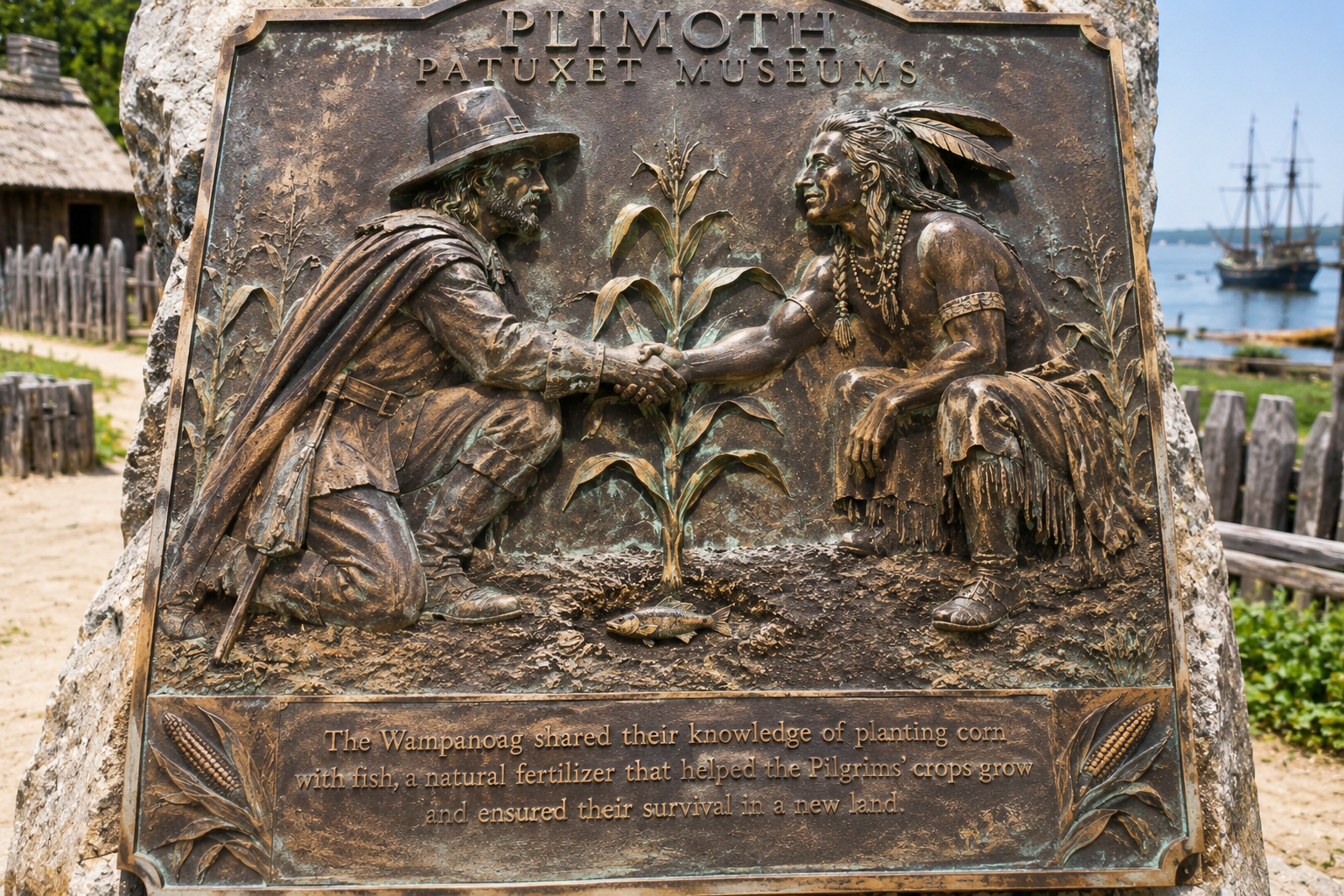
The winter of 1620–1621 was a graveyard. Of the 102 passengers who had crossed the Atlantic on the Mayflower, nearly half were dead by spring. They had arrived too late to plant, too weak to hunt, and too proud to ask for help—until a man named Squanto walked out of the woods and changed everything. What he taught them was not a single trick, but a sophisticated agricultural system that the Wampanoag people had perfected over centuries. It saved the Pilgrims from extinction. And then, within a generation, it was almost entirely forgotten.
The Man Who Spoke the Language of Survival
Squanto—also known as Tisquantum—was no stranger to the English. Years before the Pilgrims landed, he had been kidnapped by an English sea captain and sold into slavery in Spain. He escaped to England, learned the language, and eventually returned to his homeland in 1619, only to find his entire village wiped out by a devastating plague. He was the last of the Patuxet. When he approached the starving settlers in March 1621, he spoke to them in broken English, and they must have thought they were dreaming.
But Squanto did not just bring words. He brought knowledge—a deep, generational understanding of how to coax food from New England’s rocky, acidic soil. The Pilgrims had been trying to farm the way they did in England, planting wheat and barley in neat rows, and watching them rot. Squanto showed them a different way.
The Fish in the Hole: A Fertilizer Revolution
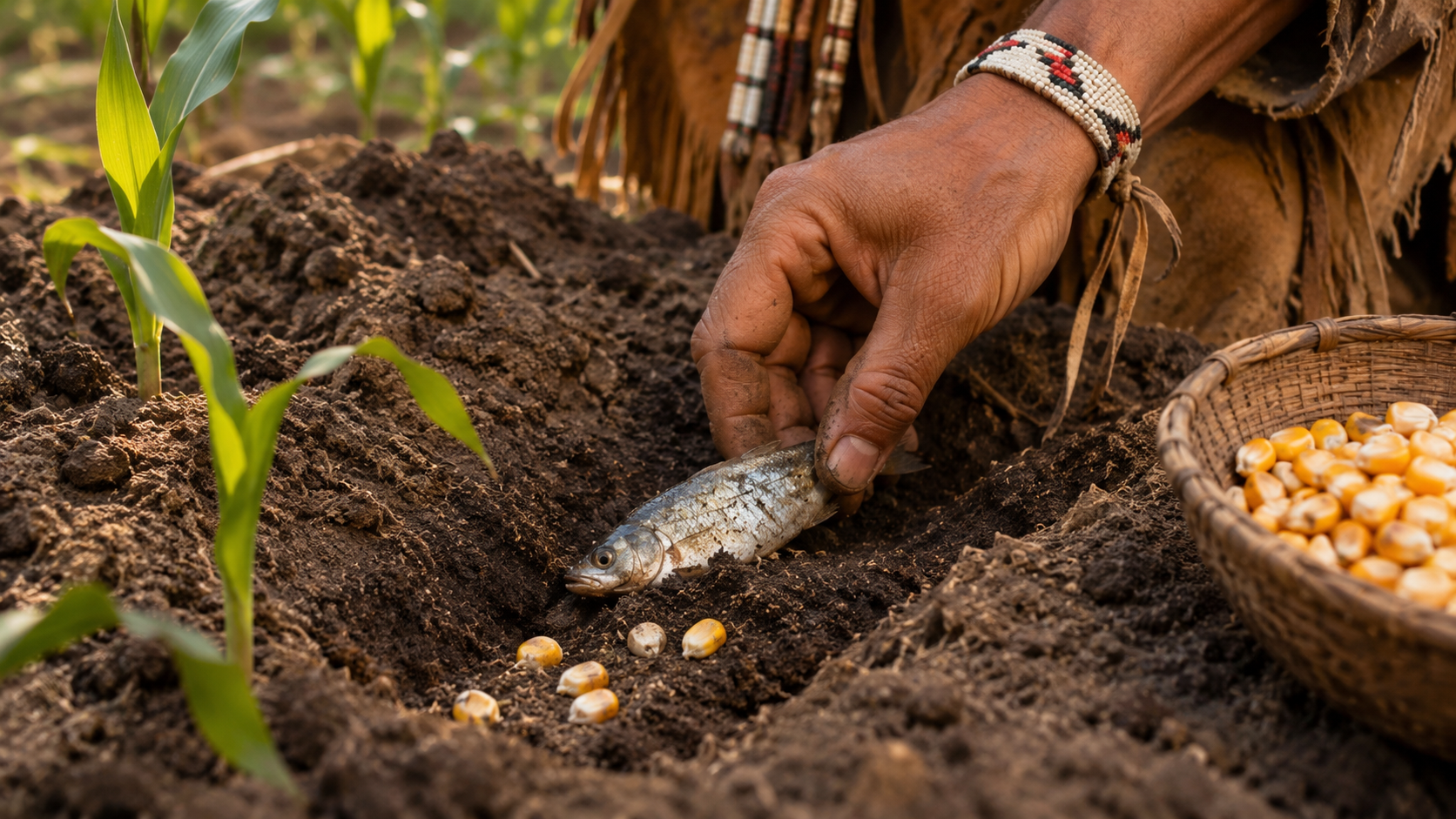
The most famous—and most misunderstood—technique Squanto taught was the use of fish as fertilizer. According to Pilgrim chronicler Edward Winslow, Squanto instructed the settlers to plant corn in hills, and into each hill they placed two or three small fish—likely alewives or menhaden—before covering them with soil. The fish decomposed, releasing nitrogen and other nutrients that the sandy New England soil desperately lacked.
This was not a quaint folk remedy. It was a precise agricultural strategy. The Wampanoag had learned that corn, a heavy nitrogen feeder, would deplete the soil within a few years if grown alone. The fish replaced what the harvest took out. And the fish were abundant—every spring, alewives ran up the coastal streams in massive numbers, easy to catch and perfect for the task.
But the fish was only one piece of a larger puzzle. Squanto also taught the Pilgrims to plant corn, beans, and squash together in the same hill—a technique now known as the “Three Sisters.” The corn provided a stalk for the beans to climb. The beans fixed nitrogen in the soil. The squash’s broad leaves shaded out weeds and kept moisture in the ground. It was a self-sustaining ecosystem in miniature, and it produced more food per acre than any English method the Pilgrims had ever seen.
The Forgotten Rotation: What the Pilgrims Never Understood
The Wampanoag did not just plant the Three Sisters and walk away. They rotated their fields. They let land lie fallow for years to recover. They used controlled burns to clear underbrush and return nutrients to the soil. They understood that farming was not about extraction—it was about reciprocity.
The Pilgrims, by contrast, came from a culture that viewed land as a commodity to be worked intensively. They adopted the fish fertilizer and the Three Sisters because they had to—it was the only way to survive. But they did not adopt the deeper philosophy behind it. They did not rotate their fields the way the Wampanoag did. They did not burn the woods to renew the soil. They planted the same crops in the same places year after year, and when the soil gave out, they simply moved west.
Within a few decades, the fish fertilizer was still being used, but the rotation and the burning and the fallow periods had largely vanished from English farming practice. The knowledge that had saved them was reduced to a single trick—a fish in a hole—stripped of its context and its wisdom.
The Thanksgiving Myth and the Erasure of Expertise
We all know the story of the first Thanksgiving: the Pilgrims, the Indians, the shared meal, the gratitude. But what we rarely hear is that the Wampanoag were not just guests at that table. They were the reason the table existed. Without Squanto’s teaching, the Pilgrims would have starved. Without the Wampanoag’s agricultural system, there would have been no harvest to celebrate.
And yet, in popular memory, Squanto has been reduced to a friendly helper—a footnote in a story about Pilgrim perseverance. The sophistication of Wampanoag agriculture, the centuries of experimentation that produced the Three Sisters and the fish fertilizer and the controlled burns, has been flattened into a single, quaint anecdote. We remember the fish. We forget the science.
The Legacy in the Soil
Today, the fish fertilizer method is still used by some organic farmers and gardeners, often cited as a traditional Native American technique. But the broader system—the rotation, the polyculture, the reciprocity—is only now being rediscovered by regenerative agriculture. Scientists and farmers are relearning what the Wampanoag knew: that healthy soil is alive, that diversity is strength, and that the land gives back what you give to it.
So the next time you sit down to a Thanksgiving meal, remember the fish in the hole. Remember the beans climbing the corn. Remember the squash shading the ground. Remember that the first harvest was not a miracle—it was a lesson. And the people who taught it were not just helpful neighbors. They were experts, and their expertise was the difference between life and death.
The Pilgrims survived because they listened. The question is: will we?
✓ story2
Squanto taught the Pilgrims to bury fish with their corn—and it saved them from starvation. But the deeper wisdom behind it was forgotten within a generation.