The HOA Sent Deputies to Arrest Me at My Own Lake—Then a 47-Year-Old Shoreline Deed Exposed Their Million-Dollar Lie
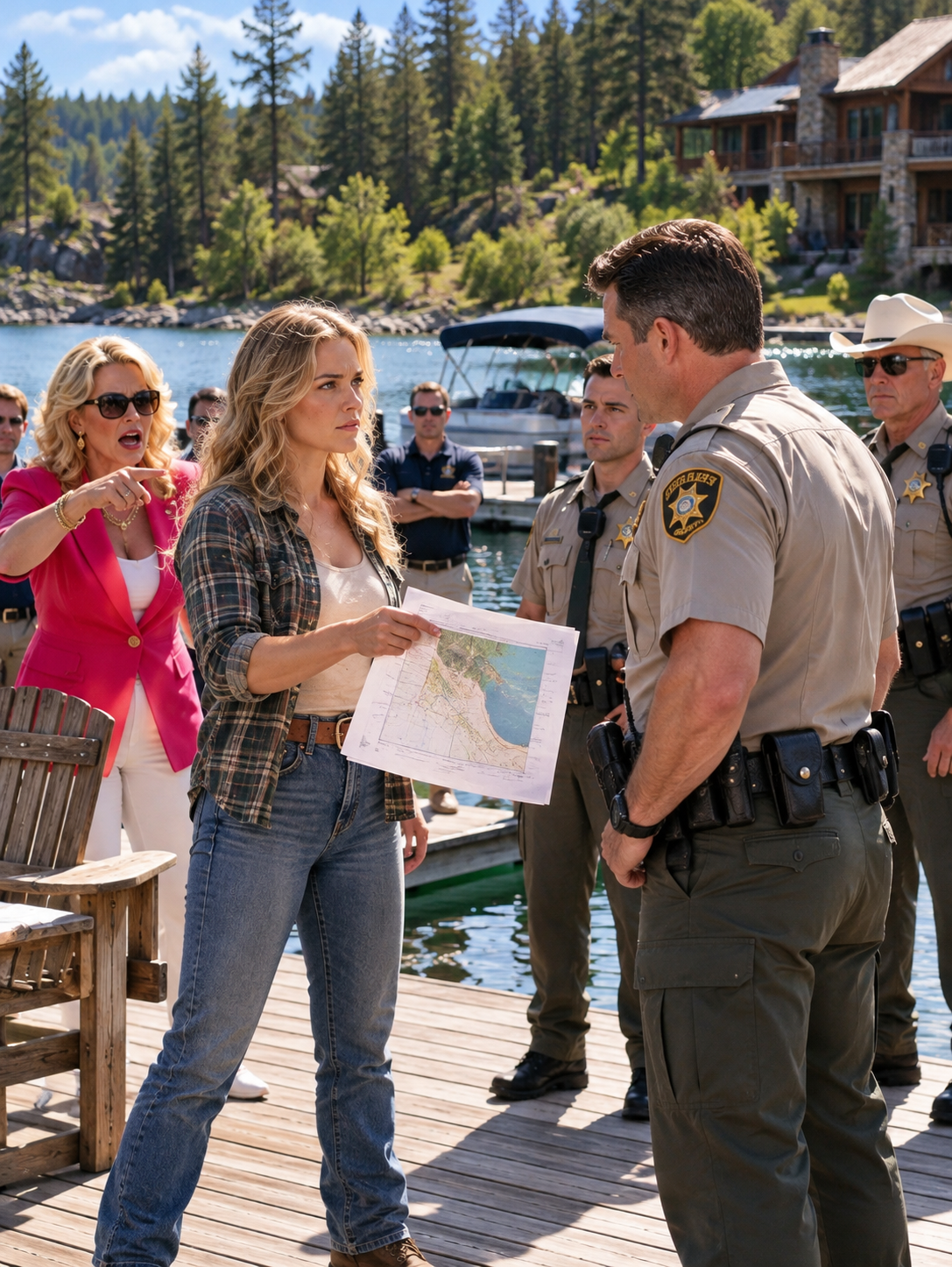
The HOA Sent Deputies to Arrest Me at My Own Lake—Then a 47-Year-Old Shoreline Deed Exposed Their Million-Dollar Lie The HOA president sent two sheriff’s deputies to drag me off my grandfather’s lake, then stood on the dock laughing while one of them reached for his handcuffs. “You have ten seconds to leave, Mr. Bennett,” she announced. “Otherwise, you’re going to jail for trespassing.” I looked at the deputy, then at the woman who had spent six months threatening me, and calmly asked one question. “Deputy, before you arrest me, would you mind telling me who owns the ground you’re standing on?” That was when the smile disappeared from Patricia Whitmore’s face. But the real trouble began forty-seven years earlier, with a deed my grandfather had hidden inside an old steel filing cabinet. My name is Daniel Bennett. I was forty-three years old when the Cedar Point Homeowners Association decided that my family’s lake belonged to them. I live in northern Tennessee, about forty minutes outside Cookeville, where the hills roll into hardwood forests and old farms still sit beside subdivisions with names like Whispering Oaks and Hidden Valley Estates. My grandfather, Walter Bennett, bought 186 acres there in 1978. There wasn’t much to look at when he first arrived. An abandoned tobacco barn. Two collapsing fences. A narrow creek. A muddy depression between three wooded ridges. Grandpa worked as a heavy-equipment operator for twenty-nine years. He knew dirt, drainage, and the difference between land that looked worthless and land that was simply waiting for somebody patient enough to understand it. He built the lake himself. Not with a shovel, obviously. He rented equipment, hired an engineer, secured the necessary permits, and spent four summers moving dirt after working ten-hour shifts. By 1984, the depression had become a seventeen-acre private lake. He named it Bennett Lake. It wasn’t fancy. The water was deep green in summer. A little wooden dock stretched from the western shore. Red clay stained the banks after hard rain. Bass lived beneath the fallen timber along the north end. On quiet mornings, mist hovered over the surface so thick it looked like someone had poured milk into the valley. I learned to swim there. I caught my first fish there. My father taught me to tie knots there. And when Grandpa died, I scattered a small handful of his ashes beneath the sycamore beside the dock, exactly where he’d asked me to. That lake was never just water. It was the one place in my life that had never demanded I become somebody else. Then Cedar Point Estates arrived. The development started on former farmland east of our property in 2009. Seventy-two homes initially. Then another thirty-six. Stone entrance pillars. Decorative streetlights. A clubhouse with a fitness center. A sales brochure promising “peaceful lakeside living in the Tennessee countryside.” The interesting part was that Cedar Point didn’t own a lake. It bordered mine. There was a difference. A very expensive difference, as it turned out. The original developer, Robert Hensley, understood that distinction. He came to see Grandpa in 2007, before construction began. Grandpa was already in his seventies. He sat on the porch with Hensley for two hours, drinking iced tea while the developer explained how attractive lake access would make the neighborhood. Grandpa wasn’t against people enjoying the water. He simply wasn’t interested in selling it. Eventually, they signed a limited recreational access agreement. The association could maintain a small floating dock at a designated point on its side of the lake, provided it secured the required approvals. Residents could use nonmotorized boats within specified areas during daylight hours. They couldn’t construct permanent shoreline improvements without written permission. They couldn’t alter drainage. They couldn’t install gates or fences on Bennett property. And the agreement did not transfer ownership of any land or water. Most important, the agreement could be terminated for defined violations after written notice and an opportunity to cure. Grandpa insisted on that provision. Hensley agreed. For more than a decade, the arrangement worked. Families paddled kayaks. Children watched turtles. Grandpa waved at neighbors. Sometimes he even helped them retrieve fishing lines tangled in submerged branches. Then the development changed management. Robert Hensley retired. The original HOA board dissolved into a series of committees. New houses sold for more than half a million dollars. And Patricia Whitmore became association president. Patricia was fifty-six, with sharply styled auburn hair, expensive sunglasses, and the habit of speaking to everyone as though she were delivering final instructions to an underperforming employee. She drove a pearl-white Mercedes SUV. She chaired the architectural review committee. She organized the annual holiday gala. And she believed that a clipboard, a title, and enough confidence could transform her wishes into law. Our first meeting happened on a Wednesday morning in April. I was repairing a loose board on Grandpa’s dock when her SUV stopped beside the gravel lane. She climbed out wearing cream-colored pants and a bright coral blazer. “Daniel Bennett?” I set down my drill. “Yes, ma’am.” “Patricia Whitmore. Cedar Point HOA president.” She extended her hand like she expected me to recognize her from television. I shook it. “What can I help you with?” She removed her sunglasses. “We’re reviewing lake management.” “Okay.” “Our residents are concerned about inconsistent shoreline appearances.” I looked behind her at the trees. “Inconsistent what?” “Shoreline appearances.” She opened a folder. “Overgrown vegetation, unauthorized fishing structures, miscellaneous equipment.” I glanced at my dock. A tackle box. A folding chair. Two fishing rods. “My equipment?” “Some of it.” I waited. She didn’t seem accustomed to that. “We’re developing uniform lakefront standards,” she continued. “As the association’s primary recreational amenity, the lake needs a cohesive aesthetic.” I leaned against the railing. “The lake isn’t your amenity.” Her expression hardened. “Excuse me?” “Your residents have limited access under an agreement. They don’t own it.” Patricia smiled. Not warmly. The way someone smiles while deciding whether you deserve an explanation. “Mr. Bennett, perhaps you’re unfamiliar with how master-planned communities operate.” “I’m familiar with property lines.” “We have a lake committee.” “That’s nice.” “We have maintenance responsibilities.” “For your permitted access area.” “And we’re implementing new policies.” “On your property?” “Throughout the lake area.” I picked up my drill. “Then you’ll want to speak with whoever owns that area.” She stared. “That’s you?” “Most of it.” “According to whom?” “The deed.” Patricia gave a short laugh. “Mr. Bennett, those arrangements are decades old.” “Land records usually are.” She closed her folder. “I can see we’re going to have difficulties.” I looked at my damaged dock board. “I was having a pretty good morning until five minutes ago.” Her face reddened. She walked back to her SUV without another word. I watched her drive away. Then I finished fixing the dock. If I’d known what was coming, I would have photographed every inch of that shoreline before putting the tools away. Because Patricia wasn’t interested in shoreline aesthetics. She was interested in ownership. And there was a reason. Three weeks later, I received my first HOA violation notice. It arrived in a white envelope with Cedar Point’s blue-and-gold logo. The letter cited “unauthorized private recreational activities within the Cedar Point Lake Preservation Zone.” Fine: $250. Compliance required within ten days. I read it twice. Then checked the address. Correct. My farmhouse. My name. My parcel number. The HOA had fined me for fishing from my own dock. I called the management office. A receptionist answered. I explained the situation. She transferred me to a compliance coordinator named Allison. Allison sounded young and exhausted. “Mr. Bennett, the notice concerns fishing in a designated residential water recreation zone.” “This isn’t residential property.” “Sir, the board has jurisdiction over common lake amenities.” “Do I belong to your HOA?” She paused. “Let me check.” Keyboard clicking. Another pause. “No, sir. It appears your address isn’t within the association.” “Then why am I receiving a violation?” “I’d have to ask the board.” “Please do.” She promised to follow up. Nobody did. Instead, a second letter arrived. Fine: $500. Then a third. $1,000. Then a warning that continued noncompliance could result in legal enforcement. I put the letters into a folder. I didn’t pay them. I didn’t argue with Patricia online. And I didn’t show up at board meetings to exchange insults. I requested documentation. Certified copies of the 1978 deed. The original development plat. The recreational access agreement. The lake construction permits. The recorded easements. The current tax maps. I also called a licensed surveyor. His name was Marcus Reed. Sixty-two years old. Retired Army engineer. Had worked in Putnam County for thirty-one years. When I described the issue, he laughed once. Not because it was funny. Because he’d heard enough property disputes to know what was coming. “Let me guess,” Marcus said. “Somebody bought a house with a lake view and now thinks they bought the lake.” “Something like that.” “Get me the survey book and your grandfather’s deed.” I did. And that was when we discovered something Patricia clearly hadn’t bothered to investigate. The HOA didn’t own the shoreline. Not the north shore. Not the western bank. Not even the narrow strip immediately in front of its clubhouse. The original property boundary wrapped around the lake in a continuous ribbon, varying from roughly twenty-five feet to more than a hundred feet wide. The subdivision bordered that ribbon. It did not own it. The access agreement allowed limited use across a defined route. Nothing more. My grandfather had kept ownership of the surrounding bank deliberately. He knew what happened when people confused permission with possession. He wanted families to enjoy the water. But he never wanted a committee deciding who belonged there. Marcus studied the map in his pickup truck. Then tapped the area beside Cedar Point’s clubhouse. “See this?” “Yes.” “Your property extends right through where they’ve built that decorative path.” I frowned. “What path?” “The stone walkway they installed last summer.” I remembered it. Wide pavers. Low landscape lighting. Black metal benches. New ornamental grass. “Is it all on my property?” “Part of it appears to be. We’ll verify with field measurements.” I looked toward the subdivision. “Grandpa would have hated those lights.” Marcus smiled. “Then he might enjoy what happens next.” I didn’t. Not yet. I still thought this could be corrected with a letter. That was my mistake. I underestimated what people will do when admitting an error might cost them money. Or status. Or a plan they’ve already sold to someone else. The official survey took twelve days. Marcus’s crew located six original iron monuments, several old reference trees, and a concrete marker beside the southern creek outlet. The line matched the historic deed. It also matched county records. There was no mystery. No ambiguous description. No forgotten conveyance transferring the bank. My property surrounded the lake. Cedar Point had an access agreement, not ownership. I sent a certified letter to Patricia. Three pages. Professional. No insults. It enclosed the survey. Requested withdrawal of the fines. Asked the association to stop entering my property for unauthorized maintenance or construction. And offered a meeting to discuss preserving lawful lake access for residents. I even proposed a sensible arrangement. Keep the existing recreational access. Clarify the boundaries. Remove the newer unauthorized fixtures. Create written maintenance standards so nobody misunderstood the rules again. Patricia responded five days later. One paragraph. Dear Mr. Bennett, The Cedar Point Board rejects your assertions regarding the lakefront area. Our association has exercised continuous control over the community lake for many years. You are instructed to cease unauthorized activity immediately. Failure to comply may result in law enforcement involvement. Sincerely, Patricia Whitmore, President. I read that letter standing beside Grandpa’s old kitchen table. Then I called Marcus. “Can I ask you something?” “Sure.” “If someone has used your land for years with permission, can they suddenly claim to own it?” “Not simply because they used it. Your agreement matters. The facts matter. But no, permission isn’t a magic transfer of title.” “Good.” “You sound awfully calm.” “I am.” He chuckled. “That’s usually when trouble gets expensive.” He wasn’t wrong. The following Saturday, I arrived at the lake before sunrise. It was late May. Air temperature in the low sixties. A soft breeze. Two herons stood in the shallows near the north bank. I had coffee in a stainless-steel thermos and a small tackle box beside my chair. At a.m., a black SUV stopped at the trail entrance. Then another. Patricia emerged from the first vehicle. Three HOA board members followed. One carried a camera. Another held a thick folder. And behind them came a sheriff’s patrol vehicle. I watched it roll slowly down the gravel lane. That was when I understood. Patricia had decided to turn a property dispute into a public humiliation. The deputies stepped out. Both looked to be in their thirties. One tall, broad-shouldered, with sandy hair. The other shorter, clean-shaven, wearing mirrored sunglasses. The taller deputy approached first. “Morning, sir.” “Morning.” “Daniel Bennett?” “Yes.” “Deputy Aaron Collins. This is Deputy Luis Ramirez.” I nodded. “What can I do for you?” “We received a trespassing complaint.” “From whom?” Patricia stepped forward. “From the Cedar Point Homeowners Association.” I looked at her. Then back at Collins. “On what property?” Patricia gave an impatient sigh. “This lake is managed by Cedar Point.” Collins looked at me. “Sir, are you aware the association claims this is private community property?” “Yes.” “Are you a resident?” “No.” “Do you have permission to be here?” I looked around. At Grandpa’s dock. At the sycamore. At the tool shed I’d painted last fall. At the gravel lane I’d maintained for twenty years. “Yes,” I said. “From whom?” “Me.” Patricia laughed. A sharp, delighted little sound. “There,” she told the deputies. “That’s exactly the behavior I described. He thinks he can make up his own rules.” I folded my hands. “Deputy, may I show you something?” Collins nodded cautiously. “What is it?” “A certified survey and deed.” Patricia stepped between us. “We have already supplied the association’s records.” Collins looked at her. “Ma’am, let him speak.” She moved aside. Reluctantly. I opened the waterproof document case beside my chair. Inside were copies of the survey, the deed, and the recreational access agreement. I handed Collins the first page. He examined it. Then looked at the lake. Then back at the page. “This is your parcel?” “Yes.” He glanced at Ramirez. “Luis, come look at this.” Patricia’s smile thinned. “Deputy, these documents are disputed.” Collins asked, “By whom?” “Our attorney.” “Do you have a court order establishing ownership?” Patricia hesitated. “We have established historical control.” “That wasn’t my question.” I kept quiet. Collins studied the survey. “Mr. Bennett, you’re saying you own the shoreline?” “Yes.” “All of it?” “The surveyed property forms a continuous perimeter around the lake. The HOA has a limited recreational access agreement.” Ramirez looked at the original deed. “Seventeen acres of water, plus the surrounding tract?” “Correct.” Patricia crossed her arms. “This is absurd. Our residents pay HOA fees specifically for lake maintenance.” I turned toward her. “That doesn’t convey title.” She glared. “You’ve been obstructing lawful association operations for months.” “By fishing?” “By refusing to follow established policies.” Collins raised one hand. “Everyone, please.” He turned to me. “Mr. Bennett, do you have identification?” I handed him my driver’s license. He checked the name against the deed. Then made a call to dispatch. While he waited, Patricia stood near the dock, whispering to the board member with the camera. I could see her watching me. She expected panic. She expected me to become angry enough to justify her accusations. Instead, I poured coffee. Collins returned. “Mr. Bennett, dispatch isn’t showing any outstanding criminal trespass order against you.” “I wouldn’t expect one.” He nodded. “Based on what you’ve provided, this appears to be a civil property dispute.” Patricia snapped, “He is trespassing.” Collins looked directly at her. “Ma’am, if his documents are accurate, he may own the ground we’re standing on.” She opened her mouth. Closed it. I said, “He does.” The deputy continued. “We cannot remove someone from disputed property merely because one party claims authority. You will need to address ownership through the appropriate civil process.” Patricia turned red. “You are refusing to enforce the law?” “No, ma’am. I’m declining to make an arrest without a legal basis.” Ramirez handed me my license. “Sorry for interrupting your morning.” “No problem, Deputy.” Collins looked at Patricia. “Please don’t call us again over this same ownership dispute unless there’s a new criminal issue or a court order requiring enforcement.” She stared at him. One board member quietly lowered his camera. I thought the incident was finished. Then Patricia made the mistake that changed everything. She pointed toward the dock. “If he insists on being difficult, we’ll simply close his access to the community lake.” I looked at her. “Patricia.” “What?” “You should read the survey.” “I have.” “Read page three.” She snatched the document from Collins. Flipped the pages. Her eyes moved down the boundary description. I waited. Then said, “The shoreline path, the floating dock connection, and the gate where your residents enter the lake are all located on Bennett property.” She looked up. “So?” “So you can’t close my access to my own property.” I held her gaze. “But I can revoke yours if you keep violating the agreement.” Nobody spoke. The only sound was water tapping against Grandpa’s dock. Patricia shoved the papers back at Collins. “This is not over.” I nodded. “That’s what I’m beginning to think.” She walked away. Her shoes slipped slightly in the red clay. One board member reached to steady her. She pulled away. The deputies left five minutes later. I stayed on the dock. Took another sip of coffee. And watched the sun move over Bennett Lake. That should have been the end. A foolish misunderstanding. A bruised ego. A corrected property line. Instead, it became the beginning of a fight that would expose a multimillion-dollar financial arrangement hidden behind an ordinary homeowners association. Because the HOA wasn’t trying to remove me simply because Patricia disliked being challenged. It was trying to remove me because my ownership stood in the way of a deal already being negotiated. And somebody had a lot of money riding on that deal. The first sign arrived Monday morning. A contractor called me. His name was Rick Dalton. He owned a small excavation company in Cookeville. “Daniel, this is Rick. You remember me?” “Sure. You fixed my driveway culvert.” “Right.” “What can I do for you?” “I’m looking at a work order for Cedar Point. Something doesn’t seem right.” “What kind of work?” “Shoreline grading.” I set down my coffee. “Where?” “Along the western lake edge. Near your old dock.” I looked out the kitchen window. “That is my property.” “That’s what I thought.” “Who hired you?” “Cedar Point Community Management.” “For what exactly?” He hesitated. “Prep work for an expanded recreation area. They want the brush cleared, bank leveled, and a temporary access road put in.” “How much shoreline?” “Nearly eight hundred feet.” I went still. Eight hundred feet. That wasn’t landscaping. That was a major alteration. “When are they planning to start?” “Tomorrow.” “Have you mobilized?” “No.” “Good.” Rick lowered his voice. “Daniel, I don’t want to get caught in somebody else’s fight.” “You won’t.” “Then what should I do?” “Ask them for written proof of ownership and the permits required for the work.” He laughed. “Already did.” “And?” “They sent me an HOA letter.” “Nothing else?” “Nothing.” “Then you’ve got your answer.” He paused. “Figured I should call.” “I’m glad you did.” After hanging up, I drove to my attorney’s office. Her name was Rachel Morgan. Forty-eight years old. Former county prosecutor. She had a habit of reading documents with one eyebrow slightly raised, as though daring the paper to disappoint her. I had hired Rachel immediately after the survey came back. She knew the property history. She knew the access agreement. And she had already sent Patricia a formal notice demanding that the HOA stop interfering with my property rights. When I explained the excavation plans, Rachel stopped writing. “Eight hundred feet?” “Yes.” “Near the western bank?” “Yes.” “That’s well outside the association’s permitted access point.” “I know.” She leaned back. “What do you think they’re building?” “Patricia mentioned expanding recreation.” Rachel shook her head. “That’s too much earthwork for a picnic area.” I agreed. She picked up the phone. “Let’s find the application.” Within an hour, her assistant had pulled county planning records. There was a pending request for preliminary review of a proposed lakefront amenity expansion. Applicant: Cedar Point Community Association. Project description: Private lakeside recreation complex. Estimated construction cost: $3.6 million. I stared at the number. “Three-point-six million?” Rachel nodded. “Apparently.” “For what?” The conceptual plans showed a new event pavilion, waterside terrace, kayak rental building, parking expansion, and a covered dining area. The parking lot would hold sixty-four vehicles. The pavilion was designed for weddings and corporate events. Commercial events. Not merely a neighborhood picnic. The proposed retaining walls extended onto my property. The planned shoreline stabilization covered my bank. And the project’s water-access assumptions relied on the HOA possessing rights it didn’t have. Rachel spread the plans across her desk. “Now we have a motive.” I stared at the pavilion rendering. “They were going to build a business on my property.” “That’s what their plans suggest.” “Without asking me.” “Apparently.” “What happens if they can’t use the shoreline?” Rachel tapped the plan. “The business model may collapse.” I understood. For a residential neighborhood, a $3.6 million amenity was expensive. For a venue charging thousands per event, it might look profitable. And for the people arranging the financing and construction, it could be very profitable indeed. “Who’s paying for it?” Rachel opened another document. “A special assessment is proposed.” “How much?” “Twenty-four thousand dollars per household.” I stared at her. “That can’t be right.” “There are 108 homes.” I did the math in my head. More than $2.5 million. Plus financing. “Have residents approved it?” “That’s one of the questions.” We spent the rest of the afternoon preparing a detailed objection. Rachel notified the county planning office that Cedar Point lacked documented ownership or sufficient property rights for the proposed shoreline improvements. She attached the survey. The deed. The access agreement. And photographs of existing improvements. She also demanded preservation of all HOA records relating to the project. Emails. Contracts. Minutes. Financial documents. Not a threat. A formal litigation hold. The following morning, the excavation contractor withdrew from the job. That afternoon, the county deferred further review of the plan until the property-rights questions could be resolved. By Wednesday, the project had effectively stalled. I expected Patricia to call. She didn’t. Instead, she sent a certified letter. It claimed that my objections were “malicious interference with association business operations.” It demanded $125,000 in preliminary damages. And it threatened litigation unless I withdrew my objections within five business days. I drove straight to Rachel’s office. She read the letter. Then laughed. Actually laughed. “What?” She held up the paper. “They’ve put their theory in writing.” “Is that good?” “Very.” “Why?” “Because they’re claiming you interfered with a project they had no right to build on your property.” I folded my arms. “So?” “So now I can ask them exactly what rights they claim to possess. Under oath, if necessary.” She drafted a response that afternoon. Three sentences mattered most. My client owns the property in question. Your association’s recorded access agreement does not authorize the proposed construction. Any entry or alteration outside that agreement will be addressed through appropriate legal remedies. Simple. Clear. No drama. The reaction came from somewhere I hadn’t expected. A Cedar Point resident called me. Her name was Emily Parker. She was sixty-seven, a retired school principal, and had lived in the subdivision for thirteen years. I’d seen her walking near the lake dozens of times. She always wore a yellow raincoat when the weather looked uncertain. “Daniel,” she said, “I hope I’m not bothering you.” “Not at all, Mrs. Parker.” “Emily, please.” “What can I do for you?” “I’ve just learned something about the lake project.” I waited. She sounded uneasy. “Patricia told everyone you’re trying to steal community property.” I closed my eyes. “Of course she did.” “She also said you threatened to cut off emergency water access.” That was new. “That’s false.” “I thought so.” “Why?” “Because I’ve seen you help people around here for years.” I didn’t know what to say. She continued. “I was on the original landscaping committee. Your grandfather attended our dedication picnic. He brought homemade peach ice cream.” I smiled despite myself. “I remember.” “He told us the lake was private, but he wanted us to enjoy it respectfully.” “Yes.” “He was very clear.” “Grandpa usually was.” Emily lowered her voice. “Daniel, I need to ask you something.” “Go ahead.” “Does the HOA actually own any of the lake?” “No.” Silence. Then a quiet breath. “Oh, dear.” She sounded less surprised than disappointed. “Why?” “Because Patricia used lake ownership to justify the special assessment.” “That project hasn’t even been approved.” “The vote was last month.” I sat up. “What vote?” “A board vote.” “Not a homeowner vote?” “No.” She paused. “They said it didn’t require one.” I looked at the ceiling. There it was. The pattern. Control the information. Control the narrative. Make dissent look dangerous. And move forward before anyone asks to see the paperwork. “Emily, would you be willing to send me the meeting notice?” “Yes.” “And the minutes?” “If I can get them.” “Don’t do anything that puts you in a difficult position.” She gave a dry laugh. “I’m sixty-seven years old, Daniel. I’ve survived thirty-four years in public education. Patricia Whitmore doesn’t frighten me.” I liked her immediately. Two days later, a thick envelope appeared in my mailbox. No return address. Inside were HOA financial summaries, board meeting minutes, and a copy of the proposed event complex agreement. One page caught my eye. The association had already paid $186,000 in preliminary consulting fees. Recipient: Whitmore Development Advisory LLC. I looked at the name. Then searched the Tennessee business registry. Whitmore Development Advisory LLC. Registered agent: Gregory Whitmore. Patricia’s husband. I sat very still. That wasn’t proof of a crime. It was, however, an obvious financial relationship worth examining. The next morning, I showed Rachel. She studied the documents. “Where did you get these?” “A resident.” “Were they lawfully available to that resident?” “As far as I know. They’re HOA records.” “Good. We’ll authenticate them.” She examined the payment schedule. Then the contract. Then the business registration. “Daniel.” “Yes?” “This is getting bigger.” “How much bigger?” “The agreement provides for additional consulting fees tied to project milestones.” “How much?” She turned the page. “Potentially another $430,000.” I stared at her. “Paid to Patricia’s husband’s company?” “Yes.” “Did she disclose that?” “We’ll have to see.” I looked at the board minutes. There were five voting members. Patricia had presided over the meeting. Gregory’s company had received a substantial contract. And the HOA was asking homeowners to pay thousands of dollars each for a project that depended on land the association didn’t own. I thought of the deputies. The handcuff threat. The fines. The lawsuit demand. Suddenly, everything connected. Patricia hadn’t been fighting for a lakeside picnic spot. She had been fighting to preserve a financial deal. And I was standing in the way. That weekend, I did something I’d been putting off. I walked the entire shoreline with Marcus. We started at sunrise. He carried his survey equipment. I carried water, a camera, and a notebook. The north bank was quiet. Dogwoods hung over the water. A beaver had chewed through a young willow near the inlet. Along the eastern boundary, we found the old iron markers Grandpa had installed decades earlier. Rusty. Almost swallowed by moss. But still there. Near Cedar Point’s clubhouse, Marcus stopped. “Hold on.” He set down his equipment. Checked his coordinates. Then walked toward a decorative stone retaining wall. I followed. “What is it?” He pointed at a survey marker buried beside the landscaping. “See that?” “Yes.” “That’s the boundary.” “Okay.” He gestured toward the retaining wall. “That wall is on your land.” I looked at the structure. It stood nearly five feet high. Behind it, manicured grass rose toward the clubhouse. Landscape lights. A paved walking path. Two benches. And a decorative fountain. “How much?” Marcus measured. “Approximately thirty-two feet into your parcel at the deepest point.” I stared. “Thirty-two feet?” “Yes.” “And how long?” He checked his notes. “About two hundred ten feet.” That wasn’t a small mistake. It was thousands of square feet. The next discovery was worse. Behind the clubhouse, a new black metal gate blocked the established access trail. The gate had a keypad. A sign read: CEDAR POINT PRIVATE LAKE ACCESS. RESIDENTS ONLY. I stood in front of it. Marcus looked at the survey. Then at the gate. “You’ve got to be kidding.” The gate posts were set on my property. Even the concrete pad beneath the keypad crossed the boundary. They had installed a gate on my land to control who could reach my lake. Including me. Marcus took photographs. Then checked his measurements again. “No question.” I pulled out my phone. Called Rachel. “We need to add something to the file.” She sighed. “What did they do now?” “Built a gate.” “Where?” “On my land.” A pause. Then: “Of course they did.” By the following Tuesday, Rachel had filed for injunctive relief to prevent further unauthorized construction and interference. The court scheduled an expedited hearing. Patricia responded with a letter accusing me of harassing residents. She claimed I was trying to deprive families of recreational amenities. She described my ownership claim as “historical paperwork weaponized against community interests.” I read that phrase twice. Historical paperwork. Grandpa’s deed. His recorded legal rights. His careful agreement. To Patricia, those things were obstacles. Not facts. I didn’t respond publicly. But I did accept Emily Parker’s invitation to meet several residents at her home. There were eleven people in her living room. Retirees. A young couple with two children. A man who worked in insurance. A nurse. A small-business owner. Most looked uncomfortable when I arrived. I understood. They’d been hearing for months that I was a dangerous outsider trying to steal their lake. I placed the survey on Emily’s coffee table. Then laid down the recreational access agreement. No speech. No accusations. Just documents. A man named Jonathan Lewis spoke first. “Patricia says your family sold the lake to the developer.” I opened the deed. “No.” He studied it. “Then what did we purchase with our homes?” “Access rights as defined in your agreement, plus whatever property the subdivision actually owns.” A woman near the fireplace frowned. “Our listing said lakefront property.” “Some lots border the land surrounding the lake. That doesn’t necessarily mean the owners hold title to the water or the intervening shoreline.” Jonathan looked at the map. “So the HOA knew?” “The original developer knew. The board has copies of the agreement. I can’t speak for what every board member understood.” Emily folded her hands. “And the event center?” “It’s proposed on land I own.” The room went silent. A younger woman spoke. “Wait. The three-point-six-million-dollar center?” “Yes.” “They told us it was already approved.” “It isn’t.” Jonathan sat back. “Then why are we being assessed?” “That is a question for your board.” Nobody moved. Finally, Emily said, “What do you actually want, Daniel?” I looked around the room. That mattered. Because in their version, I was the villain. The outsider. The man threatening to take away something their families loved. “I want my property respected.” I paused. “And I want the original agreement followed.” The young woman asked, “Would you let our kids keep kayaking?” “Yes, if the HOA stops violating the agreement.” She looked surprised. “Really?” “Why wouldn’t I?” “Patricia said you want everyone banned.” I shook my head. “My grandfather let your families use this lake. I don’t want to punish children because adults can’t read a deed.” Emily smiled faintly. I continued. “But there are limits. I won’t allow permanent structures built without permission. I won’t allow commercial events without an agreement. And I won’t allow anyone to threaten me with arrest for standing on my own land.” Jonathan looked down. “That’s fair.” Not everyone agreed. One man insisted decades of HOA fees should count for something. I listened. Then explained the difference between paying for maintenance and purchasing ownership. He still wasn’t happy. That was okay. I wasn’t there to be loved. I was there to be clear. Before leaving, I handed Emily a clean copy of the survey and the access agreement. “Share these however you think appropriate.” She accepted them. Then said quietly, “Your grandfather was a good man.” I looked at her. “He was.” “He used to tell us the lake didn’t belong to anyone forever.” I smiled. “That sounds like him.” “He said we were just responsible for what happened to it while it was in our hands.” That sentence stayed with me. Because Grandpa was right. Ownership wasn’t permission to be cruel. It was responsibility. And Patricia had forgotten the distinction. The hearing took place on a rainy Thursday in the county courthouse. Rachel and I arrived twenty minutes early. Patricia entered with Gregory and two attorneys from Nashville. She wore a navy suit. Pearl earrings. Expression like carved marble. She didn’t look at me. That was fine. I had spent weeks learning not to need her reaction. The courtroom was small. Wooden benches. A Tennessee state seal behind the judge. Rain streaking the windows. Several Cedar Point residents sat in the back. Emily was there. So was Jonathan. And three people I recognized from the association board. The judge was a woman named Helen Mercer. Late fifties. Calm voice. No patience for theatrics. Rachel presented the deed, survey, access agreement, and evidence of new construction. The HOA’s lawyer argued that the association had long exercised practical control over the lakeside area. Judge Mercer looked at him. “Are you asserting fee ownership?” The attorney hesitated. “We assert substantial property rights arising from recorded agreements and longstanding use.” “That wasn’t my question.” A pause. “We are not asserting recorded fee title to the entire perimeter.” Judge Mercer turned a page. “Then why did the association direct law enforcement to remove the recorded property owner?” Patricia’s shoulders stiffened. The attorney answered. “There was confusion regarding the boundaries.” Rachel stood. “Your Honor, the association received a certified survey before making that complaint.” The judge looked at the exhibits. “Is that accurate?” The attorney shifted. “Yes, but the association disputes the conclusions.” “Do you have a competing licensed survey?” “No, Your Honor.” “Then what exactly is your boundary evidence?” Silence. Not complete silence. Paper rustled. Someone coughed. Rain tapped the window. But there was no answer. Judge Mercer leaned back. “Counsel, I am not going to adjudicate final title at an emergency hearing. But I see substantial evidence supporting the plaintiff’s claim and a credible risk of unauthorized construction.” Rachel requested an order preventing further work on the disputed shoreline pending resolution. The judge granted temporary relief. She also prohibited interference with my existing access and directed both sides to preserve relevant records. Patricia’s attorney requested a stay. Denied. Then Rachel raised the gate. Judge Mercer studied the photographs. “Who installed this?” The HOA attorney answered. “The association.” “On what parcel?” He looked toward Patricia. She kept her eyes forward. Rachel supplied the survey overlay. Judge Mercer compared the documents. Then said, “The association is not to restrict Mr. Bennett’s access through his own property. Any dispute over removal of the structure can be addressed through the appropriate process, but its use may not interfere with the plaintiff’s rights pending further order.” I felt something loosen in my chest. Not victory. Progress. A small but important distinction. Outside the courthouse, Patricia approached me. Gregory followed a few steps behind. He was tall, heavyset, with a pink face and an expensive watch. “Daniel,” Patricia said. I stopped. Rachel remained beside me. “What can I do for you?” Patricia looked at Rachel. “I’d prefer a private conversation.” Rachel smiled politely. “My client is represented.” Patricia’s jaw tightened. “This doesn’t need to become a war.” I almost laughed. “You sent deputies to arrest me.” “That was an unfortunate misunderstanding.” “You fined me for fishing.” “Those fines can be withdrawn.” “You threatened me with a lawsuit.” “Our attorney was protecting the association.” “You started planning construction on my property.” Gregory stepped forward. “Look, mistakes were made.” Rachel asked, “By whom?” He looked irritated. “I’m trying to be reasonable.” I studied him. Then asked one question. “Why is your company receiving consulting fees from the lake project?” Patricia’s expression froze. Gregory stared. Rachel said nothing. I continued. “I’ve seen the payment schedule.” Gregory recovered first. “Those are legitimate services.” “Then you’ll have no problem documenting them.” Patricia looked toward the courthouse doors. People were coming out. Residents. Attorneys. Court staff. She didn’t want an audience. “Daniel,” she said quietly, “we should discuss a settlement.” Rachel answered. “Send a proposal through counsel.” Patricia stared at me. Then said something I remembered much later. “You have no idea how much damage you’re causing.” I looked at her. “I know exactly what property I’m protecting.” She turned away. Gregory followed. But before he got into their SUV, he looked back. Not angry. Worried. And somehow that was more interesting. Three days later, Patricia sent a settlement offer. Through attorneys. $85,000 in exchange for a permanent easement allowing the event center and related improvements. Rachel called me. “Interested?” “No.” “You haven’t heard the rest.” “Go ahead.” “The HOA would withdraw all fines, cover some legal expenses, and give you preferred access to the completed facilities.” I looked out at the lake. A bass broke the surface near the dock. “Preferred access to what?” “Their event center.” “On my land.” “Yes.” I laughed. “No.” Rachel sounded amused. “I expected that.” “Counteroffer.” “I’m listening.” “They withdraw the fines.” “Obviously.” “They acknowledge the recorded property boundaries.” “Yes.” “They remove unauthorized improvements or negotiate specific written permissions.” “Good.” “They provide a full accounting of payments relating to the proposed lake project.” Rachel paused. “That last part may be difficult.” “Then no deal.” She exhaled. “Daniel, you’re aware an accounting request goes beyond your direct property claim.” “I know.” “Why insist?” “Because if residents have been told a project is secure when the association knows it lacks the land rights, somebody needs to explain where their money went.” She was quiet. Then said, “I’ll phrase it appropriately.” The counteroffer was rejected within twenty-four hours. Patricia accused me of trying to control association finances. I wasn’t surprised. Then something unexpected happened. The residents started asking questions. Emily and Jonathan circulated the recorded access agreement. They requested financial records under the HOA’s governing documents and applicable law. They asked whether Patricia had disclosed her husband’s consulting business. They asked why the $3.6 million project had advanced without resolving ownership. And they demanded an explanation for the sheriff’s visit. The board scheduled a special meeting. Not because Patricia wanted one. Because enough homeowners signed a petition. I didn’t attend. I wasn’t a member. But Emily called me afterward. Her voice trembled with excitement. “Daniel, you wouldn’t believe it.” “What happened?” “Forty-eight people showed up.” “That’s a lot.” “For us? It’s enormous.” “What did Patricia say?” “She tried to limit questions to two minutes.” I smiled. “Of course.” “Then Jonathan stood up with the survey.” “What happened?” “She told him the document was misleading.” “And?” “He asked which line was wrong.” I laughed softly. “Good question.” “She couldn’t answer.” Emily continued. “Then someone asked about Gregory’s company.” I waited. “Patricia said everything was disclosed.” “Was it?” “That’s the interesting part. Nobody could find the disclosure in the minutes.” I looked at my desk. The folder had grown so thick it no longer closed properly. “Did the meeting accomplish anything?” “Yes.” “What?” “They voted to request an independent financial review.” I sat back. That mattered. More than another angry letter. More than a social media argument. An independent review meant records. Numbers. Bank transfers. Contracts. Dates. Facts that didn’t care about Patricia’s tone of voice. “What was the vote?” “Forty-two in favor. Six against.” I smiled. “That’s pretty decisive.” Emily chuckled. “You should have seen Patricia.” For the first time, I felt genuine hope. Not because Patricia was embarrassed. Because the community was beginning to act for itself. Then came the second major twist. It arrived in a manila envelope from the county archives. Marcus had requested the original 1978 subdivision and land-transfer history because one detail on an old survey didn’t match the access agreement. He wanted to verify the exact location of the northern inlet and spillway. The records clerk found more than he expected. A drainage easement. A maintenance agreement. And a document signed by the county, my grandfather, and the original owners of the eastern farmland. Dated November 14, 1980. The agreement established that the primary emergency overflow route for Bennett Lake crossed a narrow strip now lying within Cedar Point’s development. The county had authority to access and maintain certain drainage works under defined conditions. My grandfather retained responsibility for the private dam, subject to applicable law and engineering requirements. Nothing unusual in principle. But the accompanying engineering drawing showed something important. The emergency spillway extended through the exact area where Patricia wanted to build the event complex. I spread the drawing across the dining table. Marcus stood beside me. “See that line?” “Yes.” “That’s the designated overflow corridor.” I traced it. It began at the east bank. Passed through a vegetated swale. Then followed a natural drainage route toward the creek below the development. The proposed pavilion and parking area sat beside and partly across that corridor. Marcus pointed to the construction plan. “They’ve shown fill in here.” “How much?” “Enough to alter how runoff moves during a major storm. We’d need a hydraulic analysis to quantify the effect.” “Could it be dangerous?” “Potentially. That’s why you don’t redesign a spillway without engineering review and approvals.” I stared at the map. “They never mentioned this.” “Maybe they didn’t know.” I looked at Marcus. He raised an eyebrow. “Or maybe they knew.” Rachel reviewed the records that afternoon. Within hours, she sent copies to the county engineering office and the appropriate state dam-safety contacts, asking them to examine the proposed work. The county requested further documentation from Cedar Point. The development project was placed under additional review. And suddenly, the dispute wasn’t only about property rights. It was about drainage. Public safety. And whether a private development plan could alter a route designed to handle water during extreme storms. I thought about Grandpa. He had spent four summers building that lake. He wasn’t a fool. He hadn’t moved dirt randomly. He had hired professionals. Kept records. Followed the engineering drawings. Patricia’s committee had looked at the shoreline and seen a beautiful venue. Grandpa had looked at the same valley and seen water moving under gravity. One of them understood what happened when the sky opened. The other had hired a marketing consultant. The county inspection took place the following Wednesday. Two engineers arrived. Marcus met them. Rachel attended. So did a representative from Cedar Point. Not Patricia. She sent Gregory. The inspectors walked the proposed work area. Took measurements. Compared maps. Photographed the drainage swale. Then asked Gregory for the project’s hydraulic analysis. He didn’t have one. They asked for documentation showing the proposed fill wouldn’t obstruct the established overflow route. He didn’t have that either. They requested a revised plan and supporting engineering. Until those issues were addressed, the county would not advance the shoreline construction review. Gregory looked pale. Not furious. Pale. Because paperwork was becoming expensive. Real engineering. Real redesigns. Real delays. And every week of delay made the $3.6 million dream look less like an amenity and more like a liability. Later that day, Rachel called. “Good news.” “Tell me.” “Cedar Point’s lawyer has requested settlement discussions.” “Again?” “Yes.” “Different terms?” “Apparently.” “What changed?” “Their position on the shoreline.” I leaned against my truck. “Meaning?” “They now acknowledge your recorded ownership for purposes of negotiation.” I closed my eyes. There it was. After months of fines. Threats. A sheriff’s visit. A forced title dispute. And thousands of dollars in legal fees. They were finally acknowledging the deed. The one that had existed all along. Rachel continued. “They want to avoid further litigation.” “Do they still want the event center?” “Yes.” “No.” “I know.” I looked toward the lake. “Tell them we can talk about the existing recreational agreement. Nothing more until the records are reviewed.” “Understood.” That evening, I sat on Grandpa’s dock with a cold bottle of root beer. The air smelled like cut grass. Fireflies blinked among the trees. Somewhere across the water, children were laughing. A yellow kayak drifted near the eastern bank. I recognized Emily’s grandson. He waved. I waved back. That was what the lake was supposed to be. Not a weapon. Not an investment scheme. Not an excuse for somebody to threaten arrest. Just water. Families. Quiet. And a place worth protecting. For the first time in months, I thought the worst might be over. Then Emily called. “Daniel?” “Hey.” Her voice was different. No excitement. No humor. Just concern. “Are you home?” “Yes.” “I need to tell you something.” I stood. “What happened?” “The financial reviewer finished a preliminary examination.” “Already?” “They found unusual payments.” “To Gregory?” “Yes. But that isn’t all.” I waited. “There’s a second account.” “What kind of account?” “A reserve account.” “Okay.” “It was supposed to contain money collected over the years for lake maintenance and emergency repairs.” I looked across the dark water. “How much?” “Just over six hundred thousand dollars.” I frowned. “That’s a substantial reserve.” “Yes.” “What’s wrong?” Emily hesitated. “It’s almost empty.” My grip tightened around the phone. “How empty?” “Less than nineteen thousand dollars.” I said nothing. She continued. “Some of the withdrawals went to contractors. Some were moved through accounts connected to the proposed project. The reviewer says the supporting documentation is incomplete.” That was serious. But not yet proof of theft. I knew enough by then to understand the difference. “Has the board notified anyone?” “Jonathan is preparing a letter to homeowners.” “Good.” “Patricia resigned this afternoon.” I stared at the lake. “She what?” “Effective immediately.” The words seemed to hang in the humid air. Patricia Whitmore. The woman who had threatened me with handcuffs. The woman who insisted Cedar Point owned my shoreline. The woman who had called me a trespasser while standing on my property. Had resigned. Quietly. Without a speech. Without a public confrontation. Just a letter. Emily sounded almost disappointed. “She said health reasons.” I glanced toward the trees. “Maybe she’s under stress.” “Daniel.” “Yes?” “She and Gregory put their house on the market last week.” I didn’t answer. “And somebody saw moving trucks this morning.” The lake was still. A fish jumped near the bank. Emily added, “I think they’re leaving.” I looked toward the dark line of houses across the water. “Then let the attorneys and investigators do their jobs.” “You don’t sound happy.” “I am.” “Really?” “Yes.” But I wasn’t smiling. Because this had never been about humiliating Patricia. It was about stopping her from taking something that wasn’t hers. If the residents had lost hundreds of thousands of dollars, they deserved answers. If my grandfather’s shoreline had been misrepresented, the record needed correcting. And if the proposed construction threatened the spillway, somebody needed to stop it before a storm made the consequences permanent. The next week, the HOA’s new interim board president contacted me. Jonathan Lewis. He sounded tired. “Daniel, I owe you an apology.” “You don’t owe me one personally.” “I was on the board for part of this.” “Did you vote for the project?” “I did.” “Did you know the land wasn’t theirs?” “No.” “Then you were given bad information.” “I should have checked.” I respected that. He continued. “We want to resolve this.” “Good.” “We’ll withdraw all fines.” “Those were never enforceable against me.” “I know.” “We’ll acknowledge the property boundaries.” “Yes.” “We’ll stop the event center project.” I paused. “For good?” “Until and unless a legally valid plan exists. Frankly, I don’t think the neighborhood wants it anymore.” That was reasonable. “And the gate?” “We’ll remove the keypad restriction and work with your attorney on correcting the encroachment.” “Good.” He exhaled. “We want the kids to keep using the lake.” I looked out my window. “Then let’s write a proper agreement.” “You’d do that?” “Yes.” “After everything?” I thought of Grandpa standing on that dock with a fishing rod. I thought of Emily’s grandson waving from the yellow kayak. I thought of the families who had bought homes expecting peaceful water access, not a legal war. “Jonathan, I’m not going to punish a hundred families because a few people abused their positions.” He was quiet. Then said, “Thank you.” I didn’t tell him everything was forgiven. It wasn’t. But forgiveness wasn’t necessary for a workable future. Over the following month, Rachel and Jonathan’s attorney negotiated updated access terms. The HOA recognized Bennett ownership. The designated access point was defined by survey. Commercial activities required separate written authorization. Permanent improvements required my consent and applicable permits. Maintenance obligations were clarified. Liability coverage was updated. And the county drainage easement remained fully protected. Nothing glamorous. No courtroom speeches. No television cameras. Just a careful agreement designed to prevent another Patricia Whitmore from confusing permission with ownership. The gate was modified. The unauthorized benches were removed from my parcel. The decorative lights were disconnected and relocated. The retaining wall issue went to an engineering review to determine how to correct the encroachment without destabilizing the bank. And on a bright Saturday morning in September, Cedar Point residents held a small picnic near their designated access area. Emily invited me. I almost didn’t go. But Marcus called that morning. “You should show up.” “Why?” “Because it’s your lake.” “I don’t need to prove that.” “Exactly.” So I went. No speeches. No grand entrance. I brought two coolers of lemonade. A box of sandwiches. And Grandpa’s old fishing rods for any child who wanted to learn. About thirty people came. Kids chased each other across the grass. Parents unfolded chairs. A grandfather taught his granddaughter how to cast without hooking the person behind her. Emily walked over holding a paper plate. “Daniel.” “Emily.” “Your grandfather would be proud.” I smiled. “He’d probably complain that everybody’s using plastic fishing lures.” She laughed. “He would.” For a few hours, the lake felt normal again. At one point, a boy about nine approached me. He wore a blue baseball cap and held a fishing rod backward. “Are you the guy who owns the lake?” I crouched slightly. “That’s what the deed says.” He looked impressed. “Can I catch a fish?” “Absolutely.” He thought about that. “Do I have to pay?” I laughed. “No.” “Cool.” He ran toward the dock. Emily watched him go. Then said quietly, “That’s all it ever needed to be.” I nodded. For a moment, I believed her. Then my phone vibrated. Rachel. I stepped away from the picnic. “Hey.” “Daniel, where are you?” “At the lake.” “Can you come to my office this afternoon?” Something in her tone made me stop walking. “What’s wrong?” “We received documents from the former management company.” “About Patricia?” “Yes.” “What kind of documents?” “Contracts. Bank records. Internal communications.” “Okay.” She paused. “There’s something I want you to see in person.” I looked toward the water. “Can it wait until Monday?” “No.” I went still. Rachel had never sounded like that. Not when the HOA threatened to sue. Not when the deputies came. Not when we found the financial payments. “What is it?” “Remember the original developer, Robert Hensley?” “Of course.” “Did your grandfather ever tell you why Hensley wanted access to the lake?” “Because lake views helped sell houses.” “That’s what everyone thought.” The wind moved through the sycamore leaves. I waited. Rachel continued. “We found a separate agreement.” “Between whom?” “Robert Hensley and a company affiliated with Gregory Whitmore.” “That doesn’t make sense. Gregory wasn’t involved when the subdivision started.” “That’s what I thought.” “When was it signed?” “Twelve years ago.” “What was it for?” She took a breath. “A proposed transfer of certain development rights, conditioned on acquiring additional shoreline control.” My stomach tightened. “Development rights for what?” “That’s the part I want you to see.” “Rachel.” “Yes?” “Just tell me.” Her voice lowered. “Daniel, the event center may have been a cover for something considerably larger.” I looked across Bennett Lake. The water was calm. Children were fishing. An osprey circled above the far bank. Everything looked exactly as it had when I was a boy. “What larger project?” She hesitated. “A private development proposal involving the land below the eastern ridge.” I frowned. “What land?” “The corridor beyond your spillway.” “That’s undeveloped woodland.” “Not entirely.” I stared. “What does that mean?” “Come to the office.” I ended the call. Then looked toward the eastern ridge. I knew that hill. I had walked it a hundred times. Red oaks. Limestone outcrops. A narrow ravine carrying storm runoff after heavy rain. There had never been anything there worth discussing. At least, that’s what I believed. I told Emily I had to leave. She noticed my expression. “Everything okay?” “I don’t know yet.” Her smile faded. “Daniel?” I looked at the lake. Then back at her. “Keep the kids away from the eastern spillway until I know more.” She didn’t ask questions. She simply nodded. I drove to Rachel’s office. It was p.m. when I arrived. She was waiting in the conference room. Marcus stood beside her. That concerned me immediately. Marcus wasn’t my lawyer. He didn’t attend legal meetings unless property boundaries or engineering were involved. On the table lay a set of old development plans. Not the pavilion drawings. Older. Yellowed copies with faded blue lines. Rachel pointed to the first page. “Recognize this?” I studied the map. Bennett Lake. Cedar Point Estates. The eastern ridge. Then a long rectangular area beyond it. “What is that?” “A proposed commercial parcel.” I frowned. “There aren’t any commercial buildings there.” “No.” “Then why is it marked?” Marcus answered. “Because somebody planned to build them.” I looked closer. The proposed development covered sixty-eight acres. Its main access road approached from the highway beyond Cedar Point. Several large buildings were marked along the ridge. An artificial drainage basin sat near the bottom of the valley. I traced the watercourse. It led directly toward Bennett Lake’s spillway. “What’s this supposed to be?” Rachel handed me a document. The heading read: CEDAR RIDGE DEVELOPMENT CONCEPT. Preliminary Land Assembly and Infrastructure Plan. I turned the page. Then stopped. The second page identified one of the essential project conditions. Secure permanent shoreline and drainage easements across Bennett property. I looked up. “So they needed my land.” “Yes.” “For an event center?” Rachel shook her head. “No.” Marcus pointed toward the long rectangles. “Those structures aren’t event buildings.” “What are they?” He leaned forward. “Based on the dimensions and service roads, they look more like industrial or distribution facilities. But the original proposal doesn’t establish final use.” I stared at the map. “Why would they need the lake?” “Drainage capacity,” Marcus said. “And potentially an altered stormwater system.” My chest tightened. “Could they use my lake as part of that system?” “Not without rights, engineering, and approvals. But the proposal assumed control over areas they didn’t own.” I looked at Rachel. “Patricia knew about this?” “We have emails showing Gregory discussed the larger proposal with an outside investor.” “An investor?” “Yes.” “Who?” She slid the next page across the table. I read the name. Cumberland Infrastructure Partners. I didn’t recognize it. “Who are they?” “A private development company.” “Do they own the sixty-eight acres?” “An affiliated entity has options on much of it.” I read the signature block. Gregory Whitmore. Robert Hensley. And a third name. I blinked. Then looked again. “No.” Rachel watched me. I read the name a third time. Ethan Bennett. My younger brother. I hadn’t spoken to Ethan in nine years. Not since Grandpa’s funeral. Not since the night he’d accused me of manipulating Grandpa into leaving me the family property. Not since he’d packed his truck, slammed the farmhouse door, and told me I’d stolen his future. I stared at the paper. “Why is Ethan’s name here?” Rachel answered carefully. “That’s what we need to establish.” I looked at the signature date. Seven years earlier. Two years after Ethan stopped speaking to me. Two years after he told the family he was moving to Colorado. Two years after I believed he’d disappeared into a completely different life. “He signed this?” “His name appears as a representative of another landholding entity. We haven’t authenticated the signature.” I felt a slow pressure building behind my ribs. “Does he own land near the lake?” Marcus pointed to the map. “He appears connected to an option on the ridge parcel.” “But how?” Rachel looked at me. “Your grandfather’s estate records may not tell the whole story.” That sentence landed harder than Patricia’s threats ever had. “Explain.” She opened another folder. “Your grandfather left the lake and surrounding acreage to you, correct?” “Yes.” “And your brother received the proceeds from the sale of a separate farm parcel.” “Yes.” “Were you involved in that sale?” “No.” “Do you know who purchased it?” I thought back. It had been a painful year. Grandpa died in January. Ethan moved out in March. The farm transaction closed sometime that spring. “An investment group,” I said. Rachel nodded. “Correct.” “What’s your point?” She turned the final page. The purchasing entity was listed under a name I didn’t recognize. But its registered manager was familiar. Gregory Whitmore. My hands went cold. I looked at Rachel. “Ethan sold land to Patricia’s husband?” “Through an entity associated with him.” “When?” “Eight years ago.” I sat down. The room felt suddenly distant. All those years. Ethan telling me I’d stolen everything. Patricia trying to seize the lake. Gregory arranging development contracts. And the shoreline dispute that began with a fishing citation. Had my brother been part of this? Or had someone used his anger to pull him into something far beyond a family argument? Rachel closed the folder. “Daniel, I need you to understand something.” I looked at her. “The HOA problem may have been only one part of a much older land-assembly effort.” I thought about the original access agreement. Grandpa’s careful boundaries. The spillway. The private shoreline. He had protected those things for reasons I’d never fully questioned. Then my phone rang. Unknown number. Colorado area code. I stared at it. Rachel asked, “Are you going to answer?” I picked up. “Hello?” Silence. Then a man’s voice. Older than I remembered. Rougher. But unmistakable. “Danny?” My throat tightened. “Ethan?” He exhaled. I heard traffic in the background. A truck engine. Wind. “Don’t hang up.” I gripped the phone. “Where are you?” “Doesn’t matter.” “Your name is on a development agreement.” Silence. Then he whispered something I didn’t expect. “Oh, God.” I looked at Rachel. Ethan spoke again. “Listen to me carefully.” “I’m listening.” “Did Patricia try to get you arrested at the lake?” “Yes.” “Did you stop their construction?” “Yes.” He exhaled sharply. “Then they’ve run out of time.” I stood. “What are you talking about?” “Danny, Grandpa didn’t just build that lake because he wanted to fish.” The room went silent. My eyes moved toward Marcus. “What?” Ethan’s voice trembled. “He knew something about that valley.” I swallowed. “What did he know?” My brother said, “You need to check the original excavation records.” “Why?” “Because there’s a reason he never allowed anyone to lower the lake level below the old spillway elevation.” I stared at the engineering drawings. “What reason?” Ethan hesitated. Then spoke six words that made every hair on my arms rise. “Because of what they buried underneath.” I couldn’t breathe. “Who buried what?” He didn’t answer. “Ethan?” A car horn sounded on his end. Then hurried footsteps. His voice changed. “Danny, I have to go.” “Don’t you dare hang up.” “Listen. Whatever you do, don’t let anyone drain that lake.” The line crackled. “Ethan!” Then he said one final thing. “They already tried once, before you were born.” The call disconnected. I stood motionless in Rachel’s conference room. Marcus slowly lowered the old map. Rachel stared at my phone. Nobody spoke for several seconds. Then Marcus pointed to something on the engineering plan. A handwritten notation near the deepest section of Bennett Lake. It was faint. Almost erased. He leaned closer. His face changed. “Daniel.” I looked at him. “What?” He touched the paper. “Your grandfather marked something here.” I walked over. The handwritten note was dated October 1982. Beside it was a small red circle. Directly under the deepest part of the lake. The note contained four words. DO NOT EXCAVATE BELOW. Beneath that, in smaller writing, Grandpa had added something else. A name. Not mine. Not Ethan’s. Not Robert Hensley’s. A name I recognized from the very first dispute. Gregory Whitmore. I stared at it. Then at the date. 1982. Gregory would have been barely a teenager. It made no sense. Unless the name belonged to someone else. Or the notation had been added years later. Rachel looked at the document. “We need the original, not this copy.” Marcus nodded. “And we need to establish when that handwriting was put there.” My phone vibrated again. This time it was a text message from Ethan. One photograph. Taken at night. A concrete tunnel entrance beneath a steep wooded hillside. Water staining the walls. A heavy steel gate. And someone standing beside it. A man in an old work jacket. His face partially turned toward the camera. Underneath the photograph, Ethan had written: Grandpa was not the first person they threatened over Bennett Lake. Then a second message arrived. I opened it. And for the first time in months, my calm nearly broke. The photograph showed the same tunnel. The same steel gate. But this time, the gate was open. Fresh tire tracks led inside. And strapped to the back of a utility vehicle were several large industrial hoses. The final message contained only one sentence. They’re coming to lower the water tonight. I looked at Rachel. Then Marcus. Then the clock on the conference room wall. p.m. Outside, thunder rolled over the Tennessee hills. The weather forecast called for heavy rain after midnight. And somewhere beyond the eastern ridge, somebody was preparing to tamper with the lake Grandpa had spent four summers building. I grabbed my keys. Rachel stepped in front of me. “Daniel, don’t go alone.” I looked down at the old map. At the spillway. At the mysterious circle beneath the lake. At the name that should not have been there. Then I looked at my attorney. “Call the sheriff.” She reached for her phone. “And the county emergency manager.” Marcus grabbed the engineering plans. “What are you going to do?” I walked toward the door. “I’m going to protect that dam.” I stopped. Turned back. “And this time, when the deputies arrive, I want them looking for the people who are actually trespassing.” Then my phone rang again. Ethan. I answered. He didn’t say hello. He was breathing hard. “Danny, you’re too late.” My hand tightened around the keys. “What happened?” A deafening metallic crash sounded through the phone. Then rushing water. Ethan shouted something away from the receiver. When he spoke again, his voice was barely audible. “They opened the lower gate.” My stomach dropped. “There is no lower gate.” Silence. Then Ethan whispered: “That’s what Grandpa wanted you to believe.” The line went dead. And beneath the approaching thunder, I finally understood why my grandfather had spent forty-seven years making certain nobody else controlled the shoreline. The deed had protected the lake. But the lake had been protecting something else. Something hidden. Something dangerous. And someone was willing to destroy everything above it to get inside. THE END
✓ Lynn R. Adams
The HOA Sent Deputies to Arrest Me at My Own Lake—Then a 47-Year-Old Shoreline Deed Exposed Their Million-Dollar Lie The HOA president sent two sheriff’s deputies to drag me off my grandfather’s lake,…