The HOA president two miles from my cabin sent me a list of violations even though
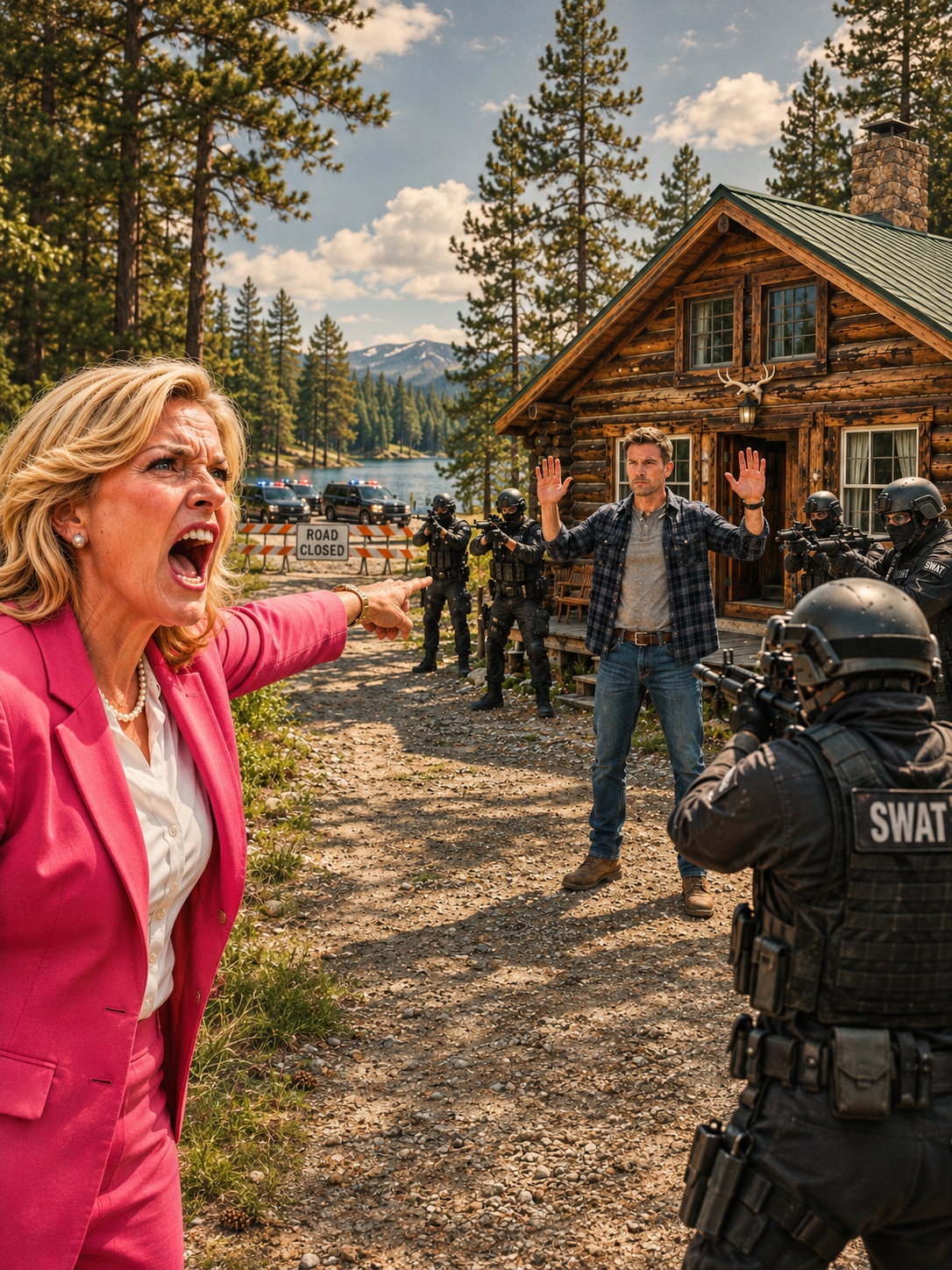
The HOA president two miles from my cabin sent me a list of violations even though I lived outside her subdivision. I figured one sentence would settle it, until I came home to a chain across my own gravel road and had to ask the family lawyer a question nobody at Brookstone Hills had thought to ask…
The first time Carol Whitfield tried to make me answer to her homeowners association, she sent a letter about my wood stove. By the time I realized how far she was willing to go, I would be kneeling in wet grass while strangers in body armor searched the cabin I had built.
My name is Daniel Hargrove. I was forty-two then, and I’d spent fifteen years as a civil engineer, building bridges and working on water systems before stepping back from fieldwork to oversee my family’s trust. We had land and infrastructure across three counties, enough to keep me busy without anybody in line at the hardware store knowing how I made my living.
Two years before the letter arrived, I’d bought nearly four hundred wooded acres about an hour from town. There was a lake, a stand of old pines, and a gravel road that disappeared into the trees. I built a two-room cabin with a loft, put in a wood stove and solar panels, and kept an old generator for outages.
In the mornings I took my fishing rod down to the dock with Cooper, my retriever, whose muzzle had gone gray. At night I read paperback westerns by lamplight. My truck backfired on cold mornings, which seemed to bother Cooper more than it bothered anybody else.
About two miles away, a stone arch marked the entrance to Brookstone Hills Estates. The mailboxes matched and the lawns were kept to a specified height. Carol was fifty-five and had been HOA president for nine years, long enough that most people there knew what came after a warning letter. First a fine, then, if she thought it was worth pursuing, a lawsuit.
I learned later that she’d been driving past my turnoff after she heard about the cabin, slowing down where the roof showed between the pines. We had never spoken. People who lived in Brookstone Hills might expect to introduce themselves at the mailboxes or turn up at a meeting, but I had no mailbox there and no reason to attend.
Her letter came on official association stationery. It cited my cabin as an unsightly structure, complained about the stove smoke and the way I parked my pickup, and took issue with the noise from my backup generator. I used that generator during outages, maybe twice a month, and I read the complaint a second time trying to work out where anybody in the subdivision could be standing to hear it.
There was a simpler problem with the letter. My acreage sat entirely outside the association’s recorded boundaries. I wrote back, “I am not a member of your association, and my property is not subject to your rules.” I mailed it the next morning and went back to fixing a leak in my boat.
Carol started coming by more often after that. Sometimes she’d park near the trees with binoculars on the dashboard. She photographed the roof, the truck, and the smoke from the chimney, all from the public road. At informal coffee gatherings she showed people the pictures, and at board meetings she began talking about the man in the woods as a threat to property values.
Patricia Owens, a retired schoolteacher, stood up at one meeting and pointed out that my land lay outside the HOA and that nobody had named a law I’d broken. Mike Sutton, a contractor, took Carol’s side and said I gave the area a bad name. People who had never met me began debating what I might be hiding, and every time the story made it around the neighborhood it seemed to pick up something new.
Then one weekend afternoon I heard a high mechanical whine over the boat shed. I looked up and saw a little quadcopter circling low enough that I could see the camera. When it banked, I took a picture that caught the registration number on the underside.
I put the picture in a folder in my desk drawer. By then I’d begun keeping things I used to throw away, and when I opened that drawer I could see Carol’s letter right there where I’d left it. I still figured there would come a point when she’d run out of reasons to look at my cabin.
One evening I turned off the highway and found a metal gate across the gravel road. A chain held it shut, and somebody had zip-tied a handwritten sign to it. Whoever put it there had marked my own way home as a private road with no outside access.
I sat in the pickup a while looking at that chain. Later I learned Carol had called in a favor from a contractor friend, telling people the gate would keep out trespassers and protect the association’s water table from runoff. Nobody had called me to ask about the runoff, or even to tell me I might want to come home by some other route.
The next morning I took a folder to Halverson and Cole, the law firm that had handled my family’s business for two generations. My grandfather Walter started Hargrove Infrastructure Group after military service with a bulldozer and a contract to grade roads. My father carried on the business, and over the years it grew to include drainage, water systems, and small bridges. Much of that work had been in the ground so long that even people who used it every day had never heard our name.
I knew Grandpa’s crew had cut roads through those woods in 1953. I had never needed to follow the old surveys to see exactly where the company’s ownership began and ended. Now I was handing deeds and agreements across a desk to Renee Castillo, our attorney, because a woman I’d never met had decided she could put a chain between me and my front door.
Renee went through the papers twice. I watched her return to the same survey and run her finger along the route I drove every day. Then she looked up and told me the road belonged outright to Hargrove Infrastructure Group. The ownership was recorded and uncontested.
Within a week, Renee sent the HOA a formal demand to remove the gate and take down any sign claiming the road. Two days later the same contractor came back and took it down. I heard from neighbors that Carol watched from her porch with her arms folded, and I assumed we’d finally reached the point where she’d leave my place alone.
At the next association meeting, Carol told the room she’d find a way to make me disappear from their lives, one way or another. Most of the people who heard her figured she meant another round of letters. If I’d heard her say it myself, I probably would have figured the same. Part 2…..
IF FACEBOOK BROUGHT YOU HERE, HERE’S THE CONTINUATION YOU’VE BEEN WAITING FOR. ENJOY! 👇 I fed Cooper before sunrise that Saturday and took my rod down to the lake. A thin layer of fog still hung over the water when I heard a low hum, followed by the sound of helicopter blades. Then the gravel road filled with black SUVs and armored trucks, their lights flashing without sirens.
Officers got out in tactical gear and ordered me to drop to my knees. I set the rod down and laced my fingers behind my head, just as they told me. Cooper kept barking until an officer moved him aside, gently enough that even then I remember being grateful for it.
I spent fifteen years on jobs where hesitation around heavy equipment could get somebody hurt, and I knew how to follow an instruction under pressure. That got me through the first few minutes. The next two hours were harder, because I had time to watch strangers go through the house I’d built and wonder what they thought they’d find under my bed.
The account that brought them out there said an armed man, possibly a fugitive, had taken over the cabin and was holding people inside. They found my paperbacks, canned soup, and fishing tackle. The only firearm was my legally owned hunting rifle, locked in a case in the closet. There were no hostages.
Sergeant Wallace came over when the search was nearly done. By then I’d knelt, sat, and stood as directed, and my knees were damp through my jeans. He told me the call didn’t line up with anything they’d found. Something had gone badly wrong before his team ever turned onto my road.
I learned the details in pieces as Detective Yvonne Marsh followed the call back. Whoever phoned 911 had known exactly where the dock sat and what color my truck was. The voice had been altered through an app, and cell records put the phone in the vicinity of Brookstone Hills when the call came in. The area investigators were looking at included the ground behind the clubhouse.
Marsh started asking residents what they’d seen or heard in the weeks before the raid. Patricia told her about Carol’s promise to make me disappear, and three other people remembered hearing the same thing. When Marsh questioned Carol, she said she’d simply been trying to protect her community and denied ever owning the kind of prepaid phone the detective was asking about.
Marsh already had security footage from a convenience store two towns over. Three days before the raid, a woman wearing the same distinctive green cardigan Carol had worn to the association meeting paid cash for a prepaid phone. When Marsh slid a still from the footage across the table, Carol reached for her glass of water with a shaking hand. She left the water untouched and made no confession that day.
Over the next two weeks the evidence came together. Records showed the burner had connected to the tower at the time of the call and never came on again. Investigators never recovered it, but a warrant for Carol’s home computer turned up evidence of voice-altering software and searches about how dispatchers prioritize hostage reports over trespassing calls.
While Marsh was still working the case, Renee called me back to her office. This time the papers on the table included easement agreements and municipal contracts I’d never read all the way through. Grandpa’s company had built the water mains and storm drains beneath Brookstone Hills and the one paved entrance connecting the subdivision to the state highway.
The old agreements granted private easements, and the company still owned the infrastructure. We’d been doing routine upkeep for years without charging the residents, and in the meantime people had come to think of the road and pipes as public. The records showed a more pressing problem from where I sat. Nobody had done a comprehensive inspection in over fifteen years.
Renee had photos of cracked pavement and records for a pump station that hadn’t been serviced since the previous decade. I’d seen what deferred work could cost once a road or a pump gave out, and I told her to go ahead and set the inspection and repairs in motion. We would give everybody the full notice required under the agreements.
The notice went out thirty days before work began. It explained that the only regular entrance would close temporarily for the inspection and overhaul of the roadway, drainage, and pump stations. It went to the association and the residents, including Carol, who was still under investigation. A neighbor told me she’d stood in her driveway reading her copy until the color drained from her face.
On the scheduled morning, a flagger and orange barricades went up at the entrance. Emergency vehicles had a narrow lane, and vehicle access for residents depended on advance clearance and the work underway. A truck carrying furniture for the Hendersons waited forty minutes and turned back, and a landscaping trailer couldn’t fit through the temporary lane.
A lot of commuters added forty-five minutes taking back roads around the work. Greg Torres, who had a home repair business, missed three appointments in a day, and the school bus ride went from fifteen minutes to nearly forty-five. Diane Foley lost a weekend’s catering bookings when her refrigerated van couldn’t get through in time for an anniversary party.
The one that stayed with me was Arthur Klein. He went three days without his health aide before the association could arrange a temporary walking route for essential workers. There were six hundred households behind those barricades, and I could see how much of their lives I’d never had to think about when all I did was drive through the woods to my own place.
Part 3 Within two days of the closure, the HOA held an emergency meeting. I wasn’t in the clubhouse, but several people told me how it went. Residents stood along the back wall because every folding chair was taken, and Carol had barely started reading her prepared statement when Hal Brennan, a retired police captain, stood up and asked if she’d called in an armed hostage situation on an innocent man.
Carol said she’d acted as a concerned resident. Patricia stood up and told the room what she’d already told Marsh. Then other people began talking about the photographs, the remarks at earlier meetings, and the gate Carol had put up without the board’s approval. By the time the road came up again, people were asking how long they’d let Carol make decisions in their name without asking what she was doing.
Once authorities filed charges for making a false police report and inducing panic, the local news picked up the case. A reporter named Olivia Brandt obtained body camera footage through a public records request. Now anybody in the county could hear what the caller had claimed and see me kneeling by the lake while Cooper barked and officers searched the cabin.
Brookstone Hills called a special vote and removed Carol from the board. She stayed away and sent a statement saying people had blown the situation out of proportion and misunderstood what it took to protect community standards. Within a month several board members had resigned and the old board had fallen apart.
Renee filed a civil case for me, and some of the residents filed their own claims over canceled contracts and missed deliveries. Around then, people started coming up to the edge of my property with things in their hands. Patricia came first with a homemade pie and said too many people had let Carol speak for them.
The Hendersons came with their two children. Their father shook my hand and told me he’d believed Carol before he’d ever bothered to ask what I was like. I let him finish. I knew how hard it must have been to decide to drive up and say that where his kids could hear him.
Renee asked whether I wanted to extend the closure while we had the upper hand. I thought about Arthur Klein waiting for his aide, and about Greg trying to make his appointments. My family had a secondary gravel road we’d built for utility crews, and it was wide enough for residents to use under supervision. I asked Renee to draw up an agreement so they could use it free while the main road was repaired.
All I asked in return was that any future infrastructure agreement be put in writing, with the association acknowledging who owned and controlled the property. The newly elected board accepted. Hal became president and sent me a formal apology from the board, with space for any resident who wanted to sign. In two weeks nearly four hundred people had added their names.
Final Carol’s case took months to work through court. She pleaded no contest to filing a false police report. Judge Constance Reyes told her that sending an armed response to an innocent man’s home on a fabricated hostage report was a betrayal of the trust Carol claimed to be protecting.
The judge sentenced Carol to probation and ordered her to pay restitution covering the tactical deployment, which ran into the tens of thousands of dollars. Some neighbors thought she should have gone to jail. My civil case ended in a separate settlement over the search, the disruption, and what it had cost me to feel at home in my cabin again. For months I checked locks I’d barely thought about before.
Within six months Carol sold her house and moved out of state to live near her sister. Renee called with word that the final settlement had been confirmed while I was casting from the dock one morning. I thanked her, set the phone down on a flat rock, and kept fishing until the sun was up over the trees.
The road reopened when the work was finished, with signs showing who owned it. Hal and the new board worked out an agreement with our company for documented annual inspections and a modest maintenance fee for the road, drainage, and pumps. When I passed residents on the road, they’d wave, and once in a while somebody stopped to see whether I had everything I needed for winter.
Nearly a year after the raid, the Hendersons came back with blueberry muffins their youngest had insisted on baking. He was about eight, and he spent a while watching the water at the end of the dock before he came over to where I was talking with his parents. He kicked at the gravel beside my boot and asked if I hated everybody in Brookstone Hills now.
I knelt so I could look him in the eye. I told him hate was a heavy thing to carry, and one person’s choices didn’t belong to everybody who happened to live down the same road. He stood there a second, thinking it over, then ran back to his parents.
After they left, I took Cooper down to the dock. He rested his gray muzzle on his paws while the last of the light went off the water. Beyond the trees, the lights at Brookstone Hills came on one by one, and we stayed out there until the lake went dark.
THE END. I’ve shared the complete story, and I truly hope it touched your heart. If this story moved you, please , like, and share the post. Thank you for reading! ❤️
✓ Lynn R. Adams
The HOA president two miles from my cabin sent me a list of violations even though I lived outside her subdivision. I figured one sentence would settle it, until I came home to a chain across my own g…