The HOA president sent
The HOA president sent a crane to dismantle my grandfather’s 80-year-old windmill, then showed up furious when I stopped the crew. By afternoon, one county map had me questioning whether her board had any right to be there….
My name is Mason Hail. I was 56 that summer, and the old windmill on Hail Creek Ranch had been part of my life for as long as I could remember. My grandfather put it up in the mid-1940s, back when a working windmill and a shallow well could make the difference between keeping cattle watered and losing them in a dry spell.
The blades had been replaced, and the galvanized tower had seen its share of repairs, but it still stood where he built it. The pump was no longer our main water supply, though we maintained its connection to an auxiliary stockwater system in case of emergency. I could look at old photographs of my father hauling hay and see that same tower in the background.
Our ranch covered 187 acres just west of Pine Ridge, a subdivision that had grown in phases over the previous 15 years. Pine Ridge had stone entrance walls, tidy landscaping, matching mailboxes, and rules about what residents could build. We had fences, hay equipment, gravel tracks, cattle, and whatever buildings were needed to keep a ranch running. For years, we managed to be neighbors without much trouble.
That changed a little after seven one morning. I heard a diesel engine working near the eastern pasture, where no one was supposed to be operating machinery. When I drove over, a crane was standing beside my grandfather’s windmill, cables hanging from the upper frame. The rotor and tail assembly were already off. Metal sections lay on a flatbed, and two workers were getting ready to take more apart.
I was stunned for a moment. Then I saw a printed authorization clipped to a barricade. It described my windmill as a noncompliant agricultural tower scheduled for removal under Pine Ridge HOA enforcement. I had never asked anybody to remove it, and I had certainly never given a homeowners association permission to enter my pasture.
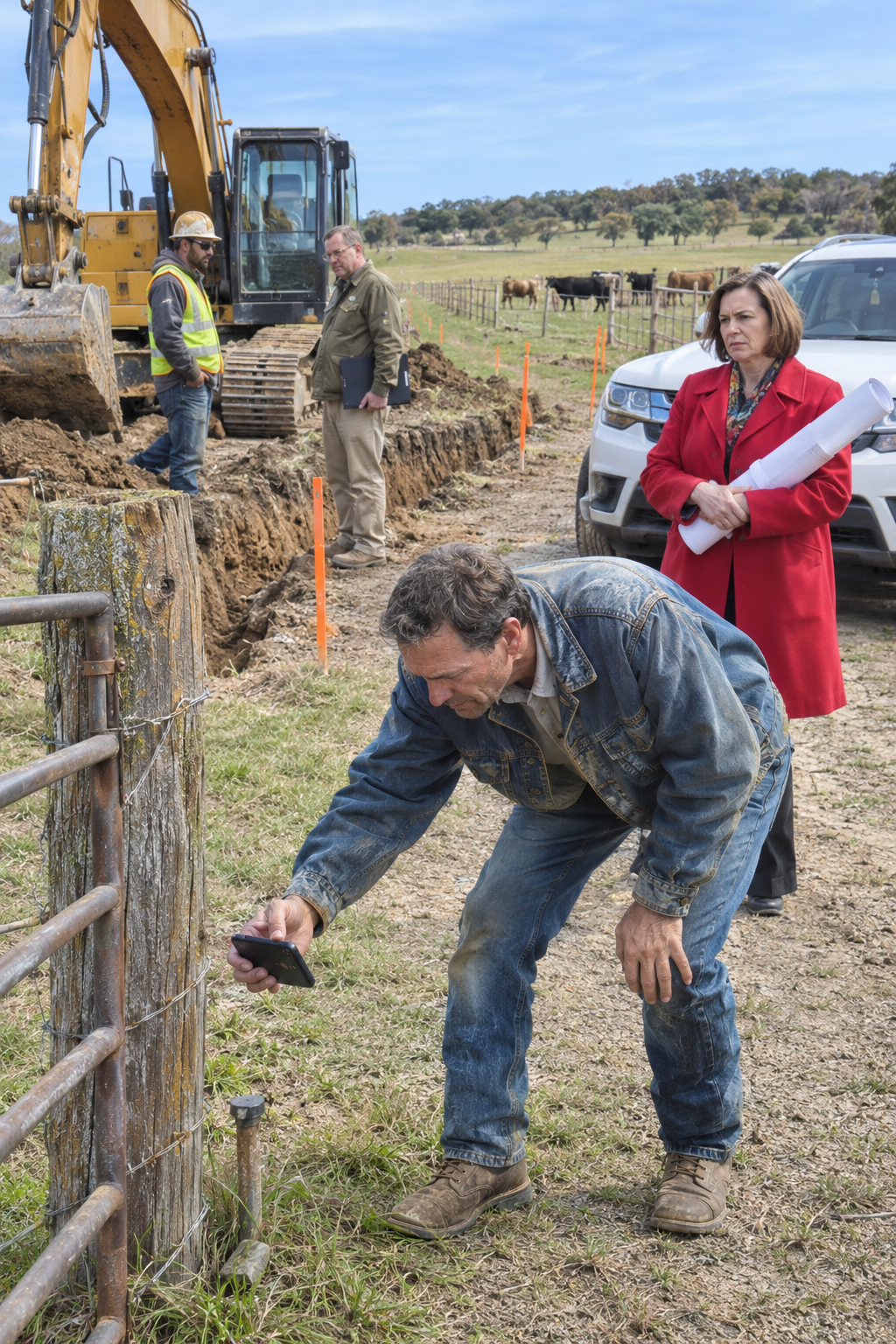
Before I confronted anyone, I took photographs. I got the crane, the truck, the work authorization, the detached pieces, the tire tracks, and what remained of the tower. Then I parked my pickup across the equipment path so the crew couldn’t drive farther into the pasture. The workers stopped and called the people who had sent them. They seemed more confused than angry.
About half an hour later, a black SUV rolled through my open gate. Victoria Sloan, the 42-year-old president of Pine Ridge HOA, stepped out in a bright red blazer, white blouse, black trousers, and heels that sank into the dry grass. Under her arm was a thick enforcement folder with red tabs. She looked at the stopped crane before she looked at me.
Victoria said the association had cited the windmill, given me time to correct the violation, and authorized removal when I failed to comply. She spoke as though the question had already been settled. I told her the windmill belonged to my ranch and asked what gave Pine Ridge the right to touch it.
She opened the folder and showed me violation notices addressed to Hail Creek Ranch. I had never seen them. The mailing address wasn’t mine, either. It was an old management address associated with a parcel that had been divided years before. I pointed that out, but Victoria kept returning to the same claim: the windmill violated the architectural standards of Pine Ridge.
I knew Pine Ridge had rules for its homeowners. Its residents had bought lots governed by an association declaration and agreed to restrictions on roofs, sheds, fences, and other structures. But I had not bought a Pine Ridge lot. My grandfather’s ranch had been here long before the subdivision existed, and none of our family conveyances had ever mentioned joining its HOA.
Victoria also had a color planning map. Pine Ridge’s later phases curved around my eastern fence, making the ranch appear nearly surrounded by homes. On a quick glance, the shaded areas looked connected. But a picture of neighboring parcels was not the same thing as a deed or an agreement binding my land to someone else’s rules.
I asked for the recorded declaration, the annexation amendments, and the legal descriptions that supposedly included Hail Creek Ranch. Victoria did not produce them there in the pasture. I made it clear the crew had no permission to continue. The workers secured the detached components on their trailer and began packing up while I took more photographs.
Standing there, I could see the damage more clearly. The windmill had lost its rotor, its tail, and part of the upper assembly. I had no idea yet whether the old pump linkage could be repaired, or whether the crane had stressed the tower below. All I knew was that something my family had maintained for generations was sitting in pieces because of rules I didn’t believe applied to us.
By late morning, I was at the county recorder’s office. I started with the original Pine Ridge declaration rather than the map in Victoria’s folder. The declaration identified the specific land placed under the association when the first subdivision phase was created. Those lots were east of my property. Hail Creek Ranch wasn’t listed.
I went through the recorded amendments one by one. The first added more residential lots. The next extended the development south. Later documents described private roads, landscaped buffers, common areas, and another phase of homes. Each had legal descriptions and attached exhibits. I checked them against my ranch boundary and parcel number, taking care not to assume that a nearby line meant the same thing as an included parcel.
The records showed how Pine Ridge had grown toward us over the years. What they did not show was a transfer of our ranch into the association. My father’s estate documents hadn’t added such restrictions. Neither had the recorded family conveyance through which I acquired the land. But I wasn’t an attorney, and I wanted someone qualified to check every possibility before I accused the board of anything beyond a serious mistake.
Back at the house, I spread the declaration, amendments, and copied maps across the kitchen table. The photographs I had taken that morning were still on my phone. Every so often I looked out the window toward the pasture and pictured that crane hanging over the windmill. It was hard not to get angry, but the documents demanded a closer look.
One annexation exhibit was especially clear. A thick boundary line followed Pine Ridge’s western edge, turned south, and stopped at the fence separating the subdivision from my property. The drawing identified the association land on one side. All 187 acres of Hail Creek Ranch sat on the other.
I traced that line with my finger, then checked the parcel descriptions again. My ranch had never been added to Pine Ridge in any of the recorded instruments I could find. The subdivision had grown right up to our fence, but its recorded boundary had not crossed it.
That was the first real turning point. An HOA had sent a crew onto my land, partly dismantled my grandfather’s windmill, and cited rules its own recorded maps did not appear to place on my ranch. Then I noticed a handwritten entry in an old association index tucked into the packet: beside a parcel reference resembling mine were the words “legacy tract.” If my ranch had never joined Pine Ridge, how had it ended up in their enforcement records at all? Part 2…..
The next morning I took everything to Daniel Mercer, a 59-year-old attorney who handled land-use disputes, title questions, boundary problems, and property covenants. Daniel didn’t begin with the HOA’s computer file. He began with the documents that had actually been recorded against the land. He compared the original declaration, every annexation amendment, and my family’s chain of title.
My grandfather had owned the ranch before Pine Ridge existed. It passed to my father through an estate transfer and later to me through a recorded family conveyance. Daniel found no HOA assessments, architectural restrictions, voting allocation, or agreement giving Pine Ridge control of our structures. More importantly, the legal descriptions in the association’s recorded documents ended before our fence each time.
The planning map in Victoria’s folder explained the confusion, but it didn’t establish authority. It showed the ranch because planners needed to depict surrounding land, access routes, and drainage. Some surrounding parcels had similar shading. Yet the map had no owner signature or recorded amendment adding Hail Creek Ranch to the HOA. Daniel put it beside the annexation exhibits and said the difference between being shown on a map and being legally subjected to a declaration was the heart of the case.
Then we looked at that phrase, “legacy tract.” It came from an internal index, not a recorded legal instrument. The parcel identifier beside it was almost mine, but one digit was wrong. County assessor history showed that the similar number belonged to an older parent tract east of us, land eventually split into Pine Ridge lots and common areas. Our ranch had not come from that tract, although the old assessor reference sequences were close enough to confuse somebody working from abbreviated records.
Daniel requested Pine Ridge’s property roster and the records used by its management company. Their list included Hail Creek Ranch under a special category, “legacy agricultural tract.” The mailing address was outdated and the ownership field incomplete. The account showed no dues, no late fees, no voting rights, no amenity privileges, and no architectural application history. Nevertheless, there it was, sitting inside the system used to open enforcement cases.
The digital history traced the ranch account back seven years, to the time Pine Ridge changed management companies. The old firm had relied on spreadsheets and scans. The new firm imported those records into centralized software. One preliminary export had a status code beside our ranch: “LEG.” Nobody had shown Daniel a declaration defining that code, because there wasn’t one. It meant “legacy” inside the software, not a property right in the county records.
Three business days later, the migration files arrived. An old spreadsheet headed “special tracts and perimeter parcels” had listed our ranch beside the similarly numbered tract. The spreadsheet contained no deed citations or annexation book-and-page references. During migration, the new database gave the ranch an association account and retained the legacy designation. What had once been an administrative row started to look, on a computer screen, like a recognized category of association property.
The account had originally been marked inactive for enforcement. Three years before the windmill incident, a compliance cleanup changed it to “monitored.” A year later it became “enforceable.” The records described these as administrative changes; neither was supported by an owner agreement, recorded covenant, or annexation. Two earlier cases about fencing and equipment had been closed, but the notices went to the same wrong address. Those old entries then helped make the next case look routine.
When screening trees on Pine Ridge common land were removed, homeowners on the eastern edge could see the windmill more plainly. Some complained that the aging metal tower affected the neighborhood’s appearance. The management company opened a violation case, sent notices to the wrong address, let the software’s cure period expire, and escalated the file toward removal. No one stopped the process at the beginning to ask whether they had jurisdiction.
But someone eventually did ask. Daniel found a status review created 23 days before the crane arrived. A reviewer noticed the missing assessment history, voting rights, membership date, and recorded covenant reference, then flagged the ranch for jurisdiction verification before any irreversible enforcement. The distribution list included Victoria Sloan, the property manager, an outside compliance consultant, and a legal-services contact. For a short time, the demolition case was put on hold.
Part 3 The file then split into two tracks. On one, staff searched archives for proof that Hail Creek Ranch had been annexed. On the other, complaints continued and the compliance schedule kept moving. Eighteen days before demolition, a board summary still called jurisdiction unresolved. Five days later, another summary described our land as a legacy tract “historically monitored” by Pine Ridge. Daniel could find no new deed or amendment between those reports. Only the wording had changed.
Emails explained how that happened. One manager pointed to the years-old database entry and prior violation cases. Another cited the color planning map. Someone else wrote that the legacy designation had been accepted operationally. Every piece of that reasoning rested on the earlier administrative mistake. The ranch had never paid assessments, voted, requested design approval, or entered an agreement with Pine Ridge. Prior computer records were being used to justify the accuracy of other computer records.
Twelve days before the crew arrived, the property manager asked whether the jurisdiction problem had been resolved. The answer referred to legacy status, not a recorded instrument. Nine days before, the HOA sought estimates to remove the rotor and upper sections of the windmill. Six days before, the contractor asked for written confirmation that the association had authority to enter the land. The contractor’s file eventually said, “Association authority verified.” That was confirmation from the client, not an independent title review.
Victoria’s approval appeared in the enforcement chain after the first warning was distributed. The records did not prove what she personally believed, and Daniel was careful about that. They did show her office approved the action despite the open jurisdiction question. Three days before demolition, another archive search reported that no annexation document for Hail Creek Ranch had been found and recommended checking county records. The file contained no cancellation. The next thing that happened was the crane entering my pasture.
Daniel assembled certified copies of the declaration, amendments, annexation exhibits, deed chain, and parcel history. He also checked for separate architectural agreements or other recorded covenants that might have given Pine Ridge a say over our windmill. He found none. The adjoining subdivision lots and common-area tracts were specifically described. The legal boundary stopped short of us. An agricultural tax classification supported the parcel’s separate history, although Daniel explained it was the recorded restrictions, not tax treatment alone, that controlled the question.
A title professional prepared a report stating that, based on the recorded instruments reviewed, Hail Creek Ranch was not identified as property subjected to the Pine Ridge Declaration. Daniel sent that report and the certified records to the HOA and the demolition contractor. The contractor promptly said it had relied on Pine Ridge’s written authorization and had not independently investigated title. That didn’t erase what the crew had done, but it made clear who had represented that the association’s authority was settled.
Pine Ridge’s board requested its own review instead of admitting everything immediately. Its counsel checked the recorder references Daniel provided, searched archived legal files, and looked for a missing annexation. None surfaced. The old parcel number mix-up helped explain why the ranch had been included in the database. It did not grant the board power over the land. Pine Ridge removed our ranch from active architectural enforcement while the lawyers worked through the remaining issues.
We still had a damaged windmill. I wanted it repaired, but Daniel told me not to put a dollar value on childhood memories and expect an insurer to accept it. He recommended inspections, photographs, estimates, and a precise restoration scope. A specialist examined the steel tower, anchor points, foundation, rotor hub, tail assembly, and pump linkage. The lower tower and foundation appeared usable, subject to testing. Several upper connections had been cut, plates distorted, the tail bent, and parts of the mechanical linkage damaged.
The specialist’s report was both upsetting and encouraging. A full replacement was unnecessary, but simply bolting the old pieces together would not be safe or faithful to the original machine. A metal fabricator priced matching parts. A windmill contractor estimated the crane, reassembly, alignment, and testing. Another ranch contractor recorded damage to our pasture, lane, and fence. My photographs, older family pictures, and the demolition company’s own images helped show exactly what had been there and what the crew had changed.
Part 4 The association’s insurer reviewed the property-damage claim and requested the contractor’s authorization file, the photographs, title records, and restoration estimates. It did not simply agree to every expense. Daniel organized the documented costs and kept the discussion focused on getting the ranch and windmill back into their prior condition, as nearly as practical. That was what I wanted, not a new decorative tower or a windfall.
Pine Ridge’s board began investigating how an inactive database row had become permission to demolish a structure. It reviewed the old spreadsheet import, the later enforcement-status changes, the violation notices sent to an incorrect address, and the two jurisdiction warnings. The board temporarily removed Victoria from direct oversight of the windmill case and from final approval of disputed boundary cases while its review continued. That was an administrative action, not a criminal charge or court finding.
The management company also paused automated enforcement for irregular entries called legacy tracts, perimeter parcels, or special agricultural tracts when recorded covenant support was missing. Other questionable records surfaced. Most needed ordinary cleanup; some required a closer look at whether nearby parcels had actually joined the association. The issue was bigger than my windmill, though our ranch showed what could happen when an internal status code was treated as a legal document.
The contractor reviewed its own procedures. Its crew had received a written client authorization, but it now had reason to reconsider how it checked site access for work involving disputed property or association enforcement. The company planned stronger confirmation before mobilizing for comparable jobs. I appreciated that the people involved were changing their process, though none of those changes could straighten a bent windmill tail.
After several weeks, the repair figures were assembled. The biggest expense was specialized labor and moving equipment, not simply buying steel. Old agricultural windmills require the rotor, tail, gearbox, tower, and pump linkage to work together. The restoration plan called for retaining sound original material, fabricating necessary replacements, and making the machine functional again rather than creating a shiny replica of something that had stood on our ranch for decades.
Pine Ridge eventually authorized restoration work to proceed while the insurer continued its coverage review. Workers stabilized the tower, replaced distorted plates and cut fasteners, repaired bracing, rebuilt the rotor hub, and straightened or remade sections of the tail. They fixed the pump linkage and tested the mechanical components. When the upper assembly was ready, another crane came through my gate, this time with my permission.
I watched the upper frame rise over the pasture. It was strange to see almost the same equipment that had caused the problem helping to fix it. The crew aligned the upper sections, secured the rotor, and fitted the repaired tail. By evening, the silhouette looked familiar again. From the ranch road you could see a windmill where, for weeks, you’d seen an unfinished tower.
But I wasn’t ready to call the matter finished. Pine Ridge froze the ranch’s internal account and removed its enforcement eligibility. It proposed deleting the legacy designation and adopted an interim rule requiring recorded declaration support before enforcement against parcels whose membership was uncertain. Daniel wanted one more assurance: a written confirmation that every internal source capable of putting our land back on the violation list had been corrected, not merely the account visible on the current screen.
That request revealed the same parcel error in more than one place. Hail Creek Ranch appeared in a perimeter spreadsheet, an old architectural reference sheet, and a planning index along Pine Ridge’s western boundary. None of these created legal restrictions, but any one could have been copied into a future database after the people who understood the mistake were gone. The board agreed that correcting a single account would leave the door open to the same trouble returning.
Final Pine Ridge cleaned up the full chain. It closed the legacy agricultural account, deleted the wrong parcel reference from its perimeter list, removed Hail Creek Ranch from the architectural roster, and revised its planning index to describe us as adjoining private agricultural property. A written note directed future staff to check the recorded declaration and annexation history before taking any action involving the ranch.
The association also changed the way it handled boundary parcels. Planning maps, legacy codes, and prior violation entries would no longer be enough to establish jurisdiction. Staff had to match the property to the recorded declaration or an annexation instrument before architectural enforcement, and unresolved cases had to stop before contractors were sent out. That was a practical safeguard born from an expensive mistake.
The financial settlement addressed the actual restoration and physical damage. Pine Ridge accepted responsibility for repairing the windmill, lane, pasture, and fence, with approved restoration expenses addressed by the association while its insurer continued to handle coverage-related portions of the claim. Daniel’s legal fees connected with the title and enforcement dispute were handled in the broader resolution. There was no huge punitive award, criminal prosecution, or dramatic courtroom victory, and I had never needed one.
Victoria remained involved with Pine Ridge during its internal review, but she no longer controlled decisions on disputed perimeter enforcement. Those cases went through management verification and legal review when authority was unclear. The consequence fit what the written record actually showed: she had approved a demolition chain after a jurisdiction warning, without any recorded document ever turning my ranch into HOA property.
By late summer, the ruts in the pasture had faded, the access lane was repaired, and the fence was back in place. The restored windmill wasn’t spotless or new. The old tower still showed its weathering, and some replacement metal stood out beside the original pieces. When its rotor finally turned steadily in a breeze, it looked like the working piece of family history it had always been.
Daniel sent me a final packet with the certified documents, title report, corrected roster, closed account record, revised enforcement procedure, and written confirmation that Hail Creek Ranch was not subject to Pine Ridge’s architectural standards. I filed it with the deed. My grandfather had never needed paperwork to prove he wasn’t in an HOA that hadn’t existed when he installed the windmill. I hoped I wouldn’t have to explain it again, either.
From our pasture, the roofs of Pine Ridge were still visible beyond the fence. Those homeowners still had an association, and it still had the right to enforce rules on land legally covered by its declaration. But our land was never part of it. Neither a shaded planning map nor a decades-old spreadsheet could move the boundary, no matter how many people had relied on the error.
One evening I stood beside the restored tower as the tail turned into a light breeze. On one side of the fence were the homes of Pine Ridge. On the other were our cattle, our pasture, and the windmill my grandfather put there. The answer had been sitting in the county records all along. And this time, the association’s own records said the same thing.
THE END. I’ve shared the complete story, and I truly hope it touched your heart. If this story moved you, please , like, and share the post. Thank you for reading! ❤️
✓ Lynn R. Adams
The HOA president sent a crane to dismantle my grandfather’s 80-year-old windmill, then showed up furious when I stopped the crew. By afternoon, one county map had me questioning whether her board had…