The HOA Condemned My Old Pump House—Then the Fire Marshal Tested Their Hydrants and Went Completely Silent
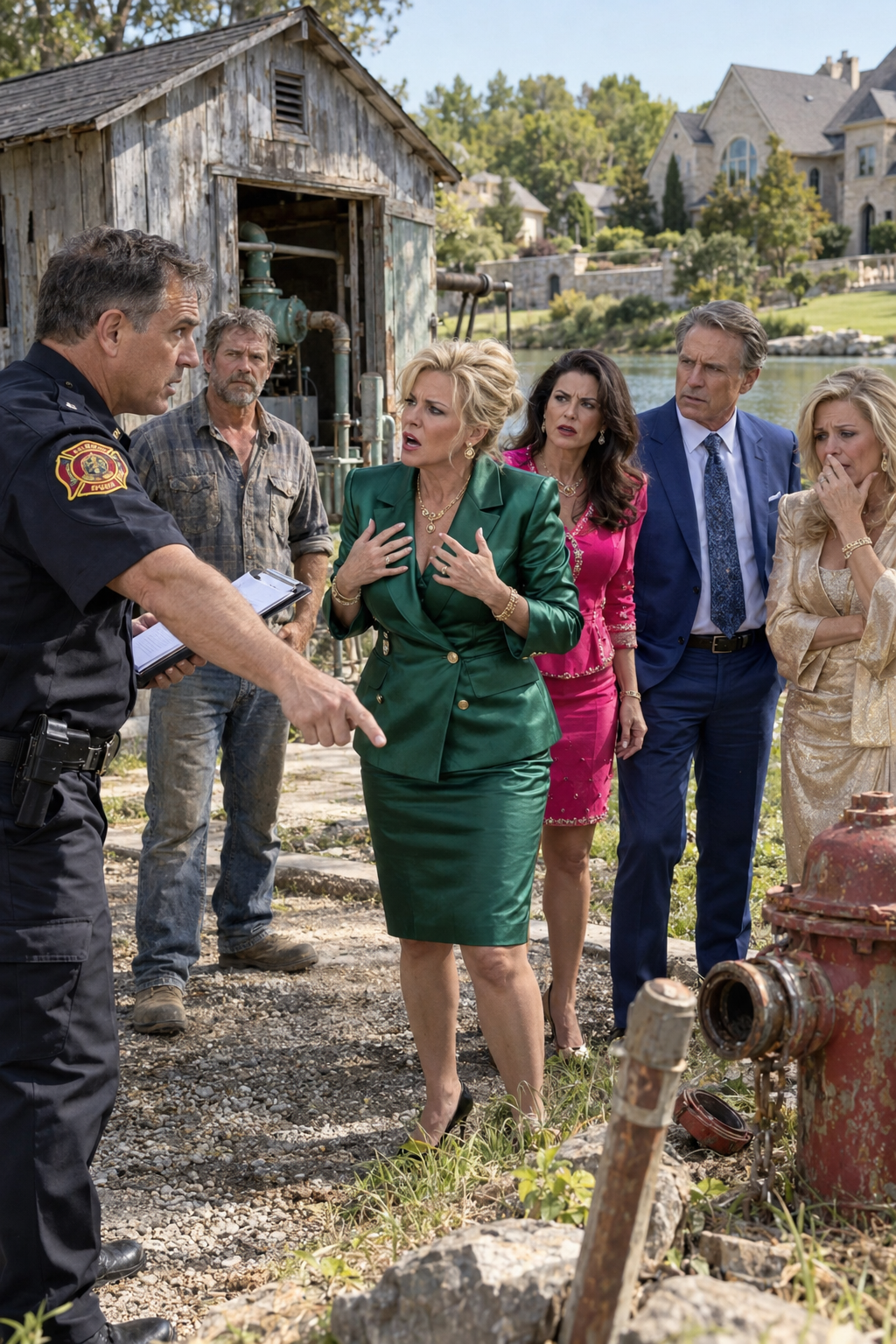
The HOA Condemned My Old Pump House—Then the Fire Marshal Tested Their Hydrants and Went Completely Silent
The red CONDEMNED notice was nailed to my pump house at on a Monday morning.
By , the HOA president was standing in my driveway telling me I had forty-eight hours to demolish it.
By noon, the county fire marshal had opened the nearest neighborhood hydrant, stared at the weak brown stream coming out of it, and asked one question that made every HOA board member stop smiling.
“Where does your fire water actually come from?”
I’m Daniel Mercer.
I’m fifty-two years old, divorced, and I own eighty-six acres outside Cedar Hollow, Colorado, where the foothills start climbing toward ponderosa country.
My grandfather bought the land in 1954.
My father ran cattle on it.
I run a smaller herd now, along with a welding business that keeps me busier than cattle ever did.
On the northwest corner of the property sits a twelve-by-eighteen stone building with a green metal roof.
The pump house.
It isn’t pretty.
I’ve never pretended it was.
The stone is dark from seventy years of weather. The little steel door has three coats of peeling paint. One window has been boarded over since a hailstorm cracked it in 2011.
Inside is an old centrifugal pump, an electrical panel, pressure gauges, two isolation valves, and a six-inch iron line disappearing beneath the concrete floor.
My grandfather built the original structure over a spring-fed cistern.
My father upgraded it after a wildfire burned across the ridge in 1978.
And after that, nobody in my family touched the underground line except to maintain it.
There was a reason.
A reason nobody in Cedar Hollow seemed to remember anymore.
Especially Rebecca Sloan.
Rebecca was president of the Aspen Ridge Homeowners Association, the development that had been built along my eastern property line fifteen years earlier.
Aspen Ridge had sixty-three homes.
Stone veneers.
Three-car garages.
Artificial waterfalls at the entrance.
Street names like Heritage Summit Drive and Elk Vista Court, even though no elk had crossed that hill since construction crews flattened half the brush.
The cheapest house there had sold for $910,000 the previous spring.
Rebecca lived in one of the largest.
She was forty-six, always polished, always smiling with just enough teeth to make you wonder whether it was a greeting or a warning.
She wore white pants in places where no sane rancher would wear white pants.
The morning she showed up at my gate, she had on white pants.
Of course she did.
Behind her stood HOA vice president Glenn Porter and a man wearing a county code-enforcement jacket.
Rebecca pointed toward the pump house.
“That structure has been officially determined to be unsafe and visually blighted.”
I looked at the orange notice nailed into my stone wall.
Then I looked at her.
The county man shifted his weight.
Rebecca answered for him.
“The appropriate authorities.”
I kept looking at the county man.
“What’s your name?”
“Elliot Barnes.”
“You inspect structures?”
“Code compliance.”
“That wasn’t my question.”
His jaw tightened.
Rebecca jumped in again.
“Daniel, this really doesn’t need to become adversarial.”
That sentence told me almost everything I needed to know.
People rarely tell you something doesn’t need to become adversarial unless they’ve arrived expecting a fight.
I walked over to the notice.
Unsafe Structure.
Public Nuisance.
Abatement Recommended.
Immediate Access Restricted.
The address was wrong.
Not dramatically wrong.
Just wrong enough.
It listed 8114 Heritage Summit Road.
My mailing address was 407 County Road 18.
Heritage Summit Road belonged to Aspen Ridge.
I tapped the paper.
“Why is my building listed under your subdivision address?”
Nobody answered immediately.
Rebecca folded her arms.
“Parcel addressing can be confusing.”
“No. It really can’t.”
Glenn gave a little laugh.
“Daniel, the thing looks abandoned.”
“It isn’t.”
“You haven’t used it in years.”
“How would you know?”
That ended his laugh.
I turned to Barnes.
“Did you inspect the inside?”
He looked at the door.
“Did you inspect the foundation?”
“The electrical system?”
“The pump?”
“The cistern?”
“Then what exactly did you condemn?”
Rebecca sighed dramatically.
“Here we go.”
I didn’t raise my voice when she called my property an embarrassment.
I didn’t raise my voice when Glenn said my family had held back Cedar Hollow long enough.
I didn’t raise my voice when Rebecca told me modern communities had different standards.
I didn’t raise my voice when Barnes admitted he had never stepped inside the building.
I didn’t raise my voice when Rebecca finally said the sentence she had probably been waiting all morning to say.
“If you don’t demolish it voluntarily, the HOA is prepared to pursue removal through every legal avenue available.”
Not because anything was funny.
Because I had just realized this wasn’t about safety.
“You already have a contractor, don’t you?”
Rebecca’s face barely changed.
But it changed.
Glenn looked at her.
That was enough.
I stepped closer to the notice.
“You’ve already priced demolition.”
Rebecca adjusted her sunglasses.
“We’ve discussed possible solutions.”
“Before the building was inspected.”
There are moments when people accidentally hand you the truth.
The trick is not reacting too fast.
I pulled out my phone and photographed the notice.
Then Barnes.
Then Rebecca.
Then Glenn.
Rebecca frowned.
“You’re recording us?”
“I’m documenting who came onto my property.”
“We’re standing near a public access area.”
“You crossed my cattle guard.”
Her eyes flicked toward the gate.
“No Trespassing” was welded into the steel.
My father had made the sign himself.
Barnes suddenly looked uncomfortable.
I pointed toward the road.
“Until somebody comes back with a warrant or an actual county order attached to my actual parcel number, you’re done here.”
Rebecca stepped toward me.
“You have forty-eight hours.”
“According to what?”
“The notice.”
“The notice with the wrong address?”
Her lips tightened.
That annoyed her more than anything else I’d said.
She turned sharply.
“Come on, Glenn.”
Barnes hesitated.
I called after him.
“Mr. Barnes.”
He stopped.
“I want the inspection file.”
“You can request it through the county.”
He nodded once.
Then they left.
I stood beside the pump house until Rebecca’s black Range Rover disappeared behind the Aspen Ridge entrance monument.
Then I unlocked the steel door.
The smell inside hadn’t changed since I was a kid.
Cold stone.
Damp concrete.
I flipped the light switch.
One fluorescent fixture flickered awake.
There it was.
The old Aurora pump.
Green housing.
Massive iron volute.
Two pipes entering from below.
Pressure tank against the rear wall.
My father’s handwritten maintenance log still hung from a nail beside the panel.
The last entry was mine.
APR 4 — exercised pump 20 min. Holding 81 PSI. No leaks.
Four months earlier.
The building was ugly.
It was not abandoned.
I crouched beside the six-inch line and brushed dust off the cast-iron flange.
Then I noticed something.
Fresh scratches.
One of the valve handles had been moved.
Not recently enough to still be shiny.
But recently.
I knew because I had painted a thin yellow witness mark across the stem and valve body years ago.
The marks no longer lined up.
Someone had turned the valve.
I stared at it for several seconds.
Then I photographed that too.
At , I drove into town.
The Cedar Hollow County Services Building was two stories of tan brick, fluorescent lights, and irritated taxpayers.
Public records sent me to Building Safety.
Building Safety sent me to Code Enforcement.
Code Enforcement told me Elliot Barnes was in the field.
So I asked for the inspection file associated with the case number printed on the orange notice.
The clerk entered it.
Then frowned.
She looked at me.
“This case is for Aspen Ridge HOA.”
“No, I mean the complainant and responsible party are Aspen Ridge HOA.”
“Responsible party for what?”
She clicked again.
“Landscape maintenance structure.”
I leaned closer.
“Say that again.”
“It’s listed as an HOA-owned landscape maintenance structure.”
I laughed once.
The clerk didn’t.
“Is that incorrect?”
“It’s been on my family’s deed since 1954.”
She stopped typing.
I gave her the parcel number.
She searched.
Then her expression changed.
“Yeah what?”
“It’s on your parcel.”
She printed the file.
The complaint had been submitted six weeks earlier.
Complainant:
Aspen Ridge HOA.
Property owner:
Aspen Ridge HOA.
Structure description:
Unused irrigation shed adjacent to Heritage Summit Road.
Public hazard alleged:
Rodent infestation, unstable masonry, unauthorized utility equipment.
There were three photographs.
All taken from the road.
None showed the inside.
None showed foundation damage.
None showed rodents.
The application included a letter claiming the structure had been “effectively abandoned by prior agricultural operations.”
At the bottom was Rebecca Sloan’s signature.
I asked the clerk for one more thing.
“Who changed this from complaint to condemnation?”
She hesitated.
“It looks like an expedited nuisance determination.”
“Who requested expedited review?”
More clicking.
“Assistant county administrator’s office.”
“Who contacted them?”
“I can’t see that.”
I thanked her and left.
I didn’t call Rebecca.
I didn’t call an attorney yet.
I drove home.
Because when somebody builds a paper trail using the wrong owner, the worst thing you can do is warn them before you understand why.
At 11:18, I was standing behind the pump house photographing the underground utility markers when I heard a diesel engine coming up the county road.
A red pickup stopped near the Aspen Ridge entrance.
The door read:
CEDAR HOLLOW FIRE DISTRICT.
A tall woman in a navy uniform stepped out.
She walked to a hydrant near the gate.
Opened the side compartment of her truck.
Pulled out a pressure gauge.
Then she noticed me.
“You Daniel Mercer?”
She smiled slightly.
“Fire Marshal Laura Keene.”
That changed the answer.
She walked over.
Late forties.
Gray starting at her temples.
No-nonsense posture.
She looked at the orange condemnation notice.
“Interesting.”
“That’s one word.”
“You call this in?”
“About my pump house?”
“About fire hazard remediation.”
I stared at her.
“Fire hazard?”
“They reported combustible debris, unpermitted electrical equipment, possible rodent damage, and concern that the structure could ignite during wildfire conditions.”
I opened the door.
“Want to see the deadly rat palace?”
She stepped inside.
Keene didn’t talk much.
She inspected the breaker panel.
Pressure tank.
Ventilation.
Clearance around electrical equipment.
Then she crouched beside the six-inch line.
“Original line is probably 1978.”
“Still active?”
She looked at the gauge.
“Eighty-one pounds?”
“When the pump runs.”
“Feeds what?”
That was the question.
I answered carefully.
“I’m not completely sure anymore.”
She turned toward me.
“You own it.”
“I own this structure. The underground line predates Aspen Ridge.”
“Where does it go?”
“Originally? East.”
“Into Aspen Ridge?”
“Aspen Ridge didn’t exist then.”
Keene stood.
“What was east of you?”
“Orchard land. Then a volunteer fire pond.”
Her face changed.
“Fire pond?”
“My grandfather called it the emergency pond. Dad installed the pump after the seventy-eight fire. County engines used to draft from the pond before the district installed municipal hydrants.”
She looked back at the pipe.
“Do you have drawings?”
“Find them.”
That tone wasn’t a suggestion.
She went outside and walked toward the neighborhood hydrant.
I followed.
Rebecca’s Range Rover appeared almost immediately.
Sometimes rich neighborhoods have a better warning system than airports.
She pulled beside us.
Glenn was with her.
Rebecca climbed out.
“Marshal Keene. Thank you for responding so quickly.”
Keene attached her gauge.
Rebecca pointed toward my pump house.
“As you can see, the structure is deteriorated.”
Keene didn’t look at her.
“I’ve seen worse.”
Rebecca blinked.
“We’re particularly concerned about fire danger.”
“I gathered.”
Keene opened the hydrant.
At first, air hissed.
Then water coughed from the outlet.
Not surged.
Brown water spat onto the asphalt.
The gauge needle rose.
Twenty-six.
Thirty-one PSI.
Then dropped.
Keene frowned.
She opened the hydrant farther.
The flow increased slightly.
The pressure fell to seventeen.
Glenn cleared his throat.
“Is that normal?”
Keene didn’t answer.
She shut it down.
Moved to a second hydrant fifty yards uphill.
Rebecca followed.
Same procedure.
Static pressure: thirty-six.
Flow pressure: eleven.
Keene stared at the gauge.
Then looked up the street at rows of million-dollar houses.
Cedar shake accents.
Wooden decks.
Dry landscaping.
Ponderosa forest less than half a mile uphill.
“Where does your fire water actually come from?”
Rebecca recovered first.
“Municipal system.”
“Which provider?”
“Cedar Hollow Water Cooperative.”
Keene looked at Glenn.
He nodded eagerly.
“Yes. Cedar Hollow.”
Keene took out her phone.
“Connection point?”
Glenn stopped nodding.
Rebecca said, “The developers handled all infrastructure.”
“About fifteen years ago.”
Keene looked at the hydrant again.
“These pressures aren’t adequate.”
Rebecca’s face tightened.
“There was a water-main issue last month.”
“Both hydrants?”
“Probably.”
Keene walked toward a third hydrant.
Rebecca followed faster.
“Marshal, our concern today was actually Mr. Mercer’s structure.”
Keene stopped.
“So was mine.”
She looked at Rebecca.
“Then I opened your hydrant.”
That was the first time Rebecca looked genuinely uncertain.
The third hydrant was worse.
Nine PSI under flow.
Keene shut it.
“Do not touch your pump house,” she told me.
Rebecca stared.
“Excuse me?”
Keene repeated herself.
“Mr. Mercer is not to demolish, disconnect, alter, drain, dismantle, disable, or otherwise modify that pump system until I determine whether it has any relationship to your subdivision’s fire protection.”
Rebecca laughed.
A quick, brittle sound.
“It doesn’t.”
Keene looked at her.
“You know that for certain?”
Rebecca opened her mouth.
“The HOA has its own fire infrastructure.”
“Good. Then finding the records should be easy.”
Keene handed me her card.
“Find those drawings.”
She turned to Rebecca.
“I also need your annual hydrant test reports for the last five years.”
“We don’t maintain those personally.”
“Who does?”
“Our management company.”
“Summit Community Management.”
“Have them send everything.”
Rebecca’s posture changed.
Only slightly.
But I saw it.
The confident HOA president was gone.
In her place was someone calculating.
Keene drove away twenty minutes later.
Rebecca waited until the fire truck disappeared around the bend.
Then she walked straight at me.
“What did you tell her?”
I kept my hands in my pockets.
“The truth.”
“What truth?”
“That your hydrants barely work.”
Her eyes narrowed.
“You’re enjoying this.”
“You’ve resented Aspen Ridge since it was built.”
“That’s what you tell yourself.”
“You opposed the development.”
“My father opposed the development.”
“And you continued his obstruction.”
“I don’t attend your meetings.”
“You refuse trail easements.”
“Across my land.”
“You blocked our proposed emergency access.”
“Across my land.”
“You objected to the landscaping buffer.”
“On my land.”
She stepped closer.
“You make cooperation impossible.”
That was Rebecca’s talent.
She could describe taking your property as cooperation.
I nodded toward my pump house.
“Then stop cooperating with my property.”
She lowered her voice.
“This community has sixty-three families.”
“Then maybe someone should explain why their hydrants don’t work.”
Then it disappeared.
She pointed at me.
“You need to be very careful about accusations.”
“I haven’t accused anybody.”
“You’re implying negligence.”
“No. The pressure gauge did that.”
Glenn whispered, “Rebecca.”
She spun toward him.
He looked toward the pump house.
“We should probably call Brad.”
Only for half a second.
But she froze.
I stored the name.
Rebecca glared at him.
Then back at me.
“You will not interfere with HOA infrastructure.”
“That’s funny.”
“An hour ago you said the pump house had nothing to do with HOA infrastructure.”
Glenn looked at the ground.
Rebecca’s jaw tightened.
Then she turned and walked away.
I watched them go.
At , I climbed into my attic.
My father saved everything.
Tax receipts.
Fence diagrams.
Vet bills from cattle that had been dead forty years.
Old Rural Electric newsletters.
Maps rolled into cardboard tubes.
I spent nearly two hours digging through boxes before I found a blue metal document case marked:
WATER / FIRE LINE — 1978.
Inside was a folded survey.
Brown at the edges.
A little brittle.
But readable.
The line left the pump house.
Crossed what was now my eastern pasture.
Continued under what had become Heritage Summit Road.
Then split at the old fire pond.
A handwritten note beside it read:
6″ EMERGENCY FIRE MAIN — PRIVATE.
My father’s handwriting.
Below that:
COUNTY VOL. FIRE ACCESS ONLY.
I unfolded another sheet.
In 1989, the pond had been partially filled after a landslide.
A replacement steel storage tank had been installed uphill.
The pump house supplied it through the same six-inch line.
Then something strange happened.
The records stopped.
No paperwork after 1991.
I was thirty-seven when Aspen Ridge was built.
I remembered bulldozers.
Survey stakes.
Arguments between my father and the developer.
But I had been working in Denver then and coming home only on weekends.
My father handled the negotiations.
He died two years after the first Aspen Ridge homes were finished.
There were questions I had never thought to ask him.
At , I found another envelope.
ASPEN RIDGE DEVELOPMENT — DO NOT DISCARD.
Inside was a letter from 2008.
Hollister Development Group.
The company that built Aspen Ridge.
It requested a temporary construction water easement over my father’s existing emergency fire line.
The next document was my father’s response.
In red ink.
Then another letter.
Hollister’s attorney offered $18,000 for permanent access.
My father wrote:
Then another.
Then a final letter.
No dollar amount.
Instead, it proposed “incorporation of the existing private fire line into the subdivision’s permanent fire-suppression infrastructure, subject to agreement.”
My father had circled permanent fire-suppression infrastructure.
Beside it he wrote:
They already connected?
I read that four times.
Then my phone rang.
Unknown number.
“Daniel Mercer?”
“This is Brad Holloway.”
The name from Glenn’s slip.
I sat on an attic joist.
“What can I do for you, Brad?”
“I’m with Summit Community Management. We manage Aspen Ridge.”
“I’ve heard.”
“I understand there was an issue today with Fire District.”
“There was an issue with water pressure.”
“I’ve been told you may have documentation concerning legacy water infrastructure.”
“We would appreciate copies.”
“For historical records.”
“You first.”
Another pause.
“What do you mean?”
“Send me whatever records Aspen Ridge has connecting my pump house to its water system.”
“I don’t believe there are any.”
“Then you don’t need mine.”
Brad sighed.
“Mr. Mercer, we’re trying to get ahead of a misunderstanding.”
“That’s good.”
“Can I come by?”
“We really should discuss this.”
“We are discussing it.”
“In person.”
His friendly tone disappeared.
“Daniel, depending on what these old utilities are, you could face significant liability.”
There it was.
Not a request.
A threat wearing a necktie.
“For what?”
“If your private equipment interferes with subdivision fire protection—”
I cut him off.
“You just told me you don’t believe there’s a connection.”
I continued.
“So which is it, Brad?”
He said nothing.
I could hear office noise behind him.
Then he changed tactics.
“Please don’t operate the pump.”
“Fire marshal told me the same thing.”
Another silence.
“You’ve spoken directly with Keene?”
“She was standing in my pump house.”
He sounded different after that.
Not panicked.
But careful.
“Then I think the best thing is for everyone to preserve the system exactly as-is.”
“I’ll send you what we have.”
“Everything.”
“Of course.”
He hung up.
He never sent anything.
That night, I installed two trail cameras.
One faced the pump house.
The other faced the valve pit behind it.
I also chained the access gate and parked my loader across the gravel drive.
At in the morning, my phone buzzed.
Motion detected.
I opened the camera app.
Headlights.
A white pickup.
It stopped outside the locked gate.
Two men got out.
One carried a flashlight.
The other walked straight toward my property line fence.
They stayed for six minutes.
Never crossed.
I saved the footage.
At the next morning, Marshal Keene called.
“Found something.”
“So did I.”
“Old fire line survey. Letters from the developer asking permission to connect.”
“Permission granted?”
“Come to the district office.”
I arrived forty minutes later.
Keene had spread county utility maps across a conference table.
Beside her stood Fire Chief Marcus Bell and a young district engineer named Owen Price.
Price pointed to Aspen Ridge.
“According to current county records, the subdivision has a six-inch looped fire main supplied from the Cedar Hollow Water Cooperative on the south entrance.”
“It isn’t there.”
I looked at him.
“What do you mean it isn’t there?”
“We traced the utility locate records.”
He pointed.
“The supposed connection crosses under County Road 18 here.”
“There’s no county road-crossing permit.”
Keene added, “No excavation permit either.”
Price continued.
“And Cedar Hollow Water Cooperative has no record of ever installing a six-inch fire-service connection at that location.”
I looked between them.
“So what feeds the hydrants?”
“That,” Keene said, “is what I’d like you to help us find out.”
We drove back to Aspen Ridge.
This time Keene brought a utility crew.
Rebecca was waiting near the entrance before we arrived.
So was Brad Holloway.
He wore khakis, a blue button-down shirt, and the expression of a man who had spent the night talking to lawyers.
Rebecca marched toward Keene.
“We were not notified there would be excavation.”
Keene pointed toward a county right-of-way marker.
“We’re not on HOA property.”
Brad stepped forward.
“Marshal, may we speak privately?”
He glanced at me.
“This involves infrastructure records.”
Keene looked at him.
“Then Mr. Mercer should probably hear it.”
Rebecca snapped.
“Because his privately owned pump facility may be involved.”
Rebecca’s face drained.
Brad whispered something to her.
She shook her head hard.
The utility crew opened a valve box near the entrance.
The valve was old.
Far older than the subdivision.
Price brushed dirt from the casting.
“Look at that.”
Stamped into the metal:
C.H.V.F.D. 1989.
Cedar Hollow Volunteer Fire Department.
Not Aspen Ridge.
Not Cedar Hollow Water Cooperative.
Nineteen years before Aspen Ridge broke ground.
They traced the pipe west.
Every locator mark marched across the grass.
Past the subdivision monument.
Under the drainage ditch.
Through the fence line.
Directly toward my pump house.
Nobody said anything for a while.
Then Glenn Porter arrived in a golf cart.
He looked at the markings.
Then at Rebecca.
“What the hell is this?”
She said nothing.
Keene pointed toward the hydrants.
“Your fire main appears to be connected to Mr. Mercer’s legacy emergency line.”
Glenn blinked.
“That’s impossible.”
Brad finally spoke.
“Legacy utilities were transferred during development.”
I turned toward him.
“Transferred by whom?”
“I’d have to review the closing documents.”
“My father denied the easement.”
Brad swallowed.
“We don’t know that those were the final negotiations.”
“Because I have every letter.”
Rebecca finally exploded.
“This is ridiculous. Hollister Development built this community to code. We’ve had occupancy certificates for fifteen years.”
Keene looked at her.
“Occupancy certificates don’t make water appear in pipes.”
Glenn rubbed both hands over his face.
“We’ve been paying for hydrant testing.”
Keene looked at him.
“Who tests them?”
He pointed helplessly at Brad.
Brad said, “Contractors.”
“Which contractor?”
“I’ll have to verify.”
“You’ve had since yesterday.”
Brad’s phone suddenly became very interesting.
That afternoon brought the first mini-explosion.
Keene obtained the last five years of Aspen Ridge hydrant reports.
Every year showed passing flow tests.
Every hydrant.
Every time.
Minimum residual pressure: forty-nine PSI.
Some listed sixty.
One listed seventy-one.
Keene had measured eleven.
The company listed as inspector was Front Range Safety & Utility.
Owen Price searched the state database.
The company had been dissolved four years earlier.
Yet Aspen Ridge had a hydrant inspection report from them dated eight months ago.
Signed by a technician named Thomas R. Vale.
No state certification number.
No fire-district witness.
No flow-rate calculation sheets.
Just boxes checked PASS.
Keene called Brad.
I heard one side of the conversation because I was still sitting in her office.
“Mr. Holloway, who hired Front Range Safety & Utility?”
“Who verified the work?”
Longer pause.
“Send invoices.”
Another pause.
She hung up.
I said, “You look happy.”
“I’m never happy when million-dollar homes have decorative hydrants.”
She leaned back.
“Your pump is probably the only reason they’ve had any pressure at all.”
“But I haven’t run it continuously.”
She tapped a utility map.
“We think there’s a storage tank uphill.”
“The old steel tank?”
“Dad’s drawings show one.”
“If that tank still exists, your pump may have been filling it indirectly whenever you exercised the system.”
That hit me.
Every few months, I ran the pump for twenty minutes.
Sometimes thirty.
Because my father had always done it.
Keep seals wet.
Exercise the bearings.
Watch pressure.
Flush sediment.
What if I had been unknowingly feeding Aspen Ridge’s fire supply?
Keene saw my expression.
“Don’t blame yourself.”
I was thinking.
“If the tank is uphill, gravity would give them some pressure.”
“How much?”
“Depends on elevation.”
“And when the tank drops?”
“The hydrants become nearly useless.”
That explained the numbers.
Static pressure.
Weak but present.
No sustainable flow.
I looked at the map.
“Where’s the tank?”
Keene circled a green strip behind Aspen Ridge’s clubhouse.
“County records show open space.”
“That’s where they built the overlook.”
“The what?”
“HOA put in a viewing terrace three years ago. Stone patio. Fire pit. Pergola.”
Keene stared at me.
“Over the tank?”
“I don’t know.”
We found out the next morning.
The overlook sat on a hill above the subdivision.
Flagstone patio.
Gas fire table.
Outdoor kitchen.
Steel pergola.
A perfect mountain view.
Rebecca had proudly announced the $186,000 amenity in the local paper when it opened.
Owen Price walked the perimeter with a metal detector and old survey.
Near the back retaining wall, the detector screamed.
They removed a section of decorative gravel.
Under it was a round steel hatch.
Painted brown.
Covered with landscape fabric.
Price knelt.
“You have got to be kidding me.”
Keene called for confined-space equipment.
Rebecca arrived twelve minutes later.
This time she brought an attorney.
Calvin Pierce.
Silver hair.
The kind of man who introduced himself before anyone asked.
“My client objects to any destructive inspection of association property.”
Keene pointed at the hatch.
“I’m not destroying anything.”
“You’re accessing HOA infrastructure without board authorization.”
Keene gave him a look I wish I could have framed.
“Mr. Pierce, I am the county fire marshal investigating an inadequate fire-suppression system serving sixty-three occupied residences in a wildfire interface zone.”
He tried again.
“We’d simply prefer to coordinate.”
That was all.
They opened the hatch.
The tank still existed.
Thirty thousand gallons.
Rust streaks down the inside wall.
Water level less than one-third full.
A six-inch inlet.
A six-inch outlet.
And a newer three-inch line somebody had added.
Price stared at it.
“That’s not on any drawing.”
The three-inch line went south.
Toward the clubhouse.
Rebecca said nothing.
Keene asked, “What does that feed?”
Rebecca looked at Brad.
Brad looked at Pierce.
Pierce said, “We don’t know yet.”
Or at least I had a good guess.
The Aspen Ridge clubhouse had an elaborate landscaping system.
Waterfalls.
Sprinklers.
Decorative pond.
And during drought restrictions, its grass was always suspiciously green.
Price traced the line.
It fed the irrigation system.
They had been pulling emergency fire water to irrigate the clubhouse.
That was the first real payoff.
And the neighborhood found out within an hour.
Homeowners gathered behind the caution tape.
A woman named Jenna Caldwell kept asking why nobody had told them.
A retired airline pilot named Frank Moran wanted to know whether his insurance company knew.
Glenn Porter looked physically sick.
“I voted for the irrigation renovation,” he said.
Rebecca hissed, “Not here.”
He ignored her.
“We were told the irrigation line came from a non-potable recycled-water connection.”
Price looked at him.
“There is no recycled-water system in Aspen Ridge.”
Glenn turned slowly toward Rebecca.
“You said Brad verified it.”
Rebecca snapped, “I said management handled utilities.”
Brad’s face reddened.
“That’s not what happened.”
For the first time, they were turning on each other.
Not dramatically.
Not all at once.
But the seams were opening.
Then Frank Moran asked the question that changed the crowd.
“If there had been a fire last month, would these hydrants have worked?”
Nobody answered.
Keene eventually did.
“Not at the required flow.”
The crowd went silent.
Frank looked toward the pine-covered ridge.
We had gone thirty-four days without measurable rain.
He whispered, “Jesus.”
That afternoon, the HOA called an emergency board meeting.
I wasn’t invited.
I attended anyway.
Not inside.
Aspen Ridge’s clubhouse was private property, and I wasn’t an HOA member.
So I parked legally on the county shoulder outside the entrance.
About twenty homeowners joined me because Rebecca had declared the meeting “board-only executive session.”
That decision lasted eleven minutes.
Then homeowners started pounding on the clubhouse doors.
By , the meeting moved to the outdoor patio.
I stood beyond the property line.
Close enough to hear.
Rebecca sat at the head of a folding table.
Glenn sat three chairs away.
Brad Holloway was nowhere to be seen.
Calvin Pierce stood behind Rebecca.
The association treasurer, Ellen Brooks, had a stack of binders.
She looked exhausted.
Rebecca began.
“The board has become aware of historical infrastructure discrepancies resulting from incomplete development records inherited from Hollister Development.”
There it was.
The passive voice.
The best friend of every guilty organization.
Discrepancies had occurred.
Records had been inherited.
Mistakes had been made.
Nobody ever did anything.
A homeowner called out, “Why did you condemn Mercer’s pump house?”
Rebecca stiffened.
“The structure presented separate safety concerns.”
I held up the county report.
“Those concerns were based on a false ownership statement.”
People turned toward me.
Rebecca snapped, “Daniel, you are not recognized.”
“I’m standing on a county road.”
A few people laughed.
She hated that.
Ellen Brooks looked down at her papers.
Then she raised her hand.
“I think now.”
Rebecca stopped.
Ellen removed one sheet.
“Our legal expense ledger shows $4,850 paid to Pierce & Conway two months ago for something called Pump Structure Abatement Strategy.”
The crowd reacted instantly.
Rebecca looked at Pierce.
Pierce stared straight ahead.
Ellen continued.
“That was five weeks before code enforcement issued the condemnation notice.”
Glenn turned toward Rebecca.
“You told us code contacted you.”
“They did.”
She didn’t answer.
Ellen found another paper.
“There’s also a $7,200 payment to Mountain Crest Demolition.”
I felt my heartbeat slow.
Not speed up.
Because there it was.
They had hired demolition before getting condemnation.
A homeowner shouted, “For what?”
Ellen read the description.
“Removal of stone utility shed and site restoration.”
Every head turned toward my pump house in the distance.
Rebecca slapped her palm on the table.
“That contract was preliminary.”
I said, “Dated?”
Ellen looked at it.
“June third.”
The condemnation complaint was filed June nineteenth.
Glenn stood.
“You lied to us.”
Rebecca rose too.
“I was dealing with a long-standing nuisance that affected property values.”
“That’s not what you told the board.”
“You approved beautification funds.”
“For entrance landscaping.”
“It was part of entrance landscaping.”
Glenn pointed toward me.
“It’s not our land!”
Rebecca’s face changed.
The mask slipped.
Only for a second.
“You think buyers want to drive into a luxury community staring at a collapsing farm shed?”
Not conspiracy.
Not evil monologue.
Something simpler.
Something believable.
She wanted it gone because it ruined the view.
Because Aspen Ridge was trying to push home values above a million dollars across the entire subdivision.
Because a seventy-year-old stone utility building beside the entrance didn’t fit the brand.
Because Rebecca Sloan cared more about the entrance photograph than what ran beneath it.
She had wanted the pump house erased.
She just hadn’t understood what it was keeping alive.
Or maybe she had.
I wasn’t sure yet.
That distinction mattered.
The meeting fell apart soon after.
People shouted.
Rebecca declared it adjourned.
Nobody moved.
Then Ellen walked across the patio toward me.
She stopped at the property line.
“You need to see something.”
Rebecca shouted her name.
Ellen ignored her.
“The HOA archive.”
Rebecca came toward us.
“Ellen, do not distribute privileged board records.”
Ellen looked back.
“This isn’t privileged.”
“You don’t know that.”
“It’s a maintenance invoice.”
Rebecca stopped.
Ellen turned back to me.
“I found old invoices from Hollister Development.”
“2009 through 2012.”
“Pump work?”
She nodded.
My skin went cold.
“On my pump?”
“I think so.”
Rebecca called, “Ellen.”
This time Ellen looked genuinely angry.
“You told me Mercer knew.”
Rebecca froze.
The crowd quieted.
I stared at Ellen.
“Knew what?”
She looked at me.
“That the HOA was maintaining the fire pump.”
I said nothing.
Ellen continued.
“There are invoices. Seal replacements. Electrical repairs. Motor service.”
“My father died in 2010.”
Her face changed.
“Then some are after he died.”
That was twist number one.
Someone from Aspen Ridge—or working for Aspen Ridge—had been entering my pump house after my father died.
Without my knowledge.
Maintaining it.
I remembered the fresh scratches on the valve.
My yellow witness marks.
I looked at Rebecca.
She knew exactly what I was thinking.
“I never entered your building,” she said.
I hadn’t accused her.
Keene arrived before sunset.
Ellen turned over copies of the invoices.
The contractor was called Western Pump & Flow.
Still in business.
Keene called the owner.
His name was Sam Ridley.
Seventy-one years old.
Semi-retired.
He agreed to come out the next morning.
Sam recognized the pump immediately.
“Hell, yeah.”
He stood in the doorway with one hand on the frame.
“I worked on this thing for years.”
I asked the obvious question.
“Hollister first. Then the HOA.”
“Did you know it was on private property?”
He scratched his cheek.
“I knew it belonged to old man Mercer.”
“My father?”
“Yeah. Harold.”
“Did he give permission?”
Sam frowned.
“I assumed he did.”
“Did you ever talk to him?”
That answer hurt more than it should have.
Not because of Sam.
Because of how easy it had been.
Everybody assumed somebody else had permission.
Sam stepped inside.
He opened the electrical panel.
Then laughed softly.
“There’s my handwriting.”
Inside the door was a service date.
Three years after my father died.
I had owned the property then.
Nobody had asked me.
I said, “How did you get in?”
“What key?”
“Management had one.”
My eyes moved toward the lock.
It was an old commercial cylinder.
I had changed it in 2016 after losing my key ring.
Which meant before 2016, someone had copied my father’s key.
Sam continued.
“After you changed the lock, they stopped calling me.”
Keene asked, “What did you service?”
“Pump seals. Starter relay once. Pressure switch. Had a bad check valve.”
“Did you understand what the pump supplied?”
Sam pointed east.
“Fire tank.”
“And the subdivision?”
Rebecca wasn’t there.
Brad wasn’t there.
He looked like he wanted the ground to swallow him.
“Were the hydrants connected directly?” Keene asked.
Sam shrugged.
“I’m a pump guy, not a civil engineer. But yes. Pump filled tank. Tank fed mains.”
“Was municipal water ever connected?”
Sam thought.
“Supposed to be.”
“I don’t remember seeing it.”
Keene looked at Price.
Price looked back at her.
Sam rubbed his chin.
“There was a fight about money.”
“What fight?”
“Hollister was nearly broke.”
That got everyone’s attention.
He continued.
“Late 2008. Early 2009. Housing market crashed. They were trying to finish infrastructure cheap enough to get homes closed.”
My father’s letters suddenly made sense.
Hollister had wanted the existing fire line.
Not because it was convenient.
Because it was cheap.
Keene asked, “Do you know whether they tied into Mercer’s system without permission?”
Sam shook his head.
“No. But I know they told me the pump was part of the subdivision’s emergency supply.”
“Who told you?”
He thought.
“Project superintendent. Gary something.”
“Last name?”
“Voss. Gary Voss.”
I knew the name.
Everyone in Cedar Hollow did.
Gary Voss had become a county commissioner.
He’d served eight years.
Retired four years earlier.
Rebecca had worked on his campaign.
That did not prove anything.
But it made the room feel smaller.
Keene closed her notebook.
“Mr. Mercer, we need to test the pump.”
She positioned crews at the tank and hydrants.
Owen monitored pressure.
Sam checked the motor.
I stood beside the switch.
Keene spoke into her radio.
“Tank team?”
“Hydrant one?”
“Hydrant two?”
She looked at me.
“Start it.”
I threw the switch.
The old Aurora pump shuddered.
Then roared.
For three seconds, nothing happened.
Then the pressure needle moved.
Fifty-five.
Sixty-eight.
Seventy-nine.
The pipe beneath the floor vibrated.
Keene’s radio crackled.
“Tank inlet flowing.”
Another voice.
“Hydrant one static rising.”
“Hydrant two at sixty-two.”
Keene’s eyes stayed on me.
“Open hydrants.”
Water exploded from both outlets.
Not brown trickles.
Solid white streams.
The kind of streams that can knock a firefighter backward if he loses control.
Price called out numbers.
“Residual fifty-four!”
Another voice:
“Flow twelve-fifty gallons per minute!”
Keene raised one hand.
Everyone went quiet except the pump.
There was the truth.
Not hidden in a contract.
Not buried in meeting minutes.
Roaring through eighty feet of hose.
My private pump house was the beating heart of Aspen Ridge’s fire-protection system.
And for ten years, nobody had told me.
They shut it down after the test.
The silence felt enormous.
Glenn sat on the stone wall.
“I bought my house because they advertised enhanced wildfire infrastructure.”
Nobody answered him.
Sam looked at the pump.
“Good machine.”
I almost laughed.
Instead I asked Keene, “What happens now?”
She issued an emergency fire-safety order that afternoon.
Aspen Ridge had to hire a fire watch during high-risk conditions.
No open flames at the clubhouse.
The decorative gas fire pit was shut down.
No new occupancy permits.
No large gatherings.
No construction that affected water demand.
And the HOA had seventy-two hours to submit an emergency water plan.
Homeowners were furious.
But something interesting happened.
Not all of them were furious at me.
In fact, most weren’t.
Jenna Caldwell knocked on my door that evening carrying a pie.
I stared at it.
“I don’t really eat pie.”
“It’s not for you.”
“It’s bribery.”
She smiled.
“Sixty-three homeowners are terrified you’re going to turn off that pump.”
“Rebecca says you might.”
“Rebecca says a lot.”
She looked toward the pump house.
“My twins sleep in the room facing the ridge.”
I didn’t know what to say to that.
She continued.
“If a wildfire comes down from that mountain…”
“The pump stays operational.”
Her shoulders dropped.
“Thank you.”
“But only under the fire district’s control until this gets sorted out.”
She handed me the pie anyway.
The next day, Rebecca’s attorney sent me a letter.
It accused me of threatening critical community infrastructure.
I had never threatened anything.
It also claimed the HOA had acquired a “prescriptive utility easement” through long-term use.
That part was serious.
I hired an attorney.
Her name was Melissa Grant.
She was sixty-one, wore red reading glasses, and had represented half the ranchers in Cedar Hollow at one time or another.
She read Pierce’s letter.
Then smiled.
“That’s adorable.”
I raised an eyebrow.
“Adorable?”
“They’re arguing they secretly used your property long enough that now they own the right to keep secretly using it.”
“Does that work?”
“Sometimes.”
My smile disappeared.
Melissa pointed at the letter.
“But not the way they want.”
She asked for every document I had.
Then she requested title records.
Subdivision plats.
Recorded easements.
County approvals.
Development agreements.
Fire-district correspondence.
By Friday afternoon, my dining room table looked like a law-school exam had exploded on it.
Then Melissa found something.
A subdivision approval document from 2008.
Condition 14.
Prior to issuance of the twentieth residential certificate of occupancy, developer shall provide evidence of permanent, independently supplied fire-flow infrastructure meeting district standards.
Independently supplied.
Meaning Aspen Ridge was not supposed to rely permanently on my system.
“What was submitted as proof?”
Melissa smiled without humor.
“That’s the interesting part.”
The county file contained a certification letter.
Signed by Hollister Development engineer Paul Denning.
The letter stated that Cedar Hollow Water Cooperative’s municipal system had been connected to the subdivision’s fire loop.
Attached was a schematic.
It showed a connection at County Road 18.
The connection we already knew did not exist.
I stared at the engineer’s stamp.
“Engineer still alive?”
Melissa searched.
Paul Denning lived in Arizona.
Keene contacted him.
His answer arrived Monday morning.
He had never seen the final subdivision.
He had designed the municipal connection.
He had stamped the original plan.
But the certification letter?
His signature had been copied.
His professional stamp number was correct.
His handwriting was not.
That was twist number two.
This wasn’t just an HOA president trying to remove an ugly building.
The whole subdivision may have received final approval using falsified fire-infrastructure certification.
Fifteen years ago.
Sixty-three homes.
Hundreds of people.
Millions in property.
Insurance policies.
Everything resting on a water connection that had never been built.
Keene notified the county.
The county notified the sheriff.
The sheriff notified the district attorney.
And suddenly everyone who had been loud became quiet.
Rebecca stopped returning homeowner calls.
Brad Holloway hired his own lawyer.
Summit Community Management issued a statement saying it had inherited inaccurate historical records.
Glenn resigned from the board.
Ellen stayed.
She said somebody had to keep the lights on.
Three days later, the HOA held a recall vote.
Rebecca lost forty-seven to nine.
She did not attend.
I expected that to be the end of her role in my life.
Friday evening, just after sunset, I saw her Range Rover at my gate.
I walked down but didn’t open it.
“What do you want?”
She stood on the other side.
No white pants this time.
Gray sweater.
No makeup that I could see.
She looked older.
Just tired.
“I didn’t know the municipal connection was fake.”
I said nothing.
“You don’t believe me.”
“I don’t know what I believe.”
“I knew about the pump.”
That mattered.
“How much?”
“Enough to know the HOA had used it historically.”
“Then why condemn it?”
She looked past me toward the little stone building.
“Because Brad told me it was obsolete.”
“He said the subdivision had backup infrastructure. He said removing the pump house would eliminate an old maintenance liability and improve the entrance.”
“You hired demolition before filing the complaint.”
“You listed my building as HOA property.”
Her jaw tightened.
“I relied on management records.”
“That doesn’t answer the question.”
We stood there.
Crickets in the grass.
Wind moving through cottonwoods.
Then she said something I didn’t expect.
“Brad was scared of that building.”
“I don’t know.”
I watched her face.
“I’m serious.”
“What does that mean?”
“When I first suggested removing it, he told me not to touch it.”
That was new.
“He told you not to?”
“Then why did he later help?”
“He changed his mind.”
She looked at me.
“After someone from Hollister contacted him.”
My hands tightened on the gate.
“Hollister Development doesn’t exist.”
“The company doesn’t.”
“Who contacted him?”
“I don’t know.”
“You expect me to believe that?”
“I saw an email subject line. That’s all.”
“What did it say?”
She closed her eyes like she was trying to remember exactly.
“Mercer Pump House — Legacy Exposure.”
I felt cold despite the warm evening.
“Who sent it?”
“I didn’t see.”
“Then why are you telling me?”
“Because Brad disappeared.”
That got me.
“He hasn’t been home in two days.”
“His wife filed a missing-person report this morning.”
I stared at her.
Rebecca reached into her bag.
I stiffened.
She noticed.
“It’s paper.”
She took out a folded photocopy and slid it through the gate.
It was an old site plan.
Aspen Ridge.
The pump house.
The fire tank.
The known six-inch line.
And another line.
A dashed line I had never seen.
It left the pump house heading north.
Across my pasture.
Toward the wooded ridge.
“What is this?”
“I found it behind a false panel in the HOA records cabinet.”
“Why would there be a false panel?”
“I don’t know.”
“You were president for six years.”
“I didn’t install it.”
I studied the map.
The dashed line ended in a black square labeled:
No description.
No dimensions.
No utility label.
I looked up.
“Where is Vault B?”
Rebecca pointed toward my north pasture.
“According to that scale?”
She swallowed.
“On your land.”
After she left, I called Keene.
Then Melissa.
Then the sheriff’s office.
Nobody wanted me searching alone at night.
For once, I listened.
At the next morning, four of us walked into the north pasture.
Owen Price.
Deputy Travis Cole.
We followed the old drawing.
Past the cattle pond.
Past a line of cottonwoods.
Up a rocky incline where nobody had built anything in my lifetime.
Price carried a locator.
For the first hundred yards, nothing.
Then the receiver chirped.
A buried metal line.
Six inches.
We followed it.
The line kept climbing.
“How did I never know this was here?” I asked.
Price looked down.
“Deep burial. Old line. No surface features.”
My father probably knew.
That thought followed me up the hill.
At , the locator signal ended beside a cluster of boulders.
Price swept again.
Then Deputy Cole noticed concrete under the pine needles.
We cleared leaves.
More concrete.
A rectangular slab.
Six feet by eight.
No visible hatch.
But the metal detector screamed.
Cole called for additional deputies.
Keene photographed everything.
I stood there staring at a piece of my own property I had walked past hundreds of times.
Price found a recessed lifting point under packed dirt.
Two hours later, the county brought a small excavator.
The slab wasn’t a slab.
It was a lid.
Reinforced concrete.
Steel framed.
When they lifted it six inches, cold air came out.
Then the smell.
Not sewage.
Stale water.
The opening revealed a steel ladder.
Keene shined a light down.
“Twenty feet, maybe.”
Cole stopped everyone.
Confined-space team.
Ventilation.
More waiting.
By noon, they entered.
I watched the helmet lights disappear.
Thirty seconds.
Then Keene’s radio crackled.
I grabbed it.
“You need to come down here.”
Cole immediately said, “No civilian entry.”
Keene answered through the radio.
“He owns the property, and you’re going to want him to identify something.”
After safety checks, Cole reluctantly allowed it.
I climbed down.
The vault was larger than I expected.
Concrete walls.
Maybe twenty by thirty feet.
Old pipework.
A bypass manifold.
Three large gate valves.
One rusted electrical cabinet.
And shelves.
Metal shelves.
Holding binders.
Dozens of them.
Sealed in plastic tubs.
Price stood beside a pipe entering the north wall.
“This isn’t just a valve vault.”
Keene pointed toward a faded stencil.
EMERGENCY INTERCONNECT.
“Phase two of what?” I asked.
Nobody answered.
I looked at the shelves.
Keene opened one tub.
Inside were engineering plans.
Not just Aspen Ridge.
Other developments.
Cedar View Estates.
Timber Creek.
All built by companies connected to Hollister.
Price slowly flipped through them.
His face went pale.
“This can’t be right.”
He spread one map on the concrete floor.
Five subdivisions.
Different names.
Different developers.
Different dates.
All connected by buried emergency mains.
And every line converged near my land.
Keene crouched.
“What was this system supposed to be?”
Price traced the map with one finger.
“I think your grandfather’s old emergency water network was much bigger than anyone realized.”
“That makes no sense.”
Then he pointed to a notation.
Not grandfather.
MERCER REGIONAL FIRE RESERVE.
The year of the wildfire.
The years volunteers had expanded rural fire protection.
My father had helped.
Maybe more than he ever told me.
Deputy Cole opened another binder.
Inspection reports.
Then he stopped.
Keene looked over.
Cole held a file marked:
ASPEN RIDGE / CERTIFICATION.
Inside was the forged engineer’s letter.
Not a copy.
An original.
Along with handwritten notes.
One line had been underlined twice.
MUNICIPAL CONNECTION DEFERRED — USE MERCER SUPPLY UNTIL PHASE II FUNDING.
Another note:
DO NOT DISCLOSE PRIVATE SOURCE AT CLOSING.
My stomach turned.
“Who wrote that?”
Cole inspected the page.
Initials in the corner.
The former county commissioner.
Rebecca’s political mentor.
The old Hollister superintendent.
The man who had helped shepherd Aspen Ridge through development approval.
Keene said quietly, “Nobody touches anything else.”
She called the district attorney.
Then Cole found the final box.
Smaller than the others.
New plastic.
Almost no dust.
He opened it.
Inside was a modern spiral notebook.
A burner phone.
A flash drive.
And a yellow envelope.
The envelope had my name on it.
DANIEL MERCER.
My handwriting?
My father’s?
Cole put on fresh gloves.
He photographed it.
Then opened it.
Inside was a single photograph.
Taken from across my driveway.
Very recent.
My current truck was in the picture.
On the back, written in black marker:
HE STILL DOESN’T KNOW WHAT HIS FATHER SIGNED.
Nobody spoke.
Then Price’s locator, still hanging from his belt, began chirping.
At first we thought he had bumped it.
He lifted it.
The signal grew stronger near the north wall.
He swept the concrete.
He looked at Keene.
“There’s another line.”
“How can you tell?”
“Too shallow.”
We followed it across the vault to a steel cabinet.
The cabinet had been painted shut.
Cole carefully broke the seal.
Inside was a modern fiber-optic converter.
A tiny green light blinked.
Keene stared at it.
“This vault has communications?”
Price traced the cable.
“It leaves toward Aspen Ridge.”
Cole looked at the burner phone.
Then at the active box.
“Maybe someone’s been monitoring this place.”
My skin crawled.
Keene suddenly looked toward the ceiling.
“Everybody out.”
Nobody argued.
We climbed.
Cole came up last.
The sheriff’s office sealed the entrance.
Evidence technicians arrived.
Then state investigators.
By three that afternoon, my quiet pasture looked like a crime scene.
I sat on the tailgate of my truck watching them work.
Melissa arrived carrying two coffees.
She handed me one.
“Which part?”
“The illegal vault, the forged development records, the active data connection, or the photograph of your house?”
She sat beside me.
For several minutes neither of us spoke.
Then she said, “There’s something else.”
I looked at her.
“I pulled your father’s probate file.”
“And his title documents.”
My stomach tightened.
“What did he sign?”
“That’s the problem.”
She opened her briefcase.
“He didn’t sign an easement.”
Then she continued.
“He signed something much bigger.”
She handed me a photocopy.
The top read:
CEDAR HOLLOW REGIONAL FIRE RESERVE OPERATING AGREEMENT.
Dated 1989.
My father’s signature was at the bottom.
Harold Mercer.
“Operating agreement?”
Melissa nodded.
“Your father wasn’t merely allowing the volunteer fire district to use the pump.”
I kept reading.
Words jumped out.
Distribution mains.
Emergency access.
Maintenance authority.
Regional reserve.
“What does this mean?”
“It means that sometime after the 1978 wildfire, your family helped establish a private emergency fire-water network across thousands of acres.”
I looked toward the ridge.
“And according to this agreement, ownership of the infrastructure stayed with the Mercer property.”
I stared at her.
“All of it?”
“Possibly.”
“How much infrastructure?”
“That’s what I’m trying to determine.”
A black state SUV pulled up before I could answer.
A woman stepped out.
Badge clipped at her waist.
She introduced herself as Special Investigator Claire Donnelly with the Colorado Attorney General’s Office.
That got my attention.
She didn’t waste time.
“Mr. Mercer, we need to discuss the records recovered from your property.”
“Which ones?”
“All of them.”
Melissa stepped closer.
“In my presence.”
Donnelly nodded.
“Of course.”
She looked toward the sealed vault.
“Preliminary review indicates infrastructure tied to at least four residential developments may have been represented to buyers, lenders, insurers, and county officials as publicly or municipally supplied when portions were actually dependent on private systems.”
I rubbed my forehead.
“How does nobody discover that for fifteen years?”
Donnelly’s expression didn’t change.
“That is now one of our primary questions.”
Then her phone rang.
She answered.
Said nothing for almost thirty seconds.
“You’re certain?”
“Secure it.”
She hung up.
Something in her face had changed.
Keene walked over.
Donnelly looked at me.
“They found Brad Holloway’s vehicle.”
Rebecca had told me he was missing.
“Old Quarry Road.”
“Was he in it?”
That should have been good news.
It didn’t sound like good news.
Donnelly continued.
“The driver’s door was open.”
Melissa asked, “Any sign of violence?”
Donnelly looked toward the investigators.
Then back at us.
“Not in the vehicle.”
I didn’t like the wording.
“What does that mean?”
She hesitated.
“They found mud on the passenger floor.”
“The same red clay found around your underground vault.”
My coffee suddenly tasted bitter.
Brad had been there.
Maybe he had hidden the notebook.
Maybe the phone.
Maybe the photograph.
Maybe he had been trying to warn someone.
Or blackmail someone.
Or protect himself.
Before anyone could say more, one of the evidence technicians came running from the vault entrance.
Not walking.
“Investigator!”
Donnelly turned.
“We found another compartment.”
Her eyes narrowed.
“Under the floor.”
Everyone moved.
I followed until Cole blocked me.
“It’s my land.”
“It’s now an active investigation.”
So I stood behind the tape while they worked.
Twenty minutes.
Forty-five.
Then Donnelly came back out carrying nothing.
Her face had gone completely still.
That scared me more than panic would have.
“What did you find?”
She looked at Melissa.
“A ledger.”
“What kind?”
“Payments.”
“From who?”
“Developers. Management companies. Contractors.”
She didn’t answer immediately.
“County officials.”
Keene swore under her breath.
My stomach dropped.
Donnelly continued.
“Some payments go back to 1998.”
I stared at her.
“My father was still alive.”
“Was he involved?”
“We don’t know.”
That sentence landed hard.
I looked toward the pump house in the distance.
The building Rebecca had tried to demolish.
The building my father maintained.
The building connected to a buried network nobody was supposed to know about.
For the first time, a thought occurred to me that I didn’t want.
Maybe my father hadn’t been fooled.
Maybe he had known more than I did.
Maybe the secrets under my land weren’t all stolen from him.
Donnelly seemed to read something in my face.
“There’s one other item.”
“A sealed envelope in the compartment.”
My throat tightened.
“Another one with my name?”
She looked directly at me.
“It was addressed to Harold Mercer.”
Dead sixteen years.
I stared at her.
“Who sent it?”
“We don’t know yet.”
“August 12, 2010.”
I stopped breathing for a second.
My father died August 16, 2010.
Four days later.
Melissa’s voice was low.
“Has it been opened?”
Donnelly glanced toward the evidence van.
“Because the seal has writing on it.”
“What writing?”
She pulled out her phone and showed me the evidence photograph.
A yellowed envelope.
My father’s name typed across the front.
Across the flap, someone had written one sentence in red ink.
IF HAROLD REFUSES, SHUT DOWN THE MERCER SYSTEM BEFORE HE TALKS.
I stared at the screen.
Wind moved across the pasture.
Behind us, a fire engine rolled slowly into Aspen Ridge.
For fifteen years, everyone thought the mystery was why the HOA had condemned my old pump house.
They were wrong.
The real question was why someone had been terrified of that pump house long before Rebecca Sloan ever wanted it gone.
And four days before my father died, someone had apparently decided he knew enough to become a problem.
✓ Lynn R. Adams
The HOA Condemned My Old Pump House—Then the Fire Marshal Tested Their Hydrants and Went Completely Silent The red CONDEMNED notice was nailed to my pump house at on a Monday morning. By , the HOA p…