The HOA Bulldozed My Father’s Well Shed and Left 438 Homes Dry—Then I Found the Water Deed He Buried Before Dying
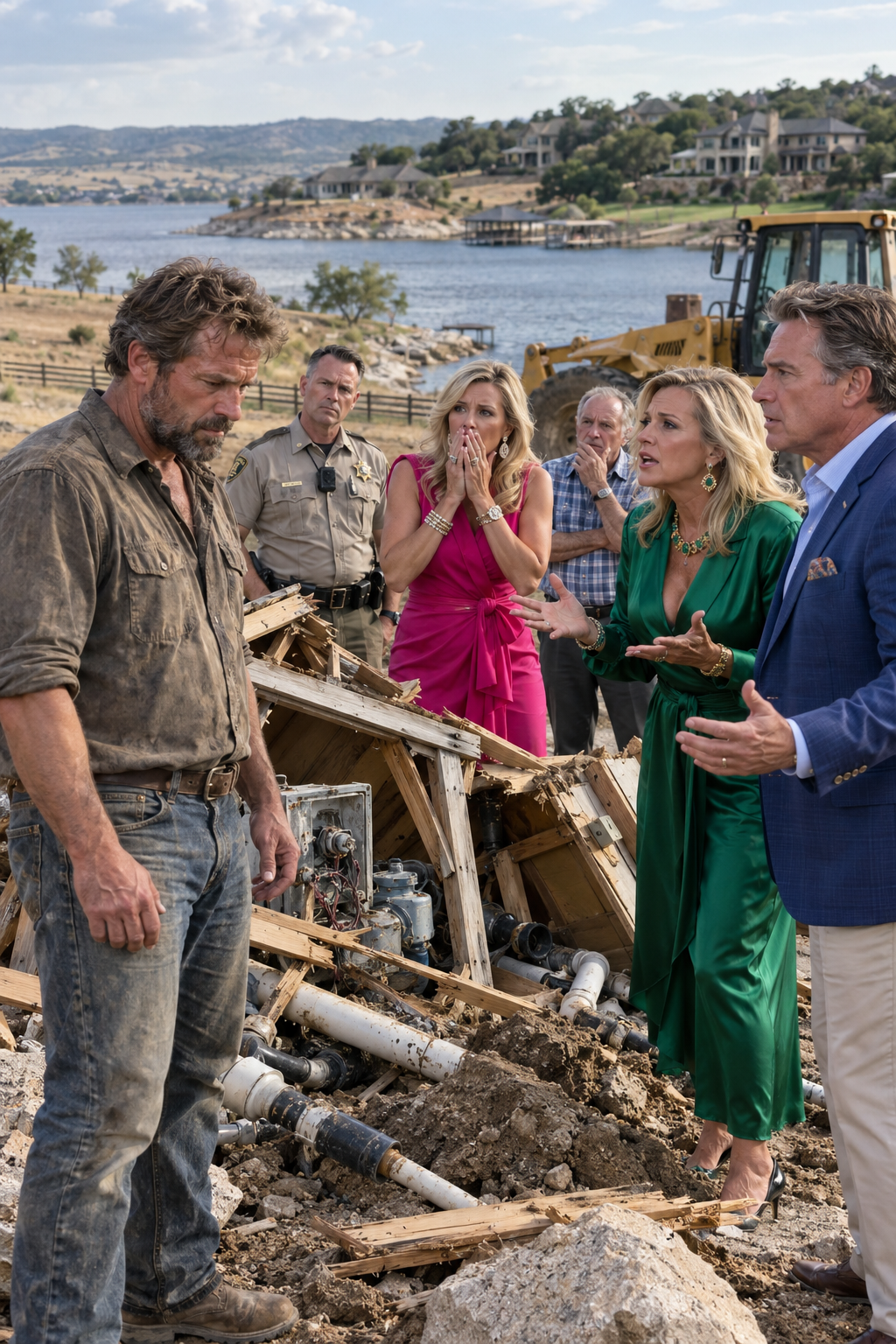
The HOA Bulldozed My Father’s Well Shed and Left 438 Homes Dry—Then I Found the Water Deed He Buried Before Dying
The HOA president ordered a bulldozer to crush my dead father’s well shed while the emergency pressure alarms were still screaming.
Then she sent 438 families a notice saying I was responsible for their water being shut off.
By noon, children were crying in houses without running water, an elderly woman was begging for enough to take her medication, and Karen Whitfield was standing on my property in designer sunglasses, threatening to have me arrested for trespassing.
There was just one problem.
The land belonged to me.
The well belonged to me.
And somewhere beneath that land, my father had buried a document Karen had spent eleven years pretending didn’t exist.
I didn’t scream when I saw the wreckage.
I didn’t threaten the construction crew.
I didn’t even raise my voice when Karen called my father a stubborn old fool who had finally gotten what he deserved.
Instead, I took out my phone, photographed the destroyed pumping equipment, and asked her one simple question.
“Karen, who told you that you owned the water?”
She smiled.
“The deed, sweetheart.”
That was when I knew she had made the biggest mistake of her life.
Because my father had left me one final instruction before he died.
And it had nothing to do with money.
It had nothing to do with revenge.
It had nothing to do with the house, the farm, or the 147 acres my family had owned for three generations.
It had everything to do with a rusted iron marker beneath an old walnut tree.
I remembered the way his hand had tightened around mine in the hospital.
I remembered the oxygen machine humming beside his bed.
I remembered him refusing another dose of pain medication until I promised to listen.
I remembered his voice breaking when he mentioned the well.
And I remembered the six words that had made no sense at the time.
“When the water stops, start digging.”
My name is Leah Bennett.
I’m thirty-eight years old, a civil infrastructure consultant, and until that Thursday morning, I believed the ugliest part of my father’s fight with the Crestwick Ridge Homeowners Association had ended when we buried him.
I was wrong.
Very wrong.
Crestwick Ridge sat in the rolling foothills outside Asheville, North Carolina.
It was the kind of neighborhood real estate agents described with words like peaceful, exclusive, and breathtaking.
Four hundred thirty-eight houses spread across wooded hillsides, winding streets, and carefully maintained cul-de-sacs.
Stone entrance columns.
A clubhouse with a heated pool.
Flower beds that somehow received more attention than the county roads.
And an HOA president named Karen Whitfield who had apparently decided the entire mountain existed for her convenience.
My father, Robert Bennett, had been there long before the first house was built.
He owned the original Bennett Farm.
He owned the lower meadow.
He owned the wooded ridge behind the development.
And he owned the parcel containing the deep community well that supplied Crestwick Ridge with its drinking water.
The well had been drilled in 1987, when the land was still mostly pasture.
Two years later, a developer approached my father about building homes on the neighboring acreage.
Dad agreed to provide access to the well through a limited water easement.
That agreement eventually allowed hundreds of families to build their lives in Crestwick Ridge.
Dad maintained the well structure for decades.
He kept the access road clear.
He permitted the water cooperative’s technicians to service equipment.
When storms knocked out electricity, he helped move generators up the hill.
He wasn’t a wealthy man.
His pickup had more rust than paint.
His boots were always covered in red Carolina clay.
But he believed that when you allowed someone to depend on your land for something as important as water, you had a responsibility not to abandon them.
Karen Whitfield believed something different.
She believed anything useful should belong to the HOA.
Especially when somebody else had already paid for it.
For six years, she had tried to convince my father to transfer ownership of the well parcel.
First, she offered money.
Then she offered threats.
Then came letters from attorneys, property violation notices, accusations about unsafe structures, and demands that he surrender what she called “community-controlled infrastructure.”
My father refused.
Not because he wanted to punish the residents.
But because he had seen what Karen did with power.
The first year she became HOA president, she raised monthly assessments by forty percent.
The second year, she pushed through a clubhouse renovation that ran nearly a million dollars over budget.
The third year, she approved a management contract for a company partly owned by her brother-in-law.
And the fourth year, she began talking about something called the Crestwick Expansion Initiative.
Dad called it a land grab dressed up as a neighborhood improvement.
I thought he was exaggerating.
I wish I had listened more carefully.
On the morning of the demolition, I was drinking coffee at my father’s kitchen table when my phone rang.
It was a.m.
Ben Torres, the licensed water-system operator who had maintained the Crestwick pumps for thirteen years, sounded like a man trying not to panic.
“Leah, are you home?”
“Yeah. What’s wrong?”
“There’s a bulldozer at the pump house.”
“They brought a demolition crew. Karen says the association has an emergency removal order.”
“Ben, that’s private property.”
“I told them. They’re not listening.”
Something metallic crashed in the background.
Then I heard him shout.
“Shut that machine off! The controls are still live!”
The call cut out.
I grabbed my truck keys.
The well sat a little more than half a mile from the farmhouse, beyond the old apple orchard and up a gravel maintenance road.
By the time I reached the first gate, I could hear machinery.
Not a small excavator.
Not a tractor.
Heavy equipment.
The kind used to clear buildings.
A yellow bulldozer had already pushed through the east wall of the well shed.
The wooden structure was collapsing around a concrete foundation.
Broken boards covered the service trench.
A section of blue electrical conduit hung from a crushed beam.
The emergency alarm cabinet was lying sideways in the mud.
And water was spraying from a damaged feed connection in a thin, violent arc.
Ben stood beside a utility truck, waving both arms at the operator.
“STOP! STOP THE MACHINE!”
The bulldozer reversed.
Its steel tracks crushed a section of pipe.
The spray abruptly weakened.
Then stopped.
I parked across the access road and stepped out.
Karen Whitfield was standing beside a silver Range Rover.
She wore cream-colored pants, a white blouse, and sunglasses large enough to cover half her face.
Beside her stood a younger man holding a clipboard.
Three contractors were watching the destruction with expressions that told me they had only recently discovered this wasn’t a routine demolition.
I walked straight toward the equipment.
“Turn it off.”
The operator looked at Karen.
She folded her arms.
“Leah. You’re interfering with an authorized project.”
“Turn it off,” I repeated.
This time, I wasn’t talking to Karen.
I was talking to the man inside the bulldozer.
He shut down the engine.
The sudden silence was enormous.
For a moment, the only sounds were the ticking of cooling machinery and Ben’s breathing.
Karen removed her sunglasses.
“You have ten seconds to move that truck before I call the sheriff.”
“Go ahead.”
She blinked.
“Excuse me?”
“Call him. Tell him you’re standing on Robert Bennett’s property after destroying a regulated community water facility.”
Her smile tightened.
“The HOA owns this infrastructure.”
“No. It doesn’t.”
“We have a deed.”
“Then you won’t mind showing it to the sheriff.”
The younger man with the clipboard looked uncomfortable.
Karen turned toward him.
“Mr. Collins, continue documenting the site.”
I looked at his company logo.
Braddock Site Services.
Then at the demolition equipment.
Then back at Karen.
“Did you disconnect the power and isolate the pressure lines before starting?”
She said nothing.
“Did you notify the water operator?”
“That isn’t your concern.”
“Did you coordinate an alternative drinking-water supply for 438 occupied homes?”
Karen laughed.
Actually laughed.
“Don’t be dramatic. The tanks have reserve capacity.”
Ben stepped forward.
“Not anymore.”
That stopped her.
His face was pale.
“The north storage tank was already at thirty-one percent. We were scheduled to refill it this morning. The pump controls are destroyed. The main telemetry is down. There’s no pressure support.”
Karen looked at the wreckage.
“Then fix it.”
Ben stared at her.
“You just bulldozed the equipment that runs it.”
She turned toward me.
“Your father’s negligence is becoming very expensive.”
I said nothing.
Instead, I took another photograph.
Then another.
Then I walked close enough to the damaged concrete slab to capture the severed electrical connections and fractured pipe fittings.
Karen followed.
“Put that phone away.”
“You’re on HOA property.”
I turned to face her.
“Say that again.”
She lifted her chin.
“This facility belongs to Crestwick Ridge.”
“Look at the camera, Karen.”
She frowned.
“Because I want a clear recording of your ownership claim.”
She stepped backward.
That was the first time I saw uncertainty flicker across her face.
It lasted less than a second.
Then her phone rang.
She looked at the screen and answered.
“Yes, Adrian. We’re handling it.”
She turned away.
I caught only fragments.
“…unexpected complication…”
“…operator making threats…”
“…before the investors arrive…”
That last sentence stayed with me.
At seven-thirty in the morning?
At a community well?
I looked toward the gravel road.
Three additional vehicles were approaching.
One county utility truck.
One sheriff’s patrol SUV.
And a white pickup carrying emergency-management equipment.
Ben had made calls before contacting me.
Very good man.
Deputy Sheriff Daniel Price climbed out first.
He was forty-six, broad-shouldered, and had attended the same high school as my older brother.
He looked at the destroyed shed.
Then at Karen.
Then at me.
“Somebody want to explain why the county dispatch center is getting calls about a community water-system failure?”
Karen stepped forward.
“Deputy, thank goodness. This woman is trespassing and obstructing HOA maintenance.”
Daniel looked at me.
“Morning, Daniel.”
“Your dad’s property?”
“Every inch.”
Then he looked at Karen.
“Ma’am, I suggest you stop talking until we establish what’s happened.”
Her face changed.
Just a little.
But I noticed.
Karen was used to controlling rooms.
She was used to controlling neighbors.
She was used to controlling meetings where everybody else had three minutes to speak and she had the microphone.
She wasn’t used to a deputy who remembered who owned the land before the subdivision existed.
Ben approached with his tablet.
“Deputy, we’ve got a pressure emergency. System-wide.”
Daniel’s radio crackled.
Dispatch was receiving complaints from Crestwick Ridge.
Low pressure on Pine Hollow Drive.
No water on Fox Ridge Lane.
Air blowing through faucets on Willow Brook Court.
The north section had completely lost service.
The south section was following.
Ben looked at his watch.
“Leah, in another hour, most of the neighborhood will be dry.”
I looked at the shattered remains of the shed.
At the wires hanging from the wreckage.
At the bulldozer standing in the mud.
Then at Karen.
She had stopped smiling.
But not because she felt guilty.
Because something had happened earlier than she’d expected.
I knew that look.
I’d seen it in construction meetings when somebody discovered their schedule depended on a permit they’d never bothered to obtain.
“Ben,” I said, “what can we save?”
He took a breath.
“The well casing may still be intact. The motor’s down there. The feed line’s damaged. The control panels are gone.”
“Any risk of contamination?”
“Absolutely. The protective enclosure is destroyed. We’ve got an open service trench and broken fittings. We need to isolate the affected connections, protect the wellhead, and test before anybody drinks from it again.”
“Then that’s where we start.”
Karen stepped between us.
“You will not touch HOA equipment.”
I looked at Daniel.
“Deputy, please record that statement.”
And just like that, Karen made her second mistake.
Her first had been destroying the pump house.
Her second was trying to prevent anyone from repairing it.
Within twenty minutes, Ruth Ellis, the county emergency-management director, arrived with two additional vehicles.
Ruth was a practical woman in her fifties who wore steel-toed boots and kept three pens clipped to the front of her shirt.
She assessed the wreckage in silence.
Then she asked Ben a series of questions about system pressure, storage capacity, vulnerable residents, and the estimated restoration process.
When he finished, she turned toward Karen.
“Who authorized the demolition?”
Karen raised her hand slightly.
“I approved a necessary safety intervention.”
“Under what authority?”
“HOA Resolution 24-118.”
Ruth opened her notebook.
“That’s an association resolution?”
“Not a county demolition permit?”
Karen hesitated.
“We were advised—”
“Not a state drinking-water authorization?”
“Not an emergency order issued by this office?”
Karen’s mouth tightened.
Ruth closed her notebook.
“Then your board resolution does not replace any of those.”
Behind her, one of the county workers made a quiet sound that might have been a cough.
I suspected it was a laugh.
Ruth continued.
“The priority is supplying these families with safe water. We’ll deal with responsibility after that.”
She looked at me.
“Ms. Bennett, do we have your permission to use this access road for emergency crews?”
“Your permission to stage equipment in the lower meadow?”
“And access to the remaining water-system components for evaluation?”
“Yes, subject to Ben’s safety procedures.”
Ruth nodded.
Karen looked as though someone had slapped her.
“You cannot make agreements regarding HOA property without board approval.”
Ruth turned.
“Mrs. Whitfield, there are more than four hundred households depending on this system. Right now, you may either help us protect them or step aside.”
Karen said nothing.
But her phone was already in her hand.
The first emergency water truck reached Crestwick Ridge shortly before ten.
By then, the neighborhood’s private Facebook group had become a battlefield.
I know because screenshots started arriving from people I hadn’t spoken to in years.
Karen’s official statement appeared at a.m.
“The Crestwick Ridge Board regrets to announce a temporary disruption of community water service due to unauthorized interference by the Bennett estate. Our legal team is pursuing immediate remedies. Residents should direct concerns to the Bennett property owner.”
She had ordered the demolition.
She had ignored the operator.
She had destroyed the equipment.
And now she was blaming me.
For the first time that morning, I felt real anger.
Not the hot kind that makes you shout.
The colder kind.
The kind that makes everything in your mind suddenly become very clear.
I forwarded the screenshot to my attorney.
Then I typed one response in the neighborhood group.
“My name is Leah Bennett. The well shed was demolished this morning by a contractor acting under HOA President Karen Whitfield’s direction. County emergency management and the sheriff’s department are responding. I have authorized access for emergency repairs and water distribution. I will share verified updates as they become available.”
I attached three photographs.
One showed the operating well shed from the previous week.
One showed the bulldozer crushing its east wall.
And one showed Karen standing beside the machine while Ben tried to stop the work.
I didn’t insult her.
I didn’t threaten her.
I didn’t mention lawsuits.
The photographs did enough.
Within fifteen minutes, my phone was vibrating continuously.
Neighbors were asking questions.
Some were thanking me.
Others were furious.
Several were demanding to know why I hadn’t “given the HOA the well years ago.”
Then a private message arrived from a woman named Donna Fisher.
I recognized the name.
Donna was eighty-one and lived on Hawthorn Circle with her husband, Frank.
My father used to bring them tomatoes every summer.
Her message was short.
“Leah, Frank needs water for his medication and hygiene care. The clubhouse station is too far for me to drive today. Can you help?”
I showed it to Ruth.
She immediately added the address to the priority-delivery list.
Then I took two cases of bottled water from my truck and drove there myself.
Donna answered the door wearing a pink cardigan.
She looked smaller than I remembered.
“Your father always said you’d come home when the mountain needed you,” she whispered.
I carried the water into her kitchen.
The faucet was open.
Nothing came out.
On the counter sat two empty pitchers and a ceramic bowl containing Frank’s morning medications.
Donna touched the bottles.
“They’re saying your father caused this.”
“No, ma’am.”
“They’re saying he refused to sell the well and left everyone vulnerable.”
I looked at her.
“My father maintained that well for thirty-six years.”
Her eyes filled.
She took my hand.
“He used to come out during the winter storms and make sure Frank had water. Even when the roads were frozen.”
I squeezed her fingers.
“Ruth’s people are organizing deliveries. I’ll make sure you’re on the list.”
She nodded.
Then her expression changed.
“Did you find what your father left for you?”
I went still.
“What do you mean?”
Donna glanced toward the kitchen window.
“About three weeks before he went into the hospital, he came by to borrow Frank’s old metal detector.”
I stared at her.
“My father borrowed a metal detector?”
She nodded.
“He said he needed to make sure something stayed exactly where he put it.”
A chill moved slowly up my back.
“Did he say what?”
Donna shook her head.
“Only that one day you would understand why he couldn’t trust the courthouse anymore.”
For a moment, I heard my father’s voice as clearly as if he were standing beside me.
When the water stops, start digging.
I had assumed the words came from pain medication.
I had assumed he was confused.
Standing in Donna’s kitchen, surrounded by bottles of water her neighborhood should never have needed, I realized something.
My father had known this day was coming.
Maybe not the exact date.
Maybe not the bulldozer.
But he had known someone would eventually try to take the well.
And he had prepared for it.
I thanked Donna.
Then I went straight home.
The old farmhouse was quiet when I entered.
Dad’s boots still sat beneath the bench by the back door.
His fishing rod leaned against the pantry wall.
And the yellow legal pad he used for grocery lists remained on the kitchen counter.
I had been unable to throw any of it away.
I walked into his study.
It smelled like cedar, coffee, and old paper.
There were photographs of my mother, who died when I was nineteen.
A framed picture of Dad standing beside his first pickup.
A faded county fair ribbon.
And a large wooden cabinet containing land surveys dating back to the 1940s.
I opened the bottom drawer.
Most of the folders were ordinary.
Property taxes.
Farm equipment.
Well maintenance receipts.
Then I found a manila envelope with my name written across the front.
Inside was a single sheet of paper.
Not a letter.
Not an explanation.
It showed the farmhouse, the orchard, the old walnut tree, and the stone wall separating the lower meadow from the northern woods.
There was a small X drawn beside the tree.
Below it, in my father’s unmistakable handwriting, were three words.
“Find the iron.”
I turned the paper over.
Another sentence.
“Never let them use the copy.”
I stood in the middle of his study for a long time.
Then my phone rang.
It was my attorney, Maya Chen.
“Leah, I’ve reviewed the photographs,” she said. “Please tell me the equipment is still on your land.”
“Good. Don’t let the contractor remove anything until the damage is documented.”
“County emergency management is already securing the site.”
“Even better.”
I looked at the paper in my hand.
“Maya, I think my father hid something.”
There was a pause.
“What kind of something?”
“A document.”
“Underground.”
Another pause.
Then she said, very carefully, “Leah, what document?”
I looked toward the window.
Beyond the orchard, the old walnut tree stood against the morning sky.
“I think it’s the original water deed.”
Maya went silent.
When she spoke again, her voice had changed.
“Leah, I need you to listen carefully.”
“I’m listening.”
“Three weeks before your father died, he contacted my office.”
My stomach tightened.
“He asked for a consultation. He said there was a document the HOA couldn’t be allowed to destroy.”
“Why didn’t you tell me?”
“Because he was my client. He instructed me not to contact you until a specific event occurred.”
I stared at the phone.
“What event?”
Maya took a breath.
“An attempt to physically seize or demolish the water facility.”
Outside, wind moved through the walnut branches.
My father’s last warning suddenly didn’t sound confused at all.
It sounded like a plan.
Maya continued.
“He told me there was only one valid deed governing the well property and the community’s permanent water easement.”
I looked down at the drawing.
“And Karen has been using a different one.”
“How different?”
Maya hesitated.
“Different enough that your father believed somebody had committed a serious fraud.”
I sank into his desk chair.
“How serious?”
“Leah, I haven’t seen the original. But if what your father told me is true, the HOA may have used a forged ownership document to secure millions of dollars in financing.”
I looked through the study window toward the ridge.
Somewhere beyond the trees, Karen Whitfield was probably making another phone call.
Probably blaming someone else.
Probably telling her attorneys to prepare a threat.
She had no idea what was coming.
Neither did I.
Because before Maya could tell me anything more, my phone buzzed with an incoming email.
The subject line read:
FINAL NOTICE OF PROPERTY SEIZURE.
It had been sent by Crestwick Ridge’s legal counsel.
And attached to it was a demand that I surrender my father’s well parcel to the association by p.m.
That same day.
Or face a lawsuit seeking emergency possession.
I read the final paragraph twice.
Then I called Maya back.
“They aren’t trying to repair the well,” I said.
“They want the land.”
I forwarded the email.
Maya opened it while I waited.
I heard her inhale sharply.
“Don’t respond to this.”
“Because the deed number they’re using is the exact one your father told me to watch for.”
I looked at the drawing.
At the little X.
At the words Find the iron.
Then I stood.
“I know where he buried it.”
Maya arrived at the farmhouse forty-seven minutes later.
She didn’t come alone.
Behind her black SUV was a county survey truck driven by a retired land surveyor named Samuel Reed.
Sam was seventy-one, lean as a fence post, and had worked alongside my father when Crestwick Ridge was nothing but hills, blackberry thickets, and a developer’s optimistic drawings.
He climbed out holding a canvas field bag.
“Your father was a difficult man,” he said by way of greeting.
I almost smiled.
“People keep telling me that.”
“He was difficult about things that mattered.”
Maya walked up the porch steps.
“Show us the drawing.”
I spread the paper across Dad’s kitchen table.
Sam adjusted his glasses.
For nearly a minute, nobody spoke.
Then he tapped the X beside the walnut tree.
“Well, I’ll be damned.”
Maya looked at him.
“You recognize it?”
Sam nodded.
“That’s the old north benchmark.”
“The what?” I asked.
“Your grandfather set an iron survey marker here in 1952. Your father used it when we marked the original development boundary. He kept the location off the modern landscaping plans because it wasn’t needed for the subdivision survey.”
“Why would he bury a deed there?”
Sam stared at the drawing.
“Because he knew nobody from the HOA would bother learning the land’s history.”
That sounded exactly like Dad.
Maya pulled out her phone.
“Before we touch anything, we document the location. Continuous video, photographs, witnesses. If this becomes evidence, I want a clean record of where it was found.”
“I’ll get the tools.”
Sam caught my arm gently.
“One more thing, Leah.”
“Your father made me promise something.”
My heart started pounding.
“He knew I might be needed someday. Said if the water company or the HOA tried to claim the ground beneath the well, I was to help you find the original boundary.”
“Why didn’t you come earlier?”
His expression softened.
“Because until today, nobody had actually destroyed what he built.”
We walked across the orchard together.
The old walnut tree stood near the northern fence line, its trunk thick and deeply scarred.
When I was eight, Dad tied a rope swing to one of its lower branches.
When I was twelve, I broke my wrist falling from that swing.
And when I was twenty-two, my father sat beneath the same tree and told me my mother had left enough insurance money to finish college if I wanted to get out of our little mountain town.
I remembered asking if he wanted me to leave.
He had shrugged.
“I want you to have choices, sweetheart.”
Now I was back.
And somehow he was still giving me one.
Sam paced away from the trunk.
Fourteen steps.
Then seven toward the stone wall.
He stopped.
“The old marker should be about here.”
He removed a compact metal detector from his field bag.
The device beeped immediately.
Sam smiled without humor.
“Your father knew exactly what he was doing.”
We cleared the leaves.
Beneath several inches of soil, my shovel struck iron.
Not a pipe.
Not a buried tool.
A round survey pin with a flattened head.
Sam knelt and brushed away the dirt.
“Bennett North,” he said quietly.
The letters were almost invisible beneath rust.
He turned toward the tree.
“Leah, measure six feet toward the house.”
The detector chirped again.
This time, the object was deeper.
We dug carefully.
The soil was packed hard.
At twenty-eight inches, my shovel hit something that sounded hollow.
My hands went cold.
Maya crouched beside me.
“Stop. Let me film this before we move it.”
I stood back while she documented the hole, the measuring tape, and the surrounding landmarks.
Then Sam knelt and used a small garden trowel to clear the remaining dirt.
A dull brass cylinder emerged from the earth.
It was about sixteen inches long, capped at both ends, with dark waterproof tape around the threads.
My father had wrapped it in an old rubberized cloth.
On one side, he had scratched four letters.
R.B. TO L.B.
Robert Bennett to Leah Bennett.
I pressed my lips together.
For the first time that day, I almost cried.
Not because the cylinder meant money.
Not because it might help us defeat Karen.
Because Dad had been dying, frightened about the well, and still trying to protect people who would never know what he had done.
Sam reached for me.
“You open it, Leah.”
My fingers were shaking when I loosened the cap.
Inside were two sealed document sleeves.
One was labeled:
ORIGINAL RECORDED WATER EASEMENT — 1989.
The other was labeled:
IF THEY CLAIM OWNERSHIP, READ THIS FIRST.
I stared at the second sleeve.
Maya leaned closer.
“Your father really did prepare for this.”
I removed the first document.
Heavy cream-colored paper.
A county recorder’s stamp.
A faded raised seal.
My father’s signature, written in the strong blocky hand I recognized from thousands of birthday cards and grocery lists.
And several pages of legal descriptions attached with old brass fasteners.
At the top, the document read:
GRANT OF LIMITED WATER SUPPLY EASEMENT AND NONEXCLUSIVE DISTRIBUTION RIGHTS.
Maya took a slow breath.
“That’s not a transfer of ownership.”
“No,” Sam whispered. “It sure isn’t.”
I turned the page.
The legal description identified a 6.4-acre well parcel inside the Bennett Farm.
It established the Crestwick Community Water Cooperative’s right to draw water for domestic use by approved residential connections.
It permitted reasonable maintenance access.
It prohibited commercial diversion without the landowner’s written consent.
And it specifically stated that no association board, management company, developer, or successor administrator could claim ownership of the underlying land merely by operating or maintaining the water system.
Maya read the clause twice.
Then a third time.
“Leah, this is extraordinary.”
I looked at her.
“What does it mean?”
“It means the document Karen’s attorneys sent this morning is inconsistent with the original grant.”
“How inconsistent?”
Maya flipped to the final page.
“Their document claims the HOA owns the entire well parcel, with unrestricted rights to transfer or commercialize the water infrastructure.”
“And this one?”
“This one says exactly the opposite.”
Sam let out a long breath.
“Robert told them no. In writing. Before the first house was even built.”
I looked at my father’s signature.
September 14, 1989.
The day he had agreed to let a future neighborhood use the water beneath his land.
He had trusted the families.
Not the people who wanted to profit from them.
But Maya wasn’t smiling.
She was examining the recording details along the bottom of the original deed.
“There’s something else,” she said.
“The instrument number matches the reference Karen’s lawyer used.”
“How is that possible?”
“Because their claimed ownership document relies on an amendment to this exact grant.”
She opened the attachment from the email on her phone.
The amendment was supposedly executed in 2015.
It stated that Robert Bennett had voluntarily surrendered the well parcel to the HOA for one dollar and “other valuable consideration.”
The attached signature looked vaguely like my father’s.
But something about it was wrong.
Dad’s capital R always had a distinctive hook.
His B was usually open at the top.
And he never signed his full middle name on ordinary contracts.
This document included a polished signature that looked like something copied from the front of an old bank account application.
I pointed to it.
“That’s not his signature.”
Maya nodded.
“I suspected that would be your reaction.”
“He didn’t sign this.”
“We’ll need forensic examination. And the recording history.”
I looked at the 2015 date.
November 17.
The year meant something.
I closed my eyes.
Then I remembered.
That was the fall Dad had fallen from the barn ladder.
He’d shattered his pelvis and spent almost six weeks in a rehabilitation facility outside Charlotte.
My older brother Michael and I had visited every weekend.
Dad hated the food.
He hated the television.
He hated being unable to stand without assistance.
And he certainly hadn’t been traveling to some county office to surrender his life’s most valuable property.
I opened my eyes.
“On the day this says he signed, Dad was in physical rehabilitation.”
Maya’s gaze sharpened.
“Can you prove it?”
“Hospital records. Insurance claims. My brother’s photographs. Everything.”
“Was he mentally capable of signing legal documents?”
“Yes. But he wasn’t there.”
“Location alone may not settle it. We need to identify the notary, the witnesses, and how the document was recorded.”
I understood.
This wouldn’t be solved with one dramatic accusation.
It would be solved with evidence.
Signatures.
People who could testify.
Exactly the kind of work I had spent fifteen years doing.
I lowered myself onto the grass.
“What now?”
Maya looked toward the distant rooftops of Crestwick Ridge.
“Now we protect this original. We get certified historical records. We seek immediate court relief to stop further destruction. And we make sure the water emergency stays separate from the ownership dispute.”
Sam nodded.
“The families didn’t bulldoze that shed.”
“No,” I said. “They didn’t.”
That distinction mattered.
It would matter every day afterward.
Because Karen had done something cruel, but I wasn’t going to respond by becoming cruel myself.
Four hundred thirty-eight households were not bargaining chips.
Their children were not bargaining chips.
Their elderly parents were not bargaining chips.
Their water was not bargaining chip.
Karen could fight me in court.
She could call me names.
She could send as many letters as she wanted.
But I was not going to make innocent families suffer just to prove she was wrong.
At eleven forty-two, I handed Maya the original deed.
She placed it inside a protective sleeve and photographed the transfer.
Sam signed a witness statement.
Then we put the brass cylinder and its wrappings into separate evidence bags.
I kept the second sleeve.
Maya noticed.
“Leah, we should document that too.”
I turned it over.
My name appeared again in Dad’s handwriting.
Underneath were two words.
I looked at Maya.
She studied the envelope.
“Did he tell you when?”
I shook my head.
“Only that I should start digging when the water stopped.”
She thought for a moment.
“Keep it sealed for now. Let’s record exactly what we’ve found and preserve everything. If we need the other document for court, we can open it together.”
I slipped the sleeve into my bag.
For some reason, I felt Dad would have approved.
At twelve-fifteen, the first angry resident came to my front gate.
He drove a red Ford F-150 and stopped so hard gravel sprayed against the fence.
His name was Greg Holloway.
I knew him only slightly.
He lived in one of the expensive houses on the upper ridge and had served on the HOA landscaping committee.
He climbed out wearing a golf shirt and an expression like he was ready for a fight.
“Are you Leah Bennett?”
“Then you need to turn our water back on.”
I stood behind the gate.
“Ben and the county are working on it.”
“That’s not good enough.”
That confused him.
He looked as though he had rehearsed an argument and I’d skipped the important part.
“My wife has three kids at home. We can’t flush toilets. We can’t wash dishes. We pay almost six hundred dollars a month in HOA assessments. Somebody needs to do something.”
“You’re right.”
“Then why won’t you cooperate with the board?”
I held up my phone.
“Have you seen the demolition video?”
He frowned.
“What video?”
I played it.
Karen standing beside the bulldozer.
Ben shouting that the system was still live.
The machine driving into the structure.
The exposed water line breaking.
Greg watched without speaking.
When the clip ended, he looked at me.
“They said you locked the gate and sabotaged the pumps.”
“The gate was open. Their contractor drove through it.”
He looked back at the screen.
“Karen authorized that?”
“She was standing there.”
He rubbed his face.
I put my phone away.
“The county has emergency water points operating. Ruth Ellis is organizing deliveries for residents who can’t travel. Ben is assessing what can be restored safely.”
Greg stared toward the ridge.
“My wife just got a text saying we need to pay a special water infrastructure assessment.”
“How much?”
“Eighteen hundred dollars. Due in ten days.”
“From the HOA?”
“They’re calling it the Bennett Emergency Recovery Fee.”
My pulse slowed.
That particular kind of slow that comes just before you understand something ugly.
“Greg, forward me that notice.”
He hesitated.
“Because somebody appears to be charging you to repair damage they deliberately caused.”
He took out his phone.
A minute later, the notice appeared in my inbox.
The association was demanding $1,800 from each household.
Four hundred thirty-eight households.
Seven hundred eighty-eight thousand four hundred dollars.
I knew the number without opening a calculator.
I had spent most of my professional life checking the budgets of public construction projects.
This was more than an emergency repair assessment.
It was a substantial amount of money.
And Karen had issued it less than five hours after the demolition.
I looked at Greg.
“Did the board vote on this?”
He shook his head.
“Karen said the emergency authority allowed it.”
“Did she provide a contractor’s cost estimate?”
“An engineering assessment?”
“An insurance determination?”
He looked increasingly uncomfortable.
I thanked him.
Then I forwarded the notice to Maya.
She called almost immediately.
“Leah, where did you get this?”
“Resident.”
“Has anyone paid?”
“Not that I know of.”
“Tell them to preserve the notice and verify their legal obligations before sending money. Don’t give advice about withholding regular assessments. We need to distinguish the emergency charge from their normal obligations.”
“Understood.”
Maya was quiet for a moment.
“Something about this doesn’t add up.”
“The association moved very quickly to blame your estate. Very quickly to demand ownership. And now they’re collecting money for a repair nobody has even estimated.”
“Karen spoke to somebody named Adrian at the demolition site.”
“She said investors were arriving.”
Maya exhaled.
“That might explain the timing.”
“The HOA has been negotiating with a company called Keene Development Partners.”
The name meant nothing to me.
“They’ve proposed a luxury residential and hospitality project on the land bordering Crestwick Ridge.”
“North of the subdivision. Near the old timber tract.”
I turned toward the walnut tree.
That tract sat directly above the well.
“Sixty-two luxury vacation cottages, a boutique lodge, and a private wellness retreat. Estimated construction value, eighteen million dollars.”
I glanced down at the emergency assessment.
“And they want the well.”
“They need a dependable water source. Their land-use plans appear to assume the association can authorize additional connections.”
“But the original deed specifically forbids commercial diversion without my consent.”
I looked back toward the ridge.
Something clicked.
Karen hadn’t destroyed the shed because she thought it was unsafe.
She wanted to change who controlled it.
And maybe, just maybe, she expected the resulting emergency to force me into an agreement.
“Leah?” Maya said.
“I’m here.”
“Don’t confront her about the development yet.”
“Because I want to see what she does when she thinks you don’t know.”
I smiled for the first time that day.
A small smile.
The kind my father used to make when he drew a good hand at poker.
“That’s fine,” I said.
“Let her talk.”
By one-thirty, the situation had grown more serious.
Ben reported that the storage tanks had fallen below minimum operating levels.
The state drinking-water program had been notified.
County health officials were helping coordinate public advisories, bottled-water distribution, and sampling plans.
Any damaged lines would need to be inspected and repaired.
Disinfection would be required.
Water-quality tests would have to satisfy the appropriate safety standards before normal drinking-water service resumed.
There would be no magical fix.
No turning a valve and declaring victory.
The families would need a real emergency response.
And the HOA was doing almost nothing useful.
I drove to the clubhouse.
The parking lot was crowded with cars.
Families stood in lines beside two emergency distribution trucks.
Volunteers were handing out cases of water.
A young mother held a toddler on one hip while balancing three empty containers in her other hand.
A man in a wheelchair waited beneath an umbrella.
Two teenagers were carrying supplies to an elderly couple’s trunk.
Ruth stood at the center of it all, directing traffic with a bright orange vest.
When she saw me, she waved.
“Leah! We need more space for incoming deliveries.”
“Use the lower meadow. There’s room for two dozen trucks.”
“We’ll need lighting after dark.”
“My barn has portable floodlights and a generator.”
“Can you spare them?”
“Take whatever you need.”
Ruth nodded once.
Then she lowered her voice.
“There’s a problem.”
“What kind?”
“The HOA management company told residents not to accept water from county volunteers because the board hasn’t approved the distribution.”
I stared at her.
“You’re kidding.”
“Who’s giving those instructions?”
“Office staff. Apparently on Karen’s orders.”
Behind us, a little girl tugged at her mother’s sleeve.
“Mommy, can we wash our hands when we get home?”
Her mother looked exhausted.
“Not with the sink, honey.”
The girl stared at the bottles.
“But that’s drinking water.”
I stepped toward them.
“We’ve got separate hygiene supplies coming too,” I said gently. “The county’s helping your mom figure everything out.”
The mother looked at me.
“Are you the well lady?”
“The what?”
“Someone said you’re the woman whose father built the water system.”
“He helped.”
Her expression softened.
“Thank you for letting the trucks come.”
The little girl studied me.
“Did you break the water?”
The question hit harder than anything Karen had said.
I crouched.
“No, sweetheart.”
“Can you fix it?”
I looked at her mother.
Then back at the child.
“We’re working very hard to make it safe again.”
She nodded solemnly.
“My daddy says if something breaks, you have to find all the pieces.”
I glanced toward the broken pump house beyond the ridge.
“Your daddy sounds pretty smart.”
She smiled.
Then her mother carried her away.
I stood there watching them.
That was when I made my decision.
I would not let this become a simple property fight.
Not while hundreds of families were carrying water through parking lots.
Not while county workers were doing the HOA’s job.
Not while Karen was sending invoices instead of apologies.
I called Maya.
“Can we force the board to produce the project contracts?”
“Possibly. Through discovery, emergency proceedings, member inspection rights, or other legal mechanisms. Why?”
“Because I want to know where that $788,400 assessment is supposed to go.”
“Leah, if she’s using this emergency to finance the expansion—”
“Don’t jump ahead of the evidence.”
I looked across the parking lot.
At the volunteers.
At the families.
At the children.
“I’m going to help keep these people supplied. You find out what Karen has signed.”
Maya’s voice softened.
“Your father would be proud.”
I closed my eyes.
For a moment, that hurt more than I expected.
Then I went back to work.
At two-forty, Ben called from the destroyed well site.
“Leah, we’ve got a problem.”
“Another one?”
“Somebody’s trying to remove the equipment.”
I was already walking toward my truck.
“Braddock Site Services. They say the HOA instructed them to clear all debris before five.”
“Have they started?”
“One truck’s loaded. They’re putting the old control cabinet on a flatbed.”
“Tell Daniel.”
“I did. He’s on his way.”
I climbed into the truck.
“Don’t let them disconnect anything else.”
“Leah, they’ve got two security guards here.”
“Security guards?”
“Private security. Black shirts. One of them just told me the site is under exclusive HOA control.”
I tightened my grip on the steering wheel.
“Ben, get away from the equipment. Don’t argue with them.”
“Listen to me. Your job is keeping the water system safe. Not fighting hired security. Let the deputy handle them.”
I drove faster than I should have.
When I reached the site, two flatbed trucks were parked on the access road.
A hydraulic excavator was lifting a twisted section of the shed’s metal framing.
Beside it stood a man in a navy blazer.
Expensive watch.
Shoes that had clearly never belonged on a muddy construction site.
Adrian Keene.
I knew it before he introduced himself.
He was talking to Karen.
She looked nervous.
He looked angry.
Neither noticed me immediately.
“—was supposed to be clean by the afternoon,” Adrian was saying.
Karen kept her voice low.
“We’ve had unexpected interference.”
“From whom?”
“The daughter.”
He looked toward the flattened structure.
“Then handle her.”
I stepped into view.
“Would you like to do that yourself?”
They both turned.
Karen’s face hardened.
“Leah, you are not authorized to enter an active construction zone.”
I looked at the destroyed equipment.
“It’s my property.”
Adrian studied me.
“You must be Miss Bennett.”
“Leah is fine.”
“Adrian Keene.”
He extended a hand.
I didn’t take it.
His smile didn’t quite disappear.
“I’m sorry we’re meeting under these circumstances.”
He lowered his hand.
“Look, I understand there’s a dispute about an old easement. Nobody wants the residents inconvenienced.”
“Then why are your contractors removing equipment from a damaged drinking-water facility?”
“They aren’t my contractors.”
I pointed toward his vehicle.
A black SUV with a Keene Development Partners parking authorization on the dashboard.
“You’re here to inspect a project you don’t control?”
He glanced at the vehicle.
Then back at me.
“There’s no need to be adversarial.”
“Then let’s keep this simple. The county needs to preserve the damaged equipment for investigation, and the water operator needs access to evaluate what can be salvaged. Tell the crews to stop.”
Karen stepped forward.
“Mr. Keene has a contractual right—”
Adrian raised one finger.
She stopped talking.
It was a tiny gesture.
But I saw everything I needed to see.
Karen was loud when she spoke to neighbors.
She was careful when she spoke to Adrian.
He took out a business card.
“Miss Bennett, perhaps we can settle this privately.”
I accepted the card.
“About what?”
“The well parcel.”
“It’s not for sale.”
“Everything has a price.”
“Not everything.”
His smile became colder.
“You’ve inherited a complicated asset. Old infrastructure. Regulatory exposure. Liability. Maintenance obligations. A dispute with hundreds of neighbors.”
He said each phrase slowly.
Like he was arranging weights on a scale.
“Those things can be expensive.”
“Destroying the equipment probably didn’t help.”
He ignored that.
“My company could take the burden off your hands.”
“By buying the property?”
“By reaching a mutually beneficial agreement.”
“What would that agreement look like?”
He glanced at Karen.
“Sign over the parcel. We address the current water emergency. Your estate receives compensation. Everyone moves forward.”
“How much compensation?”
“Two hundred thousand dollars.”
I stared at him.
He looked pleased.
Perhaps he thought I’d never seen a large check before.
“That’s your offer?”
“That’s a generous offer given the property’s restrictions.”
I tilted my head.
“Which restrictions?”
His expression changed.
“You said the property’s restrictions. Which deed are you relying on?”
Karen went very still.
Adrian studied me for a moment.
“The recorded ownership documents.”
“Which ones?”
He slipped his hands into his pockets.
“Miss Bennett, my attorneys can provide the details.”
“Good. Mine will be interested.”
His smile disappeared.
“Are you rejecting the offer?”
“I’d reconsider.”
He stepped a little closer.
“There are four hundred thirty-eight families without water right now.”
I met his eyes.
“I know. I’ve spent the morning helping them.”
“And restoring the system could take days.”
“Potentially.”
“That creates pressure.”
There it was.
Not a confession.
Not an admission.
Just a businessman revealing how he calculated human suffering.
I looked at Karen.
She avoided my eyes.
Then I turned back to him.
“Mr. Keene, I’m not interested in discussing a land transfer at the scene of an infrastructure failure. Any proposal should go through my attorney.”
He studied me.
Then he nodded.
“Very well.”
Behind him, Daniel’s patrol SUV appeared over the hill.
Adrian noticed.
He turned toward Karen.
“Make sure this doesn’t become more expensive.”
Then he walked away.
By the time Daniel stepped out of his vehicle, Adrian was already getting into his SUV.
Karen had regained her confidence.
“Deputy, these workers are removing unsafe materials.”
Daniel held up one hand.
“Everyone stop working.”
The excavator went silent.
He looked at the flatbed.
“Who ordered the equipment removed?”
A contractor in a reflective vest approached.
“HOA president.”
Daniel glanced at Karen.
“We’re preserving the site pending investigation. That includes the damaged controls.”
Karen bristled.
“You can’t just seize association property.”
“I’m not seizing it. I’m preventing removal while we establish what happened.”
“On whose authority?”
“County investigation. Potential property damage. Potential public-safety violations.”
He looked at the contractor.
“Lower that load.”
The man obeyed.
Karen stared at Daniel with an expression of pure hatred.
But she said nothing.
I watched the excavator lower the ruined control cabinet gently onto the ground.
A small victory.
One more piece of evidence preserved.
One more thing Karen couldn’t make disappear.
Daniel walked over to me.
“Leah, you should know something.”
“Karen’s lawyer contacted the sheriff’s office.”
“About the deed?”
“About you.”
I raised an eyebrow.
“He claims you’re threatening the association and interfering with emergency repairs.”
I looked at the crews.
“That’s rich.”
Daniel lowered his voice.
“He also said the HOA would be taking legal possession of the well parcel at five this afternoon.”
I checked my watch.
Less than two hours.
“What did the sheriff tell him?”
Daniel almost smiled.
“That property disputes don’t get settled by sending a deputy out with somebody’s email.”
“Good answer.”
“But Leah?”
“If they’re this desperate to take possession before dark, you need to find out why.”
I thought about Adrian’s expensive watch.
Karen’s sudden assessment.
The investors.
The removal trucks.
And the forged-looking document sitting on Maya’s desk.
“I think we’re getting close.”
That afternoon, a detail emerged that changed everything.
It came from someone I hadn’t expected.
At p.m., Greg Holloway called me again.
His voice was low.
“Leah, can we meet somewhere private?”
“What’s wrong?”
“I’ve got something you need to see.”
“Can you email it?”
“Because I think the HOA office monitors the board’s document-sharing account.”
I looked toward the farmhouse.
“Come to my place.”
He arrived twenty minutes later.
This time, he wasn’t angry.
He was scared.
He carried a blue folder and kept glancing toward the road.
“I’m on the finance committee,” he said as we sat at the kitchen table.
“Karen asked us to approve a short-term financing resolution last month. She called it a routine extension of the clubhouse improvement loan.”
“I didn’t understand the attachments until today.”
He opened the folder.
Inside were six pages of bank documents.
The first identified a financing arrangement for Crestwick Ridge HOA.
The second listed pledged assets.
Clubhouse reserve funds.
Future assessment revenues.
And a property interest described as:
BENNETT WATER PARCEL — OWNED FREE AND CLEAR BY CRESTWICK RIDGE HOA.
I looked at Greg.
“Who prepared this?”
“Karen’s management company.”
“Did the board approve it?”
“She says they did.”
His face reddened.
“We approved refinancing in principle. I never saw this collateral schedule before the signature packet went out.”
I turned to the final page.
The borrowing amount was $4.6 million.
The maturity date was October 16.
Seven days away.
A balloon payment.
My chest tightened.
“Greg, does the association have the money to repay this?”
He shook his head.
“Not without the new development closing.”
I sat back.
And the whole morning rearranged itself in my mind.
The sudden demolition.
The emergency possession notice.
The assessment.
Adrian Keene.
The five o’clock deadline.
Karen didn’t just want the well parcel.
She needed it.
She had pledged property the HOA might never have owned.
And if she couldn’t prove ownership before the refinancing deadline, a multimillion-dollar deal could collapse.
I looked at Greg.
“Does Karen know you have these documents?”
He nodded miserably.
“I’m supposed to be reviewing them.”
“Why bring them to me?”
He stared down at his hands.
“Because my eight-year-old son asked me this morning whether we’re going to have to move if the water doesn’t come back.”
He swallowed.
“And I realized I didn’t know what our board had done.”
I reached across the table.
“Greg, we’re going to give Maya these. She’ll need to establish where they came from and what they actually mean.”
Then he said something that made the room feel colder.
“Leah, there’s one more thing.”
“Karen called an emergency homeowners’ meeting for seven tonight.”
“I saw the notice.”
“She plans to announce that the Bennett family has agreed to sell the well.”
I stared at him.
“But I haven’t.”
“Then why would she say that?”
He looked toward the window.
“Because Adrian Keene is bringing a financing representative.”
I said nothing.
Greg continued.
“And Karen told the board that once the residents applaud the deal, no court will want to undo it.”
I looked down at the forged-looking deed.
Then at the old brass cylinder on the table.
My father had warned me never to let them use the copy.
Now I understood exactly what he had meant.
The copy wasn’t merely a lie.
It was the foundation of a four-point-six-million-dollar financial arrangement.
And Karen was preparing to build another lie on top of it.
I checked the clock.
Maya was filing our emergency court papers.
Ben was still fighting to restore a basic water supply.
Ruth was delivering water to vulnerable residents.
And in less than three hours, Karen Whitfield intended to stand in front of hundreds of frightened homeowners and announce that she had acquired something I hadn’t agreed to sell.
I picked up the brass cylinder.
Then I looked at Greg.
“Does the meeting allow residents to ask questions?”
He almost laughed.
“Karen has a three-minute speaking limit.”
“Three minutes will be plenty.”
At exactly p.m., Karen Whitfield’s attorney sent another email.
I was standing in the barn with Ruth Ellis, helping unload portable lights, when the notification appeared.
The subject line was almost comical.
NOTICE OF DEEMED CONSENT AND TRANSFER.
I opened it.
The association claimed that my failure to surrender the well parcel by five would be treated as consent to an emergency management arrangement.
It further stated that the HOA would “assume full operational authority” over the property until the dispute was resolved.
I read it once.
Then I forwarded it to Maya.
She called thirty seconds later.
“Leah, do not sign anything.”
“I wasn’t planning to.”
“And don’t let that language scare you. They can’t create a property transfer just because you don’t answer an email.”
“Can we respond?”
“Already drafting it.”
I heard typing.
Then Maya continued.
“I’ve notified their counsel that the purported consent is rejected, that ownership is disputed, and that continued entry without permission may create additional liability. I’ve also requested preservation of every communication concerning today’s demolition.”
“Leah, I want you to understand something.”
“I’m listening.”
“Karen’s attorney has been practicing property law for twenty-seven years. He knows silence doesn’t transfer land ownership.”
I looked toward the barn doors.
Outside, volunteers were carrying bottled water into county vehicles.
“Then why send it?”
“Pressure. Or because someone needs to show a lender that they made a formal demand before a deadline.”
I thought about Greg’s documents.
The $4.6 million loan.
The approaching balloon payment.
“She needs something in writing,” I said.
“Something she can wave in front of the bank.”
“That’s my concern.”
I ended the call and returned to helping Ruth.
She had secured an additional three water tankers, two portable restroom trailers, and a refrigerated truck filled with bottled water donated by a regional distributor.
The county had opened a priority-delivery hotline.
Local churches were providing showers.
A nearby elementary school had offered its gymnasium as an emergency distribution center.
People were doing what people usually do when something terrible happens.
They were helping one another.
The only person who seemed interested in turning the emergency into a business opportunity was the woman who had caused it.
At , Ben drove into the barnyard.
He climbed out looking exhausted.
His jeans were soaked.
There was a thin cut across his right forearm.
I grabbed the first-aid kit from the barn.
“What happened?”
“Nothing serious. Caught my arm on a broken bracket.”
I handed him antiseptic wipes.
While I cleaned the cut, he stared toward the ridge.
“I’ve been trying to figure out why they demolished the east wall first.”
I looked at him.
“What do you mean?”
“If the structure was unsafe, they’d have taken down the roof supports in a controlled sequence. That’s not what happened.”
“Maybe their crew was incompetent.”
He shook his head.
“But the east wall protected the main electrical controls and service trench. They drove straight through it.”
I remembered the bulldozer pushing into the structure.
“Why would they do that?”
“Because somebody wanted the controls destroyed quickly.”
I stopped wiping his arm.
“Can you prove that?”
He looked at me.
“But I’ve got the maintenance logs. I warned Karen’s office last week that demolition could not begin until a replacement pumping system was installed and commissioned.”
My hand froze.
“Last week?”
“She’d been talking about removing the shed for months. I thought she was threatening us to force a sale.”
“Did she request a shutdown schedule?”
“And you told her no?”
“I told her we’d need engineering plans, county coordination, and an uninterrupted emergency water-supply arrangement.”
“Did she respond?”
“Her office said the board would take full responsibility.”
I put the wipes down.
“Ben, do you have those emails?”
“Every one.”
“Send them to Maya.”
Then he looked toward my father’s house.
“Your dad warned me about her.”
“He said one day she’d decide the pipes belonged to whoever could afford the biggest lawyer.”
A sad smile crossed his face.
“Then he told me lawyers still need water to brush their teeth.”
But it felt good.
Ben pulled a folded sheet from his pocket.
“I also found something that might help us restore service.”
He spread it across the hood of my truck.
It was an equipment layout.
The old well structure connected to a control assembly, pressure tanks, a disinfection system, and the distribution line feeding the community storage reservoirs.
He pointed toward a small square at the western edge.
“Your father installed an emergency connection here in 2008. It was designed so we could connect a temporary pumping and treatment skid during major equipment failures.”
“Does it still work?”
“I inspected it. The fitting is damaged, but the connection could be rebuilt.”
“How long?”
“With the right parts, we can probably establish an isolated temporary pumping arrangement much sooner than rebuilding the shed.”
“Can it supply all 438 houses?”
“Not at normal demand. We’d need restrictions, staged use, and approval from the water authorities. And nobody should assume the water is safe to drink until the required testing is done.”
I studied the drawing.
“But it could help restore sanitation water after the system is cleared?”
“That’s the hope.”
“Then what do you need?”
He began listing equipment.
A replacement control panel.
A correctly sized pump drive.
A generator.
Pressure protection.
Temporary sheltering.
Testing supplies.
Certified electricians.
Qualified pipefitters.
I knew companies that stocked most of it.
Some owed me favors from projects in Charlotte and Raleigh.
Others would probably help because an entire neighborhood was without water.
I took out my phone.
“Let’s make some calls.”
For the next ninety minutes, I barely stopped talking.
A contractor in Hendersonville agreed to lend us a portable generator.
A pump supplier in Greenville found a compatible drive that could arrive the following morning.
One of my former project managers located temporary control equipment sitting unused at a municipal construction yard.
A regional plumbing contractor offered two crews at emergency rates.
And a licensed electrical team agreed to inspect the replacement assembly before energization.
None of that meant we could immediately turn the water back on.
The state and county would still need to review the restoration plan.
The system would still need to be disinfected and tested.
But for the first time since dawn, there was a practical path forward.
Ben looked at the growing list.
“Your dad would’ve liked this.”
“Because he hated being told something couldn’t be fixed.”
“He hated being told anything.”
Ben laughed.
Then his face became serious.
“Leah, what happens if Karen wins the property dispute?”
I looked at him.
“She won’t win by destroying things.”
“That’s not what I asked.”
I folded the equipment list.
“Then we’ll fight with facts.”
“And if the facts aren’t enough?”
I thought about my father’s handwriting.
Find the iron.
Never let them use the copy.
“Then we keep looking until we find the truth they’re hiding.”
At p.m., I arrived at the Crestwick Ridge clubhouse.
The parking lot was overflowing.
Residents were standing beside cars, speaking in tense clusters.
Several had brought folding chairs.
Some carried bottled water.
Others held printed copies of the emergency assessment.
Two local reporters stood near the entrance.
Karen’s emergency meeting had attracted more attention than she probably intended.
Greg met me on the walkway.
“You came.”
“Of course.”
“Karen says she isn’t allowing nonresidents inside.”
I glanced at the doors.
“Is she aware the meeting concerns my property?”
“Then she’ll have to decide whether she’d rather answer questions in front of me or explain why she excluded the person she’s accusing.”
Greg shifted uneasily.
“Leah, I need to tell you something.”
“Karen called me this afternoon.”
“She asked whether I’d spoken to you.”
“What did you say?”
“The truth.”
I looked at him.
He swallowed.
“She removed me from the finance committee.”
I was quiet for a moment.
Then I said, “Greg, you did the right thing.”
He shook his head.
“I spent four years assuming the board knew what it was doing.”
“Most people do.”
“I defended her.”
“That doesn’t mean you have to defend her tomorrow.”
He looked toward the crowded clubhouse.
“No. It doesn’t.”
We entered together.
The meeting room was packed.
Rows of white folding chairs faced a raised platform.
A large television screen displayed the Crestwick Ridge logo.
At the front stood Karen.
Beside her sat the HOA’s attorney, a gray-haired man named Richard Sloan.
Two other board members occupied chairs behind the table.
Adrian Keene stood near the side wall, talking quietly to a woman in a charcoal business suit.
I recognized her from a regional banking conference.
Her name was Evelyn Shaw.
She represented a private commercial lender.
I didn’t know whether she was there officially.
But if the proposed deal depended on a credible ownership claim, she was about to hear something uncomfortable.
Karen saw me immediately.
She crossed the room with quick, angry steps.
“You aren’t welcome here.”
I kept my voice calm.
“Good evening, Karen.”
“This is a private HOA meeting.”
“I’ve been named in your agenda and your emergency assessment. My attorney has already requested that you preserve all statements concerning my property.”
Her eyes narrowed.
“You think you can intimidate me?”
I looked toward the crowd.
“I think your residents deserve accurate information.”
She moved closer.
Before I could answer, a woman in the front row stood.
Her name was Melissa Carter.
She was a schoolteacher and a mother of three.
“Karen, let her speak.”
Karen turned.
“This is association business.”
Melissa held up a piece of paper.
“You’re charging my family eighteen hundred dollars because of her property. I want to hear what she says.”
Several people murmured agreement.
Then Greg stepped forward.
“I second that.”
Karen stared at him.
“Greg, you’re no longer a committee member.”
“I’m still a homeowner.”
Someone applauded.
Then another person joined in.
Karen looked toward her attorney.
Richard Sloan leaned close and whispered something.
Whatever he said, she didn’t like it.
But she stepped aside.
“Three minutes,” she snapped.
“That’s enough.”
The meeting began seventeen minutes late.
Karen opened with a statement about unprecedented infrastructure challenges.
She spoke about public safety.
Board leadership.
The need for decisive action.
She mentioned my father’s name six times.
Not once did she mention ordering the bulldozer forward.
She displayed a photograph of the wrecked shed.
“This,” she announced, “is the direct result of decades of neglect by the Bennett family.”
I sat in the third row.
Beside Donna Fisher.
Donna had insisted on coming despite her age.
Frank was staying with their granddaughter.
When Karen said the word neglect, Donna squeezed my hand.
“Your daddy would’ve thrown his hat at that television,” she whispered.
I almost laughed.
Karen continued.
“The board has negotiated a generous transfer agreement that will allow a professional development partner to modernize our water infrastructure and protect homeowners from future disruptions.”
Adrian Keene stood near the wall.
He nodded slowly.
Then Karen displayed a slide.
A rendering of the proposed Crestwick North Retreat.
Luxury cottages.
A landscaped lake.
A private wellness center.
The room became quiet.
Karen smiled.
“This project will strengthen property values and ensure the long-term financial health of our community.”
A man near the back raised his hand.
“Will it use our water?”
Karen ignored him.
“Karen, will those cottages use the same well?”
She tightened her smile.
“All utility planning will comply with applicable requirements.”
“That’s not what I asked.”
Richard Sloan leaned toward the microphone.
“Questions will be taken after the presentation.”
The man sat down, muttering.
Then Karen introduced the special assessment.
Seven hundred eighty-eight thousand four hundred dollars.
She called it a temporary recovery measure.
Someone shouted, “Why are we paying when your contractors broke the building?”
Karen’s eyes flashed.
“There has been no determination of fault.”
Another voice came from the middle rows.
“You were there!”
A third voice joined.
“We saw the pictures!”
Karen struck the table with her palm.
The room fell into a tense silence.
She looked directly at me.
“Miss Bennett, since you seem determined to turn a difficult situation into a spectacle, perhaps you’d like to explain why your father’s estate has refused to cooperate with the association.”
Greg handed me the portable microphone.
I faced the residents.
For a moment, I saw nothing but tired faces.
People who had spent the day carrying water.
People worried about their children.
People frightened about unexpected bills.
I hadn’t come to humiliate them.
I wanted them to understand what had happened.
“My father owned the well parcel for decades,” I began. “He granted domestic water-supply rights to the original community water cooperative in 1989. Those rights were intended to protect the households here.”
Karen interrupted.
“The HOA owns the infrastructure.”
I looked at her.
“You’ll have an opportunity to present your documents in court.”
Several people shifted.
I continued.
“This morning, a demolition contractor acting under Mrs. Whitfield’s direction destroyed the structure containing the well’s control equipment. The licensed operator warned them that the system was active.”
Karen opened her mouth.
I held up my phone.
“I have the video.”
The room went still.
Melissa called out.
Karen immediately objected.
“This meeting will not be hijacked by unauthorized media.”
Richard Sloan whispered something to her.
She folded her arms.
I glanced toward Maya.
She was standing near the rear doors.
She had arrived without fanfare and was watching carefully.
She gave me a slight nod.
I connected my phone to the room’s display through the equipment Greg had arranged.
The video appeared.
There was Karen.
Standing beside the bulldozer.
There was Ben.
Shouting for the operator to stop.
There was the machine pushing through the shed.
The alarm was clearly audible.
Then the water line ruptured.
The room went silent.
Nobody coughed.
Nobody shifted.
Nobody spoke.
Even Karen looked different when forced to watch herself on a screen.
The recording ended.
I disconnected my phone.
“That was this morning,” I said.
A man in the back stood.
“She knew it was operating?”
Ben rose from his chair near the side wall.
Every head turned.
He looked tired.
But his voice was steady.
“I informed the HOA in writing that a controlled replacement plan was required before demolition. I was on-site and told the contractor to stop. I did not authorize the shutdown.”
A woman near the front whispered, “Oh my God.”
Karen stepped toward the microphone.
“Mr. Torres is an employee with a conflict of interest.”
Ben didn’t react.
He simply held up his tablet.
“I have my emails.”
That was the moment the room changed.
Not because someone shouted.
Not because someone threatened a lawsuit.
Because Karen’s version of the morning had finally met the morning itself.
Greg stood.
“Karen, did the board authorize the demolition?”
She glared.
“It was handled under emergency authority.”
“Was there an emergency before you started?”
“Was the well providing water?”
Karen’s jaw tightened.
“Greg, sit down.”
“Did the full board vote to destroy that building?”
Richard Sloan reached for the microphone.
“Mr. Holloway, there are legal issues that should not be discussed in a public forum.”
Greg turned to him.
“Then why are we being asked to approve an assessment before anyone’s investigated those issues?”
Several people applauded.
Karen raised her voice.
I watched Adrian Keene move toward the woman in the charcoal suit.
They spoke briefly.
She shook her head.
Then she walked toward the exit.
Adrian followed.
I didn’t know what had been said.
But I could guess.
The lender had come to hear about a secure investment.
Instead, she’d watched evidence of a demolished public water supply.
I turned back to the room.
“I have one more thing to say.”
Karen laughed bitterly.
“Your three minutes expired.”
I looked at the residents.
“I will not use your water emergency to pressure you into supporting me.”
The room quieted.
“My attorney is investigating the ownership documents. That will take time. But the families here shouldn’t have to suffer while lawyers argue.”
I took a breath.
“I’ve authorized county emergency access to the well property. Ben and qualified contractors are developing a temporary restoration plan. There will be safety inspections, disinfection, and testing before drinking-water service resumes.”
Donna squeezed my hand again.
“I’m not asking anyone here to choose sides before seeing the evidence,” I continued. “I’m asking you to preserve your notices, attend the public emergency briefings, and hold anyone making decisions about your water accountable.”
I looked at Karen.
“Especially me.”
For several seconds, nobody moved.
Then Donna Fisher stood.
It took her a moment.
Melissa helped her.
Donna looked across the room.
“I’ve lived here twenty-six years,” she said.
Her voice trembled slightly.
“Robert Bennett brought us water during the ice storm of 2004. He checked our pipes after Frank’s surgery. He came out in the rain when our pressure dropped.”
She looked at Karen.
“I don’t know what happened to this neighborhood. But I know that man never abandoned us.”
Someone started clapping.
Then another person.
Then another.
Within seconds, half the room was on its feet.
I didn’t feel triumphant.
I felt relieved.
Because the people who needed water most were finally hearing something besides threats.
Karen stood frozen behind the table.
Her carefully prepared presentation was still glowing on the screen.
A perfect luxury retreat.
Built above a neighborhood where families couldn’t flush their toilets.
Richard Sloan leaned toward her.
He whispered urgently.
Karen shook her head.
Then she grabbed the microphone.
“This meeting is adjourned.”
She walked off the platform.
No approval.
No transfer.
No applause for the development.
Just hundreds of angry homeowners asking questions she had spent years making sure nobody asked.
I slipped my phone into my pocket.
Maya approached.
“Well,” she said, “that was useful.”
I looked at her.
“Did I say too much?”
“No. You stayed with what we can support.”
She glanced toward Karen disappearing through a side door.
“And now we know exactly how she’ll react when she loses control of the room.”
“What does that tell us?”
Maya’s expression became serious.
“That tomorrow may be worse.”
Outside, the parking lot was filled with small groups of residents comparing information.
Greg had started organizing volunteers to help older neighbors receive water.
Melissa was collecting phone numbers for emergency deliveries.
A retired electrician offered to help Ben’s team.
Two nurses asked Ruth for extra supplies for residents with medical needs.
The atmosphere was still tense.
But something important had changed.
The neighborhood was no longer waiting for Karen to solve the problem.
People had started helping one another.
I was walking toward my truck when Adrian Keene stepped from the shadows beside the clubhouse wall.
“Miss Bennett.”
“Mr. Keene.”
He looked toward the open doors.
“You made quite an impression.”
“The video did most of the work.”
He smiled thinly.
“Public embarrassment can make negotiations difficult.”
“So can bulldozers.”
He ignored the remark.
“I’ve spoken to my legal team.”
“The situation remains salvageable.”
“That’s what Ben and the emergency crews are working toward.”
“I’m not talking about the water.”
I looked at him.
He came closer.
“The board is under substantial financial pressure. If the refinancing fails, homeowners could face serious consequences.”
“Then perhaps someone should explain why the board pledged property it doesn’t own.”
He stopped.
For the first time, his expression lost its polish.
“Careful, Miss Bennett.”
I met his gaze.
“Is that a threat?”
“It’s professional advice.”
“Then send it through my attorney.”
He watched me for a moment.
Then he said something strange.
“Your father never understood how much this land was worth.”
I looked toward the distant dark ridge.
“I think he understood it better than anybody.”
Adrian’s mouth tightened.
“People become sentimental about dirt.”
“Some people become reckless about money.”
His eyes hardened.
He took one step backward.
“Tomorrow changes things.”
Then he walked away.
I stood beside my truck, listening to his footsteps fade.
Tomorrow changes things.
It wasn’t a normal business statement.
It sounded like a deadline.
And I had a feeling it wasn’t only about the bank.
At that evening, Maya and I returned to the farmhouse.
Sam was waiting on the porch.
He had brought a battered leather briefcase and a thermos of coffee.
“Found something,” he said.
We sat at the kitchen table.
He opened the briefcase and removed three survey maps.
The first was dated 1987.
The second, 1989.
The third was a later development map from 2016.
He laid them side by side.
“Look at the well parcel.”
I leaned forward.
On the 1987 map, the original Bennett well was surrounded by a rectangular boundary.
The 1989 map showed the easement corridor leading toward the planned subdivision.
But the 2016 map had changed something.
The legal parcel boundary had been redrawn.
The well property appeared within an area labeled Crestwick Community Utility Reserve.
“How did they move the line?”
Sam adjusted his glasses.
“They didn’t move the actual boundary.”
“Then what am I looking at?”
“A planning map prepared for the expansion proposal. It treats the HOA’s claimed ownership as an established fact.”
Maya pointed to a small reference note.
“Based on the 2015 transfer.”
Sam nodded.
“The same document your father disputed.”
I sat back.
One questionable paper had become the foundation for another.
A claimed transfer became a development map.
The development map became a financing exhibit.
The financing exhibit became a collateral schedule.
And soon, if Karen got her way, people might treat the entire chain as legitimate simply because so many official-looking documents repeated the same assumption.
I thought about the words my father had written.
Never let them use the copy.
He hadn’t been talking about ordinary photocopies.
He had been warning me about how easily a false record could spread.
Maya examined Sam’s survey.
“We’ll need to confirm the source documents and the surveyor’s certification. But this helps establish when the claimed ownership began appearing in the planning records.”
Sam looked at me.
“Your dad knew.”
“Knew what?”
“That someone was trying to turn a water easement into a land transfer.”
“Why didn’t he sue?”
Sam’s face became tired.
“He tried to get answers. Wrote letters. Requested records. Talked to people at the county. He didn’t have the money for a long fight, and he worried that disrupting the water agreement would hurt the homeowners.”
He looked down.
“Your father wasn’t afraid of Karen. He was afraid of what a battle might do to the families.”
I stared at the map.
For years, I had thought Dad was just being stubborn.
He would mention the HOA over Sunday dinner.
Complain about its lawyers.
Complain about survey stakes appearing in the lower meadow.
Complain that someone kept changing the names on old property maps.
I would tell him to hire an attorney.
He would say he’d already tried.
I would tell him to sell the farm and move closer to me.
He would shake his head.
And we’d change the subject.
Now I wished we’d never changed the subject.
Maya closed the map.
“Leah, we’re scheduled for an emergency hearing tomorrow morning.”
“What time?”
“Eight-thirty.”
“The court agreed to hear a request for temporary protective relief because of the damaged water facility and the threatened interference with repairs.”
“Will the judge decide who owns the land?”
“Not permanently. There hasn’t been enough time for full evidence, discovery, or expert examination. But we can ask for orders preserving the site, preventing further demolition, and restricting disputed transfers while the case proceeds.”
“What do you need from me?”
“Everything you have.”
I looked toward the kitchen window.
Beyond the orchard, the walnut tree was barely visible in the darkness.
My father had hidden the original deed beneath it.
And somehow that one act had given us a chance.
Maya gathered the documents.
Then she noticed the second sealed sleeve resting beside my bag.
“Still unopened?”
“Your father labeled it ‘Not yet.’”
Sam looked at the envelope.
For a moment, his expression changed.
Recognition.
I caught it immediately.
He looked up.
“Do you know what’s inside?”
He hesitated.
“I know your father was worried about more than the HOA.”
Maya stopped gathering papers.
“What do you mean?”
Sam looked toward the dark ridge.
“Robert asked me about some old survey records. The northern timber tract. A drainage corridor. An abandoned industrial site.”
“Industrial site?”
“Before the subdivision was built, there was a small chemical treatment operation up beyond Miller Creek. Closed decades ago. Most of the structures were removed.”
I remembered the place.
Bare concrete pads.
A chain-link fence.
Old warning signs.
When I was little, Dad never let us play there.
“What does that have to do with the well?”
Sam rubbed his forehead.
“I don’t know. He never explained.”
“Did he ask you to survey it?”
“No. He asked me whether an old buried utility corridor had ever been properly abandoned.”
Maya looked at him.
“What corridor?”
Sam shook his head.
“I told him I’d need records. Then he got sick.”
We were silent.
Finally, Maya put a hand on the envelope.
“Leah, perhaps we should open this.”
I looked at my father’s handwriting.
The words were so deliberate.
So unmistakably his.
I shook my head.
“Tomorrow. After the hearing.”
Maya studied me.
Then nodded.
“All right. But keep it secured.”
I slid the sleeve into the locked drawer of Dad’s desk.
At midnight, after everyone had left, I sat alone on the back porch.
The farmhouse was quiet.
The hills were dark.
Far beyond the trees, emergency lights flashed near the neighborhood distribution center.
I thought about the families sleeping in homes without water.
I thought about Ben preparing equipment lists.
I thought about Greg trying to untangle the HOA’s finances.
And I thought about my father.
He had never been the kind of man who gave long speeches.
When I broke something as a child, he didn’t lecture me.
He handed me a screwdriver.
When I failed a test, he didn’t call me stupid.
He asked what I’d learned.
When my mother died, he didn’t tell me to be strong.
He sat beside me on the kitchen floor and let me cry until there were no tears left.
Then he made pancakes.
Terrible pancakes.
Burned on one side.
Raw in the middle.
But I ate them anyway.
I looked toward the walnut tree.
“Okay, Dad,” I whispered.
“I found it.”
The wind moved softly through the orchard.
For a moment, I could almost hear him answering.
Then my phone rang.
Unknown number.
I almost ignored it.
But something made me answer.
At first, there was only breathing.
Then a man’s voice.
“Is this Robert Bennett’s daughter?”
“Don’t say my name if somebody’s near you.”
I sat straighter.
“Who is this?”
“I worked on the utility drawings.”
“What drawings?”
“The expansion.”
My heart began pounding.
“Mr. Keene’s development?”
“Listen carefully. That old well shed wasn’t demolished because it was unsafe.”
“No, you don’t.”
The voice trembled.
“They needed the concrete floor removed.”
I stared into the darkness.
A long silence.
Then the man whispered.
“There’s something underneath it.”
Before I could answer, the call disconnected.
I tried calling back.
I called again.
Straight to voicemail.
I sat completely still.
Something beneath the concrete floor.
Dad’s second envelope.
The abandoned industrial site.
The old utility corridor.
For the first time that day, I felt afraid.
Not of Karen.
Not of Adrian Keene.
Of what my father might have discovered before he died.
The next morning, the emergency court hearing began at .
The courthouse sat in downtown Briar Falls, a fictional little county seat with brick storefronts, a war memorial, and a diner famous for biscuits the size of baseball gloves.
I had been there countless times as a child.
But never like this.
Maya and I sat at the petitioner’s table.
Across the aisle were Karen Whitfield, Richard Sloan, and two other attorneys.
Adrian Keene sat in the back row.
He wore a navy suit and looked as though he had come to a board meeting.
Not a hearing about the destruction of a water facility.
Judge Margaret Harrison entered.
She was in her late fifties, with silver-rimmed glasses and an expression that suggested she had little patience for theater.
The clerk called the case.
Maya stood.
She explained the emergency.
The property dispute.
The demolition.
The threats of further entry.
The danger of losing critical evidence.
Then she presented the original 1989 water deed, the recording reference, the survey records, and the video.
Judge Harrison reviewed the materials.
She asked several questions about chain of custody.
Maya explained how we’d documented the excavation, preserved the original, and arranged for an independent examination.
Then the judge looked toward Karen’s attorney.
“Mr. Sloan, does your client dispute that the demolition occurred?”
Sloan stood.
“No, Your Honor. The association undertook emergency safety measures concerning deteriorated infrastructure.”
“Was the system operational at the time?”
“That issue is contested.”
Maya raised her hand.
“Your Honor, we have a sworn statement from the licensed operator and system logs showing the pumps were active.”
The judge turned a page.
“Yes. I’ve seen those.”
She looked at Sloan.
“Was the operator notified and did he authorize the work?”
Sloan hesitated.
“The association believed it possessed independent authority.”
“That wasn’t my question.”
He cleared his throat.
“No, Your Honor.”
Judge Harrison removed her glasses.
“You demolished part of an operating drinking-water facility serving hundreds of occupied homes without approval from the operator?”
Sloan looked toward Karen.
“With respect, Your Honor, the structure had become a safety concern.”
“Then where is the engineering determination?”
He opened a folder.
The courtroom was silent.
Finally, he produced a two-page document.
Judge Harrison studied it.
“This appears to be a visual inspection report.”
“It recommends further evaluation.”
“It does not recommend immediate demolition.”
Sloan said nothing.
The judge placed it down.
“Nor does it establish that emergency demolition could be conducted without protecting the water supply.”
I looked at Karen.
Her expression had gone rigid.
Judge Harrison continued.
“Mr. Sloan, what is the association’s basis for claiming ownership of the underlying well parcel?”
He held up the 2015 transfer document.
“Your Honor, that document’s authenticity is disputed. The original 1989 easement expressly retains the fee ownership in the Bennett family. We have requested the complete county recording history and intend to seek examination of the purported later instrument.”
The judge studied the papers.
Then looked at Sloan.
“Has the association produced a verified original of this 2015 transfer?”
“Not at present.”
“Can you identify the notary and witnesses?”
“We are working to confirm that information.”
“Was any consideration actually paid to Mr. Bennett?”
“That is under review.”
Judge Harrison leaned back.
“Then this court is not going to assume title has changed merely because the association presents a disputed document.”
I felt Maya’s hand rest briefly against my arm.
The judge wasn’t deciding the whole case.
But she was doing something almost as important.
She was refusing to let Karen treat her claims as established facts.
Maya then called Ben to testify about the current emergency.
He described the damaged equipment.
The interrupted pumping.
The contamination precautions.
The planned temporary restoration.
The judge listened closely.
“Mr. Torres, do you believe qualified crews can safely continue evaluating and repairing the system if granted access?”
“Yes, Your Honor, subject to the state drinking-water program’s requirements and the proper technical work.”
“And does the property owner permit that?”
Maya answered.
“Ms. Bennett has provided written permission for emergency access.”
The judge turned toward Karen.
“Does the HOA object to restoration work proceeding?”
Sloan stood.
“We believe the association should supervise all repairs.”
“Because it is responsible for the community.”
Judge Harrison studied him.
“Mr. Sloan, responsibility begins with preserving the water supply, not preventing others from restoring it.”
Nobody spoke.
At , she issued temporary orders.
No further demolition or removal of equipment from the disputed property without appropriate authorization.
No interference with emergency water-system work conducted by qualified personnel under the applicable regulatory requirements.
No attempted transfer or encumbrance of the disputed well parcel pending further court review.
Preservation of relevant documents, electronic records, and communications.
And a prompt follow-up hearing to address the property claims in greater detail.
She made clear that the orders did not finally determine title or liability.
But they protected the site.
They protected the evidence.
And they protected the people who were trying to restore the water.
Karen leaned toward her attorney.
I couldn’t hear her words.
But I saw Sloan close his eyes.
Then Judge Harrison said something that stayed with me.
“The court is particularly concerned that private financial disputes may be interfering with essential residential water service. I expect all parties to place public safety ahead of negotiating advantage.”
She looked directly at Karen.
“Is that understood?”
Karen stood.
“Yes, Your Honor.”
Her voice was barely audible.
I didn’t celebrate.
I didn’t smile.
I simply wrote the time in my notebook.
The first time someone with actual authority had told Karen Whitfield that she couldn’t bulldoze her way into owning my father’s land.
Outside the courthouse, reporters crowded the steps.
One asked whether I planned to shut off the neighborhood’s water permanently.
“No,” I answered. “I’m working with the operator and emergency authorities to restore safe service.”
Another asked whether Karen had forged a deed.
“The documents are disputed and require examination. I won’t make accusations beyond the evidence.”
A third asked whether I was demanding money from homeowners.
“Absolutely not.”
Then someone shouted a question from behind the reporters.
“Ms. Bennett, are you willing to sell the well?”
I looked toward the street.
Adrian Keene stood beside his SUV.
He wasn’t smiling.
I turned back to the reporters.
“My father made sure the families of Crestwick Ridge would have legal access to domestic water. My priority is honoring that agreement.”
Then I walked away.
Maya caught up to me near the parking lot.
“That went well.”
“Temporary orders.”
“Important temporary orders.”
She looked at me carefully.
“Leah, you’re allowed to feel relieved.”
I shook my head.
“Not until the families have water.”
She nodded.
“Fair enough.”
We drove back toward the farm.
As we passed the Crestwick Ridge entrance, a handwritten sign caught my eye.
Someone had tied it to the stone columns.
THANK YOU, EMERGENCY WATER CREWS.
Below it, in smaller letters:
THANK YOU, LEAH.
I didn’t know who had written it.
I didn’t need to.
For a moment, I had to blink hard to see the road.
At eleven, the replacement generator arrived.
At noon, the electricians completed their preliminary inspection.
By early afternoon, Ben’s crews were preparing a temporary enclosure for the controls.
County staff coordinated access, safety, and water distribution.
The emergency response moved forward in stages.
But forward.
The HOA office, meanwhile, had become unusually quiet.
Karen’s official neighborhood posts stopped.
The emergency assessment portal was taken offline pending legal review.
Greg told me that three directors had requested an independent audit of the association’s finances.
Melissa had organized a homeowner petition demanding a special board meeting.
By five that evening, it had 219 signatures.
Another small victory.
Not a final one.
But enough to show the residents were beginning to understand that the problem was bigger than a broken pump.
At six-fifteen, Greg drove up to the farm carrying two pizzas.
“You’ve probably forgotten to eat,” he said.
He was right.
We sat on the porch while county trucks passed along the lower meadow.
He handed me a paper plate.
“My wife asked me to say thank you.”
“For what?”
“For not taking this out on the neighborhood.”
I looked at him.
“Greg, you didn’t order the demolition.”
“No. But I helped elect Karen.”
I took a bite of pizza.
“People vote for things they believe will help. Sometimes they find out they were wrong.”
He nodded slowly.
“My son’s been talking about you.”
“That sounds dangerous.”
“He says the lady who owns the water has more trucks than the fire department.”
“What did you tell him?”
“That you don’t own the water in his glass. You own the land that helps him get it.”
I looked at Greg.
“That’s a pretty good explanation.”
Then his face changed.
“Leah, I think the board’s finances are worse than we knew.”
“One director told me the reserve account is short.”
“How short?”
“She wouldn’t say.”
I put down my plate.
“Has anybody requested the bank statements?”
“Yes. Karen says the auditor is reviewing them.”
I looked toward the ridge.
“Greg, don’t let this become another rumor. Get the records through the proper process. Maya can point you toward someone independent.”
We ate quietly for a moment.
Then he said, “My wife wants to bring meals to the work crews tomorrow.”
“Tell her Ben likes anything with hot sauce.”
Greg laughed.
And for a few minutes, sitting on my father’s porch with cheap pizza and the smell of autumn leaves drifting through the yard, life felt almost normal.
Then Ben called.
“Leah, can you come up to the well?”
“What’s wrong?”
His voice was strange.
“There’s something here I don’t recognize.”
“Equipment?”
“What kind?”
He hesitated.
“A buried pipe.”
My mind returned immediately to the anonymous call.
They needed the concrete floor removed.
I looked at Greg.
“Ben, don’t touch it.”
“I haven’t.”
“Is it part of the original distribution system?”
“Could it be an abandoned service connection?”
“Possibly. But I can’t find it on any approved drawing.”
I was already walking toward my truck.
“What does it look like?”
Then Ben said, “It’s painted red.”
Something moved through my chest.
A cold, unpleasant feeling.
“Underneath the demolished slab. The concrete cracked when the bulldozer hit it. We cleared some rubble to inspect the foundation, and there’s a pipe running out of the trench toward the north.”
I closed my eyes.
The northern timber tract.
The abandoned industrial site.
The old drainage corridor.
I heard Sam’s voice from the previous night.
Your father was worried about more than the HOA.
“Ben,” I said, “keep everyone away from that line until we know what it is.”
“Already done.”
“Call Ruth.”
I looked toward Dad’s study.
“And don’t let anyone from the HOA near it.”
Ben’s answer made my blood run cold.
“That’s the strange part, Leah.”
“Two men from Keene Development came here yesterday afternoon asking whether we’d uncovered anything beneath the floor.”
I gripped the phone.
“What did you tell them?”
“That the site was under investigation and they had to leave.”
“Did they explain what they were looking for?”
“Leah, I think someone knew that pipe was here.”
I ended the call.
Then I went inside.
For a long moment, I stood in the doorway of my father’s study.
The yellow legal pad was still on the desk.
His glasses sat beside a small brass lamp.
The room smelled like him.
Old leather.
Wood polish.
I crossed to the locked drawer.
Took out the key.
The second document sleeve lay exactly where I’d left it.
IF THEY CLAIM OWNERSHIP, READ THIS FIRST.
I stared at those words.
Maybe Dad hadn’t meant I should literally wait.
Maybe he had meant that I shouldn’t read the deeper evidence until the fight over ownership had begun.
Or maybe I was simply afraid of what he had put inside.
I called Maya.
“The crews found a buried pipe beneath the shed.”
Her voice sharpened.
“What kind?”
“Red steel line. No approved drawing. Runs north.”
“Toward the timber tract?”
“Don’t let anyone disturb it. I’ll contact the appropriate authorities and make sure the discovery is documented.”
“There’s something else.”
“I’m opening Dad’s second envelope.”
Then Maya said, “Put me on video.”
I placed the phone against the desk lamp.
Maya watched as I photographed the sealed sleeve.
I used a small letter opener to cut one edge.
Inside were three things.
A handwritten letter.
A folded survey map.
And a photograph.
The photograph was old.
Its colors had faded.
It showed my father standing beside a younger man wearing a hard hat.
Behind them was a low industrial building.
A large steel tank stood near the wall.
Across the bottom, Dad had written:
MILLER CREEK — AUGUST 1998.
I looked at Maya.
“Miller Creek.”
She nodded.
“Read the letter.”
I unfolded the paper.
My father’s handwriting filled two pages.
I began reading aloud.
“Leah, if you’re holding this, then someone has finally forced the fight I spent years trying to avoid.”
My throat tightened.
I continued.
“I know you’ve probably been told I was stubborn. Maybe I was. But there are things a father doesn’t do for pride, money, or fear. Some things he does because the alternative would let innocent people pay for somebody else’s greed.”
Maya waited.
I took a breath.
“The original water deed was never meant to enrich us. It was meant to keep one group from controlling something everybody needed. That’s why I refused to change it.”
I turned the page.
The next paragraph was underlined.
“In 1998, during a survey of the old Miller Creek treatment property, I found evidence of a buried utility connection that did not appear on the approved county plans.”
I stared at the sentence.
Then kept reading.
“The company operating the site told me it was an abandoned process line. I asked for proof. They gave me a drawing that didn’t match the ground.”
My heartbeat grew louder.
“I hired an independent engineer to look at it. He said the line appeared to run toward the well property. I was told it had been isolated and abandoned before the community system was expanded.”
I looked at the map.
A red line extended from Miller Creek down the northern hillside.
It passed beneath the timber tract.
Then disappeared into a small square representing the well shed.
The same shed Karen had destroyed.
Maya leaned toward the camera.
“Leah, don’t assume it’s active. This is a historic observation. We need the agencies to determine what it is.”
But my hands were trembling.
I kept reading.
“After I raised questions, the company closed. Most of its records disappeared. I was told the matter had been resolved.”
There was a long gap between paragraphs.
Then Dad had written:
“I never believed it.”
Beneath that were several names.
One belonged to the engineer.
One to an old industrial company.
The third made me stop breathing.
Adrian Keene.
Not Keene Development Partners.
Not a modern real estate company.
Just his name.
Beside it was a date.
September 3, 1998.
Adrian had been involved with the old Miller Creek property more than twenty-five years earlier.
Long before Crestwick North Retreat.
Long before Karen became HOA president.
Long before anyone supposedly needed a modern water expansion.
I looked up at Maya.
“He’s in the letter.”
Maya’s face changed.
“What does it say?”
I looked down.
“He was listed as the representative present when Dad asked for the utility drawings.”
For several seconds, neither of us spoke.
Then Maya said, “Leah, this could be significant, but we need to know in what capacity he was there.”
She was right.
A name wasn’t proof of wrongdoing.
A drawing wasn’t proof of contamination.
An old suspicion wasn’t enough to accuse somebody of poisoning a water supply.
But it was enough to demand answers.
And it was enough to make me realize the ownership dispute might be hiding something far more serious.
I unfolded the map completely.
In the lower right corner, Dad had drawn a circle.
Inside it were two words.
CHECK VALVE.
I knew what that meant.
A check valve allowed flow in one direction.
But the arrow on Dad’s drawing wasn’t pointing away from the well.
It pointed toward it.
My skin prickled.
I looked at the letter again.
There was one final paragraph.
This one wasn’t written in Dad’s usual steady hand.
The letters were smaller.
As though he’d added it much later.
“Leah, I can’t prove what I feared. I tried. I kept every record I could. If they ever remove the shed, have a qualified investigator examine the buried line before anyone opens, reconnects, or pressurizes it. Do not let anyone guess. That line was never part of the domestic water agreement.”
Below it, he had written:
“I kept the well because I couldn’t trust the people who wanted control of what was connected to it.”
I sat down.
For several moments, I couldn’t speak.
Maya’s voice came through the phone.
“I’m here.”
“Take photographs of everything. Don’t alter the map or handle it more than necessary. We need to get this to the investigating authorities.”
I looked toward the window.
The sun was setting behind the northern hills.
Somewhere up there, behind the trees, stood the abandoned Miller Creek site.
A place my father had forbidden us to visit.
A place Adrian Keene had apparently known about for decades.
A place connected by a red line on a map to the same well Karen had tried to seize.
I suddenly understood why the bulldozer had struck the east wall first.
Why the crews had tried to remove the wreckage so quickly.
Why Adrian wanted the parcel before anyone could inspect the foundation.
Maybe the well wasn’t the whole prize.
Maybe controlling the land would also let them control what investigators could discover beneath it.
I didn’t know.
But I intended to find out.
I grabbed my keys.
“Where are you going?” Maya asked.
“Back to the well.”
“Leah, don’t go alone.”
“Ben’s there. Ruth’s on her way.”
“Listen. Whatever that pipe is, don’t touch it. Don’t let anyone open a valve. Let the qualified teams assess it.”
She paused.
“And Leah?”
“Your father wasn’t imagining things.”
I looked at the faded photograph.
At his younger face.
At the hard hat resting crookedly on his head.
“He was trying to tell us,” I whispered.
Then I left.
The drive to the well took less than five minutes.
But it felt much longer.
County lights were already flashing along the access road.
Two emergency-management vehicles stood beside the gate.
Ben waited near the rubble with Ruth and a state environmental response specialist.
The specialist wore protective gear and carried a portable detection instrument.
Nobody was working inside the damaged foundation.
I parked and approached.
Ben pointed toward the center of the slab.
“Over here.”
From a safe position outside the marked area, I could see the exposed section.
A narrow steel pipe.
Dark red beneath decades of dirt.
It passed through a concrete sleeve and disappeared under the northern edge of the foundation.
Near one visible fitting was an old stamped metal tag.
Most of the writing had corroded.
But the arrow was unmistakable.
It pointed toward the well-side equipment trench.
Ruth looked at me.
“Do you know what this is?”
I held up the map.
“My father found evidence of a buried connection in 1998.”
Her expression sharpened.
“Can we see that?”
I handed her the photographs and copies I’d made before leaving.
She studied them beside the specialist.
Then she looked at Ben.
“Has this pipe been included in any inspections?”
“Not that I know of.”
“Was it on the current system drawings?”
“Do we know whether it’s connected or isolated?”
Ruth turned to the specialist.
“We need identification and an assessment before any more work happens in this section.”
The area was expanded into a restricted work zone.
The temporary water restoration plan would continue only where the crews could work safely without disturbing the unknown line.
Nobody argued.
Nobody tried to rush.
That was how an actual emergency should be handled.
With evidence.
With trained people.
With caution.
I stood beside Ben, watching the specialist photograph the exposed pipe.
Then a black SUV appeared at the gate.
Adrian Keene.
He stepped out with a man I didn’t recognize.
Both looked toward the foundation.
Adrian’s expression changed the instant he saw the restricted area.
He approached Ruth.
“What’s going on?”
She stood between him and the work site.
“We’re investigating an unidentified buried utility line.”
He glanced at the red pipe.
Only for a second.
But I saw him recognize it.
“You can’t delay the water repairs,” he said.
“We’re continuing authorized work where it’s safe,” Ruth answered.
“That line is abandoned.”
Everyone turned.
Ruth studied him.
“How do you know?”
Adrian paused.
Then smiled.
“Old site records.”
“Which records?”
“My company reviewed the property history.”
Ruth held out her hand.
“Then we’d appreciate copies.”
He didn’t move.
“They’re archived.”
“Please arrange for them to be provided.”
Adrian glanced at me.
I watched his face carefully.
For the first time since meeting him, he seemed genuinely uncomfortable.
Not arrogant.
Uncomfortable.
Like a man who had opened a door and discovered somebody standing on the other side.
I stepped forward.
“Mr. Keene, were you involved with the Miller Creek treatment property in 1998?”
He went completely still.
The stranger beside him looked sharply toward his face.
Adrian recovered quickly.
“I’ve worked on numerous properties.”
“Was Miller Creek one of them?”
“That was decades ago.”
“Do you remember Robert Bennett asking questions about a buried utility line?”
He stared at me.
Ruth watched him without speaking.
Finally, Adrian said, “Your father’s concerns were resolved years ago.”
I felt the blood drain from my face.
I hadn’t told him what concerns Dad had written about.
I hadn’t shown him the letter.
I hadn’t mentioned the engineer.
And yet he’d just confirmed he remembered the dispute.
I kept my voice level.
“Then you’ll have the records showing how they were resolved.”
His jaw tightened.
“Anything relevant will be provided through counsel.”
He looked past me toward the foundation.
“Nobody should be digging around old industrial infrastructure without understanding the consequences.”
Ruth stepped forward.
“That’s precisely why we’ve stopped work in that area.”
Adrian said nothing.
The man beside him touched his arm.
They turned and walked back toward the SUV.
But before getting in, Adrian looked at me.
“Your father should have let this go.”
I met his eyes.
“He couldn’t.”
Adrian’s expression darkened.
Then he opened the car door.
I said one more thing.
“And neither can I.”
The SUV disappeared down the gravel road.
Ben exhaled.
“Well, that was strange.”
Ruth looked at the map again.
“Leah, I want copies of every document your father left concerning this connection.”
“You’ll have them.”
She nodded.
“We’re treating it as an unknown utility with a potentially significant history. That doesn’t tell us what’s inside it, but it means nobody touches it until we know.”
I looked at the old red steel.
Then a county worker called from beside the temporary control shelter.
“Ben! You’ve got a pressure reading!”
Ben hurried toward him.
I followed.
They had been conducting isolated equipment checks on an undamaged section of the system.
One gauge showed a small, unexpected pressure fluctuation.
Ben frowned.
“That shouldn’t be moving.”
The worker pointed to the monitoring display.
“Could be residual pressure.”
Ben studied it.
He checked the instrumentation against another reading.
Then shook his head.
“No. Something’s changed.”
Ruth approached.
“What kind of change?”
Ben looked toward the old foundation.
“I don’t know yet. The reading isn’t behaving the way I’d expect from the isolated section.”
The specialist returned to the equipment area.
The workers began reviewing the valve positions and pressure records.
Nobody rushed to conclusions.
But I could see concern spreading through their faces.
My phone buzzed.
It was an email from Maya.
She had obtained another set of historical property records through a contact working on the title investigation.
The subject line read:
MILLER CREEK — PRIOR OWNERSHIP.
I opened the attachment.
There were old incorporation papers.
Industrial site records.
A 1998 operating agreement.
And a faded document listing the directors of the company that had once managed the Miller Creek treatment property.
Adrian Keene’s name appeared halfway down the page.
I wasn’t surprised anymore.
Then I saw another name.
One I knew better than almost any other.
Karen’s husband.
Charles Whitfield.
He had died six years earlier.
Karen always described him as a successful financial consultant who had spent his career helping local businesses.
But according to this document, he had also been a director of the industrial company operating the Miller Creek site.
I stared at the screen.
Miller Creek.
The buried pipe.
The forged-looking property transfer.
Suddenly, their partnership looked much older than the resort proposal.
I forwarded the document to Ruth.
Then I called Maya.
“Karen’s husband was involved with Miller Creek.”
“Did Dad know?”
“We don’t have enough evidence to answer that yet.”
I looked toward the pipe.
“Do you think this is why they wanted the well?”
Maya was silent for a moment.
“It’s possible the ownership dispute and the buried utility connection are related. But we need to separate what the records prove from what we suspect.”
I took a breath.
She was right.
That was how we’d win.
Not by making the most dramatic accusation.
By finding the one thing they couldn’t explain away.
Another county truck arrived at the gate.
A technician unloaded additional monitoring equipment.
The sun was almost gone.
Floodlights lit the damaged concrete.
The old red pipe looked black in the artificial glare.
Ben walked toward me.
His face was pale.
“I checked the isolation records.”
“The pressure change isn’t coming from our temporary equipment.”
I stared at him.
“Then where?”
“We’re still verifying the source.”
He looked toward the north.
“Ruth’s asked the specialist to expand the investigation.”
I followed his gaze.
Beyond the trees, the northern ridge was disappearing into darkness.
Miller Creek lay somewhere behind it.
The old industrial site.
The missing records.
The place my father had spent years trying to understand.
Then Ruth’s radio crackled.
A voice came through.
“Ruth, we’ve got a report from the north access road.”
She lifted the radio.
“Go ahead.”
“Maintenance contractor says there’s fresh vehicle activity near the old Miller Creek gate.”
Ruth looked at me.
“Activity?”
“Heavy truck tracks. Lock appears to have been replaced recently. We’re trying to confirm who currently controls access.”
I felt a chill.
Adrian’s warning replayed in my head.
Tomorrow changes things.
Maybe he hadn’t been talking about the court hearing.
Maybe he had been talking about the old site.
I looked at Ruth.
“Can someone check it?”
“We’re coordinating that now.”
She spoke into the radio.
“Nobody enters without the appropriate authority or a safety assessment. Document what you can from public access and report back.”
I looked again at Dad’s map.
The red line began at Miller Creek.
It crossed the northern timber tract.
And ended beneath the well shed.
I unfolded the final page of Dad’s letter.
There was writing near the bottom I hadn’t noticed before.
Almost pressed into the paper.
I held it beneath the floodlight.
It was a date.
October 14.
Just the month and day.
Beneath it, a sentence.
“Check what they schedule before the loan comes due.”
I stopped breathing.
The HOA’s $4.6 million loan matured October 16.
Two days after the date my father had written.
Had he learned about the financing before he died?
Had he known someone intended to return to Miller Creek?
I looked at the words again.
Then I noticed something else.
A faint indentation beneath the sentence.
I tilted the paper.
Dad had pressed so hard with his pen that the letters had marked the next sheet in the stack.
I could barely make them out.
But there were enough to understand.
“Ask why they need the well parcel to reach the valve.”
I stared toward the damaged foundation.
That was it.
That was what he had been warning me about.
Karen hadn’t only needed the land for new water connections.
Someone also needed unrestricted access to the buried infrastructure.
The demolition had exposed the very section of concrete protecting it.
I looked at Ruth.
“We need to preserve every inch of that foundation.”
“And the old Miller Creek records.”
“Already working on it.”
“And the equipment logs.”
She nodded.
“Leah, we’re taking this seriously.”
I believed her.
But I was beginning to understand how long my father had fought without anyone believing him.
My phone rang.
It was Greg.
“Leah, are you at the well?”
“Something’s happening at the HOA office.”
“Karen’s moving boxes.”
I went still.
“What kind of boxes?”
“Records. Office files. Two men are loading them into a van.”
I looked at Maya’s last email.
The court had ordered preservation of relevant records.
“Greg, don’t confront anyone. Take down what you can lawfully observe and call Maya.”
“I already did.”
He hesitated.
“Leah, Karen just told one of the directors she’s leaving town tonight.”
My stomach tightened.
“Did she say why?”
“She said the situation was bigger than the board.”
I stared at the red pipe.
Bigger than the board.
For the first time, Karen’s behavior made a terrible kind of sense.
She’d been desperate to control the well.
Desperate to remove the equipment.
Desperate to transfer ownership.
Desperate to get the loan refinanced.
And now, as investigators began examining the buried line, she was moving records.
I ended the call.
Then turned toward Ruth.
“We may have a records-preservation problem.”
I explained.
She immediately contacted the appropriate law-enforcement personnel.
I wasn’t interested in chasing Karen through the night.
If she was violating the court’s order, the people with legal authority could handle it.
I had something more urgent to worry about.
The old industrial site.
And the possibility that the water problem wasn’t over when the pumps were repaired.
At p.m., the environmental specialist requested that all nonessential personnel move farther away from the foundation.
I complied.
Ben came with me.
We stood beside my father’s old fence, watching technicians work beneath the floodlights.
“Do you think it’s dangerous?” I asked.
Ben studied the scene.
“I don’t know.”
He turned toward me.
“And anybody who claims they know without testing is guessing.”
My father used to say exactly the same thing.
A cold wind moved down the ridge.
Somewhere far away, a dog barked.
Then Ruth walked toward us.
She was holding a radio and a clipboard.
“Leah, there’s been another development.”
My stomach dropped.
“The team at Miller Creek found an access point for the old utility corridor.”
I stared at her.
“Is it connected?”
“Not confirmed.”
She paused.
“But they’ve located a locked service chamber that doesn’t appear on the current county utility maps.”
I looked at Ben.
He looked back at me.
Ruth continued.
“We’ve requested additional technical support. Until we know what these lines were designed for, we’re maintaining the restrictions.”
“Is there anything else?”
She hesitated.
“The old chamber has a recently installed electrical connection.”
For a moment, the world seemed to go silent.
Recently installed.
Not abandoned.
Not forgotten.
Someone had supplied power to equipment at a site supposedly closed for decades.
I looked toward the dark ridge.
“How recent?”
“They can’t say yet. That’s part of the investigation.”
I felt the folded map in my pocket.
Dad’s red line.
Dad’s warning.
October 14.
I looked at my phone.
October 11.
Three days.
I didn’t know what was supposed to happen on the fourteenth.
But somebody else might.
Then a new call came through.
Unknown number.
The same number that had called the previous night.
I answered immediately.
A man’s voice whispered.
“Did you find the line?”
I stepped away from the others.
“Who is this?”
“Did you find it?”
Then a sharp exhale.
“Listen to me,” I said. “If you know something about that pipe, you need to speak with the investigators.”
“I tried years ago.”
My grip tightened.
“Who are you?”
Another silence.
Then he said, “Your father hired me in 1998.”
I looked at the letter in my hand.
The engineer.
The one who had examined the utility drawings.
“You’re the engineer?”
“Why are you calling now?”
“Because I saw the demolition on the news.”
I swallowed.
“Tell me what the pipe is.”
“I need to know one thing first.”
“Has anyone opened the chamber at Miller Creek?”
I looked toward Ruth.
“They found it. They’re investigating.”
“Don’t let them open anything until they have the right protective team.”
His voice was trembling.
“Because I was told that connection had been permanently disabled.”
A long silence.
Then he whispered.
“I never saw proof.”
I closed my eyes.
“What was the line used for?”
There was a sound in the background.
A door opening.
The man stopped speaking.
Then hurried footsteps.
He returned to the phone.
“Leah, I can’t explain over this line.”
“Then come to the sheriff’s office.”
“I’ll try.”
“Who are you afraid of?”
His breathing quickened.
“Your father thought the company had hidden something under the northern ridge. I thought he was mistaken.”
I stared toward Miller Creek.
The man whispered, “Now I think he was right.”
A vehicle engine started somewhere near him.
He lowered his voice even further.
“Listen. The old documents describe a disposal transfer system.”
My mouth went dry.
“Not a drinking-water supply line.”
I looked toward Ben.
Then toward the red pipe.
Pointing toward the well.
The engineer continued.
“Your father asked why the system was routed so close to a domestic water source. The company said there was a physical separation and that every line had been taken out of service.”
“And you believed them?”
“At first.”
“What changed?”
The man hesitated.
“Robert showed me something they had left out of the official drawings.”
My heart pounded.
“A connection detail.”
“Leah, if that old drawing was accurate, the line terminated near the well’s service foundation. There was supposed to be a sealed isolation assembly. Your father was afraid someone might someday remove it.”
My mind raced.
The bulldozer.
The broken concrete.
The rush to remove the equipment.
“Did he ever prove the connection was dangerous?”
“No. And I won’t pretend he did. We couldn’t establish what the line had carried or whether it had remained completely isolated.”
He took a shaky breath.
“But if somebody has recently powered equipment at Miller Creek, then the old assumptions cannot be trusted.”
I looked at the damaged slab.
“What do I do?”
“Give the investigators everything. My name, the old drawings, the dates. I’ll provide my files.”
“What’s your name?”
He told me.
Thomas Garner.
The name matched the engineer listed in Dad’s letter.
I wrote it down.
Then he said something that made my knees feel weak.
“Leah, your father didn’t keep that original deed buried because he thought it was worth money.”
“He kept it because it was the only document he had that clearly prevented the HOA from claiming unrestricted control of the land.”
“And if they gained that control, they could keep everyone else out while they worked beneath the shed.”
I looked toward the ridge.
“Why would someone do that?”
His voice became almost inaudible.
“That’s what Robert was trying to find out.”
Then the call disconnected.
This time, I didn’t stand there wondering what to do.
I walked straight to Ruth.
I gave her Thomas Garner’s name.
His number.
The details of the call.
I showed her the section of Dad’s letter describing the original investigation.
She listened without interrupting.
Then she immediately relayed the information to the environmental response team.
The next hour was a blur of phone calls.
More documentation.
More questions.
The temporary water restoration continued only in the areas safely isolated from the unknown pipe.
The Miller Creek site remained under investigation.
And my father’s little well shed, which Karen had tried to erase in a single morning, had suddenly become the center of a much larger inquiry.
At p.m., Maya arrived.
She brought copies of the emergency court order and a fresh preservation notice.
I handed her Dad’s letter.
She read every word.
When she finished, she looked at me.
“Leah, we’re going to need experts. Environmental records. Historical permits. Utility drawings. Possibly decades of corporate documents.”
“Whatever it takes.”
She touched the paper.
“Your father kept this for a reason.”
I looked at the last sentence.
He had written it beneath his signature.
So small I hadn’t noticed it at first.
“Never mistake a quiet pipe for an empty one.”
Maya stared at the words.
Then at me.
“That’s a warning.”
We stood silently beside the temporary control shelter.
The wind was growing colder.
Ruth’s radio crackled continuously.
The technicians were still working.
And then, at , something happened that made every person near the foundation stop moving.
A low mechanical vibration came from beneath the broken concrete.
It lasted only a few seconds.
But I felt it through the soles of my boots.
Ben turned sharply.
“Did you feel that?”
He looked toward the red pipe.
One of the technicians called for a supervisor.
The monitoring instrument beside the restricted area registered another change.
Nobody touched the pipe.
Nobody approached the trench.
The specialist ordered the work area cleared while the instruments were checked.
Ruth moved quickly, directing personnel to safer positions.
I stepped back with Maya.
Then I heard Ben say something.
Not loudly.
Not dramatically.
Just four quiet words.
“Something is running uphill.”
I looked at him.
He pointed toward the separate monitoring display.
“We have an unexplained pressure event. I can’t confirm where it’s coming from, but it isn’t explained by our isolated equipment.”
Ruth called the environmental response specialist.
The team began reviewing readings.
I looked toward the northern ridge.
Miller Creek.
The recently powered service chamber.
The old buried corridor.
And the date my father had written.
October 14.
Three days away.
My phone vibrated.
A new message.
From an unknown number.
There was no greeting.
No signature.
Just one photograph.
I opened it.
A dimly lit concrete room.
Industrial valves.
Old pipes painted red.
A freshly installed electrical panel.
And on the far wall, beneath a layer of dust, a metal sign.
I enlarged the image.
My breath caught.
The sign read:
BENNETT WELL — TRANSFER LINE 2.
Below the photograph was a message.
“Your father found the first connection. He never found the second.”
I stared at the screen.
Then another message arrived.
“The first line is under the shed.”
My fingers went numb.
A third message appeared.
“The second is under the houses.”
I looked toward Crestwick Ridge.
Four hundred thirty-eight homes.
Hundreds of families.
Children brushing their teeth.
Parents warming bottles.
Elderly residents swallowing medication.
People who had trusted the water coming from their kitchen faucets for decades.
My father’s buried deed had protected the well from being legally swallowed by the HOA.
But it hadn’t told me everything about the infrastructure buried around it.
I turned toward Ruth.
“There’s another line.”
She looked at me.
I showed her the photograph.
Her face went pale.
Before she could speak, my phone rang again.
Thomas Garner.
I answered.
His voice was frantic.
“Leah, I found my old construction records.”
I gripped the phone.
“What do they say?”
“The second line wasn’t part of the original disposal system.”
I looked toward the dark houses on the hillside.
“Then what was it?”
He took a breath.
“It was added later.”
“I don’t know yet. But it appears to have been routed beneath part of Crestwick Ridge during the subdivision’s second construction phase.”
My heart hammered.
There was a long silence.
Then Thomas whispered.
“I think someone was building a way around the isolation system your father insisted on.”
Behind me, a radio operator called Ruth’s name.
The pressure event had been detected again.
The environmental team was ordering additional precautions.
I could hear vehicles arriving near the gate.
Thomas spoke faster.
“Leah, listen carefully. There was a test in 2003. Your father asked for the results. The company refused to release them.”
“What test?”
“Groundwater sampling near the northern utility corridor.”
My stomach dropped.
“Did it show contamination?”
“I don’t know. I only found a reference to the report. I’m trying to locate the actual laboratory results.”
“Thomas, you need to give those records to the authorities immediately.”
Then he said something that froze me.
“Leah, your father left one more instruction in my files.”
I closed my eyes.
“What instruction?”
“He wrote that if the well shed was ever demolished, someone should check the distribution records before allowing full pressure to return.”
“Because he was afraid there was an undocumented connection below the neighborhood.”
I turned toward Ben.
He was speaking urgently with Ruth.
More radios were sounding.
The temporary pumping work had been paused.
I looked at the photograph again.
The two red lines.
The old industrial chamber.
The sign bearing my family’s name.
And then I saw something I hadn’t noticed.
In the lower corner of the photograph was a sheet of paper attached to a clipboard.
A work order.
Dated October 14.
Three days from now.
I enlarged it until the words became readable.
The heading said:
FINAL LINE COMMISSIONING.
Beneath it was an authorization signature.
Karen Whitfield.
And beside her signature was a second name.
Adrian Keene.
The same two people who had claimed my father’s well.
The same two people who had sent a bulldozer through the shed.
The same two people who had tried to obtain legal possession before anyone could inspect what lay beneath the concrete.
My breath stopped.
Then a fourth message arrived.
This one contained only seven words.
“They know you found the original deed.”
I looked toward the access road.
Two headlights appeared between the trees.
Then two more.
And two more.
Three dark vehicles were approaching the well.
Ruth’s radio crackled.
A deputy at the lower gate reported that the vehicles had stopped outside the secured area.
One of the occupants was asking for me by name.
I looked at Maya.
She looked at me.
Then my phone lit up with one final message.
“Your father wasn’t the first person they silenced.”
I stared at the screen.
A photograph began loading beneath the text.
At first, all I could see was an old kitchen.
A wooden table.
A yellow legal pad.
A familiar brass lamp.
Then the rest of the picture appeared.
It was my father’s study.
But the photograph hadn’t been taken today.
The calendar on the desk showed a date eight months earlier.
Three days before Dad died.
And seated across from him was a man whose face I recognized immediately.
Sheriff Daniel Price.
Beside the sheriff was a sealed evidence box.
My father’s hand rested on its lid.
Across the front, in thick black marker, someone had written:
CRESTWICK WATER — ORIGINAL TEST RESULTS.
My heart stopped.
Because Daniel had stood beside me at the demolished well.
He had helped preserve the evidence.
He had watched Karen threaten me.
And he had never once mentioned that he’d been sitting in my father’s study three days before Dad died.
I looked toward the dark vehicles waiting at the gate.
Then I looked back at my phone.
A final sentence appeared beneath the photograph.
“Ask the sheriff why your father died before he could testify.”
And at that exact moment, a voice behind me said:
“Leah Bennett?”
Daniel Price stood beside his patrol car.
His face was white.
In his hands was a sealed envelope bearing my father’s signature.
He looked at the photograph on my phone.
Then at me.
And whispered:
“Leah, whatever you do, don’t let them see what’s inside this envelope.”
Behind him, the first dark SUV opened its doors.
✓ Lynn R. Adams
The HOA Bulldozed My Father’s Well Shed and Left 438 Homes Dry—Then I Found the Water Deed He Buried Before Dying The HOA president ordered a bulldozer to crush my dead father’s well shed while the e…