THE HASHTAG BRIDE: MY HUSBAND’S MISTRESS PLANNED
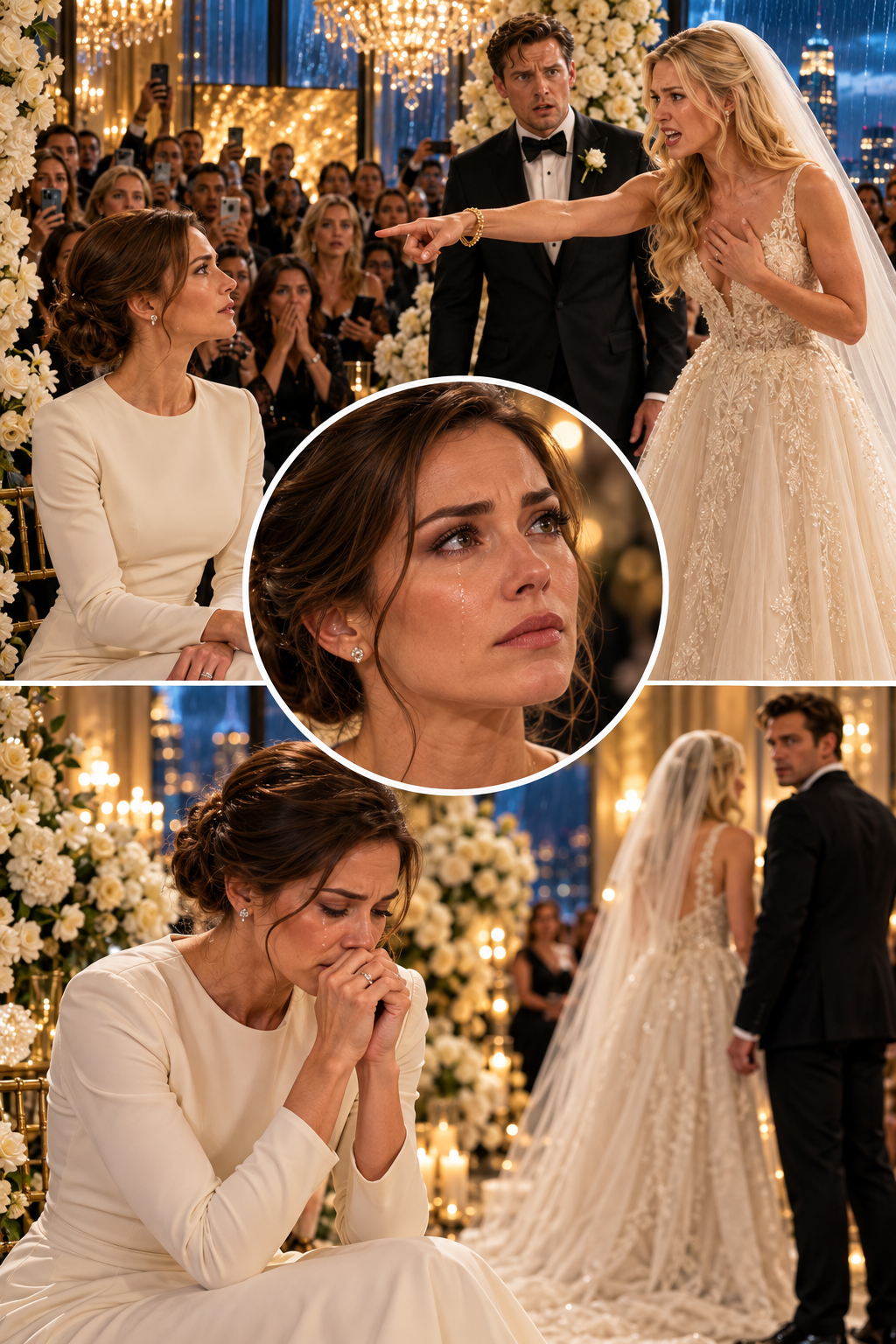
Part 2: My family’s secret investment revealed Preston’s expensive financial deception.
The Whitmore family had spent generations perfecting the art of appearing wealthy without discussing how much money they actually possessed. Their homes contained antique portraits, private libraries, silver engraved with initials, and furniture nobody was allowed to sit on comfortably. Preston’s grandfather had built an impressive hospitality business, but succeeding generations expanded more aggressively than their profits justified, purchasing prestigious properties while borrowing against older holdings. By the time Preston and I became engaged, Whitmore Holdings was struggling with excessive debt, disappointing hotel renovations, and loans requiring substantial refinancing. The family continued hosting extravagant events because admitting financial difficulty would have damaged the social identity they valued almost as much as their name.
My family operated differently. Caldwell Capital began as a Baltimore shipping investment created by my grandfather and grew under my mother’s leadership into a diversified portfolio of commercial property, private credit, and established businesses. I grew up hearing that money was useful only when supported by judgment, accurate records, and the willingness to walk away from agreements built on vanity. My mother rarely discussed our assets at social events, which Preston interpreted as evidence that she was old-fashioned and uninvolved in serious decisions. In reality, Helena Caldwell understood balance sheets more thoroughly than most executives who spent their evenings explaining finance to women they assumed would never question them.
When Whitmore Holdings approached Caldwell Capital for help, I was still engaged to Preston and believed his family’s financial problems were temporary. My mother insisted that any investment receive independent analysis and be structured according to commercial terms, with no special treatment merely because our families were preparing to join through marriage. The resulting transactions gave a Caldwell-controlled trust majority ownership of Whitmore House and controlling interests in several related property entities, while the Whitmore family retained certain operating responsibilities and minority holdings. Preston’s father signed the relevant documents, clearly understanding the transfer of control even though he disliked it. Preston attended the closing dinner but apparently paid more attention to the wine selection than the agreements that saved his family’s business.
For years afterward, I allowed the Whitmore name to remain on the hotel because changing the brand would have been commercially unnecessary and potentially disruptive. Preston continued presenting himself as the natural heir to the properties, and I rarely corrected him outside formal meetings because our marriage seemed more important than winning arguments about ownership. That restraint eventually became a serious mistake because he confused my desire for peace with an inability to assert my rights. Whenever we hosted dinners at the hotel, he introduced me as his beautiful wife rather than as an investor with legal authority over the property. I smiled politely because I believed the people who mattered understood the truth.
Marissa entered the picture as an event stylist working on private celebrations at Whitmore House. She was twenty-six, ambitious, attractive, and skilled at presenting luxury as an ordinary part of her everyday existence. Her professional photographs featured designer clothes, beautiful hotels, elaborate floral arrangements, and captions about manifesting success. Preston apparently admired her enthusiasm because she treated the Whitmore surname as evidence of unlimited money and influence. She had never witnessed the debt negotiations, emergency refinancing, or difficult meetings that made the hotel’s survival possible.
The first time I saw her name in an internal report, it was attached to expenses charged through a corporate events account. The amounts were not enormous individually, but several appeared unrelated to legitimate hotel operations, including designer jewelry deliveries, luxury transportation, and reservations connected to private celebrations. Our finance director initially assumed the expenses had been misclassified, while Miriam suggested the possibility of unauthorized personal spending by someone with executive access. I authorized a careful review through the company’s legitimate governance procedures, avoiding any action that might compromise evidence or employee privacy. The investigation began before I discovered the bridal hashtag, which meant Marissa’s public account suddenly provided an unexpected timeline.
One post showed a Cartier bracelet purchased in Paris, matching the piece Preston had told me disappeared from his luggage. Another showed a private dining room reserved during a weekend he claimed to be attending meetings in Boston. Several photographs contained hotel staff, company vehicles, and floral installations that appeared to have been charged against ordinary corporate operating budgets. None of those posts alone proved financial misconduct, but together they justified examining the underlying records. Miriam warned me that the strongest response would come from accurate documentation rather than accusations made in anger.
My mother reviewed the preliminary information during lunch and asked only one question. “Are you trying to save your marriage, Eleanor, or are you trying to protect yourself from the consequences of ending it?” I realized I had spent years treating those goals as the same thing, even though Preston had begun behaving as though protecting his image mattered more than protecting our relationship. I told her I wanted to understand the truth before making any irreversible decisions. She touched my hand and said that whatever I discovered, the Caldwell family would not require me to sacrifice my dignity to preserve an impressive surname.
That afternoon, Miriam called with news that Marissa had requested an exclusive wedding-related reservation at Whitmore House. The request included premium ballroom access, floral services, entertainment, private security, and a media production team, all apparently expected to operate through an internal hospitality budget. Preston had approved several preliminary arrangements without obtaining the permissions required for expenses of that size. The wedding hashtag was no longer merely evidence of adultery. It had become a useful map of transactions we needed to investigate.
Part 3: A wedding invitation uncovered the scheme behind my public humiliation.
The invitation arrived on a rainy Monday morning, delivered by courier in a thick cream envelope sealed with white wax. I opened it beneath the portrait of Preston’s great-grandmother, a woman whose expression suggested she had never forgiven anyone for being born into a less impressive family. Inside was a formal announcement inviting Eleanor Whitmore to attend a celebration of love, truth, and new beginnings between Marissa Claire Vale and P.W. at Whitmore House. The date was June fourteenth, the venue was the hotel’s grand ballroom, and the bottom of the invitation displayed the familiar wedding hashtag in delicate gold lettering. I stared at the paper for several seconds, wondering whether Marissa understood that she had invited a married woman to attend her own husband’s replacement wedding.
Rosa found me standing in the foyer and asked whether she should call security or my mother. I told her to bring tea instead because I wanted to examine the invitation carefully before anyone else made decisions on my behalf. The paper was expensive, the typography professional, and the event details specific enough to suggest that Marissa had already committed money she did not personally possess. I photographed both sides, saved the courier information, and forwarded everything to Miriam. She called immediately and asked whether Preston truly believed he could use a hotel controlled by my family’s trust to stage a ceremony designed to pressure me into divorce.
Over the following days, our attorneys and financial advisers reconstructed the events leading to the invitation. Several internal messages suggested Preston expected the public spectacle to make me embarrassed enough to negotiate a quick settlement without challenging certain financial arrangements. In one preserved communication, he described my concern for reputation as an advantage because I would supposedly prefer paying for silence rather than allowing strangers to discuss our marriage. Marissa asked whether she would eventually live in our townhouse and whether Whitmore House could host future events under her direction. Preston’s responses were confident, despite the fact that he lacked unilateral authority to promise either property.
The correspondence transformed my sadness into something colder and more useful. I had expected my marriage to end painfully if Preston chose another woman, but I had not imagined he would deliberately construct a public humiliation to strengthen his financial position. He apparently hoped I would accept the story that our relationship had already ended privately, allow Marissa to inherit the social role of Mrs. Whitmore, and agree to a settlement that protected his access to valuable assets. His plan depended on my remaining too frightened or ashamed to challenge him. What he misunderstood was that I had spent years negotiating complicated contracts without confusing discomfort with defeat.
Miriam advised me to preserve the invitation and avoid any confrontation that might encourage Preston to conceal or destroy relevant records. Company counsel separately instructed employees responsible for corporate documents to comply with preservation requirements and maintain normal access controls. We reviewed ownership agreements, spending approvals, and the proposed event arrangements, identifying which commitments the hotel could lawfully cancel or modify and which required further negotiation. I refused to interfere with ordinary hotel guests or employees because they had not created this situation. If Marissa wanted a wedding celebration, she could organize it using her own money and properly authorized contracts.
Then I accepted the invitation.
Marissa celebrated my response online within hours, posting a cropped photograph of my RSVP card beneath a caption suggesting that even the past had finally given its blessing. Her followers treated the gesture as proof that the original wife had surrendered gracefully, while others questioned why any married woman would attend such an extraordinary event. I watched the comments grow without explaining my intentions. Preston had spent years assuming that my unwillingness to create public conflict meant I lacked the courage to confront him, and I saw no reason to correct that misconception before the facts were properly organized.
Three evenings before the planned celebration, Preston found me in our dressing room holding a white gown against myself. He looked exhausted and immediately demanded to know why I had accepted Marissa’s invitation when he had supposedly told her the event was becoming inappropriate. I asked whether he meant the ceremony, the public account, the missing jewelry, or the financial settlement he had discussed with her. His expression changed so quickly that I knew he understood at least some of what we had discovered. He accused me of spying, and I reminded him that nobody needed to spy on an affair publicly advertised through hundreds of photographs.
Preston tried to dismiss Marissa as a young woman who had become carried away by romantic fantasy. I asked why he had allowed her to use hotel resources and why his messages described embarrassing me into a settlement. He hesitated, then admitted that our marriage had felt restrictive because he never believed I saw him as an equal. I told him that helping his family rescue its company had never been intended to make him feel owned, but his resentment did not authorize financial deception. For a moment he looked like the man I once loved, frightened and uncertain rather than arrogant.
Then he asked me to cancel my attendance.
I told him no.
He warned that people would gossip about my marriage and that photographs might circulate for years. I answered that our relationship had already been turned into public entertainment without my permission, and I would not surrender my legal rights merely to avoid uncomfortable attention. He stared at the white dress hanging beside me and asked whether I intended to wear it. I told him I did, because I wanted to look like myself when the truth finally became impossible to ignore.
Part 4: I attended her wedding and watched their carefully manufactured fantasy unravel.
The evening of June fourteenth arrived beneath heavy clouds, with rain moving across Manhattan and black cars lining the entrance to Whitmore House. Marissa had transformed what she called a private celebration into a public spectacle, inviting influencers, society acquaintances, and people whose interest in scandal outweighed their concern for anyone involved. Cameras gathered beneath the hotel’s awning, and several guests held phones ready before the first formal moment began. I arrived alone shortly after six, wearing a white Carolina Herrera gown without a veil, accompanied only by a driver who had worked for the Caldwell family for years. The hotel entrance looked familiar because I had attended dozens of events there, yet I had never walked through its doors knowing so many people expected to see me humiliated.
Inside, the grand ballroom had been decorated with white roses, candles, suspended orchids, and a ceremony arch beneath the largest chandelier. A screen displayed Marissa’s wedding hashtag, cycling through congratulatory comments and photographs from her increasingly extravagant preparations. Preston stood near the front in a tuxedo, looking pale and uncomfortable as guests whispered around him. When he noticed me, his eyes widened, but I offered a polite smile and took the seat reserved under my married name. Several women nearby looked away, apparently embarrassed to be witnessing a situation they had been eager to discuss only minutes earlier.
Marissa entered twenty minutes later wearing a full bridal gown with a cathedral-length train. She was beautiful, which irritated me less than I expected because beauty had never been the problem with our situation. The problem was that she believed elegance, attention, and a wealthy man’s promises made her entitled to a life she had not built. She walked toward the ceremony arch while music swelled, then turned to address the audience about courage, forgiveness, and the importance of choosing genuine love over empty legal arrangements. Her speech was carefully designed to portray herself as a romantic heroine rather than a participant in a calculated public confrontation.
Then she asked me to stand.
Every camera turned toward my chair as Marissa announced that she wanted to forgive me for holding on to a marriage Preston had supposedly left long ago. She said women should support one another rather than compete over men and expressed hope that I would eventually find someone who loved me without requiring a legal contract. Preston looked at the floor, while several guests shifted uncomfortably under the weight of her performance. I stood slowly, waiting until the murmurs faded before asking whether she had personally arranged the celebration. Marissa answered that she had organized everything with love and that Preston had generously provided the venue.
I asked whether the Cartier bracelet she wore was also a gift.
She smiled and lifted her wrist, clearly enjoying the opportunity to display a piece of jewelry she knew had once belonged to me. I explained that the bracelet had been purchased in Paris under my name, remained listed in my personal insurance records, and had been reported missing after Preston claimed it disappeared during our trip. Marissa insisted Cartier sold many identical pieces, and I agreed that ownership could not be established merely by recognizing a design. Then I said the relevant purchase information and circumstances had already been provided to counsel for review. Her confidence faltered because she had expected emotional accusations, not documented questions.
I turned toward the guests and explained that Whitmore House was operated by a company controlled through the Caldwell family’s investment trust. The name above the entrance reflected a historic brand, but it did not give Preston unlimited authority to approve private celebrations or spend corporate money. I told the audience that several event charges were being reviewed because they appeared to have been authorized outside the hotel’s established procedures. Miriam, who had entered discreetly with company counsel, confirmed that the relevant parties had received or would receive formal notices concerning financial records and document preservation. No one was being convicted in a ballroom, but nobody would be allowed to disguise the dispute as a simple romantic misunderstanding.
Preston stepped forward and demanded that I stop discussing company matters in public. I reminded him that he and Marissa had invited guests to witness an event apparently intended to redefine our marriage without my agreement. Then I told him I would not expose confidential financial records merely to satisfy curiosity, but that the hotel’s governing documents would determine what occurred next. The authorized management team had already reviewed the event agreement and determined that certain services could not continue under the claimed corporate sponsorship. Guests would be treated respectfully, but Marissa and Preston would need independent arrangements if they wanted to hold a private ceremony.
The ballroom fell silent as a hotel representative confirmed that the event’s corporate billing privileges had been suspended pending review. The music stopped after the current piece, and staff began preparing to transition the space according to the hotel’s contractual obligations. Marissa stared toward Preston, demanding that he explain why the hotel was refusing to honor arrangements he had promised. He told her the matter involved a temporary disagreement with investors, but she seemed to understand that something fundamental had changed. She had planned to become Mrs. Whitmore inside a building her fiancé supposedly controlled, only to discover that his authority had never been what he claimed.
I looked at the guests and offered a brief apology for the disruption. Then I told them that my marriage would be addressed through the legal process, while any financial concerns would be examined by the people responsible for the company. I did not ask anyone to applaud or choose sides. I simply turned toward Preston and said that the surname he carried did not give him ownership of everything associated with it. For the first time that evening, he had nothing persuasive to say.
Part 5: The documents revealed how Preston intended to profit from destroying me.
The most important confrontation occurred after the guests began leaving, when Miriam requested a private meeting with Preston, Marissa, and their respective counsel. Preston initially refused, claiming that the entire evening had been staged to disgrace him, but his attorney advised him that financial preservation notices required immediate attention. Marissa remained in her wedding gown, visibly shaken as she learned that the hotel’s corporate accounts, property ownership, and spending authority were considerably more complicated than Preston had represented. I did not attend the entire discussion because Miriam had already explained that my presence could turn necessary legal communication into another emotional argument. Instead, I waited in a small sitting room while the company representatives began securing the relevant records.
The evidence suggested that Preston had attempted to exploit our marriage’s public collapse as leverage in settlement negotiations. Messages recovered through authorized company systems described his expectation that I would accept a quick financial agreement if the scandal threatened my family’s reputation. He appeared especially interested in obtaining continued access to our townhouse, favorable treatment of certain minority business interests, and reduced scrutiny of expenses associated with Marissa’s lifestyle. None of those objectives guaranteed that a court would have granted his demands, but they demonstrated that his actions involved financial strategy as well as infidelity. I found that realization more disturbing than the affair because it meant he had studied my vulnerabilities while pretending to be my husband.
Marissa’s role was complicated. She had knowingly participated in a relationship with a married man, publicly announced an intended ceremony, and used corporate resources she should have questioned. Yet correspondence indicated that Preston had repeatedly exaggerated his authority and suggested the family’s financial arrangements would soon make her wealthy. He told her the townhouse would become theirs after a settlement and implied that Caldwell Capital preferred discretion so strongly it would never challenge him publicly. She had believed the promises because they matched the life she wanted, even when evidence should have prompted skepticism. Her willingness to believe him did not absolve her, but it explained why she appeared genuinely stunned by the ownership documents.
Miriam advised the hotel board to complete an independent review before making final determinations about misconduct. Several expenses were clearly personal in nature, while others required examination because they involved services legitimately provided by hotel employees. The board authorized tighter spending controls, removed Preston’s discretionary approval privileges, and appointed an interim executive to supervise the review. I supported those measures while insisting that ordinary staff members receive wages for work already performed. The employees had prepared an event according to instructions from people who appeared authorized, and I refused to make them bear the financial consequences of decisions made above them.
The following morning, Preston’s attorneys contacted Miriam regarding divorce negotiations. They initially argued that my family’s financial resources created an imbalance requiring substantial support for Preston, but our prenuptial agreement and the relevant trust documents clearly separated various assets from our marital estate. Some property and financial questions remained legitimate subjects for negotiation, and I understood that a fair settlement required following applicable law rather than trying to leave Preston destitute. What he could not obtain was a controlling interest in trust-owned properties simply by invoking the social meaning of the Whitmore name. The law did not treat prestige as a substitute for ownership.
Marissa deleted the bridal account several days later, but preservation copies and information lawfully collected during the review remained available to counsel. The internet had already transformed the evening into a scandal, with strangers celebrating my apparent victory while speculating wildly about arrests, bankruptcy, and secret fortunes. I refused interviews and asked the company’s communications team to issue only factual statements about governance changes. My private life had already been exposed without my consent, and I did not intend to provide more material simply because public curiosity remained strong. The important outcomes would come through contracts, records, and decisions made away from cameras.
Preston tried contacting me personally several times. In one message he apologized for allowing things to become public, but he described the underlying affair as the result of feeling diminished by my family’s wealth. I answered through Miriam that financial insecurity and emotional dissatisfaction could be discussed honestly without deception, theft, or attempts to coerce a spouse. He accused me of using ownership rights to punish him, and I reminded him that the company had responsibilities to investors, employees, and creditors beyond our marriage. His refusal to separate those responsibilities was one of the reasons we could no longer remain married.
The investigation ultimately established improper personal charges and unauthorized uses of company resources requiring reimbursement and further legal review. The parties negotiated repayment where appropriate, and the company pursued remedies supported by its records. Preston lost his executive authority at Whitmore House and agreed to a divorce settlement that allowed him financial stability without transferring trust-controlled properties. Marissa faced professional consequences within the hospitality industry, although I did not attempt to prevent her from earning a living elsewhere. Justice did not require my former husband and his mistress to become permanently miserable.
For months, I had imagined that discovering the truth would make me feel powerful. Instead, I felt tired, embarrassed, relieved, and unexpectedly lonely, sometimes all within a single afternoon. I had loved Preston despite recognizing his flaws, and the collapse of that love left an absence no legal document could immediately fill. Miriam reminded me that ending a harmful relationship did not erase the memories that once made it meaningful. My task was no longer to prove Preston had been wrong. It was to decide what kind of life I wanted when the argument finally ended.
Part 6: I reclaimed my family name without turning revenge into identity.
The divorce became final the following winter, after months of negotiations and financial disclosures that were far less dramatic than the wedding spectacle. Preston moved into an apartment downtown and began working outside the hotel group, where his surname still opened doors but no longer guaranteed executive authority. Marissa left Whitmore House and eventually established a small events business under her original name, though several prospective clients remained cautious because of the public controversy. I heard these developments through ordinary professional channels and did not investigate further. Their future no longer required my supervision.
I remained in our Manhattan townhouse for several months before realizing that every room reminded me of a marriage in which I had gradually learned to mistake elegance for happiness. The dining room contained memories of dinners arranged around Preston’s ambitions, while the bedroom reminded me of nights when he returned late and accused me of being suspicious for asking ordinary questions. Even the kitchen carried the memory of that first morning when I discovered Marissa’s wedding account while preparing his coffee. I could have remained because the property was beautiful and legally secure, but I no longer wanted my home to function as a museum of someone else’s dishonesty. I began searching for a place chosen entirely according to my own preferences.
My mother objected when I found a restored brownstone in Brooklyn Heights. She thought it was too modest compared with the townhouse, too old to justify the renovation costs, and insufficiently impressive for someone with my financial resources. I told her that was precisely why I liked it. The rooms had tall windows, creaking floors, a small garden, and enough space to entertain friends without requiring staff to transform every dinner into a diplomatic event. My mother studied the photographs and eventually admitted the house looked peaceful.
Rosa moved with me after explaining that she had never particularly liked the marble kitchen. On our first morning, she placed coffee on a plain wooden counter and announced that the brownstone seemed to breathe more easily than the old townhouse. I laughed because I understood exactly what she meant. There were no monogrammed cups, no portraits of Whitmore ancestors, and no rooms arranged primarily to impress strangers. I ate breakfast beside an open window while a neighbor walked past with an unruly golden retriever.
The transition was not immediately comfortable. I had spent years organizing my days around Preston’s preferences, professional obligations, and the expectations of families accustomed to wealth. Without those demands, I sometimes felt strangely unoccupied, as though independence required a schedule I had not yet learned to create. I began walking along the waterfront, visiting small bookstores, and cooking simple meals that would have looked absurd on the formal menus I once approved. The ordinary experiences gradually became more satisfying than the elaborate rituals I had previously treated as evidence of a successful life.
At Whitmore House, the board continued implementing stronger financial controls and reviewing the hotel’s long-term identity. Several executives suggested keeping the original brand because it remained widely recognized, while others argued that association with Preston’s scandal had weakened its reputation. I asked the team to evaluate the commercial implications independently rather than treating a name change as emotional revenge. After market research and consultation with employees, the company approved a rebranding intended to reflect its current ownership and renewed direction. The historic property would retain its architecture, staff, and established standards, but the signage above the entrance would change.
Six months after the scandal, workers removed the gold letters spelling Whitmore House and installed a new name: The Caldwell. I attended the unveiling privately with Miriam, Rosa, and a few senior employees who had guided the hotel through its difficult transition. No journalists were invited, and nobody prepared a speech about triumph or betrayal. The name change represented a business decision and a personal boundary, but I did not need either meaning broadcast to the world. Watching the final letter settle into place, I felt an unexpected calm.
A young concierge approached and addressed me as Ms. Caldwell. The sound of my original surname moved through me with surprising warmth because I had spent years believing that becoming Mrs. Whitmore meant entering a family whose history would strengthen my own. Now I understood that my identity had never depended on exchanging one name for another. I thanked him and accepted a small delivery box left at the reception desk. Inside was the missing Cartier bracelet, accompanied by a note from Marissa.
She apologized for accepting jewelry that did not belong to her and admitted that she had confused being chosen by Preston with becoming someone important. The note was brief and did not demand forgiveness, though its sincerity was impossible for me to verify. I examined the bracelet, remembering the Paris afternoon when I bought it and the years during which I had believed its disappearance was an unfortunate accident. Then I asked Miriam to arrange for the piece to be included in a properly documented charitable auction supporting legal assistance for women facing financial coercion. I wanted the bracelet to become useful without allowing it to remain emotionally powerful.
That evening, I returned to Brooklyn and sat alone in my garden. The air smelled of rain, and the house behind me glowed softly through open curtains. For years I had believed happiness required maintaining an impressive marriage and satisfying people who measured value through money, property, and public reputation. Now I could hear distant traffic, a neighbor’s laughter, and the gentle movement of leaves without wondering whether Preston would approve of the evening. The quiet felt unfamiliar, but it no longer frightened me.
Part 7: A hotel reborn became the place where other women found help.
The following spring, The Caldwell hosted its first major charitable gala under the new name. Instead of centering the event on luxury branding or fashionable personalities, we partnered with organizations providing legal guidance, emergency financial support, and practical assistance to people leaving coercive relationships. The ballroom remained beautiful, with the same chandeliers and architectural details Marissa had once used as decorations for her imagined wedding. But the guests included advocates, attorneys, counselors, community organizers, donors, and women who had received help rebuilding their lives. I wanted the evening to demonstrate that an expensive room could serve something more meaningful than the reputation of the people standing inside it.
I wore midnight blue without a wedding ring and arrived early to speak with staff members. Several employees remembered the scandal, but nobody treated it as the purpose of the event. They were concerned with catering schedules, accessibility, guest seating, and making sure speakers felt comfortable discussing difficult experiences. I approved the final details and then stepped aside, allowing the professional team to do the work they had been hired to perform. It occurred to me that learning to delegate could be another form of trust, one that did not require surrendering judgment.
During the reception, a young attorney described how access to legal advice could help someone understand their financial rights before making decisions about a troubled relationship. Another speaker discussed the practical difficulty of finding safe housing while protecting employment and childcare arrangements. Their presentations were thoughtful, specific, and free from the theatrical language that had dominated Marissa’s bridal account. I listened from the front row, remembering how many resources had been available to me when I discovered Preston’s deception. The contrast made me determined to support people who could not simply call a trusted attorney and investigate an entire corporate structure.
Our charitable partners explained that financial coercion could take many forms, from restricting access to income and documents to using debts or housing arrangements to discourage separation. The discussion reminded me that Preston had hoped social pressure and complicated ownership questions would frighten me into a settlement favorable to him. I had possessed the knowledge and support necessary to challenge that pressure, but others might not. We established a fund to assist eligible clients with legal consultations, document recovery, and short-term practical needs through qualified organizations. I insisted on transparent reporting so donors could see how resources were actually used.
Halfway through the evening, I stepped onto the terrace for air. Manhattan spread below, bright and restless, looking almost identical to the city I had watched from Whitmore House during years when I believed everything important belonged to Preston’s world. Miriam joined me carrying two glasses of sparkling water and asked whether seeing the ballroom again had been difficult. I admitted that certain details still reminded me of the night Marissa tried to become Mrs. Whitmore in front of a crowd. But the memory no longer controlled how I felt about the building.
Miriam asked whether I regretted attending the celebration instead of simply filing for divorce privately. I considered the question because the public confrontation had exposed me to scrutiny I would never have chosen for myself. I did not regret protecting my rights or correcting false claims about ownership, but I also understood that public attention had not been necessary to establish the legal truth. The documents would have mattered whether or not a ballroom full of guests had witnessed the conflict. What I valued most was not that strangers saw Preston embarrassed, but that I stopped allowing his threats about reputation to govern my choices.
A week later, I received a message from a young woman who had seen footage of the event and later attended our charitable gala. She wrote that watching me remain calm while confronting public humiliation had encouraged her to seek legal advice about a difficult relationship. She explained that the professional assistance she received, not the viral video itself, had helped her understand her options. I was moved by the distinction because it reminded me that inspiration without practical support could quickly become another empty performance. I forwarded her thanks to the organization that had assisted her and asked that her privacy be respected.
As the seasons changed, The Caldwell’s new identity became familiar to guests who had never followed the scandal. Business travelers praised the service, event planners booked the ballroom, and employees gradually stopped referring to the name change as an extraordinary event. I attended board meetings when appropriate and spent the rest of my time developing projects unrelated to Preston. My family’s investments continued operating, and I began mentoring younger women interested in hospitality finance and property management. I enjoyed teaching them to read contracts carefully, ask difficult questions, and recognize that politeness did not require surrendering authority.
My mother visited Brooklyn more frequently than she admitted enjoying. She complained about the stairs, criticized the garden’s drainage, and then spent entire afternoons reading beside the living-room windows. Rosa claimed Helena secretly loved the house because nobody expected her to dress for dinner. I suspected Rosa was right, although my mother denied it with the same dignity she brought to every disagreement. Their banter made the rooms feel warm in a way no amount of polished marble had ever accomplished.
One evening, my mother asked whether I was lonely. I considered offering a reassuring answer, then admitted that sometimes I was. She reminded me that loneliness was not the same as being lost and that learning to enjoy my own company did not mean refusing future love. I understood that I had spent much of my marriage fearing abandonment more than questioning whether the relationship was good for me. Now I could experience an empty evening without treating it as proof that something was wrong with my life.
I began traveling alone occasionally, choosing places because I wanted to see them rather than because a social calendar demanded my attendance. I visited small coastal towns, spent weekends in quiet inns, and discovered that eating dinner without company could be pleasant when nobody expected me to perform sophistication. The freedom was not spectacular enough to become news, but it made my days feel honest. I no longer checked whether Preston was dating someone or whether Marissa’s business had become successful. Their choices belonged to them, and my future no longer depended on watching.
Part 8: The woman behind the hashtag finally reclaimed her entire future.
One year after the wedding scandal, I rented a small gray cottage on Nantucket for a week without inviting anyone to accompany me. The island had appeared repeatedly in Marissa’s bridal mood boards, but I chose it for the quiet beaches, weathered cottages, and familiar smell of saltwater that reminded me of childhood summers with my grandfather. I spent mornings walking beside the dunes, afternoons reading, and evenings cooking simple meals while the wind rattled the windows. There were no photographers waiting outside, no elaborate schedules, and no one expecting me to explain where I was going. For the first time in years, I felt that an entire day belonged exclusively to me.
On my final afternoon, I walked barefoot along the beach and watched a little girl constructing a crooked sandcastle with extraordinary seriousness. Her mother apologized when the child scattered shells near my towel, but I told her the beach had room for all of us. The girl announced that her castle contained a luxury hotel where only kind people were allowed to stay. I smiled and told her that sounded like an excellent business policy, especially if she charged guests according to how respectfully they treated others. She considered that advice, then offered me a small white shell as payment for helping reinforce the castle wall.
I accepted the shell, appreciating its uneven shape and the way sunlight shone through the thin edge. Her mother studied my face for a moment before asking whether I was the woman from the hotel scandal. I nodded, expecting another question about the wedding or the ownership documents. Instead, she told me she had left a difficult relationship six months earlier after seeking help from an attorney and a local support organization. She said the video had helped her recognize how much she feared public embarrassment, but the practical guidance she received had made leaving possible.
I thanked her for trusting me with something so personal. She explained that she had once believed maintaining the appearance of a stable family was more important than acknowledging how unhappy and frightened she had become. Watching another woman challenge a public story that everyone expected her to accept had made her question her own assumptions. I told her I was glad she had found professional support and that she deserved safety and respect regardless of whether strangers understood her decisions. Her daughter interrupted us to request help building another tower, and the conversation returned to ordinary summer things.
That evening, I placed the little shell on the cottage windowsill beside a glass of water. It was not a designer bracelet, an inherited diamond, or an object anyone would insure for thousands of dollars. Nobody had purchased it to impress me, display ownership, or create the illusion of affection. A child had simply offered it because she wanted to share something beautiful she had found. I realized how rare that kind of uncomplicated generosity had felt during my marriage.
I opened my laptop and found the digital folder I created on the morning I discovered Marissa’s bridal account. It still contained screenshots of the first post, the missing bracelet, the hotel ballroom, and the comments celebrating her supposedly inevitable future as Mrs. Whitmore. Additional folders held documents preserved for legal purposes, maintained securely according to counsel’s guidance. The original folder name, M.W., suddenly seemed inappropriate because the experience no longer belonged primarily to Marissa. I renamed my personal collection The Day I Remembered.
I did not delete the records because they had once helped protect my rights, and some remained relevant to formal obligations. But I no longer needed to review them whenever I felt uncertain about my worth. The evidence had established what happened, the legal process had addressed the financial questions, and time had allowed me to separate my identity from Preston’s deception. I had spent months believing closure would arrive when he admitted everything or Marissa publicly acknowledged the cruelty of her actions. Eventually I understood that neither person’s confession could create peace inside a life I refused to rebuild.
When I returned to Brooklyn, Rosa greeted me with coffee and asked whether the vacation had been restful. I showed her the shell, and she laughed when I explained that a little girl had paid me for helping construct a beach hotel. She placed it on the kitchen windowsill, declaring that it belonged somewhere I would see it every morning. I agreed because it reminded me of a moment when someone gave me something without expecting status, money, access, or gratitude in return. That seemed a fitting symbol for the home I was learning to create.
The following month, The Caldwell announced a new training program for young professionals interested in hospitality operations and financial management. I helped design its curriculum around transparent accounting, contract literacy, ethical leadership, and practical decision-making. Several participants came from families without connections to established investment networks, and I wanted them to acquire skills that would help them recognize opportunities without becoming dependent on people who controlled access. The program did not carry my personal name, and I deliberately asked other executives to teach major sections. Its success would depend on useful education rather than my reputation.
Years later, some people still recognized me from the wedding video. They asked whether I had truly attended my husband’s mistress’s ceremony or whether I had personally ordered the hotel’s staff to stop the event. I answered that I had attended, that the property was controlled through my family’s investment trust, and that the business arrangements were addressed through legitimate corporate procedures. The truth was less theatrical than many versions circulating online, but it was more important to me. I had not needed to invent power at the last moment. I had needed to stop pretending I possessed less authority than the documents already gave me.
Preston remained part of my past, but no longer occupied the center of my thoughts. I occasionally remembered him while passing a restaurant we once loved or hearing a song from our early marriage, and those memories could still carry sadness. I had genuinely loved him, even if he later used my affection as a reason to believe I would tolerate dishonesty. Recognizing the relationship’s failure did not require pretending every earlier moment had been false. It simply meant refusing to let good memories excuse harmful choices.
Marissa also became less significant with time. Her wedding account had once seemed like a declaration that she could replace me by claiming my surname and wearing my jewelry. Now the idea felt almost painfully small because I understood that no person could inherit another person’s judgment, experience, or character through a romantic relationship. She had wanted the appearance of my life without understanding the work that sustained it. Whether she eventually built something genuine for herself was no longer my concern.
One evening in early autumn, I attended a quiet dinner at The Caldwell with several women involved in our legal assistance program. We discussed expansion plans, financial safeguards, and the challenges of supporting people during difficult transitions. Afterward, I stepped outside and looked toward the gold letters above the entrance. They displayed the surname I had been given at birth, but I knew now that even the Caldwell name did not define everything I was. My worth existed independently of inherited money, social standing, marital status, and public admiration.
I thought about the first morning when I stood in our marble kitchen watching Preston’s espresso drip into a cup bearing his initials. I had believed that remaining calm meant gathering enough evidence to prove I had been wronged, and in part that was true. But the deeper transformation came afterward, when I stopped organizing my decisions around the desire to expose or punish someone else. I learned that dignity did not require a dramatic confrontation, and that freedom was not simply the absence of a dishonest husband. It was the ability to choose a life that no longer depended on his approval.
That night, I returned home to Brooklyn and placed fresh flowers beside the little shell on my windowsill. The house was quiet, the garden lights glowed softly, and there were no urgent messages requiring me to defend my marriage or protect Preston’s reputation. I made tea, opened a book, and listened to rain moving across the street. Nothing extraordinary happened, which was precisely why I loved the evening. I was safe inside a home I had chosen, surrounded by things that belonged there because I wanted them.
Marissa had once believed that becoming Mrs. Whitmore would transform her into the woman she imagined me to be. Preston believed humiliating me would make me surrender financial rights he could never obtain honestly. Both underestimated the difference between appearances and ownership, and both misunderstood the quiet confidence they mistook for weakness. Their scheme produced evidence, consequences, and a scandal neither had anticipated. But the most important result happened privately, long after strangers stopped following the wedding hashtag.
I stopped measuring my life by what they had taken.
I stopped wondering whether another woman was prettier, younger, or more exciting.
I stopped believing that loyalty required me to remain silent when someone used my trust against me.
And I stopped treating my married name as proof that I belonged somewhere important.
The hotel carried my family’s name because its ownership and leadership had changed. The shell on my windowsill carried no famous name at all, yet it reminded me of something more valuable than prestige. It represented kindness without calculation, generosity without demands, and the possibility of being appreciated without performing a role.
My husband’s mistress had created a wedding hashtag because she believed taking my place would give her my life.
Instead, she gave me the evidence I needed to protect it.
And when the last photograph faded from public attention, the woman who remained was not defined by the marriage she had lost or the scandal she had survived.
She was Eleanor Caldwell.
She had always been enough.
And now, finally, she knew it.
✓ Lynn R. Adams
Part 2: My family’s secret investment revealed Preston’s expensive financial deception. The Whitmore family had spent generations perfecting the art of appearing wealthy without discussing how much m…