The End – The Woman Dax Freed and the Road Sihaya Chose for Herself _064
## Part 6 – The Last Road They Shared and the Freedom That Outlived Them Both
They moved.
Not immediately.
Sihaya refused panic.
Dax agreed.
Mostly.
They spent spring deciding.
Their daughter Mara offered to take over more of the horse operation.
Samuel, now teaching in a larger settlement, wrote that there was a small house available near him at lower elevation.
Dax hated the idea.
“Town.”
“It has twelve buildings.”
“Town.”
Sihaya smiled.
“Doctor is there.”
“Suspicious.”
“Food store.”
“Overrated.”
“Children nearby.”
Dax looked away.
There.
He wanted that.
The old fear.
People leaving.
This time possibility of moving closer.
They visited.
The house was small.
One story.
Wide doorway.
Sihaya appreciated that.
The ceiling?
High enough.
Barely.
She looked at Dax.
“If I bump my head, you repair.”
“Fair.”
There it was.
They bought the house jointly.
Sold their old home?
Not immediately.
Mara leased it and used pasture for horse operation.
After two years, she bought their share gradually.
Clear.
No burden.
Dax and Sihaya moved.
The first winter at lower elevation, Dax breathed better.
He hated admitting.
Sihaya enjoyed seeing grandchildren more.
She hated admitting.
Marriage.
They became old in a new place.
That mattered.
Home had moved before.
It moved again.
Dax taught local boys and girls horse handling.
Sihaya advised breeders.
Not full work.
Enough.
One child asked Sihaya:
“Were you really tied to a tree?”
She looked at Dax.
He groaned.
“Who tells these stories?”
“Everyone.”
Sihaya said:
“Yes.”
“Were you scared?”
“Yes.”
The child looked surprised.
“You didn’t look scared in story.”
“Stories are bad at showing fear unless someone cries.”
“Did you cry?”
“Later.”
“Did Dax save you?”
Sihaya thought.
“He cut rope.”
“That helped.”
Dax smiled.
The child frowned.
“Only helped?”
“He gave me chance.”
“I chose what to do with it.”
Good.
The child accepted.
Children often handled nuance better than adults expected.
Dax’s heart weakened gradually.
Five years.
Then six.
The doctor who once warned them had retired.
Dax complained he had outlasted professional opinion.
Sihaya said:
“Spite is sustaining you.”
“Effective medicine.”
He smiled.
Their marriage aged with them.
Not always tender.
Dax became impatient when tired.
Sihaya became controlling when worried.
Once she hid his boots because doctor said no riding that day.
Dax was furious.
“You do not get to make decision by stealing boots.”
She stared.
He was right.
Again.
She returned boots.
He did not ride.
His choice.
That mattered.
Later he said:
“Thank you.”
“Do not enjoy.”
“I am.”
Marriage.
Mara’s horse partnership prospered.
Samuel remained teacher.
His children thought Grandmother Sihaya could touch roof beams.
She could.
One grandson measured her every birthday.
She stopped shrinking only because he was terrible at measuring.
Family laughed.
Her height became ordinary in family.
That pleased her.
Then Nodin died.
Older.
Still dramatic until end.
He left no mysterious note.
No hidden ledger.
Thank heaven.
Sihaya traveled for funeral despite knees.
Dax wanted to come.
Could not.
He said:
“I hate that.”
“I know.”
“Go.”
“I will.”
“Come back.”
She looked at him.
“Request?”
“Yes.”
She smiled.
“I intend.”
She returned.
He cried when saw her.
No shame.
Then Vale’s name appeared once more.
Abner Vale had died years earlier.
His grandson visited.
Why?
He brought an old black horse photograph.
Midnight Crown.
Sihaya stared.
Not because sacred.
Because that stallion had started chain.
The grandson said:
“My grandfather kept this.”
“Thought your family might want copy.”
Sihaya considered.
“No.”
Dax looked surprised.
She smiled.
“Keep it.”
“The horse belongs to your family history too.”
The grandson nodded.
No relic transfer.
History shared.
Good.
Years passed.
Dax turned seventy-three.
Sihaya seventy-one.
He walked with cane.
She still stood taller than nearly everyone.
One evening they sat outside.
Sunset.
He asked:
“First thing you said?”
“Do not come closer.”
“Yes.”
“Should I have listened?”
Sihaya smiled.
“Probably.”
He looked offended.
“You could have gone for help.”
“True.”
“You could have avoided danger.”
“True.”
“You cut rope anyway.”
“Yes.”
“Was that wrong?”
She thought.
“No.”
“Why?”
“Because you did not ask whether helping made you entitled to what came next.”
Dax looked down.
“I almost did later.”
“Sometimes.”
He nodded.
“I made geography your responsibility.”
“Sometimes.”
“Bought things.”
“Sometimes.”
“Tried to fix.”
“Often.”
He smiled.
“You stayed.”
Sihaya corrected:
“I returned.”
His eyes lifted.
Different.
Important.
“Yes.”
She took his hand.
“I stayed when staying fit.”
“I left when leaving fit.”
“You did same.”
“Marriage survived both.”
Dax looked toward road.
“I used to think love meant someone finally stopped leaving.”
Sihaya’s eyes softened.
“And now?”
“Love means they can leave without disappearing.”
There.
The boy inside him had finally learned.
Sihaya squeezed hand.
“Better.”
He groaned.
Always.
Dax’s final illness came that winter.
Not sudden.
Weeks.
He slept more.
Ate less.
Complained about weak coffee.
Samuel visited.
Mara came from horse operation.
Grandchildren.
Not all at once.
Dax hated crowds.
Then asked where everyone went.
Predictable.
One afternoon Mara sat.
“Pa.”
“Yes?”
“Do you want old house kept?”
Dax thought.
“No.”
She blinked.
“You and Ma built it.”
“Yes.”
“And?”
“You want it?”
“For herd office, maybe.”
“Then keep.”
“If not?”
“Sell.”
“What about memories?”
Dax smiled.
“Hard to sell.”
She laughed through tears.
Good.
Samuel asked:
“Did you want me to work horses?”
“Yes.”
“Were you disappointed I taught?”
“Yes.”
Samuel smiled.
“Thanks.”
“For what?”
“Admitting.”
Dax squeezed hand.
“I liked who you became more than plan I had.”
Enough.
Sihaya sat with him at night.
Sometimes silence.
One night Dax said:
“I’m sorry.”
“For?”
“Your wrists.”
She looked down.
Scars faint.
“What?”
“I cut rope.”
“That is not apology.”
“No.”
“For taking years to understand what those ropes meant.”
Her expression softened.
“Dax.”
“I know I did not tie them.”
“But sometimes I tried to protect by holding too tightly.”
“Yes.”
He smiled weakly.
“You always answer.”
“You prefer lies now?”
“No.”
“Good.”
There it was.
Then he asked:
“Were you ever afraid of me?”
Sihaya thought.
“First day?”
“Yes.”
He looked surprised.
“Why?”
“You had gun.”
“Knife.”
“Were a stranger.”
“And chose not to leave when I told you.”
Dax winced.
“That sounds bad.”
“It could have been.”
“But you gave me weapon.”
“Yes.”
“You let me lead trail.”
“Yes.”
“You listened when I said no shooting.”
“Yes.”
“That changed fear.”
He nodded.
Then:
“Did my size matter?”
Sihaya smiled.
“You are not giant.”
“I was compared with most men.”
She looked down at him.
“Not here.”
He laughed until coughing.
Worth it.
His last spring came warm.
Doctor surprised.
Dax made porch.
Sat wrapped blanket.
Sihaya beside him.
A horse went by.
Young black mare.
Dax watched.
“Good shoulders.”
“Too narrow chest.”
“You’re wrong.”
“I am not.”
He smiled.
Their oldest argument type.
Normal.
Then:
“Do you remember Gravewind?”
“Yes.”
“Best horse.”
“He hated carrying us both.”
“He survived.”
“So did we.”
Dax looked at her.
“Do you regret kissing me?”
“No.”
“Marrying?”
“Sometimes.”
He looked offended.
She smiled.
“You?”
“Frequently.”
“Liar.”
“Yes.”
He took breath.
“Whole life?”
“No.”
“Same.”
Good.
Then he asked final question that mattered.
“Sihaya.”
“Yes?”
“Did I ever make you smaller?”
She went still.
He waited.
“Sometimes.”
His eyes filled.
“When?”
“When you mistook help for decision.”
“When you believed work should bend because yours paid more.”
“When you thought your fear of losing me mattered more than my reason for leaving.”
Dax closed his eyes.
She continued.
“But you listened.”
“Not always immediately.”
“No.”
“Enough?”
Sihaya thought.
“For our life.”
He smiled.
Then:
“Did you make me smaller?”
“Yes.”
He opened eyes.
“Really?”
“When I treated your shame about Mercer as if you had to suffer forever to prove regret.”
“When I mocked your work because I feared it would take you farther away.”
“When I assumed I was wiser because I saw control in you but not in myself.”
Dax smiled.
“Good.”
Sihaya groaned.
He laughed softly.
Then:
“We did not save each other.”
“No.”
“We helped.”
“Yes.”
“Much better story.”
“Less exciting.”
“Good.”
He closed eyes.
Slept.
Dax died three days later.
Morning.
Sihaya holding his hand.
No dramatic last rescue words.
He woke once before dawn.
Looked at her.
“Still tall.”
She laughed through tears.
“Idiot.”
He smiled.
Then slept again.
Never woke.
Sihaya stayed beside him until sun rose.
Then called Mara.
Samuel.
Family.
She ate breakfast because body still required food.
Grief did not cancel life.
Dax was buried outside town where hills opened west.
Sihaya chose plot.
Not beside old house.
Not near cottonwood.
Just good ground.
She remained in small house four years.
Then moved closer to Mara’s horse operation.
People said:
“You’re leaving Dax’s house.”
Sihaya answered:
“He is not in walls.”
Simple.
She lived in a cottage designed with tall doors.
Finally.
She laughed first time saw them.
Mara said:
“You deserve not to duck.”
Sihaya replied:
“I rarely did.”
True.
At seventy-eight, she stopped riding alone.
Hated.
At eighty, stopped riding entirely.
Hated more.
She remained involved with horses through records, breeding advice, and criticizing everyone.
Useful.
Samuel retired from teaching.
Visited.
They argued about books.
Family.
One granddaughter grew tall.
Six feet three.
She came crying after boys mocked.
Sihaya listened.
Did not say beauty.
Did not say strength.
Asked:
“Do your feet hurt?”
Girl blinked.
“What?”
“Shoes fit?”
“Barely.”
“Then first problem is boots.”
Practical.
They found boots.
Then talked about staring.
The girl asked:
“Did people call you strange?”
“Yes.”
“Did Grandpa love you because you were different?”
Sihaya thought.
“No.”
“Did he love your height?”
“Sometimes.”
“What does that mean?”
“He liked all of me.”
“But he did not turn one feature into reason for love.”
Good.
Then the granddaughter asked about tree.
Sihaya sighed.
“Again?”
Family laughed.
She told story shorter each year.
Three men.
Rope.
Cowboy.
Knife.
Horse.
Ledger.
Then everything else.
Eventually she realized descendants cared more about romance than theft.
Fine.
She corrected essentials.
“He did not carry me away.”
“I rode.”
Important.
“He did not defeat three men in gunfight.”
“No one died.”
“He did not marry me because he rescued me.”
“We lived apart for three years first.”
That often disappointed listeners.
Good.
At eighty-two, Sihaya visited old cottonwood canyon once more.
With Mara.
The tree was still alive.
Larger.
Scar where rope rubbed bark gone beneath growth.
Sihaya touched trunk.
Mara asked:
“Do you hate this place?”
“No.”
“Love it?”
“No.”
“Then why come?”
“To see if it still matters.”
“Does it?”
Sihaya looked around.
Less than expected.
That pleased her.
The place where everything began had become only one place among thousands.
Roads afterward mattered more.
She left.
Never returned.
Her final illness came at eighty-four.
Quiet.
Heart.
Age.
She lived with help near Mara.
Not dependent on one child.
Paid assistance.
Family visits.
One afternoon Samuel brought an old letter from Dax.
Found in his book.
Not hidden secret.
Just unsent draft.
Sihaya looked at it.
“Read?”
Samuel asked.
She shrugged.
He handed.
Dax had written years ago during Fort Bridger:
Sihaya,
I keep wanting to ask whether you will wait for me.
That is wrong question.
I hope when our roads meet again, we still like what we find.
Dax.
Sihaya smiled.
Why unsent?
Probably wrote better version.
She did not treasure.
Kept by bedside one week.
Then gave Samuel.
“Do what you want.”
No relic obligation.
Her final night, Mara sat beside her.
“Mother?”
“Yes?”
“Were you lonely after Dax?”
“Sometimes.”
“Did you want someone else?”
“No.”
“Why?”
“Did not.”
Simple.
Then:
“Was he love of your life?”
Sihaya frowned.
“Life had many loves.”
“Family.”
“Children.”
“Work.”
“Horses.”
“Dax.”
Mara smiled.
“Was he special?”
“Yes.”
“Why?”
Sihaya thought.
“He was the first man who saw me bound and understood eventually that freeing someone is not same as keeping them.”
Mara’s eyes filled.
Then Sihaya added:
“Eventually.”
They laughed.
Good.
At dawn she asked for water.
Mara brought cup.
Sihaya drank.
Looked toward window.
“Road?”
“What?”
“Can you see road?”
“Yes.”
“Busy?”
“Not yet.”
Sihaya smiled.
“I liked roads.”
“I know.”
“They go both ways.”
Mara squeezed her hand.
Sihaya closed eyes.
She died before noon.
The family buried her near Dax because she had chosen that years before.
Not automatically.
Choice.
Her stone read:
SIHAYA CALDER
A HORSEWOMAN, MOTHER, TEACHER OF PATIENCE, AND HER OWN PERSON.
Maybe she would have called that too many words.
Family kept anyway.
Years later, the story changed.
Of course.
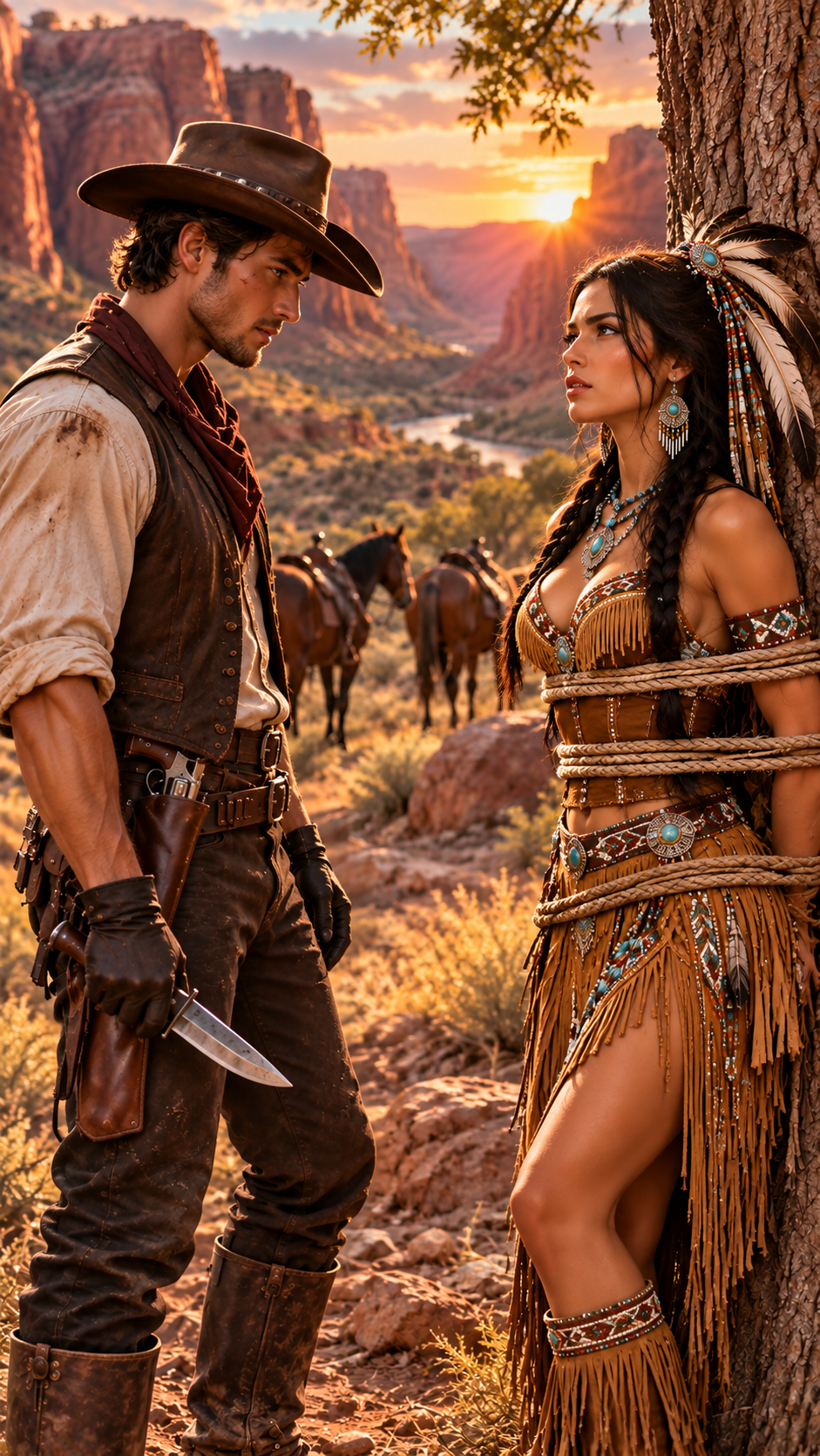
People said a lone cowboy found a seven-foot woman tied to tree.
True.
They said three dangerous men returned and Dax fought them all.
False.
They said she fell in love with him because he saved her.
Wrong.
Dax cut ropes.
That mattered.
He gave her weapon.
Let her lead trail.
Admitted his own old failure.
Helped expose theft.
Then left.
Sihaya returned to work.
Built more of her own life.
Dax built his.
They wrote.
Visited.
Kissed months later.
Spent three years refusing to make either career disappear for convenience of romance.
Then found a third place.
Ugly little house.
Excellent well.
A road in both directions.
That was where marriage began.
Not beneath cottonwood.
Not under pursuit.
Not when Sihaya was vulnerable.
When both could leave.
And both had lives worth keeping.
The rope eventually became a garden tie.
Then rotted.
The stolen horses passed into different herds.
The ledger entered county records and disappeared into history.
The men who chased Sihaya became footnotes.
Dax’s old shame became something he answered for rather than something he hid behind.
And Sihaya’s height, once the first fact strangers noticed, became merely one fact among thousands.
She hated raisins.
Loved difficult mares.
Counted money twice.
Could forgive slowly.
Could leave quickly when necessary.
Could love without surrendering authority over herself.
Dax loved all of that.
Not because she was extraordinary enough to make a legend.
Because she remained herself after the legend stopped being useful.
And when descendants asked what Dax’s greatest act of courage had been, Mara never said cutting the rope.
She would smile and answer:
“He learned that after you set someone free, you have to keep letting them be free.”
That was the harder courage.
And the one that lasted.
**–THE END– PLEASE
Share your thoughts or feedback to motivate us to create more stories ♥️
✓ Lynn R. Adams
## Part 6 – The Last Road They Shared and the Freedom That Outlived Them Both They moved. Not immediately. Sihaya refused panic. Dax agreed. Mostly. They spent spring deciding. Their daughter M…