The End – The Widow’s Table That Changed Iron Cross Ranch and Her Future _064
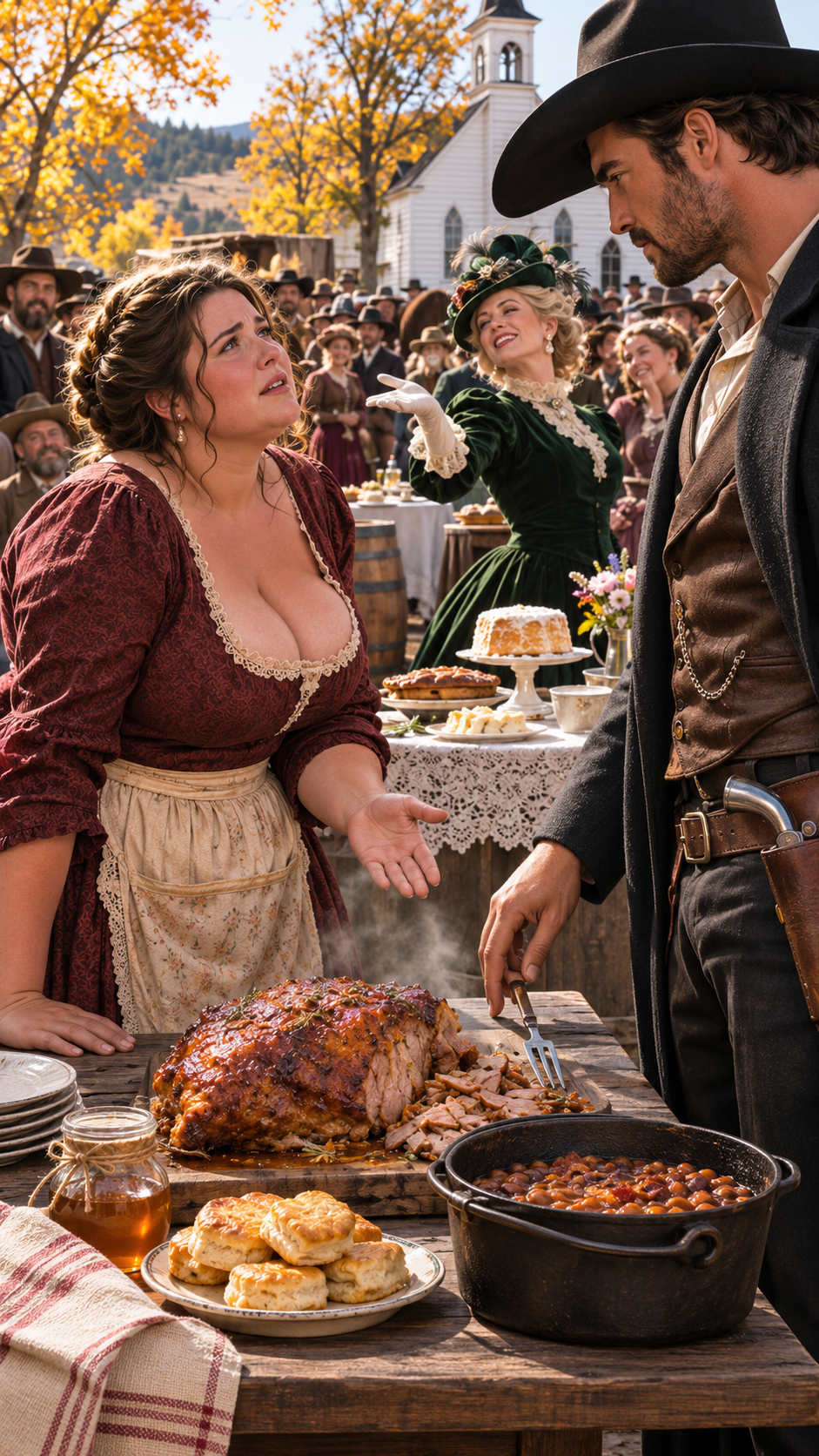
## **Part 6 – The Table That Fed a Town and the Life Mabel Finally Chose**
The old Silver Queen list took two years to resolve.
Not every claim remained valid.
Some had been paid under different names.
Some families had moved.
One widow had remarried and assumed payment was impossible.
Another miner had accepted a smaller settlement years earlier.
Mabel refused to turn Thomas’s handwritten list into unquestioned truth.
It was a starting point.
Nothing more.
Arthur helped.
A young county clerk named **Evelyn Moss** searched archived records.
Caleb contributed money only to travel expenses when formally requested by the claim committee.
Mabel insisted.
“This is not your personal charity.”
“I know.”
“You keep trying.”
“I own habits.”
“Correct them.”
He smiled.
The reopened review recovered payments for five families.
Others received written explanations confirming what happened.
Not everyone became wealthy.
No miracle.
But records changed.
A county rule followed.
Mine emergency funds could no longer close without direct documented notice to beneficiaries.
Widows received copies of claim procedures automatically.
No transfer of benefit rights without witnessed signatures.
Administrative work.
Boring.
Powerful.
Mabel learned that many harms survive because paperwork assumes frightened people will not question it.
She had become excellent at questioning.
Bitter Creek changed around her too.
Not into paradise.
People remained people.
They gossiped.
Misjudged.
Apologized late.
Sometimes not at all.
But the woman once mocked beside a carriage house now employed six people.
Higgins & Company became famous for honey pork, molasses beans, biscuits, preserves, and winter pies.
The church fair eventually asked Mabel to judge the cooking contest.
She agreed on one condition.
“What?”
Reverend Josiah asked.
“No contestants shoved beside the carriage house because someone decided they don’t look like they belong at the good tables.”
He looked ashamed.
“That was years ago.”
“Yes.”
“People changed.”
“Good.”
She smiled.
“Then the rule should be easy.”
He agreed.
Mabel judged food.
Not bodies.
Clara Abernathy became unexpectedly useful in later years.
Her taste for presentation balanced Mabel’s practical cooking.
They never became intimate friends.
But they worked well together on community suppers.
One day Clara said:
“I used to think elegance meant small portions.”
Mabel replied:
“Your husband used to leave your table hungry.”
Clara laughed.
“He did.”
They developed a church supper menu together.
Children loved it.
That was enough.
Mrs. Gable eventually sold the boardinghouse.
Ruth Allen bought it with her grown daughter.
Mabel helped them design the kitchen.
No loan from Caleb.
A bank loan.
Market terms.
Mabel co-signed nothing.
Clear boundaries.
Ben Foster became Iron Cross cook after Mabel retired from daily ranch work.
His biscuits eventually became genuinely excellent.
Mabel admitted this only after he threatened to place her written compliment in the newspaper.
She signed a note:
**Acceptable.**
Ben framed it.
Caleb laughed for years.
Their marriage aged.
So did they.
At fifty-five, Caleb injured his shoulder and could no longer throw a saddle easily.
He hated needing help.
Mabel watched him struggle one morning.
“You know what you sound like?”
“Do not.”
“Me.”
He sighed.
“Cruel woman.”
“You married me voluntarily.”
“So I did.”
He learned to ask ranch hands for help.
Slowly.
At sixty, Mabel’s knees began aching after long hours standing.
She reduced shop work.
Hired a manager.
Kept ownership.
Then eventually sold most of Higgins & Company to Lily and Ruth’s daughter **Emma**, keeping a small share for retirement income.
The name stayed.
Not because Mabel demanded it.
Because customers knew it.
Business reason.
She approved.
Caleb considered retiring.
Then discovered ranchers do not understand retirement.
He simply stopped riding as often and began irritating younger foremen with advice.
Mabel told him to find a hobby.
He bought woodworking tools.
His first chair collapsed.
Mabel laughed until she cried.
Caleb burned the evidence.
They traveled sometimes.
Cheyenne.
Denver once.
Even Kansas City.
Mabel had never imagined hotels where someone else carried her bags.
She tipped generously.
Not because she had forgotten poverty.
Because she remembered work.
They never had children.
For years, townspeople called that sad.
Eventually fewer did.
Mabel stopped explaining.
Their home filled with nieces, nephews, ranch hands, former employees, friends, and occasionally travelers who arrived at supper because someone told them Iron Cross always had room.
Mabel disliked that phrase.
“Not always.”
Caleb smiled.
“Most of the time.”
“Only if they wash dishes.”
Fair.
One summer, an orphaned twelve-year-old named **Samuel Reed** came to work temporarily at the ranch after his aunt became ill.
Temporary lasted two years.
Then his aunt recovered and asked him to return.
Samuel wanted to stay at Iron Cross but also loved her.
Mabel and Caleb did not decide for him.
He split time.
Later became a veterinarian.
Family sometimes looks like shared responsibility rather than legal ownership.
That pleased Mabel.
Thomas remained part of her life.
Not constantly.
Not as wound.
His ledger stayed in a drawer.
His letters in a cedar box.
Caleb never asked her to put them away.
Once, on their twentieth anniversary, Mabel asked:
“Does it bother you?”
“What?”
“That I still love him.”
Caleb thought.
“No.”
“Why?”
“Because you’re not comparing us.”
She smiled.
“And if I were?”
“I’d tell you.”
Good.
Then:
“Do you still think about Evelyn?”
“Sometimes.”
“Does that bother me?”
“You tell me.”
Mabel considered.
“No.”
Past love was not theft.
It became dangerous only when turned into an unspoken third person in the room.
They spoke.
That was enough.
At seventy-one, Caleb developed heart trouble.
He ignored it for three months.
Mabel noticed because he stopped finishing breakfast.
That frightened her more than anything.
“You’re seeing the doctor.”
“I’m fine.”
“You left bacon.”
He stared at the plate.
“Strong evidence.”
“Tomorrow.”
He went.
The doctor told him to reduce work.
Caleb asked whether the doctor had ever met cattle.
Mabel told him cattle could survive without personal supervision from a seventy-one-year-old man.
He disagreed.
The cattle survived.
Years passed.
Caleb’s health weakened gradually.
Enough time.
That mattered.
They moved from the large ranch house into a smaller home near the kitchen garden.
Iron Cross passed into a management trust eventually owned in part by long-term ranch employees.
Caleb had no direct children.
He did not want the ranch sold simply because inheritance required a surname.
The trust terms were clear.
Workers could buy shares over time.
Land use protected.
No heir burden.
Mabel liked that.
“Who knew a rich man could learn paperwork?”
“I had a terrifying teacher.”
“Yes.”
At seventy-eight, Caleb became too weak for long walks.
Mabel sat with him on the porch.
He looked toward the pasture.
“Do you remember the church fair?”
“Yes.”
“You were terrified.”
“Yes.”
“So was I.”
She looked at him.
“You?”
“I had just fired the cook and thought thirty men might mutiny.”
Mabel laughed.
“That is not the same.”
“No.”
Then he smiled.
“I remember the first bite.”
“Everyone does.”
“You looked like you expected me to insult you.”
“I did.”
“I wanted to ask for the whole plate.”
“Should have.”
He took her hand.
“Did I save your cabin?”
“No.”
He laughed.
“Still strict.”
“The fund saved my cabin.”
“You found the papers.”
“Yes.”
“I gave you work.”
“You did.”
“Did I save you?”
Mabel looked toward him.
“No.”
He nodded.
“Good.”
She squeezed his hand.
“You gave me a job when I needed one.”
“Yes.”
“You believed my work had value before most people did.”
“Yes.”
“You gave me room to say no.”
His eyes softened.
“That mattered?”
“More than the ranch.”
He looked toward her.
“Even the ranch?”
“Especially the ranch.”
Caleb laughed weakly.
Then:
“I’m glad.”
He died the following winter.
At home.
Mabel beside him.
No grand final speech.
His last clear request was:
“Biscuits tomorrow?”
Mabel had smiled.
“If you eat breakfast.”
He did not wake.
For months afterward, she could not bake biscuits without thinking of him.
So she stopped.
Not forever.
Just until she wanted to again.
That was grief.
Not obligation.
Mabel lived nine more years.
She remained financially independent.
Visited the store.
Attended claim committee meetings.
Corrected younger clerks who confused confidence with accuracy.
She became an elder people asked for advice.
She hated the word elder.
Preferred customer.
At eighty-four, a young widow came to her door.
Her name was **Sarah Cole**.
Her husband had died in a ranch accident.
She had received paperwork she did not understand.
Mabel sat with her.
Read every line.
Then said:
“Do not sign today.”
Sarah looked frightened.
“They said I should.”
“Then they can wait until tomorrow.”
“What if I lose the payment?”
“Ask them to put that deadline in writing.”
The woman stared.
Mabel smiled.
“Fear makes bad ink.”
They reviewed the documents with a clerk.
Everything turned out legitimate.
Good.
Not every paper hid a crime.
That mattered too.
Mabel did not teach suspicion.
She taught verification.
Years later, the church fair created a permanent community cooking scholarship.
People proposed naming it after Mabel.
She refused.
“Why?”
asked the reverend’s granddaughter.
“Because young cooks should not have to carry an old woman’s legend.”
They compromised.
The prize became the **Bitter Creek Kitchen Grant**.
Anonymous judging.
No premium table assignments.
Applicants judged by food, sanitation, cost planning, and practicality.
Mabel approved.
At eighty-seven, she visited Higgins & Company one final time.
Lily’s granddaughter ran it now.
The original honey pork remained on the menu.
Modified.
Less expensive.
More practical.
Still good.
A child asked:
“Are you the Mrs. Higgins?”
Mabel smiled.
“One of them.”
“My grandma says you cooked for the richest rancher in Wyoming.”
“I did.”
“And he married you because your food was so good?”
Mabel laughed.
“No.”
The child looked disappointed.
“Then why?”
“Because we liked each other.”
“That’s boring.”
“Most good marriages are.”
The child frowned.
Mabel bought a biscuit.
It was excellent.
Outside, she sat on a bench where the churchyard could be seen in the distance.
Years earlier she had stood there terrified that one plate of pork had to save her entire life.
It hadn’t.
One meal did not save her.
One rancher did not save her.
One fund did not save her.
Her life changed because several things finally aligned:
her work was given a fair price,
old records were examined,
stolen choices were returned,
and she learned that desperation did not make every offered hand a permanent obligation.
The people who mocked her had been wrong.
But Caleb loving her did not prove them wrong.
Her business did not prove them wrong.
Her money did not prove them wrong.
They had been wrong before any of those things happened.
Mabel’s dignity had never depended on becoming successful enough to embarrass people who underestimated her.
That was perhaps the lesson she understood latest.
At eighty-nine, her health weakened.
She moved into a smaller cottage near Ruth’s family.
Not Iron Cross.
Not the original cabin.
A place she chose because the windows caught morning light.
Her belongings were simple.
Thomas’s letters.
Caleb’s pocketknife.
Her first Higgins & Company ledger.
One recipe book.
The wooden spoon she used at the church fair.
A photograph of Caleb making the collapsed chair.
He looked furious.
She loved it.
Mabel’s final weeks were quiet.
Friends visited.
Employees from years past sent notes.
Ben Foster, now old and stooped, brought biscuits.
She tasted one.
“Too much salt.”
He laughed.
“You’ve been saying that for fifty years.”
“Still true.”
He kissed her cheek.
When he left, Mabel whispered to Ruth’s daughter:
“They’re excellent.”
“Should I tell him?”
“Absolutely not.”
Some traditions deserve survival.
Mabel died at ninety.
Her will was clear.
Savings distributed among several relatives and employees.
A portion went to the Bitter Creek Kitchen Grant.
Another funded free legal-document review for widows and injured workers filing compensation claims.
The wooden spoon went to Higgins & Company.
Not displayed behind glass.
Used.
That had been her instruction.
**Tools should work.**
Her letters remained private with family.
Thomas’s ledger went to county archives because it had become part of the Silver Queen claims history.
Caleb’s collapsed-chair photograph stayed with Lily’s family.
Iron Cross continued.
Higgins & Company continued.
Neither needed Mabel’s body present to remain meaningful.
Years later, people still told the story.
As people do, they simplified it.
They said a penniless plus-size widow cooked one extraordinary meal and Wyoming’s richest rancher fell in love at first bite.
That was not quite true.
Caleb did fall silent over the pork.
He did give Mabel work.
He did eventually love her.
But he did not marry her because she could cook.
And Mabel did not love him because he rescued her from poverty.
They married much later, after Mabel had money in her own name, a secure home, a growing business, and enough confidence to tell the richest rancher in Wyoming to put his ring back into his pocket until she was ready.
The better story was less magical.
And more important.
A widow who had been treated as though her body made her ridiculous discovered that ridicule did not define the value of her skill.
A rancher who was used to being obeyed learned that love sometimes looked like waiting when a woman said not yet.
A dead husband’s ledger uncovered a financial wrong, but his letters also reminded Mabel that being trusted and being consulted were not always the same.
A mine fund failed because too many people assumed frightened widows would never challenge paperwork.
A kitchen became a business.
A business became employment.
A marriage became companionship rather than rescue.
And the meal that began everything became famous not because it transformed Mabel into someone worthy of respect.
It simply gave one person the chance to notice what had been true all along.
Mabel Higgins had always possessed talent.
She had always possessed judgment.
She had always possessed dignity.
The pork did not create those things.
Caleb did not grant them.
Bitter Creek merely took far too long to see them.
And by the time the town finally did, Mabel no longer needed anyone’s laughter—or admiration—to tell her who she was.
**–THE END– PLEASE
Share your thoughts or feedback to motivate us to create more stories ♥️
✓ Lynn R. Adams
## **Part 6 – The Table That Fed a Town and the Life Mabel Finally Chose** The old Silver Queen list took two years to resolve. Not every claim remained valid. Some had been paid under different na…