The End – The Seven Days That Taught Lauren What Freedom Really Cost _064
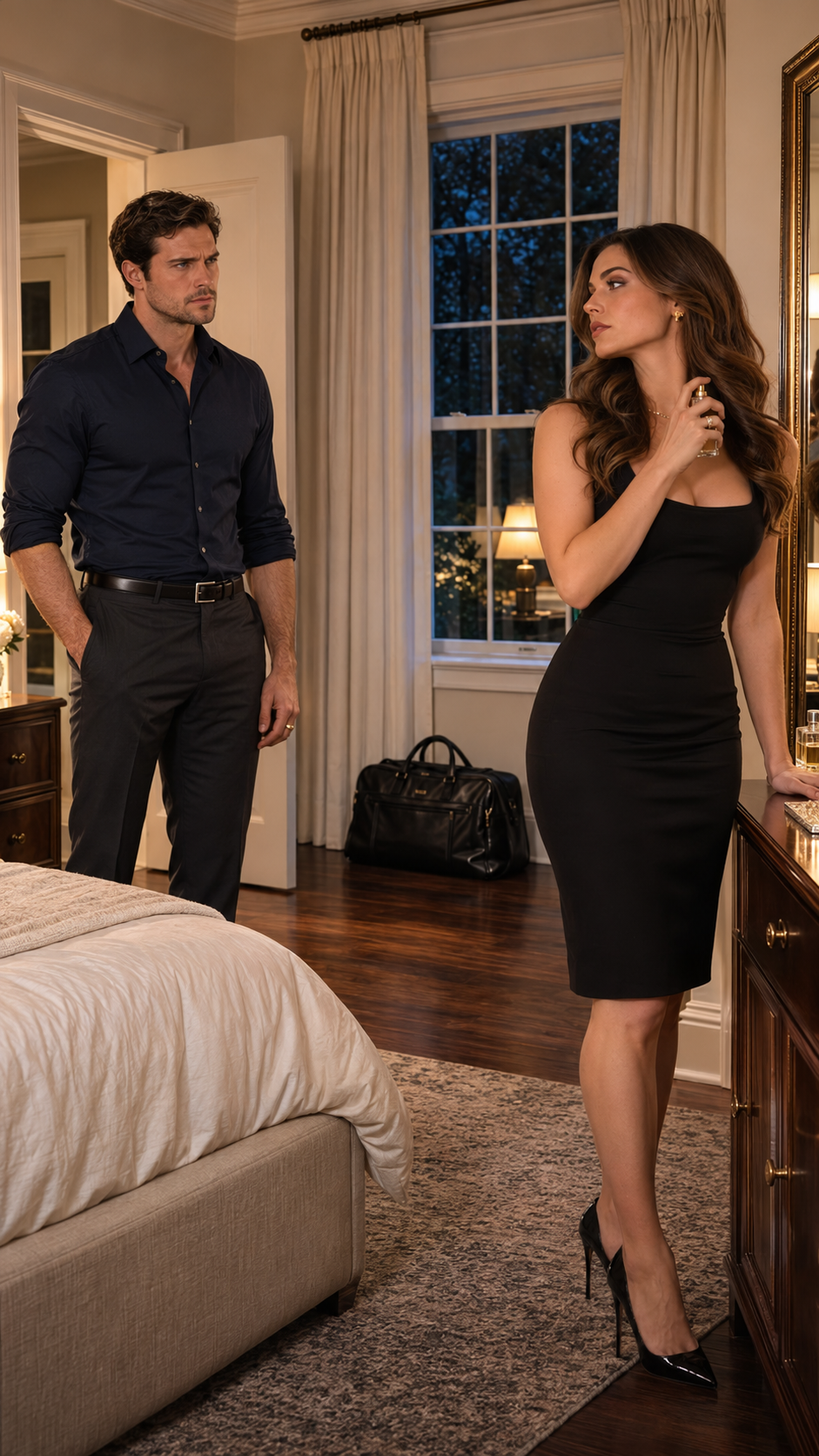
## **Part 6 – The Home Lauren Chose After She Finally Learned She Could Leave**
Lauren and I were married for forty-three years.
Noah always said that number sounded impossible.
Lauren corrected him.
“Forty-three legally.”
Then she looked at me.
“Emotionally, we took a sabbatical.”
I groaned.
She loved that joke.
By our sixties, the black dress story had become something we rarely discussed.
Not forbidden.
Just no longer central.
That mattered.
The marriage had accumulated other events.
Noah graduating.
My father dying.
Lauren changing careers again.
A flooded basement.
A terrifying medical test that turned out benign.
Two bad vacations.
One excellent trip to Scotland.
Thousands of breakfasts.
The old betrayal became one chapter among many.
Not erased.
Proportioned.
Lauren remained fiercely independent.
She traveled with friends.
Joined a painting group.
Took a solo train trip through Canada at sixty-four.
The first night she called.
“You okay?”
I asked.
“Yes.”
“You?”
“Yes.”
“No panic?”
“Moderate.”
She laughed.
“Growth.”
Yes.
I learned independence too.
Fishing trips.
Volunteer work.
Mentoring younger colleagues.
We did not need constant togetherness to prove the marriage survived.
That would have been another form of fear.
At sixty-seven, Noah got married.
Before the ceremony he asked:
“Dad, what’s the most important marriage advice?”
I said:
“Ask your mother.”
Cowardly.
Lauren laughed.
Then said:
“Say things while they are still sentences.”
Noah frowned.
“What does that mean?”
“Don’t wait until unhappiness becomes a suitcase.”
Good.
“Don’t wait until attraction becomes a secret.”
Good.
“Don’t wait until resentment becomes a personality.”
Very good.
Then I added:
“And don’t assume calm means everything is fine.”
Lauren looked at me.
We smiled.
Whole history in two sentences.
Noah married.
Built his own life.
No requirement for grandchild.
Eventually he and his wife had one daughter.
We became grandparents.
Lauren was ridiculous.
She once bought twelve books for a baby who could not yet sit upright.
I protested.
She ignored me.
Marriage.
At seventy, I had a heart attack.
Minor.
Still frightening.
Lauren became intensely controlling for three days.
Medication schedules.
Food.
Walking.
I said:
“You’re becoming my parole officer.”
She froze.
Then laughed.
“Fair.”
She backed off.
Asked instead:
“Do you want help remembering pills?”
“Yes.”
Good.
Care with consent.
That lesson came from much earlier.
Years later, Lauren developed arthritis.
Then increasing fatigue.
Nothing dramatic.
Age.
One morning she could not open a jar.
I reached.
She pulled it away.
“I can do it.”
I waited.
Thirty seconds.
She sighed.
“Help.”
I did.
No victory.
Good.
At seventy-eight, we moved into a smaller townhouse near Noah.
While packing, we found the original document box.
Passport.
Birth certificate.
Grandmother’s earrings.
The separation letter.
Lauren sat on the floor.
“Wow.”
I smiled.
“What?”
“You were terrifyingly organized.”
“I was angry.”
“No.”
She shook her head.
“That was what scared me.”
“What?”
“You weren’t chaotic.”
I looked at her.
“If you had screamed, I could have told myself you were the unreasonable one.”
That was painfully insightful.
“But you gave me my documents.”
“They were yours.”
“And a legal separation proposal.”
“Yes.”
She smiled sadly.
“You treated me like an adult whose choices had real consequences.”
“Yes.”
“That ruined every excuse.”
Probably.
Then she held up the passport.
“I thought freedom was this.”
“Travel?”
“Escape.”
She looked around the half-packed room.
“Turns out freedom was coming back without needing to.”
There.
That was the line.
We kept the box.
Not as shrine.
Useful place for documents.
The separation letter stayed inside.
At eighty, Lauren’s health declined more quickly.
Heart failure.
Manageable for a while.
Then less.
Doctors were honest.
We were too.
No pretending.
One night she asked:
“Do you think you really forgave me?”
“Yes.”
“When?”
“I don’t know.”
She frowned.
“Unhelpful.”
“In pieces.”
That seemed right.
Forgiveness was not one emotional ceremony.
It was dozens of moments where I chose not to turn old pain into current punishment.
Some days easier.
Some harder.
Then I asked:
“Did you forgive yourself?”
Lauren thought.
“Eventually.”
“What changed?”
“I stopped trying to prove I was a good person.”
Interesting.
“And?”
“I accepted I was a person who did something harmful.”
She looked at me.
“And then I spent years trying to make different choices.”
That was better than self-absolution.
Her final months were quiet.
No hidden letter waiting.
We had learned not to save truth for later.
One evening Noah left after dinner.
Lauren and I sat beside the window.
She said:
“Ethan.”
“Yes?”
“Do you remember what I told you before I left?”
“Unfortunately.”
She smiled.
“I said you always forgive me.”
“Yes.”
“I was so arrogant.”
“Yes.”
“Thank you for proving me wrong.”
I stared.
“That’s a strange thank-you.”
“No.”
She reached for my hand.
“If you had forgiven me immediately, I might have learned nothing.”
Maybe.
Then:
“Thank you for not making forgiveness impossible either.”
That was the other side.
I squeezed her hand.
“You did the work.”
“So did you.”
We sat quietly.
Then she asked:
“If you had divorced me, do you think you would’ve been happy?”
“Yes.”
Her eyes widened.
“Fast answer.”
“Probably.”
She laughed.
“And me?”
“Yes.”
“So why did we stay?”
I looked toward her.
“Because happiness wasn’t available in only one direction.”
She went quiet.
That might have been the truest thing I ever said.
We did not need to declare reconciliation the only good ending.
We chose it because it became our ending.
Other endings could have contained dignity too.
Lauren whispered:
“I’m glad this was ours.”
“So am I.”
She died three months later.
At home.
No drama.
No last secret.
No final confession.
Noah and I beside her.
Afterward, I found the black dress.
I thought it had been donated years earlier.
Apparently Lauren had kept it folded in a storage box.
There was a note.
Not addressed to me.
Just taped to the fabric.
**It was never the dress.**
I laughed.
Then cried.
Correct.
I donated it.
No ceremony.
Somewhere, perhaps, another woman wore it to dinner.
Maybe to a wedding.
Maybe to an office party.
Maybe nowhere memorable at all.
Good.
Fabric deserves freedom from symbolism too.
I lived six more years.
During that time, Noah’s daughter—my granddaughter—once asked why Grandma and I had separated.
She was twenty-one.
Old enough for a simple truth.
“Your grandmother hurt our marriage.”
“How?”
“She tried to build a different life without telling me honestly what was happening.”
My granddaughter thought.
“Did she cheat?”
I looked at her.
“She intended to.”
That was enough detail.
“And you took her back?”
“Yes.”
“Why?”
I smiled.
“Because by the time I chose again, she wasn’t asking to be taken back.”
That confused her.
So I explained.
“She had built her own life.”
“She could support herself.”
“She knew I might say no.”
“She still wanted the marriage.”
“And I knew I could live without her.”
My granddaughter nodded slowly.
“So you both stayed because you didn’t have to?”
“Yes.”
Exactly.
Years after both of us were gone, Noah kept the document box.
Not the dress.
Not jewelry except family pieces.
The box.
Inside remained the old separation proposal.
One page carried a handwritten note I added years after reconciliation:
**Freedom is not the absence of consequences. It is having choices and accepting that other people have choices too.**
Lauren later wrote beneath it:
**And love means not demanding someone prove it by having no other way to live.**
That became our real legacy.
Not the black dress.
Not Blake.
Not the seven days.
The choice afterward.
Lauren had once walked out believing excitement was proof of being alive.
I had once believed patience alone could hold a marriage together.
We were both wrong.
Excitement could become avoidance.
Patience could become permission.
Freedom without responsibility could become selfishness.
Commitment without boundaries could become fear.
What finally worked was less dramatic.
Truth.
Autonomy.
Consequences.
Repair.
And the willingness to say difficult things before they became departures.
The first marriage we had—the one where Lauren assumed I would forgive anything and I assumed endurance could solve everything—ended the night she carried that overnight bag through our front door.
That marriage never returned.
Something better eventually did.
A marriage where Lauren could travel without threatening abandonment.
Where I could be angry without fearing conflict would end us.
Where neither of us needed jealousy to prove desire.
Where freedom existed inside commitment instead of outside it.
And where staying meant something precisely because leaving remained possible.
Seven days after Lauren walked away laughing, she returned believing I would still be waiting exactly where she left me.
I wasn’t.
That frightened her.
Years later, she told me it was also the beginning of the first honest choice she had made about our marriage in a long time.
She had finally discovered that freedom was not walking out the door simply because she could.
Freedom was knowing the door existed—
and choosing, with clear eyes and no guarantee of forgiveness,
which side of it she truly wanted to build her life on.
**–THE END– PLEASE
Share your thoughts or feedback to motivate us to create more stories ♥️
✓ Lynn R. Adams
## **Part 6 – The Home Lauren Chose After She Finally Learned She Could Leave** Lauren and I were married for forty-three years. Noah always said that number sounded impossible. Lauren corrected hi…