The End – The Secret Beneath Naira’s Blanket and the Promise Mateo Kept _064
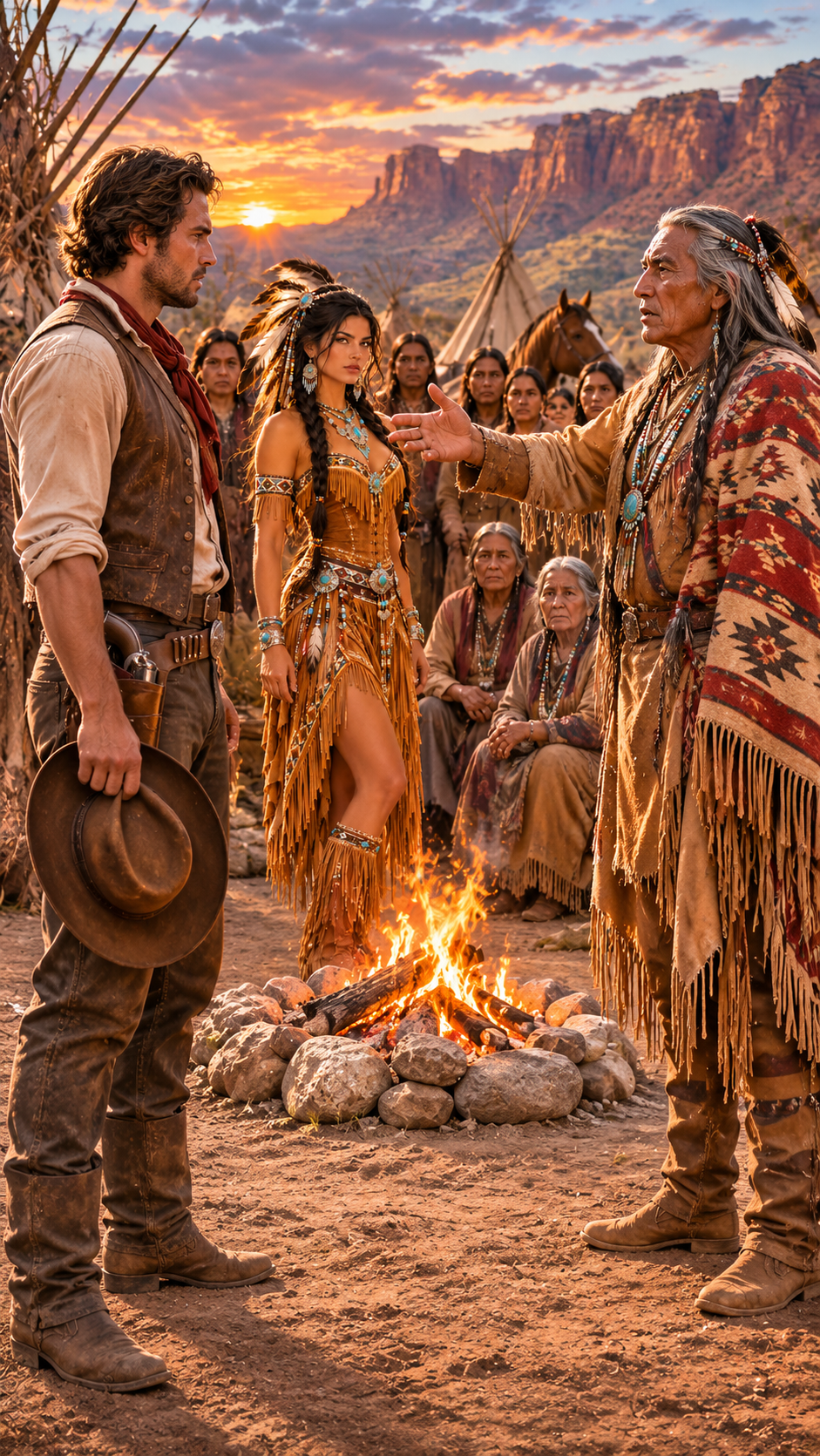
## Part 6 – The Promise That Outlived the Drought
Thomas Hale had been dead nine years.
His son, however, had inherited more than a name.
According to Eleni’s ledger, Thomas had served as Harlan Baines’s record keeper.
He had copied deeds.
Filed surveys.
Carried documents between Tucson and the territorial land office.
He was never the man whose name appeared at the top.
He lived in the margins.
Warren Hale had apparently learned the same skill.
Daniel sat at my kitchen table with his head in his hands.
“I hired him.”
“You didn’t know,” I said.
“I should have.”
Naira answered before I could say more.
“Knowing afterward does not make ignorance beforehand dishonest.”
Daniel looked at her.
“But what I do next matters.”
“Yes.”
That was Naira.
Truth without cruelty.
Accountability without theater.
Sheriff Warren organized the search for Hale.
I did not join.
Neither did Chaska.
The law could find a clerk.
We had more important work.
The water agreement.
The territorial office sent an examiner to my ranch.
For two days we compared original markers, Gideon’s maps, Eleni’s ledger, Rafael’s copy and the Baines confession.
The result was simple.
My ranch did not lose its water.
Neither did Chaska’s people.
The spring returned to what it had always been intended to be.
Shared.
Other disputed boundaries were reopened for review.
Some ranchers were angry.
Others relieved.
Most discovered the truth was less catastrophic than rumor.
Warren Hale was found a week later in Yuma attempting to board a stage under another name.
He had carried copies of altered deeds.
He eventually admitted changing several pages after legitimate signatures were obtained.
His motive was disappointingly ordinary.
Money.
He believed invalidating shared agreements would increase the value of water company holdings.
No grand conspiracy.
No hidden army.
No dramatic final confrontation.
Just greed wearing respectable clothes.
Daniel dissolved the disputed contracts voluntarily.
He sold part of his company to repay ranchers who had been overcharged for access to water that should never have been exclusively controlled.
“You don’t have to do all of this,” I told him.
“Yes,” he replied, “I do.”
We were standing beside the spring.
Water moved quietly over limestone.
“My father spent years knowing what he should repair.”
Daniel looked at me.
“I don’t want to inherit the delay.”
I understood.
So did Naira.
Three weeks later I rode back to Chaska’s settlement.
This time nobody surrounded me.
Tala came running first.
She threw herself at Lucero so enthusiastically the horse looked personally offended.
Naira stood beside the fire.
She wore no blanket over her face.
No leather ledger was hidden beneath her clothing.
It rested openly beneath her arm.
One of the warriors who had once stepped backward when she revealed it now sat nearby repairing a bridle.
He nodded to her.
She nodded back.
Things had changed.
Not completely.
People rarely changed that cleanly.
But conversations had begun.
Two men had asked to add corrections to Eleni’s record.
An older woman had brought letters her husband kept hidden for years.
A former warrior admitted accepting flour intended for several families and distributing it unfairly during a hard winter.
Naira did not shame him.
She simply recorded what he said.
“The book is getting larger,” I told her.
“Truth requires storage.”
“You may need a wagon.”
“I know a rancher.”
“His rates are unreasonable.”
“His roof leaks.”
“It no longer leaks.”
Naira stopped.
“You repaired it?”
“Yesterday.”
She looked genuinely impressed.
“That changes everything.”
Chaska approached.
“You came.”
“I said I would.”
“You also said you would marry my daughter.”
“I did.”
“Have you changed your mind?”
“No.”
Naira looked at him.
“He is supposed to ask me, Father.”
“He already did.”
She stared.
“How do you know?”
Chaska nodded toward me.
“I asked him.”
“Before asking me?”
“You already accepted.”
“You did not know that.”
“I suspected.”
Naira closed her eyes.
“I will never escape either of you.”
“Probably not,” I said.
She tried not to smile.
The wedding took place four days later.
It was not entirely Apache.
Not entirely Mexican.
Not entirely anything except ours.
A priest from Tucson came because my mother would have haunted me if I married without one.
Chaska conducted a blessing from his people.
Marisol traveled from Santa Fe.
She and Naira embraced awkwardly at first.
Then Tala crashed into both of them and destroyed all solemnity.
Daniel Baines attended.
So did Esteban.
Sheriff Warren stood near the back.
Even Ahiga came, though he claimed weddings lasted too long.
I wore my father’s best coat.
Naira wore a deep red dress with woven details made by women from her community.
Around her neck hung the silver chain Gideon had once sent to Marisol.
Marisol had insisted.
“Only for today,” she said.
Naira had answered, “Then tomorrow you wear my mother’s bracelet.”
The sisters were already inventing traditions.
When Naira stood before me, everything else disappeared.
I remembered the first morning.
The heavy blanket.
The silent warriors.
The object hidden beneath her clothing.
I had thought I was about to learn something terrifying.
Instead, she had revealed a book.
A history.
A set of truths people feared because truth asks something after it is known.
I took her hands.
The priest asked whether I entered the marriage freely.
“Yes.”
Chaska translated the question.
Naira answered.
“Yes.”
Nobody negotiated water.
Nobody mentioned cattle.
Nobody threatened alternate roads.
Just yes.
Afterward, Chaska pulled me aside.
“I owe you an apology.”
I stared.
“Should I be worried?”
“Yes.”
“For what?”
“The first day.”
“The marriage condition?”
He nodded.
“You should not have been placed in that position.”
I studied him.
“You were trying to protect your family.”
“That does not make every method wise.”
“No.”
“You were angry.”
“Yes.”
“You still agreed.”
“Yes.”
“Why?”
I looked toward Naira.
She was laughing with Marisol.
“Because she looked like someone who had spent too long being explained by other people.”
Chaska followed my gaze.
“And you understood that?”
“No.”
I smiled.
“But I wanted to.”
The old chief nodded.
“That is sometimes enough to begin.”
Married life began with rain.
Not much.
One afternoon shower.
But after months of drought, the smell of wet earth felt miraculous.
Naira stood on the porch with both hands extended.
I leaned against the doorway.
“You are getting wet.”
“That is generally what happens in rain.”
“I have heard.”
She stepped into the yard.
“Come here.”
“I’m comfortable.”
“Mateo.”
“No.”
She gave me a look.
I knew that look now.
I walked into the rain.
She smiled.
“Was that difficult?”
“Terrible.”
Water darkened her hair.
Lucero stood beneath the shed roof, watching us with the disgust of a horse who believed humans lacked common sense.
We laughed.
The rain lasted thirteen minutes.
I counted.
Naira mocked me for counting.
I told her ranchers counted everything.
That winter Marisol visited.
She stayed two weeks.
Then three.
By the end, Chaska had started calling her daughter when he forgot to be cautious.
The first time it happened, Marisol cried.
Chaska pretended not to notice.
Tala absolutely noticed.
She announced it to everyone.
Eleni’s ledger eventually moved from Naira’s private keeping to a small records room we built near the settlement school.
Not because Naira surrendered it.
Because she chose to share it.
Copies were made.
In English.
Spanish.
Apache.
People began adding their own accounts.
Not just wrongdoing.
Marriages.
Births.
Water agreements.
Stories about storms.
Lost horses.
Harvests.
Promises kept.
A record, Naira said, should remember more than failure.
I liked that.
Daniel helped establish an independent water council representing ranchers and Apache families.
It was boring work.
Endless meetings.
Arguments over measurements.
People complaining about gates.
That was perhaps the best sign of success.
Peace was often boring.
Nobody wrote songs about fair distribution schedules.
But cattle drank.
Families had water.
Neighbors spoke instead of guessing.
I came to value boring things.
Years passed.
The ranch recovered.
We increased the herd slowly.
Naira refused to let me buy thirty new cattle in one season.
“You count everything except your own impatience,” she told me.
She was right.
I bought twelve.
She pretended that was compromise.
I pretended I had chosen twelve independently.
Tala grew tall.
She spent summers with us.
When she was fifteen, she could outride me.
I denied this publicly.
When she was sixteen, she corrected one of my fence designs.
I denied that too.
Naira preserved both incidents in writing.
I considered burning the ledger.
Briefly.
One evening, years after the dust storm that brought us together, Naira and I rode to Santa Catalina Spring.
The original markers still stood.
We had added small stone cairns so nobody would forget where they were.
Water flowed through the basin.
I sat beside it.
Naira lowered herself beside me.
She carried the old leather ledger.
“You still bring that everywhere?”
“No.”
“Everywhere important.”
She smiled.
“Perhaps.”
She opened to the first pages.
Then to page forty-two.
Her birth.
Gideon Voss.
She touched the words.
“I used to hate this page.”
“I remember.”
“I thought it explained me.”
“Does it?”
“No.”
She turned forward.
There were later entries.
Her marriage to me.
Marisol’s visit.
The restored water agreement.
Tala’s schooling.
Chaska’s seventy-first birthday.
My unfortunate attempt to repair a wagon axle without proper tools.
“That last one is unnecessary.”
“History must remain honest.”
“It was one axle.”
“It rolled into a chicken house.”
“Nobody was injured.”
“Three chickens remain emotionally affected.”
I laughed.
Naira closed the book.
“Do you remember what you thought when I first pulled this out?”
“That everyone had lost their minds.”
She nudged me.
“Truly.”
“I expected a weapon.”
“And instead?”
“A different sort.”
She considered.
“Words?”
“Memory.”
That answer pleased her.
The sun lowered behind the ridge.
I looked at the woman beside me.
The mysterious chief’s daughter.
The woman warriors supposedly feared.
My wife.
My friend.
The person who had entered my life holding a history nobody wanted opened.
“What was the terrifying secret?” I asked.
Naira frowned.
“What?”
“The story people told. That you had some secret every warrior feared.”
She smiled slowly.
“Oh.”
“Well?”
“They feared I remembered.”
I thought about that.
“That is all?”
“Isn’t it enough?”
Perhaps it was.
People could endure many things more easily than being reminded of what they had promised.
But memory had not destroyed us.
It had repaired boundaries.
Restored water.
Found a sister.
Exposed forgery.
And forced several stubborn men—including me—to discover that inheritance did not have to mean repeating what came before.
Naira slipped her hand into mine.
“Do you regret it?”
“What?”
“Taking the shorter road.”
I looked toward the canyon where I had found Tala.
The safe route would have taken three more days.
If I had chosen it, my cattle might have died.
I would never have met Tala.
Never entered Chaska’s settlement.
Never seen Naira lift that blanket.
Never learned the truth about my father.
Never found the original agreement.
Never sat here.
“No.”
“Not even the first day?”
“I was uncertain.”
“You looked terrified.”
“I was surrounded.”
“You had a pistol.”
“Twenty warriors also had weapons.”
“They were mostly curious.”
“They hid it impressively.”
She laughed.
I squeezed her hand.
“No. I don’t regret it.”
“Good.”
“Do you?”
She thought longer.
“I regret that my father made marriage sound like a toll collected at the border.”
“That was unfortunate.”
“I regret that I tested you.”
“You did?”
“Constantly.”
“I suspected.”
“I regret believing that if you learned everything, you might leave.”
I turned toward her.
“You had reasons.”
“Yes.”
“But?”
“But I no longer regret telling you.”
I kissed her temple.
We sat until stars appeared.
Then Naira opened the ledger one final time.
Near the back was a blank page.
She removed a pencil.
“What are you writing?”
“Our story.”
“I thought you already did.”
“Only pieces.”
I watched her.
She wrote the date.
Then:
Years ago, during a drought, Mateo Molina chose a dangerous road because he believed it would save his cattle.
He found a child.
I interrupted.
“That makes me sound admirable.”
“You complain when I record your mistakes and when I record your virtues.”
“I value balance.”
She continued.
He returned the child to her family and was rewarded with an alarming marriage proposal.
“Better.”
Naira smiled.
He met a woman everyone claimed men feared.
He discovered they did not fear her strength, her temper or anything hidden beneath her blanket.
They feared the questions she refused to stop asking.
Naira paused.
“What next?” I asked.
She handed me the pencil.
“You write it.”
“I have poor handwriting.”
“So did your father.”
I took the pencil.
After a moment, I wrote:
Mateo discovered he was not brave because he lacked fear.
He was brave only on the days he chose not to let fear make his decisions.
Naira read it.
Her eyes softened.
“That is good.”
“I occasionally surprise myself.”
“Continue.”
I wrote:
Naira discovered that truth was not a burden she had to carry alone.
She looked at me.
I added:
Together they learned that love was not the absence of old secrets.
It was the decision to face them side by side.
Naira closed the book.
“That is enough.”
“No dramatic ending?”
“Our life is not ending.”
Fair point.
We stood.
The desert night had become cool.
Our horses waited nearby.
Before mounting, Naira looked back at the spring.
“What should happen to the ledger someday?”
“Someday?”
“When we are old.”
“You are asking the wrong person.”
“Why?”
“I would preserve every page.”
“Even your wagon accident?”
“No. Some editing is historically responsible.”
She laughed.
Then became thoughtful.
“I want Tala to have it.”
“That seems right.”
“And after her?”
“Whoever understands it isn’t a weapon.”
Naira nodded.
We began riding home.
The ranch lights glowed faintly in the distance.
Home.
Such a small word.
It had once meant acreage, a well, cattle and my father’s house.
Now it meant more.
Naira.
Tala’s endless questions.
Chaska arriving without warning.
Marisol’s letters.
Esteban arguing with me about fences.
Shared water flowing through an old channel.
A book on the table.
A repaired roof.
And rain when we were fortunate.
Halfway home, Naira stopped her horse.
“What?”
She looked at the stars.
“My mother used to say the desert remembers everything.”
“Your mother said many things.”
“She did.”
“Was she right?”
Naira considered.
“No.”
That surprised me.
“No?”
“People remember.”
She looked at me.
“The desert simply gives us somewhere quiet enough to listen.”
We rode on.
Years earlier, every warrior had stepped backward when Naira revealed the object beneath her blanket.
I had stepped closer.
At the time, I thought that choice made me brave.
I know better now.
The brave choice came later.
It came every time we opened the book.
Every time we admitted we had been wrong.
Every time we allowed an old story to become more complicated without turning away from it.
Every time Naira chose to trust me.
Every time I chose to deserve that trust.
And every evening, when the Arizona sun lowered beyond the ranch and painted the mountains gold, I remembered the desperate young cowboy who had once taken a shortcut through Apache land because his cattle needed water.
He thought he was trying to save a ranch.
He had no idea he was riding toward the woman who would teach him what was worth saving.
Or that beneath her blanket she carried no terrifying weapon at all.
Only the truth.
And the courage to open it.
**–THE END– PLEASE
**Share your thoughts or feedback to motivate us to create more stories ♥️**
✓ Lynn R. Adams
## Part 6 – The Promise That Outlived the Drought Thomas Hale had been dead nine years. His son, however, had inherited more than a name. According to Eleni’s ledger, Thomas had served as Harlan Ba…