The End – The Mountain Cabin Where Mercy Finally Learned Freedom Could Feel Like Home _064
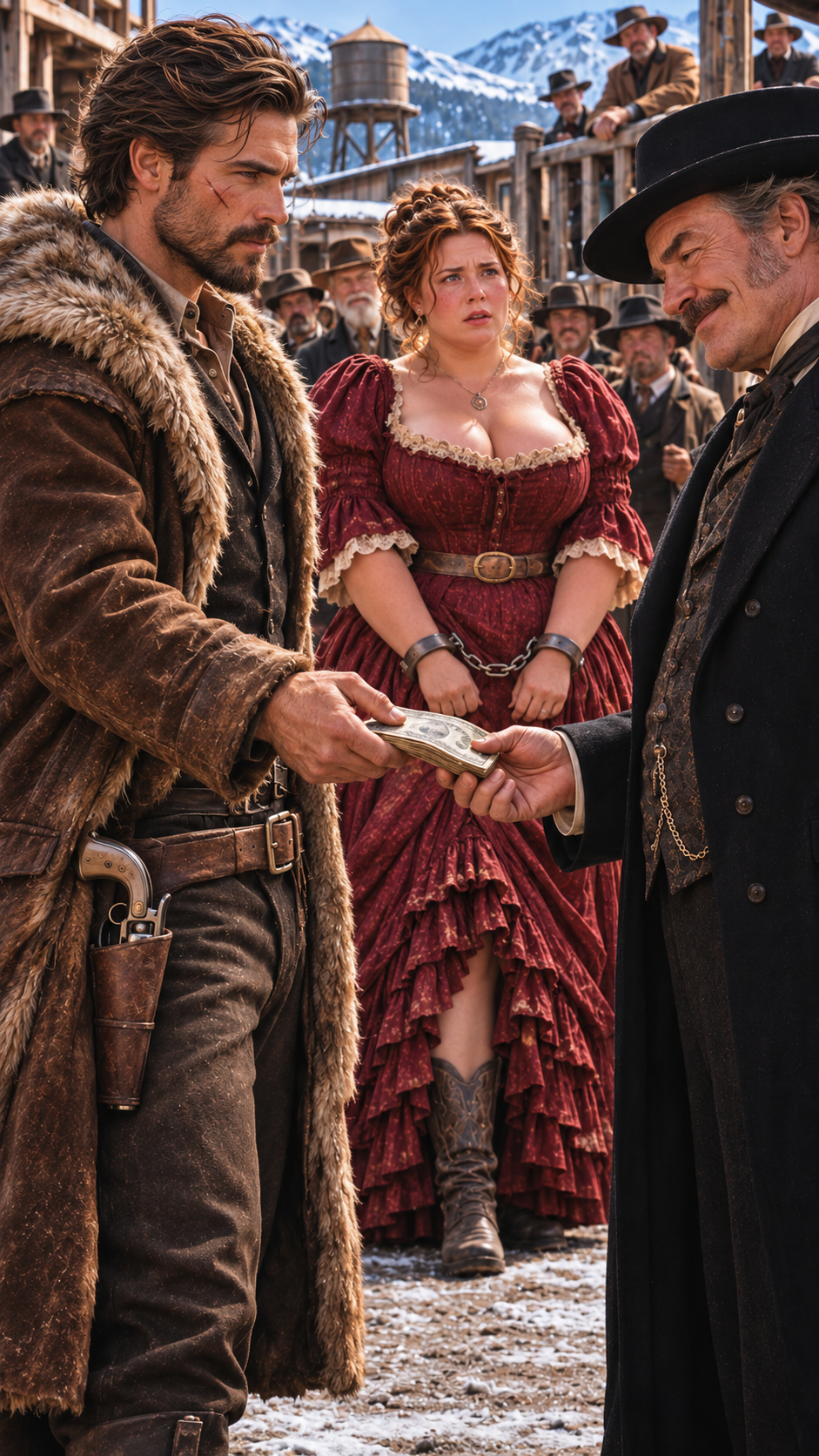
## **Part 6 – The Home With Open Doors and the Woman Who Never Owed Herself Away**
Mercy Flanigan Morrison grew older without becoming smaller.
Not physically.
Not emotionally.
She liked that.
Her hair silvered.
Her hands thickened from work.
Her laughter became louder.
At sixty, she still managed River Hearth two days a week.
Only two.
Caleb enforced that.
Badly.
“Do you want help?” he would ask.
Mercy would glare.
“You are weaponizing good communication.”
“Yes.”
She loved him for it.
Middle Place became their main home.
Thunder Mountain cabin remained.
They visited each winter.
Not because trapping mattered anymore.
Because the cabin held beginnings.
The blue dress stayed in a cedar chest there.
Mercy wore it only once more.
Their twenty-fifth anniversary.
It no longer fit perfectly.
She did not care.
Caleb stared when she came down the stairs.
“Mercy.”
“What?”
“That dress.”
“Yes.”
He touched one sleeve.
“Ruth’s.”
“Yes.”
“Sarah kept it.”
“Yes.”
“I gave it to you.”
“Yes.”
Mercy smiled.
“And now it’s mine.”
That mattered.
Objects changed ownership.
Meaning too.
Ruth laughed when she saw it.
“You look better in it.”
Mercy answered:
“Obviously.”
Good.
River Hearth became a cooperative.
Not a monument to Mercy.
She insisted.
Women bought shares.
Worked shifts.
Earned wages.
Some stayed months.
Some one night.
No gratitude contracts.
No permanent dependence.
A sign near the entrance read:
**ROOM, WORK, AND HELP MAY BE OFFERED. NONE PURCHASES A PERSON.**
Judge Vale approved.
Silas died in his seventies.
Mercy attended the funeral.
People were surprised.
She was not.
Silas had done something terrible.
He had also been her uncle.
Both.
At the grave, she remembered him teaching her to tie fishing knots when she was seven.
Then remembered the shackles.
Human beings rarely fit one memory.
She did not pretend forgiveness had made the auction acceptable.
She also did not let the auction consume every earlier year.
Afterward, Silas’s executor gave Mercy a small box.
Inside:
Three hundred dollars.
Caleb’s original auction money?
No.
Silas had repaid that.
This was different.
A note:
**I spent years thinking money could make people owe me. I leave this with no instruction. Burn it if you like.**
Mercy stared.
Then laughed.
She used the money to replace River Hearth’s roof.
Practical.
Caleb approved.
Their daughter Nora became a respected animal doctor.
Not formal veterinarian in modern sense, but trained under established practitioners.
She traveled constantly.
Married late.
A schoolteacher named Thomas Reed.
They had one son.
Mercy adored him.
Spoiled him moderately.
Caleb accused her of excess.
She ignored him.
When Nora married, Mercy asked one question before the ceremony.
“Do you have money of your own?”
Nora groaned.
“Mother.”
“Answer.”
“Yes.”
“Good.”
Caleb whispered:
“Romantic.”
Mercy elbowed him.
They gave Nora no land automatically.
Instead, offered options.
She chose none.
Moved east.
Mercy cried for two weeks.
Then wrote weekly letters.
Choice hurts sometimes.
Still choice.
Caleb slowed in his sixties.
Old trapping injuries.
Knees.
Shoulder.
One winter, he could no longer climb the Thunder Mountain trail without resting.
He hated that.
Mercy sat beside him on a fallen log.
“Need help?”
“No.”
She waited.
Five minutes later:
“Yes.”
She held out her arm.
He took it.
No shame.
That was another lesson.
Help could increase choice even in age.
Caleb stopped heavy carpentry.
Started carving.
Small boxes.
Combs.
Toys.
A rocking horse for their grandson.
Mercy watched him work.
“You like this.”
He frowned.
“Too small.”
“That was not my question.”
He looked toward the tiny horse.
“Yes.”
Good.
One evening, after forty years together, Caleb asked:
“Do you remember the first thing I told you in the cabin?”
Mercy laughed.
“Take off everything they gave you.”
He winced.
“Terrible wording.”
“Yes.”
“I meant the clothes.”
“I know now.”
“I should have explained first.”
“Yes.”
He sighed.
“Still angry?”
“Occasionally.”
They laughed.
Then Mercy became quiet.
“What I remember most is the dress.”
Caleb looked toward her.
“I thought I was about to be humiliated.”
His face tightened.
“I know.”
“And then I saw something clean.”
She smiled.
“It wasn’t expensive.”
“No.”
“It didn’t even fit perfectly.”
“No.”
“But it was the first time somebody gave me something without telling me what I owed.”
Caleb’s eyes filled.
“You owed nothing.”
“I know.”
She looked at him.
“Now.”
That word held years.
Healing takes time.
Caleb died at seventy-six.
At Middle Place.
Winter.
Peacefully.
Mercy sat beside him.
Ruth was gone by then.
Nora arrived in time.
Their grandson too.
Caleb’s last clear conversation happened the afternoon before.
He looked toward Mercy.
“Do you want me to stay?”
She stared.
“Idiot.”
He smiled faintly.
“Question.”
“Yes.”
Her eyes filled.
“Yes, I want you to stay.”
He nodded.
“Trying.”
She laughed and cried.
Then he whispered:
“Good.”
By morning, he was gone.
Mercy grieved fiercely.
She returned to Thunder Mountain alone three months later.
The cabin felt enormous.
She opened the cedar chest.
Blue dress.
Old gloves.
Sarah’s letters.
Nora’s letter.
Caleb’s first carved comb.
She sat on the bed where he had once placed the dress.
And cried.
Then she did something important.
She left.
Not forever.
Just after two days.
She went back to Middle Place.
Because grief did not obligate her to live inside the beginning.
Caleb had loved a woman who chose.
She would keep choosing.
Mercy lived another fourteen years.
She reduced work.
Then stopped.
River Hearth continued without her.
Good.
She taught young women basic bookkeeping one afternoon each week.
Not because every woman needed business.
Because every person deserved to understand the numbers attached to her name.
She often began with:
“Read before signing.”
Then:
“If someone says you owe, ask how much.”
Then:
“Ask for the original.”
Judge Vale would have approved.
At eighty, Mercy’s grandson asked about the auction.
He had heard town legends.
“Grandma, did Grandpa buy you?”
Mercy sighed.
“No.”
“He paid money.”
“Yes.”
“Then?”
“He paid money inside a system that should never have existed.”
The boy frowned.
“Same?”
“No.”
She explained.
“Your grandfather thought paying would end it.”
“Did it?”
“No.”
“What did?”
Mercy thought.
“Paperwork.”
The child looked disappointed.
She laughed.
“And courage.”
Better.
“And people admitting mistakes.”
“Better.”
“And Grandma?”
“Yes?”
“Did Grandpa save you?”
Mercy looked toward the mountains.
“He helped me.”
“Same?”
“No.”
“What did you save?”
She smiled.
“My own life, mostly.”
The boy considered.
Then:
“Did you save Grandpa?”
“Also no.”
“What did you do?”
“Made his house louder.”
The boy laughed.
Good.
On Mercy’s eighty-third birthday, River Hearth held a celebration.
She protested.
Lost.
A plaque had been installed near the old doorway.
Mercy read:
**RIVER HEARTH
FOUNDED BY MERCY FLANIGAN MORRISON
FROM LAND FIRST ENVISIONED BY NORA FLANIGAN AND SARAH BRENNAN MORRISON
A PLACE WHERE HELP CREATES CHOICES**
Mercy cried.
Then complained her full name took too much space.
Perfect.
That evening, she sat outside beneath cottonwoods.
Her daughter Nora beside her.
“You happy?” Nora asked.
Mercy thought.
“Yes.”
“Always?”
“No.”
Nora smiled.
“Good.”
Mercy looked toward River Hearth.
Women carrying trays.
Children running.
Travelers arriving.
No chains.
No auction.
No one asking what another person was worth.
She thought about the twenty-four-year-old woman she had been.
Head lowered.
Shackles around ankles.
Believing humiliation had become identity.
If she could speak to that Mercy now, what would she say?
Not:
A mountain man will save you.
Too easy.
Not:
Everything will become beautiful.
False.
She would say:
**Ask for the paper.**
**Keep your name.**
**Take the dress.**
**Accept the help.**
**Open your own account.**
**Learn the land.**
**Leave when you need to.**
**Stay when you want to.**
**And never confuse gratitude with a lifetime debt.**
That was the life.
A series of doors.
Some opened by others.
Some by Mercy.
Some she closed.
Some she returned through years later.
At eighty-five, Mercy died peacefully at Middle Place.
Nora found her near the window.
A half-finished letter on the table.
Addressed to River Hearth’s next board.
It read:
**Do not preserve this place exactly as I made it. If it cannot change, it is not free either.**
Nora laughed through tears.
Of course.
Mercy’s will was clear.
No hidden conditions.
No surprise debts.
Middle Place sold after family discussion.
Proceeds divided plainly.
Thunder Mountain cabin went to a regional historical trust only if they agreed not to turn Caleb into a romantic “buyer of brides.”
They agreed.
The blue dress became part of River Hearth’s archive.
Beside it, a small card:
**This dress mattered because it was given without a debt attached.**
Visitors often stood there longest.
Not at the auction papers.
Not at Silas’s forged collection form.
Not at Sarah’s bank account.
At the dress.
Simple.
Clean.
Waiting on a bed in a mountain cabin while a frightened woman believed the worst was about to happen.
Caleb had turned his back.
Walked outside.
And left her alone with something she could choose to wear.
Years later, people told the story as though the three hundred dollars changed Mercy’s life.
It did not.
Money changed hands.
A bad agreement was interrupted.
But the real transformation happened afterward.
When records were examined.
When inheritance was returned.
When Sarah’s intentions were understood.
When Mercy owned land.
When Caleb learned love did not mean carrying every burden.
When Mercy learned accepting kindness did not mean surrendering independence.
When they built separate lives strong enough to create a shared one without either disappearing inside it.
And in the end, the greatest gift Caleb Morrison ever gave Mercy Flanigan was not the dress.
Not shelter.
Not marriage.
It was the room to answer one question again and again:
**What do you choose?**
Mercy spent the rest of her life answering it.
And that was how a woman once treated like a debt finally became fully, unmistakably, beautifully her own.
**–THE END– PLEASE
Share your thoughts or feedback to motivate us to create more stories ♥️
✓ Lynn R. Adams
## **Part 6 – The Home With Open Doors and the Woman Who Never Owed Herself Away** Mercy Flanigan Morrison grew older without becoming smaller. Not physically. Not emotionally. She liked that. He…