The End – The Marriage Bargain That Revealed the Widow’s Buried Family Secret _064
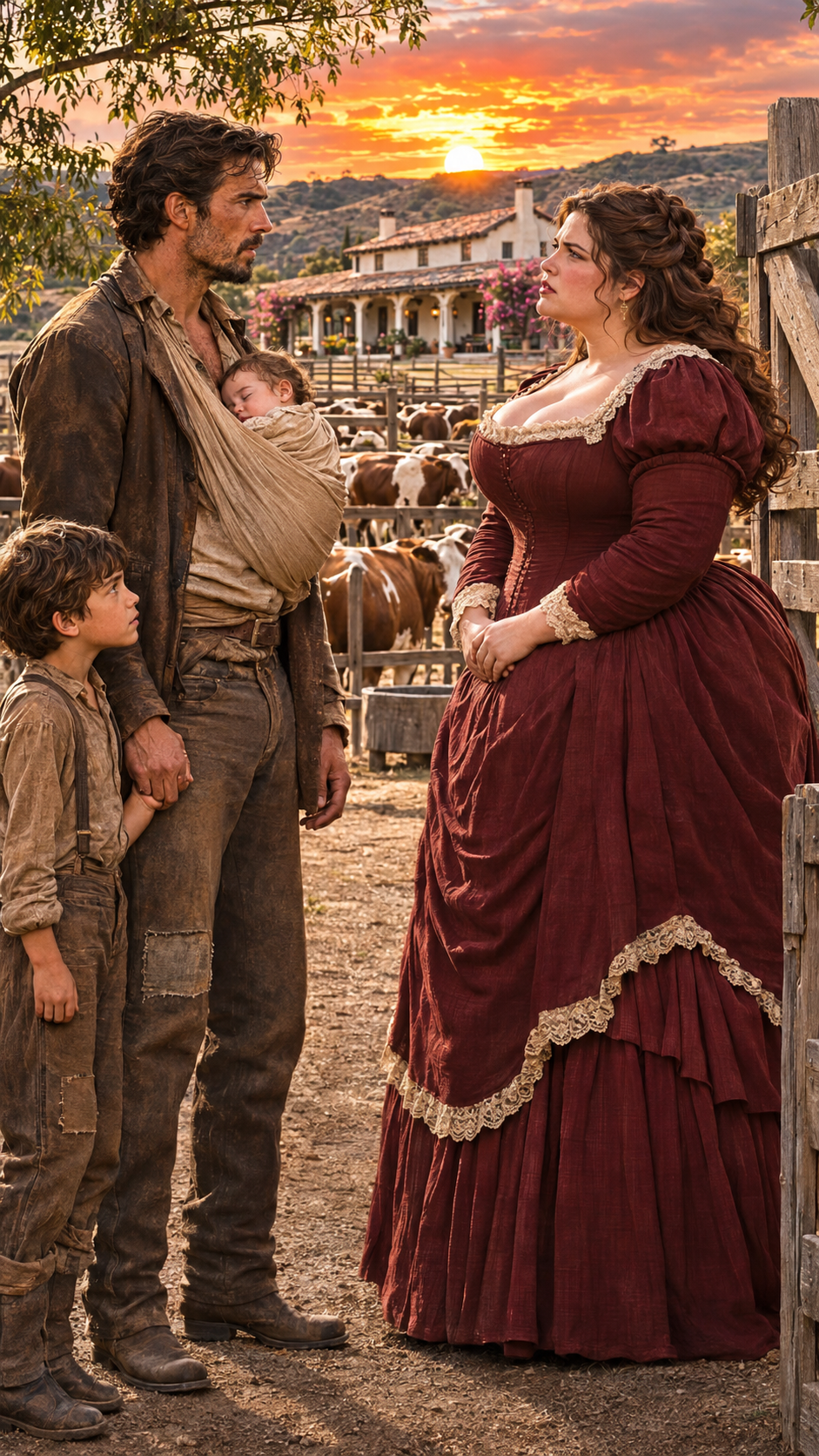
## **Part 6 – Mateo’s Final Truth and the Family No Bargain Could Create**
The fire had been small.
That was the first surprise.
Not the great disaster Gabriel imagined.
No deaths.
No burned ranch house.
Only the old dairy shed behind Santa Esperanza.
Seventeen years earlier, shortly after Elena’s birth, fire destroyed a storage room containing records.
Birth notes.
Employment papers.
Several estate documents.
Isabella remembered smoke.
Barely.
She had been feverish in bed.
Mateo told her a lamp overturned.
His final letter said otherwise.
They gathered in the kitchen.
Isabella.
Gabriel.
Ana.
Inés.
Marta.
Samuel coloring at the far end.
Emma asleep nearby.
No lawyers yet.
No court.
Family first.
Truth first.
Isabella opened Mateo’s letter.
My Isabella,
If Elena ever returns to you, then I failed to make right what fear made me do.
Her hands shook.
Gabriel touched the table near hers.
Not her hand.
An offer.
She took it.
Then continued.
The night after the doctor told me you might die, Victor’s father came to Santa Esperanza.
Gabriel frowned.
Victor’s father.
Alejandro Navarro.
Dead many years.
Mateo wrote:
He told me that if you died, our daughter would become the center of a guardianship fight.
He proposed that the family take control of Elena and the ranch until she was grown.
I refused.
Isabella’s breathing changed.
Then:
He said if I did not cooperate, he would challenge my management and claim I had endangered you by allowing the pregnancy.
Gabriel’s jaw tightened.
Family pressure.
Not physical danger.
Legal.
Social.
Enough.
Mateo continued:
I panicked.
I asked Dr. Valdez to record Elena as stillborn temporarily and place her with Rafael and Inés Morales until you recovered.
Ana covered her mouth.
Inés whispered:
“Rafael knew.”
Of course.
Mateo continued:
I intended three weeks.
Then Alejandro learned she lived.
I feared he would locate her.
So I burned the dairy records showing Rafael’s name and destroyed the duplicate birth registry.
Isabella stopped.
“You.”
Her voice broke.
“Mateo started the fire.”
Gabriel squeezed her hand.
She read on.
I told myself fire was safer than paper.
It was not.
It made secrecy easier.
Once the records were gone, every week I delayed telling you became easier to justify.
Isabella cried.
Mateo had not lost control of Elena through an accident.
He had created the disappearance.
From fear.
Then became trapped inside the solution.
He wrote:
When you recovered, I could not bear to tell you I had sent our living daughter away.
I told myself I would retrieve her first.
Then Rafael moved.
Then his letters stopped.
Then months became years.
I hated myself.
But hatred is not repair.
Gabriel closed his eyes.
That sentence could have belonged to half the people in their story.
Mateo continued.
Lucía discovered enough to force me to search honestly.
She was right to despise my silence.
She was also kinder than I deserved.
She helped me write the codicil because she feared my family would use our child again if Elena returned.
Isabella looked toward Ana.
Ana was crying quietly.
Then:
If Elena comes home, do not ask her to forgive me.
Tell her I loved her.
Tell her love did not excuse what I did.
Tell her I was frightened and made cowardly choices in the name of protection.
And Isabella—
if you hate me after reading this, let that hatred be yours.
Do not soften me because I am dead.
Her hands dropped.
The letter trembled.
Gabriel waited.
She whispered:
“I don’t hate him.”
Ana looked toward her.
Isabella continued:
“I want to.”
She laughed through tears.
“But I remember him making coffee.”
“Repairing that terrible chair.”
“Sitting beside me when I couldn’t sleep.”
Her voice broke.
“And he did this.”
Ana nodded.
“Both.”
The word had become familiar.
Both.
People could love and fail.
Protect and harm.
Regret and still remain responsible.
Inés spoke.
“Rafael told me only part.”
Everyone looked at her.
She had known Elena was not abandoned.
But Rafael said the mother was too ill.
That temporary care became permanent because records vanished.
Inés had suspected something was wrong.
Then Rafael died.
She kept Ana because she loved her and did not know where truth belonged.
Ana looked at her.
“You knew I might have another mother.”
“Yes.”
“Why didn’t you tell me?”
Inés cried.
“Because I was afraid you would leave.”
Silence.
Again.
Fear becoming possession.
Ana closed her eyes.
Then opened them.
“I am angry.”
Inés nodded.
“Yes.”
“I love you.”
More tears.
“Yes.”
“Both.”
Inés nodded.
Both.
No one fixed it that day.
They began.
Ana asked for copies of everything.
Good.
No more hidden paper.
Isabella agreed.
Victor was informed too.
He was horrified by his father’s role.
He did not defend Alejandro.
That mattered.
He helped produce remaining family correspondence.
One letter proved Mateo had repeatedly resisted pressure to bring Elena under Navarro guardianship.
Another showed Alejandro later regretted his interference but never confessed publicly.
Too late.
Still relevant.
The court recognized the codicil.
Santa Esperanza became Isabella’s independent property immediately.
No marriage requirement remained once the challenge ended.
The five-year clause became irrelevant.
Gabriel celebrated by asking for a raise.
Isabella stared.
“You already have wages.”
“I have experience now.”
She laughed.
“Outrageous.”
“Market value.”
Marta nearly dropped a bowl laughing.
Gabriel received the raise.
Their wedding happened exactly one year after the second proposal.
Not one day earlier.
Isabella insisted.
Gabriel pretended not to count.
He counted.
By then, Samuel was eight.
Emma almost two.
Ana visited monthly.
Sometimes with Inés.
Sometimes alone.
Little Elena considered Santa Esperanza primarily a place with calves.
That pleased everyone.
The wedding was small.
Under cottonwoods near the dairy pasture.
No grand society gathering.
Victor attended.
So did Ana.
Inés.
Marta.
Samuel stood beside Gabriel.
Emma refused to stand anywhere and wandered toward the flowers until Marta retrieved her.
Before vows, Isabella looked toward Gabriel.
“Last chance.”
He smiled.
“For you?”
“For both.”
“Good.”
Then:
“Still yes.”
“Still yes.”
They married.
No property transferred.
No court activated.
No child saved by the signature.
No debt repaid.
Only two adults choosing each other after every practical reason had disappeared.
That mattered more than either expected.
Marriage at Santa Esperanza was ordinary quickly.
Gabriel discovered Isabella snored when exhausted.
She denied it.
Samuel confirmed.
Isabella accused both of conspiracy.
Gabriel left boots in the wrong place.
She moved them.
He moved them back.
This continued for fifteen years.
Emma grew healthy.
Strong.
Loud.
She did not remember hunger.
Gabriel did.
That difference became a private gratitude.
Samuel remembered Lucía.
At first, he worried calling Isabella “Mama Isabella” betrayed her.
Gabriel used Lucía’s letter.
Not as command.
Permission.
Samuel chose the name eventually.
Emma called Isabella Mama because she knew no other daily mother.
Isabella never corrected.
But she also spoke Lucía’s name.
Often.
“Your mother hated overcooked beans.”
“Your mother laughed at Gabriel’s hat.”
“Your mother once told me I was stubborn enough to argue with rain.”
The children knew her as human.
Not saint.
Exactly as she requested.
Ana’s relationship with Isabella deepened slowly.
Some weeks easy.
Some difficult.
She occasionally disappeared for months emotionally.
Not physically.
Just needed distance.
Isabella learned not to chase.
Hardest lesson of her life.
Inés remained Ana’s Mama.
Isabella became Mama Isabella.
No title erased another.
Little Elena grew into a child who believed having two grandmothers on one side was fortunate because it doubled sweets.
Everyone accepted this interpretation.
Victor changed too.
He reorganized his own estate while alive.
No secret contingencies.
His sons knew what they would inherit.
His daughters too.
Isabella teased him.
“Revolutionary.”
He replied:
“I am tired.”
Sometimes tired people made excellent reformers.
The Santa Esperanza nursery did not remain a shrine.
That decision took time.
Eventually Isabella turned it into a small schoolroom.
At first for Samuel and Emma.
Then ranch workers’ children.
Then Ana’s daughter during visits.
The cradle remained.
Not as monument.
As furniture.
One day, Emma put a doll inside.
Isabella saw.
Stopped.
Then smiled.
That was healing in its least dramatic form.
The baby bracelet went to Ana.
Not Isabella.
“Why me?” Ana asked.
“Because it was yours.”
Ana touched it.
Then gave it to Inés.
Inés cried.
Later, when little Elena turned sixteen, Ana gave it to her.
Objects moved.
So did belonging.
The New Mexico winters remained hard.
Ranching remained uncertain.
Some years milk prices fell.
One drought nearly destroyed half the pasture.
Gabriel and Isabella argued about selling cattle.
He wanted earlier cuts.
She waited too long.
He was right.
She hated that.
Marriage survived.
Not because love solved business.
Because disagreement no longer meant abandonment.
That was new for Isabella.
When she became angry, Gabriel did not leave the ranch.
When he became afraid, she did not turn his gratitude into leverage.
Their first bargain had nearly trapped them.
Their real marriage remained free by being chosen repeatedly.
Years later, Samuel married.
A teacher named Clara.
Gabriel tried to give advice.
Samuel said:
“Papa, you proposed to Mama after she proposed to you during a property crisis.”
Gabriel considered.
“Fair.”
Isabella laughed for five full minutes.
Emma became a veterinary assistant in Santa Fe.
She loved cattle more than people.
Isabella approved.
Ana eventually moved closer.
Not onto Santa Esperanza.
That mattered.
She bought a small place six miles away.
Her own.
Inés lived with her final years there.
Isabella visited.
Not daily.
Not possessively.
Just family.
When Inés died, Isabella stood beside Ana at the grave.
Ana cried:
“I don’t know who I am without her.”
Isabella said:
“You are still her daughter.”
No competition.
No secret relief.
Only truth.
Ana leaned against her.
That was perhaps the moment Isabella finally became a mother to Ana in the way she had longed for.
Not because Inés disappeared.
Because Isabella honored her place.
Marta lived long enough to see Emma marry.
She never stopped claiming she had known Gabriel would stay from the moment he refused free wages.
Gabriel said:
“That makes no sense.”
Marta replied:
“Neither did you.”
Fair.
Lucía’s letters were kept in a wooden box in the main house.
Not hidden.
Not constantly displayed.
The children read them when older.
Samuel cried at his mother’s permission to forget.
Then laughed because he had forgotten her singing voice.
Gabriel told him:
“That’s allowed.”
Emma read the line about burned beans and immediately accused Gabriel of cooking them wrong for years.
He had no defense.
Mateo’s letter remained too.
So did the codicil.
Not because they loved paperwork.
Because they had learned what happens when truth becomes dependent on memory.
Eventually Santa Esperanza created a family record chest.
Copies.
Names.
Births.
Land.
Letters.
Not secret.
Accessible.
Ana insisted.
Gabriel agreed.
Isabella teased that Lucía would approve.
“She’d add notes.”
“Too many.”
“Yes.”
On the twentieth anniversary of Gabriel’s arrival, they stood near the same gate.
He was fifty-eight.
Isabella sixty-four.
Samuel had children.
Emma lived nearby.
Ana’s granddaughter was nearly grown.
The dairy herd had changed.
The fence had been replaced twice.
Gabriel touched the gate.
“Do you remember?”
Isabella raised an eyebrow.
“You looked terrible.”
“I was starving.”
“The children were.”
“So was I.”
“You hid it.”
“Pride.”
“Useless.”
“Often.”
He smiled.
“You proposed marriage.”
“You looked trustworthy.”
“I looked homeless.”
“Also.”
They laughed.
Then Gabriel asked:
“Were you terrified?”
“Yes.”
“Of Victor?”
“Partly.”
“What else?”
Isabella looked toward the house.
“That Santa Esperanza would be taken.”
“Yes.”
“And that if it was…”
She paused.
“…then Mateo, Elena, the baby, all of it would mean nothing.”
Gabriel understood.
Property had become container for grief.
Lucía saw that before anyone.
“And now?”
Isabella smiled.
“Now it’s a ranch.”
He laughed.
“Very expensive emotional progress.”
“Extremely.”
She looked toward him.
“And you?”
“What?”
“Why did you nearly say yes?”
He did not pretend.
“Milk.”
She laughed.
“Romantic.”
“And shelter.”
“Better.”
“And Samuel.”
“Yes.”
“Then later?”
He looked toward her.
“You.”
Her face softened.
“Very late.”
“Had to be sure.”
“Twenty years?”
“Still evaluating.”
She hit his arm.
He laughed.
Then the gate creaked.
A wagon approached.
A young father.
Two children.
One infant crying.
Gabriel and Isabella both went still.
History echoed.
The man removed his hat.
“Excuse me. I heard Santa Esperanza might need seasonal help.”
Gabriel looked toward Isabella.
She looked toward him.
Then at the children.
The father continued quickly:
“I can work. I’m not asking charity.”
Gabriel almost laughed.
He remembered that sentence before he ever spoke it.
Isabella stepped forward.
“When did the baby last eat?”
The man hesitated.
“This morning.”
Isabella looked toward Gabriel.
He nodded.
She opened the gate.
“Come inside.”
The man’s shoulders nearly collapsed with relief.
“Ma’am—”
“Food first.”
He looked ashamed.
“I can pay.”
Gabriel said:
“No debt.”
The man stared.
Gabriel smiled.
“If you work, you get wages.”
“Yes.”
“If you need supper before work starts, that’s supper.”
The man looked toward the house.
“Thank you.”
Gabriel nodded.
No marriage proposal.
They had improved.
Later that evening, the children ate at the long kitchen table.
Isabella sat beside Gabriel.
Samuel’s family arrived unexpectedly.
Then Ana and Elena.
The table became crowded.
Marta was gone.
Mateo gone.
Lucía gone.
Inés gone.
Yet none had disappeared entirely.
Their choices remained.
Some harmful.
Some loving.
Some both.
Gabriel looked around.
Once, he had stood at Santa Esperanza with nothing but two starving children and grief he could barely carry.
Isabella had stood with land, wealth, cattle—
and terror that everything she loved could be taken.
They offered each other a bargain because fear made bargains look like miracles.
But the bargain never saved them.
Truth did.
Choice did.
Waiting did.
Allowing one mother to exist beside another.
Allowing one marriage to be remembered without making the next one lesser.
Allowing help without turning it into debt.
Allowing land to be property instead of proof of love.
The young father at the end of the table looked embarrassed by how much his son was eating.
Gabriel noticed.
“Let him.”
The man looked up.
“He hasn’t eaten like this in days.”
Gabriel nodded.
“I know.”
No explanation.
He did know.
Isabella reached beneath the table and took Gabriel’s hand.
He looked toward her.
“Still evaluating?” she whispered.
“Constantly.”
She smiled.
“Verdict?”
Gabriel looked at the crowded room.
At Emma’s daughter feeding bread to the visiting baby.
At Ana laughing with Samuel.
At the woman who once offered him marriage because she thought time had run out.
He squeezed her hand.
“I’d stay.”
“Only stay?”
He smiled.
“Choose.”
Isabella’s eyes softened.
That was the difference.
Staying could happen from fear.
Obligation.
Debt.
Shame.
Habit.
But choosing had to remain alive.
And after twenty years, two marriages remembered, one daughter rediscovered, one family enlarged, and countless truths finally spoken, Gabriel Morales knew exactly what Lucía had meant.
Love could add.
It did not have to replace.
And no home was truly safe if belonging required someone else to disappear.
**–THE END– PLEASE
Share your thoughts or feedback to motivate us to create more stories ♥️
✓ Lynn R. Adams
## **Part 6 – Mateo’s Final Truth and the Family No Bargain Could Create** The fire had been small. That was the first surprise. Not the great disaster Gabriel imagined. No deaths. No burned ranc…