The End – The Land He Wanted, the Woman Another Man Chose _065
Part 6 – What the Land Was Worth
Reverend Watkins did not deny it.
Perhaps that was what surprised Matilda most.
Morning light poured through the stained-glass windows of the First Presbyterian Church when she confronted him.
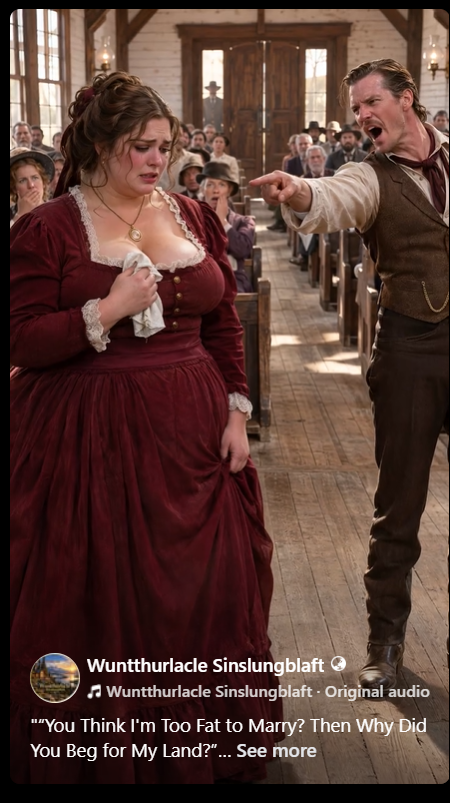
The same church where, two days earlier, Jeb had humiliated her.
The same aisle where Elias had returned.
Now only seven people stood inside.
Matilda.
Elias.
Ruth.
Silas.
Bartholomew Bell.
Jeb.
And Reverend Watkins.
No crowd.
No spectacle.
Matilda had insisted.
Whatever truth came now would not become another performance.
Watkins sat in the front pew.
“I wondered when Ruth would tell you.”
Matilda remained standing.
“Why?”
The reverend looked older than before.
“Because I was afraid.”
“Of what?”
“Poverty.”
The simplicity of the answer unsettled everyone.
Watkins clasped his hands.
“My father lost everything when I was young. Land. House. Store. I watched my mother beg relatives for rooms.”
He looked toward the pulpit.
“When I came to Blackwood, I wanted security.”
Bell said quietly, “So you joined Morrow.”
“Yes.”
“You altered contracts.”
“Yes.”
Matilda asked, “My father’s?”
Watkins closed his eyes.
“Yes.”
Ruth looked away.
Watkins continued.
“At first I told myself the borrowers would never notice. The company promised to invest in the town. Roads. Schools. Rail access.”
“You stole farms,” Matilda said.
“I helped people steal farms.”
“Why hide the ledger?”
“Because Henry changed me.”
Matilda almost laughed.
“My father?”
“He discovered what I’d done.”
“And he didn’t expose you?”
“He intended to.”
Watkins looked at her.
“Then Ruth disappeared.”
Silence.
“Henry was shattered. He became concerned only with you. By the time he returned to the matter, years had passed.”
“You could have corrected it.”
“Yes.”
“But you didn’t.”
“No.”
“Why?”
“Cowardice.”
Matilda studied him.
There was no villainous smile.
No theatrical confession.
Only a tired man who had made small compromises until they became a life.
That frightened her more than wickedness.
“How did my father get the ledger?”
“I gave it to him.”
Silas stared.
“You?”
“Yes.”
Watkins nodded.
“I finally wanted out.”
Silas’s expression changed.
“You could have come to me.”
“You were already protecting your family interests.”
“I was trying to dismantle Morrow.”
“So was I.”
Matilda raised her hand.
“Enough.”
The men fell silent.
For once, she thought bitterly, they actually listened.
“What happens now?”
Bell answered.
“We correct the records.”
“All of them.”
“Yes.”
“Not only mine.”
Bell looked at Watkins.
Then Silas.
“All of them.”
Silas nodded.
“I have already prepared to dissolve Morrow Agricultural Holdings.”
Jeb looked at his father.
“What?”
Silas turned toward him.
“The company is finished.”
“But our store—”
“Will survive or it won’t.”
Silas sounded almost relieved.
“I should have done this years ago.”
Matilda looked at him.
“Why didn’t you?”
Silas gave a humorless smile.
“Probably the same reason Reverend Watkins didn’t confess.”
“Cowardice?”
“Respectability.”
That answer stayed with her.
Respectability.
How much harm had been hidden behind polished counters, church pews, signed papers, and respectable men telling themselves that ordinary people would survive one more unfairness?
Ruth stepped forward.
“I will sign my share of the creek property to Matilda.”
Matilda turned.
“No.”
Her mother blinked.
“No?”
“No.”
“Tilly, it belongs to you.”
“It belongs to you.”
“I left.”
“Yes.”
Ruth flinched.
Matilda’s voice softened.
“You left. Father lied. Reverend Watkins forged papers. Mr. Bell allowed false accounts. Mr. Sloum protected a company he should have dismantled.”
She looked around the church.
“And I nearly married Jeb because I believed I had no other choices.”
Jeb lowered his gaze.
Matilda continued.
“I am finished making permanent decisions because frightened people tell me there is only one road.”
Nobody spoke.
She faced Ruth.
“If you want to give me your land someday, we can discuss it someday.”
Ruth’s eyes filled.
“Then what do you want from me?”
Matilda had imagined this moment since childhood.
Not this exact moment.
But versions of it.
Her mother returning.
Explaining.
Apologizing.
Holding her.
In those childhood fantasies, forgiveness had always been immediate.
Reality was more complicated.
“I want to know why you never wrote to me.”
Ruth began to cry.
“I did.”
Matilda froze.
“What?”
“Every year.”
Elias looked sharply at Ruth.
Ruth opened her satchel.
Inside were copies of letters.
Dozens.
Birthdays.
Christmases.
Ordinary days.
“I sent them to Henry.”
Matilda’s throat tightened.
“He never gave them to me.”
“No.”
“Why?”
Ruth shook her head.
“I don’t know.”
Matilda did.
Pride.
Pain.
Fear that Ruth might return and Matilda might choose her.
Henry had loved his daughter deeply.
And imperfectly.
For the first time, Matilda saw him not as father or victim, but as a man.
A man capable of sacrifice.
A man capable of cowardice.
A man who had loved fiercely enough to become selfish.
She began to cry.
Not loudly.
Ruth did not approach.
She waited.
That mattered.
Finally, Matilda crossed the space between them.
She did not embrace her mother.
Not yet.
She took the letters.
“I’ll read these.”
Ruth nodded.
“That is enough.”
It was.
For now.
The legal matters took three months.
Judge Collins ordered an independent review of mortgages connected to Morrow Agricultural Holdings.
Twenty-three families received corrected balances.
Nine properties were returned.
Several others received compensation.
The railway project survived, though under different ownership.
Blackwood changed slowly.
Not dramatically.
No villains were driven from town.
No one was tarred, feathered, ruined, or publicly destroyed.
Reverend Watkins resigned.
He left Blackwood quietly and later worked as a schoolteacher in a settlement east of Denver.
Bell remained at the bank under supervision while outside auditors examined the accounts.
Silas sold his interest in Morrow and used much of the proceeds to settle property claims.
Some townspeople praised him.
Others refused to speak to him.
Silas accepted both.
Jeb surprised everyone.
Especially Matilda.
He did not leave.
He worked in the mercantile.
Stopped drinking.
And rarely spoke about the wedding.
Six months afterward, he came to the Jenkins farm.
Matilda found him repairing a wheel on his wagon.
“I brought something.”
He handed her a small paper bag.
Inside were apples.
Bruised ones.
Matilda stared.
Jeb grimaced.
“I realized halfway here this was probably a terrible choice.”
She laughed.
It was the first time she had laughed with him since the church.
He looked relieved.
“I wanted to say something.”
“You’ve said enough things near altars.”
“I deserved that.”
“Yes.”
He looked toward the creek.
“I am sorry.”
Matilda waited.
No excuses followed.
No mention of drunkenness.
No mention of his father.
No explanation about pressure.
Just the apology.
“I believe you,” she said.
He looked surprised.
“That doesn’t mean I forgive everything.”
“I know.”
“But I believe you’re sorry.”
Jeb nodded.
“That’s more than I expected.”
He climbed onto the wagon.
Before leaving, he turned.
“For what it’s worth, Tilly…”
She raised an eyebrow.
He seemed to reconsider whatever he intended to say.
Then smiled.
“Never mind.”
“Good decision.”
He laughed.
Then rode away.
Elias stayed through winter.
He repaired the barn.
Built a new footbridge.
Argued with Matilda about planting potatoes.
Lost every argument.
Ruth rented a room in town.
She and Matilda met twice each week.
Sometimes they talked for hours.
Sometimes they sat in silence.
Neither forced the relationship into an easy shape.
One evening in February, Matilda finally asked the question.
“Why didn’t you come back sooner?”
Ruth sat beside the stove.
“Shame.”
“For leaving?”
“For everything.”
“You thought I would hate you.”
“Yes.”
“I did.”
Ruth looked at her.
Matilda continued.
“For a while.”
Her mother nodded.
“That seems fair.”
“I don’t now.”
Ruth’s eyes filled.
Matilda looked toward the window.
Snow fell across the yard.
“I don’t know exactly what I feel.”
“That seems fair too.”
Their relationship grew from there.
Not backward.
Forward.
Spring arrived late.
The creek swelled with melting snow.
One morning, Matilda stood beside it while Elias checked fence posts.
“You’re leaving,” she said.
He stopped.
“How do you know?”
“You’ve been staring north for three days.”
He smiled.
“I need to inspect my property.”
“Your mountain of valuable rocks.”
“Yes.”
“When?”
“Tomorrow.”
Matilda looked toward the water.
“I thought you might.”
Elias came beside her.
“You could come.”
“To your land?”
“For a visit.”
She laughed.
“I have my own.”
“I noticed.”
They stood in comfortable silence.
Then Elias said, “There is something else.”
Matilda groaned.
“If this is another family secret, I’m pushing you in the creek.”
“No secret.”
“Good.”
“I received an offer.”
“For your land?”
“Yes.”
“Railway?”
“Yes.”
“Will you sell?”
“Part of it.”
“What will you do with the money?”
“I thought about building something here.”
Matilda frowned.
“In Blackwood?”
“A grain mill.”
She looked toward the creek.
“That would help every farm in the valley.”
“That’s the idea.”
“You’d stay?”
“Part of the year.”
Matilda smiled.
“You’re not very good at leaving.”
“No.”
His answer carried more meaning than the sentence required.
That summer became the busiest in Blackwood’s history.
Rail crews arrived.
A new freight road was built.
The mill foundations were laid near the creek.
The town changed.
Matilda changed with it.
For the first time, the farm made money.
Not much.
Enough.
She hired two hands.
Bought three milk cows.
Repaired the roof.
And one September morning, she opened an envelope from Judge Collins containing the official judgment.
The Jenkins property was free of fraudulent debt.
Entirely.
Matilda stood on the porch reading the sentence repeatedly.
She had spent years believing survival depended upon somebody choosing her.
Jeb.
The bank.
A husband.
A rescuer.
But the paper in her hands said something else.
She had endured long enough to choose herself.
Elias found her there.
“Good news?”
She handed him the document.
He read it.
Then smiled.
“Congratulations.”
Matilda nodded.
She expected tears.
Instead, she felt strangely calm.
“That’s it.”
“That’s it.”
“No bank.”
“No.”
“No mortgage.”
“No.”
“No one can take it.”
Elias gave her a look.
“Someone can always try.”
She laughed.
“Thank you for ruining the moment.”
“My specialty.”
He handed the paper back.
Then he looked at her carefully.
“What?”
Matilda asked.
“Nothing.”
“That means something.”
He reached into his coat.
Her expression hardened.
“If you have another letter from my dead father—”
“It’s not a letter.”
He pulled out a small wooden whistle.
Cedar.
Old.
Cracked along one side.
Matilda stared.
“You kept it?”
“You gave it to me.”
“I was seven.”
“You said I needed it so I wouldn’t get lost.”
“I was apparently very wise.”
“Apparently.”
She took the whistle.
“You really kept this twenty years?”
“Yes.”
“Why?”
Elias looked toward the farmhouse.
“Because sometimes you need something small to remind you where home is.”
Matilda swallowed.
“You’re getting sentimental.”
“Age.”
“Terrible condition.”
“Fatal eventually.”
She smiled.
Later that afternoon, Ruth arrived for supper.
Silas came unexpectedly to speak with Elias about the mill.
Even Bell appeared carrying new bank documents.
By sunset, Matilda’s kitchen was full.
She stood at the stove watching them argue about railway schedules, grain prices, and whether cinnamon belonged in apple pie.
Jeb passed the window outside.
He waved.
Matilda waved back.
For one strange moment, she remembered the church.
The white dress.
The silence.
The laughter.
The feeling that her life had ended before everyone she knew.
It had not ended.
It had turned.
Painfully.
Messily.
Without anyone understanding the direction.
Ruth joined her by the stove.
“What are you thinking?”
“That three months ago I believed losing Jeb meant losing everything.”
Ruth smiled faintly.
“And now?”
Matilda looked around her kitchen.
At Elias.
At the letters stacked near her chair.
At the farm visible through the window.
“At the moment, I’m mostly worried Elias is burning the biscuits.”
“I heard that,” Elias called.
“You were meant to.”
Everyone laughed.
Later, after the others had gone, Matilda walked alone to the creek.
Moonlight trembled on the water.
The land no longer felt like a burden her father had left behind.
It was not a prize.
Not a bargaining chip.
Not something that made her worthy of marriage.
It was simply home.
Footsteps sounded behind her.
She turned.
Ruth approached slowly.
“I forgot something.”
“What?”
Her mother held out a small envelope.
“I found it among my things.”
Matilda opened it.
Inside was another photograph.
Henry and Ruth, young and laughing beside the unfinished farmhouse.
Between them stood Elias, barely nineteen.
On the back, Henry had written:
We were fools, but for a little while we were happy.
Matilda smiled.
“He knew.”
“Knew what?”
“That people are complicated.”
Ruth looked toward the creek.
“He learned late.”
“Most of us do.”
They stood together beneath the cottonwoods.
After a while, Ruth slipped her arm gently through Matilda’s.
This time, Matilda did not pull away.
A year later, the Blackwood railway station opened.
The celebration drew nearly everyone in town.
Matilda arrived wearing a green dress she had sewn herself.
It fit comfortably.
She had stopped allowing dressmakers to apologize for the width of her shoulders.
Jeb noticed her near the platform.
He came over.
“You look well.”
“So do you.”
He smiled.
Then, after a pause, he said, “Do you remember what I called you in the church?”
Matilda’s expression cooled.
“Yes.”
“I wish I could take it back.”
“You can’t.”
“I know.”
She studied him.
Then she smiled slightly.
“But you can live long enough to become embarrassed by the man who said it.”
Jeb laughed.
“I’m working on that.”
A whistle sounded.
The first passenger train rounded the distant bend.
Children cheered.
Hats flew into the air.
Matilda watched the locomotive cross land men had once fought to control in secret.
Beside her stood Ruth.
Behind her stood Elias.
The mill turned beside the creek.
The farm waited beyond town.
And for the first time in her life, Matilda did not feel that she was waiting for something to begin.
It already had.
Elias leaned toward her.
“You know, there’s one thing I never understood.”
“What?”
“Why did you agree to marry Jeb?”
Matilda watched the train approach.
“Fear.”
“That simple?”
“Yes.”
She thought about it.
“Fear makes poor decisions sound reasonable.”
Elias nodded.
“And now?”
“Now I intend to make unreasonable decisions for better reasons.”
He laughed.
The train roared into Blackwood Station.
Steam rolled across the platform.
Somewhere in the crowd, Jeb shouted at a porter.
Silas argued cheerfully with Bell.
Ruth squeezed Matilda’s hand.
The whole town seemed suddenly alive.
Matilda lifted her face toward the warm wind.
For years, she had believed her father’s land was the most valuable thing she possessed.
She had been wrong.
The land could be bought.
Mortgaged.
Measured.
Divided.
Inherited.
Taken.
Returned.
What no ledger had ever measured was the worth of choosing a life without bargaining away her dignity to keep it.
And that, Matilda Jenkins finally understood, belonged entirely to her.
Share your thoughts or feedback to motivate us to create more stories ♥️
**–THE END– PLEASE
✓ Lynn R. Adams
Part 6 – What the Land Was Worth Reverend Watkins did not deny it. Perhaps that was what surprised Matilda most. Morning light poured through the stained-glass windows of the First Presbyterian Chu…