The End – The Kiss That Revealed the Secret Daniel Had Hidden for Months _064
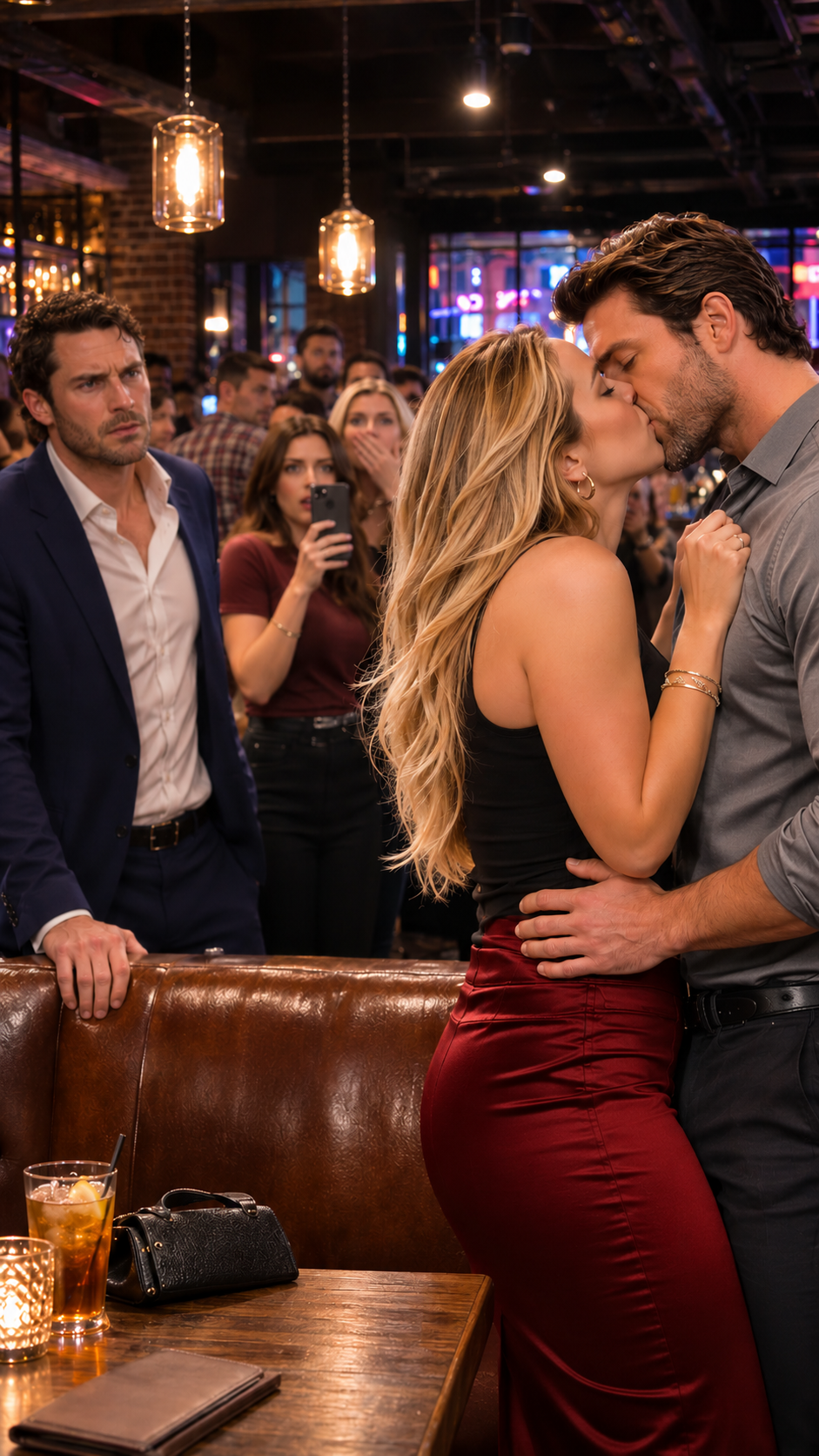
## **Part 6 – The Life They Built After Love Stopped Needing to Be Tested**
Daniel and I were married for fifty-four years.
When people hear that, they sometimes imagine longevity means nothing truly terrible ever happened.
Or that whatever happened must not have been serious.
Neither is true.
One kiss nearly ended our marriage.
But not because lips touched.
The kiss mattered because of why I chose it.
I wanted to hurt my husband just enough to force proof that I mattered.
That was serious.
Daniel’s secrecy mattered too.
He hid a significant medical diagnosis.
Rented an apartment.
Planned an entire conversation around choices I did not know existed.
Not equivalent to what I did.
Still consequential.
Our marriage survived because neither of us demanded that the other person’s wrongdoing erase our own.
That lesson carried us through decades.
Daniel’s heart required monitoring for the rest of his life.
Mostly uneventful.
At forty-eight, one test showed mild changes.
Nothing urgent.
This time he came home that same day.
Sat beside me.
Said:
“My scan changed.”
I felt old fear.
But also gratitude.
He told me before certainty.
Before treatment plan.
Before he had arranged my emotional response.
We went to the next appointment together.
No secret sister consultation.
Erin mocked him for finally becoming trainable.
He accepted.
At fifty, I faced my own health scare.
A suspicious mammogram.
Probably nothing.
Old Claire would have waited until I knew.
I told Daniel that afternoon.
He held my hand.
We lived through uncertainty together.
It was benign.
The experience mattered anyway.
Information did not have to become perfect before it could be shared.
That became one of our quiet rules.
We still argued.
Of course.
Marriage did not transform into permanent wisdom.
Sometimes Daniel withdrew.
Sometimes I became sarcastic.
Sometimes he overplanned.
Sometimes I performed irritation instead of naming hurt.
The difference was speed.
We recognized patterns sooner.
One evening after a ridiculous argument about vacation plans, Daniel disappeared into the garage for two hours.
When he returned, I said:
“You went full father.”
He winced.
“I did.”
“I went full mother.”
He smiled.
“You did.”
We apologized.
Booked nothing that night.
Progress can look very unimpressive.
It still counts.
Lacey remained my friend.
Different from before.
Less entangled.
Healthier.
She married at forty-two.
Before the wedding, she said:
“I keep waiting for some dramatic sign I’m choosing the right man.”
I laughed.
“Please don’t test him.”
She threw a napkin at me.
Then became serious.
“I learned.”
She did.
Her marriage was not perfect.
No one’s.
But she stopped treating conflict like theater.
Years later, she told me the Nashville bet remained one of her deepest regrets.
I said:
“You don’t have to keep proving that.”
Her eyes filled.
That was something Daniel had taught me indirectly.
Responsibility should change behavior.
It should not become a lifelong performance of shame.
Mason never reentered our lives.
Appropriate.
The photograph remained in a box.
Not displayed.
Not destroyed.
Just history.
Ashwood House eventually closed when Mason sold the property.
Daniel read the article and said:
“There goes our reservation.”
I laughed.
“Refund policy was terrible anyway.”
Humor becomes safe again when it no longer conceals harm.
The velvet ring box survived everything.
Moves.
Closet cleanouts.
Retirement.
We filled it with anniversary cards until it could barely close.
Then Daniel built a wooden box.
Of course.
Larger.
Inside went the velvet box and the cards.
Year twenty-seven:
**I want to stop pretending my knees are fine.**
That was Daniel.
Mine:
**I want you to stop pretending hearing aids are optional when the time comes.**
He accused me of prophecy.
I was right eventually.
Year thirty-two:
Daniel:
**I want to visit Maine.**
Me:
**I want one vacation where you don’t schedule breakfast.**
He failed.
Year thirty-eight:
Daniel:
**I want to tell you I’m lonely when I’m lonely, even if you’re sitting beside me.**
Mine:
**I want to hear that without treating it as an accusation.**
Those cards charted a marriage more honestly than photographs.
Some years joyful.
Some afraid.
Some ordinary.
One simply read:
**More tomatoes.**
We had become gardeners inexplicably.
Neither good.
Still.
At sixty-eight, Daniel retired.
He lasted six months before volunteering at a literacy center.
I retired two years later.
Our days changed.
Too much proximity at first.
We had to relearn autonomy.
I joined a community music group despite still being mediocre at piano.
Daniel took long morning walks.
We ate lunch together.
Not every meal.
Marriage grew breathable.
That mattered because one of our earliest mistakes had been believing closeness must constantly prove importance.
Eventually we understood:
Space is not indifference.
Attention is not ownership.
Jealousy is not love.
And calm is not absence if the quiet person still speaks.
At seventy-two, Erin died unexpectedly after a stroke.
Losing her broke something in Daniel.
She had carried his medical secret.
Driven him to appointments.
Sent me the photograph.
Protected him sometimes wisely and sometimes too much.
She had been part of the marriage story even when she should not have been.
Daniel grieved hard.
This time he did not become silent.
He said:
“I don’t know how to be the oldest one left.”
I held him.
“You don’t have to know tonight.”
He nodded.
That sentence had once belonged to him.
Now I gave it back.
Erin’s daughters found the original Ashwood House planning folder among her things.
They asked whether we wanted it.
Daniel looked at me.
I said:
“No.”
He agreed.
They destroyed it.
No archive needed.
We remembered enough.
Then came age.
Real age.
Daniel’s heart grew weaker in his late seventies.
Not sudden.
Gradual.
Medication changed.
Walks shortened.
He hated stairs.
Pretended he did not.
I learned when to ask and when to leave dignity alone.
He learned to accept help without turning it into defeat.
One morning he could not carry a laundry basket downstairs.
He stood staring at it.
I said:
“Want me to take it?”
“No.”
I waited.
Ten seconds.
He sighed.
“Yes.”
I picked it up.
He said:
“Don’t look triumphant.”
“I waited thirty years for this.”
He laughed.
We still had humor.
Good.
At eighty, we found the old proposal ring box while organizing documents.
Daniel opened it.
The first receipt was still there.
Faded almost white.
**PRIVATE EVENT DEPOSIT.**
He smiled.
“Expensive evening we never attended.”
I looked at him.
“Maybe ask for refund.”
“Think Mason honors forty-year deposits?”
“Worth trying.”
He laughed until he coughed.
Then became quiet.
“Claire.”
“Yes?”
“Do you know what I was most afraid of before surgery?”
I expected death.
He shook his head.
“That you would become loving only because I was sick.”
My chest tightened.
“I know.”
“No.”
He looked at me.
“I was afraid I would accept it.”
That surprised me.
“Why?”
“Because I wanted you so badly.”
Even after distance.
Even after hurt.
“I thought if illness made you stay, I might let myself believe it was enough.”
He took my hand.
“That’s why I rented the apartment.”
I finally understood more fully.
Not only giving me freedom.
Giving himself protection from accepting pity as intimacy.
I whispered:
“Did you ever think I stayed because you were sick?”
“During recovery.”
My eyes filled.
“What changed your mind?”
“You kept letting me say no.”
There.
I did not move into his apartment.
Did not make myself caretaker.
Did not turn surgery into reconciliation.
I stayed available without demanding closeness.
That mattered.
Then I asked:
“Do you know what I was most afraid of?”
“What?”
“That if you didn’t get jealous, it meant I could disappear and you wouldn’t notice.”
Daniel looked heartbroken.
“I always noticed.”
“I know now.”
“Why didn’t you ask?”
“Because asking felt less romantic than making you prove it.”
He smiled sadly.
“Younger us were exhausting.”
“Unbearable.”
We laughed.
Then he said:
“I noticed every room you entered.”
My eyes filled.
“Even Nashville?”
“Especially Nashville.”
That was enough.
Daniel’s health remained manageable another four years.
Then heart failure progressed.
Doctors were honest.
We had time.
Months.
Perhaps a year.
No miracle cure.
No dramatic experimental treatment.
Daniel chose comfort-focused care when aggressive intervention no longer offered much benefit.
We discussed everything.
Together.
No hidden plan.
No sealed envelopes.
No apartment.
One evening he opened the wooden anniversary box.
Cards spilled across the bed.
We read them.
Laughing.
Crying.
Year nineteen:
**Less work.**
He had failed.
Year twenty-one:
**More kissing.**
We had succeeded admirably.
Year thirty:
**Stop being afraid that hard conversations mean something is ending.**
That card made us quiet.
Daniel said:
“We got there.”
“Yes.”
Then he found the original blank-card tradition from our tenth anniversary.
My first card:
**More ordinary dinners with phones in another room.**
He smiled.
“My favorite.”
“Why?”
“Because we got thousands.”
He was right.
That was our marriage in the end.
Not the kiss.
Not surgery.
Not separation.
Thousands of ordinary dinners.
Some joyful.
Some distracted.
Some tense.
Most unremarkable.
Love became less interested in proof.
More interested in presence.
Daniel died at eighty-four.
At home.
I was beside him.
No dramatic final confession.
His last clear conversation happened the previous evening.
“Claire?”
“Yes?”
“Are you going to be okay?”
I hated the question.
“Eventually.”
He smiled.
“Dangerous word.”
He remembered.
I laughed through tears.
“Then not eventually.”
“What?”
“I’ll be sad.”
“Yes.”
“I’ll be lonely.”
“Yes.”
“I’ll ask for help.”
His eyes filled.
“Good.”
Then:
“I’ll keep living.”
He squeezed my hand weakly.
“That’s what I meant.”
I kissed him.
No stranger.
No audience.
No test.
Just the man I had spent most of my life learning how to love without demanding he perform it back in my preferred language.
Daniel slept.
By morning, he was gone.
Widowhood was quiet.
Painfully.
I missed his iced tea.
His planning.
His cautious driving.
The way he folded receipts before throwing them away.
The hand that still reached for mine crossing busy streets even when we were eighty.
For a while, Broadway music on television made my stomach tighten.
Strange how memory chooses sounds.
Then less.
I continued piano.
Badly.
My nieces visited.
Lacey came every Thursday.
We grew old enough that the Nashville night felt like something that happened to younger people whose faces we still wore in photographs.
At eighty-seven, Lacey asked me:
“If I had never made that bet, do you think you and Daniel would have been fine?”
I thought.
“No.”
She looked surprised.
“Would you have stayed married?”
“Maybe.”
“Then—”
“The kiss forced something.”
I raised a hand before she could turn that into meaning.
“That does not make it good.”
She nodded.
“We could have told the truth without hurting him.”
“Yes.”
“That would have been better.”
“Yes.”
I continued:
“Never make damage sacred because growth came after it.”
Her eyes filled.
“I needed to hear that.”
So had I.
For years.
Daniel’s illness did not happen to save our marriage.
My betrayal did not happen to teach us trust.
Lacey’s mistake was not destiny.
Life does not need suffering to be secretly necessary in order for people to learn from it.
We simply took what happened and tried not to waste the lessons.
At ninety, I moved into a smaller apartment near Erin’s youngest daughter.
The wooden anniversary box came with me.
I gave most furniture away.
Kept the box.
One afternoon my grandniece asked:
“What’s all that?”
“Marriage.”
She laughed.
“That’s marriage?”
“Mostly index cards.”
She began reading.
I stopped her.
“Private.”
She rolled her eyes.
Good.
Young people need boundaries too.
Before I died, I sorted the cards.
I destroyed some.
Kept others.
Not every private thought belongs to descendants.
The original ring box remained.
Inside:
The faded receipt.
One blank card.
And Daniel’s final anniversary note from year fifty-three.
I had forgotten what it said.
I opened it.
**I want one more year of knowing you without assuming I already do.**
I cried.
That was Daniel.
Even after half a century, he refused to turn love into certainty about another person.
I wrote one final card.
Not because he would read it.
Because I needed to answer.
**I spent too many years asking whether you would fight to keep me. I finally understood that the greater gift was how often you made room for me to choose you freely.**
I placed it beside his.
Then closed the box.
I died the following winter at ninety-two.
Nothing remarkable about the day.
Family nearby.
Music low.
Snow outside.
Afterward, my grandniece kept the wooden box but honored my instruction not to read the sealed cards.
She kept the velvet ring box too.
Eventually someone asked what it was.
She knew only the family version.
“My aunt once kissed a man in Nashville to make her husband jealous.”
The listener laughed.
“That sounds dramatic.”
“It was.”
“And he left a ring?”
“No.”
She smiled.
“He left a receipt.”
The real story, of course, was larger.
A wife who believed jealousy could measure devotion.
A husband who believed silence could prevent pain.
A friend who mistook interference for help.
A stranger who participated in a joke he should have refused.
A sister who protected too much and later learned to speak more directly.
A heart condition that forced one man to admit he was frightened of being loved out of pity.
A marriage that nearly ended not because one person stopped loving, but because both had begun protecting themselves with hidden tests and hidden truths.
The kiss mattered.
So did the ring box.
But neither was the darkest secret.
The darkest secret was how long Daniel and I had been living beside versions of each other we had invented.
I believed he did not care because he stayed calm.
He believed I needed drama because I never asked directly for reassurance.
I believed love should chase.
He believed love should never pressure.
Both beliefs contained something useful.
Both became harmful when treated as universal truth.
We had to learn the person instead of the theory.
That took nearly losing each other.
It did not have to.
But once it happened, we chose not to make the loss inevitable.
And by the end of our life together, I no longer needed Daniel to stand across a crowded room and prove he would fight another man for me.
I knew what his love looked like.
It looked like coffee.
Truth told before certainty.
A hand extended but not forced.
A medical result shared before a plan was finished.
A disagreement that did not become a disappearance.
An anniversary card asking what I wanted now.
And thousands of ordinary nights when neither of us needed to make the other person afraid in order to feel chosen.
**–THE END– PLEASE
Share your thoughts or feedback to motivate us to create more stories ♥️
✓ Lynn R. Adams
## **Part 6 – The Life They Built After Love Stopped Needing to Be Tested** Daniel and I were married for fifty-four years. When people hear that, they sometimes imagine longevity means nothing trul…