The End – The Five Words That Made Callaway Believe in Home Again _064
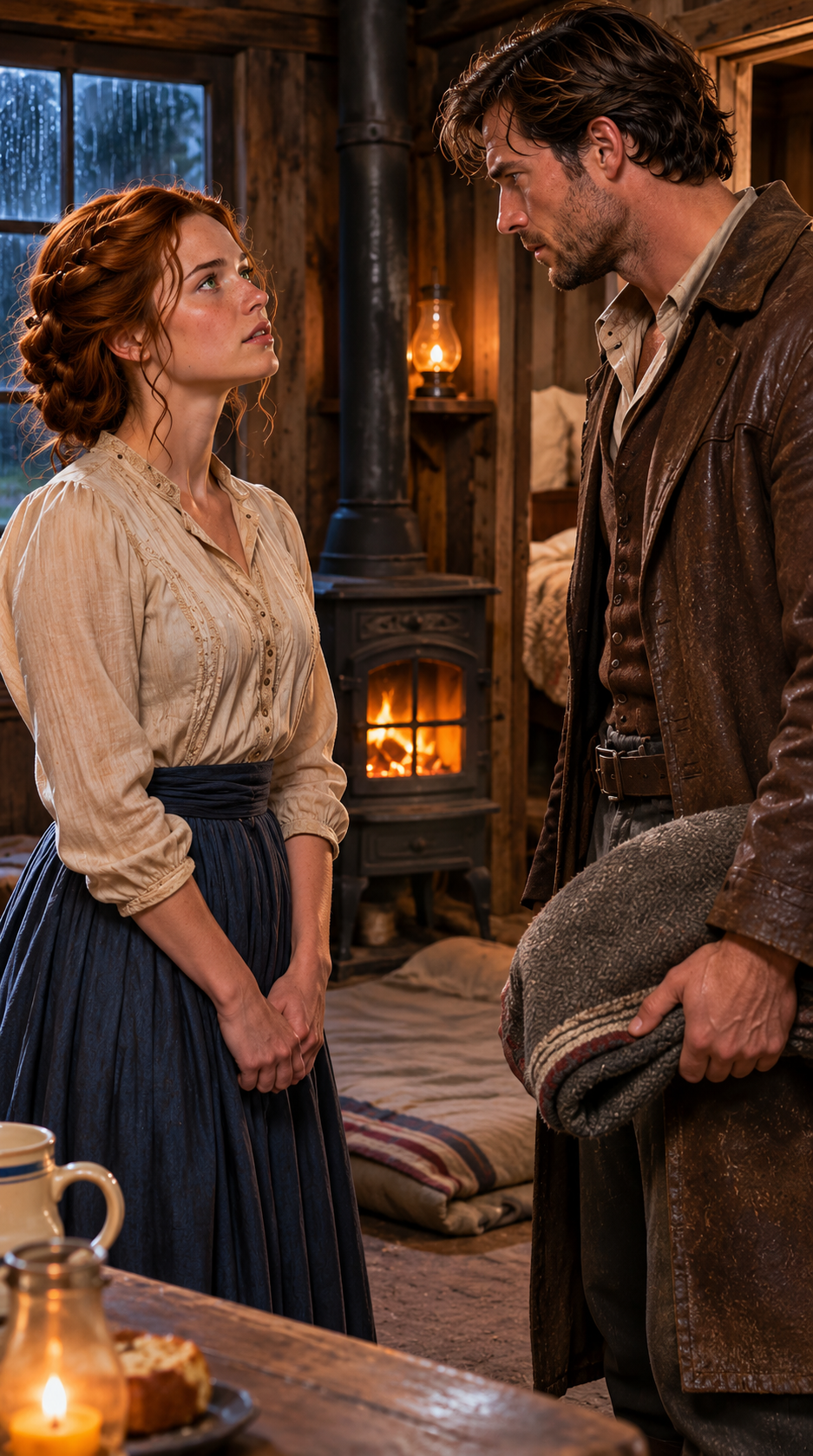
## Part 6 – The House Where Nobody Had to Arrive Alone
Thomas Ward was not my father.
That was the first truth we confirmed.
I appreciated receiving one simple answer.
The rest was less simple.
Callaway had not spoken of Thomas because they had separated young.
His brother was ten years older.
Restless.
Charming.
The sort of man who found opportunities everywhere and responsibilities nowhere.
“He went to Ireland?” I asked.
Callaway nodded slowly.
“Apparently.”
Patrick knew the rest.
Thomas had worked on shipping routes between New York, Liverpool, and Cork.
He met my parents through Maeve before Maeve came west.
When my mother Brigid became dangerously ill after my birth, Thomas offered to take me to America if both parents died.
Not because he was my father.
Because he had become close to the family.
Too close, according to Eamon.
My father distrusted him.
So Eamon created a competing guardianship arrangement naming Maeve.
“Why the secrecy?” I asked.
Patrick sighed.
“Pride.”
Of course.
“Thomas claimed Eamon was too poor to raise you.”
I stiffened.
“Father raised me well.”
“Yes.”
“He had little.”
“Little is not nothing.”
Callaway looked at me.
He understood.
“What happened to Thomas?” I asked.
Callaway answered.
“Mining accident in California.”
“Confirmed?”
“Yes.”
He had received notice fifteen years earlier.
No hidden survivor.
No next mystery.
Just a man from the past whose involvement explained a confusing paper.
Patrick had found the affidavit while requesting Irish family records for the O’Connor trust.
“That’s all?” I asked.
He smiled.
“That’s enough.”
I laughed.
“Yes.”
For once, a secret closed instead of opening another door.
We married in June.
Not grandly.
Not poorly.
Honestly.
The ceremony took place on the O’Connor forty acres.
My land.
Our family’s land.
A small meadow beside cottonwoods.
The creek ran clear.
Nora came from Denver wearing a blue dress.
Patrick cried before the ceremony began.
Honora Brennan brought wildflowers.
Hal Brennan was too ill to travel but sent a letter wishing us peace and reminding Callaway that his father still owed Brennan’s father twelve dollars from a card game.
Callaway disputed this for years.
The sheriff attended.
The stationmaster too.
Even Otis Bell appeared and swore he had known from the first day that Patrick would return.
No one believed him.
I wore cream with green ribbon.
The ribbon mattered.
Maeve had worn green.
Nora had worn green traveling with Patrick.
I wore it not because I wanted to become either woman.
Because history could be carried without being copied.
Callaway stood beneath the cottonwoods.
Handsome.
Nervous.
His coat fit poorly because his shoulders were too broad for anything respectable.
I loved that.
When I reached him, he whispered, “You can still change your mind.”
I smiled.
“You say the most romantic things.”
“I’m serious.”
“So am I.”
I took his hands.
“I am here.”
His eyes filled.
The minister began.
I barely remember his words.
I remember Callaway’s.
He had written none.
When asked to speak, he looked at me and said:
“I used to think home was a place you stayed because leaving meant losing something.”
My throat tightened.
“Then Kathleen arrived and made me understand home can be the place where staying is chosen.”
No poetry.
No polished speech.
Better.
He continued.
“I will not ask her to forget where she came from.”
I looked toward Patrick and Nora.
“I will not ask her to become Maeve.”
His voice trembled.
“I will not ask her to heal what I should have healed myself.”
Tears filled my eyes.
“I will ask her to tell me when I am wrong.”
I smiled.
“Frequently.”
People laughed.
“And I promise to listen.”
“That is the difficult part.”
More laughter.
Then my turn.
I had planned many things.
Forgot all of them.
So I said the truth.
“I came to Wyoming with fourteen dollars and sixty cents.”
Callaway smiled.
“A carpetbag.”
“Yes.”
“And no one waiting for me at the station.”
His smile vanished.
“But then you came.”
My eyes filled.
“Late.”
“My mare—”
“Not now.”
Everyone laughed.
“You gave me your coat.”
I touched his hands.
“You gave me a bed and slept in the barn.”
His eyes softened.
“You gave me work without treating need as permission to control me.”
Then I looked toward the farmhouse in the distance.
“But you also hid truth because you were afraid.”
“Yes.”
“And I almost left.”
His fingers tightened.
“But you learned.”
I smiled.
“And so did I.”
I had learned that kindness did not mean perfection.
That grief did not disappear because love returned.
That having a past did not make someone unavailable to the future.
“I choose you, Callaway.”
Simple.
Enough.
We married.
Then we ate.
A great deal.
I cooked nothing.
That was my one demand.
Three women from Hartwell handled supper.
Callaway tried to help.
They removed him from the kitchen.
I approved.
That night, we returned to the farmhouse.
Same bed.
Same stove.
Different life.
Callaway stood in the bedroom doorway.
“You nervous?”
“Yes.”
“Good.”
He laughed.
“You?”
“Yes.”
I took his hand.
“The bed is big enough.”
He looked at me.
Those five words.
Again.
But this time they meant more.
Not simply share warmth.
Share room.
Share grief.
Share uncertainty.
Share the life we were choosing.
“Yes,” he whispered.
We closed the door.
Years passed.
Not quickly.
Life never feels quick while living it.
The boarding room became two rooms.
Then four.
We added a second story.
Women arrived from Ireland, Germany, Sweden, eastern states.
Some came for jobs.
Some for marriages arranged through letters.
Some simply had nowhere to stay while waiting for relatives.
No woman slept at Hartwell Station alone if I could help it.
Callaway built a sign.
O’CONNOR HOUSE.
I objected.
“You live here too.”
“Ward House sounds like a hospital.”
He had a point.
We charged what women could afford.
Sometimes nothing.
We connected them with ranch jobs, school work, laundries, kitchens, shops.
Not charity.
A landing place.
That was what I had needed.
So we built it.
The O’Connor forty-acre trust remained.
Nora never moved west permanently.
She visited every summer.
Eventually she married a doctor in Denver.
Patrick returned to survey work but lived part of each year near us.
He built a cabin on the forty acres.
Small.
Neat.
He spent his final years recording family history so no one else had to discover it through hidden papers.
That amused me.
“Finally learned?”
I asked.
“Painfully.”
Callaway and Patrick became close.
Not immediately.
Maeve stood between them at first.
Then beside them.
Memory changed shape.
They stopped speaking only of how she died.
They remembered how she lived.
Callaway told stories.
Patrick corrected half.
Nora corrected both.
We placed Maeve’s letters in a cedar box.
Not hidden.
On a shelf.
Anyone in the family could read them with respect.
That mattered.
Hal Brennan died the winter after our wedding.
Honora inherited the ranch.
Her first act was formally recording the original shared water agreement.
No challenge.
No bargaining.
She and I became friends.
Callaway and Brennan men had spent decades distrusting one another.
Their descendants—well, not descendants exactly, because we had no children at first—ended up trading preserves and cattle medicine.
Life enjoys irony.
The aquifer became more important over time.
A dry summer in 1893 reduced surface water.
Because the deed was shared, no ranch could hoard the deep well.
Hart.
Brennan.
O’Connor.
Three names.
One spring.
No one grew rich from it.
Everyone kept cattle alive.
That seemed better.
Callaway never fully stopped blaming himself for Maeve’s death.
I never asked him to.
Grief is not an account you balance.
But he stopped sleeping in the barn.
That was something.
Some nights he woke during storms.
I would feel his body tense beside mine.
“Callaway.”
“Yes.”
“You’re here.”
“I know.”
“Say it.”
“I’m here.”
“Good.”
Then we slept again.
Years after our marriage, a young widow named Becca arrived from Missouri.
Twenty-two.
Two children.
No money beyond a few coins.
She apologized repeatedly for needing help.
I recognized the habit.
One evening, while I served soup, she whispered, “I hate owing people.”
I sat beside her.
“Then don’t owe us.”
She blinked.
“But the room—”
“Pay when you can.”
“And if I can’t?”
“Help someone else later.”
She cried.
I understood.
That became the rule of O’Connor House.
No debt to us.
Only a request that kindness travel forward.
Callaway pretended he thought it impractical.
Then quietly added two more rooms.
We never had children of our own.
Not for years.
Then, when I was thirty-three, I became pregnant.
I was terrified.
Not because the child was unwanted.
Because everything wanted becomes frightening once it can be lost.
Callaway was worse.
He followed me around the ranch.
“Sit.”
“No.”
“You’ve been standing.”
“I have legs.”
“Doctor said rest.”
“Doctor said reasonable rest.”
“You interpret generously.”
“You interpret like a prison guard.”
He stopped.
That word mattered.
“I’m sorry.”
I softened.
“I know.”
We learned another thing.
Love can become control even when fear means well.
So we adjusted.
Our daughter arrived in spring.
Maeve Kathleen Ward.
I hesitated over the name.
Callaway too.
Nora settled it.
“Maeve would complain you made a baby carry two Irish women at once.”
So we called her Mae.
She grew wild-haired.
Loud.
Entirely uninterested in cooking.
Callaway adored her.
At six, she asked why there was another Maeve’s portrait in the bedroom.
We told her.
Age-appropriate.
Truthfully.
Not every detail.
But no lies.
At twelve, she read the letters.
At fifteen, she told us both we had made terrible decisions.
“Correct,” I said.
Callaway looked offended.
She inherited my directness.
Poor man.
Years later, Mae became a teacher.
Not a rancher.
Callaway pretended disappointment.
Then built her school desks himself.
When she married, he asked her fiancé approximately four thousand questions.
I stopped him at twenty.
“Choice,” I reminded.
He sighed.
“Yes.”
We grew older.
The ranch changed.
Fences moved.
Buildings expanded.
Rail finally came closer, though never through our north pasture.
Hartwell grew.
The tiny station gained a hotel.
O’Connor House became known across the region.
I stopped cooking professionally.
Not because I disliked it.
Because managing eight rooms, ranch accounts, family trust papers, and half the town’s newly arrived women left little time.
Callaway occasionally cooked.
Poorly.
He improved.
Slightly.
On our twenty-fifth anniversary, rain came.
Hard Wyoming rain.
We sat in the bedroom.
Same bed frame.
Repaired many times.
Callaway’s hair had silver at the temples.
Mine too.
He looked at me.
“Do you remember the second night?”
“Yes.”
“Five words.”
“The bed is big enough.”
He smiled.
“I thought I might faint.”
“You’ve faced stampedes.”
“Cattle are simpler.”
“True.”
“What made you ask?”
I thought.
“At the time?”
“Yes.”
“You looked lonely.”
His eyes softened.
“That simple?”
“No.”
I touched his hand.
“You respected me when you had opportunity not to.”
He swallowed.
“And I thought perhaps you deserved one night where someone asked you to stay.”
The words moved him even after twenty-five years.
“I didn’t know Maeve was your aunt.”
“I know.”
“I should have told you the possibility.”
“Yes.”
“I’m still sorry.”
“I know.”
We had spoken of it enough that apology no longer demanded repair.
It had become memory.
He squeezed my hand.
“Would you still come?”
“To Wyoming?”
“Yes.”
I laughed.
“Ask after winter.”
“Kathleen.”
“Yes.”
“Even knowing everything?”
I looked around.
Maeve’s cedar box.
Family photographs.
Our daughter’s letter pinned above the desk.
The sound of women laughing downstairs in O’Connor House.
Rain on the roof.
Callaway beside me.
“Yes.”
“Why?”
“Because knowing everything is why I would come.”
He smiled.
Then I added, “But I would demand higher wages.”
He laughed until he coughed.
That night, after the house quieted, I walked downstairs.
On the wall near the entrance hung the old .
RANCH COOK WANTED. HARTWELL AREA. ROOM AND BOARD. FAIR WAGES.
Below it, I had framed my original train ticket.
And fourteen dollars and sixty cents?
No.
I spent that.
I was never sentimental enough to preserve money when shoes needed replacing.
But beneath the ticket I placed a small card.
KATHLEEN O’CONNOR ARRIVED HERE BELIEVING SHE NEEDED EMPLOYMENT.
SHE FOUND WORK.
SHE ALSO FOUND FAMILY SHE DID NOT KNOW SHE HAD, LAND SHE NEVER EXPECTED TO OWN, AND A MAN WHO NEEDED TO LEARN THAT GRIEF WAS NOT THE SAME AS LOYALTY.
Callaway read it once.
He objected.
“Too long.”
“You build fences. I write.”
“Fair.”
Then he added one line below mine:
CALLAWAY WARD HIRED A COOK.
HE RECEIVED FAR MORE THAN HE DESERVED.
I crossed out deserved.
Wrote expected.
He looked at me.
“Why?”
“Because love is not payment.”
He smiled.
“Maeve said that.”
“So do I.”
We left both corrections visible.
That seemed appropriate.
Our lives were full of edits.
Things believed.
Reconsidered.
Corrected.
Nothing perfect.
Nothing erased.
Years after Callaway died peacefully in that same house, I found one final note tucked into the old wool blanket he used the night I arrived.
Kathleen—
If you find this, I have gone somewhere I cannot annoy you.
Unlikely, I thought.
The letter continued.
Thank you for never asking me to stop loving Maeve before loving you.
Thank you for being angry when I hid truth.
Thank you for teaching me that being forgiven is not the same as being excused.
And thank you for those five words.
I cried then.
Not the hopeless tears of a woman alone.
Grief with a lifetime behind it.
He ended:
The bed was big enough.
So was the house.
So was your heart.
Mine became larger because you came.
I folded the letter.
Sat on the edge of the bed.
Outside, rain tapped softly against the Wyoming windows.
Downstairs, a young woman who had arrived from Scotland that afternoon was laughing with Mae over supper.
O’Connor House remained full.
No one arriving alone stayed alone unless she wanted solitude.
That had become our promise.
Not rescue.
Not obligation.
A door.
A warm meal.
A bed.
Time.
Choice.
I looked toward the empty place beside me.
Callaway had once believed loving anyone after Maeve would betray her.
I had once feared loving a man with a past meant competing with a ghost.
We had both been wrong.
Love had not required erasing anyone.
It had required making room.
And in the end, the five words that changed Callaway’s life had never really been about a bed.
They were about the possibility that his life might still contain another person without losing the one who came before.
The bed was big enough.
The house became big enough.
And eventually, so did the future.
**–THE END– PLEASE
**Share your thoughts or feedback to motivate us to create more stories ♥️**
✓ Lynn R. Adams
## Part 6 – The House Where Nobody Had to Arrive Alone Thomas Ward was not my father. That was the first truth we confirmed. I appreciated receiving one simple answer. The rest was less simple. C…