The End – The Emerald Pool That Revealed a Queen No Prince Could Claim _064
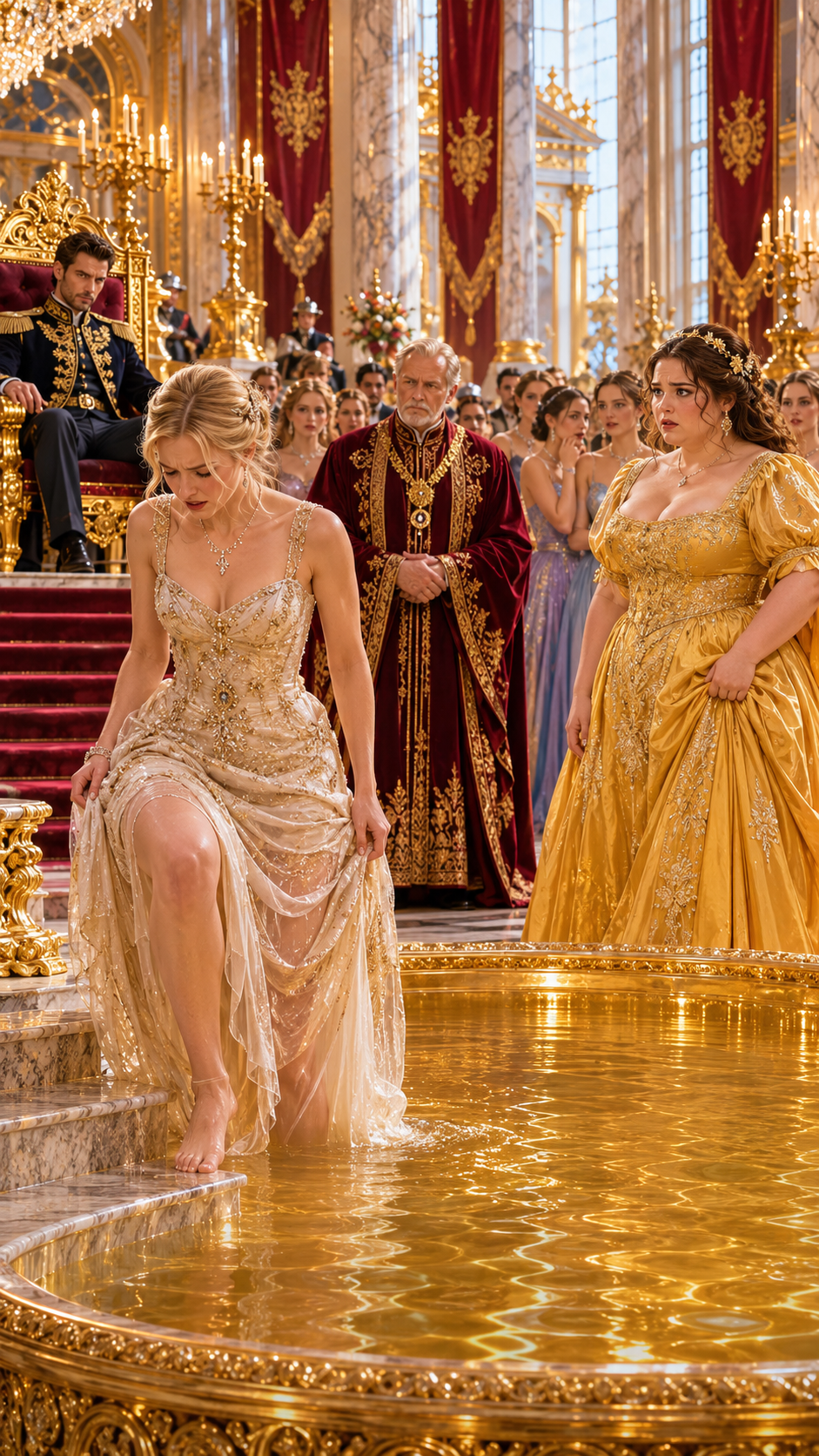
## **Part 6 – The Queen Who Was Chosen Only After She Chose Herself**
By the time Isabella turned sixty, no one in the kingdom called the emerald pool a bridal pool anymore.
Schoolchildren knew it by its proper historical name:
**The Aurelian Recognition Basin.**
They also knew it had once been misunderstood.
That mattered.
The palace museum preserved the old records beside an inscription approved by Isabella herself:
**Tradition can carry memory. It can also carry mistakes.**
Some ministers wanted a grander sentence.
She refused.
History did not need embroidery.
The basin remained filled with ordinary water.
Gold tiles still lined the bottom.
Visitors threw coins.
Children splashed fingers in it when guards were not watching carefully enough.
Once, a little girl in a yellow dress climbed onto the edge.
Isabella nearly laughed.
Adrian saw her expression.
“Memories?”
“Unfortunately.”
“Should I look away?”
She stared at him.
He smiled.
Good.
Some mistakes became jokes only after enough repair had passed.
Not because they ceased mattering.
Because memory no longer needed to hurt every time.
Their marriage changed with age.
Early years were full of reform.
Travel.
Debates.
Council meetings.
Children.
The ordinary strain of two public lives pressed into one private household.
They argued.
Often.
Isabella hated Adrian’s tendency to read documents during breakfast.
Adrian hated Isabella’s habit of inviting scholars to dinner and then forgetting to warn the kitchen.
Neither threatened the marriage over such things.
They learned what deserved weight.
More difficult conflicts came too.
When Jonas was sixteen, Adrian wanted him sent to a military academy.
Isabella opposed it.
Not because the school was cruel.
Because Jonas hated military study.
Adrian argued duty.
Isabella heard old court expectations.
Their argument lasted three days.
Finally she said:
“You are trying to make him useful to the crown.”
Adrian went still.
The phrase hurt because it echoed Elara’s warning about Isabella.
He defended himself at first.
Then stopped.
Asked Jonas.
Directly.
The boy wanted engineering.
So they found another path.
Adrian apologized.
Not perfectly.
Enough.
Years later, Isabella made the opposite mistake with Elara Miriam.
Their daughter fell in love with a physician from a minor noble family.
Isabella worried court life would crush him.
She quietly asked Mara Venn to investigate whether the match was “practical.”
Mara refused.
Good.
Then told her:
“You are deciding what your daughter can handle.”
That sentence struck immediately.
Isabella went home.
Told Elara what she had done.
Her daughter was furious.
Rightly.
They repaired it.
The marriage proceeded.
The physician became an excellent royal consort to nobody because Elara Miriam chose not to hold the throne.
She preferred her council work and medical charities.
The revised constitution allowed succession through Jonas instead.
No crisis.
No pool.
No spectacle.
Choice.
The kingdom grew accustomed to it.
That may have been Isabella’s proudest achievement.
People stopped finding women’s choices revolutionary.
They became administrative.
Ordinary.
Good.
Adrian aged into his face.
The young prince who once looked away from ridicule became a king known for listening too long before answering.
Some ministers found this irritating.
Isabella called it progress.
He still made mistakes.
So did she.
Neither became a symbol inside their own marriage.
That protected them more than any charter.
Helena died at ninety-one.
At her memorial, Isabella spoke for only two minutes.
She said:
“She spent half her life hiding from a palace and the other half walking into it without permission.”
The court laughed.
Then Isabella added:
“She taught me that surviving secrecy is not the same as being obligated to keep it.”
That was enough.
Mara Venn retired at seventy-three.
For exactly eleven days.
Then accepted a position teaching law because apparently retirement offended her.
Severin’s name became more complicated in history books.
Not villain.
Not hero.
Advisor who concealed a queen’s poisoning for four days.
Advisor who preserved evidence afterward.
Advisor who perpetuated a harmful ritual.
Advisor who eventually confessed.
Students argued whether he deserved forgiveness.
Isabella thought that was healthy.
History should leave room for argument.
When Adrian was sixty-eight, he developed a heart condition.
Manageable at first.
Then more serious.
For the first time in decades, Isabella remembered fear as something physical.
A cold pressure beneath the ribs.
The same feeling she had before stepping into the pool.
The same feeling she had when her mother died.
She hated it.
Adrian noticed.
“What?”
“Nothing.”
He raised an eyebrow.
She sighed.
“Fine.”
Then:
“I’m afraid.”
Good.
No waiting.
He took her hand.
“So am I.”
They did not turn fear into plans immediately.
Later, yes.
Doctors.
Schedules.
Medication.
Reduced travel.
But first they admitted it.
That mattered.
Adrian lived another nine years.
Good years.
Slower.
He delegated more.
Complained about delegating.
Read reports anyway.
Isabella threatened to burn them.
Never did.
At seventy-five, he stepped down from most daily royal duties under the constitutional structure they had helped create.
Jonas became acting sovereign.
Not absolute.
Not dramatic.
A transition.
The monarchy no longer depended on one person remaining vigorous until death.
Another old tradition corrected.
Adrian hated retirement for six months.
Then discovered gardening.
Badly.
He planted roses too close together.
Isabella warned him.
He ignored her.
The roses developed mildew.
She never let him forget it.
“Your Majesty,” she would say, “the kingdom survives constitutional reform, but not your gardening.”
He would reply:
“Cruel queen.”
Normal.
Beautiful.
At seventy-seven, Adrian’s health declined sharply.
One evening they sat beside the old recognition basin.
The palace courtyard was empty.
The same marble.
Different world.
Adrian looked toward the water.
“Do you know what I remember most?”
“My magnificent yellow dress?”
“No.”
“Wrong answer.”
He smiled.
“Your face when I extended my hand.”
Isabella laughed.
“I was furious.”
“I know.”
“I considered taking it just so I could squeeze hard enough to hurt.”
He looked delighted.
“Why didn’t you?”
“Self-control.”
“Tragic.”
Then he became serious.
“I thought that day the pool had chosen my wife.”
Isabella looked at him.
“And?”
“It had only revealed a cousin.”
“A distant one.”
“Important clarification.”
Then:
“You chose later.”
“Yes.”
“That still amazes me.”
“Your standards are low.”
He laughed until he coughed.
Then rested.
After a while:
“Were you ever tempted by the throne?”
The question surprised her.
“The competing claim?”
“Yes.”
She thought.
“For a week.”
Adrian looked genuinely interested.
“Really?”
“Yes.”
“Why?”
“Because everyone expected me not to want it.”
He smiled.
“Spite.”
“Partly.”
Then:
“And because power is seductive when you have spent your life without much of it.”
That was the truth.
She had not been morally immune.
Being mocked one day and deferred to the next does something dangerous to a person.
She had felt it.
The urge to make people regret.
To make doors open.
To watch people bow.
Then she remembered the women beside the pool.
How quickly value changed.
She did not want to become addicted to that reversal.
“What stopped you?”
“Nothing noble.”
Adrian waited.
“I realized governing would mean reading agricultural reports every morning.”
He laughed.
Then she smiled.
“Also, I did not want my first major use of power to be proving I deserved it more than you.”
That mattered.
They had changed the structure instead.
Better.
Adrian looked toward the fountain.
“My mother would have liked you.”
“I know.”
“You sound certain.”
“She wrote ‘let her become inconvenient.’ I honored her.”
He smiled.
“Yes.”
That was their last long conversation.
Adrian died two months later.
Peacefully.
At home.
Isabella beside him.
His final clear words were not poetic.
He whispered:
“The roses.”
She leaned closer.
“What?”
“Too close together.”
Isabella started laughing and crying at once.
“Yes.”
“I should have listened.”
“You often should.”
He smiled.
Then slept.
He did not wake the next morning.
The kingdom mourned.
Isabella mourned privately.
Not hidden.
Private.
Different.
She refused a ceremonial title upgrade after his death.
No “Queen Mother Supreme” nonsense.
She remained Isabella Maren, Queen Dowager and Aurelian Councilor.
Enough.
Jonas ruled under the constitutional framework.
Elara Miriam chaired a health commission.
Grandchildren multiplied.
The palace became noisy again.
Good.
Isabella spent more time outside the capital.
She visited the Aurelian estates, now mostly governed locally.
She attended schools funded from the old trust.
One headmistress asked:
“Do you want the children to know you are visiting?”
“No.”
“Why?”
“Because then they sing.”
The woman laughed.
“Fair.”
Isabella liked classrooms better without ceremony.
At eighty, she returned once more to the pool courtyard.
A group of young girls was touring the museum.
The guide explained:
“Long ago, people believed this basin chose the prince’s bride.”
One girl raised her hand.
“Did it?”
“No.”
“Then why did everyone believe it?”
The guide paused.
Isabella listened.
“Because people sometimes inherit stories without checking what they were originally for.”
Good answer.
Another child asked:
“Was Queen Isabella really laughed at?”
The guide hesitated.
Isabella stepped forward.
“Yes.”
Everyone turned.
The guide nearly fainted.
The children stared.
One whispered:
“That’s her.”
Isabella smiled.
“I am still capable of hearing.”
The child went red.
Isabella sat on the fountain edge.
“Ask.”
The girls gathered.
“Did the prince really look away?”
“Yes.”
“Were you angry?”
“Very.”
“Did he apologize?”
“Yes.”
“Did you forgive him?”
“Eventually.”
“Why?”
Isabella thought.
“Because he did not spend the rest of his life telling me I misunderstood what he had done.”
That was important.
Another girl asked:
“Did the water make you queen?”
“No.”
“Then what did?”
Isabella smiled.
“Paperwork, mostly.”
The children groaned.
Good.
Then she added:
“And choices.”
Better.
They liked that.
A girl in a green ribbon asked:
“Would you have married him if the pool never changed?”
Isabella stopped.
She had wondered that herself.
“Probably not.”
The girls looked disappointed.
“Why?”
“Because we might never have been forced to speak honestly.”
Then Isabella corrected herself.
“But that does not mean the pool was good.”
The guide looked relieved.
“We could have met another way.”
The child considered.
“So bad things don’t have to happen for good things to happen?”
Isabella’s heart tightened.
Exactly.
“No.”
She smiled.
“Never let anyone convince you damage was necessary merely because something beautiful came afterward.”
That became the line people repeated.
Isabella disliked famous lines.
Still.
It was accurate.
At eighty-three, she developed a lung illness.
Slow.
Manageable for a while.
Then less so.
She moved into Elara Miriam’s home outside the capital.
Not the palace.
She wanted windows facing hills.
Grandchildren visited.
Great-grandchildren too.
One afternoon, her great-granddaughter **Miriam Elara** brought an old yellow dress from the royal archive.
Not the original.
A reconstruction used in museum displays.
“You wore this?”
Isabella laughed.
“Mine fit better.”
The girl grinned.
“Were you scared?”
“Yes.”
“Of the pool?”
“No.”
“Of the prince?”
“No.”
“Then what?”
Isabella thought.
“Of being ridiculous.”
The girl frowned.
“That seems small.”
“It wasn’t at twenty-eight.”
Humiliation can feel enormous when belonging feels fragile.
Then Isabella said:
“I learned something later.”
“What?”
“Being laughed at is survivable.”
The girl smiled.
“Good.”
“Yes.”
“Being worshipped is dangerous too.”
The child did not understand.
She would someday.
Isabella’s final months were peaceful.
Not free of pain.
Peaceful anyway.
She reviewed no state papers.
Refused them.
Jonas once brought a folder out of habit.
She threw a cushion at him.
The king of the realm obeyed his mother and removed the folder.
Progress.
She kept Adrian’s key to Elara’s study beside her bed.
Not a crown jewel.
Just a key.
Because that moment had mattered.
He invited her into grief instead of hiding it.
That had been when she first loved him, though she admitted it only years later.
The night before she died, Elara Miriam sat beside her.
“Mother?”
“Yes?”
“Do you regret anything?”
Isabella laughed weakly.
“That is a cruel question for someone this tired.”
“Sorry.”
“Do not apologize. I taught you directness.”
She thought.
“I regret how long I sometimes confused strength with refusing help.”
Elara nodded.
“I regret not asking your grandmother more questions while she was alive.”
Another pause.
“I regret that yellow dress.”
Her daughter laughed.
Then:
“Adrian?”
Isabella’s expression softened.
“No.”
“The court?”
“Frequently.”
“The pool?”
“I regret what it did to other women more than what it did to me.”
That mattered.
The twelve women who entered before her.
The generations before them.
Women made to stand while bodies, families, accents, and beauty were evaluated under false tradition.
Ending that mattered more than becoming queen.
Then Elara asked:
“What do you think Father loved most about you?”
Isabella smiled.
“That I said no.”
“That sounds like him.”
“He hated it.”
“Also sounds like him.”
They laughed.
Then Isabella whispered:
“But he learned.”
That was what mattered.
Not that Adrian had always been good.
He had failed in the first moment that counted.
Then listened.
Changed.
Changed the institution too.
Personal regret without structural change would have been incomplete.
Isabella slept.
She died the next morning at eighty-four.
No emerald light.
No sacred water.
No prophecy.
Just family.
The kingdom held a state memorial.
At Isabella’s instruction, no one placed the golden pool behind her portrait.
Instead, the image showed her standing beside a desk covered in constitutional drafts.
Mara Venn would have approved.
The museum later added one final plaque near the old basin.
Not about blood.
Not about destiny.
It read:
**Isabella Maren entered this water as a woman mocked for not resembling the court’s idea of a queen. The pool revealed ancestry. It did not reveal worth.**
Below:
**Worth had never been the pool’s to decide.**
That became the final correction.
Generations later, people still told the story badly sometimes.
They said the emerald water chose Isabella.
It did not.
They said the prince fell in love because he discovered she was secretly royal.
Not exactly.
At first, he became curious because status changed what he saw.
Isabella never let him forget that.
Then he learned to see her when status was no longer the question.
They said the court fell to its knees.
Some did.
Because hierarchy had trained them to bow faster than they apologized.
Isabella cared much more about what happened after they stood again.
The bride ritual ended.
The old bloodline became history rather than destiny.
A competing throne claim became constitutional reform instead of civil conflict.
A queen’s poisoning was investigated without inventing a murderer for dramatic satisfaction.
An old advisor faced consequences without being reduced to a single act.
And a prince who once turned away from ridicule became a man willing to admit he had done so.
That mattered.
Most of all, Isabella never became valuable because she was Aurelian.
She had been valuable while the crowd laughed.
She had been valuable before the water changed.
Before the advisor trembled.
Before Adrian stood.
Before anyone knew her grandmother’s name.
The emerald water did not create a queen.
It merely exposed how quickly people changed their behavior once they believed they were standing near power.
Isabella saw that clearly.
And because she saw it, she refused the easiest version of the story.
She did not take Adrian’s hand when everyone expected her to.
She did not reject him forever simply because rejection made her powerful.
She did not claim a throne because old law allowed it.
She did not surrender a claim merely because she loved a prince.
She learned.
Asked.
Waited.
Negotiated.
Chose.
Years after the famous morning, Adrian once asked her why she finally took his hand.
Isabella answered:
“Because by then you had stopped holding it out as though I needed help climbing from the water.”
He laughed.
Then asked:
“And what was I doing instead?”
“Waiting.”
That was the difference.
The first hand had been offered by a prince to a woman the court had suddenly declared worthy.
The last was taken by Isabella freely, after she had learned who she was without him.
Not chosen by a pool.
Not chosen by blood.
Not chosen by tradition.
Not chosen by a court.
A queen only because she had first learned that no crown mattered unless the woman beneath it still belonged to herself.
**–THE END– PLEASE
Share your thoughts or feedback to motivate us to create more stories ♥️
✓ Lynn R. Adams
## **Part 6 – The Queen Who Was Chosen Only After She Chose Herself** By the time Isabella turned sixty, no one in the kingdom called the emerald pool a bridal pool anymore. Schoolchildren knew it b…