The End – The Cowboy Who Stayed When Leonor’s Hidden Past Came Calling _064
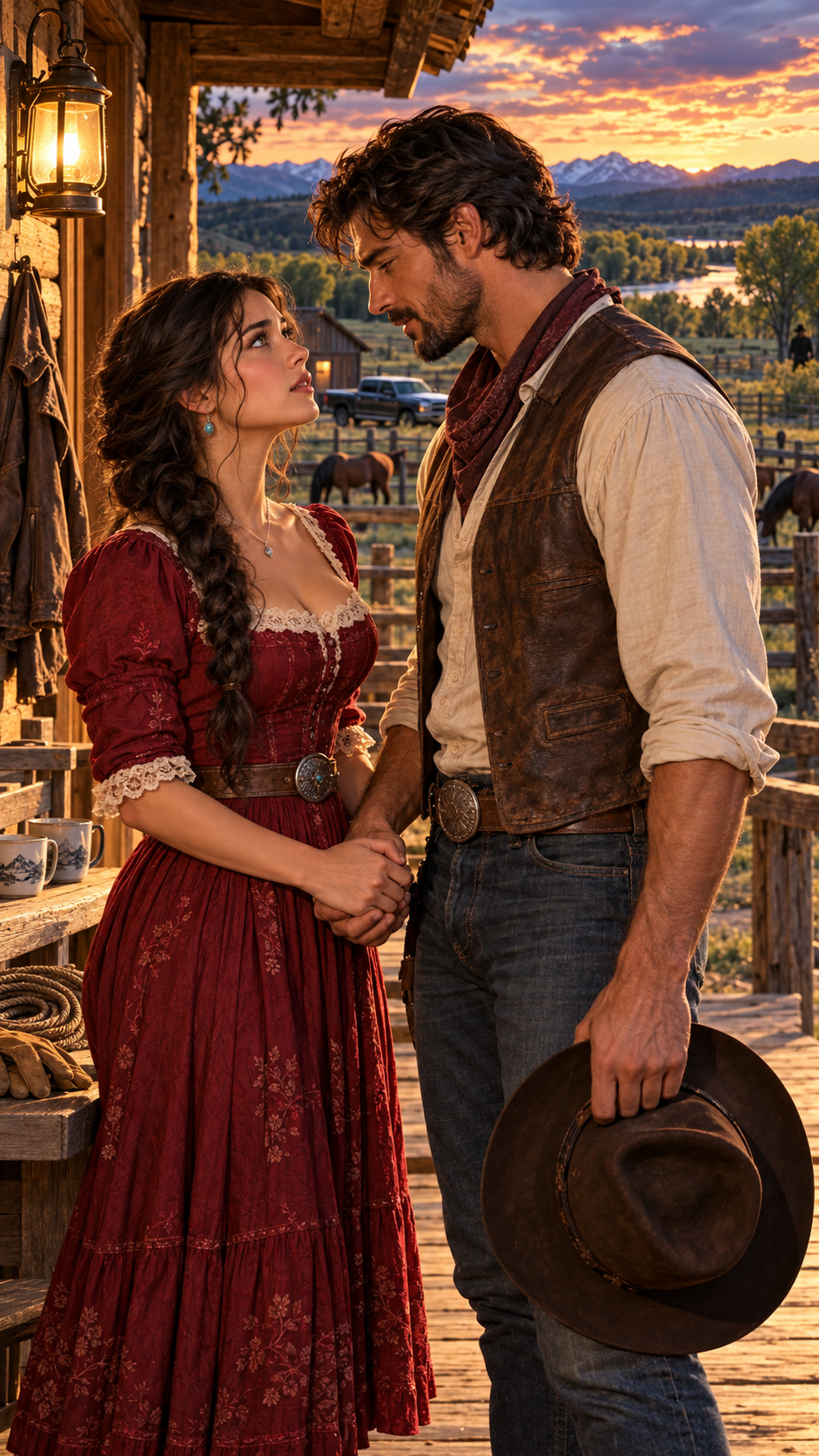
## Part 6 – The Life Leonor Finally Chose for Herself
John did not propose on my birthday.
I was grateful.
Any man foolish enough to propose immediately after discovering he owned forty-nine percent of a woman’s pasture deserved suspicion.
Instead, he did something better.
He went to work.
Not as my ranch hand.
Not as co-owner.
Not yet.
He helped rebuild the north fence because winter had shifted three more posts.
He fixed my truck enough that it stopped sounding like a bucket full of bolts.
Then admitted I needed another vehicle.
I bought one.
Used.
Reliable.
My choice.
That became important.
The conservation trust took months.
Lawyers reviewed the old water rights.
State hydrologists confirmed the aquifer boundaries.
Neighboring ranchers attended meetings.
North Line Holdings eventually withdrew its pending purchase offers after public scrutiny of its acquisition strategy increased.
Graham Pike resigned from regional acquisitions.
Not because of a dramatic exposure.
Because his own board decided his tactics created more legal and reputational risk than value.
He sent me a letter.
I almost threw it away.
John said, “Your choice.”
I read it.
Pike did not ask forgiveness.
He wrote that Clara had once told him he confused control with security.
“I spent forty years proving her right,” he admitted.
That line stayed with me.
I placed the letter in Dad’s file.
Not because I liked Pike.
Because history looked better when all the pieces remained available.
Clay Rourke changed too.
Slowly.
He sold no land to North Line.
Instead, he divided management responsibilities with Daniel and offered John formal recognition of Thomas’s inherited share.
John declined ownership.
But he accepted family.
Partially.
Carefully.
He visited Daniel.
Occasionally Clay.
The first Thanksgiving together was nearly unbearable.
Clay overcooked the turkey.
Daniel brought two pies because he remembered Thomas loved cherry but forgot John hated it.
John’s mother, Evelyn, finally told him the full story.
They cried.
They argued.
They forgave some things.
Not others.
Real families rarely resolve themselves in one meal.
That comforted me.
Mine never had either.
In September, John moved from the bunkhouse.
Not into my bedroom.
Into the house.
The spare room.
He carried one duffel bag.
I stared.
“That’s everything?”
“Mostly.”
“You’re thirty-four.”
“Yes.”
“You own fewer possessions than my mule.”
“I move often.”
“Not anymore.”
The words escaped.
He looked at me.
I looked away.
“Unless you want to.”
“I don’t.”
That was all.
For another month.
Then, one cold October evening, we sat on the porch.
The same place everything had begun.
I had become sentimental about that porch.
John pretended not to notice.
He brought coffee.
I took the mug.
“Thank you.”
“Welcome.”
We sat.
The cottonwoods had gone gold.
Wind moved through dry leaves.
No hidden rider.
No rifle.
No mystery.
Just quiet.
John said, “Leonor.”
I knew from his voice.
My heart began pounding.
“Yes?”
He took off his hat.
I laughed.
“What?”
“You always remove your hat before saying serious things.”
“Habit.”
“It’s terrifying.”
He smiled.
Then he reached into his jacket.
A small box.
I immediately held up a hand.
“No speech longer than two minutes.”
He stared.
“You timed me?”
“I know you.”
“Apparently poorly. I had three minutes.”
“Cut.”
He laughed.
Then became serious.
“I came here because my horse lost a shoe.”
“Yes.”
“My phone was dead.”
“Yes.”
“I smelled your stew.”
“You stayed for the cooking.”
“Partly.”
I smiled.
“Then I met a woman who had spent a year proving she could carry everything alone.”
My eyes burned.
“And I watched you do it.”
He took my hand.
“But I never wanted to take the weight from you so you’d need me.”
That sentence mattered more than the ring.
“I wanted to stand beside you until you decided which things you wanted to carry and which you wanted help with.”
I swallowed.
“John.”
“I love your ranch.”
He squeezed my fingers.
“But I would love you if you sold it tomorrow.”
That was when I started crying.
Unfairly early.
“I love your stubbornness.”
“That feels insulting.”
“It’s not.”
“Continue carefully.”
“I love that you argue.”
“Dangerous.”
“I love that you fed a stranger before deciding whether you trusted him.”
“That was stew.”
“It changed my life.”
“Good stew.”
“The best.”
He opened the box.
Simple ring.
Nothing extravagant.
“Leonor Bennett, will you marry me?”
I looked at him.
The man who had waited to kiss me.
The man who never laughed when I confessed how inexperienced I was.
The man who asked permission.
The man who stayed when leaving would have been easier.
The man whose family was tied to mine through decades of mistakes neither of us had made.
“Yes.”
His whole face changed.
“Yeah?”
“Yes.”
He kissed me.
Not cautiously this time.
Still gentle.
But certain.
When we pulled apart, I looked at the ring.
“Pretty.”
“You sound surprised.”
“I was afraid you’d buy something with a horseshoe on it.”
“I almost did.”
“Wedding canceled.”
He laughed.
We married the following spring.
Small ceremony.
Ranch yard.
Cottonwoods leafing green.
Mara attended.
So did Ruth, who wore a hat large enough to block the view of anyone behind her.
Daniel brought twenty dollars in an envelope labeled CLARA’S WINNINGS.
I cried when I opened it.
Clay came.
So did Evelyn.
The Rourke family stood together without pretending everything was fixed.
I respected that.
Graham Pike did not attend.
Obviously.
But three neighboring ranch families did.
All had entered the new shared aquifer trust.
The arrangement protected agricultural access, domestic wells, and recharge areas.
No one became fantastically wealthy.
Good.
The ranch remained difficult.
Also good.
I had never wanted a fairy tale.
I wanted a life that felt like mine.
Before the ceremony, I stood alone in my bedroom.
My father’s photograph on the dresser.
My mother’s beside it.
I touched the frame.
“Okay,” I whispered.
For months, I had imagined what they might say.
Dad would probably complain about the barn siding.
Mom would probably tell him to stop.
Then she would inspect my dress and pretend not to cry.
I missed them.
That did not ruin the day.
Grief and happiness had finally learned how to occupy the same room.
John knocked.
“You decent?”
“Unfortunately.”
He opened the door.
Then stopped.
For a man who usually had an answer, silence looked good on him.
“Well?”
I asked.
He swallowed.
“Wow.”
“That’s your sentence?”
“I had more.”
“Lost it?”
“Yes.”
“Acceptable.”
He came closer.
“You okay?”
“Yes.”
“Nervous?”
“Yes.”
“Me too.”
That helped.
Before we went outside, he reached for my hand.
Not taking.
Offering.
Even now.
I took it.
During the ceremony, the officiant asked if we had written vows.
John had.
I had not.
Because the night before, I decided anything I wrote sounded like someone else.
So when it was my turn, I looked at him and said the truth.
“I spent most of my twenties believing love was something other people learned before I did.”
John’s eyes softened.
“I thought I had missed some lesson.”
A few people smiled.
“My father protected me because he loved me. Then he got sick, and I became the one caring for everything.”
My voice shook.
“I got very good at surviving.”
John squeezed my hands.
“But surviving quietly became a habit.”
The wind moved through the cottonwoods.
“Then you arrived.”
He smiled.
“Uninvited.”
“Yes.”
People laughed.
“You asked before entering my house.”
His face changed.
“You asked before touching me.”
My throat tightened.
“You asked before kissing me.”
Now I was crying.
“So when you asked me to marry you, I knew the answer because you had spent a year showing me something I did not know I needed.”
I paused.
“That love could make room instead of taking it.”
John’s eyes were wet.
“I choose you.”
Simple.
Enough.
His vows were equally quiet.
He promised not to confuse helping with deciding.
Promised to tell me when he was afraid instead of disappearing into silence.
Promised to keep coffee in the house.
That part received applause.
When we kissed, Ruth loudly said, “About time.”
Everyone laughed.
I did too.
Marriage did not transform the ranch overnight.
The old chicken-coop roof leaked again.
John claimed it was a different section.
I told him that excuse was hereditary among cowboys.
We hired a part-time ranch hand for winter.
I began keeping better books.
We diversified the herd.
John started a small horse-training business using the west pasture.
Not my business.
His.
That mattered to both of us.
The south pasture remained protected under the trust.
We retained grazing rights.
The aquifer remained available to neighboring properties under negotiated conditions.
No company could acquire exclusive infrastructure control without approval from the trust members.
Boring legal details.
Beautiful boring legal details.
Mara once joked that our great frontier mystery ended in paperwork.
I told her paperwork had caused half the problem.
“Fair.”
Two years later, Daniel visited with another box from the Rourke attic.
I groaned.
“No more family secrets.”
He held up both hands.
“Nothing dangerous.”
Inside were photographs.
Thomas Rourke as a young man.
My mother.
Dad.
Daniel.
Even Graham Pike before ambition hardened him.
One picture showed all of them beside the Musselshell River.
Clara had written on the back:
We are young enough to believe promises are permanent.
Below, Dad added years later:
Promises are not permanent. People must keep choosing them.
John read that line twice.
Then handed the picture to me.
“Your father improved everything your mother wrote.”
“Absolutely false.”
“He did.”
“She was smarter.”
“He had better handwriting.”
“Debatable.”
We framed the photograph.
Not because those people had done everything right.
They had not.
Clara hid things.
Dad hid things.
Thomas ran.
Daniel kept secrets.
Clay manipulated.
Pike chose control over trust.
Every one of them had made mistakes.
But they also tried.
Sometimes too late.
Sometimes imperfectly.
That mattered too.
By the third spring after our wedding, the ranch looked better.
Not richer.
Healthier.
Fence posts stood straight.
The truck started on cold mornings.
The chicken coop did not leak.
Mostly.
John and I still sat on the porch.
Same two chairs.
One evening he asked, “Do you remember what you told me the night everything started?”
I groaned.
“No.”
“You do.”
“No man has ever kissed me.
I threw a dish towel at him.
He caught it.
“You promised not to repeat that forever.”
“I promised nothing.”
“I regret trusting you.”
“No, you don’t.”
I smiled.
“No.”
He moved closer.
“Do you regret telling me?”
I thought.
“No.”
That surprised me.
At twenty-nine, I had believed inexperience was something shameful.
Something everyone could see.
A flaw.
Now it seemed small.
Almost tender.
That version of me had simply been waiting until trust felt safer than loneliness.
Nothing wrong with that.
“Do you know why I told you?” I asked.
“No.”
“I think I wanted you to know how much it meant that I trusted you.”
John became quiet.
“I knew.”
“You did?”
“Not completely.”
He took my hand.
“But enough to be careful.”
The sunset turned the hills copper.
Exactly as it had the first week he came.
A calf called from the pasture.
Chickens settled for the evening.
The ranch breathed around us.
I looked toward the cottonwoods where Wes Calder had once frightened us both nearly senseless with a rifle he never intended to use.
At the time, that shadow seemed like danger.
In truth, the greater danger had been quieter.
Secrets.
Assumptions.
People deciding for one another.
Fear disguised as protection.
Control disguised as help.
Those things had shaped our families for decades.
John and I could not erase that.
We could only notice when we began repeating it.
And choose differently.
Years later, when people asked how we met, John usually said his horse lost a shoe.
I said he was trespassing.
He denied it.
I reminded him I had a rifle.
He said that detail made me sound dangerous.
I said I was.
Then someone inevitably asked when we knew.
John always answered first.
“The stew.”
I hated that answer.
Mine was better.
“The porch.”
Because it was there, beneath a warm light and a Montana sky, that I had told him the thing I was most embarrassed to admit.
And instead of laughing, rushing, or turning my uncertainty into an opportunity, he gave me something I had never realized could feel so much like love.
Time.
A choice.
Room.
The same things I later learned my parents had tried, imperfectly, to protect for me.
The same things John’s father had wanted for him.
The same things we promised never to take from each other.
On our fifth anniversary, John stood beneath the cottonwoods holding two cups of coffee.
“Leonor.”
“Yes?”
“You still happy?”
I frowned.
“What kind of anniversary question is that?”
“A real one.”
I looked at the ranch.
At the house.
At the south pasture glowing green after spring rain.
At the man who had stayed.
“Yes.”
“Good.”
“You?”
“Yes.”
“Very romantic.”
“I brought coffee.”
“True.”
He handed me a cup.
We walked toward the fence.
I rested my head against his shoulder.
For years, I thought love would arrive like something enormous.
A storm.
A revelation.
A moment that divided life into before and after.
Instead it arrived on a tired horse.
Asked for water.
Stayed for stew.
Repaired a fence.
Waited on a porch.
Asked permission.
And kept choosing me long after there was nothing left to rescue.
That was better.
Much better.
**–THE END– PLEASE
**Share your thoughts or feedback to motivate us to create more stories ♥️**
✓ Lynn R. Adams
## Part 6 – The Life Leonor Finally Chose for Herself John did not propose on my birthday. I was grateful. Any man foolish enough to propose immediately after discovering he owned forty-nine percen…