The End – The Blizzard Stranger Who Taught Clara Her Heart Could Live Again _064
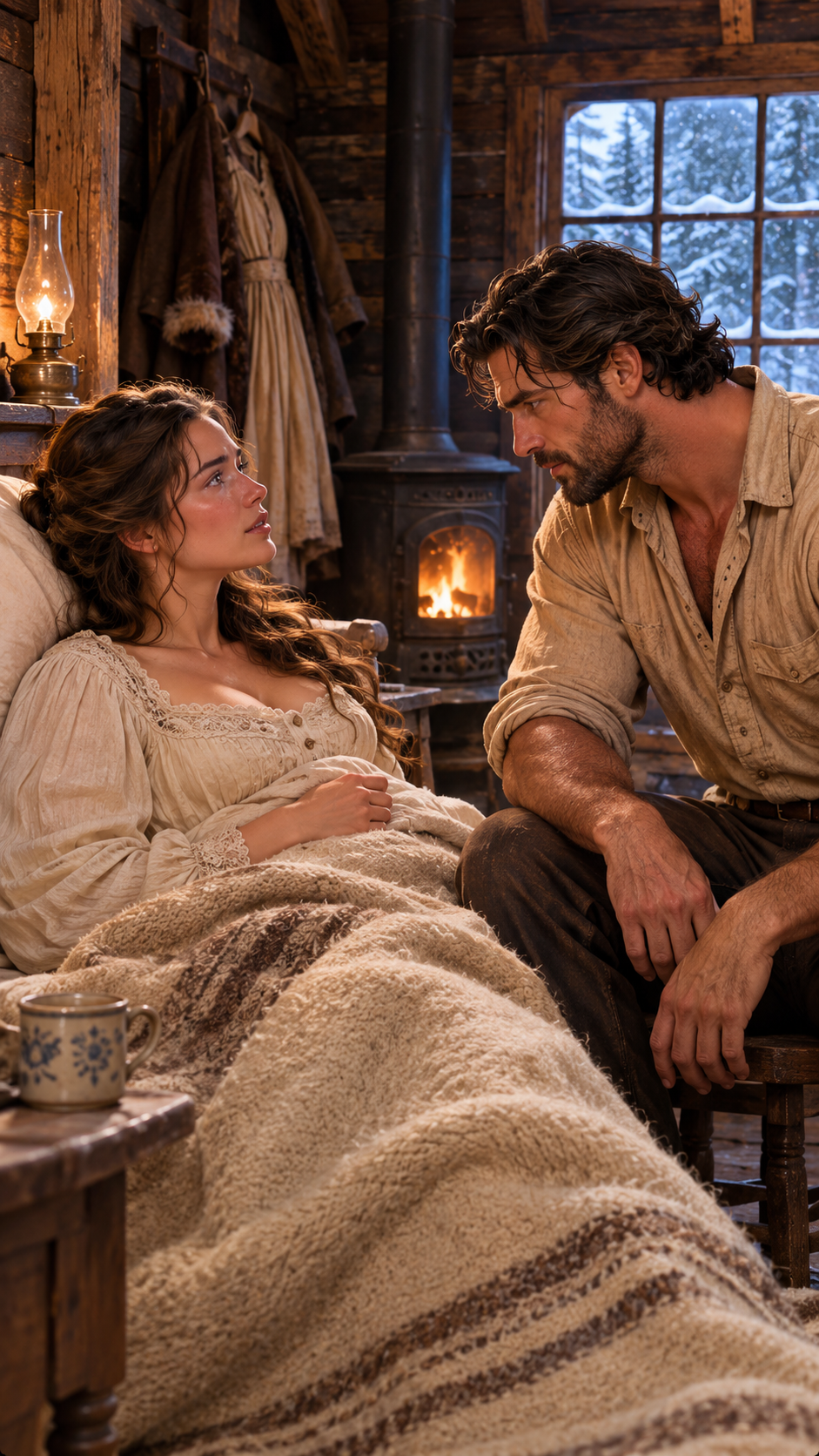
## **Part 6 – The Winter Silas Finally Learned Being Loved Was Not the Same as Being Needed**
The winter Silas turned seventy-six, he fell from the barn ladder.
Not far.
Five feet.
Enough.
His hip fractured.
For a man who had once carried Clara through snow as though she weighed nothing, the humiliation of being unable to stand alone cut deeper than the injury.
Eli—Jake’s son, named for Silas’s brother—drove the doctor out from town.
The doctor set what could be set.
Ordered rest.
Months, perhaps, before Silas walked normally again.
Silas hated every word.
Clara recognized the anger immediately.
Not anger at anyone.
Fear wearing work clothes.
The first week, he apologized every time she helped him.
“Stop.”
Clara adjusted the blanket.
“Stop what?”
“Making trouble.”
“You broke a hip.”
“Yes.”
“That is inconvenient.”
He frowned.
“Inconvenient?”
“Very.”
Silas looked offended.
Then she smiled.
“But you are not trouble.”
His expression changed.
The distinction mattered.
Weeks passed.
Silas grew restless.
He watched Jake’s sons repair fence.
Watched Clara carry books.
Watched other people feed horses.
One afternoon Clara found him trying to stand without his cane.
“What are you doing?”
“Walking.”
“You are leaning against a wardrobe.”
“Temporary strategy.”
“You’ll fall.”
“I won’t.”
He did.
Not badly.
Clara stared at him from above.
Silas sighed from the floor.
“You may say it.”
“I have nothing to say.”
“You have a lot.”
“Yes.”
She helped him up.
Later, he admitted:
“I hate this.”
“I know.”
“I feel useless.”
Clara sat beside him.
“You think usefulness is why I stayed?”
“No.”
“Do you?”
Silas looked toward his scarred hands.
“For most of my life, if I could work, I had a place.”
There.
Freight driver.
Prison labor.
Rancher.
Husband who fixed things.
Man who carried people from snow.
“What happens when you cannot?”
Clara asked.
Silas looked at her.
“I don’t know.”
She took his hand.
“Then perhaps you get to learn.”
He gave her a tired smile.
“Always teaching.”
“Always stubborn.”
Recovery was slow.
He did walk again.
With a cane.
Then without, for short distances.
Never with the same strength.
That loss remained real.
Clara did not pretend otherwise.
But his life widened.
He began teaching younger ranch hands.
Not doing every task himself.
Explaining.
Correcting.
Laughing when they ignored him and learned the hard way.
He repaired harnesses seated at a workbench.
Read more.
Told stories to grandchildren.
Eventually discovered that people visited him not because they needed a fence repaired.
They wanted his company.
That realization embarrassed him.
Clara enjoyed that.
“Turns out your personality survived the hip.”
“Unfortunately.”
Then Clara’s health began declining too.
Arthritis.
Eyesight.
Fatigue.
Neither became caretaker and patient permanently.
They traded roles.
Some mornings Silas made breakfast.
Some mornings Clara did.
Some days neither managed much, and they ate bread with cheese.
Good enough.
They sold part of Silas’s ranch to a neighboring family.
Not because children failed to inherit.
Because neither wanted to manage it.
Jake had his own business.
His daughters had their own lives.
Clara retained enough land for the house, barn, orchard, and pasture.
No one was trapped by legacy.
At their forty-fifth anniversary, Jake asked whether they wanted a large celebration.
Clara said no.
Silas said:
“Maybe pie.”
They had pie.
Family came.
Mrs. Bell had long since died.
Sister Agnes too.
Attorney Vale.
Samuel.
Miriam.
So many people who shaped their lives now existed mostly in stories.
Clara raised a glass.
“Do not turn us into a story where everything happened for a reason.”
The grandchildren laughed nervously.
She continued.
“Silas was wrongfully imprisoned. Miriam died before he was released. Samuel died too young. I nearly froze.”
She looked toward Silas.
“None of those things were necessary to create love.”
Silas squeezed her hand.
Clara continued.
“We simply had to decide what to do with what happened.”
That was their truth.
Not destiny.
Choice after circumstance.
Years later, Jake brought Clara the family album.
He had added labels.
One photograph showed young Silas, Miriam, and Samuel.
Jake asked:
“Do you want that removed?”
Clara looked at Silas.
He shook his head.
“No.”
Clara agreed.
Those people existed.
Their lives mattered beyond how they led to later happiness.
Miriam was not merely “the woman before Clara.”
Samuel was not merely “Clara’s first husband.”
Both had full stories.
The album should reflect that.
At eighty, Silas developed heart trouble.
Not catastrophic at first.
Medication.
Rest.
Less travel.
He handled the news better than Clara expected.
“Afraid?”
she asked.
“Yes.”
“Good.”
He frowned.
“Good?”
“You said it.”
He smiled.
“I learned eventually.”
They had time.
Enough for ordinary things.
Sour apples.
Grandchildren.
Arguments about stove wood.
One last trip to Santa Fe, where Silas bought another terrible hat simply to annoy Clara.
She made him wear it home.
Then one winter evening, snow began falling.
Thick.
Quiet.
Clara sat by the fire.
Silas in the chair beside her.
He looked toward the window.
“Reminds me of that night.”
“What night?”
He stared.
Clara smiled.
“I remember.”
“You were stubborn.”
“I was unconscious.”
“Before that.”
“Fair.”
Silas looked toward her.
“You know what frightened me most?”
“When you found me?”
“Yes.”
“What?”
“That you stopped shivering.”
Clara remembered the strange warmth.
The surrender.
Silas continued.
“I had seen men freeze before.”
She looked at him.
“You never told me.”
“No.”
“Why?”
“Didn’t want to make that night darker.”
Another protected truth.
Clara raised an eyebrow.
Silas sighed.
“I know.”
“At eighty, still learning.”
“Slow student.”
She took his hand.
“What did you think?”
“That I had arrived too late.”
Her chest tightened.
“And then?”
“You breathed.”
He smiled.
“I think I started caring before I knew your name.”
Clara looked at him.
“That sounds dangerously romantic.”
“Age makes me reckless.”
She laughed.
Then he said:
“I loved Miriam.”
“I know.”
“I loved her a long time.”
“I know.”
“I thought loving you would betray her.”
Clara had never heard him say that so directly.
“What changed?”
Silas looked toward the fire.
“Nothing.”
She waited.
“I just eventually understood that love is not a room with one chair.”
Clara smiled.
“Good line.”
“I’ve had forty years.”
They sat together.
Snow covered the porch.
No emergency this time.
No one half-buried outside.
No rescue needed.
Only winter.
A few months later, Silas’s heart worsened.
The doctor was honest.
Maybe weeks.
Maybe months.
Silas asked to stay home.
Clara agreed.
Jake arranged everything.
Family visited without crowding him.
Silas tired easily.
One evening he asked Clara:
“Will you sit?”
She sat.
“Closer.”
She moved.
He reached toward her hand and stopped.
Even now.
“May I?”
Clara laughed through tears.
“Yes.”
He held her hand.
His palm was thinner than when she first knew him.
Still warm.
“Clara.”
“Yes?”
“I spent years believing I had to be useful to deserve staying.”
“I know.”
“You never needed me as much as I wanted.”
“That is a terrible thing to say to your wife.”
He smiled.
“You know what I mean.”
She did.
Clara had survived before him.
Would survive after him.
Love was not dependence.
“I’m glad.”
she whispered.
“Why?”
“Because then I know you stayed because you wanted me.”
Silas closed his eyes.
“Yes.”
Clara’s throat tightened.
“And I stayed because I wanted you.”
He opened his eyes again.
“Even after the oatmeal?”
“That nearly ruined everything.”
He laughed weakly.
Then:
“Jake all right?”
“Yes.”
“Grandchildren?”
“Yes.”
“You?”
Clara thought.
“Not for a while.”
Silas nodded.
“Fair.”
Then he whispered:
“Don’t become alone just because I’m gone.”
Clara’s eyes filled.
“I can’t promise what life will look like.”
“Good.”
“That’s an impossible promise.”
“I know.”
“But I can promise not to confuse grief with duty.”
Silas smiled.
“That’s better.”
He died the next morning.
Clara’s hand in his.
No drama.
No sudden last secret.
The snow outside had begun melting.
Clara lived seven years after Silas.
The first year felt strange.
She still turned to speak to him.
Still expected his boots near the door.
Still woke during storms.
But she did not retreat completely.
Jake visited.
Grandchildren came.
She joined a church sewing circle despite hating sewing circles.
She admitted later that she mostly went for coffee.
She continued managing the remaining homestead with help.
Eventually moved into a smaller cottage Jake built nearby.
Not because the big house was sacred.
Because it was too much work.
The old house became a home for Jake’s eldest daughter and her husband.
Life moved through it.
That pleased Clara.
She kept Samuel’s wedding chest.
But she stopped treating it like a tomb.
Inside went old letters.
Silas’s terrible hat.
Miriam’s copied testimony.
Samuel’s compass.
Photographs.
Things from multiple lives sharing the same box.
At eighty-six, Jake asked whether she wanted the freight records donated to the territorial archive.
Clara agreed.
Original legal evidence went.
Personal letters stayed.
Not every private feeling belonged to history.
The archive eventually created a small exhibit about freight corruption.
Silas’s wrongful conviction.
Miriam’s clinic records.
Samuel’s investigation.
Harrow’s fraud.
Clara refused to allow the exhibit to be called **The Silas Maddox Scandal**.
“It involved more than one man.”
They changed it.
Good.
At eighty-eight, Clara sat with one of her granddaughters, **Evelyn**, during a snowstorm.
Evelyn asked:
“Were you scared the night Grandpa Silas found you?”
“Yes.”
“Did you know you loved him then?”
“No.”
“Did he?”
“No.”
“People say he did.”
“People improve stories.”
Evelyn smiled.
“Then when did you know?”
Clara thought.
Not the rescue.
Not the photograph.
Not the first kiss.
Perhaps there had been many knowing moments.
“I knew when I realized he could hear no from me without treating it as rejection of his worth.”
Evelyn frowned.
“That’s not very romantic.”
“It is when you’re older.”
She laughed.
Then:
“Did Grandpa Silas save you?”
Clara looked toward the snow.
“From freezing, yes.”
“That’s not what I mean.”
“I know.”
She thought.
“No.”
“Then what did he do?”
“He loved me while I saved myself from thinking my life was over.”
Evelyn went quiet.
That answer was closer.
Clara had believed widowhood meant the important emotional part of her life had ended.
Silas did not resurrect something dead.
He showed her it had never actually died.
It had been sleeping beneath grief.
That distinction mattered.
At ninety, Clara’s body began failing quickly.
She was not afraid exactly.
Tired.
Jake, now an old man himself, sat beside her.
Funny how children age.
He asked:
“Do you want Samuel’s compass?”
“Yes.”
He placed it in her hand.
**CLARA ALWAYS FINDS NORTH BETTER THAN I DO.**
She smiled.
Then:
“Silas’s ring?”
Jake gave it to her.
She held both.
Two marriages.
Two men.
No competition.
Samuel had given her one kind of life.
Silas another.
Neither erased the other.
Jake asked:
“Which should I bury with you?”
Clara looked horrified.
“Neither.”
He blinked.
“Why?”
“Useful things.”
“The compass is useful?”
“Someone can use it.”
“And the ring?”
“Someone can wear it.”
“You don’t want anything buried?”
Clara thought.
“Maybe the terrible hat.”
Jake laughed until he cried.
They did not bury the hat either.
Clara died peacefully at ninety-one.
Her will was clear.
The cottage to Jake’s daughter.
Remaining savings divided among family and a small fund for rural medical transport.
The compass to Evelyn.
Silas’s silver ring to another granddaughter who had admired it.
Samuel’s private letters to family.
The freight documents to the archive.
The old wedding chest to Jake.
One note lay on top.
**Do not keep this closed because you think grief requires preservation. Put blankets in it if you need a blanket chest.**
Jake obeyed.
Eventually.
Years later, the chest held winter quilts.
The old house still stood.
The barn had been rebuilt twice.
The creek still froze some winters.
People in the county told Clara and Silas’s story.
As always, they exaggerated.
They said a mysterious giant cowboy appeared in a blizzard and instantly fell in love with a lonely widow.
Not exactly.
They said Clara nearly died and woke already knowing he was the man fate had sent.
Wrong.
They said Silas rescued her heart.
Too simple.
The truth took longer.
A man carrying a dead husband’s letter arrived at a widow’s homestead just before a storm.
He saved her from freezing.
She discovered he had been wrongly convicted.
Together they uncovered records Samuel had hidden while trying to expose stolen supplies.
Clara learned that good intentions could still exclude someone from decisions they had a right to understand.
Silas learned his life could become larger than the conviction he spent years trying to overturn.
They learned grief did not require permanent loyalty to loneliness.
They waited until rescue, gratitude, fear, and unfinished legal battles stopped making the decisions for them.
Then they chose each other.
And they kept choosing.
Through bad oatmeal.
Sour apples.
Jake growing up.
A house becoming too large.
A broken hip.
Illness.
Arguments.
Ordinary mornings.
The gentle touch Clara noticed during that first blizzard did not awaken something that belonged to Silas.
It awakened something that had always remained hers.
The capacity to want.
To trust.
To be frightened by tenderness and move toward it anyway.
And in the end, the greatest gift Silas gave Clara was not that he carried her out of the snow.
It was that after she stood again, he never asked her to pretend she could not stand without him.
He simply offered his hand.
And waited for her to choose whether to take it.
**–THE END– PLEASE
Share your thoughts or feedback to motivate us to create more stories ♥️
✓ Lynn R. Adams
## **Part 6 – The Winter Silas Finally Learned Being Loved Was Not the Same as Being Needed** The winter Silas turned seventy-six, he fell from the barn ladder. Not far. Five feet. Enough. His hi…