The End – The Anniversary Toast That Hid a Family’s Most Dangerous Secret _065
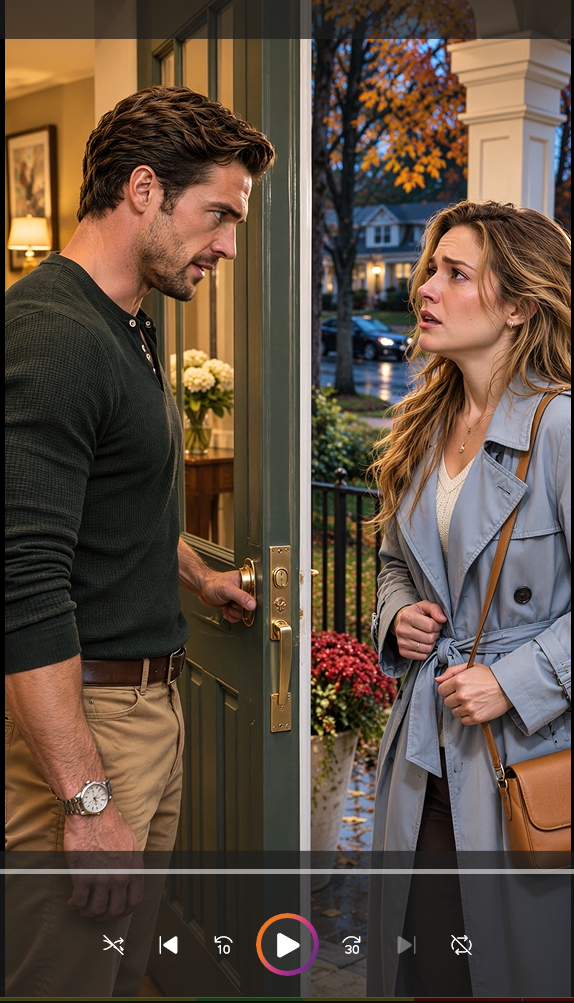
## Part 6 – The Life We Chose After the Truth
“My mother?”
I sat on the edge of my bed, phone pressed to my ear.
“That isn’t possible.”
Melissa spoke carefully.
“The letter is old.”
“How old?”
“I don’t know exactly.”
“Where did Andrew get it?”
“From Dad’s office.”
I stood.
“Why would Claire’s father have a letter from my mother?”
“I don’t know.”
“Melissa.”
“I swear.”
After weeks of lies, the phrase meant very little.
Still, something in her voice made me listen.
“Andrew found it when he was searching through old company records. He showed it to me because your name was on the envelope.”
“Where is it now?”
“With me.”
“I want it.”
“I know.”
“I want it tonight.”
“Okay.”
An hour later, Melissa met me in the parking lot of a twenty-four-hour grocery store.
No dramatic confrontation.
No accusations.
She simply handed me an envelope.
She looked exhausted.
“I am sorry, Daniel.”
I looked at her.
“For the money?”
“For all of it.”
“The dinner?”
Her eyes filled.
“Especially the dinner.”
“Why did you laugh?”
She looked down.
The question seemed to hurt more than anything else.
“Because I was scared.”
I shook my head.
“Everyone keeps saying that.”
“I know.”
She wrapped her arms around herself.
“I thought if the separation looked ugly enough, you’d stay away. Andrew kept saying you were the one person who might start asking the right questions.”
“So you made me the joke.”
“Yes.”
“At my own anniversary.”
“Yes.”
She didn’t defend herself.
Maybe that was the only reason I stayed.
“I told myself it was one horrible night to keep you away from a bigger disaster.”
Her voice trembled.
“Then I started laughing, and everybody joined in, and for a few seconds it felt easier to pretend you were the problem.”
I understood more than I wanted to.
Not forgiveness.
Understanding.
They were different.
“Is Andrew coming back?”
“Yes.”
“With a lawyer?”
“Yes.”
“Good.”
Melissa wiped her cheek.
“I don’t expect you to forgive me.”
“I don’t know if I will.”
She nodded.
“That’s fair.”
I looked at the envelope.
My mother’s handwriting crossed the front.
**For Claire. Someday.**
I knew every curve of those letters.
My chest tightened.
“Why did your father have this?”
“Ask Claire.”
I looked up.
“What?”
Melissa shook her head.
“I think she knows.”
That startled me more than the letter itself.
I drove home.
I didn’t open it.
Instead, I called Claire.
She arrived twenty minutes later.
The moment she saw the envelope, she stopped in the doorway.
“Oh.”
One syllable.
But it told me everything.
“You knew.”
Claire stepped inside slowly.
“Not about Andrew finding it.”
“But you knew the letter existed.”
“Yes.”
“Why didn’t I?”
She closed the door.
“Your mother asked me not to tell you.”
I laughed in disbelief.
“Apparently everyone in my life has been protecting me from information.”
Claire absorbed that.
“You have every right to be angry.”
“What is it?”
“I don’t know.”
I studied her.
“You never opened it?”
“No.”
“Why?”
“Because she asked me not to until I needed it.”
“Needed it for what?”
Claire looked at the envelope.
“For the day I wasn’t sure whether I could stay married to you.”
I stared at her.
My mother had loved Claire.
During the final year of her life, the two of them had grown especially close.
Claire drove her to appointments when I had work.
They cooked together.
Sometimes I’d walk into the room and find them laughing about something neither would explain.
I had always loved that.
Now I realized there had been conversations I knew nothing about.
“When did she give it to you?”
“Two months before she died.”
“And how did your father get it?”
“I gave it to him.”
“Why?”
“The week before our anniversary.”
That hurt.
“You were considering leaving me.”
“Yes.”
I sat down.
Claire remained standing.
“Why give it to him?”
“I was afraid I’d open it.”
“That was the point.”
“I know.”
She wiped her eyes.
“I didn’t want advice from someone who wasn’t there anymore.”
I understood that too.
Grief had strange rules.
After my mother died, I spent almost a year avoiding the final voicemail she’d left me because hearing her voice felt unbearable.
Eventually I listened.
She had called to remind me to buy milk.
I cried for twenty minutes.
I looked at the envelope.
“Open it.”
Claire shook her head.
“It’s yours.”
“My mother addressed it to you.”
“Daniel—”
“Open it.”
Her fingers shook as she broke the seal.
Inside were three handwritten pages.
Claire began reading silently.
Halfway through the first page, she sat down.
“What?”
She laughed through tears.
“What did she say?”
“She says you alphabetize spices.”
“I frowned.
“I do not.”
“You did when she wrote this.”
“That was one afternoon.”
Claire kept reading.
Then her expression changed.
“Read it aloud.”
She hesitated.
Then began.
“Dear Claire. If you’re reading this, I’m guessing marriage has turned out to be exactly what I promised: less graceful than the wedding photos.”
I could hear my mother’s voice.
Claire continued.
“She says, ‘Daniel will try to fix every problem you give him. This is charming until it isn’t.’”
I laughed despite myself.
“That sounds like her.”
Claire smiled.
Then read on.
“She says, ‘Do not stay with my son because you promised me anything. I don’t want that. Stay only if the life you build together still allows both of you to become yourselves.’”
Claire stopped.
I looked at her.
She continued.
“‘And if one day you discover that you need something different, tell him before resentment turns his best qualities into evidence against him.’”
Claire’s voice broke.
I looked away.
My mother, four years gone, had described the exact thing that happened.
Claire wiped her face and continued.
“‘Ordinary life is not a small life, Claire. But it should be chosen, not endured. If you love him, choose it honestly. If you cannot, leave honestly. Whatever you do, do not make him guess.’”
Silence.
Claire folded the page.
“I should have opened it.”
“Maybe.”
“No.”
She looked at me.
“I should have.”
I reached for the letter.
She gave it to me.
There were a few more lines.
My mother had written about marriage.
Not as endurance.
Not as permanence at any cost.
As repeated honesty.
**People change. The trick isn’t preventing change. It’s being brave enough to introduce yourself again when you do.**
I read that sentence three times.
Claire sat across from me.
“I don’t deserve another chance because your mother wrote a beautiful letter.”
“No.”
“I don’t deserve one because my family manipulated me.”
“No.”
“I don’t deserve one because I was scared.”
“No.”
A tear slipped down her cheek.
“Do you enjoy saying no?”
“A little.”
She laughed.
So did I.
And something inside the room loosened.
Not healed.
Just loosened.
“What happens with Andrew?” I asked.
“He’s returning tomorrow.”
“And your father?”
“He’s cooperating.”
“Melissa?”
“She moved out temporarily.”
That surprised me.
“From Andrew?”
“Yes.”
“Because of what he did?”
“Because she realized she doesn’t know where helping him ended and losing herself began.”
There was an echo in that sentence.
Claire heard it too.
“Seems to run in the family,” she said.
“What?”
“Confusing loyalty with surrender.”
She looked down.
“I’m trying not to do that anymore.”
The next several weeks were less dramatic than everything that came before.
Which was exactly what we needed.
Andrew returned.
With attorneys present, he admitted altering my engineering report and using copied documents.
Investigators continued sorting through Bellweather’s records.
Claire’s father stepped away from daily management of his businesses.
Several assets were sold.
Debts were negotiated.
The world didn’t end.
That was perhaps the greatest surprise.
For months, everyone had acted as though admitting failure would destroy the family.
Instead, admitting failure finally allowed them to stop creating new disasters to hide the old ones.
Melissa and Andrew entered counseling.
Whether they would remain married, none of us knew.
Claire began seeing a therapist.
So did I.
Separately.
That was my idea.
Claire smiled when I told her.
“You hate therapy.”
“I hate yoga too. Doesn’t mean stretching isn’t useful.”
She laughed.
We stayed separated.
That part mattered.
I didn’t want a reunion built on fear, nostalgia, or the excitement of surviving a crisis.
For three months, we simply talked.
Sometimes over coffee.
Sometimes while walking.
Sometimes on the phone.
We talked about things we should have discussed years earlier.
Children.
Neither of us had ever been certain.
Money.
Claire admitted she had felt embarrassed earning less than her father expected.
Work.
I admitted I had turned down opportunities because I liked staying close to home, without ever asking whether she wanted the same.
Travel.
Family boundaries.
Boredom.
Ambition.
Sex.
Grief.
And the strange pressure of reaching your thirties and realizing the life you chose might actually be the life you keep.
One evening in December, we met at the restaurant where we’d had our second date.
Not the anniversary restaurant.
Neither of us wanted to see that place again.
Claire arrived wearing a green coat.
I remembered it.
“You still have that?”
She looked down.
“You bought it.”
“Seven years ago.”
“It still works.”
“That isn’t how fashion operates.”
“Maybe that’s why I married an engineer.”
We sat by the window.
There were no family members.
No envelopes.
No hidden plans.
Just two people who had been together eight years and were trying to determine whether there could be a ninth.
Halfway through dinner, Claire reached into her purse.
I raised one hand.
“Absolutely not.”
She laughed.
“This isn’t legal paperwork.”
“It better not be.”
She placed a small box on the table.
Inside was my wedding ring.
I had left it on my dresser after the anniversary dinner.
Apparently she had taken it when she packed.
“I wondered where that went.”
“I stole it.”
“At least you’re confessing.”
“I’ve improved.”
I picked it up.
It looked strange in my hand.
Familiar and foreign.
“I don’t want you to put it on,” she said.
I looked at her.
“Then why bring it?”
“Because I wanted to give it back.”
She folded her hands.
“What happens to it should be your choice.”
I stared at the ring.
Six months earlier, Claire had chosen for both of us.
Tonight she was doing something harder.
She was leaving the decision with me.
I slipped the ring into my pocket.
Not onto my finger.
Claire noticed.
She smiled anyway.
That mattered too.
“Are you disappointed?” I asked.
“Yes.”
Her honesty surprised me.
“But?”
“But disappointment isn’t an emergency.”
I smiled.
“That sounds like something your therapist says.”
“It is.”
“I’m stealing it.”
“Please do.”
We walked outside after dinner.
Snow had begun falling in thin, uncertain flakes.
Claire stopped beneath a streetlamp.
“Daniel?”
“Yeah?”
“If we try again, I don’t want to go back.”
I understood.
“Neither do I.”
“I don’t want our old marriage.”
“Neither do I.”
She looked frightened.
But not like the woman on my doorstep months earlier.
This fear was different.
There were no investigators.
No financial secrets.
No family scheme.
Just uncertainty.
The normal kind.
“What would we be, then?” she asked.
I looked down the street.
People were leaving restaurants.
Cars passed.
A man hurried along carrying flowers wrapped in brown paper.
Ordinary life everywhere.
“I don’t know,” I said.
Claire laughed.
“That isn’t very romantic.”
“It’s honest.”
She considered that.
Then smiled.
“I’ll take honest.”
I held out my hand.
She looked at it.
Then took it.
We walked without deciding anything that night.
That was new for us.
We didn’t need a dramatic answer.
We needed time.
In February, the corrected separation agreement was filed.
Schedule C was formally identified as unauthorized.
My attorney confirmed I was no longer considered connected to Bellweather’s obligations.
In March, Andrew entered a negotiated legal process related to the falsified documents and financial representations.
The details were complicated.
The consequences were real.
But none of us celebrated them.
There were no champagne glasses.
No jokes.
No triumphant speeches.
Failure had already taught us what celebration at someone else’s expense looked like.
We had learned enough.
In April, Claire’s father asked to meet me.
We sat on his back porch.
For the first ten minutes, he mostly stared at the yard.
Finally he said, “I owe you an apology.”
“Yes.”
He glanced at me.
“You’re supposed to make that easier.”
“I’m retired from making things easier.”
To my surprise, he laughed.
Then he apologized.
Not for being misled.
Not for Andrew.
For himself.
For encouraging secrecy.
For treating his daughters like extensions of his reputation.
For allowing pride to become family policy.
Before I left, he said, “Claire tells me you two are talking.”
“We are.”
“Are you getting back together?”
I looked at him.
“She hasn’t decided.”
He frowned.
“I thought it was your decision.”
“No.”
That was the lesson.
If there was another marriage, it would require two decisions.
Not one.
In June, exactly a year after Claire began pulling away, we went to Maine.
The same inn.
The same cold beach.
The same ridiculous lobster restaurant.
We had not officially reconciled.
We called it a trip.
Nothing more.
On the second evening, we walked along the shore.
Claire picked up a smooth stone and tossed it toward the water.
It landed three feet short.
“Impressive.”
“I didn’t marry you for encouragement.”
“You didn’t marry me for athletic ability either.”
“True.”
The sky was turning purple.
Claire slipped her hands into her jacket.
“Can I ask you something?”
“Yes.”
“Do you trust me?”
I thought carefully.
“Sometimes.”
She nodded.
That answer hurt her.
I could see it.
But she accepted it.
“Do you think you ever will completely?”
“I don’t know.”
She looked toward the horizon.
Then I said, “Do you trust me?”
She turned.
“Of course.”
“No.”
She frowned.
“You didn’t trust me enough to tell me the truth last year.”
She absorbed that.
Slowly.
Then nodded.
“No,” she said. “I didn’t.”
“That has to change too.”
“It will.”
“Don’t promise.”
She smiled faintly.
“Right.”
We kept walking.
After a while she asked, “What should I say instead?”
“Say you’ll work on it.”
“I’ll work on it.”
“So will I.”
We reached the end of the beach.
Claire sat on a piece of driftwood.
I sat beside her.
The ocean moved endlessly in front of us.
No conclusion.
No neat line where one wave stopped and another began.
I reached into my pocket.
The wedding ring was there.
I had carried it for six months.
Not every day.
But that day, yes.
I held it between my fingers.
Claire saw it.
She didn’t speak.
“I’ve been thinking about this.”
Her eyes filled.
“Daniel—”
“Don’t turn it into a speech.”
She laughed nervously.
“Sorry.”
I looked at the ring.
“I don’t want our old marriage either.”
She nodded.
“I don’t want to pretend the anniversary dinner didn’t happen.”
“I don’t either.”
“I don’t want you to forgive yourself by blaming Melissa or Andrew.”
“I won’t.”
“And I don’t want to spend the next twenty years using one terrible night as permission to punish you.”
Claire wiped her cheek.
“I don’t want that either.”
I held up the ring.
“What if this doesn’t mean we’re going backward?”
She looked at me.
“What would it mean?”
“That we’re choosing again.”
Claire began crying.
Quietly.
Not the desperate tears from my doorstep.
Different ones.
“What if we fail?” she whispered.
“Then we tell the truth.”
“What if ordinary starts feeling too ordinary again?”
“Tell me.”
“What if you’re unhappy?”
“I’ll tell you.”
“What if we’re scared?”
I smiled.
“We’ve established that being scared doesn’t qualify us to make secret legal decisions on behalf of each other.”
She laughed through her tears.
“Fair.”
I slipped the ring onto my finger.
It felt strange.
Then familiar.
Then neither.
Just present.
Claire looked at it for a long time.
“Are we married again?”
“Technically, we never divorced.”
“You know what I mean.”
“I think we’re trying.”
She leaned her head against my shoulder.
For once, trying felt big enough.
A year later, on our seventh wedding anniversary, we ate dinner at home.
No expensive restaurant.
No relatives.
No surprises.
I cooked pasta.
Claire burned the bread.
She claimed it was intentional.
I refused to validate the lie.
After dinner, she poured two glasses of sparkling cider.
I eyed mine suspiciously.
“What?”
“No anniversary toasts.”
She smiled.
“Just one.”
I groaned.
“Claire.”
She raised her glass.
“To telling each other things before they become catastrophes.”
I considered it.
“That seems reasonable.”
“And to boring Saturdays.”
“Excellent.”
“And stupid documentaries.”
“Essential.”
“And ordinary life.”
I looked around our kitchen.
There were photographs on the walls again.
Not all the old ones.
Some.
New pictures had joined them.
Maine.
Christmas.
A muddy hiking trip.
Claire asleep on the couch with a book on her chest.
Nothing impressive.
Nothing anyone would place on the cover of a magazine.
But they were ours.
Chosen.
Honestly.
I touched my glass to hers.
“To ordinary life.”
She smiled.
Then her expression turned mischievous.
“And one more thing.”
I narrowed my eyes.
“No.”
“You don’t know what it is.”
“History has taught me caution.”
She laughed.
“Open the drawer.”
I hesitated.
“Which drawer?”
“The one beside you.”
I opened it.
Inside was a bouquet of white roses.
Exactly like the ones I’d brought to the anniversary dinner two years earlier.
For a moment I couldn’t speak.
Claire’s smile faded.
“If that’s too much—”
“No.”
I lifted them.
“They’re beautiful.”
“I wanted to give them back.”
I looked at her.
“Why?”
“Because you left yours on that table.”
I remembered walking away.
The envelope.
The laughter.
The terrible coldness settling over me.
Then I looked at the woman standing across from me now.
The woman who had hurt me.
The woman I had hurt in smaller, quieter ways by assuming contentment meant we never needed difficult conversations.
The woman who had learned that loyalty without honesty became fear.
The woman who had come back trembling because everything she’d tried to control had finally escaped her control.
I put the flowers in a vase.
Then Claire leaned against the counter.
“Daniel?”
“Yes?”
“Do you ever think about that night?”
“The dinner?”
“Yes.”
“Sometimes.”
“Does it still hurt?”
“Yes.”
Her face fell slightly.
I walked toward her.
“But that’s not all it does anymore.”
“What else does it do?”
I thought about the answer.
“It reminds me that a marriage can survive being broken without pretending it was never broken.”
Claire looked at me.
“That sounds suspiciously profound.”
“I’ve been practicing.”
She smiled.
Outside, rain tapped gently against the windows.
Somewhere down the block, a dog barked.
The dishwasher hummed.
The kitchen smelled faintly of burned bread.
Ordinary.
Completely, beautifully ordinary.
And this time neither of us mistook ordinary for empty.
Claire raised her glass again.
“No toast.”
“I wasn’t going to.”
“Good.”
I kissed her forehead.
She rested against me.
There had never been a secret villain hunting her through the night.
No vast conspiracy waiting to destroy us.
The truth had been both simpler and more difficult.
People we loved had been afraid.
They had lied.
They had protected the wrong things.
They had confused control with care, silence with loyalty, and appearances with safety.
So had we.
The hardest part hadn’t been uncovering the forged signatures or the hidden company.
It had been discovering that good intentions did not erase bad choices.
And love did not automatically create honesty.
Honesty had to be chosen.
Again.
And again.
And again.
I looked at the white roses on our table.
Two years earlier, I’d left another bouquet beside Claire’s plate while her family toasted the end of our marriage.
For a long time, I thought that was the night our story ended.
I was wrong.
It was simply the night we learned that the life we’d built could no longer survive on assumptions.
What came afterward wasn’t the marriage we had before.
It was quieter.
More careful.
Sometimes awkward.
Sometimes difficult.
But it was honest.
And standing there in our kitchen, with rain on the windows and burned bread on the counter, I realized something my mother had somehow understood years before either of us did.
Ordinary life was never the absence of adventure.
Sometimes the greatest adventure was looking at someone you thought you knew completely and having the courage to ask—
Who are you now?
Then staying long enough to hear the answer.
**–THE END– PLEASE
Share your thoughts or feedback to motivate us to create more stories ♥️
✓ Lynn R. Adams
## Part 6 – The Life We Chose After the Truth “My mother?” I sat on the edge of my bed, phone pressed to my ear. “That isn’t possible.” Melissa spoke carefully. “The letter is old.” “How old?” …