The charge nurse gave me a deaf combat veteran everyone called difficult, and two coworkers waited
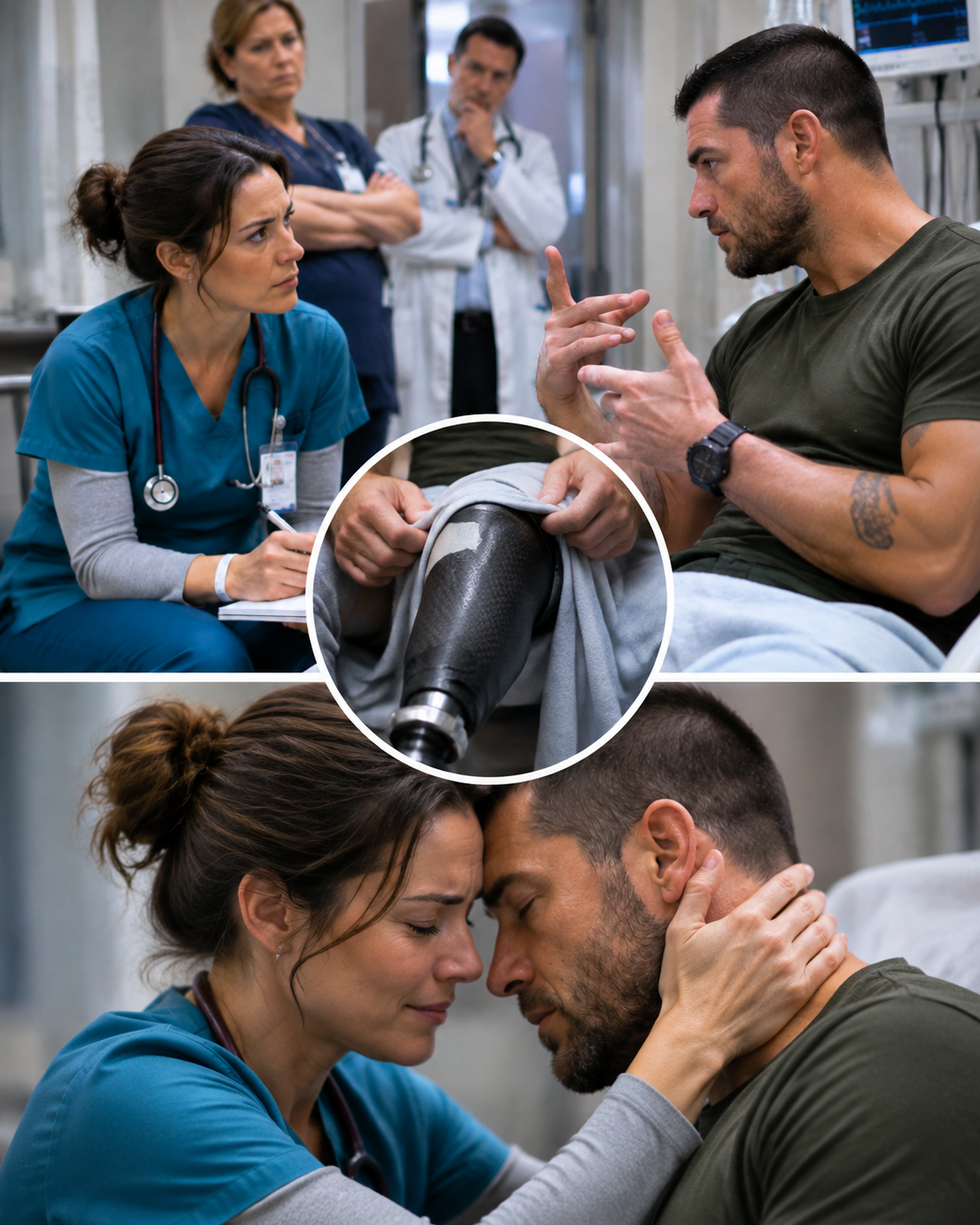
IF FACEBOOK BROUGHT YOU HERE, HERE’S THE CONTINUATION YOU’VE BEEN WAITING FOR. ENJOY! 👇 Respiratory therapist Danny Ochi arrived first, followed by Priya, a second-year resident. I gave them Grant’s history, current vital signs, and the change in his breathing. Danny listened carefully to his right chest and immediately asked for portable imaging and a thoracic consultation.
Paxton came back and insisted he had already assessed Grant. Danny said she could barely hear breath sounds on the right, and Priya began arranging the urgent tests. I kept explaining what was happening to Grant in sign language, because he had a right to understand every decision being made around him.
His oxygen dropped to 84 percent. He signed “Rook” again, and I told him to keep his eyes on me and take the easiest breaths he could. He answered that he’d been through worse, though I could see how much effort even that small exchange required.
The portable X-ray showed a significant right-sided pneumothorax, with concern for developing tension physiology. His blood pressure started falling and his pulse accelerated. Danny and Priya prepared for emergency treatment while the thoracic surgeon was called.
When his condition became immediately dangerous, I opened the emergency decompression supplies. Paxton objected that I wasn’t authorized to perform an invasive procedure independently. Grant reached for my sleeve and signed that he wanted me to help him.
Danny witnessed his consent, and I acted using the emergency skills I had been trained to use, knowing that my decision would be reviewed. Air escaped, and Grant’s breathing began to improve. His oxygen readings rose as the team continued supporting him.
Dr. Andrea Yun, the thoracic surgeon, arrived and reviewed the X-ray, the emergency intervention, and Grant’s condition. She directed the team to prepare a chest tube for definitive treatment. When she asked who had recognized the emergency and intervened, I told her I had.
Paxton said I’d acted without authorization. Dr. Yun asked why the deterioration hadn’t been addressed sooner, then told me my intervention had helped save Grant. From behind his oxygen mask, Grant signed that he wanted me to stay, and I translated his request.
At four o’clock, I was called to a conference room for an administrative review. Administrator Dennis Fournier sat with Paxton, Charlene, and Tyler. They asked why I had performed an emergency procedure despite an attending physician’s instruction to stand down.
I described the declining oxygen levels, the signs of a dangerous pneumothorax, Grant’s consent, and the rapidly worsening situation. Fournier said the scope-of-practice concern was legitimate. I agreed that my actions should be reviewed, but said the failure to respond to his deterioration needed equal scrutiny.
Paxton asked why Grant had called me Rook. He also raised a two-year gap in my employment records. I told him those years were private and that the patient’s breathing, not my old call sign, was the matter the hospital needed to investigate.
Dr. Yun entered with an updated chart and confirmed that Grant had experienced a serious pneumothorax with early tension physiology. She said further delay could have led to cardiac arrest and offered to support my account of the emergency. Fournier agreed the clinical and professional questions would both need formal review.
Then Grant appeared at the doorway, having left his monitored recovery area despite still needing treatment. A step-down nurse was close behind him. I was frightened to see him standing there with his drainage equipment, and I asked him to return to his room, but he insisted that I translate first.
He signed that Charlene had assigned him to me as a joke, that staff had treated his inability to hear as a reason to dismiss him, and that I had spoken to him in his language before anyone else had truly listened. He said I had asked permission before touching him and had stayed when his breathing worsened.
Then he explained the name Rook. Years earlier, I had been attached to his element as a combat medic near Kandahar. During an emergency on a dangerous road, after communications failed and the unit had been told to withdraw, I had gone back to help bring two men to safety.
I hadn’t expected him to recognize me after all that time. I had left that life for reasons I wasn’t prepared to discuss in a hospital conference room. But Grant remembered, and his hands shook as he finished telling them.
Before anyone could respond, his legs gave way. I caught him with help from the step-down nurse, and we returned him to monitored care. Dr. Yun checked his treatment, and I stayed until he was settled again.
Later that evening, Captain Ree Brandt arrived from CFB Trenton. He confirmed that I had served as Petty Officer First Class Cora Anne Finley with a JTF2 medical support element, and that I had been medically released under a protected personnel record. He referred to a Silver Star recommendation forwarded through an American liaison and two commendations whose details remained classified.
I didn’t want those details announced in a hallway. I had become a nurse because I still wanted to care for people, not because I wanted strangers to know what I had done before. Brandt understood that and ended the conversation without asking me to explain more.
Part 3 That night Charlene found me in the supply room. She admitted she’d given me Grant because she wanted me to fail, and she said she hadn’t known my background. I told her that my history wasn’t the point; she had used a vulnerable patient and a new colleague for entertainment.
“Are you sorry because you were cruel,” I asked, “or because you were wrong about what I could do?” She was quiet for a long time. Finally she admitted she didn’t know yet, and I told her to figure it out before asking me to accept an apology.
Three days later, Fournier called us back for the formal review. Paxton was under administrative review after four earlier nursing complaints were reconsidered, and Dr. Yun had filed a fifth. Charlene and Tyler were present, and Captain Brandt attended as a courtesy.
Fournier began to offer an apology on behalf of the hospital. I stopped him and told him I wanted policy changes instead. An apology couldn’t help the next deaf veteran who came through the doors and found nobody willing to communicate.
I had written my requests the night before. Every deaf or hard-of-hearing veteran admitted to our unit should have timely access to a qualified interpreter, in person or through an appropriate remote service. Staff should document attempts to communicate before labeling a patient non-cooperative, and unnecessary observers or recordings should never be allowed without proper consent.
I also asked for basic sign-language training for every nurse on the unit within six months. Fournier approved the changes and agreed that existing privacy rules needed enforcement. Charlene looked at her hands, and Tyler didn’t meet my eyes.
Grant, now safely brought to the meeting in a wheelchair with staff assistance, signed that he wanted me to teach the classes. I refused, and he gave me the faintest smile. Charlene said she would attend; Tyler said he would too.
Three weeks later, the unit still had its squeaking supply cart and the same burned coffee. Fourteen names were on the sign-language training sheet, with Charlene’s at the top. Paxton’s photograph had been removed from the physician recognition display, and Tyler had requested a transfer.
He left me a short letter of apology. I read it and put it in the recycling, hoping he meant the words. There wasn’t anything more I could do with them.
Final On the day Grant was discharged, he stopped his wheelchair beside the nursing station. It was the same place where Charlene had announced his room assignment as though she were delivering a punishment. He signed slowly, and I translated for the staff who had gathered nearby.
He told them they’d mistaken his deafness for weakness and my quietness for incompetence. They’d assumed communication was his problem alone, rather than a responsibility shared by everyone caring for him. He wanted them to remember that the next time someone arrived who needed a different way to be heard.
Captain Brandt stood near the elevator and raised a hand in acknowledgment. I returned the gesture, then adjusted the badge on my scrubs. It read Cora Finley, RN, without a rank or a call sign, and that was exactly how I wanted it.
Grant signed one last message to me: “You stayed.” I answered, “You were my patient.” He looked at me for a moment and signed that I’d stayed before that, too, on the road outside Kandahar.
I didn’t have an answer ready for that. I squeezed his shoulder with his permission, and he went home. Then I went back to work, because another patient needed me.
Months later, people still told the story as though it were about a secret military past or a dramatic confrontation. For me, it began with a note saying a man was difficult when the staff simply hadn’t understood his hands. It ended with a ward learning that listening was part of treatment, even when no sound was involved.
THE END. I’ve shared the complete story, and I truly hope it touched your heart. If this story moved you, please , like, and share the post. Thank you for reading! ❤️
✓ Lynn R. Adams
IF FACEBOOK BROUGHT YOU HERE, HERE’S THE CONTINUATION YOU’VE BEEN WAITING FOR. ENJOY! 👇 Respiratory therapist Danny Ochi arrived first, followed by Priya, a second-year resident. I gave them Grant’s …