THE BRIDE WHO CANCELED EVERYTHING: MY BEST FRIEND STOLE MY FIANCÉ,
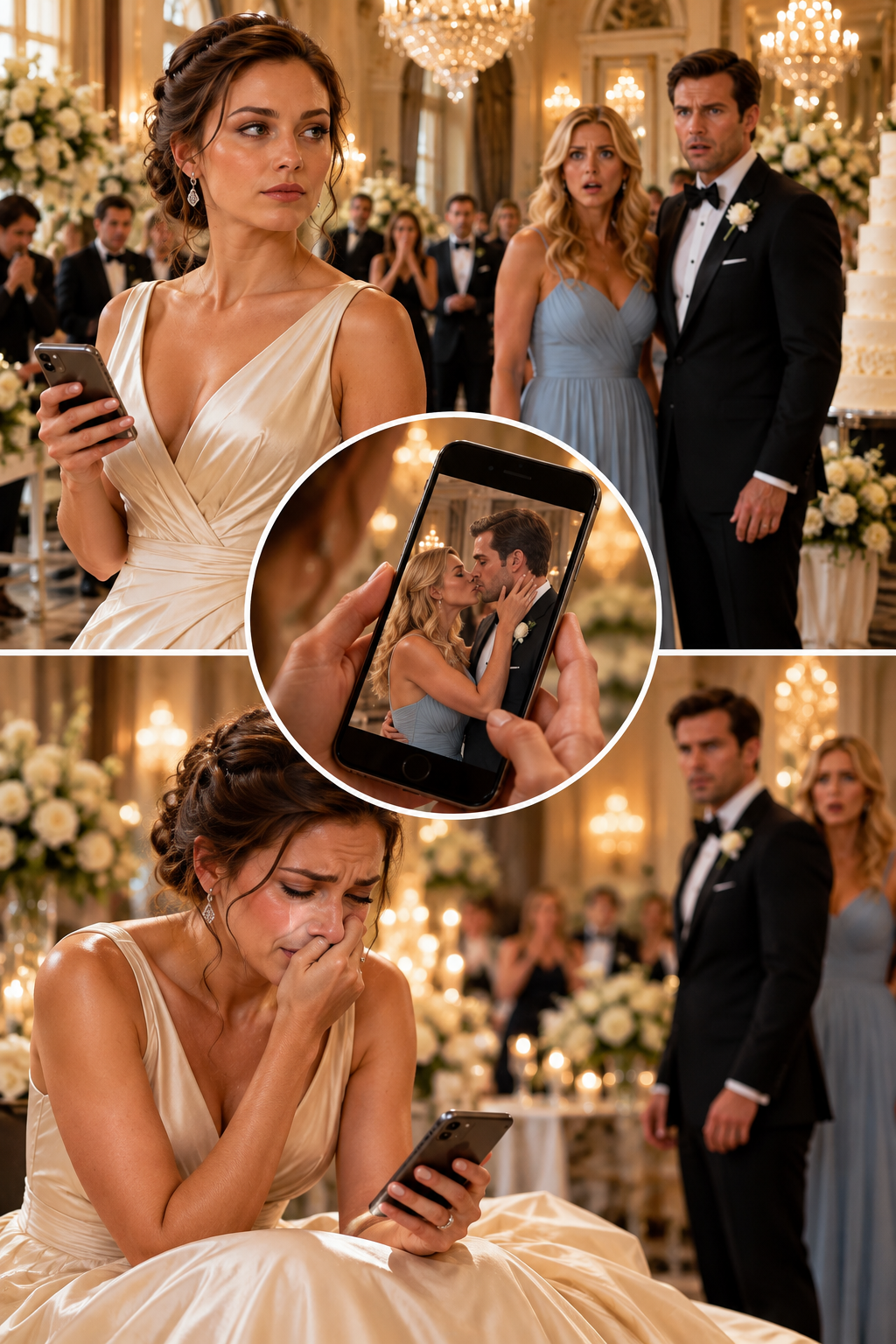
Part 2: Nineteen years of friendship concealed an ambitious financial betrayal.
Vanessa Hart entered my life when we were twelve years old, long before expensive hotels, designer clothes, and national business awards complicated the meaning of friendship. We met at Briarwood Middle School outside Richmond, Virginia, where I was the quiet scholarship student with secondhand clothes and Vanessa was the new girl whose parents’ divorce had made her the target of cruel jokes. I defended her during lunch one afternoon, and she followed me home afterward, where my mother offered us grilled cheese sandwiches and asked whether she wanted to stay for dinner. Within weeks, we were inseparable, sharing secrets about boys, teachers, family arguments, and the futures we imagined for ourselves. When my father died during my freshman year of college, Vanessa slept beside my bed for three nights because I was frightened of being alone with my grief.
For years, I believed our friendship had survived precisely because we understood each other’s weaknesses. I knew Vanessa feared being ordinary, and she knew I feared abandonment, particularly after losing my father while my mother struggled to keep our finances stable. When I launched Meridian House Events, Vanessa designed my first logo and celebrated every small booking as though we had won a national award. She attended our first major corporate gala, helped me choose furniture for our Charleston office, and cried when a business magazine featured me among emerging women in hospitality. I never noticed that her excitement sometimes faded the moment someone congratulated me without mentioning her. I mistook the changing expression on her face for exhaustion instead of resentment.
Caleb arrived three years before our planned wedding, introducing himself at a Nashville charity fundraiser as a commercial real estate consultant. He was confident, attractive, attentive, and remarkably skilled at remembering personal details that made people feel important. He knew my father’s favorite bourbon after one conversation, remembered my mother’s birthday without being reminded, and insisted that my demanding career did not intimidate him. I had dated men who complained about late meetings and travel schedules, so Caleb’s apparent admiration felt like finding solid ground after years of unstable relationships. When he proposed beneath the lights of a Charleston rooftop restaurant, Vanessa embraced us both and said she had never seen two people more perfectly suited for one another.
By then, Meridian House had become a national company with offices in Charleston, Nashville, New York, and Los Angeles. We managed corporate launches, private celebrations, charity galas, destination weddings, and high-profile hospitality experiences, employing eighty-four full-time staff members alongside hundreds of contractors. I had built the organization through difficult years of cash-flow shortages, sleepless nights, missed holidays, and constant responsibility for people whose livelihoods depended on sound decisions. When Caleb suggested that our wedding should be the one event I did not personally manage, the proposal sounded like love. I assigned Evelyn Park to oversee production and gave Vanessa limited access to wedding logistics, while Caleb participated in selected planning and financial discussions.
The final wedding budget approached $412,000 before honeymoon costs, an extraordinary amount even by the standards of my company’s largest private celebrations. I knew it was excessive, but after fifteen years of careful financial decisions, I wanted one day when generosity could feel joyful instead of dangerous. Vanessa encouraged every extravagant detail, from the six hundred white roses to the vintage cars, elaborate lighting, premium champagne, and seven-tier wedding cake. Caleb occasionally complained that the celebration was unnecessary, yet he never refused the expensive clothing, luxurious accommodations, or exclusive travel arrangements I provided. I thought I was giving us a beautiful beginning. In retrospect, I had been furnishing the stage where they intended to replace me.
The first warning appeared six weeks before the wedding when our controller, Diane Foster, discovered two unauthorized payments totaling $48,000 to an unfamiliar vendor. The receiving entity was listed as H&H Luxury Consulting, and its invoices referenced event services that none of our teams recognized. Diane initially suspected outside vendor fraud, but the transactions had passed through internal authorization pathways associated with temporary event permissions. I instructed her to preserve records, suspend unusual discretionary transfers, and work discreetly with our legal team while we investigated. Three days later, Caleb casually asked whether Meridian House had recently changed its payment approval procedures, claiming Vanessa had heard a wedding vendor complaining.
That question disturbed me because our wedding vendors had no reason to know about internal restrictions placed on corporate transfers. When I asked which vendor was affected, Caleb hesitated before mentioning lighting, even though the lighting company’s invoices had already been settled. I smiled, told him Evelyn would handle it, and watched his expression tighten almost imperceptibly. Over the next two weeks, I noticed Vanessa asking unusually specific questions about purchasing authority and Caleb becoming interested in international transfer limits. A rejected request to expand wedding representatives’ purchasing privileges appeared in our system, originating from a device associated with Vanessa’s temporary credentials. I wanted to believe the incidents were misunderstandings, but my instincts as a chief executive were beginning to overpower my instincts as a woman in love.
The final warning came when I found a hotel receipt inside Caleb’s jacket. It showed a room for two guests at Magnolia House Inn on an evening he had claimed to be attending meetings in Atlanta. I photographed the receipt, returned it to his pocket, and contacted our general counsel, Priya Shah, the following morning. She agreed that the financial records required independent review and that anyone involved should be approached only after the evidence had been properly preserved. Three days before my wedding, investigators identified Hart & Harbor Luxury Ventures as an entity connected to both Caleb and Vanessa. They were not merely hiding a relationship. They were building another company while trying to finance it with mine.
Part 3: The cancelled wedding turned their stolen celebration into public humiliation.
The elevator descended toward the lobby while my cousin Lauren stood beside me holding the bouquet I had forgotten to put down. Vanessa’s younger sister Brooke occupied the opposite corner, staring at the red mark on my cheek and struggling to comprehend what I had just told her. She asked whether Vanessa had truly admitted sleeping with Caleb for eleven months, and I answered yes without adding anything designed to make the betrayal sound worse. Brooke looked physically ill because she had believed she was attending a celebration for someone who had practically become her older sister. When the doors opened, we stepped into a hotel lobby where staff members were already transforming my wedding into a dismantling operation.
Two floral technicians carried an enormous white-rose arrangement toward a service corridor while a lighting crew removed personalized projections from the ballroom entrance. Servers wheeled unopened champagne bottles into storage, and the bandleader supervised the careful packing of instruments that had been scheduled to entertain our guests until midnight. Evelyn approached with a clipboard and confirmed that the hotel had accepted my withdrawal as the sole contracting client, subject to the cancellation obligations already outlined in the agreement. She also reported that Vanessa had previously asked hotel staff whether the primary passenger information on our St. Lucia honeymoon reservation could be changed after the ceremony. When the hotel requested my written authorization, Vanessa claimed the trip was being transferred as a surprise gift.
I felt a fresh wave of disbelief. Caleb and Vanessa had not simply expected me to tolerate their relationship or surrender the ceremony. They intended to use my honeymoon arrangements, including the private aircraft reservation, luxury resort accommodations, and additional services I had already paid for. They had imagined me so embarrassed that I would disappear into my suite while they walked into the life I had prepared. I asked Evelyn to confirm that every legitimate guest would receive a clear explanation that the wedding was canceled, and that those who had traveled would be offered refreshments while arrangements were made. I refused to punish innocent guests because two people had mistaken entitlement for ownership.
Vanessa appeared on the grand staircase moments later, with Caleb following several steps behind her. Her makeup had been repaired, but her expression changed when she saw workers removing the floral arch from the ballroom entrance. She hurried toward the crew and demanded they stop, insisting the arrangement belonged to her wedding and could not be removed without her permission. Marisol, the florist who had worked with Meridian House for seven years, explained that the installation was rented inventory contracted through my company. Vanessa replied that she had personally selected the flowers, and Marisol answered that choosing decorations did not give someone ownership of the materials.
Guests began gathering around us as the confrontation grew louder. Vanessa accused me of destroying the happiest day of her life, apparently forgetting that she was standing before relatives and friends who had traveled to witness my marriage to Caleb. Her mother sat near the lobby windows with her hands pressed against her mouth, while Brooke tried unsuccessfully to persuade her sister to stop talking. Caleb approached me and explained that the event could still be salvaged if I behaved rationally. I told him the contracts were being handled rationally, and that the emotional complications were consequences of decisions he and Vanessa had made without my knowledge.
He attempted to regain control by announcing that I had always prioritized business over our relationship. In front of our guests, he described me as demanding, obsessed with appearances, and incapable of allowing anyone else to make decisions. There were elements of recognizable truth in his criticism because I had worked too much, struggled to delegate, and occasionally treated personal problems as projects requiring immediate solutions. But Caleb used those weaknesses to suggest that an eleven-month affair and attempted takeover of my wedding represented a justified escape from an unhappy relationship. I let him finish before reminding him that dissatisfaction could have been discussed privately without deceiving me or using my company’s resources.
Then I told him our finance team had identified unauthorized payments linked to Hart & Harbor Luxury Ventures. Vanessa’s face changed immediately, and she glanced toward Caleb as though waiting for him to explain why I knew the name of their proposed business. I said our legal department was reviewing financial activity and that any conclusions would be handled through appropriate procedures. Caleb demanded that I stop discussing private matters, which struck several guests as extraordinary given that he had just publicly criticized my character. I told him that he had introduced the subject of my supposedly controlling relationship with money, and I was simply making clear that financial questions would not disappear because he preferred a different narrative.
As hotel staff closed the ballroom, Vanessa lost control of her temper. She snatched a champagne flute from a passing tray and threw it toward the closed doors, where it shattered against the marble floor. Security personnel moved quickly to clear the area, but Vanessa stumbled backward into a decorative stand, knocking a floral arrangement into a service cart carrying empty glasses. Caleb tried to steady her, slipped on the spilled liquid, and collided with a banquet table while guests retreated in alarm. Nobody was seriously injured, but the chaos scattered flowers, glass, and expensive decorations across the lobby.
A large decorative sign bearing our names toppled during the commotion, splitting one of its ornamental letters and leaving the words announcing our promised forever lying crookedly on the floor. Lauren looked at the broken display and whispered that nobody would believe such an obvious metaphor if she wrote it into a movie. I surprised myself by laughing, not because I enjoyed watching people fall, but because the entire scene had become absurd beyond anything I could have imagined. Vanessa stood trembling near the locked ballroom doors, demanding that someone restore what she continued calling her wedding. I looked at her and realized she had spent nineteen years watching me pay for the things she wanted. For the first time, she was discovering what happened when I stopped.
Part 4: A forged signature revealed the million-dollar scheme behind their affair.
By midafternoon, I had abandoned the idea of salvaging any part of the wedding celebration, but I could not bear the thought of sending guests home hungry after they had traveled across the country. I asked Evelyn to arrange a simple buffet in a smaller hotel lounge, providing sandwiches, salads, coffee, and desserts without formal speeches or elaborate decorations. My mother, Catherine Vale, stayed beside me while Lauren coordinated transportation for relatives who wanted to leave early. Everyone appeared determined to comfort me, yet I found myself oddly grateful whenever someone discussed an ordinary subject instead of asking how I felt about Caleb. I was not ready to explain emotions I had barely begun to understand.
Priya arrived shortly afterward with our controller and Marcus Reed, Meridian House’s head of internal security. We met in a private conference room where she placed a folder containing preliminary financial findings on the table. She warned that investigators were still reconstructing the full pattern of activity, but the suspicious transfers had extended far beyond the original $48,000. Several invoices had been submitted against dormant event codes over a period of months, including four payments totaling $92,400 that appeared to have reached accounts connected to Hart & Harbor. Other transactions had been rejected, reversed, or stopped before completion, creating a potential attempted exposure exceeding $600,000.
I stared at the numbers because I understood exactly what they represented beyond money. Every dollar inside Meridian House belonged to a business responsible for wages, vendors, insurance, taxes, equipment, offices, and future obligations. Those funds were not private decorations Caleb could remove from our relationship whenever he felt entitled to something larger. Priya explained that some transactions appeared to have been initiated using credentials or documentation accessed through my home office, where Caleb had spent countless evenings watching me work. Marcus had located a deleted login record showing unauthorized activity on my computer during a business trip, including access to contract templates and executive authorization documents. Someone had downloaded a copy of my digital signature.
Then Priya showed me a proposed financing package submitted by Hart & Harbor to a commercial lender. It included a request for a $1.2 million credit facility intended to support the acquisition and renovation of a boutique hotel in Savannah, Georgia. Attached was a purported partnership letter claiming Meridian House Events would serve as an exclusive national hospitality partner, with future event revenue expected to support the project. My name appeared at the bottom beside a copied signature, even though I had never seen the letter, approved any partnership, or authorized the use of Meridian House as a financial sponsor. The lender had requested independent verification before funding anything, and our finance department had flagged the communication.
I asked whether investigators knew who prepared the document. Marcus explained that available metadata suggested Caleb had worked on the file, while electronic correspondence showed Vanessa had forwarded materials to the lender during the application process. That distinction mattered because the evidence could establish different levels of knowledge and responsibility for each person. Priya cautioned me against assuming that every participant understood the entire scheme, even if both had apparently benefited from it. I agreed because what we could prove was far more important than what I suspected.
The proposed hotel was to operate under the name Hart House, a luxury retreat concept featuring private events, curated dining experiences, and boutique accommodations. Its business plan contained language strikingly similar to Meridian House presentations, including descriptions of our supplier relationships and event-production methodology. Vanessa had once sat beside me while I developed those presentations, offering suggestions and celebrating ideas I believed we shared as friends. Now she appeared to be using the knowledge to position herself as the founder of a business that would compete directly with mine. She had not merely wanted Caleb’s affection. She had wanted the professional identity she believed marriage to him might help her claim.
Priya advised that we preserve every relevant document, maintain confidentiality, notify appropriate financial institutions, and avoid further public accusations. I was ready to agree when Evelyn entered the room and announced that Vanessa had found a microphone in the smaller lounge. She and Caleb were addressing guests who had remained for refreshments, apparently attempting to present the canceled wedding as an unfortunate consequence of my controlling behavior. My mother closed her eyes in disbelief, while Lauren muttered that Vanessa had never encountered an audience she could resist. I looked at Priya, who reminded me to speak carefully if I chose to respond.
We entered the lounge as Caleb explained that our relationship had been unhappy for months. Vanessa stood beside him with tears in her eyes, describing their affair as an unexpected love that had developed while she supported him through emotional difficulties. She insisted they had never intended to take anything from me and claimed the wedding cancellation proved I valued money more than people. I waited until she finished, then asked whether she was certain nothing belonging to Meridian House had been used without authorization. Her immediate glance toward Caleb revealed more than any prepared speech could have.
Part 5: Their public confrontation exposed secrets neither thief could conceal anymore.
Caleb responded before Vanessa could speak, insisting that financial disagreements belonged in private discussions rather than before wedding guests. I agreed and told everyone that Meridian House had identified disputed transactions and documents currently under formal review, but that legal conclusions would not be established through a hotel microphone. He visibly relaxed until I mentioned an unauthorized partnership document bearing my signature. Vanessa turned toward him and asked what document I meant, her confusion appearing genuine enough that I immediately understood she might not know the full extent of what he had submitted. Caleb tried to end the conversation, but the questions had begun moving in a direction he could no longer control.
Vanessa insisted that Caleb had described the partnership as an approved business arrangement. According to her, he had promised that Meridian House would invest after our wedding and that I intended to support their company as part of a broader hospitality expansion. I told her no such agreement existed, and Priya confirmed that the disputed letter had never received corporate authorization. Vanessa’s expression shifted from fear to fury as she demanded to know why Caleb had assured her my signature was genuine. He accused her of asking too few questions because she wanted the money and prestige as badly as he did.
Their argument unfolded before an audience neither seemed to notice anymore. Vanessa admitted she knew about the original $48,000 transfer but insisted Caleb had described the money as a temporary advance that would be repaid. Caleb responded that she had understood the company was using Meridian House resources long before the wedding and had never objected while the funds appeared likely to finance their Savannah venture. She accused him of lying about his investments, and he accused her of treating their relationship as an opportunity to obtain a luxury business without doing the work required to build one. Every explanation contradicted something they had previously told me.
At one point, Vanessa raised her hand toward Caleb, but Brooke stepped between them and asked security to separate everyone before another confrontation occurred. I was grateful because nothing about the day’s public spectacle would improve the legal investigation, and I had no interest in watching people injure one another for an audience. The hotel manager requested that Caleb and Vanessa leave the lounge, explaining that the gathering was a private event organized under my company’s agreement. Caleb continued arguing until security escorted him toward the exit. Vanessa remained near her mother, crying silently as she realized the afternoon had destroyed the future she had imagined.
Before leaving, Caleb turned toward her and said their relationship had been a mistake. She stared at him, apparently unable to comprehend that the man she had expected to marry only hours earlier was now distancing himself from her. When she demanded that he acknowledge loving her, he replied that he had said what he needed to say because he believed they could create a profitable company together. The cruelty of that admission shocked even people who already knew about the affair. Vanessa had betrayed nineteen years of friendship for someone who now regarded her as an unnecessary liability.
I expected satisfaction, but instead I felt exhausted. I had imagined how painful it would be to see my best friend standing beside Caleb as his chosen partner, yet watching him discard her did nothing to repair what either had taken from me. Vanessa looked toward me as though searching for the person who had helped her through every crisis since middle school. For a moment I felt the familiar impulse to comfort her, arrange transportation, call someone who could help, and make certain she was not left alone with the consequences. Then I remembered that she had struck me, deceived me for eleven months, and helped direct money away from a company whose employees trusted me.
I picked up the long ivory veil I had removed earlier and carried it toward her. She looked confused when I placed the folded fabric in her hands, its delicate embroidery catching against the jewelry she had selected for my wedding. “You helped me choose this because you said it made me look like a woman beginning a beautiful life,” I told her. Vanessa began crying harder, but I continued because the moment represented everything I finally needed to acknowledge. “You can keep the veil if you want, but you cannot keep expecting me to build the life you think you deserve.”
She whispered that she had never intended for things to become so ugly. I answered that intentions stopped being persuasive after months of deliberate choices, and that my company’s attorneys would handle any financial accountability separately from whatever happened to our friendship. Then I walked away before she could ask for forgiveness I was not prepared to consider. My mother met me near the buffet table and asked whether I wanted something to eat. That ordinary question nearly made me cry harder than the betrayal itself, because it required nothing from me except being a daughter who had experienced a terrible day.
Outside, vendors continued loading the final wedding decorations into trucks. Guests departed gradually, offering quiet support rather than the dramatic advice I feared they would give. I changed out of my wedding gown and returned to the suite wearing jeans and a simple sweater, finally seeing the room as an expensive hotel accommodation rather than the place where my married life was supposed to begin. The mirror still reflected a faint mark across my cheek, but I no longer saw a woman waiting for Caleb to explain why she had not been enough. I saw someone whose future had been interrupted, not destroyed.
Part 6: The investigation destroyed their business while exposing deeper personal lies.
By the following morning, short videos of the canceled wedding had spread across social media. One showed Vanessa shouting that I had ruined her celebration, another captured hotel staff closing the ballroom, and a third showed Caleb stumbling during the chaotic incident near the champagne display. Thousands of strangers began offering opinions about my relationship, my appearance, my finances, and whether canceling the ceremony had been an act of courage or cruelty. Reporters contacted Meridian House, television producers requested interviews, and several companies attempted to attach their products to the publicity. I declined every opportunity because becoming famous for humiliation was not the life I had spent fifteen years building.
Meridian House issued a brief statement confirming that a privately contracted event had been canceled and that the company was reviewing financial irregularities through appropriate channels. Priya coordinated with investigators, lenders, insurers, and auditors while our leadership team implemented additional safeguards around payment authorization and document access. The Savannah property negotiations collapsed after the lender suspended review of Hart & Harbor’s financing package, and the seller withdrew from the proposed transaction when the company could not demonstrate available funding. Several disputed transfers were recovered or frozen, although other losses required civil claims and insurance procedures. The legal process was slower and less satisfying than the public imagined.
Over the following months, investigators traced how Caleb had accessed confidential records and attempted to use altered authorization materials to obtain financial support. Evidence indicated that he had studied Meridian House’s purchasing procedures and relied on my trust to access information unavailable to ordinary outside parties. Vanessa’s involvement was also substantial, although investigators distinguished between transactions she knowingly supported and documents Caleb apparently prepared without explaining their contents. Both faced serious financial and legal consequences, but I refused to turn speculation into public allegations. The company needed accurate findings, not dramatic headlines.
The most painful discovery arrived through an eight-page letter Vanessa sent me three weeks after the wedding. I placed it in a drawer for nearly a month because I was afraid reading her handwriting would reopen memories I had barely begun to survive. When I finally unfolded the pages, she admitted that jealousy had shaped our friendship long before Caleb entered our lives. She wrote about feeling invisible beside my success, comparing her ordinary achievements with my growing business, and resenting the very generosity she had once celebrated. She also described lies Caleb had told her about me.
According to Vanessa, Caleb claimed I privately referred to her as a charity project, laughed at her financial struggles, and planned to remove her from consulting opportunities because I considered her professionally inferior. He allegedly told her I had been unfaithful during a conference in Los Angeles and that our engagement continued only because canceling it would damage my company’s public image. None of those accusations were true, but they had been carefully tailored to the insecurities Vanessa had carried since adolescence. Caleb appeared to have encouraged her resentment while presenting himself as the only person who genuinely understood how badly I supposedly treated her.
The letter did not absolve Vanessa. She admitted that she wanted to believe those stories because they gave her permission to pursue Caleb without confronting the betrayal involved. She also acknowledged knowing that money had been transferred from Meridian House to support their planned venture, even if she claimed she misunderstood the authorization. One sentence stayed with me long after I finished reading: she said she had wanted my life without ever wanting the years of work required to build it. I realized she had spent years comparing herself with the visible results of my sacrifices while ignoring the exhaustion, uncertainty, and responsibility beneath them.
Caleb contacted me through his attorney after several civil claims moved forward. He proposed repayment under a confidential settlement that would have restricted how Meridian House discussed certain matters, but Priya advised against accepting terms that could interfere with legitimate disclosure obligations or future proceedings. We negotiated through counsel and preserved our ability to cooperate with investigators. When Caleb eventually called me personally, I told him that financial disputes belonged with our attorneys. He tried to remind me that he had once loved me, as though affection should soften the consequences of professional misconduct.
I admitted that some of our memories might have been genuine, but genuine feelings did not make dishonest decisions harmless. Caleb apologized broadly, then became impatient when I refused to discuss reconciliation or reduce the matter to two people who had simply fallen out of love. I ended the conversation after telling him that the most damaging part was not losing a fiancé, but discovering he had treated my trust as access to resources he believed he deserved. His life would continue according to the consequences of his choices, and mine would continue without his permission. I never answered another personal call from him.
Part 7: Vanessa’s apology finally revealed the envy behind our friendship.
Nearly a year after the canceled wedding, I agreed to meet Vanessa at a small coffee shop in Richmond. The decision surprised my mother, who had watched me struggle through months of grief, financial investigation, and uncomfortable public attention. I explained that meeting Vanessa did not mean forgiving her or reopening the friendship, but that I wanted to understand whether either of us could speak honestly without performing for the other. We chose a public place far from Charleston, with no photographers, lawyers, relatives, or mutual friends present. When I arrived, Vanessa was already sitting beside the window, looking older and far less confident than the woman who had announced she was taking my place.
She stood awkwardly when she saw me, then sat again after I declined the hug she seemed uncertain about offering. For several moments we discussed nothing more important than the coffee menu and the rain outside, both of us aware that ordinary conversation could not conceal what had happened. Finally, Vanessa began apologizing for the affair, the financial misconduct she acknowledged, the attempted takeover of the wedding, and the moment she struck me. She did not claim Caleb had forced her into every decision, although she maintained that he had misrepresented some financial arrangements. She said she understood that acknowledging his lies did not erase her own choices.
I asked why she had remained my friend for so long if being near me made her feel inferior. Vanessa stared at her hands before admitting that I had never actually treated her as second best, but that she had arranged our friendship that way in her own mind. Every promotion I earned reminded her of an opportunity she had abandoned, and every vacation I paid for reminded her that she could not afford the same experiences without help. When I offered introductions or consulting work, she accepted them while privately resenting the fact that I possessed something she needed. She had convinced herself that I enjoyed being superior because accepting my kindness without resentment would require confronting her own dissatisfaction.
“What did you actually want from me?” I asked, expecting her to say money or professional opportunities. Vanessa looked up and answered that she wanted to feel as important as I seemed to feel whenever I entered a room. She wanted the freedom to make decisions without worrying about money, the confidence to refuse people, and the admiration that appeared to follow me into expensive hotels and corporate meetings. I told her that much of what she envied came with responsibilities she had never seen because she visited my life during celebrations rather than emergencies. She admitted she had wanted the rewards without the years of sacrifice.
Then she asked whether I had ever been jealous of her.
The question caught me off guard because I had spent months examining her resentment without considering the ways our friendship had been complicated from both sides. I told her I had sometimes envied her ability to change careers, move cities, take unexpected trips, and walk away from responsibilities she no longer wanted. While I was building Meridian House, I often felt responsible for everyone around me, including employees, contractors, clients, relatives, and friends. Vanessa had seemed free to begin again whenever life became disappointing, while I believed every mistake I made would affect dozens of people. She stared at me as though discovering that the person she considered untouchable had spent years feeling trapped by obligations.
We sat quietly after that, two women who had known each other since childhood but had misunderstood each other in ways that now seemed painfully obvious. Vanessa asked whether I hated her, and I told her that hatred had exhausted me until I finally realized it kept her at the center of my life. I did not want to punish her forever, but I also did not want to rebuild a friendship that had required me to ignore years of concealed resentment. She began crying when I said I hoped she would create something of her own rather than continue comparing her future with mine. I left the coffee shop without embracing her, but for the first time I did not feel that walking away meant abandoning someone I was obligated to rescue.
The meeting also changed how I thought about my own life. I had built an identity around being the person who solved every problem, made every decision, and carried every crisis without admitting exhaustion. Caleb exploited that dependence on control, while Vanessa resented the success it produced. My company had become proof that I was capable and valuable, but somewhere along the way I had allowed the business to consume the ordinary life I originally hoped it would support. I began asking myself who Madison Vale might become if she no longer needed to be indispensable.
I hired an experienced president to oversee Meridian House’s daily operations and delegated decisions I had previously insisted on approving personally. At first, the change made me uncomfortable because I worried standards would collapse the moment I stepped away. Instead, the company continued functioning, and several employees flourished when given authority they had earned. I started taking occasional Fridays off, painting badly, traveling without photographing every meal, and spending afternoons with my mother without checking work messages every ten minutes. I discovered that a successful business did not require its founder to sacrifice every private moment forever.
A year after the wedding, I sold the Charleston house Caleb and I had chosen together. I did not move because the property contained too many memories, although it certainly did, but because I realized the house had never reflected my taste. Caleb had loved the formal rooms, dramatic staircase, and impressive kitchen designed for entertaining people, while I had always preferred smaller spaces filled with light. I purchased a restored brick townhouse near Hampton Park, with a garden, a comfortable office, and a kitchen that made me want to cook for myself. For the first time in years, I selected a home without imagining how it would impress anyone else.
Part 8: The abandoned bride rebuilt a life neither betrayer could steal.
On the first anniversary of my canceled wedding, my mother invited me to dinner without revealing that several friends were coming. I arrived at her house wearing jeans and a simple sweater, expecting a quiet meal, but found Lauren, Evelyn, Priya, Diane, and a few other people who had remained close through the difficult year. There were no elaborate decorations, no hired musicians, and no expensive floral arrangements. My mother had prepared too much food, as she always did, and someone had placed a small grocery-store cake on the kitchen counter. Written across it in uneven blue icing were the words: “Congratulations on not marrying Caleb.”
I laughed so hard that I had to sit down. My mother explained that the bakery employee had suggested calling it Freedom Day, but she thought that sounded like an for discounted furniture. Lauren raised her glass and announced that one year earlier she had believed the most impressive thing I had done was cancel a wedding worth more than most houses. Then she said she had changed her mind after watching me rebuild my life without turning the disaster into a permanent performance. Evelyn added that Meridian House had survived an extensive financial investigation, strengthened its security systems, and continued growing under new leadership.
Priya mentioned that several legal matters had reached negotiated resolutions while others had required longer proceedings, emphasizing that recovering company losses had taken far more patience than canceling an event. Diane thanked me for supporting the finance team instead of blaming employees who had been deceived through sophisticated misuse of internal systems. My mother said she was proud that I had learned to accept help rather than insist on carrying every problem alone. Hearing those words from people who knew the unglamorous months after the wedding moved me more deeply than any public praise I had received. They were celebrating the life I had built afterward, not merely the spectacle that had made strangers recognize my face.
I still encountered occasional references to the wedding online. Some people called me the contracts bride, others treated the canceled reception as a legendary revenge story, and a few continued debating whether I had been too harsh by refusing to let Caleb and Vanessa use the ceremony. Those conversations no longer mattered because the people discussing them had not spent nights reviewing audit records, comforting my mother, or wondering whether I could ever trust someone again. They remembered the disappearing flowers and the locked ballroom doors because those moments were dramatic and easy to understand. I remembered the quieter moments when I discovered that survival required far more than winning an argument.
I also remembered the woman I had been before the wedding. She believed that if she was generous enough, hardworking enough, loyal enough, and understanding enough, the people she loved would eventually reward those efforts with honesty. She believed professional competence could protect her from personal betrayal and that controlling details could prevent disappointment. She had built a successful company but had not always built boundaries strong enough to protect the person responsible for it. Losing Caleb and Vanessa forced her to confront those assumptions in ways no business award ever could.
Years later, Meridian House continued organizing extraordinary events, but I no longer attended every production or treated every emergency as proof that I was needed. I mentored younger executives, supported fair payment practices, and built systems that allowed people to succeed without depending on my constant presence. I maintained friendships with people who could disagree with me honestly, and I stopped confusing dramatic loyalty with the quieter reliability that healthy relationships required. My mother became a frequent companion on short trips, and Lauren continued making jokes about the canceled wedding whenever she sensed I was taking myself too seriously. Life became less extravagant in certain ways and immeasurably richer in others.
Vanessa eventually found work outside luxury hospitality while resolving the remaining obligations associated with Hart & Harbor. I heard occasional updates through mutual acquaintances, but I no longer sought information about whether she regretted losing our friendship. We exchanged a brief message after her mother underwent surgery, and I wished her family well without reopening the relationship. Caleb disappeared from my personal life entirely, leaving attorneys and formal records to preserve whatever accountability remained necessary. I did not need either of them to suffer forever to believe that what they had done was wrong.
The photograph I kept from the wedding was not a professional portrait, because there had been no ceremony and no first dance. A guest had accidentally captured me standing outside the Bellweather Grand in my ivory gown while workers loaded white roses into a truck behind me. My veil was gone, my bouquet had disappeared, and the faint red mark on my cheek remained visible. Yet I was laughing, not because the experience was funny, but because something about stepping outside the hotel made me realize I was free to leave a future that had been built on lies. I eventually framed the photograph and placed it in my new office.
Sometimes visitors asked why I displayed a picture from the worst day of my personal life. I told them it reminded me that a destroyed plan did not mean a destroyed future. Caleb had betrayed my trust, Vanessa had betrayed our friendship, and together they had placed my company’s finances and reputation at risk. But they had not taken the skills, judgment, determination, or relationships that allowed me to build Meridian House in the first place. Those things remained mine even when everything I had imagined about marriage disappeared.
One evening, several years after the wedding, I stood in my townhouse kitchen preparing dinner for my mother and a few friends. The windows were open, music played softly, and no one was particularly interested in discussing business or old scandals. Lauren arrived early with dessert and asked whether I ever regretted canceling the wedding instead of letting Caleb and Vanessa embarrass themselves before the officiant. I thought about the question while cutting vegetables and realized the answer was simpler than it once would have been. I regretted trusting people who misused that trust, but I did not regret withdrawing from a situation that required me to finance my own humiliation.
My mother entered the kitchen carrying flowers from her garden and asked whether I needed help. I handed her a cutting board instead of insisting I could manage everything, and she smiled because she recognized how much that ordinary gesture represented. For years I had been afraid that needing help would make me less valuable, but the people who remained in my life had never required me to perform strength without interruption. They stayed when I was exhausted, uncertain, disappointed, and unable to solve everything. Their affection did not depend on access to my money, reputation, or business connections.
As the evening continued, I looked around the table and remembered the hotel lounge where guests had gathered after my wedding collapsed. Back then, I had been surrounded by people watching a spectacular failure unfold, yet I had mistaken the attention for the most important part of the story. Now I was surrounded by people who did not need a catastrophe to show up. Nobody was recording videos, delivering accusations, or explaining why betrayal should be excused in the name of love. We were simply eating dinner, telling stories, and making plans for another weekend.
That was when I finally understood what the canceled wedding had given me. It had not made me invincible or taught me that everyone could be trusted, and it certainly had not erased the pain of losing two people who once occupied enormous places in my heart. Instead, it had forced me to discover that my worth existed independently of the people who chose to remain beside me. I could be successful without being responsible for everyone, generous without surrendering boundaries, and loving without confusing devotion with unlimited access. I could also be disappointed without believing disappointment meant I had failed.
Vanessa had wanted my confidence, Caleb had wanted my resources, and both had mistaken the visible results of my work for something they could obtain by occupying the right position in my life. They tried to inherit a wedding without honoring the relationship it was meant to celebrate, and they tried to build a business without earning the resources it required. When I withdrew my support, the structure they depended upon collapsed because it had never truly belonged to them. Their mistake was believing that taking my place would somehow transfer the qualities that made my life possible. It never could.
I did not marry Caleb Ross, and I never again called Vanessa Hart my best friend. The wedding I spent fourteen months planning disappeared within an hour, leaving behind disappointed guests, expensive cancellation costs, public embarrassment, and a financial investigation that consumed much of the following year. But the woman who walked away from the Bellweather Grand did not disappear with the decorations. She went home, confronted the truth, protected her company, repaired her confidence, and built a future that no longer depended on someone else’s approval.
The world remembered the story as the day a bride canceled everything after discovering her fiancé and maid of honor intended to marry each other.
I remembered it as the day I stopped paying for people to remain in my life.
Because a wedding can be canceled, a relationship can end, and even nineteen years of friendship can collapse beneath the weight of betrayal.
But the person who built a life from nothing can build again.
And that was the one thing Caleb and Vanessa never had the power to steal.
✓ Lynn R. Adams
Part 2: Nineteen years of friendship concealed an ambitious financial betrayal. Vanessa Hart entered my life when we were twelve years old, long before expensive hotels, designer clothes, and nationa…