She Was Buried with a Silver Cross—100 Years Later, It Solved a Frontier Mystery
The Grave That Shouldn’t Have Been There
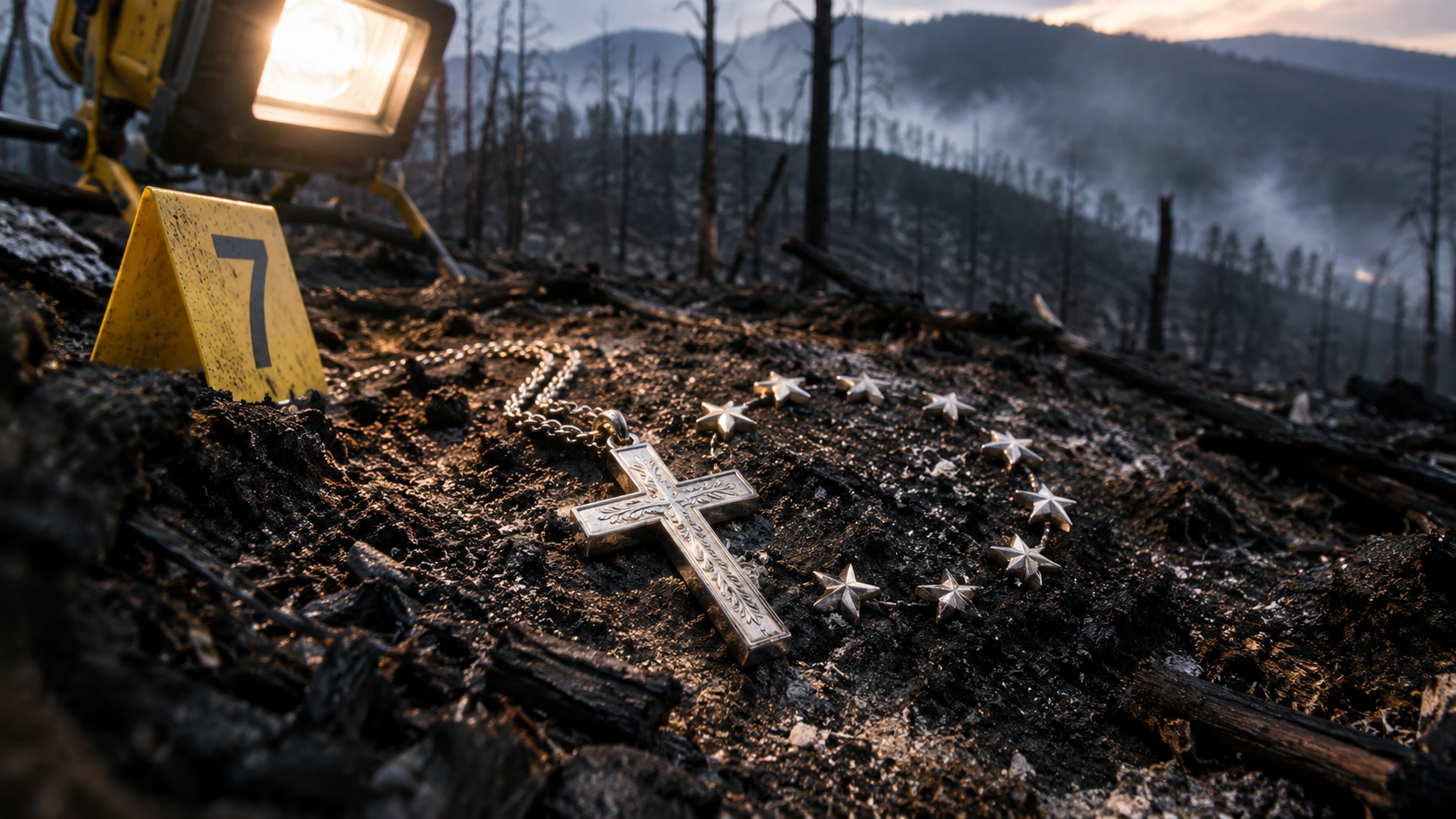
In the summer of 2019, a wildfire scorched a remote ridge in the Bitterroot Mountains of Montana, stripping away decades of undergrowth. When the smoke cleared, a team of archaeologists surveying the damage found something they couldn’t explain: a single grave, marked by a crude wooden cross that had somehow survived the flames. Beneath it lay a woman’s skeleton, her hands folded over a small silver cross that gleamed as if it had been placed there yesterday. The land was federal, with no record of any burial. The nearest town, Sage Creek, was twelve miles away and had a population of forty-two. No one there recognized the name carved into the cross: Elena Marsh, 1868–1893.
But the cross itself was the real mystery. It was engraved with a symbol that didn’t match any known religious order—a circle of stars around a single letter M. Within weeks, the artifact would lead historian Dr. Caleb Rourke to a forgotten chapter of the American West: the rise and disappearance of a pioneer community that vanished without a trace, leaving behind only rumors, a handful of letters, and one woman’s grave.
The Town That History Forgot
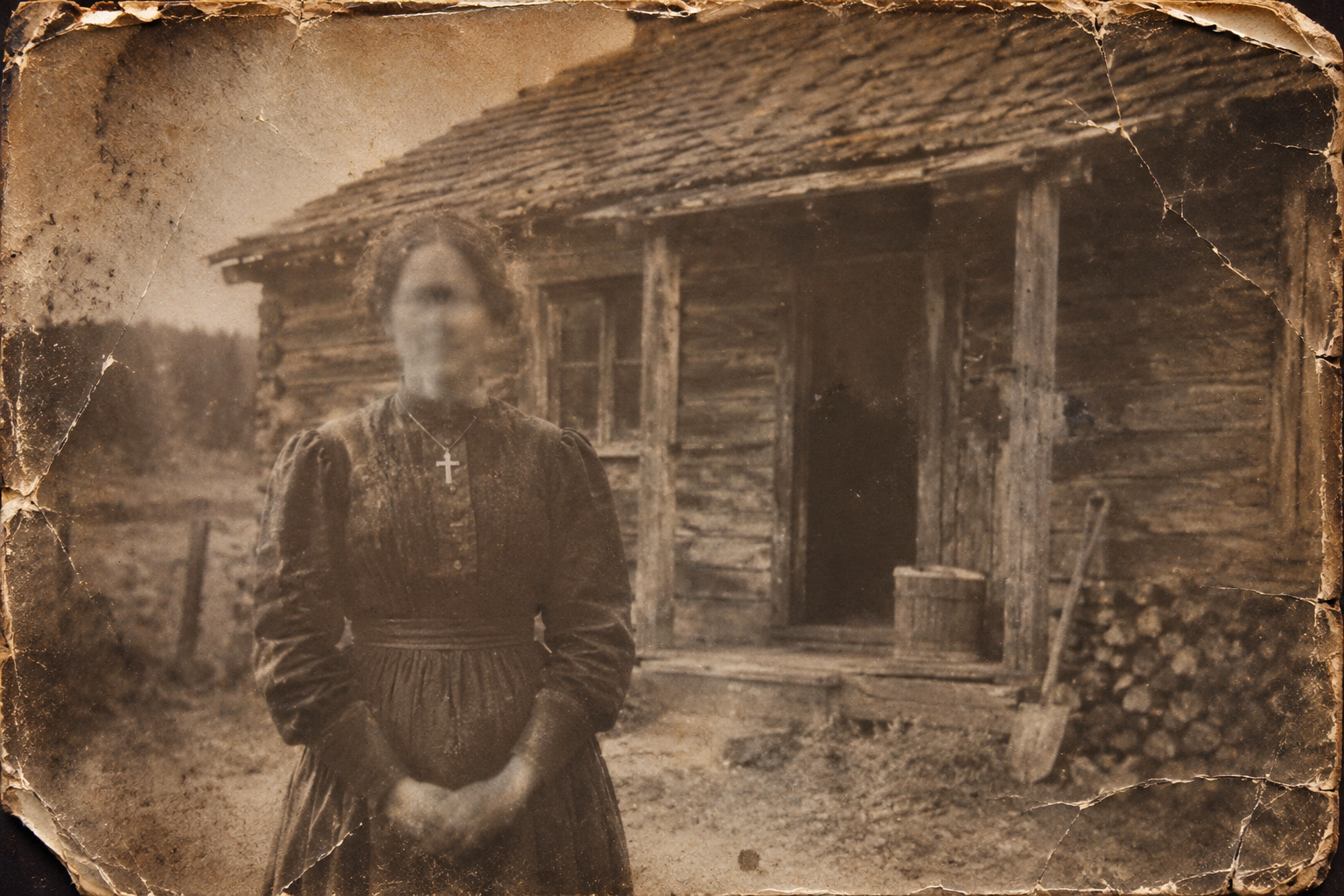
Sage Creek today is a gas station, a diner, and a post office that closes at noon. But in 1890, it was a thriving settlement of nearly three hundred souls—farmers, miners, and a handful of families who had come west chasing cheap land and a chance to build something of their own. Among them was Elena Marsh, a young widow who arrived from Ohio with her brother, Thomas, and a reputation for being able to fix anything with a needle and thread.
According to local lore, Elena was the heart of the community. She ran a small school in her cabin, taught the children to read from a single battered Bible, and organized the town’s first harvest festival. When the silver mine played out in 1892, she was the one who convinced the families to stay, to plant orchards, to wait out the winter. “She had a way of making you believe tomorrow would be better,” one surviving letter reads. “Even when the snow came early and the flour ran low, she’d say, ‘We have each other. That’s enough.’”
Then, in the spring of 1893, Sage Creek vanished. Not a single building was left standing. The orchards were gone. The mine entrance was sealed. And the people? They were simply… gone. No massacre, no plague, no mass grave. Just empty land and a few scattered belongings. The official explanation was “economic hardship,” but no one ever found where the residents went. They became a footnote, a ghost story told to scare children.
The Cross That Spoke
Dr. Rourke, a historian at the University of Montana, had spent years chasing the Sage Creek mystery. When he heard about the grave, he requested access to the cross. Under a magnifying glass, he noticed something the archaeologists had missed: a tiny seam along the edge. The cross was hollow. Inside, curled into a tight cylinder, was a piece of oilcloth. And inside that, a letter.
Written in Elena’s hand, the letter was dated April 2, 1893—two weeks before the town disappeared. It was addressed to her brother, Thomas, who had left for California the previous fall. The words were hurried, the ink smudged with what looked like tears:
Thomas,
The mine is gone, and the men are talking about leaving. But I’ve found something. There’s a cave behind the falls, a natural shelter big enough for all of us. I’ve been storing food there for months, just in case. If the worst happens, we’ll go there. We’ll wait out the winter. Don’t worry about us. We have each other.
But there’s more. The silver cross you gave me—I’ve been using it to mark our path. Every family has one, a small token. If something happens to me, follow the stars. They’ll lead you home.
Rourke’s hands trembled as he read. The circle of stars on the cross wasn’t a religious symbol—it was a map. Each star represented a family, and the M stood for Marsh. Elena had marked a trail, a breadcrumb of silver crosses that would lead to their hiding place.
The Cave Behind the Falls
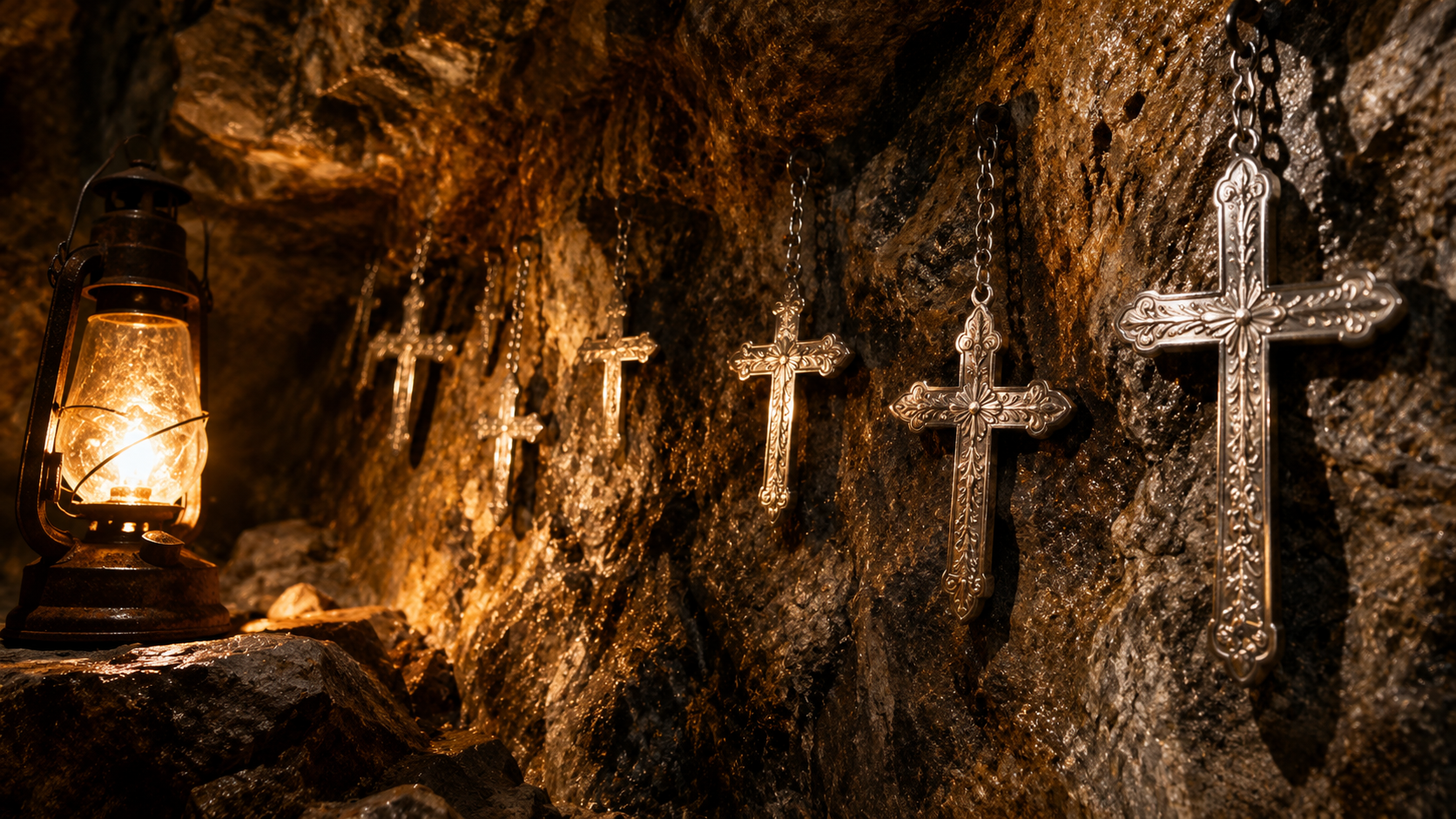
Rourke organized an expedition to the falls, a mile north of the old townsite. The cave was hidden behind a curtain of water, its entrance almost completely obscured by moss and rock. Inside, they found the remains of a small community: fire pits, makeshift beds, and a dozen more silver crosses, each engraved with a different family name. And in the deepest chamber, they found a second letter, this one written by Thomas’s hand, dated 1894:
We made it. Elena’s plan worked. We lived in the cave for eight months, until the spring thaw. Then we moved on—some to California, some to Oregon. We didn’t tell anyone where we went. We were tired of being found. But we left the crosses, so that one day, someone would know we didn’t just disappear. We survived.
The mystery of Sage Creek was solved. The community hadn’t vanished—they had simply chosen to disappear, to start over somewhere else, leaving behind a trail of silver stars for anyone who cared enough to look.
The Legacy of the Silver Cross
Today, the crosses are displayed in the Sage Creek Historical Museum, a single room in the old post office. Elena Marsh’s cross, the one that started it all, sits in a glass case at the center. Visitors often ask why she was buried alone on that ridge, so far from the cave. Rourke’s theory: she died of pneumonia during the winter in the cave, and her brother carried her body to the ridge to give her a proper burial, a view of the valley she loved. He marked her grave with the cross, knowing that one day, someone would find it.
And someone did. The wildfire that destroyed the ridge also uncovered the truth. It’s a reminder that history isn’t always written in books—sometimes it’s buried in the ground, waiting for the right moment to speak. Elena Marsh may have been forgotten for a century, but her story, like the silver cross, has finally come to light.
So the next time you see an old grave or a forgotten artifact, remember: it might not be a dead end. It might be a beginning. And the people who came before us—they left pieces of themselves behind, hoping we’d find them. All we have to do is look.
✓ story2
A wildfire reveals a forgotten grave and a silver cross. Inside, a hidden letter unlocks the mystery of a pioneer town that vanished overnight.