She Vanished Seven Months Pregnant—By Midnight, the Evidence in Her Empty House Had Destroyed Her Billionaire Husband’s Empire
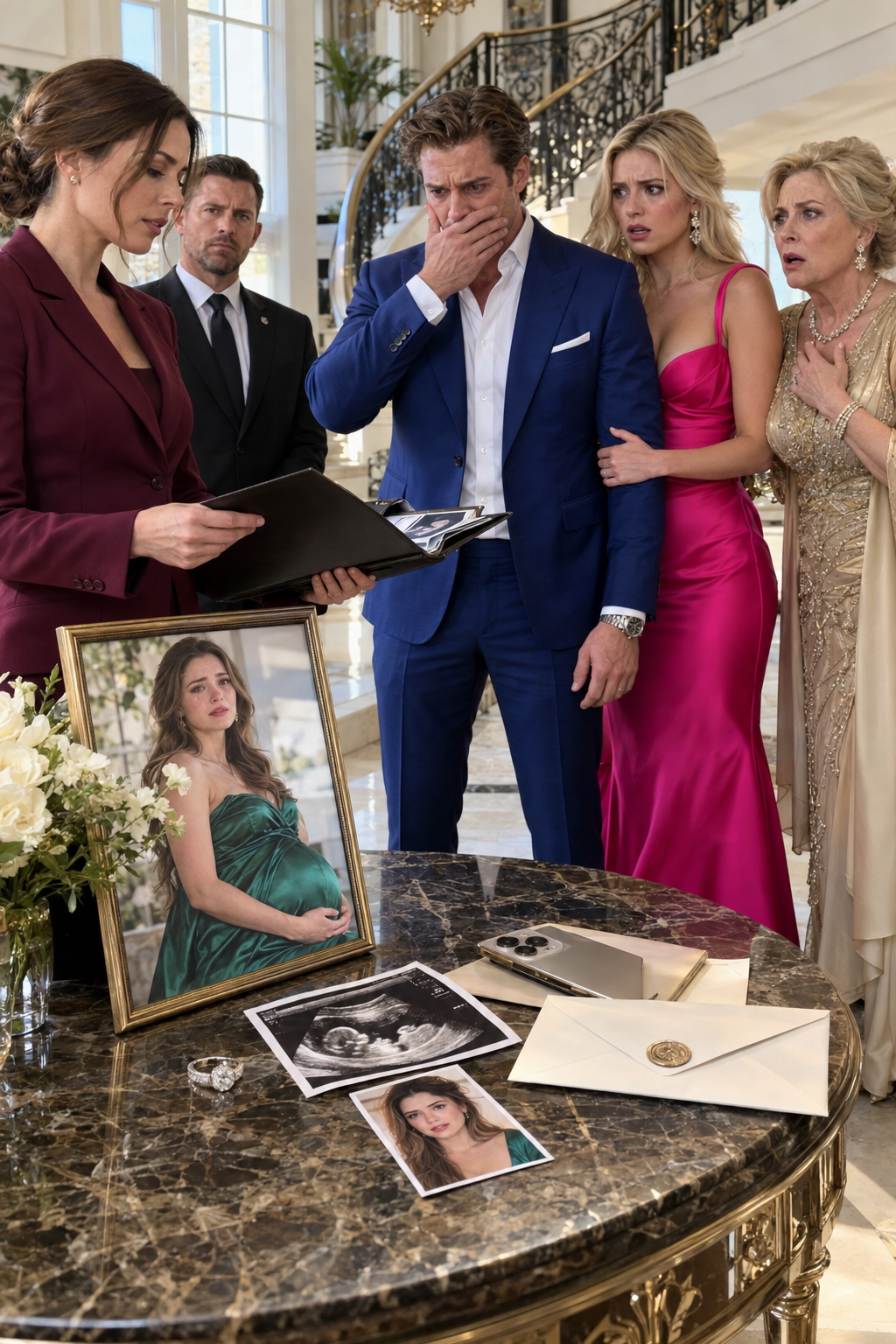
She Vanished Seven Months Pregnant—By Midnight, the Evidence in Her Empty House Had Destroyed Her Billionaire Husband’s Empire
“If she refuses to sign, freeze every account she can reach.”
My husband said it calmly.
Like he was discussing a delayed shipment.
Like the “she” in that sentence wasn’t his seven-month-pregnant wife sitting twelve feet away.
I stood barefoot behind the half-closed library door in our Seattle house, one hand beneath my stomach, listening to billionaire Adrian Vale explain to his attorney how they would convince a judge I was mentally unstable before I could expose what I had found.
Then Adrian said the sentence that changed everything.
“And after the baby is born, I want Evelyn gone permanently.”
His attorney went silent.
Not because I was shocked.
I had already learned something much more dangerous than the fact that my husband wanted to destroy me.
I had learned exactly how he planned to do it.
And three weeks earlier, I had begun planning first.
I didn’t scream.
I didn’t push open the door.
I didn’t demand an explanation from the man who still kissed my forehead every morning before leaving for Vale Meridian headquarters.
I simply stepped backward.
The baby shifted beneath my ribs.
I placed my palm against the movement.
“Not yet,” I whispered.
Then I walked upstairs, washed my face, changed into the emerald-green dress Adrian liked, and went downstairs for dinner.
He was already seated at the end of our twelve-foot walnut dining table when I entered.
He looked exactly the way financial magazines loved to photograph him.
Dark hair beginning to gray at the temples.
Navy suit with no tie.
A steel watch that cost more than my first apartment.
The face of a man who had built Vale Meridian from a three-person logistics software startup into a private infrastructure empire valued at nearly eleven billion dollars.
He smiled when he saw me.
“There she is.”
His voice was warm.
His eyes were not.
I took my usual seat.
His attorney, Martin Keene, was gone.
The library doors were closed.
A housekeeper placed roasted salmon in front of me and disappeared toward the kitchen.
Adrian poured himself wine.
He didn’t offer me any.
He never drank much.
That night he filled the glass almost to the rim.
“How are you feeling?” he asked.
“Pregnant.”
“That bad?”
“That obvious.”
Another small smile.
Anyone watching us would have seen an attractive married couple sharing a quiet dinner in a glass-walled mansion above Lake Washington.
They would not have seen the voice recorder sewn into the lining of my handbag.
They would not have known I had copied fourteen months of Vale Meridian executive correspondence onto an encrypted drive that morning.
They would not have known I had already hired an attorney in another state.
They would not have known that under the loose sleeve of my dress, taped flat against my forearm, was a storage card containing the only unedited copy of a recording Adrian believed he had destroyed.
And Adrian certainly didn’t know that the woman sitting across from him was no longer waiting to discover whether her husband would betray her.
I was measuring how far the betrayal went.
He cut his salmon.
“You missed lunch with my mother.”
“I was tired.”
“She was disappointed.”
“Vivian survives disappointment exceptionally well.”
His knife paused.
Adrian’s mother, Vivian Vale, had inherited old timber money and transformed it into social influence.
She chaired museums.
She funded governors.
She could make an insult sound like an etiquette lesson.
When Adrian and I married five years earlier, Vivian had pulled me aside at our rehearsal dinner and said, “You’re beautiful enough to photograph well and educated enough not to embarrass him. That’s rarer than you think.”
She had meant it as approval.
For five years, I had treated it as information.
Adrian resumed eating.
“She worries about you.”
“I’m touched.”
There it was.
The warning.
Controlled.
He used my name differently when he wanted me to remember the distance between disagreement and disobedience.
I looked up.
“You’ve been withdrawn.”
“I’m seven months pregnant.”
“You’ve been asking questions.”
That landed exactly where he intended it to.
I lifted my water glass.
“What kind of questions?”
“About the company.”
“I own shares in the company.”
“Through the family trust.”
“I still own them.”
He said it gently.
Then he realized what he had said.
His expression changed by less than a millimeter.
But I saw it.
Adrian had built a career around assuming other people missed small things.
I had built mine before marriage doing forensic accounting for federal contractors.
Small things were where people hid crimes.
He leaned back.
“I didn’t mean that the way it sounded.”
“How did it sound?”
“Like a threat.”
“And how did you mean it?”
He looked at me for several seconds.
Then smiled.
“I think pregnancy has made you suspicious.”
There it was.
The first brick.
A few days earlier, Vivian had asked our obstetrician—in front of me—whether pregnancy hormones could cause “episodes of irrational fixation.”
Two days before that, Adrian had suggested I stop driving.
The week before, Martin Keene had emailed me a “routine estate update” containing language that would have given Adrian temporary authority over several of my independently held assets if I became medically incapacitated.
And that morning, one of our household employees had casually mentioned that a psychiatric consultant had called for me.
I had never requested a psychiatric consultant.
They weren’t improvising.
They were building a record.
Not because Adrian feared I was unstable.
Because he feared I was observant.
I set down my fork.
“Maybe you’re right.”
He blinked.
I almost smiled.
Adrian was prepared for resistance.
Men like him usually were.
Resistance allowed them to apply pressure.
Agreement made them wonder what they had missed.
“I’ve been exhausted,” I continued. “Maybe I should stop involving myself in company matters.”
His shoulders loosened.
“That’s all I’m saying.”
“You have enough pressure.”
“And I don’t want this affecting you or the baby.”
He reached across the table.
I let him take my hand.
His thumb brushed over my wedding ring.
“I love you,” he said.
Three weeks earlier, that sentence would have broken me.
That night, it simply made me more careful.
Because I remembered the man Adrian had been when we met.
Or at least the man I thought he had been.
I remembered cheap Thai food eaten from cardboard containers while he worked late in his first Seattle office.
I remembered him driving a six-year-old Lexus because every spare dollar went into the company.
I remembered him standing in my apartment kitchen in sock feet, promising that if Vale Meridian ever became successful, we would never become “those people.”
By those people, he meant the rich families who treated loyalty like a stock option.
Conditional.
Useful until it wasn’t.
Then his company grew.
One acquisition became six.
Six became twenty-three.
Shipping software expanded into ports, warehouses, rail infrastructure, data centers, and defense-adjacent logistics.
Money stopped arriving in amounts normal people understood.
First millions.
Then hundreds of millions.
Then billions.
The private jets came.
Then the security teams.
Then the political dinners.
Then the people whose job was to say yes before Adrian finished speaking.
And somewhere along the way, my husband stopped measuring himself by what he had built.
He began measuring himself by what he could control.
I should have noticed sooner.
I should have noticed when employees who challenged him vanished.
I should have noticed when our prenuptial agreement was “modernized.”
I should have noticed when he stopped saying our money and started saying my exposure.
I should have noticed when Vivian began discussing my pregnancy as though I were carrying a Vale family acquisition.
I should have noticed when Adrian changed the locks on his home office.
I should have noticed when Martin Keene started attending our supposedly private estate meetings.
But love is excellent camouflage.
Love explains the unexplained.
Love edits contradictions.
Love tells you that the person you remember is still hiding somewhere inside the person standing in front of you.
Until one day, evidence becomes heavier than memory.
And then love becomes something else.
I had found the first piece of evidence twenty-two days before that dinner.
It happened because Adrian forgot one thing.
My old profession.
Before I became Mrs. Adrian Vale, before magazines photographed me at hospital fundraisers, before society pages described me as a “philanthropic strategist,” I spent nine years following money people did not want followed.
Fraud rarely looked dramatic.
There were no black bags.
No shadowy meetings in parking garages.
Usually there was an invoice.
A rounding difference.
A payment split into amounts just small enough not to trigger review.
A consulting firm with no employees.
A vendor whose mailing address happened to match someone’s cousin.
I had left forensic accounting because I wanted a different life.
But I never stopped seeing patterns.
And twenty-two days earlier, while reviewing donations for the Vale Family Foundation, I noticed a pattern.
Three grants.
Each just under $900,000.
All listed as infrastructure education partnerships.
All paid to organizations with impressively boring names.
North Coast Development Initiative.
American Port Education Council.
Civic Freight Partnership.
I recognized one address.
Not because it was memorable.
Because I had seen it years earlier in a contractor fraud case.
A mailbox center in Delaware.
I checked the filings.
Then I checked again.
The nonprofits existed.
Technically.
But each organization had been created within weeks of a major Vale Meridian acquisition.
Each received foundation money.
Each transferred most of it to a consulting company.
And each consulting company had ties to someone involved in approving infrastructure contracts Vale Meridian later won.
I spent the afternoon telling myself there could be an explanation.
Then I found the fourth organization.
That one wasn’t about bribery.
It was worse.
Cascade Safety Research had received $3.2 million from the Vale Family Foundation.
Its stated purpose was studying industrial accident prevention.
Its actual function, according to the documents I eventually uncovered, was paying outside engineers to discredit safety findings from a Vale Meridian automated cargo system.
A system involved in an accident near Tacoma eighteen months earlier.
Two workers had died.
Official reports blamed operator error.
The files on Adrian’s private server said something else.
The braking logic had failed.
Vale Meridian knew.
They knew before the accident.
They knew after the accident.
And someone had paid to make the truth disappear.
I stared at the screen for almost ten minutes.
Then I closed the laptop.
I walked upstairs.
I stood in the nursery Adrian’s mother had decorated in cream and pale blue without asking me.
I put both hands on my stomach.
And I made the first important decision of my life as a mother.
My child would not be raised inside a family where truth could be purchased and people could be erased.
I did not confront Adrian.
That surprised even me.
The younger version of myself would have.
She would have marched into his office carrying printed documents and demanded an explanation.
But pregnancy had changed something in me.
Not my intelligence.
Not my courage.
My sense of consequence.
I was no longer responsible only for surviving my own mistakes.
So I did what I had been trained to do.
I verified.
I created duplicates.
I photographed documents.
I recorded dates.
I copied metadata.
I separated what I knew from what I suspected.
And I told exactly one person.
Rachel Kim.
Rachel had been my closest friend since graduate school.
She was also a federal litigation attorney in Washington, D.C.
When I called her from a grocery store parking lot because I knew Adrian’s security system logged calls made from our home network, she listened without interrupting.
Then she asked one question.
“Does Adrian know you found it?”
“I don’t think so.”
“Don’t guess.”
I looked through the windshield at people pushing shopping carts through rain.
“I don’t know.”
“Then assume he does.”
That became the rule.
Assume he knows.
Assume he sees.
Assume someone talks.
Assume the house is not private.
Assume the car is tracked.
Assume every move made emotionally becomes useful to him legally.
Rachel did not tell me to run.
She told me to build options.
For two weeks, I behaved normally.
I attended a foundation dinner.
I smiled beside Adrian while photographers asked whether we had chosen a baby name.
I let Vivian complain that I was eating too much bread.
I toured a maternity wing Adrian planned to donate ten million dollars to and listened while he accepted praise for caring about families.
At night, while he slept beside me, I stared into the dark and learned how quietly a marriage could die.
Then Adrian made his mistake.
He tried to access my independent trust.
The trust had nothing to do with him.
My grandmother had left me an investment portfolio worth a little over $11 million.
Compared with Adrian’s wealth, it was small.
Compared with ordinary life, it was freedom.
The trustee called me personally because a request had arrived asking for copies of incapacity provisions.
The request came from Martin Keene.
I told the trustee to send nothing.
Then I called Rachel.
“Now we know,” she said.
“Know what?”
“That whatever he thinks you know, he’s preparing for you.”
The next day I searched our shared digital calendar.
A private appointment had appeared under Adrian’s initials.
Dr. Samuel Harrow.
I knew Martin.
I knew Vivian.
I searched Dr. Harrow.
Psychiatrist.
Specialized in high-net-worth competency evaluations.
That was when fear finally arrived.
Clean and useful.
The kind that sharpens edges.
I began carrying a second phone.
I moved copies of evidence outside Washington State.
I changed the beneficiary instructions on accounts Adrian could not control.
I signed medical directives excluding him from certain decisions if I became incapacitated under suspicious circumstances.
I gave copies to Rachel and to an attorney in Oregon named Daniel Price.
Then I found the audio file.
It had been recorded accidentally by the smart conference system in Adrian’s study.
Most meetings auto-deleted after seven days.
This one had not.
I still don’t know why.
Maybe someone marked it for transcription and forgot.
Maybe arrogance simply created its own evidence.
I opened it at in the morning while Adrian was in San Francisco.
His voice filled my headphones.
Martin Keene spoke first.
“If Evelyn connects the foundation transfers to Cascade, you have a discovery problem.”
Adrian answered.
“I have a wife problem.”
Vivian’s voice followed.
“Then deal with your wife.”
Martin said something too low to hear.
Then Adrian again.
“She’s pregnant. Everyone will believe stress affected her judgment.”
My fingers went cold.
Vivian asked, “And after delivery?”
Adrian’s answer was soft.
“We’ll reassess custody.”
I listened to the rest once.
I didn’t need to hear it again.
That was the moment my exit stopped being a possibility.
It became a schedule.
I had planned to leave in four days.
Then I overheard Adrian in the library ordering Martin to freeze my accounts.
The schedule changed.
I would leave the next morning.
At dinner, Adrian finished his wine.
Then he slid a folder across the table.
I already knew what it contained.
Martin had sent me an electronic draft.
“Routine paperwork?” I asked.
I opened it.
A revised family trust agreement.
Buried on page twenty-eight was language giving Adrian emergency management authority if two physicians determined I lacked capacity.
One physician could be selected by him.
The second could be selected by the family office.
Which was controlled by him.
A legal cage with cream stationery.
I turned another page.
Then another.
Adrian watched.
“Martin needs it tomorrow.”
I closed the folder.
“I’ll read it tonight.”
His jaw tightened.
“There’s no need.”
“That’s a strange thing to say about a forty-three-page legal document.”
“It’s standard.”
“Then reading it should be easy.”
I met his eyes.
For one second, the charming husband disappeared.
Something harder looked back.
Then the mask returned.
“Of course,” he said. “Read it.”
“Thank you.”
He hated that.
Not openly.
But I saw it.
Powerful men become uncomfortable when you thank them for permission they never actually had the right to give.
That night Adrian slept beside me.
At a.m., I woke before the alarm.
The room was dark except for rain sliding down the windows.
I stared at the ceiling.
My heart was beating too fast.
Beside me, Adrian breathed evenly.
I turned my head.
For a few seconds, grief caught me off guard.
Not grief for the marriage.
That had already happened.
Grief for the future I had believed in.
Christmas mornings.
A little boy or girl running into our bedroom.
Adrian teaching them to ride a bicycle.
Summer weekends on Whidbey Island.
Family dinners without lawyers.
The ordinary life we had once promised to protect from money.
I almost reached toward him.
Then I remembered the recording.
We’ll reassess custody.
My hand stopped.
At , I got out of bed.
I showered.
Braided my hair.
Put on black maternity pants, a cream sweater, and flat boots.
No dramatic suitcase.
No jewelry case.
No photo albums.
No obvious sign that I was leaving.
I carried a leather tote downstairs.
Inside were two changes of clothes, medication, identification, one laptop Adrian didn’t know I owned, and a small silver drive.
The rest had already been moved.
Piece by piece.
One grocery trip at a time.
One prenatal appointment at a time.
One ordinary afternoon at a time.
At , I entered the kitchen.
Rosa, our longtime housekeeper, was making coffee.
She looked at the tote.
Then at me.
Rosa had worked for Adrian since before our wedding.
She had never asked personal questions.
That morning, she poured coffee into a travel cup and pushed it toward me.
“No caffeine,” I whispered.
It was warm milk with cinnamon.
My throat tightened.
“Thank you.”
She looked toward the hallway.
Then she reached into her apron and placed a brass key in my palm.
I stared at it.
“What is this?”
“Back gate.”
My eyes lifted.
The electronic security system on the pedestrian gate could log exits.
The old mechanical service gate behind the landscaping shed could not.
I had forgotten it existed.
Rosa closed my fingers over the key.
“I did not see you this morning.”
For the first time in days, I nearly cried.
I squeezed her hand.
At a.m., seven months pregnant, wearing flat boots under a raincoat, I walked away from an eleven-billion-dollar empire through a rusty service gate.
No car waited outside.
No dramatic driver.
I walked four blocks.
A gray Honda Civic pulled to the curb.
Rachel was behind the wheel.
She had flown in overnight.
I opened the passenger door.
She looked at my face.
“You good?”
“Can you function?”
“Then get in.”
That was why I loved Rachel.
No speeches.
No promises that everything would be fine.
She respected facts too much.
We drove south.
My primary phone remained at the house, charging beside the bed.
At a.m., it sent an automated message to Adrian.
Couldn’t sleep. Going for a walk. Don’t worry.
At , a second scheduled message went to Vivian.
Feeling tired today. I’m going to skip lunch. Sorry.
At , my Apple Watch registered a short walk around the neighborhood.
The watch was attached to Rachel’s cousin’s dog.
Rachel had laughed exactly once when we planned that part.
At , Adrian called my phone.
At , he called again.
At , according to Rosa later, he came downstairs.
By then Rachel and I were already forty-eight miles away.
At , Adrian discovered my wedding ring on the bathroom counter.
That was intentional.
Not sentimental.
I wanted him to know I had left voluntarily.
At , he found the folder from dinner on his desk.
On top of it sat one white envelope.
Inside was a single sheet of paper.
No accusations.
No emotional farewell.
Only twelve words.
Do not search for me.
Communicate through counsel.
You know why.
Adrian searched anyway.
Of course he did.
By , Vale Meridian security was checking airports.
By , private investigators were contacting hospitals.
By , Martin Keene had called three attorneys who had represented me years earlier.
At , Adrian called the police.
That move nearly worked.
He reported me as a vulnerable missing pregnant woman.
He told officers I had been “emotionally erratic.”
He mentioned insomnia.
He mentioned prenatal anxiety.
He mentioned concerns for my safety.
He did not mention that I had left with identification.
He did not mention my note.
He did not mention the trust document he wanted me to sign.
And he definitely did not mention Dr. Samuel Harrow.
But I had expected that.
At , Daniel Price contacted Seattle police on my behalf.
He confirmed I was safe.
He confirmed I had left voluntarily.
He confirmed I did not consent to disclosure of my location to Adrian.
And then he delivered copies of my medical directive and a sworn statement signed the previous afternoon.
The missing-person narrative collapsed before lunch.
Adrian did not.
He changed tactics.
At 10:11, his communications director sent a private message to several board members describing me as “under significant pregnancy-related stress.”
At 10:34, Vivian called my obstetrician.
At 10:50, Martin requested an emergency meeting with the family trust administrator.
At 11:06, an investigator photographed Rachel’s empty townhouse in D.C.
At 11:19, someone from Vale Meridian security called my brother in Colorado.
At 11:32, Adrian tried to access one of my old email accounts.
At 11:47, he finally noticed something important.
I had not taken any valuable jewelry.
Not the sapphire earrings.
Not the diamond bracelet.
Not the antique watch from his grandmother.
Not the emerald necklace insured for $480,000.
A frightened woman fleeing impulsively might have taken valuables.
A woman planning never to return might have taken personal possessions.
I had taken neither.
I wanted Adrian asking the correct question.
If Evelyn didn’t leave with things, what did she leave behind?
At 12:03 p.m., he began searching the house himself.
He went through my desk.
Nightstand.
Bathroom drawers.
Home office.
According to the internal security log I saw later, he opened the nursery closet three times.
At 12:41, he called Martin.
At , he called Vivian.
At , they both arrived.
By then, Rachel and I were in a rented farmhouse outside Bend, Oregon, owned through a trust Daniel used for protected clients.
The place had no smart appliances.
No security cameras connected to the internet.
No neighbors within sight.
I stood in the kitchen eating peanut butter from a spoon while Rachel watched Adrian’s world begin to move.
“You realize,” she said, “normal pregnant women eat actual meals.”
“I had toast.”
“That was five hours ago.”
“I had half your granola bar.”
“You stole half my granola bar.”
“Still nutrition.”
She pushed a bowl of pasta toward me.
The baby kicked.
Rachel noticed.
“Boy or girl?”
“We’re waiting.”
“You still want to wait?”
“You’re better than me. I’d have bribed the ultrasound tech.”
The smile surprised both of us.
For thirty seconds, we were just old friends in a kitchen.
Then Daniel called.
Rachel put him on speaker.
“Adrian filed an emergency petition.”
I stopped eating.
“For what?”
“Temporary access to certain marital assets. He’s claiming concern you may transfer funds while impaired.”
Rachel’s expression hardened.
“Based on what evidence?”
“Mostly statements from family.”
“And one employee.”
I looked at Rachel.
Daniel hesitated.
“Rosa Alvarez.”
I almost laughed.
“That’s what the filing says.”
“What does it say she witnessed?”
“That you wandered outside late at night, forgot appointments, displayed paranoia regarding household surveillance.”
Rachel was already typing.
“Get the declaration.”
“I have it.”
Daniel sent the file.
I opened it.
Then read again.
A strange calm moved through me.
The declaration was supposedly signed by Rosa two days earlier.
But there was a problem.
Rosa’s legal surname was not Alvarez.
It had been Mendoza for eleven years.
The household payroll used Mendoza.
Her tax forms used Mendoza.
Her driver’s license used Mendoza.
Only one old document in the Vale family files still listed Alvarez.
Her employment application from fourteen years earlier.
Someone had fabricated the declaration using stale personnel records.
Mini-payoff number one.
I looked at Rachel.
“They forged it.”
She read the signature page.
“Can we prove that?”
I picked up my burner phone.
“I think Rosa can.”
Daniel objected immediately.
“Do not contact household staff directly.”
I sent one message to a number memorized years earlier.
Rosa’s daughter.
Please ask your mother to call Daniel Price. Tell her it is important.
Twenty-six minutes later, Rosa called him.
By p.m., she had signed a real declaration denying everything.
By , Daniel filed it.
By , Martin Keene withdrew the petition “pending clarification.”
Adrian had tried to paint me unstable.
Instead, one of his attorneys had just submitted a forged declaration to a court.
That alone would have been bad.
But it was still afternoon.
The real evidence had not moved yet.
At , I received the first message from Adrian.
He had found my new legal number.
Evelyn, enough.
We can solve this privately.
I stared at the screen.
Rachel looked over.
Another message.
Whatever you think you found, you don’t understand the context.
Then another.
You are carrying my child.
That one almost made me angry.
I typed four words.
The baby is not property.
Rachel read them.
I deleted the message.
Silence was better.
At , Adrian called.
At , again.
At , Martin called.
At , Vivian sent a text.
Your behavior is humiliating your husband during a sensitive business period.
I showed Rachel.
She stared at it.
“Your mother-in-law could watch the Titanic sink and complain the lifeboats weren’t arranged symmetrically.”
Actually laughed.
Then I blocked Vivian.
By p.m., Adrian’s lawyers had realized they could not legally force me home.
By , Vale Meridian security had failed to locate me.
By , Martin Keene had begun calling outside crisis counsel.
At , Adrian canceled a dinner with investors.
At , Vivian arrived at the Seattle house again.
At , Rachel closed her laptop.
“Six hours.”
I looked at the clock.
The evidence release was scheduled for midnight Eastern.
Nine p.m. Pacific.
“Plenty of time.”
“You nervous?”
“Want to stop it?”
She studied me.
The release system was Rachel’s idea.
No single dramatic email.
No envelope delivered to a newspaper.
No anonymous dump that Adrian could dismiss as fabricated.
We built distribution.
Authenticated copies.
Different recipients.
Different legal obligations.
Certain material would go to Vale Meridian’s independent directors.
Certain material would go to outside auditors.
Safety records would go to investigators connected with the Tacoma accident litigation.
Foundation transfer records would go to federal and state authorities.
Trust documents and the competency plan would go only to my attorneys unless needed.
One package would go to three journalists.
Not gossip reporters.
Investigative reporters with experience in corporate misconduct.
The system required a digital confirmation from me every twelve hours.
If I missed two confirmations, release accelerated.
If I manually triggered it, everything went at once.
At p.m., Adrian sent another message.
This one was different.
I know you’re scared.
I have never wanted to hurt you.
Come home before outsiders turn this into something neither of us can control.
I read it twice.
Not because I believed it.
Because it showed me what he feared.
For years, Adrian had solved problems inside rooms he controlled.
Family offices.
Private settlements.
Confidential arbitration.
Money works best in closed systems.
My plan was to open every door at once.
At , Daniel called.
“There’s something you need to hear.”
He played a voicemail left by Martin Keene.
“Daniel, this is becoming unnecessary. Adrian is willing to make extremely generous arrangements for Evelyn and the child. There are sensitive company matters she may have misunderstood. We should discuss a comprehensive confidentiality framework before people make irreversible mistakes.”
Rachel mouthed the words.
There it is.
I said, “Did he give a number?”
At p.m., Martin emailed a proposed settlement.
Fifty million dollars.
A house of my choosing.
Full medical coverage.
A separate trust for the baby.
Private travel.
And a condition.
Permanent confidentiality regarding any information learned through marriage, family access, company systems, charitable work, or household conversations.
Fifty million dollars for silence.
I stared at the number.
Rachel leaned against the counter.
“You know what’s interesting?”
“He thinks fifty is enough.”
“Should I be insulted?”
My phone rang.
This time I answered.
Rachel straightened.
I put the call on speaker but said nothing.
For a moment, neither did he.
Then I heard his breathing.
His voice softened instantly.
“Thank God.”
I almost admired the performance.
“Are you safe?”
“Where are you?”
“That’s not relevant.”
“It is to me.”
“No. It’s useful to you.”
Then, “Martin sent an offer.”
“I saw it.”
“That’s not me trying to buy you.”
“What would you call fifty million dollars in exchange for permanent silence?”
“A way to make sure you and the baby are protected.”
“We’re protected.”
“Among other things.”
He exhaled.
“Evelyn, listen to yourself.”
He couldn’t help it.
The little insertion.
Listen to yourself.
A phrase designed to make sanity feel debatable.
“I am,” I said. “Very carefully.”
“You accessed information you don’t understand.”
“I understand debits and credits.”
“This isn’t forensic accounting.”
“Money usually wishes it were more complicated than it is.”
His voice sharpened.
“You stole proprietary documents.”
“I preserved evidence.”
“Evidence of what?”
That question mattered.
I leaned back.
“If you don’t know, why are you offering fifty million dollars?”
He said nothing.
Rachel slowly smiled.
Mini-payoff number two.
Adrian changed direction.
“You’re angry.”
“You think I betrayed you.”
“You’re emotional.”
“I’m eating pasta.”
Rachel covered her mouth to stop herself laughing.
Adrian went quiet again.
Then he lowered his voice.
“Come home.”
“For one night.”
“Let me see you.”
“Let me see my child.”
My hand tightened around the phone.
“Your child is currently attached to my internal organs.”
“Don’t do that.”
“Turn this into a joke.”
“I’m not laughing.”
His breathing changed.
The charm was slipping.
“I can protect you.”
“From the situation you created?”
“From what happens when powerful people panic.”
That sentence changed the room.
Rachel stopped smiling.
I sat straighter.
“What powerful people?”
Adrian paused.
Then: “The board. Investors. Partners. You have no idea how many interests are involved.”
Not a confession.
Something better.
For the first time, I understood that Adrian might not be the largest thing hiding behind the evidence.
But I refused to chase a new theory without facts.
“Then maybe they should panic,” I said.
“Goodbye, Adrian.”
I ended the call.
Rachel stared at me.
“What did he mean?”
“I don’t know.”
“You think he’s bluffing?”
“I think he said more than he intended.”
At , I opened the release dashboard.
Fifty-eight minutes.
The baby pushed hard against my side.
Drank water.
Rachel checked the windows for the third time.
At , headlights appeared at the end of the long gravel driveway.
We both froze.
The farmhouse was not visible from the main road.
Nobody should have been there.
Rachel killed the kitchen lights.
The headlights moved closer.
My heart began pounding.
Not dramatic fear.
Physical fear.
Cold hands.
Every muscle ready to move.
Rachel picked up her phone.
“Stay behind me.”
“You’re five-two.”
“And mean.”
The vehicle stopped outside.
A door opened.
Then another.
Rachel looked through the curtain.
Her shoulders dropped.
“It’s Daniel.”
Daniel Price entered carrying two grocery bags and looking annoyed.
“You two need better food.”
Rachel stared.
“You drove four hours because of groceries?”
“I flew to Redmond and rented a car.”
He put the bags down.
“Because our situation changed.”
I hated the phrase immediately.
Daniel removed an envelope from his coat.
“Someone left this at my Portland office.”
No return address.
Inside was a photograph.
Martin Keene.
And three men I recognized.
The CEO of a defense contractor.
And Russell Dane, chairman of Hawthorne National Bank.
The photo had been taken at a private lodge in Montana.
On the back, someone had written:
CASCADE IS THE SMALL ACCOUNT.
FOLLOW PROJECT ORCHARD.
Rachel read it twice.
Daniel said, “Any idea?”
“Could this connect to your documents?”
“I’ve never seen Orchard.”
“You sure?”
“I don’t guess.”
I looked at the release timer.
Thirty-one minutes.
Daniel followed my eyes.
“If there’s a larger network, releasing tonight could warn people.”
Rachel shook her head.
“Or waiting gives Adrian time to bury what we already have.”
They both looked at me.
I felt the weight of the moment.
This was the kind of decision stories often made dramatic.
A woman trembling over a button.
A desperate gamble.
Reality was quieter.
I asked questions.
“Are the files authenticated?”
“Yes,” Rachel said.
“Chain of custody?”
“Anything included that we cannot independently support?”
“Does this photograph change the truth of what we already have?”
Daniel answered.
“Then the release goes.”
At p.m. Pacific, I pressed CONFIRM.
Nothing exploded.
No dramatic sound.
The screen simply changed.
DISTRIBUTION COMPLETE.
For eleven seconds, nothing happened.
Then Daniel’s phone rang.
Rachel’s laptop chimed.
My secure email refreshed.
Another alert.
Vale Meridian’s lead independent director acknowledged receipt.
The outside audit committee requested an emergency call.
An attorney representing families from the Tacoma accident confirmed possession of the engineering reports.
A state investigator replied with two words.
Received. Preserve.
At , one journalist asked for verification of metadata.
At , another confirmed they had been independently investigating one of the foundation entities for months.
At , Vale Meridian’s general counsel—not Martin, the actual corporate general counsel—sent a notice instructing executives to preserve documents.
That mattered.
Legal hold.
No deletion.
No shredding.
No quiet cleanup.
At , two board members requested Adrian temporarily surrender access to internal systems.
At , he refused.
At , the board scheduled an emergency meeting.
At , Hawthorne National Bank suspended a pending $1.8 billion credit facility.
Daniel read the notice aloud.
Rachel whistled.
“That fast?”
“Banks don’t enjoy discovering their collateral may be attached to fraud investigations.”
At , one of Vale Meridian’s insurance carriers demanded disclosure.
At , a major pension fund paused negotiations on an infrastructure partnership.
At 10:03, the first article went live.
It did not mention me.
That had been a condition.
The headline focused on concealed safety findings and foundation-linked consulting payments.
Adrian could not dismiss it as a marital dispute.
He could not call me hysterical.
He could not make my pregnancy the story.
Because I had removed myself from the center.
The documents were the story.
At 10:09, Adrian called me.
I didn’t answer.
At 10:10, again.
At 10:12, again.
Then a text.
What have you done?
I looked at it.
For the first time that day, anger left me completely.
Nothing that wasn’t already true.
This time, I sent it.
At 10:20, Vale Meridian’s communications team issued a statement calling the allegations “selective, misleading, and based on stolen internal materials.”
At 10:28, the engineering firm named in the safety documents released its own statement confirming the reports were authentic.
Vale Meridian’s statement lasted eight minutes.
At 10:36, Martin Keene’s law firm placed him on administrative leave after reporters asked about the forged Rosa declaration.
At 10:44, another reporter published proof that two foundation grant recipients had transferred money to consultants connected with public contracting decisions.
At 10:53, the state attorney general’s office announced it was “reviewing credible information.”
At 11:02, one member of Vale Meridian’s board resigned.
At 11:11, three others voted to form a special committee.
At 11:26, Adrian was temporarily stripped of authority to approve transactions above five million dollars.
At 11:39, lenders triggered review clauses.
At 11:48, employees began leaking their own stories.
That was what destroyed him.
Not my evidence alone.
My evidence gave people permission to stop being afraid.
A former engineer described being threatened after raising safety concerns.
A compliance manager produced emails showing pressure to alter risk language.
A finance employee gave reporters spreadsheets involving consulting firms I had never heard of.
By midnight, Adrian’s empire was not gone.
Buildings still existed.
Ports still operated.
Trucks still moved.
Thousands of employees still had jobs.
But his control—the thing he valued more than the company itself—had cracked.
And once control cracks publicly, every person who was pretending loyalty starts calculating distance.
At 12:14 a.m., Vale Meridian’s board voted seven to two to place Adrian on temporary leave.
At 12:19, the chairman called him personally.
At 12:23, Adrian tried to enter the company’s executive server.
His credentials had been suspended.
At 12:31, security at Vale Meridian headquarters received instructions that Adrian could enter only with board authorization.
The founder of an eleven-billion-dollar company had been locked out of his own building before breakfast.
That was the “overnight destruction” the headlines later loved.
But while the world watched Adrian fall, I was sitting at a farmhouse kitchen table with swollen feet and heartburn.
Rachel made tea.
Daniel slept on the couch for forty minutes and woke when his phone rang.
At a.m., my obstetrician called.
Not Vivian.
My obstetrician.
“Evelyn, I’m sorry to call so late.”
“It’s okay.”
“I received a request today for your medical records.”
“From whom?”
“A law firm representing your husband.”
My jaw tightened.
“I did not authorize that.”
“I know. We denied it.”
“Thank you.”
“There’s more.”
“Yesterday, someone identifying himself as Dr. Samuel Harrow contacted our office and asked to consult regarding your mental state.”
Rachel heard the name.
Her eyes met mine.
“What did you tell him?”
“That I would need your written consent.”
“Did he say why he was calling?”
“He said your family had concerns about acute prenatal paranoia.”
I laughed once.
There was no humor in it.
My doctor continued.
“I documented the call. I’m sending the record to your attorney.”
“Thank you.”
“You have never displayed prenatal paranoia in my care.”
My throat tightened.
“I appreciate you saying that.”
“I’m not saying it to comfort you. I’m saying it because it’s medically true.”
Facts were becoming the people who showed up for me when family did not.
By a.m., exhaustion finally won.
I slept for four hours.
When I woke, sunlight cut through unfamiliar curtains.
For one second, I forgot where I was.
Then the baby moved.
Memory returned.
The release.
The house I had walked out of.
Rachel was asleep in a chair with her laptop open.
Daniel was outside on the phone.
My secure phone showed eighty-three messages.
I ignored most.
One was from my younger brother, Noah.
I opened it.
I don’t care where you are.
I don’t care what anyone says.
Just tell me you’re safe.
I answered.
Three dots appeared instantly.
I stared at the screen.
My brother and I had never been emotionally elaborate.
Need me? meant everything.
His reply came.
Then later.
At a.m., national business networks began leading with Vale Meridian.
At , Adrian’s personal net worth estimates dropped by billions—not because cash had vanished, but because lenders and analysts were reassessing the value of his private holdings.
At , prosecutors connected to the Tacoma accident requested records from Vale Meridian.
At , the board hired outside counsel.
At , Vivian Vale called Rachel.
Rachel stared at the screen.
“How did she get my number?”
“She’s Vivian.”
Rachel answered.
“Rachel Kim.”
Vivian’s voice carried across the speaker.
“You have involved yourself in a family matter.”
Rachel looked delighted.
“I’m Evelyn’s attorney.”
“You are her college friend.”
“I contain multitudes.”
I covered my mouth.
Vivian did not appreciate humor.
“I want to speak with my daughter-in-law.”
“She does not want to speak with you.”
“Put her on the phone.”
“Ms. Kim, do you understand who you are dealing with?”
Rachel’s expression changed.
Not scared.
Professional.
“Yes. Do you?”
Then Vivian said, “Evelyn is destroying her child’s inheritance.”
I reached for the phone.
Rachel raised an eyebrow.
She handed it to me.
Then her voice became almost maternal.
“Evelyn, sweetheart.”
I nearly admired that too.
Her tone cooled.
“Fine. You’ve made your point.”
“I wasn’t making a point.”
“You wanted Adrian humbled.”
“You wanted leverage.”
“What do you want?”
“The truth preserved.”
“This childish moral absolutism may sound noble now, but you have no idea what you’re risking.”
“I understand exactly what I’m risking.”
“No, you don’t.”
Her voice lowered.
“There are thousands of employees. Pension obligations. Government contracts. Families. You pull one thread because you’re angry at your husband, and people you’ve never met lose jobs.”
There it was.
Her motive.
Not madness.
Not cartoon villainy.
The Vale family believed the machine had become too important to be judged by ordinary rules.
If concealing two dead workers protected ten thousand jobs, Vivian could live with that.
If bribery secured projects that employed thousands, she called it pragmatism.
If destroying me protected the machine, I was simply one more cost.
“I thought about the employees,” I said.
“Clearly not.”
“That’s why I sent evidence to the board instead of dumping every file online.”
She stopped.
I continued.
“That’s why I separated safety evidence from unrelated company operations.”
“That’s why reporters did not receive employee personal data.”
Another silence.
“You thought I acted emotionally,” I said.
Vivian’s voice became very quiet.
“That was your mistake.”
I ended the call.
Rachel stared at me.
“I need that on a mug.”
Daniel entered.
“‘You thought I acted emotionally. That was your mistake.’”
“No mugs,” I said.
“Needlepoint pillow?”
I finally laughed.
For the first time since leaving Seattle, I felt something unfamiliar.
Not victory.
I could breathe without calculating Adrian’s mood.
I could eat without wondering which employee was watching.
I could sleep without a man beside me quietly preparing legal arguments for taking my child.
The freedom was not dramatic.
It was the absence of pressure.
That morning, Daniel arranged another location.
The farmhouse was secure, but after the Project Orchard photograph, we stopped assuming secrecy would last.
I traveled under my maiden name.
No private aircraft.
No Vale vehicles.
No obvious luxury.
At gas stations, nobody recognized me.
At a diner outside Klamath Falls, a waitress called me honey and brought extra pickles because “pregnant ladies need options.”
I nearly cried over the pickles.
Rachel noticed.
“You okay?”
“Perfectly.”
“You’re crying.”
“I’m hormonal.”
“Convenient.”
Three days later, we reached a coastal town in Northern California.
Daniel had rented a modest house overlooking a gray strip of Pacific Ocean.
I expected to stay there until the legal situation stabilized.
I expected Adrian to fight.
I expected injunctions.
Depositions.
Public statements.
Private threats.
I did not expect him to appear on television.
He did it six days after I left.
No lawyer beside him.
No corporate backdrop.
Just Adrian in a dark suit seated across from a respected national journalist.
He looked tired.
That was intentional.
“I love my wife,” he said.
I watched from the living room with Rachel.
Adrian continued.
“Evelyn is brilliant. She’s strong. She’s carrying our first child. And I believe she came across complex internal information during an emotionally difficult period and reached conclusions that aren’t supported by the full record.”
Rachel threw popcorn at the television.
I kept watching.
The interviewer asked, “Are you saying your wife is mentally unwell?”
Adrian paused perfectly.
“I’m saying I’m worried about her.”
He wanted viewers to reach the conclusion without forcing him to say it.
The interviewer played a portion of the forged Rosa declaration story.
Adrian frowned.
“I had no involvement in preparation of that document.”
Martin may have done it.
The interviewer asked about the hidden safety reports.
Adrian said technical teams handled those matters.
About foundation payments?
He said independent administrators managed grants.
About the competency evaluation?
His face changed.
Just slightly.
“I don’t discuss private medical concerns involving my wife.”
Rachel whispered, “There it is.”
Then came the question that mattered.
“Did you attempt to gain authority over your wife’s independent assets?”
A clean answer.
I reached for my laptop.
Rachel glanced at me.
“He just made a mistake.”
We had the trust request.
Emails from Martin.
But those still allowed distance.
Adrian could say counsel acted broadly.
I searched my archive.
An email Adrian had sent Martin six weeks earlier.
Subject: Evelyn trust.
Need incapacity language reviewed before third trimester.
Make sure control passes cleanly.
I forwarded it to Daniel.
Ten minutes later, Daniel sent it to the interview network with authentication.
The segment was still airing when the interviewer received an update.
She touched her earpiece.
Then looked at Adrian.
“Mr. Vale, my producers have just received an email apparently sent by you regarding your wife’s trust.”
His face went still.
She read the relevant sentence.
Need incapacity language reviewed before third trimester.
For the first time since I had known him, Adrian Vale had no immediate answer.
Not a polished one.
Not a charming one.
Not an angry one.
Millions of viewers watched his silence.
Mini-payoff number three.
His attorney ended the interview during the commercial break.
That clip went everywhere.
The board extended his leave.
Two lenders demanded additional collateral.
Another director resigned.
Vivian stopped calling.
Martin Keene hired a criminal defense lawyer.
But Adrian still had resources.
A lot of them.
And powerful people rarely become less dangerous when they lose status.
They become unpredictable.
Ten days after I disappeared, someone broke into Daniel’s Portland office.
Nothing expensive was taken.
Computers remained.
Cash remained.
Artwork remained.
Only one filing cabinet had been opened.
The cabinet containing printed copies of my Vale Meridian evidence index.
Fortunately, the actual evidence was stored elsewhere.
Still, the message was obvious.
Someone wanted to know what we had.
Daniel installed more security.
Rachel wanted me moved again.
No argument.
The goal was not to prove I wasn’t afraid.
The goal was to remain difficult to reach.
We relocated to a small property outside Monterey owned by a retired federal judge Daniel trusted.
By then my pregnancy had entered its thirty-third week.
My ankles were swollen.
Sleep came in ninety-minute pieces.
The baby had discovered my ribs.
And every news notification seemed to include my husband’s face.
Then something unexpected happened.
Adrian stopped fighting me publicly.
For four days, silence.
No interviews.
No statements about my mental state.
No settlement offers.
I distrusted that more than everything before it.
On the fifth day, a package arrived at Daniel’s office.
No return address.
Inside was an old external hard drive.
And a note.
Mrs. Vale was right about Cascade.
She is wrong about when it started.
Rachel called me immediately.
“Don’t touch anything.”
“I’m in California.”
“I mean metaphorically.”
“Forensic image first.”
“Already arranged.”
The drive contained archived internal material from Vale Meridian’s early years.
Before the company was worth billions.
Before Vivian became involved operationally.
Before most current executives worked there.
And inside those files was the first real reference to Project Orchard.
Not bribery.
Not safety reports.
Acquisitions.
A confidential strategy used to identify distressed regional logistics companies that could be pushed toward insolvency, then purchased cheaply.
Aggressive.
Possibly illegal depending on methods.
But the documents suggested something darker.
Vale Meridian appeared to have shared confidential financing information with lenders who then tightened credit on target companies.
Those companies weakened.
Vale Meridian acquired assets at fractions of prior valuations.
Project Orchard had helped build Adrian’s empire.
But one name in the files stopped me.
Mercer Freight Systems.
My father’s company.
I read it three times.
Mercer Freight had belonged to my father, James Mercer.
He founded it in Oregon with two trucks in 1988.
By the time I was in college, it operated 117 trucks across five states.
Then, during the recession, its credit lines were abruptly reduced.
A major client canceled.
Insurance costs jumped.
Within nine months, Mercer Freight collapsed.
My father lost almost everything.
He died four years later after a heart attack.
I had always believed bad timing destroyed his business.
The Project Orchard documents suggested Vale Meridian had targeted it.
I sat completely still.
Rachel was on video call.
I couldn’t answer.
For the first time since leaving Adrian, calm failed me.
Not loudly.
I didn’t scream.
I didn’t throw anything.
I simply stopped breathing correctly.
The company.
We had met two years after Mercer Freight failed.
At a logistics industry charity event.
He had introduced himself by saying, “Mercer? Any relation to James Mercer?”
I had been impressed he knew my father’s name.
Now I understood why.
Rachel said, “We don’t know what Adrian personally knew.”
“He asked about my father the night we met.”
“That’s relevant.”
I closed my eyes.
She was pulling me back to facts.
“Right,” I whispered.
“We verify.”
“Do not confront him.”
“Do not contact anyone from Mercer Freight yet.”
“And breathe.”
The baby moved.
I pressed my palm to my stomach.
“I’m here,” I whispered.
That night I did something I had avoided since leaving Seattle.
I looked at old photographs.
My father standing beside a red Freightliner.
My mother, who died when I was seventeen, laughing in the passenger seat.
Me at twelve holding a clipboard upside down because Dad told me I was “vice president of paperwork.”
My college graduation.
Dad thinner by then.
Still smiling.
After Mercer Freight collapsed, shame changed him.
He never blamed employees.
Never blamed banks.
He blamed himself.
“I should’ve seen it coming,” he used to say.
What if he could not have seen it?
What if someone had engineered it?
And what if I had married that someone?
The thought was almost too cruel.
Which meant I needed more evidence, not less.
Over the next week, Daniel’s forensic team authenticated the drive.
Consistent with Vale Meridian systems.
But authorship was complicated.
Adrian appeared on some emails.
So did early investors.
So did a consulting firm called Harrow Strategic Advisory.
I stared at the name.
Samuel Harrow?
Different person.
The firm’s founder was Richard Harrow.
Samuel’s father.
Coincidence was possible.
But I no longer trusted coincidences.
Richard Harrow had advised Vale Meridian during its earliest acquisitions.
His son later became the psychiatrist Adrian’s family contacted to establish my supposed instability.
I called Daniel.
“That can’t be accidental.”
“Can we connect them?”
“Familially, yes. Legally, we need more.”
Then Daniel said something I did not expect.
“Evelyn, Adrian has requested a meeting.”
“He says he’ll come alone.”
“He says it concerns your father.”
I went silent.
“How does he know we have the Orchard files?”
“He didn’t say.”
That frightened me more than the request.
Someone inside our circle might be leaking.
Or Adrian had independently discovered the files were missing.
“He proposed my office.”
“You agree?”
“I wanted to hear your instinct.”
“My instinct says every room he chooses is his room.”
Daniel nodded.
“We can choose neutral territory.”
Rachel hated the idea.
Absolutely hated it.
“He spent weeks trying to legally classify you as unstable.”
“He threatened custody.”
“Someone broke into Daniel’s office.”
“And now he says the magic words your father and you want tea?”
“Sounds like yes.”
“I want information.”
“You have lawyers for that.”
“He won’t tell lawyers everything.”
“He may not tell you anything true.”
“Then I’ll watch what he avoids.”
Rachel paced across the room.
“You are thirty-four weeks pregnant.”
“I noticed.”
“If your blood pressure goes up—”
“My blood pressure is better than yours right now.”
“That is deeply possible but irrelevant.”
Then became serious.
“I need to see his face when I say Mercer Freight.”
Rachel stopped pacing.
She knew me well enough to understand.
Not revenge.
Two days later, I met my husband for the first time since disappearing.
The meeting took place in a private conference room at a law firm in Sacramento.
Neutral location.
Security outside.
Daniel in the adjacent room.
Rachel watching through live video with my consent.
No physical contact.
No phones except a recording device on the table.
Adrian entered at p.m.
He looked different.
Not ruined.
Not broken.
But smaller somehow.
Power had always arrived in rooms before him.
Now he entered alone.
His suit was still tailored.
His watch was still expensive.
His posture was still straight.
But his face showed ten sleepless nights.
He looked at my stomach first.
Pain crossed his face.
That almost made the meeting harder.
“You look well,” he said.
“So do you.”
“That’s generous.”
I said nothing.
He sat across from me.
For several seconds, neither spoke.
Then Adrian reached inside his jacket.
Security moved outside the glass.
He slowly placed a photograph on the table.
James Mercer.
Standing beside a younger Adrian.
My breath stopped.
The photo had been taken years before Adrian and I supposedly met.
I looked up.
Mercer Freight collapsed in 2011.
“You knew my father.”
The room seemed to tilt.
I kept my hands flat on the table.
“He approached Vale Meridian.”
“For what?”
“A partnership.”
“Dad never mentioned you.”
“He wouldn’t have.”
“Because I turned him down.”
I studied Adrian’s face.
“What was Project Orchard?”
His eyes changed.
So he knew exactly what I meant.
“Where did you hear that?”
“It was an acquisition strategy.”
“It targeted Mercer Freight.”
The word hit harder than denial would have.
“Did you destroy my father’s company?”
“Did Vale Meridian pressure his lenders?”
Adrian looked toward the recording device.
I almost laughed.
“Now you’re worried about context?”
His eyes returned to mine.
“Yes. People associated with Vale Meridian shared information with lenders.”
“Did you know?”
“At the time? Not all of it.”
“That’s not an answer.”
“I knew Orchard was designed to create acquisition opportunities.”
“By damaging companies.”
“By identifying vulnerable companies.”
“Then making them more vulnerable.”
He said nothing.
My heart was beating hard.
But my voice remained steady.
“Did you know Mercer Freight was one of the targets when you met me?”
There it was.
Twist one landed completely.
Our entire beginning changed shape.
I remembered the charity gala.
The way he had recognized my name.
His questions about Dad.
His interest in my work.
I had believed fate brought us together.
Maybe guilt had.
Maybe strategy had.
Maybe something worse.
“Why did you approach me?”
His answer came quickly.
“Because I recognized your name.”
“That isn’t what I asked.”
He looked away.
For the first time, I saw shame.
“I wanted to know what your father told you.”
The sentence cut clean.
“You dated me to find out whether Dad had evidence?”
“At first.”
Two words capable of poisoning five years.
I stared at him.
He continued.
“I expected coffee. Maybe dinner. I needed to know whether James left records.”
“And then?”
“I fell in love with you.”
I nearly stood.
Not because I believed him.
Because part of me still remembered wanting to.
“You don’t get to use that sentence as bleach.”
“No, you don’t.”
My voice finally rose.
“You let me believe our marriage started by accident.”
“You stood at my father’s grave.”
His face tightened.
“You listened to me tell you he died believing he failed everyone.”
“You knew his collapse was manipulated.”
“I knew people had pressured the company.”
“And you said nothing.”
There was no defense in his voice.
That was worse.
I pushed the photograph back toward him.
“Why tell me now?”
“Because Orchard isn’t what you think.”
“Apparently it’s worse.”
That stopped me.
Adrian leaned forward.
“The files you have are incomplete.”
“Convenient.”
“I’m not asking you to trust me.”
“I’m asking you to understand that Cascade, the foundation payments, even what happened to Mercer Freight—they connect to the same structure.”
“What structure?”
He hesitated.
“The group that financed Vale Meridian’s first expansion.”
“Hawthorne?”
“Russell Dane?”
His eyes flickered.
So I had hit something.
“Who else?”
“I can’t tell you here.”
I almost laughed.
“You requested this meeting.”
“Because I needed you to know your father didn’t die thinking he failed.”
My anger sharpened.
“Don’t use him to manipulate me.”
“You just admitted our relationship began as an information-gathering exercise.”
“And now you expect credibility?”
That answer disarmed me for half a second.
Adrian reached into his jacket again.
This time he removed a folded letter.
My name on the front.
In my father’s handwriting.
I knew it instantly.
Just my name.
I did not touch it.
“Where did you get that?”
“Your father gave it to me.”
“Three months before he died.”
My skin went cold.
“You saw him?”
“He came to Seattle.”
“For what?”
“To warn me.”
“About whom?”
Adrian looked toward the glass wall.
Then back at me.
“The people behind Orchard.”
I stared at the letter.
“Open it,” he said.
I didn’t move.
“What does it say?”
“I don’t know.”
“You expect me to believe you kept a sealed letter for eleven years?”
“Because he made me promise to give it to you only if two things happened.”
“What things?”
“You found Orchard.”
Adrian’s eyes moved to my stomach.
“You were pregnant.”
Every hair on my arms lifted.
The room became silent.
I picked up the letter.
The seal was old.
My father had written one line beneath my name.
For Evie, when she has someone worth protecting more than me.
My vision blurred.
I hated that Adrian saw it.
I opened the envelope.
Inside was one page.
Dad’s handwriting shook slightly.
If you are reading this, you found something I hoped would stay buried.
First, I am sorry.
Second, Adrian did not begin Orchard.
He was part of it, and he made choices I could not forgive, but he was not the person I feared most.
If you have a child, protect that child before you protect my name.
Do not trust anyone simply because they helped expose Vale.
Especially not the person who gives you the Orchard files.
There is a second ledger.
It is not about money.
It is about names.
I hid the access key where only you would understand why it matters.
Remember what your mother called the red truck.
Do not search from home.
Do not tell Adrian until you know whether he is still afraid of them.
I read it again.
My hands began trembling.
Adrian sat motionless.
“You didn’t read this?”
“Why should I believe you?”
“You shouldn’t.”
“Then why keep it?”
“Because your father saved my life.”
I looked up.
“In 2015, three months before he died, he told me someone planned to force me out of Vale Meridian after a financing vote.”
“I don’t understand.”
“He gave me a name. I didn’t believe him. Then that person tried.”
Adrian’s jaw tightened.
“Russell Dane.”
The banker from the Montana photograph.
Chairman of Hawthorne National.
The man whose bank financed billions in Vale Meridian projects.
I remembered the note on the Project Orchard photograph.
CASCADE IS THE SMALL ACCOUNT.
FOLLOW PROJECT ORCHARD.
Daniel had assumed someone was helping us.
Dad’s letter said not to trust the person who gave us the files.
I looked at Adrian.
“Who sent the drive?”
“I don’t know.”
“Who knew we were investigating?”
“More people than you think.”
“Was the break-in at Daniel’s office yours?”
“Did you send anyone after me?”
“Did you try to have me declared incompetent?”
His expression changed.
There was nowhere to hide.
“Did you plan to take custody?”
He swallowed.
“I discussed it.”
“Then don’t ask me to separate you from the people you’re suddenly warning me about.”
He looked directly at me.
“I did terrible things because I thought control could protect me from worse people.”
“That sentence has excused every coward in history.”
Again, no defense.
I hated his honesty because it did not absolve him.
It only made him more human.
And human monsters are harder to simplify.
I folded Dad’s letter.
“Meeting over.”
Adrian stood.
“You need to find the second ledger.”
“And when you do—”
“I said no.”
He stopped.
I placed one hand beneath my stomach.
“You threatened my freedom.”
He flinched.
“You tried to build a psychiatric case against me.”
“You prepared to use our child against me.”
His face broke then.
Only for a second.
“So whatever danger you are afraid of, whatever truth you finally decided to share, it does not make you my ally.”
“I don’t trust you.”
“You shouldn’t.”
“And if you come near me without my permission, I will use every legal tool available.”
Then he walked toward the door.
Before leaving, he turned.
“Your mother called the truck Rosie.”
Dad’s letter was still in my hand.
“The red Freightliner. Your mother called it Rosie.”
“How do you know that?”
“Your father told me.”
He opened the door.
Then stopped.
“And Evelyn?”
“If the Orchard drive came from who I think it came from, they wanted you to destroy me.”
I said nothing.
His eyes met mine.
“They succeeded.”
Then he left.
That night I called my brother.
Noah answered on the second ring.
I hadn’t heard that nickname in years.
“Do you remember Dad’s red truck?”
My chest tightened.
“What about it?”
“Why did Mom call it that?”
He laughed softly.
“You don’t remember?”
“Because of the rose sticker.”
“What rose sticker?”
“Inside the glove box. Mom put it there when they bought the truck.”
The room suddenly felt too small.
“What happened to Rosie after the company closed?”
“Sold, I thought.”
“I don’t know.”
“Noah, think.”
“I was twenty-three and trying to keep Dad from selling the house. I wasn’t tracking trucks.”
“Who handled the auction?”
He went quiet.
Then said, “Wait.”
I heard movement.
Noah kept everything.
Old tax forms.
Manuals for appliances he no longer owned.
After five minutes, he returned.
“I have the liquidation list.”
My pulse jumped.
“Unit MFS-001. 1988 Freightliner FLC.”
“That’s weird.”
“It wasn’t sold.”
I gripped the phone.
“What do you mean?”
“Marked withdrawn before auction.”
“Looks like it.”
“What happened to it?”
“There’s an address.”
I wrote it down.
An old storage property outside Salem, Oregon.
My father had rented it for twelve years.
The payments continued until three months after his death.
Then stopped.
The property owner had never contacted us because the lease was prepaid.
The next morning, Daniel checked.
The storage company still existed.
So did the unit.
Untouched for eleven years.
We drove to Oregon.
Rachel came.
Daniel came.
Security came.
I sat in the back seat with Dad’s letter in my lap.
Rain followed us north.
At p.m., we reached a row of corrugated metal storage buildings surrounded by wet fields.
The owner was seventy-six and remembered my father immediately.
“Jim Mercer?”
He smiled sadly.
“Quiet guy. Always paid ahead.”
“Did he keep a truck here?”
The owner pointed.
“Building six.”
My heart pounded.
The padlock had rusted.
Daniel photographed everything before cutting it.
The door rolled upward.
Then the outline appeared.
Red paint faded to burgundy.
Chrome dull.
Tires flat.
My father’s first truck.
I walked toward it slowly.
The smell hit me first.
I was nine again, sitting in the passenger seat drinking orange soda while Dad pretended I was dispatching trucks to California.
My eyes burned.
I climbed into the cab.
The seat cracked beneath me.
Rachel stayed outside.
She understood.
I opened the glove box.
Old registration.
A flashlight.
Work gloves.
And a small faded rose sticker stuck to the inside metal panel.
My mother’s joke.
My fingers traced it.
I checked behind the sticker.
Then I remembered Dad’s exact words.
I hid the access key where only you would understand why it matters.
Not behind the rose.
Why it matters.
I looked down.
When I was little, Dad never let me touch the gearshift.
But Mom did.
Every time Dad stopped for fuel, she would put my tiny hand on the shifter and say, “Captain Evelyn controls the ship.”
I looked at the gear knob.
Old black resin.
A tiny crack around the base.
He climbed into the cab.
“This comes off.”
He put on gloves.
Unscrewed the gear knob.
Then he shook it.
Something clicked inside.
Rachel leaned through the door.
Daniel carefully pried open the cracked base.
A tiny brass key dropped into his palm.
Not digital.
Not a drive.
A physical key.
Attached to it was a stamped number.
The storage owner recognized the format.
“Old station lockers,” he said. “Union Station in Portland used numbers like that years ago.”
Portland Union Station had renovated its lockers long ago.
But historical records showed some private long-term storage boxes had been transferred to a secure baggage archive run by a successor company.
Box 317 still existed.
Registered under an alias.
The access record required the brass key plus a password.
One hint had been left.
CAPTAIN EVELYN.
I almost laughed.
My mother again.
Three hours later, with attorneys, documentation, and enough witnesses to preserve chain of custody, we opened box 317.
Inside was not a ledger.
It was a sealed waterproof case.
Daniel photographed the exterior.
Rachel recorded video.
I opened it.
Inside were six notebooks.
A stack of contracts.
An encrypted drive.
And a photograph.
The photograph showed my father standing beside Russell Dane.
Richard Harrow.
Two men I did not recognize.
And Vivian Vale.
Not Adrian.
On the back, Dad had written:
ORCHARD FOUNDERS — 2007.
My stomach turned.
Vale Meridian had barely existed in 2007.
Adrian had always told me his mother became involved only after the company succeeded.
The photograph said otherwise.
Rachel whispered, “Adrian may have been telling the truth about not starting it.”
I looked at Vivian’s face.
Smiling beside my father.
“What was Dad doing with them?”
We opened the first notebook.
The second ledger.
Except Dad had been wrong about one thing.
It was about money.
Regulators.
Executives.
Consultants.
Political donors.
Acquisition targets.
Private investigations.
Medical evaluations.
That last category made my skin crawl.
Medical evaluations.
I scanned the pages.
Executives declared unstable.
Founders pushed out.
Spouses discredited.
Witnesses hospitalized after “stress incidents.”
The same strategy Adrian had tried to use against me had been used before.
Many times.
He had not invented it.
He had inherited it.
And then I found the Harrow entries.
Psychiatric reports.
Competency opinions.
Guardianship recommendations.
Samuel Harrow’s name appeared years earlier than I expected.
Rachel sat back.
“Oh my God.”
Daniel was reading another notebook.
His face had gone pale.
He turned it toward me.
One page contained a list titled FAMILY EXPOSURE.
James Mercer — noncompliant.
Adrian Vale — manageable.
Vivian Vale — partner.
Then my name.
Evelyn Mercer.
Beside my name was a date.
Two years before Mercer Freight collapsed.
Three years before I met Adrian.
I whispered, “Why am I in this?”
Nobody answered.
There was a notation beside my name.
F.A. track.
Potential leverage.
Forensic accounting track.
I had begun my graduate program in 2009.
Someone had been tracking me before Adrian ever entered my life.
Rachel’s voice was barely audible.
“Evelyn, this means—”
Our marriage may have begun as Adrian gathering information.
But the system had noticed me first.
A decade before I knew it existed.
Daniel opened the encrypted drive.
Password protected.
Dad had left another hint.
EVIE FIRST FLIGHT.
I knew that one.
My father took me on my first airplane ride when I was eight.
Portland to Denver.
Flight number 417.
The password worked.
Folders appeared.
And one folder labeled E.M. CHILD.
My blood ran cold.
Rachel looked at my stomach.
The folder was empty.
Except for one text file.
Created eleven years earlier.
Before my marriage.
Before my pregnancy.
Before Adrian and I had ever discussed children.
The file contained one sentence.
If Evelyn Mercer joins the Vale family, any future child becomes the controlling heir to both structures.
I read it three times.
“What structures?” Rachel asked.
I couldn’t answer.
Daniel searched the drive.
A legal diagram appeared.
Old family trusts.
Holding companies.
Voting rights.
My grandmother’s trust.
Vale family entities.
Mercer Freight intellectual property.
Hawthorne financing vehicles.
The lines intersected.
At the center was a dormant holding company called Orchard Crown Holdings.
Ownership activated under an absurdly specific condition.
A descendant of James Mercer legally married to a descendant of Vivian Vale.
Any biological child of that marriage would inherit the controlling voting interest at birth.
I stopped breathing.
“This is impossible.”
Daniel scanned the documents.
“Maybe not.”
“Adrian didn’t know.”
Rachel looked at me.
“How can you be sure?”
“Because he tried to control my trust. If he knew the baby automatically controlled something larger, he would have mentioned it.”
“Unless that’s why he wanted custody.”
The words hung there.
I shook my head.
“No guessing.”
I needed facts.
Daniel’s phone rang.
He looked at the number.
Then at me.
Nobody spoke.
“Answer,” I said.
Daniel put it on speaker.
Adrian sounded breathless.
“Is Evelyn with you?”
Daniel looked at me.
“Get her out.”
My heart slammed.
“Out of where?”
Adrian heard me.
“Where are you?”
“Answer first.”
His voice broke.
Not metaphorically.
Actually broke.
“Because Vivian knows you found the second ledger.”
Rachel stood.
Daniel’s face changed.
Adrian continued.
“My mother just disappeared.”
I looked at the photograph of Vivian beside the Orchard founders.
“What do you mean disappeared?”
“Her security detail was found at her house.”
“One man is unconscious.”
Cold moved through me.
Adrian said, “Her private car is gone.”
Rachel whispered, “We need to move.”
Then every light in the storage archive went out.
Darkness swallowed the room.
Daniel’s phone remained on speaker.
Adrian heard us react.
“What happened?”
Rachel turned on her flashlight.
Daniel reached for the case.
“Pack everything.”
Outside, tires crunched over gravel.
More than one vehicle.
Security moved toward the door.
Adrian’s voice exploded through the phone.
“Evelyn, listen to me. Do not let anyone tell you Vivian is the top of Orchard.”
A knock hit the outer door.
Three slow strikes.
Then a man’s voice.
“Mrs. Vale?”
Nobody moved.
The voice came again.
Professional.
“We know you’re inside.”
Rachel grabbed my arm.
Daniel whispered to security.
Adrian was still speaking through the phone.
“Evelyn, the photograph is wrong.”
I looked down at it.
Russell Dane.
Richard Harrow.
“Wrong how?”
Another knock.
Adrian said, “Those aren’t the founders.”
The handle on the outer door moved.
I felt the baby kick hard beneath my ribs.
“Then who are they?”
Adrian answered.
“Employees.”
The room went completely still.
Outside, metal scraped against metal.
Someone was forcing the lock.
I stared at my father’s notebook.
At my own name written in it seventeen years earlier.
At the file describing my unborn child before I had even met my husband.
Then I noticed something none of us had seen.
A seventh notebook was hidden beneath the foam lining of the waterproof case.
Black cover.
One word written across the front in my father’s handwriting.
I pulled it free.
The first page contained a date.
Three days after my birth.
Below it was a sentence.
If they ever tell my daughter I joined Orchard willingly, this book proves why I had no choice.
Another crash sounded at the outer door.
The lock bent.
Rachel whispered, “We are out of time.”
I turned the page.
A photograph slid into my lap.
Holding newborn me in a hospital bed.
Beside her stood a man whose face I recognized instantly.
Not Russell Dane.
Not Richard Harrow.
Not Adrian.
A man I had seen hundreds of times on television.
A man whose name had never appeared in any Orchard document.
On the back, my father had written four words.
He owns all of them.
The outer door burst open.
And at that exact moment, my phone received a message from an unknown number.
One photograph.
Taken seconds earlier.
It showed me sitting inside the archive.
Holding the black notebook.
The message beneath it contained only seven words.
Your father warned you too late, Evelyn.
✓ Lynn R. Adams
She Vanished Seven Months Pregnant—By Midnight, the Evidence in Her Empty House Had Destroyed Her Billionaire Husband’s Empire “If she refuses to sign, freeze every account she can reach.” My husban…