She Bought a $10 Ranger Station After Her Family Threw Her Out—Then a Locked Steel Room Exposed Everything They Stole
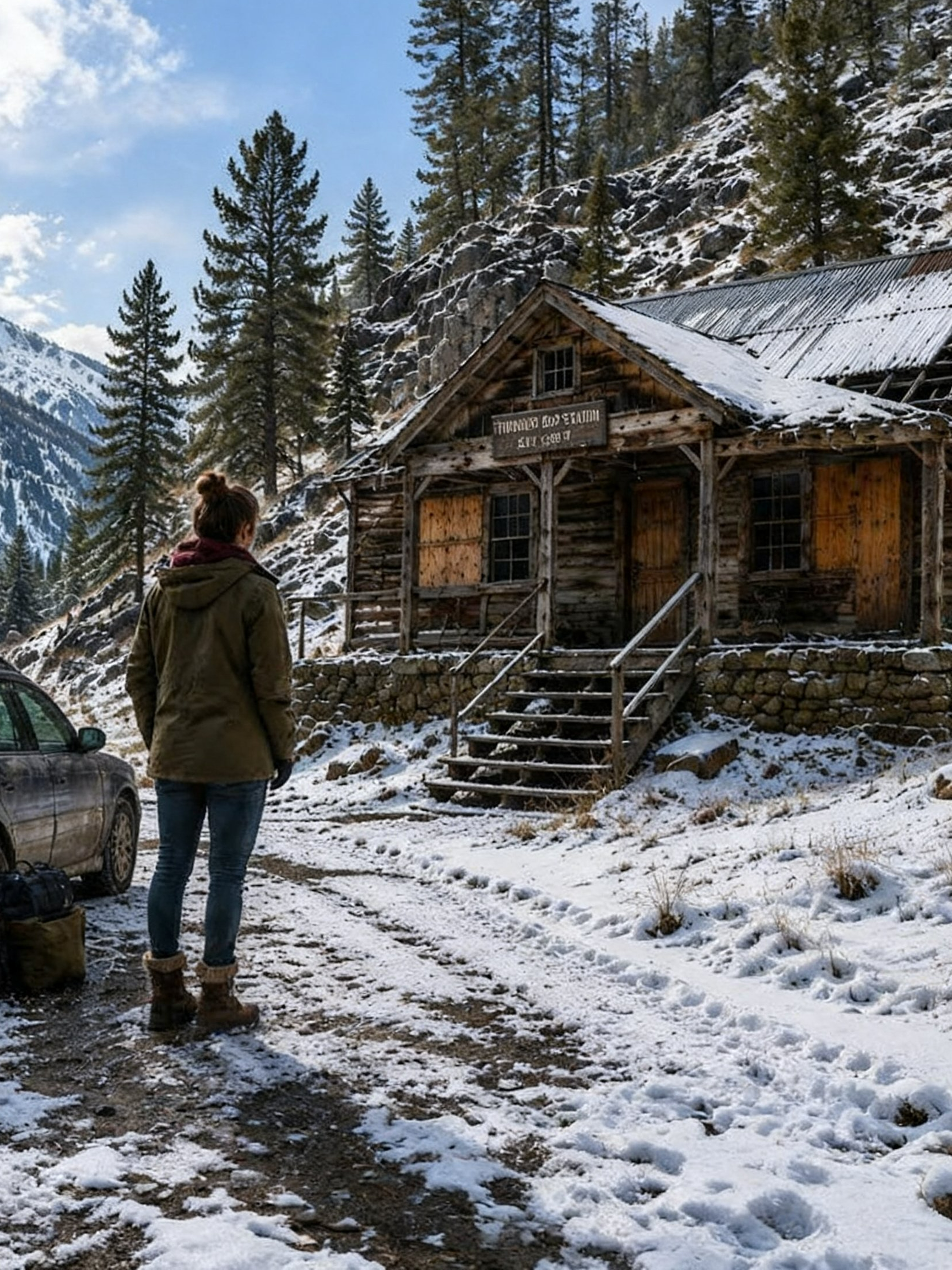
She Bought a $10 Ranger Station After Her Family Threw Her Out—Then a Locked Steel Room Exposed Everything They Stole
“You’ve had four days, Ellen. That’s more charity than most people get.”
My younger brother said it from the front porch of the house I had spent eleven years paying to keep warm.
Grant Mercer stood beneath our mother’s brass porch light with one hand in the pocket of his navy golf jacket and the other wrapped around a coffee mug that used to belong to our father.
Behind him, his wife, Diane, watched through the storm door.
My nephew Tyler leaned against a rented dumpster in the driveway, scrolling on his phone while two men carried my boxes out of the house.
One of them dropped a carton marked MOM — MEDICAL RECORDS.
The bottom split.
Eleven years of pharmacy receipts, oncology reports, Medicare notices, hospice instructions, and handwritten medication charts spilled across wet concrete.
Grant looked down at the papers.
Then he stepped over them.
“This isn’t personal,” he said.
That was when I became quiet.
Not shocked.
Not broken.
There is a kind of silence people mistake for surrender because they have never seen what it looks like when someone finally stops explaining herself.
I crouched and gathered the papers one by one.
Grant sighed as if my dignity were inconveniencing him.
“Ellen, Mom left the house equally to all three of us. We voted. Diane found the buyer. Caroline signed off. Closing is Friday.”
“Our mother has been dead nine days.”
“And the market doesn’t care.”
I looked up at him.
He had our father’s chin and none of his shame.
Grant smiled a little.
That tiny smile hurt more than the words.
Because I recognized it.
It was the same smile he had worn eleven years earlier when he told me his job in Denver was too demanding to help with Mom after her stroke.
The same smile he wore when Caroline said her kids were too young to see Grandma “like that.”
The same smile he wore every Christmas when he arrived with an expensive bottle of wine, stayed ninety minutes, and left me to change our mother’s bedding after everyone else drove home.
I had paid the property taxes when Mom’s savings ran thin.
I had slept in hospital chairs when Grant was skiing in Vail.
I had washed our mother’s hair when she could no longer lift her arms.
I had learned which pain meant arthritis and which pain meant another tumor.
I had given away eleven years because I believed family remembered who stayed.
Family remembered.
They simply priced it differently.
Grant pointed toward my old Subaru.
“You can take the remaining boxes. Tyler put the furniture you wanted in storage for thirty days. After that, the fees are yours.”
“You sold my bedroom set?”
“Technically, Mom owned everything in the house.”
“I bought that bedroom set.”
He shrugged.
“Then find the receipt.”
That was the moment Diane came outside carrying a small cedar box.
It had belonged to our father, Daniel Mercer, who had died nineteen years earlier.
Dad had been a district ranger in western Montana for almost three decades.
He wore green wool shirts even when he was off duty.
He knew which creeks flooded in May, which logging roads iced first in October, and how to look at a hillside and tell whether a fire had passed through twenty years ago or fifty.
He had also been the only person in our family who ever seemed to understand that my silence was not weakness.
Diane held out the cedar box.
“We found this in the attic.”
Grant frowned.
“What is it?”
“Just some of Dad’s junk,” she said.
The brass latch was tarnished.
My initials had been carved into the bottom.
Not by my father.
I had carved them there when I was thirteen and Dad caught me using his hunting knife.
He had made me sand the scar smooth.
Apparently I had done a poor job.
Grant glanced at the box.
“If there’s anything valuable inside, technically it belongs to the estate.”
I slid it beneath my arm.
“Then sue me.”
His smile disappeared.
It was the first satisfying thing that had happened all morning.
I loaded the Subaru.
Everything I still owned fit behind the front seats.
Mom’s medical records.
A cast-iron skillet.
Dad’s cedar box.
And a chipped ceramic mug that said BEST DAUGHTER.
Caroline had given it to Mom.
I had been the one who washed it every night.
When I closed the hatch, Grant walked down the driveway.
His voice softened.
That bothered me more than his cruelty.
“Look, Ellen. You’re fifty-eight. You don’t have a husband. You never had kids. You stayed here way too long. Maybe this is good for you.”
I looked at the sold sign near the mailbox.
The buyer’s name was printed beneath the realtor logo.
BLACKRIDGE MOUNTAIN DEVELOPMENT LLC.
I knew that name.
Everyone in Granite County did.
Blackridge had spent the last three years buying ranch parcels west of town for a luxury resort called Silver Crown.
Private cabins.
Golf course.
Ski access.
Equestrian center.
Artificial lake.
One hundred eighty million dollars, according to the local paper.
I looked back at Grant.
“Blackridge bought Mom’s house?”
He hesitated.
Only for half a second.
“Because they’re consolidating.”
“Our house is twelve miles from their resort.”
“They have future plans.”
“What plans?”
His expression hardened again.
“There you go.”
“There I go what?”
“Turning everything into an interrogation. Dad did that too. Always suspicious. Always keeping records. Always thinking somebody was trying to steal a mountain.”
Behind him, Diane looked away.
That was the first crack.
Almost invisible.
I filed it away.
Dad had taught me that too.
You do not chase every sound in the woods.
You remember where it came from.
Then Grant said something I would replay later.
“You need to stop living like Dad left some secret inheritance for you. He didn’t. Caroline got the insurance money for college. I got his truck. Mom got the pension. You got memories. That’s it.”
I did not answer.
He spread his hands.
“Then why are you looking at me like that?”
I put my hand on the driver’s door.
“Because Dad never liked it when people spoke for the dead.”
I drove away.
For the first six miles, my hands did not shake.
At mile seven, they did.
So I pulled beside the Clark Fork River, turned off the engine, and sat until they stopped.
Then I opened Dad’s cedar box.
There was no money inside.
No jewelry.
No dramatic final letter.
Just his old brass compass.
A folded Forest Service map.
A tarnished ranger badge he had supposedly surrendered when he retired.
A Polaroid photograph.
The key was old, long, and blackened with age.
A strip of masking tape had been wrapped around the head.
Dad’s handwriting was still visible.
Under the key was a note.
ELLEN — IF THEY SELL, GO NORTH.
I read it three times.
Then I unfolded the map.
A red pencil circle surrounded a place I had not thought about in almost thirty years.
Ranger Station Seven.
The old Clearwater Ridge station.
Dad had taken me there during summers when I was a teenager.
It sat forty-three miles north of town near the edge of what had once been federal timberland before a complicated series of land exchanges in the 1990s.
By the time Dad retired, the station was already abandoned.
No electricity.
No plumbing.
No maintained road.
Just a two-room log structure, an equipment shed, a collapsed radio tower, and an outhouse leaning toward Canada.
I stared at the red circle.
Then at the note.
IF THEY SELL, GO NORTH.
My phone rang.
I let it ring.
It stopped.
Then a text appeared.
One more thing. Blackridge may send you paperwork regarding Mom’s estate easement interests. Just sign where flagged. Attorney says routine.
I read that message twice.
Then I laughed.
It was not a happy laugh.
It was the sound a lock makes when the right key finally enters.
I drove to the Granite County courthouse.
The county surplus auction was taking place in the basement that afternoon.
I did not know that until I asked the clerk whether Ranger Station Seven still existed.
She was young enough to call me ma’am without irony.
She typed for a moment.
“That parcel reverted to the county years ago.”
“Structure only, apparently. Wait.”
She frowned at the screen.
“That’s weird.”
“The legal description is incomplete.”
“How incomplete?”
“It lists the ranger station improvement and approximately point-four acres, subject to historical easements, reservations, covenants, reversionary clauses, and recorded instruments.”
“How many recorded instruments?”
She scrolled.
“Looks like… a lot.”
“Who owns it?”
“County currently. But it’s scheduled for disposal.”
She looked at the wall clock.
“Forty minutes.”
That is how I bought a ranger station for ten dollars.
Nobody else bid.
Why would they?
The auction packet described it as an uninhabitable public-safety liability accessible only by seasonal forestry road.
Minimum bid: ten dollars.
Tyler Mercer could spend that on a craft beer.
I signed the form.
The clerk stamped it.
A county employee named Pete chuckled and said, “Congratulations. You now own the worst building in Montana.”
I folded the receipt into my purse.
The clerk handed me a warning packet.
“No utilities. No guaranteed access. Possible asbestos. Roof failure. Wildlife intrusion.”
“What kind of wildlife?”
“Last inspection mentioned pack rats.”
“Those I can handle.”
She smiled.
“I like you.”
“Give me a week.”
I reached Ranger Station Seven just before sunset.
The road was worse than I remembered.
Ponderosa pine crowded both sides.
Snow remained in dirty patches beneath the shadows.
Twice I had to move fallen branches.
The Subaru scraped its undercarriage across a washout, and I apologized aloud to the car like an old friend.
Then the trees opened.
There it was.
The station.
Smaller than memory.
The porch sagged on the east side.
One shutter hung loose.
Moss climbed the stone chimney.
The radio tower had collapsed into the weeds behind the shed.
A rusted sign still clung to a post.
CLEARWATER RIDGE RANGER STATION NO. 7.
Someone had fired a shotgun through the word CLEARWATER.
I stepped from the car.
The air smelled like pine bark and cold mud.
For the first time since Mom died, nobody wanted anything from me.
No signatures.
No apologies.
No explanations.
Only trees.
I walked onto the porch.
The front door was secured with a county padlock.
The clerk had given me the combination.
Inside, mice had ruled for years.
Their kingdom was extensive.
A metal desk stood beneath a broken window.
Two bunk beds had collapsed against one wall.
An iron stove rusted in the corner.
A calendar from 1996 still hung beside the kitchen shelves.
The picture showed Glacier National Park.
I almost smiled.
Then I saw the floor.
Near the back wall, someone had recently moved dust.
A narrow track crossed the boards.
Not animal tracks.
Boot marks.
Fresh enough that the edges were sharp.
I stood still.
Then I noticed the smell.
Cigarette smoke.
Maybe days old.
I did not call Grant.
I did not call Tyler.
I walked outside, retrieved the tire iron from my Subaru, and came back.
The back room had once been Dad’s office.
The door was jammed.
I shoved it open.
Filing cabinets lined one wall.
A faded topographic map covered another.
Nothing looked disturbed.
Then I saw the steel door.
I remembered it immediately.
As a child, I thought it was a closet.
Dad never let me open it.
It was narrow, painted green, and built directly into the interior stone wall of the station.
Just an old mortise lock.
My heart began beating harder.
I took the blackened key from my pocket.
I turned it.
I pushed harder.
A mechanism shifted somewhere inside the wall.
The steel door moved half an inch.
Cold air touched my face.
Behind the door was not a closet.
It was a stairway.
Stone steps descended beneath the ranger station.
Dad had never told me there was a basement.
I found my flashlight.
The stairs ended at another door.
This one was steel too, but newer.
No keyhole.
A horizontal locking bar held it shut.
Someone had painted three words across the center in white.
NOT COUNTY PROPERTY.
My father’s handwriting.
I lifted the bar.
The door opened.
The room behind it was maybe twelve feet square.
Shelves covered every wall.
Metal document boxes.
Survey tubes.
Photographs.
Bound ledgers.
Old cassette tapes.
Waterproof map cases.
And in the center, beneath a canvas tarp, sat a fireproof steel trunk with two padlocks.
I did not touch it immediately.
Dad had taught me another thing.
When something has waited twenty years, it can wait five more minutes while you understand the room.
I studied the shelves.
Some boxes were marked with dates.
Others carried names.
BLACKRIDGE TIMBER.
GRANITE COUNTY LAND EXCHANGE.
MERCER CONSERVATION TRUST.
MILL CREEK WATER.
SILVER CROWN.
That last label stopped me.
Silver Crown was the name of Blackridge Mountain Development’s new resort.
The project had not existed when Dad was alive.
Or at least it was not supposed to have existed.
I opened the box.
Inside was a yellowed development prospectus dated 1996.
SILVER CROWN RECREATION COMMUNITY.
The logo was different.
The name was not.
Below it was a map covering thousands of acres north and west of our family home.
The planned resort.
The current resort.
Almost exactly.
Someone had been working on it for thirty years.
A sound came from outside.
I turned off my flashlight.
Headlights swept through the broken window upstairs.
A vehicle stopped near the porch.
I stood in the dark basement and listened.
Doors slammed.
Maybe three people.
Boots crossed the porch.
The front door opened.
A man said, “County lock’s gone.”
Another voice answered.
“Check the office.”
I recognized the second voice.
I did not move.
Above me, boots crossed the floor.
A drawer slammed.
Tyler cursed.
“She bought it. I’m telling you. Aunt Ellen bought the place.”
The other man said, “How would she know?”
“I don’t know.”
“Did Grant tell her?”
“Jesus, no.”
Then Tyler said something that turned my blood cold.
“Dad said the old man might’ve left a box.”
The old man.
The man had been dead nineteen years.
Yet my nephew, who had been four years old when Dad died, was searching for something he had left.
The stranger said, “If the box is here, Blackridge wants it tonight.”
I reached slowly into my coat pocket.
My phone showed one bar.
I opened the camera.
Started recording.
Upstairs, wood creaked.
Tyler said, “There’s nothing here.”
“Check the wall.”
“What wall?”
“The old records room.”
My thumb tightened around the phone.
Not everything.
But enough.
Footsteps entered Dad’s office.
I heard Tyler push against the steel door.
It moved slightly.
Then stopped.
I had lowered the locking bar on my side.
“What the hell?”
The stranger said, “It’s locked from inside?”
I looked around the basement.
There was no second exit.
Then Tyler spoke quietly.
“Aunt Ellen?”
I did not answer.
He knocked on the steel door.
“Aunt Ellen, if you’re down there, this isn’t funny.”
I nearly smiled.
Then the other man said, “Move.”
Something slammed against the door.
The locking bar held.
Tyler said, “Stop. She’ll call the cops.”
“She won’t.”
“You don’t know her.”
“No. But your dad does.”
Another impact hit the door.
Dust fell from the ceiling.
I looked at my phone.
I sent the recording to myself, to an email account Grant did not know existed, and to my friend Ruth Bennett, who had been the county librarian for thirty-two years.
Then I typed:
CALL SHERIFF. RANGER STATION 7. MEN TRYING TO ENTER BASEMENT. ONE IS TYLER.
The message hung.
I moved toward the back corner.
One bar became two.
Above me, the stranger cursed.
Then everything went quiet.
Then Tyler said through the door, “Aunt Ellen, Dad just wants the old family documents.”
That told me Grant knew exactly what was here.
I finally answered.
My voice came out calm.
“Then he should have bid eleven dollars.”
Tyler exhaled.
“Who is with you?”
“What’s his name?”
I continued.
“What company does he work for?”
The stranger said, “This is private property we have authorization to inspect.”
“Whose property?”
“The county.”
“I bought it at three fourteen this afternoon.”
Silence again.
Then I heard Tyler whisper something.
The stranger replied too softly to make out.
A moment later, their footsteps retreated.
The front door slammed.
Their vehicle left fast enough to spray gravel.
I waited fifteen minutes before coming upstairs.
The sheriff’s deputy arrived eleven minutes after that.
Her name was Melissa Shaw.
She was forty-something, broad-shouldered, observant, and visibly unhappy when she heard Tyler’s name.
“Your nephew?”
“You sure?”
“I changed his diapers.”
“People change.”
“Apparently not enough.”
She watched the video.
The stranger’s face never appeared, but his voice was clear.
Blackridge wants it tonight.
Deputy Shaw replayed that sentence.
“You know who the other guy is?”
She did not explain.
That was the second crack.
I filed it beside Diane looking away.
Deputy Shaw photographed the boot prints and the pry marks.
Then she looked at the basement.
Her expression changed.
“What is all this?”
“My inheritance, apparently.”
She picked up nothing.
Good deputy.
“You should get a lawyer before opening more.”
“I need a locksmith first.”
“For the trunk?”
She looked at the labels on the shelves.
“You might need a very good lawyer.”
The next morning, Grant called at .
I answered on the first ring.
“What did you tell the sheriff?” he demanded.
“Good morning.”
“Tyler said you accused him of breaking in.”
“He entered my property without permission.”
“It belonged to the county yesterday.”
“Not when he entered.”
“He was checking on you.”
“With a Blackridge employee?”
There are questions that seek answers.
There are other questions that measure fear.
That one was the second kind.
Grant recovered quickly.
“You’re confused.”
“I recorded them.”
Another silence.
“Do not make this bigger than it is.”
“What is it?”
“Old land paperwork.”
“Then why did Blackridge want it tonight?”
He swore under his breath.
And there it was.
“I’m coming up there.”
“We need to talk.”
“You’re my sister.”
“You remembered.”
He lowered his voice.
“Dad got involved in things he didn’t understand.”
“He was a district ranger for twenty-eight years.”
“He was obsessed.”
“With what?”
“Land records. Easements. Old conservation nonsense. He thought the county stole property from Grandpa.”
I sat at Dad’s desk and wrote every word down.
“What property?”
Grant stopped.
He had said too much.
Finally, he answered.
“Nothing that matters anymore.”
“Then why are you calling me before sunrise?”
He hung up.
By nine, Blackridge’s attorney had sent me a letter.
By ten, Grant’s estate lawyer had sent another.
By noon, the county planning office informed me that my newly purchased ranger station might be subject to immediate condemnation due to structural danger.
The system had awakened.
That interested me.
Ordinary bureaucracy moved like January molasses.
Fear moved at highway speed.
I called Ruth Bennett.
She arrived in a red Toyota carrying coffee, two cinnamon rolls, and the expression of a woman who had waited all her life to see somebody else’s family scandal documented properly.
Ruth had known Dad.
She also hated Blackridge.
Not emotionally.
Professionally.
Blackridge had twice tried to pressure the library board into removing historical land maps from public access because, according to their attorneys, “unverified legacy documents could create title confusion.”
Ruth had framed that letter.
“Show me everything,” she said.
We spent six hours reading.
By midafternoon, the pattern emerged.
My grandfather, Samuel Mercer, had owned more land than any of us knew.
Not because he was wealthy.
Because in 1947, after returning from the Pacific, he bought burned-over timberland that nobody wanted.
Three thousand eight hundred forty acres.
Over the decades, he sold portions to the federal government, donated parcels to the county, granted public trail access, and created a conservation trust protecting the headwaters of Mill Creek.
But he had imposed conditions.
Strict conditions.
The land could be logged selectively.
It could be used for public recreation.
It could support ranger stations, fire roads, trails, and watershed infrastructure.
It could not be converted to private resort development.
If the county attempted to sell designated trust parcels for prohibited commercial use, title reverted.
Not to Grandpa personally.
Not automatically to his children.
To the Mercer Conservation Trust.
The trustee was to be a direct descendant who had not received compensation from any attempted prohibited transfer.
I read that paragraph twice.
Then a third time.
Ruth leaned back.
I looked at her.
“You know who has received compensation?”
Maybe even Mom’s estate.
Blackridge’s purchase of her house suddenly looked different.
So did Grant’s insistence that I sign “routine” easement papers.
Ruth opened another ledger.
Dad had spent years documenting attempts to bypass the trust.
Shell companies.
Boundary adjustments.
Tax foreclosures.
Administrative transfers.
One piece at a time.
Never enough to attract public attention.
Then, in 1996, Blackridge Timber—an older company tied to the current developer—proposed something called Silver Crown.
Dad objected.
The project disappeared.
Or supposedly disappeared.
Ruth tapped a page.
“Your father believed they were waiting.”
“For what?”
“For the people who remembered to die.”
The room seemed colder.
On the final page of Dad’s ledger, his handwriting changed.
Pressed deep into the paper.
If Silver Crown returns after my death, they will come through the family first.
Do not argue with them.
Do not warn them.
Do not sign.
Make them show what they believe they own.
Then compare it to Instrument 4481.
I whispered the number.
“Instrument 4481.”
Ruth went still.
“I know that number.”
She stared at me.
“Because somebody requested the original from county archives two months ago.”
“Your brother.”
That was the first true twist of the knife.
Not Blackridge.
Not a stranger.
My own brother had gone searching before Mom died.
Ruth continued.
“He said he was helping settle your mother’s estate.”
“She was alive two months ago.”
We drove to the courthouse.
Instrument 4481 was missing from the public file.
The index remained.
The document did not.
The clerk blamed digitization.
Ruth did not.
Neither did I.
We requested the scanned image.
We requested the microfilm.
We requested the transfer log.
That was when the records supervisor stopped smiling.
“You’ll need to file a formal request.”
“How long?”
“Up to thirty business days.”
I looked at Ruth.
Then I asked, “Who signed out the original?”
The supervisor’s eyes flicked toward the hallway.
“Mrs. Mercer—”
“I can’t discuss internal handling procedures.”
That was answer enough.
County Commissioner Wade Holloway entered the lobby three minutes later.
Holloway chaired the planning commission approving Blackridge’s resort.
He had also played high school football with Grant.
He smiled when he saw me.
“Ellen. Sorry about your mom.”
“Thank you.”
“Grant says you bought that old ranger shack.”
“For ten dollars.”
He laughed.
“Always did have your dad’s sense of humor.”
“Dad wasn’t joking often.”
His smile weakened.
“I hear you’ve found old documents.”
“People keep telling me that.”
“Historical records can be fascinating, but boundaries change. Laws change.”
“Do dead people’s signatures change?”
The color left his face so quickly Ruth actually inhaled beside me.
I had not found a dead person’s signature.
But the question did what I wanted.
It measured fear.
Holloway recovered.
“Be careful, Ellen. People get excited over old papers. They start seeing conspiracies.”
“I’ve mostly been seeing deeds.”
He stepped closer.
“Blackridge is bringing jobs here.”
“I’m sure.”
“Families need those jobs.”
“Then don’t let your father’s old grudges hurt living people.”
There it was.
The moral shield.
Economic growth.
The language powerful men use when they want a woman to feel selfish for noticing where the money came from.
“I’ll keep that in mind.”
He relaxed.
That was useful too.
People like Holloway needed to believe politeness meant obedience.
That evening, Grant came to the ranger station.
He arrived in his white pickup wearing expensive boots that had never touched mud before that week.
I met him on the porch.
He looked beyond me at the broken windows.
“You’re actually staying here?”
“I slept in worse chairs beside Mom.”
He flinched.
“Ellen, I don’t want to fight.”
“You sent Tyler.”
“I sent him to find Dad’s records before you did something stupid.”
“Because Blackridge will sue.”
“They already threatened to.”
“I’m trying to protect you.”
“From ten-dollar real estate?”
His jaw tightened.
He took an envelope from his coat.
Inside was a cashier’s check.
My name on it.
I stared at the amount.
Grant spoke softly.
“For what?”
“Sell me the ranger station.”
“Worthless building.”
“Quarter million dollars.”
“You need a place to live.”
“I have one.”
“This is not a home.”
I looked around at the sagging porch.
“Neither was Mom’s house for the last four days.”
His eyes hardened.
“Don’t do that.”
“Make everything about sacrifice.”
I said nothing.
That irritated him more.
He pointed at me.
“You chose to stay with Mom.”
“Nobody forced you.”
“Caroline had a family. I had a career. You had flexibility.”
The old insult.
The one wrapped in gratitude.
Your life mattered less, therefore your time was free.
I looked at the cashier’s check.
“How much did Blackridge pay you?”
His expression froze.
“For Mom’s house?”
“Market value.”
“How much over market value?”
He did not answer.
“Did they buy Caroline’s land too?”
“Did they pay Tyler?”
“How much?”
He stepped toward me.
“Dad poisoned you against everybody.”
“Dad has been dead nineteen years. You managed this yourself.”
He grabbed the envelope back.
Then he said the sentence that convinced me never to trust him again.
“You don’t understand what happens if that trust activates.”
I kept my face blank.
“What trust?”
He knew instantly.
His mistake.
My answer told him I did not know.
His face told me he did.
Neither of us spoke.
A bird called from the timber.
Grant stepped backward.
“You’re playing with things that are bigger than you.”
“I’m living in a building smaller than most garages. Almost everything is bigger than me.”
Then he walked to his truck.
Before opening the door, he turned.
“Mom wanted us together.”
“No,” I said. “Mom wanted morphine every four hours and somebody to hold her hand when she got scared.”
He looked away.
“I was there.”
“You visited Sunday.”
“I was there.”
“For seventy-three minutes.”
His face changed.
I had kept the hospice log.
He knew it.
That was the moral reason I would not sell.
Not because I deserved revenge.
Not because Grant deserved humiliation.
Because for eleven years, our family had converted care into invisibility.
They counted inheritance in rooms, acres, accounts, vehicles, and resale values.
They had never counted time.
Dad’s trust was the first document I had ever seen that tried to count character.
The trustee could not be someone who profited from prohibited transfer.
For once, refusing the money mattered.
That night Ruth and I opened the steel trunk.
The locksmith charged sixty dollars and asked no questions.
Inside were no stacks of cash.
No bearer bonds.
Something better.
Original documents.
Instrument 4481 sat on top.
Beneath it was a notarized copy of the Mercer Conservation Trust.
Then surveys.
Water rights.
Photographs.
Correspondence.
A reel-to-reel recording.
And one sealed letter addressed to me.
Not Caroline.
Dad’s handwriting.
I opened it carefully.
If you are reading this, then Silver Crown came back and someone in our family helped them.
I hope I was wrong.
I do not think I am.
The station is not the inheritance.
It is the lock.
The documents are not the inheritance.
They are the key.
The inheritance is the obligation.
Your grandfather did not protect this land so a Mercer could become rich. He protected it because Mill Creek feeds farms, homes, wildlife habitat, and two towns downstream. Whoever controls the headwaters controls more than property.
If they offer you money, understand this: the offer is proof that they fear the conditions.
If they threaten you, understand this: the threat is proof that the conditions remain alive.
Do not destroy them.
Do not embarrass them for pleasure.
Make them put every claim in writing.
Let them swear to it.
Then open Box 14.
I stopped reading.
Ruth looked around.
We found it on the lowest shelf.
It was thin.
Inside were copies of deeds Blackridge believed supported its ownership.
Dad had marked discrepancies in red.
Parcel numbers changed by one digit.
Survey bearings shifted.
Notary stamps dated Sundays when the courthouse was closed.
Signatures inconsistent across documents.
Then Ruth found the worst one.
A quitclaim deed transferring a critical access corridor from the Mercer Conservation Trust to Granite County in 2001.
Dad died in 2007.
Grandpa had died in 1983.
The deed claimed Grandpa personally signed it.
Eighteen years after his death.
There was my dead man’s signature.
My bluff to Holloway had accidentally described the truth.
Ruth sat down.
I kept reading.
That forged deed fed three later transfers.
County to Blackridge Timber.
Blackridge Timber to a shell company.
Shell company to Blackridge Mountain Development.
The resort’s primary northern access road crossed that corridor.
Its planned reservoir depended on Mill Creek water rights held under the trust.
Its sewer line crossed protected land.
Its emergency evacuation route did too.
The whole $180 million project had been designed around ownership that might never have legally existed.
Ruth looked at me.
“You could destroy them.”
She blinked.
“I can stop them.”
“That’s what I mean.”
“No. Destroying them would hurt contractors, employees, homeowners who bought in good faith.”
Ruth studied me.
“You sound like your father.”
“I’m prettier.”
She laughed so suddenly coffee came out her nose.
For thirty seconds, we were sixteen again.
Then headlights appeared beyond the trees.
This time I called Deputy Shaw before the vehicle stopped.
But it was not Tyler.
It was a Blackridge SUV.
Three people stepped out.
A woman in a camel coat introduced herself as Margaret Vale, chief counsel for Blackridge Mountain Development.
She did not come inside.
She stood on my porch holding a leather folder.
“Mrs. Mercer—”
“Ms. Mercer. We understand you may possess documents relating to title interests associated with the Silver Crown project.”
“People understand a lot about my belongings.”
“These documents may constitute stolen county records.”
“They were in my father’s ranger station.”
“Which was county property until yesterday.”
“The basement door says otherwise.”
“That phrase has no legal significance.”
“Then you won’t mind me keeping everything.”
Her smile tightened.
She opened the folder.
“One million dollars.”
Behind her, even the younger attorney shifted.
Margaret did not.
“Purchase price for the ranger station, all contents, and any claims you may assert.”
I looked at the offer.
“Yesterday it was condemned.”
“Circumstances evolve.”
“One million.”
“Is that what my brother received?”
She closed the folder.
“I’m not authorized to discuss private transactions.”
There it was.
Confirmation without confession.
I leaned against the porch rail.
“I have a question.”
“Of course.”
“If your title is clean, what exactly are you buying from me?”
She smiled again.
Not warmly.
“Excuse me?”
“You’re buying silence. Peace would cost less.”
The younger attorney looked down.
Margaret’s eyes became flat.
“You should retain counsel.”
That was not technically true.
But by sunset it was.
Her name was Joanna Price.
She specialized in conservation law and land-title litigation out of Missoula.
Ruth knew her through the library foundation.
Joanna drove up that night, read until two in the morning, slept four hours in her car because she refused the mouse bunk, then woke me at six with the first sentence I wanted to hear.
“Do not contact your family.”
“I wasn’t planning to.”
“Do not contact Blackridge.”
“Do not contact the county.”
“Even better.”
“Let them move first.”
“What are we waiting for?”
“For them to put lies under oath.”
Dad’s letter.
Make them put every claim in writing.
Let them swear to it.
Joanna had understood immediately.
Three days later, Blackridge sued me.
They requested an emergency injunction ordering surrender of allegedly stolen property and preventing me from interfering with construction.
Grant submitted an affidavit.
Under penalty of perjury, my brother swore that Dad had removed county documents without authorization during his employment and that our family had “always understood” the conservation trust had been legally extinguished decades ago.
Caroline signed another affidavit.
She lived in Arizona and had not returned one of my calls since Mom died.
She swore the same.
Commissioner Holloway submitted a county declaration confirming the disputed parcels had been lawfully transferred.
Blackridge attached copies of the deeds.
Including the forged one.
They put it all in writing.
They swore to it.
And for the first time since Grant threw my boxes into the driveway, I smiled without forcing it.
Joanna saw.
“There she is.”
“The woman your brother should have been afraid of.”
I shook my head.
“He isn’t afraid of me.”
“What is he afraid of?”
“Being ordinary.”
That was Grant’s real motive.
Not some cartoon hunger for money.
He had spent his entire adult life building the appearance of success.
Country club.
New truck every two years.
A consulting business that rose and fell with development cycles.
Tyler’s private college.
Diane’s renovation projects.
Blackridge had offered him a way into a class of people he had always wanted to join.
He had probably told himself the trust was ancient.
The land unused.
The project beneficial.
The signatures paperwork.
The money deserved.
People rarely wake up and decide to betray blood.
They build a staircase of smaller excuses and descend one reasonable step at a time.
That almost made it worse.
The hearing was set for Monday.
Blackridge arrived with six attorneys.
The county sent two.
Grant wore a gray suit.
Diane sat behind him.
Tyler did not attend.
Caroline appeared by video from Phoenix.
I wore Mom’s dark green cardigan.
Not because it was elegant.
Because the left cuff still carried a tiny bleach mark from the night she vomited after chemotherapy and apologized for ruining my clothes.
I wanted something honest in that courtroom.
Blackridge went first.
Their attorneys described me as a grieving woman influenced by “historical misunderstandings.”
They suggested Dad had become paranoid late in life.
Grant’s affidavit described his concern for my emotional state.
Not because I believed him.
Because he had learned how to make cruelty sound clinical.
Blackridge introduced the chain of title.
County records supported it.
Commissioner Holloway supported it.
Grant supported it.
Caroline supported it.
They looked, for an hour, unbeatable.
Then Joanna stood.
She did not raise her voice.
She asked Margaret Vale’s title expert one question.
“Is your entire northern access claim dependent upon the validity of the 2001 quitclaim deed marked Plaintiff’s Exhibit 18?”
The expert hesitated.
“Not entirely.”
“Name an alternative instrument.”
He could not.
Joanna waited.
Silence spread.
Finally he said, “Exhibit 18 is significant.”
“Was Samuel Mercer authorized to execute that deed?”
“Personally?”
“On what date?”
“April 17, 2001.”
Joanna nodded.
Then she placed Grandpa’s death certificate on the projector.
Date of death: November 3, 1983.
Nobody gasped.
Real courtrooms are quieter than television.
But the silence changed.
It became physical.
Blackridge’s lead attorney rose.
“Your Honor—”
Judge Evelyn Pierce lifted one hand.
“Sit down.”
Joanna continued.
“Mr. Mercer had been dead seventeen years, five months, and fourteen days when your foundational deed says he appeared before a notary and signed away the corridor.”
The expert stared at the screen.
Joanna turned toward the county table.
“Commissioner Holloway, you swore this deed was valid.”
Holloway’s attorney objected.
The judge allowed questioning only after Holloway was sworn.
That was better.
Joanna walked him through the transfer.
He claimed reliance on county records.
She asked who had requested removal of Instrument 4481 from archives.
He said he did not know.
Ruth had obtained the access log the previous afternoon.
It showed Grant.
Authorized by Holloway.
Grant’s face turned white.
Joanna displayed it.
Then she asked Holloway whether he had any financial interest in Silver Crown.
“Your wife?”
“Children?”
“Businesses?”
Joanna produced a corporate disclosure.
Holloway’s brother-in-law owned thirty percent of a site-preparation company holding a $12.4 million Blackridge contract.
Holloway stopped answering without consulting counsel.
Mini-payoff number one.
Judge Pierce froze construction on the access corridor.
Blackridge tried to narrow the order.
Joanna opposed.
The judge expanded it.
Mini-payoff number two.
Then the county attorney argued that even if the 2001 deed was defective, subsequent good-faith transfers might protect Blackridge.
Joanna opened the Mercer Conservation Trust.
Reversion clause.
Prohibited commercial conversion triggered immediate reversion.
No compensation required.
Trustee eligibility excluded compensated descendants.
Judge Pierce looked at me.
“Ms. Mercer, have you received compensation from Blackridge Mountain Development, its predecessors, affiliates, or related entities?”
“From Granite County in connection with these transfers?”
“From another Mercer family member in exchange for surrendering your interest?”
I looked directly at Grant.
Grant stared at the table.
The judge looked at him next.
“Mr. Mercer?”
His attorney whispered.
Grant swallowed.
One point eight million dollars.
Diane closed her eyes.
Caroline, appearing on the screen, covered her mouth.
Judge Pierce asked Caroline.
Eight hundred thousand.
There it was.
They had sold the inheritance before Mom was even buried.
Blackridge had bought Mom’s house for triple market value because the property contained another easement interest needed for the project.
Grant had negotiated the transaction while Mom was in hospice.
That was why he wanted me gone in four days.
That was why the closing could not wait.
That was why he needed my signature.
I felt anger then.
Real anger.
But I did not speak.
Because anger is useful only when it has somewhere to go.
Mine went into memory.
Joanna requested appointment of an interim trustee pending full title litigation.
Blackridge objected violently.
Grant’s attorney argued I was acting out of family resentment.
That was when Judge Pierce asked me if I wanted to respond.
My knees felt steady.
“I do resent my brother.”
Grant looked up.
Everyone expected denial.
I continued.
“I resent that he visited our mother seventy-three minutes the Sunday before she died and later described himself as one of her caregivers.”
Grant’s face tightened.
“I resent that he threw away medical records I spent eleven years maintaining.”
Blackridge’s attorney started to object.
The judge stopped him.
“I resent that he sold property before we had finished choosing Mom’s burial clothes.”
Diane began crying quietly.
“But resentment does not change a deed. It does not change a death certificate. It does not change a trust. If my brother had cared for Mom every day for eleven years and I had abandoned her, Samuel Mercer would still have died in 1983. The forged signature would still be forged.”
I looked toward the judge.
“I am not asking the court to reward me because I stayed.”
My voice almost broke there.
“I am asking the court not to reward them because they lied.”
Judge Pierce appointed me temporary trustee that afternoon.
Construction stopped across three critical Silver Crown parcels.
Not the entire project.
Forty-three heavy machines sat idle by Tuesday.
Blackridge’s stock lenders requested title assurances.
Two banks froze additional project draws.
County investigators seized archive access logs.
The state attorney general opened a review.
Grant stopped calling.
Caroline started.
I did not answer the first three times.
On the fourth, I did.
She cried for nine minutes.
I listened.
Then she said, “I didn’t know about the forged deed.”
“I believe you.”
She sounded relieved.
I added, “You just chose not to ask.”
“Ellen, I needed that money.”
“So did I.”
“You don’t understand.”
“Then explain.”
Her voice sharpened.
“Medical bills. Trevor’s business failed. The mortgage—”
“Did Blackridge tell you why they were paying eight hundred thousand dollars for an easement interest you thought was worthless?”
She said nothing.
“Did you ask?”
“Did Grant tell you I needed to sign?”
“Did you ask why?”
“I thought he was handling it.”
There it was.
The phrase that had carried half the harm in our family.
I thought someone else was handling it.
Mom’s appointments.
Dad’s records.
The hospice.
Caroline whispered, “Are you going to take the money away?”
“I don’t decide that.”
“You’re trustee.”
“I protect the trust.”
“I’m your sister.”
“So protect me from having to choose.”
She hung up.
I sat alone in the ranger station afterward.
Rain tapped the repaired section of roof.
I had spent $438 making one room habitable.
A propane heater.
A used mattress.
Window plastic.
Mouse traps.
A battery lantern.
The temporary trustee of land potentially worth tens of millions slept beside a bucket catching rainwater.
I found that comforting.
Money was only dangerous when people mistook it for identity.
The trust land was valued at roughly sixty-two million dollars if sold.
Maybe more.
But I could not simply sell it.
That disappointed reporters.
They wanted the poor betrayed sister who became rich overnight.
That was not the story.
I inherited authority.
Responsibility.
A chance to correct something.
That was heavier than money.
And cleaner.
The next six weeks turned vicious.
Anonymous complaints hit the county health department.
Someone reported hazardous waste at the ranger station.
Someone reported me for illegal occupancy.
Technically complicated, but Joanna fixed it.
My Subaru tires were slashed outside the grocery store.
Deputy Shaw began checking the property at night.
Blackridge launched a public campaign accusing the trust of threatening 640 jobs.
Grant appeared at a chamber-of-commerce meeting and called the litigation “a tragic family dispute weaponized by outside environmental lawyers.”
He looked tired on television.
For one terrible second, I felt sorry for him.
Then the reporter asked when he first learned about the trust restrictions.
Grant said, “After my father died.”
That sentence destroyed his defense.
Because his affidavit said our family understood the trust had been extinguished before Dad’s death.
Joanna paused the television.
“Perjury problem.”
Mini-payoff number three.
Two days later, Grant’s lawyer withdrew.
Then Blackridge made its largest offer.
Nine million dollars.
Not to buy the station.
They would preserve 1,200 acres.
Fund public trails.
Pay litigation costs.
And pay me personally $3 million in exchange for trustee approval of modified commercial use.
Joanna called it a serious offer.
Ruth called it perfume on a landfill.
I asked for forty-eight hours.
Then I drove downstream.
Dad’s letter had mentioned Mill Creek.
I wanted to see what the trust actually protected.
The creek left the mountains narrow and cold.
Twenty miles later it watered hay fields.
Farther down, it fed a municipal intake serving nearly fourteen thousand people.
I stopped at a small ranch where an eighty-one-year-old man named Raymond Ellis remembered Grandpa.
He invited me onto his porch.
When I mentioned the resort, he pointed toward a ditch crossing his property.
“My father dug that with Samuel Mercer in ’52.”
“For irrigation?”
“For everything.”
He showed me old photographs.
Families standing beside the first diversion gate.
Children swimming.
Men laying pipe.
Women serving coffee from enamel pots.
People I had never met.
People whose names were written into the back pages of the trust as protected downstream users.
Grandpa had not written those clauses to control land after death.
He had written them because water moved.
What happened upstream did not stay upstream.
That evening I rejected nine million dollars.
Blackridge called me irrational.
Grant called me vindictive.
A columnist called me “The Ten-Dollar Queen of Clearwater Ridge.”
I hated that name.
Ruth loved it.
Then the state investigators found the first bank transfer.
Blackridge had paid a consulting company owned by Grant eighteen months before Mom died.
His work product consisted of four emails.
The investigators subpoenaed more.
Another payment.
Then another.
Grant had not simply been offered money after Mom’s death.
He had been helping assemble family interests for more than a year.
While I was changing Mom’s bandages.
While I was driving her to radiation.
While Grant was texting that he wished he could do more.
He had been doing more.
For Blackridge.
Diane came to see me the next morning.
She arrived without makeup.
Without Grant.
She looked smaller than I remembered.
I made coffee.
She refused it.
Then she handed me a flash drive.
“I didn’t know at first.”
“He told me the consulting payments were for zoning strategy.”
“They were.”
“He didn’t tell me the strategy involved your family.”
I looked at the drive.
“What’s on this?”
I did not touch it.
“Why bring them to me?”
Her face crumpled.
Not theatrically.
“He used Mom’s illness.”
That was the first time Diane had called my mother Mom.
She continued.
“He scheduled calls with Blackridge around the times he knew you’d be at the hospital. He had Tyler photograph papers in the house when he visited.”
The room went cold.
My brother.
My mother’s dying bedroom.
Diane wiped her cheek.
“I found messages after the hearing.”
“Why didn’t you bring them immediately?”
“Because he’s my husband.”
Fair answer.
“Now he wants Tyler to say you gave him permission to enter the station.”
There was the line.
Diane had reached hers.
I finally took the flash drive.
“Does Grant know you copied these?”
“You should get your own lawyer.”
“I already did.”
I almost smiled.
She stood to leave.
At the door, she said, “Ellen?”
“He did love your mother.”
She looked surprised.
I added, “Love does not make every choice loving.”
Diane nodded.
Then she left.
The emails gave prosecutors enough for search warrants.
County offices were searched.
Blackridge headquarters received subpoenas.
Commissioner Holloway resigned.
Grant was charged with obstruction, evidence tampering, and conspiracy related to public-record manipulation.
Caroline returned most of her settlement voluntarily after Joanna explained potential exposure.
Blackridge’s lenders pushed the company toward mediation.
The local paper stopped calling it a family feud.
The state called it a land-title fraud investigation.
I never celebrated Grant’s charges.
That confused people.
Reporters wanted rage.
A sentence about karma.
I gave them none.
He was still my brother.
And consequences were not entertainment simply because someone deserved them.
Three months after I bought Ranger Station Seven for ten dollars, Judge Pierce approved a preliminary settlement framework.
Blackridge surrendered its claim to 2,640 protected acres.
The company agreed to reroute infrastructure away from Mill Creek headwaters.
A reduced resort footprint could proceed on legitimately acquired land.
Five hundred forty acres would remain permanent public-access forest.
Another 900 would be placed into watershed protection.
Blackridge funded restoration of damaged streams.
The county agreed to reopen and digitize historical land records under independent supervision.
The Mercer Conservation Trust received restitution.
I received no personal millions.
Instead, I took a trustee salary smaller than Grant used to spend on club dues.
Ruth said I was terrible at revenge.
I told her I slept well.
Mom’s house sale was partially unwound because the easement component had been misrepresented.
I did not move back.
I could have fought for it.
I chose not to.
Too many ghosts.
Instead, I repaired the ranger station.
Not into luxury.
Into something useful.
The front room became a small watershed archive.
The back became my home.
We replaced the porch.
Restored the chimney.
Rebuilt the radio tower as an emergency repeater.
Local students came twice a month to help catalog maps.
Raymond Ellis donated photographs.
Deputy Shaw donated a coffee maker.
Ruth donated a sign that said TEN-DOLLAR QUEEN.
I hid it in a drawer.
She kept putting it back.
By September, the station looked alive again.
Then Grant requested permission to visit.
He was awaiting trial.
His lawyer had negotiated terms that allowed limited travel.
I almost refused.
Then I remembered Dad’s words.
Do not embarrass them for pleasure.
So I said yes.
Grant arrived alone.
No polished truck.
He drove Diane’s old sedan.
We sat on the repaired porch.
For a long time, neither of us spoke.
Finally he said, “Diane filed for separation.”
“Tyler won’t talk to me.”
“I lost the business.”
“You could say something.”
“What would help?”
He looked at me.
For once, there was no salesmanship in his face.
“I don’t know.”
So I said nothing.
He stared toward the mountains.
“I thought Blackridge was inevitable.”
“What does that mean?”
“The resort. The transfers. Holloway. Everybody was doing it. Dad had fought them for years and nothing changed. Then Dad died. The files disappeared. The county approved everything. It felt… done.”
“So you joined them.”
He rubbed his hands together.
“They said the trust couldn’t survive. They said the land would eventually get condemned or transferred anyway. They said if the family cooperated, at least we’d benefit.”
“Did you believe them?”
“At first.”
“And later?”
He looked down.
That mattered.
Not enough.
But it mattered.
“Why Mom’s house?”
“Blackridge needed the old eastern easement release.”
“She was dying.”
“You started negotiations before she died.”
“You told me you were too busy to sit with her.”
His eyes closed.
That was the first apology he offered.
Not the word sorry.
Something harder.
The truth without defense.
I asked, “Did Mom know?”
He looked at me.
I believed him.
That gave me relief I had not expected.
He reached into his jacket.
My body tensed.
He took out Dad’s brass compass.
“How did you get that?”
“You left it in the cedar box at the house.”
“No. I had it.”
“You had the other one.”
Grant placed the compass on the porch rail.
It looked nearly identical.
Same scratched case.
Same cracked glass.
But the initials on the back were not Dad’s.
They were Grandpa’s.
“I found it in Mom’s safe after the hearing,” Grant said.
“Why keep it?”
“I thought there might be something inside.”
“Was there?”
He gave a humorless laugh.
“I broke the hinge trying.”
I picked it up.
The compass needle trembled north.
“What do you want from me, Grant?”
He swallowed.
“I want you to tell the prosecutor I helped.”
“With what?”
His eyes shifted toward the station.
“There are things Blackridge never told Holloway.”
“What things?”
“Old acquisitions.”
“Which acquisitions?”
“I don’t know all of them.”
“Then tell investigators what you know.”
“I want a deal first.”
There he was again.
My brother.
Still negotiating with consequences.
I put the compass in my pocket.
“You should leave.”
His face tightened.
Then something in him surrendered.
Not legally.
Not morally.
Just personally.
“I hated Dad for choosing you.”
I looked at him.
“He trusted you.”
“He loved all of us.”
“That isn’t what I said.”
Grant’s eyes were wet now.
“He taught you things. Maps. Trails. Records. He’d disappear with you for whole weekends. With me, he only talked about work.”
“You hated camping.”
“I was twelve.”
“You threw a hatchet at a squirrel.”
“I missed.”
“That was not the problem.”
For one second, we both laughed.
It hurt worse than anger.
Grant wiped his face.
Then he said, “He knew.”
“Knew what?”
“That if something went wrong, you’d be the one who stayed.”
He walked to the sedan.
I watched him drive away.
I did not forgive him.
I did not decide never to forgive him.
Some things do not need decisions immediately.
Autumn came early that year.
The larches turned gold.
The first snow dusted Clearwater Ridge in late October.
On the anniversary of Dad’s death, I closed the archive early.
I made coffee.
Then I opened his cedar box again.
I had looked through it dozens of times.
The folded map.
Photograph.
Second compass now beside the first.
I picked up the Polaroid.
I had barely studied it before.
It showed Ranger Station Seven in winter.
Dad stood beside the radio tower.
Another ranger stood with him.
On the back, Dad had written:
MARCH 1997 — LAST DAY BEFORE TRANSFER.
Below that:
MARTHA KNOWS WHERE THE REST WENT.
I stared at the name.
No last name.
Then I noticed something in the photograph.
Behind Dad and the woman was the station porch.
On the porch sat metal boxes.
The same kind stored beneath my floor.
I had maybe twenty-three.
The photograph showed at least eighty.
I carried it downstairs.
I counted the shelves again.
Twenty-three boxes.
Dad’s inventory sheet listed twenty-three.
Yet the photograph proved there had once been far more.
I examined Box 14.
Then Box 13.
Then Box 15.
At midnight I was tired enough to make mistakes, so I stopped.
Dad never trusted tired decisions.
I went upstairs.
The wind had picked up.
Something tapped the repaired window.
I turned off the lantern.
Then I heard it.
A metallic click beneath the floor.
Then again.
The sound came from the old basement radio equipment.
The emergency repeater had been rebuilt, but this was separate.
An original shortwave receiver sat on the basement shelf.
Unconnected.
Or so I thought.
I went downstairs.
A green light glowed faintly behind its cracked display.
Static whispered from the speaker.
Then stopped.
I reached toward it.
Static again.
A series of tones.
Not a voice.
Three short.
Three short.
I wrote them down.
The receiver went dark.
The next morning, Ruth came up.
She stared at the sequence.
“That could be nothing.”
“But you don’t think it is.”
We searched Dad’s communication logs.
Then Ruth opened Grandpa’s compass.
The broken hinge Grant had damaged allowed the rear plate to lift farther than intended.
Something thin was wedged inside.
I used tweezers.
A strip of waterproof drafting film slid out.
On it were coordinates.
Eleven sets.
And one sentence.
NOT ALL STATIONS WERE FEDERAL.
Ruth and I looked at each other.
We entered the first coordinates.
An abandoned fire lookout in Idaho.
A shuttered ranger cabin near the Wyoming line.
A maintenance station outside Yellowstone’s northern corridor.
Private timberland.
A county reservoir.
Eleven locations.
Eleven old ranger or forestry properties.
Each one had been involved in a land transfer between 1994 and 2003.
Each one now sat beside, beneath, or within a major private development.
Ruth whispered, “Ellen…”
I kept entering coordinates.
The tenth location belonged to a mining company.
The eleventh stopped me.
It was less than six miles from Silver Crown.
According to current maps, there was nothing there.
Just protected forest.
According to Dad’s 1997 map, there had once been a ranger storage station.
Station Twelve.
I found no transfer record.
No demolition record.
No fire report.
Then Joanna called.
Her voice sounded different.
Controlled.
“Ellen, federal investigators contacted me.”
“About Grant?”
“Holloway?”
I looked at Ruth.
“They found your father’s ranger badge number in an evidence index from a federal corruption investigation opened in 1998.”
I sat down slowly.
“What investigation?”
“That’s the problem. Most of the file is sealed.”
“I don’t know.”
“What does my father have to do with it?”
“They won’t say.”
I looked at the eleven coordinates spread across the table.
Outside, snow began falling through the pines.
Joanna continued.
“There’s something else. The evidence index lists materials recovered from several remote government stations.”
“How many?”
My hand tightened around the phone.
Ruth had gone pale.
Joanna said, “Ellen, do not go looking for those sites by yourself.”
I stared at the final coordinate.
Station Twelve.
Six miles away.
Then I remembered Dad’s warning.
The station is not the inheritance.
It is the lock.
The documents are not the inheritance.
They are the key.
All this time, I thought he meant Ranger Station Seven.
One station.
One stolen corridor.
One crooked development.
But there had been eleven boxes missing.
Eleven locations.
Eleven land transfers.
And somewhere among Dad’s records was a woman named Martha who apparently knew where the rest had gone.
I reached for the Polaroid again.
That was when Ruth noticed the woman’s uniform.
Not Forest Service green.
A small patch on the shoulder.
We used a magnifying glass.
The patch was faded, but three letters remained visible.
Department of Justice.
Ruth whispered, “Your father wasn’t collecting land records.”
“What was he collecting?”
I turned the photograph over.
Under Dad’s original note, something faint had been written in pencil and later erased.
I tilted it beneath the lamp.
Four words appeared.
ELLEN GETS THIS LAST.
My throat tightened.
Not Caroline.
A choice made nineteen years before anyone threw my belongings into a driveway.
A choice Dad had never explained.
A burden he had hidden beneath a ten-dollar ranger station because perhaps he knew money would attract the wrong people, while responsibility would wait for the person willing to stay.
Ruth looked at the map.
Then at me.
“Are you going to Station Twelve?”
I folded the map carefully.
She raised an eyebrow.
“Dad said make them show what they think they own.”
“You think someone still owns it?”
“I think someone believes they do.”
I called Joanna back.
“Tell the federal investigators I found coordinates.”
“All eleven?”
“What do you want in exchange?”
She was silent.
I continued.
“But before I hand them over, I want one small question answered.”
“What question?”
I looked once more at the photograph of my father standing beside the unknown Justice Department woman, surrounded by boxes that had vanished before the county, Blackridge, and my own family ever realized one of them remained beneath Ranger Station Seven.
Then I asked the question quietly.
“If my father hid twenty-three boxes here to expose one stolen mountain, who was powerful enough to make the other fifty-seven disappear?”
✓ Lynn R. Adams
She Bought a $10 Ranger Station After Her Family Threw Her Out—Then a Locked Steel Room Exposed Everything They Stole “You’ve had four days, Ellen. That’s more charity than most people get.” My youn…