Rejected by Her Family at Forty, She Inherited Grandpa’s Ruined Cabin—Then Found the Fortune They Thought They Owned
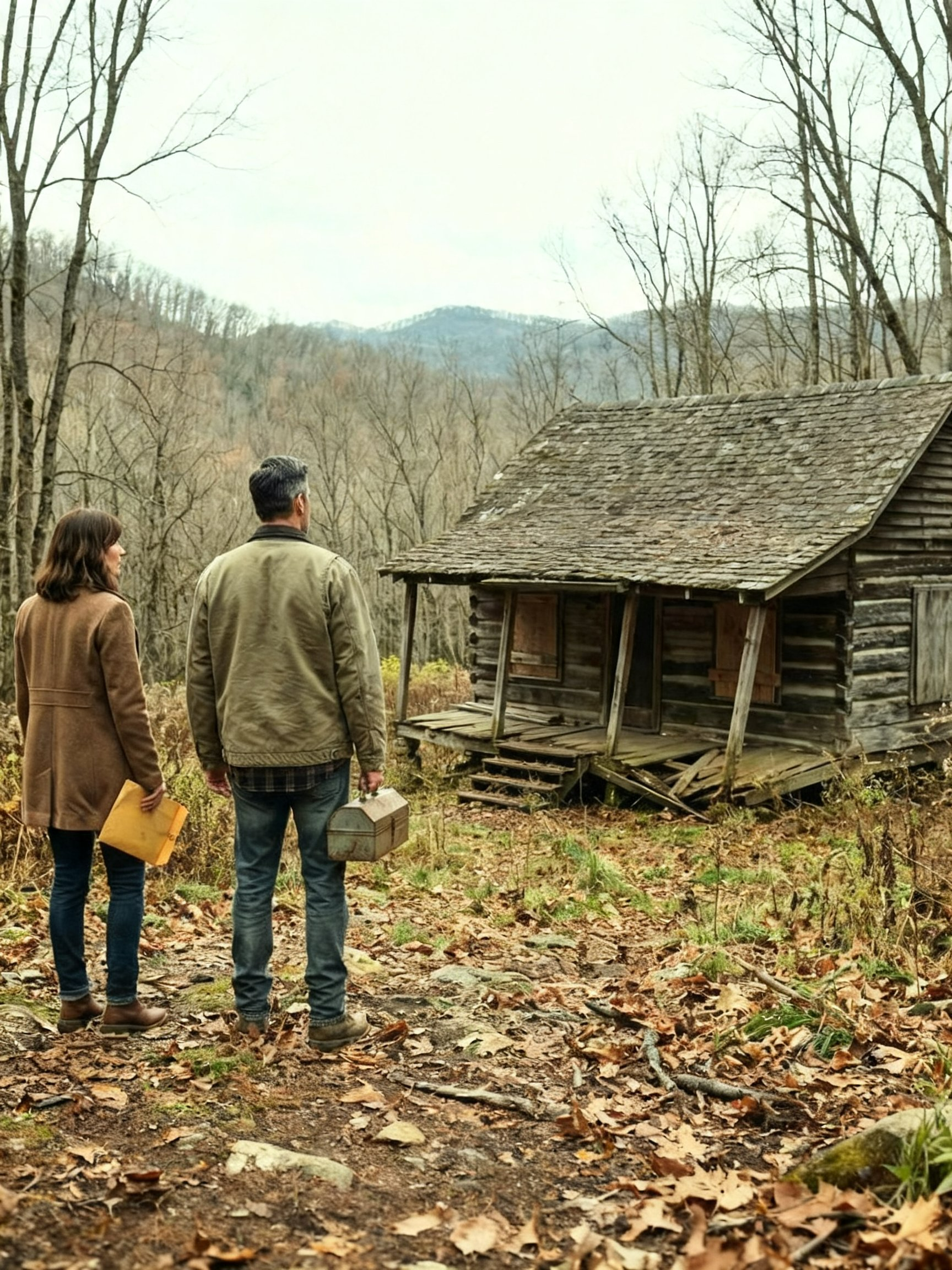
Rejected by Her Family at Forty, She Inherited Grandpa’s Ruined Cabin—Then Found the Fortune They Thought They Owned
“Three days is enough, Claire. You need to leave.”
My brother Ryan said it while eating the pot roast I had cooked in our mother’s kitchen.
He did not raise his voice.
He did not have to.
My sister Vanessa sat across from him beneath the chandelier I had paid to repair seven years earlier, swirling red wine in one of the crystal glasses I had bought Mom for Christmas. Uncle Curtis stood near the fireplace with both hands in his pockets, staring at me with the expression people use when they are waiting for a stray dog to understand that the porch does not belong to it.
Three days.
That was how long my family had allowed me to stay in the house after Grandpa Elias’s funeral.
I was forty years old.
Recently laid off after the regional publishing company where I had worked for seventeen years shut down its Asheville office.
According to my family, these facts had somehow become evidence of a moral failure.
Vanessa tilted her head.
“You knew this wasn’t permanent.”
I looked at her.
She wore a cream cashmere sweater, diamond studs, and the same expression she had worn at sixteen when Dad gave her a new Jeep and told me I should be happy for her.
“I arrived Sunday night,” I said.
“It’s Wednesday,” Ryan replied.
That was all I said.
Ryan seemed disappointed.
He had expected tears.
Vanessa had probably expected shouting.
Uncle Curtis almost certainly expected me to remind everyone that I had spent the previous decade being the person they called whenever somebody needed money, medicine, a ride to a hospital, a tax form corrected, a roof patched, a dog picked up, an elderly relative fed, or a family embarrassment quietly handled before the neighbors found out.
I did none of that.
I folded my napkin.
Placed it beside my plate.
And asked, “What time do you want me gone?”
Silence moved around the table.
That was the first moment Ryan looked uncertain.
Not guilty.
There is a difference.
People become nervous when someone they have spent years hurting finally stops explaining the pain.
“Tomorrow morning would be best,” Vanessa said.
“Eight?” I asked.
“Nine is fine.”
I stood and carried my plate to the sink.
Behind me, Ryan exhaled.
He thought he had won.
That assumption would cost him almost everything he owned.
My family had always mistaken silence for surrender.
Grandpa Elias never did.
That was probably why, two days later, I was standing outside an abandoned cabin thirty-seven miles northwest of Asheville with his old brass key in my palm.
The cabin sat beyond a narrow mountain road lined with rhododendrons, white pines, and October maples burning orange against the Blue Ridge sky. The property had not been lived in for at least twenty years. One shutter hung crooked. Moss covered half the roof. The porch sagged in the middle. A black walnut tree had pushed roots beneath the stone steps hard enough to tilt them.
Ryan had laughed when the attorney announced that Grandpa had left it to me.
The will reading had taken place that morning in the conference room of Bradshaw, Keen & Morrow, the law firm that had handled my family’s business affairs since before I was born.
Grandpa’s estate looked impressive on paper.
There were investment accounts.
Three rental buildings in Asheville.
A commercial warehouse.
Several hundred acres of mountain property.
A controlling interest in Bennett Ridge Holdings, the family company Grandpa had built from a two-truck excavation business in 1968.
But almost all of it had already been transferred into trusts or company entities years earlier.
Ryan received voting shares.
Vanessa received cash and real estate.
Uncle Curtis received land.
There were gifts for grandchildren and great-grandchildren.
Then the attorney, Martin Bradshaw, cleared his throat.
“And to my granddaughter, Claire Anne Bennett, I leave the property known as Hawthorn Cabin, together with all fixtures, contents, appurtenant rights, historical records, and associated instruments located therein.”
Ryan laughed before Martin finished.
He actually laughed.
Vanessa covered her mouth, pretending she was suppressing a cough.
Uncle Curtis looked at me almost pityingly.
Hawthorn Cabin was family folklore.
The worthless place.
The old mountain shack.
Grandpa’s mistake.
Dad used to joke that even raccoons had moved somewhere better.
Twenty-six acres of steep, rocky land surrounded the structure, according to the county tax map. No public water. No municipal sewer. Spotty electricity. The access road washed out nearly every spring.
Ryan had just inherited company holdings worth several million dollars.
Vanessa had received a mountain vacation home.
I had received a rotten cabin.
Martin Bradshaw slid a small envelope across the polished conference table.
“This was specifically directed to Claire.”
Ryan leaned back.
“Maybe there’s a Home Depot gift card in there.”
Nobody laughed except Vanessa.
I opened the envelope.
Inside was the brass key.
And a piece of paper in Grandpa’s handwriting.
Only thirteen words.
CLAIRE—GO ALONE. LOOK UNDER WHAT YOUR GRANDMOTHER REFUSED TO THROW AWAY. DO NOT SIGN ANYTHING.
I read it twice.
Then folded it.
Ryan leaned forward.
“What does it say?”
“Nothing important.”
His eyes narrowed.
That was the second time he looked uncertain.
I slipped the note into my purse.
Martin Bradshaw asked me to sign an acknowledgment that I had received my inheritance.
I read every page.
Grandpa had taught me that.
Never sign a page because someone else looks impatient.
Near the signature line was language confirming that I accepted Hawthorn Cabin “in full satisfaction of any claim, known or unknown, arising from ancillary property instruments associated with the estate.”
Martin’s pen remained suspended above the table.
“Problem?” he asked.
“What are ancillary property instruments?”
“Standard language.”
“That wasn’t my question.”
Ryan groaned.
“Claire, for God’s sake.”
Martin smiled.
The smile contained no warmth.
“It refers to miscellaneous historical records that may exist with the property. Old surveys. Expired options. Mineral leases. Things of that nature.”
I remembered Grandpa’s note.
DO NOT SIGN ANYTHING.
I closed the folder.
“I’ll have someone else review it.”
Ryan’s chair scraped backward.
“Someone else?”
“We’ve used Bradshaw’s firm for thirty years.”
“That’s why I want someone else.”
Vanessa gave me a long, disgusted look.
“You inherited a collapsing shack and now you think there’s a conspiracy?”
I put the folder into my bag.
“I think Grandpa told me not to sign something, so I’m not signing it.”
Uncle Curtis laughed.
“You always were dramatic.”
I looked at him.
“No, Uncle Curtis. I was useful.”
That quieted the room.
Then I left.
By five that afternoon, I was inside Hawthorn Cabin.
The first room smelled of wet timber, mouse nests, cold stone, and years of abandonment.
Dust covered everything.
The fireplace was enormous, built from river rock blackened by decades of smoke. An iron kettle hung from a hook. A faded braided rug curled at the corners. Against the wall stood a pine table with three chairs.
I walked slowly.
I had been there once before.
I was nine.
Grandma Ruth had still been alive.
She and Grandpa brought me for a weekend after my parents canceled my birthday camping trip because Vanessa had a dance competition.
Grandma had taught me to make biscuits on that table.
Grandpa had taken me fishing.
At night, we played cards beneath a kerosene lamp while rain struck the tin roof.
I remembered Grandma pointing at a huge wooden cabinet beside the fireplace.
Never let your grandfather throw that thing away, she had said.
It’s ugly enough to scare death itself.
I turned toward it.
A pie safe.
That was what Grandma refused to throw away.
It had belonged to her mother.
The cabinet leaned against the wall, warped and gray beneath decades of grime.
I pulled it forward.
I opened the doors.
Empty shelves.
Mouse droppings.
An old flour sack.
A rusted biscuit cutter.
I nearly laughed at myself.
Then I noticed the back panel.
Four screws.
Three were rusted.
One was new.
My pulse slowed.
That sounds strange, but it is true.
Fear makes some people’s hearts race.
Mine becomes deliberate.
I found Grandpa’s old toolbox beneath the sink and removed the screws.
Behind the panel was a narrow cavity.
Inside sat a rectangular metal box wrapped in oilcloth.
My hands froze.
For the first time since the dinner table, emotion broke through the numbness.
Not excitement.
Recognition.
Grandpa had meant this.
Not metaphorically.
Not sentimentally.
He had hidden something for me.
I lifted the box onto the table.
The brass key fit.
Inside were five objects.
A leather ledger.
A sealed envelope with my name on it.
A blue survey map.
An old photograph.
And a document packet stamped with the words APPALACHIAN HERITAGE TRUST—ORIGINAL INSTRUMENTS.
I stared at the packet for almost a minute.
Then I opened Grandpa’s letter.
If you are reading this, they gave you the cabin because they still believe the cabin is worthless.
Let them believe it a little longer.
Your father knew part of what I am about to tell you. Curtis knows more than he admits. Ryan knows only what he has been taught, which may make him the most dangerous of them because ignorance mixed with entitlement is a powerful drug.
Hawthorn is not twenty-six acres.
Hawthorn is the key to everything around it.
Do not call Martin Bradshaw.
Do not give any document to Bennett Ridge Holdings.
Do not confront your family until you understand the map.
And, Claire, if they tell you that I lost my mind near the end, remember who visited me when I was sick and who visited only when papers needed signatures.
I sat down.
Outside, wind moved through the trees.
I unfolded the blue map.
At first I thought Grandpa had lost his mind after all.
The survey did not show twenty-six acres.
It showed 4,812.
The boundary ran across entire ridgelines, streams, timber stands, valley roads, and parcels that now contained expensive vacation houses.
In the center was Hawthorn Cabin.
Red lines spread outward from it like veins.
Stamped in the lower corner was a date.
October 14, 1979.
I opened the trust packet.
The language was dense, but one sentence appeared repeatedly.
Hawthorn Tract.
4,812.6 acres.
Held in perpetual private trust.
Beneficial succession to descend through the designated Ruth Bennett line.
Grandma Ruth.
My grandmother.
Not Grandpa.
I kept reading.
And then I found my name.
Not handwritten.
CLAIRE ANNE BENNETT.
Successor beneficiary.
My hands began shaking.
Walked outside.
Breathed cold mountain air.
Then went back inside.
For the next six hours, I read.
The story buried in those papers began before I was born.
Grandma Ruth had inherited nearly five thousand acres from her father, Samuel Hawthorne, whose family had owned timber and mineral land across western North Carolina since the 1920s.
By the 1970s, the land was worth little compared with what it would become later.
Samuel distrusted developers.
He had watched logging companies strip neighboring mountains and leave families with contaminated wells and worthless slopes.
So before he died, he placed the land into a private conservation-oriented family trust.
Grandma became beneficiary.
Grandpa became managing trustee only through marriage.
But there was a condition.
The core trust property could not be sold outright.
It could be leased.
It could grant road access.
It could license timber under restrictions.
It could receive royalties.
But ownership itself had to pass through Grandma Ruth’s designated bloodline successor.
That successor had originally been my father, Thomas.
Except Dad had signed a disclaimer in 1998.
I found it in the packet.
The ledger explained.
Grandpa kept notes obsessively.
Dad had accumulated gambling debt in the 1990s.
More than $600,000.
Grandpa paid much of it.
In exchange, Dad disclaimed succession rights to protect the Hawthorn land from creditors.
Grandma then amended the beneficiary designation.
She chose me.
I was twelve years old.
My throat tightened.
At twelve, I had believed Grandma simply liked taking me into the woods.
I had believed Grandpa was teaching me how to identify property markers because old people enjoyed strange hobbies.
Survey pin.
Creek boundary.
Old logging road.
Never trust a fence until you find the deed.
He had been teaching the future beneficiary to recognize her own land.
The trust was not the fortune.
The fortune came from what my family had done with it.
Over the next twenty years, Bennett Ridge Holdings developed property all across those mountains.
Luxury cabins.
Private roads.
Utility easements.
A golf community.
Two commercial lodges.
Cell tower leases.
Timber contracts.
Much of the infrastructure crossed Hawthorn trust land.
Some of the developments themselves sat on parcels my family had represented to banks as company-owned.
Grandpa’s ledger contained copies of payments.
Road easement fees.
Water rights.
Timber royalties.
Lease percentages.
For years, Bennett Ridge Holdings had apparently paid the trust.
Then the payments stopped.
The final full payment was dated fourteen years earlier.
After that, numbers were crossed out.
Notes appeared in Grandpa’s handwriting.
CURTIS SAYS COMPANY CANNOT AFFORD FULL ROYALTY.
THOMAS PROMISES ACCOUNTING.
MARTIN SAYS TEMPORARY CONSOLIDATION.
NO CONSENT GIVEN.
Then, eleven years earlier:
DISCOVERED DEED RECORDED WITHOUT RUTH’S TRUST CERTIFICATE.
SIGNATURE NOT MINE.
THEY THINK THE OLD MAN DOESN’T READ.
CLAIRE MUST NEVER SIGN RELEASE.
I looked at the fireplace until the flames blurred.
Eleven years earlier.
I remembered that year.
Grandpa had suffered a stroke.
He needed help with groceries and physical therapy.
Ryan was building his first house.
Vanessa had just married.
Uncle Curtis said he was too busy running the company.
Dad visited twice that month.
I went every Tuesday, Thursday, and Sunday.
For fourteen months.
I cut Grandpa’s pills in half when the dosage changed.
I drove him to rehabilitation.
I helped him shower when he was too proud to ask the home health aide.
I sat beside him when he struggled to speak.
Sometimes he became angry.
Sometimes he threw things.
Once he hurled a plastic cup at the wall because he could not remember the word refrigerator.
Everyone called him difficult.
I called him Grandpa.
I never knew that during those same months, members of our family were quietly moving land around him.
The next morning, I drove to Hendersonville and met a lawyer named Evelyn Shaw.
I chose her for one reason.
Twenty-three years earlier, she had sued Bennett Ridge Holdings.
I remembered Grandpa saying she was the most irritating woman in three counties.
From him, that was praise.
Evelyn was sixty-three, silver-haired, narrow-eyed, and entirely unimpressed by family reputations.
She read Grandpa’s letter.
Then the trust.
Then the disclaimer.
Then the survey.
Halfway through the recorded deed, she stopped.
“Where did you get this?”
“Cabin wall.”
“That’s not what I mean. Where did Elias get it?”
“I don’t know.”
She flipped another page.
“Claire, has anyone else seen these?”
She stood and locked her office door.
That was the first moment I understood the scale of what I had found.
Evelyn spent six hours reviewing the documents.
At sunset she removed her glasses.
“I need title researchers. A forensic document examiner. Possibly a trust specialist. We also need the county records.”
“For whom?”
“My family.”
She stared at me.
“Potentially catastrophic.”
I said nothing.
She tapped the forged deed.
“This instrument purportedly moved approximately thirty-one hundred acres from the Hawthorn trust into Bennett Ridge Holdings eleven years ago.”
“Grandpa said he didn’t sign it.”
“The signature appears notarized.”
“So the notary was Martin Bradshaw’s former legal assistant.”
My stomach tightened.
Evelyn continued.
“The deed then became part of the collateral package for at least three development loans.”
“How much?”
“I don’t know yet.”
“I don’t like guessing.”
“Neither do I.”
She studied me.
“Possibly tens of millions.”
I looked out the window.
Cars moved along Main Street.
People walked dogs.
A teenager carried takeout pizza.
The world appeared offensive in its normality.
“Can they take the cabin?”
“Can they destroy the documents?”
“Not if we move correctly.”
“What do we do?”
Evelyn gave me the first advice that would save everything.
“We let them think you know almost nothing.”
I moved into Hawthorn Cabin.
That infuriated Vanessa more than anger would have.
Within a week, she posted photographs online from the family’s annual fall dinner.
Everyone was there.
His wife, Melissa.
Their children.
Vanessa and her husband.
Uncle Curtis.
Three cousins.
Dad’s sister Linda.
Even Martin Bradshaw.
The caption said FAMILY IS EVERYTHING.
I saw it while replacing rotten boards on Grandpa’s porch.
I stared at it for perhaps ten seconds.
Then put my phone away and kept working.
I had done enough begging in my life.
I had begged Dad to attend my college graduation.
I had begged Mom to stop comparing me to Vanessa.
I had begged Ryan to repay the $18,000 I loaned him when his contracting business nearly failed.
I had begged relatives to visit Grandpa during physical therapy.
I had begged people I loved to behave as though loving me was not an inconvenience.
At forty, I was finished auditioning for my own family.
Evelyn’s investigators began assembling the hidden history.
What they found was worse than Grandpa’s ledger suggested.
Bennett Ridge Holdings had spent more than a decade treating trust assets as corporate property.
The mountain road serving fifty-eight luxury homes crossed Hawthorn land.
The underground water line feeding the Ridge Crest development crossed Hawthorn land.
Two cellular towers sat on Hawthorn land.
A stone quarry leased by a regional construction supplier sat on Hawthorn land.
Three hundred and forty acres of managed timber sat on Hawthorn land.
A high-end lodge advertised as being surrounded by “privately preserved wilderness” was, ironically, surrounded by Hawthorn land.
And the family company had collected millions from those uses.
Ryan was not merely benefiting.
He had expanded them.
Six years earlier, after Grandpa’s health declined further, Ryan had signed a refinancing package certifying Bennett Ridge Holdings had clear title to several trust parcels.
Vanessa, who handled marketing and investor relations, had presented the same properties in company materials.
Uncle Curtis had signed the original internal transfers.
Martin Bradshaw had prepared them.
The system was complete.
Bank financing.
Friendly surveyors.
Nobody needed to be a mastermind.
They simply needed everyone else to agree not to ask questions.
Then I found out why they had evicted me after three days.
It had never been about wanting me gone.
Not really.
They needed me at the cabin.
Or rather, they needed me to accept it.
Evelyn discovered an email during preliminary document requests connected to Grandpa’s probate file.
Ryan had written Martin ten days before the funeral.
If Claire receives Hawthorn and signs the estate acknowledgment, does that close the old beneficiary issue?
Martin replied:
It materially strengthens our position. Especially if she takes possession without objection.
I read the email twice.
The humiliation at dinner suddenly changed shape.
They had not simply thrown me away.
They had staged my exit.
Make Claire feel unwanted.
Give Claire the worthless cabin.
Let Claire accept it.
Let Claire sign.
Then use her acceptance to argue that any old trust rights had been resolved through the estate.
Vanessa’s cruelty had not necessarily been planned in every detail.
She did not need a plan to be cruel.
But Ryan’s timing was.
They believed the family failure at forty would be so grateful for any roof that I would sign whatever papers put a roof over my head.
Instead, I had read Grandpa’s note.
DO NOT SIGN ANYTHING.
I sat in Evelyn’s office with the email on the desk.
“I want to sue.”
“All of them.”
“Probably.”
“I want the land back.”
“That may happen.”
“And the money?”
“Potentially.”
I looked at her.
“Potentially isn’t enough.”
Evelyn leaned back.
“This is the part where you decide what you actually want, Claire.”
“What do you mean?”
“If we can prove fraud, breach of fiduciary duty, improper conveyance, and unjust enrichment, the damages could be enormous. But litigation is not vengeance with paperwork. It will take patience. Your family will attack your credibility. They’ll say Elias was incompetent. They’ll say Ruth’s trust terminated. They’ll say you waived rights. They’ll say records are incomplete. They may accuse you of manipulating a sick old man.”
That hurt more than I expected.
Because I knew they would.
Grandpa and I had been close.
They would turn that love into evidence against me.
Evelyn watched my face.
“You need a reason stronger than making them suffer.”
I thought about Grandpa.
About Grandma Ruth.
About the streams Grandpa refused to let companies poison.
About the families living along the old valley road.
About how often the Bennett name had been used as a threat rather than a responsibility.
Then I remembered something in Grandpa’s ledger.
A list of names.
Twenty-three families.
Beside each one was a number.
I had assumed they were rental accounts.
I asked Evelyn to investigate.
Three days later she called me.
Those families had once owned small parcels beside the Hawthorn tract.
During the recession, Bennett Ridge Holdings purchased easements from them.
Several sales had occurred after the company told owners that a new highway project would eliminate their access.
No highway project existed.
The company later used the acquired strips to assemble private roads for luxury development.
Some families had been paid less than ten cents on the dollar compared with what the company earned later.
One name stopped me.
Walter Greene.
When I was fourteen, Walter Greene repaired Grandpa’s tractor.
His wife baked peach pies.
They had lived in a white farmhouse beside the creek.
I remembered their daughter, Amy.
Grandpa’s ledger contained one line beside their name.
CURTIS LIED TO WALTER. MAKE THIS RIGHT IF I CAN’T.
That became my reason.
Not Vanessa.
Not the dinner table.
Not even the money.
I wanted the entire story opened.
For once, I wanted every quiet thing counted.
Every sacrifice.
Every signature.
Every acre.
Every person my family had decided did not matter.
Two weeks after I moved into the cabin, Ryan arrived in a black Range Rover.
I saw him through the window.
He was wearing expensive boots he had probably never used for work.
I left him standing outside for nearly a minute before opening the door.
He looked past me.
“You’re actually living here?”
“You have heat?”
“Wood stove.”
“This is ridiculous.”
“I like it.”
“You like mold?”
“Some of it has personality.”
That almost made him smile.
Then he remembered why he was there.
He handed me a folder.
“Martin cleaned up the estate paperwork.”
“I’m not signing anything yet.”
His jaw tightened.
“It’s been two weeks.”
“What exactly are you waiting for?”
“I’m fixing the roof.”
“That has nothing to do with probate.”
“Then why bring it up?”
“Because I’m fixing the roof.”
Ryan stared at me as if he had forgotten the language we were speaking.
He stepped closer.
“Did Grandpa leave papers here?”
There it was.
Too direct.
I looked at him.
“What kind of papers?”
“Old records.”
“I found Sears catalogs from 1987.”
“I’m serious.”
“So am I. Their winter coats were incredible.”
I smiled slightly.
That frightened him.
“Why?” I asked. “Is something missing?”
He answered too quickly.
I lowered my voice.
“Then there’s nothing to worry about.”
He left twelve minutes later.
That evening, Evelyn called.
“Did you tell him anything?”
“Good. Because this afternoon Bennett Ridge Holdings filed a petition asking the probate court to compel execution of the estate acknowledgment.”
I looked toward the pie safe.
“They’re scared.”
“How scared?”
“Scared people make mistakes.”
My family began making them immediately.
Vanessa called Aunt Linda and told her I was mentally unstable.
Aunt Linda told Cousin Megan.
Megan texted me asking whether I was okay.
Ryan told a family friend that Grandpa had suffered dementia.
Uncle Curtis contacted a retired doctor who had once treated Grandpa after his stroke.
Martin sent a letter claiming the trust documents, if any existed, had likely been superseded.
The more they moved, the clearer the picture became.
And then they made their biggest mistake.
They tried to buy the cabin.
Ryan offered $185,000.
The county tax value was $74,000.
I declined.
He offered $300,000.
I declined.
Two days later Vanessa drove up.
She did not enter.
She stood beside her Mercedes wearing a camel-colored coat and high-heeled boots entirely unsuited for mud.
“You’ve always done this,” she said.
“Done what?”
“Made everything difficult.”
“For whom?”
“For everyone.”
I leaned against the porch railing.
“You came thirty-seven miles to tell me I’m difficult?”
“I came because Ryan is trying to help you.”
“With $300,000?”
“It’s generous.”
“For a ruined cabin?”
Her eyes moved.
Toward the tree line.
That was enough.
I said, “Four hundred.”
Her face changed.
But enough.
“Are you serious?”
“Claire, grow up.”
“I’m forty. Apparently that was the problem.”
She folded her arms.
“You think Grandpa left you some secret treasure, don’t you?”
I said nothing.
She laughed.
“Oh my God. You do.”
I let her laugh.
“He was senile, Claire.”
My fingers tightened against the railing.
That was the blade.
Not being thrown out.
Not being mocked.
Grandpa had spent the last years of his life fighting to recover speech, movement, dignity, and control while people who wanted his signature called him senile.
I wanted to cross the porch.
I wanted to slap her.
Instead I asked, “Why are you here, Vanessa?”
“To save you from embarrassing yourself.”
“You never worried about that before.”
She stared.
I continued softly.
“Did you visit him the week after his stroke?”
“That has nothing to do with this.”
“Month after?”
“Did you ever help him learn to walk again?”
She turned toward her car.
“Enjoy your shack.”
She looked back.
“Tell Ryan the price is five hundred now.”
She slammed the door hard enough to shake the window.
The next morning, Bennett Ridge Holdings offered $600,000.
Evelyn laughed for nearly a full minute.
Then her expression became serious.
“They know.”
“Everything?”
“No. If they knew everything, they wouldn’t be offering six hundred thousand.”
“What do they think I found?”
“Probably the original trust.”
“And what don’t they know?”
She placed a newly discovered document on the table.
It was an amendment.
Executed by Grandma Ruth eleven months before she died.
Grandpa had referenced it, but Evelyn’s researchers had located the recorded counterpart in an archival index under Grandma’s maiden name.
The amendment contained a forfeiture provision.
Any trustee, beneficiary, manager, heir, or related entity that knowingly attempted to conceal, improperly convey, or encumber core trust property for personal gain forfeited any claim to income derived from the trust.
I read it again.
“What does that mean?”
“It means if we prove knowing fraud, they didn’t merely fail to acquire Hawthorn.”
She tapped the page.
“They may owe the trust what they earned from it.”
“How much?”
“We commissioned a preliminary accounting.”
She turned a page around.
The number at the bottom was $46,870,000.
I did not react.
Evelyn watched me.
“That’s estimated gross benefit across royalties, easement value, development premiums, water access, timber, quarry income, and financing advantages. Recoverable damages could be less. With interest and punitive claims, they could also be more.”
I thought about Ryan offering me $600,000.
“What is the land itself worth?”
“Conservatively?”
“With development restrictions in place, perhaps twenty-two to thirty million. Without them, much more. But Ruth intentionally restricted development.”
“So I can’t sell it for a fortune.”
“You could probably restructure portions with court approval, but if your question is whether you inherited five thousand acres you can bulldoze into subdivisions, the answer is no.”
Evelyn looked surprised.
“You don’t want to?”
“Because Grandma didn’t.”
For the first time, Evelyn smiled back.
“That may become legally relevant.”
Three months passed.
Winter came early.
I repaired the cabin slowly.
Not because I had money.
Because I had time.
I refinished Grandma’s table.
Repaired the chimney.
Installed a proper furnace.
Replaced the roof.
I kept the pie safe exactly as it was.
In December, Ryan filed suit.
The complaint alleged the trust had terminated decades earlier.
It accused me of withholding estate property.
It demanded I surrender any documents found in Grandpa’s cabin.
It requested a court declaration confirming Bennett Ridge Holdings’ ownership of the disputed land.
My family believed attack was strength.
Evelyn believed timing was strength.
She waited.
Then filed our response.
One hundred and eighty-seven pages.
Original trust instruments.
Recorded amendments.
Title history.
Bank records.
Royalty ledgers.
Forensic handwriting analysis.
Correspondence.
Grandpa’s notes.
Historical maps.
Photographs of survey pins.
The suspicious deed.
The notary connection.
Ryan’s certification to lenders.
Curtis’s internal memos.
Vanessa’s investor materials.
And the email about getting me to accept Hawthorn and sign away “the old beneficiary issue.”
The lawsuit did not remain private for long.
A local newspaper found it.
Then a regional business publication.
BENNETT FAMILY LAND DISPUTE THREATENS MOUNTAIN DEVELOPMENTS.
The company issued a statement calling my claims “meritless.”
Ryan told reporters the documents had been “misinterpreted by a disgruntled relative.”
Disgruntled.
That word amused me.
It sounded so much smaller than betrayed.
Then the lender notices began.
Three banks demanded clarification of title.
The quarry operator suspended expansion.
The cell tower company escrowed payments.
Homeowners in Ridge Crest discovered portions of their only access road crossed contested trust property.
Ryan’s investors panicked.
And Vanessa called me at 11:43 one night.
I answered.
She was crying.
I had heard my sister cry many times.
At weddings.
During breakups.
When a salon ruined her hair before senior pictures.
When her first house closing was delayed.
When Mom criticized her parenting.
This cry was different.
“Do you understand what you’re doing?”
“People could lose everything.”
“So could the people you took it from.”
“We didn’t take anything.”
“Then discovery should be easy.”
She inhaled sharply.
“You’re enjoying this.”
“You always resented us.”
“Ryan worked for that company his whole life.”
“So did Grandpa.”
“Dad built it.”
“Grandpa built it.”
“Dad expanded it.”
“With whose land?”
Then Vanessa said the sentence that finally killed something inside me.
“You were never part of this, Claire. You don’t understand what it takes to protect a family.”
I sat in Grandpa’s chair beside the fire.
For decades, I had wondered whether my family understood how much those words hurt.
That night I realized something simpler.
They understood.
They just believed pain was acceptable when it happened to me.
I said, “You’re right.”
Vanessa stopped.
“I was never part of what you were protecting.”
I ended the call.
The next morning, I slept better than I had in years.
The case expanded.
Former employees contacted Evelyn.
A retired bookkeeper named Samuel Price produced copies of internal ledgers he had kept because he believed Curtis was hiding revenue from Grandpa.
A former survey technician admitted he had been instructed to remove references to the Hawthorn trust from development maps.
The notary, now living in Florida, testified that she had notarized a stack of documents brought to her by Martin Bradshaw.
She could not specifically remember seeing Grandpa sign the disputed deed.
Then the forensic report arrived.
Grandpa’s signature had been traced.
Not obviously.
But conclusively enough that three examiners independently found indications of mechanical reproduction.
Martin Bradshaw withdrew as estate counsel.
Two weeks later, his law firm placed him on leave.
My family stopped calling me greedy.
They started calling me dangerous.
Uncle Curtis came to the cabin in January.
He was seventy-two then.
For the first time in my life, he looked old.
Not powerful.
Not intimidating.
Snow covered the road.
He stood on the porch holding no folder.
No paperwork.
“Can I come in?”
He sat at Grandma’s table.
His eyes stopped on the pie safe.
“So that’s where he put them.”
I did not answer.
Curtis gave a tired laugh.
“Should’ve burned that ugly thing.”
“Grandma loved it.”
“She hated it.”
That made him smile despite himself.
Then he looked at me.
“You think Elias was a saint?”
“He cheated people too.”
“Then show me.”
“He pushed Dad out of deals. He bullied everybody. He held grudges thirty years.”
“He treated Thomas like a disappointment.”
“He treated me worse.”
“I believe you.”
That unsettled him.
He had arrived ready for a fight.
I would not give him one.
He rubbed both hands over his face.
“The company was going under.”
“After the recession.”
“So you moved trust land.”
“We consolidated.”
“You forged Grandpa’s signature.”
“I didn’t forge anything.”
“But you knew?”
That was answer enough.
I leaned forward.
“Why didn’t you ask him?”
“Because he would’ve said no.”
There it was.
The entire case in eight words.
Because he would have said no.
Curtis looked toward the fire.
“We saved hundreds of jobs.”
“Then why hide it?”
“You think business is clean?”
“You think your hands stay clean when fifty families depend on payroll?”
“You think Elias never bent rules?”
He slammed his palm against the table.
“Then stop saying no like you understand!”
His breathing slowed.
Then I asked, “Did Walter Greene know there was no highway project?”
Curtis went still.
The anger disappeared.
He looked at me.
“How do you know about Walter?”
“That old bastard.”
“Did Walter know?”
Curtis stood.
“You don’t understand anything.”
“Maybe not.”
I looked up at him.
“So explain it.”
He left without answering.
That was when I knew we would win.
Not because Curtis had admitted fraud.
He had not.
Not formally.
Not on tape.
I knew because guilty people eventually stop defending what they did and start explaining why they deserved to do it.
By spring, settlement talks began.
Ryan arrived with four attorneys.
Vanessa came with two.
Curtis had separate counsel.
The company’s insurers had lawyers.
Two banks sent representatives.
Martin Bradshaw attended remotely through his own attorney.
Evelyn sat beside me.
The first offer was $3 million.
I declined.
Then $7 million.
I declined.
Ryan stared across the table.
“What do you want?”
“The trust recognized.”
“That’s not realistic.”
“Then we’re done.”
Evelyn closed her folder.
Their lead attorney asked us to remain.
The offer reached $12 million.
Then $18 million.
In exchange, I would validate existing land titles, release fraud claims, waive the forfeiture provision, and allow Bennett Ridge Holdings to retain control of the disputed property.
I declined.
Vanessa finally exploded.
“You live in a two-room cabin!”
Everyone stopped.
She pointed at me.
“You drove a twelve-year-old Subaru into this meeting. You wore the same black dress to Grandpa’s funeral and Mom’s anniversary dinner. You lost your job. You had to move into a shack because you had nowhere else to go. They’re offering you eighteen million dollars, Claire. Eighteen million. What exactly are you trying to prove?”
I looked at her.
“That I can read.”
Her attorney looked down.
Evelyn coughed to hide a laugh.
Vanessa’s face turned red.
Ryan leaned forward.
“What number?”
“It isn’t a number.”
“Everything has a number.”
“That’s your problem.”
I opened Grandpa’s ledger.
“Walter Greene.”
Curtis swore under his breath.
“Marjorie Bell.”
Another page.
“Daniel Everett.”
“Rosa and Henry Cole.”
Ryan frowned.
“What is this?”
“I know they’re people.”
The room became quiet.
I continued.
“Twenty-three families were pressured into selling easements or land after being given false information. The trust will review every transaction. Where the company profited through deception, restitution is part of any settlement.”
The lead attorney shook his head.
“Those transactions are decades old and involve separate entities.”
“Then litigate them.”
“Claire,” Ryan said.
I turned toward him.
He looked exhausted.
For the first time, the expensive suit did not make him look successful.
It made him look like a man trapped inside someone else’s idea of success.
“You’re going to destroy Grandpa’s company,” he said.
“You already are.”
“Grandpa’s company survived because Grandpa understood that land lasts longer than quarterly reports.”
Ryan laughed bitterly.
“You think he chose you because you were special?”
The answer came easily.
“I think he chose me because I showed up.”
That hurt him.
Because it was true.
I showed up when Grandpa could not walk.
I showed up when Mom needed surgery.
I showed up when Ryan needed a loan.
I showed up when Vanessa’s first marriage collapsed and she called me at two in the morning from a hotel in Charlotte.
I showed up when Dad drank too much after his business failed.
I showed up when Aunt Linda’s husband died.
I showed up at birthdays where nobody remembered mine.
I showed up to hospital rooms.
Emergency rooms.
Moving days.
Court dates.
School recitals.
Thanksgiving dinners.
I showed up.
I showed up.
I showed up.
And when I finally arrived somewhere carrying nothing but my own need, they gave me three days.
Nobody in the settlement room spoke.
Ryan looked down.
The negotiations failed that afternoon.
Trial preparations began.
Then, three weeks before the hearing, Evelyn received a call from the state attorney general’s office.
Our civil discovery had uncovered evidence that potentially involved fraudulent land records and lender certifications.
I had wanted justice.
I had not expected investigators.
Neither had Ryan.
The family system started breaking apart.
The former survey technician accepted immunity in exchange for cooperation in a state investigation.
The old bookkeeper turned over twenty-seven boxes of records.
Martin Bradshaw’s attorney began discussing a plea arrangement connected to document fraud.
A bank filed a separate action against Bennett Ridge Holdings.
The quarry operator sued.
Investors demanded Ryan step aside temporarily as CEO.
The board voted.
Ryan lost by one vote.
Vanessa resigned two days later.
Uncle Curtis entered the hospital with chest pain.
He survived.
For once, I was glad.
Death would have been too easy for all of us.
I did not want graves.
I wanted answers.
The civil hearing lasted nine days.
Grandpa’s competency became the centerpiece of their defense.
Ryan’s lawyers argued that Grandpa had become paranoid after his stroke.
They presented medical records showing cognitive difficulties.
They showed notes where Grandpa repeated himself.
They described his anger.
His confusion.
His mistrust.
Then Evelyn called Grandpa’s occupational therapist.
She explained that aphasia impaired his ability to retrieve words but did not necessarily impair judgment.
His neurologist testified that Grandpa understood property, numbers, and family relationships.
Then Evelyn displayed three documents side by side.
One genuine signature before the stroke.
One genuine signature after the stroke.
And the signature on the disputed deed.
The judge stared at them for a long time.
Next came the bank records.
Then the emails.
Then Grandma Ruth’s trust amendment.
Then the forfeiture clause.
On the eighth day, Ryan testified.
I watched my brother swear to tell the truth.
He said he believed the company owned the land.
Evelyn asked whether he had ever seen the original trust.
Whether Grandpa had ever personally told him Hawthorn belonged to Bennett Ridge Holdings.
Whether he had signed financing documents representing clear title.
Whether Martin Bradshaw had assured him the title issue was resolved.
Then Evelyn displayed Ryan’s email.
If Claire receives Hawthorn and signs the estate acknowledgment, does that close the old beneficiary issue?
She asked, “What old beneficiary issue?”
Ryan stopped breathing for a moment.
His attorney objected.
Ryan looked at the screen.
“I don’t remember.”
“You wrote the email.”
“I write hundreds.”
“What issue were you referring to?”
“I was relying on counsel.”
“Did counsel tell you Claire might possess a beneficial interest?”
“I don’t remember.”
“Did you know your grandfather disputed the company’s ownership?”
“I knew he was confused.”
“Did you know he accused someone of forging his signature?”
Ryan’s face changed.
The courtroom seemed to shrink.
Evelyn waited.
“When did you learn that?”
“Around 2017.”
“And after learning your grandfather alleged forgery, did you investigate?”
“I relied on counsel.”
“Did you disclose the allegation to the banks when refinancing property derived from that deed?”
His lawyer stood.
Ryan answered before the objection was completed.
That single word cost him more than money.
The judge ruled six weeks later.
The Hawthorn trust remained valid.
The disputed deed was void.
My status as successor beneficiary was confirmed.
The company had no ownership interest in the core trust acreage.
An accounting was ordered.
Fraud and breach claims could proceed.
The forfeiture provision was enforceable against parties shown to have knowingly participated in the improper conveyance.
Existing homeowners would not be evicted or lose access.
That mattered to me.
The trust would honor residential access under fair easement terms.
I had no interest in punishing families who bought homes without knowing the history.
The quarry, towers, utilities, timber contracts, and commercial developments were another matter.
They would pay.
That distinction became important.
Over the next year, the final settlement took shape.
Bennett Ridge Holdings surrendered several properties and paid $31 million into the Hawthorn trust through asset sales, insurance proceeds, and negotiated restitution.
Banks restructured remaining loans.
The company survived, smaller and under independent management.
Ryan lost control permanently.
Vanessa sold her vacation home to cover legal expenses and a personal settlement tied to investor representations.
Curtis surrendered his trust-related claims and testified in the state investigation.
Martin Bradshaw pleaded guilty to offenses connected to fraudulent recording and false instruments. He lost his law license.
No dramatic federal agents crashed through doors.
No one was dragged away from Christmas dinner.
Real consequences were slower.
Less cinematic.
And in some ways worse.
They happened in conference rooms.
Court orders.
Bank notices.
Professional disciplinary letters.
Properties sold quietly.
Board seats lost.
Names removed from buildings.
Phones that stopped ringing.
People who had always assumed the world would protect them discovered that paperwork could become a blade when someone finally read it carefully.
The twenty-three families in Grandpa’s ledger became my first priority.
Not all were alive.
Some cases could not be fully proven.
Some descendants wanted nothing.
Others did.
Walter Greene had died six years earlier.
His daughter Amy still lived in western North Carolina.
I met her at a diner.
She was fifty-one.
I had not seen her since childhood.
When I told her why, she stared at me for a long time.
“My father thought he was stupid,” she finally said.
I swallowed.
“After he sold. When the road project never happened. He thought he’d misunderstood something. Your uncle told him everybody else knew. Dad spent years believing he’d made the biggest mistake of his life.”
I looked down.
Amy continued.
“He stopped talking about it because he was embarrassed.”
That sentence nearly broke me.
Not millions.
Not forged deeds.
An old man carrying shame that belonged to someone else.
The trust paid Walter Greene’s estate restitution based on the independent appraisal of what had been unfairly obtained, adjusted for time.
Amy cried when I gave her the letter.
I had learned something about tears.
Sometimes they arrive when you are hurt.
Sometimes they wait until justice finally recognizes the shape of the wound.
The same process was used for the others.
Marjorie Bell’s grandchildren.
The Everett family.
A retired couple who had sold creek access after being told the county would condemn it anyway.
Not every story ended perfectly.
Money cannot return years.
It cannot resurrect people.
It cannot restore dignity retroactively.
But it can put the record straight.
Sometimes that matters.
The rest of the trust changed too.
I hired professional managers.
We placed 3,600 acres under permanent conservation easements.
The quarry lease was renegotiated with stricter environmental requirements and a restoration fund.
Timber harvesting became selective and locally managed.
The cell tower leases continued.
Road access continued.
Commercial royalties continued.
The trust generated more income than I would ever personally need.
I took a salary approved by independent trustees.
Not millions.
I established the Ruth and Elias Bennett Land Stewardship Fund for rural families facing predatory property practices.
Evelyn joined the advisory board after pretending she was not interested.
The cabin remained mine.
I could have built a house.
A large one.
I expanded Hawthorn modestly.
Two bedrooms.
A proper kitchen.
A screened porch.
I restored Grandma’s pie safe.
Except for the hidden panel.
That stayed.
Two years after Grandpa’s death, Ryan came back.
He drove an older truck.
Not because he was poor.
He was not.
But his life had contracted.
He had started a small construction consulting firm.
No family empire.
No company jet.
No boardroom full of people saying yes.
He stood on my porch holding a cardboard box.
“What’s that?”
“Grandpa’s things.”
I opened the door.
Ryan stepped inside.
He looked around.
The cabin no longer smelled abandoned.
Wood smoke.
Rain had begun tapping the windows.
He put the box on the table.
Inside were photographs.
Grandpa with Dad.
Grandpa with Curtis.
Grandpa holding Ryan as a baby.
Grandpa and me beside a trout stream when I was nine.
Ryan picked up that photograph.
“He really did always like you best.”
Ryan looked at me.
“He trusted me differently.”
“That sounds like the same thing.”
“It isn’t.”
For several minutes neither of us spoke.
Then he said, “I hated you.”
“No. I mean after the lawsuit.”
“I thought you wanted to ruin us.”
“I still think part of you did.”
I considered lying.
He looked surprised.
“I wanted you to feel it.”
“Feel what?”
I looked around the cabin.
“What it’s like when somebody else gets to decide you don’t count.”
Ryan stared at the table.
Rain grew harder.
He nodded once.
“I deserved that.”
“That isn’t the same as saying you deserved everything that happened.”
“Didn’t I?”
“I’m not the judge.”
He laughed softly.
“You kind of were.”
“No. That was the problem before. Everybody in this family thought they got to be the judge.”
He looked toward the pie safe.
“Was everything really in there?”
Ryan shook his head.
“We searched this place when Grandpa went into assisted living.”
My eyes lifted.
“You searched it?”
“Curtis did. I came once.”
“For what?”
“Documents.”
“So you knew.”
“Not what. Just that Grandpa had hidden records.”
I sat across from him.
“Why didn’t you tell me?”
“I didn’t think you mattered.”
There are sentences that would destroy you at twenty.
At forty-two, they can simply complete a puzzle.
Ryan began crying.
I did not move to comfort him.
Not because I hated him.
Because I had finally learned that love and rescue are not the same thing.
He wiped his face.
“I’m sorry.”
“I believe you.”
“Can you forgive me?”
That answer hurt him.
But truth sometimes does.
He stayed for coffee.
We did not become close.
That would have been a different kind of lie.
We became honest.
It was enough.
Vanessa took longer.
Four years.
She sent birthday cards first.
Then Christmas cards.
Then an email.
Eventually we met in Asheville.
She had changed.
Not magically.
People rarely do.
But humiliation had stripped away some of her certainty.
She apologized for the dinner.
For calling Grandpa senile.
For the settlement meeting.
For believing success made her more deserving than me.
I listened.
Then she said, “I always thought you judged me.”
“I did sometimes.”
She smiled.
“At least you admit it.”
“You judged me too.”
“All the time.”
We both laughed.
It was the first honest laugh we had shared since childhood.
Forgiveness did not restore the old family.
There was no old family worth restoring.
We built something smaller.
More cautious.
Uncle Curtis never apologized directly.
He mailed me a letter the year before he died.
Three pages.
Most of it was explanation.
A little was confession.
One paragraph mattered.
Your grandfather was right about one thing. I became so afraid of losing what we built that I stopped asking whether it was ours to keep.
I framed that paragraph.
Not because I loved Curtis.
Because it described the sickness that had infected my family for generations.
Possession without gratitude.
Power without stewardship.
Blood without loyalty.
When Curtis died, Ryan asked whether I would attend the funeral.
I stood in the second row.
Vanessa beside me.
Ryan on my other side.
People whispered.
Families love pretending funerals erase history.
They do not.
But sometimes they provide a place to put it down for an hour.
After the service, I drove alone to Hawthorn.
The mountain was green with early summer.
The road curved beside the creek.
Wildflowers covered the field where Grandpa once taught me to cast a fishing line.
Near sunset, I walked to the ridge above the cabin.
From there I could see miles of forest protected under the trust.
Somewhere below, families drove home along roads they no longer had to fear losing.
Water moved through streams no developer could fill without review.
Timber grew on slopes that would still be forest long after everyone who fought over them was gone.
Grandma Ruth’s inheritance was worth more than it had ever been worth on paper.
Not because of market value.
Because it had survived us.
I finally understood why Grandpa left me the cabin instead of simply naming the fortune in his will.
If he had written five thousand acres, everyone would have fought before his funeral flowers wilted.
If he had written forty million dollars, greed would have filled the room before grief had a chance.
Instead he left me what everyone believed was worthless.
A broken cabin.
An ugly cabinet.
A brass key.
And the opportunity to discover whether I would treat inheritance the way they had.
As possession.
Or as responsibility.
For most of my life, I thought being overlooked was proof that I had failed.
I watched Ryan receive praise for ambition while I quietly covered his mistakes.
I watched Vanessa receive affection for being charming while I remembered everyone’s medications and birthdays.
I watched relatives praise the people who arrived for photographs and forget the person who arrived before sunrise to unlock the door.
I believed visibility was value.
Grandpa knew better.
Sometimes the person everyone ignores sees everything.
Sometimes the child who receives the smallest gift is being handed the only thing that matters.
Sometimes getting thrown out of one house is the only way you find the place that was waiting for you.
I was forty when my family decided I had become an embarrassment.
Forty when they gave me three days.
Forty when they laughed because an old man left me a collapsing cabin in the mountains.
Forty when they believed I was too broke, too lonely, too ordinary, and too grateful to ask questions.
They thought I would sign.
They thought I would disappear.
They thought silence meant I had nothing to say.
Grandpa knew my silence better.
He knew I used it when I was watching.
When I was reading.
When I was remembering.
When I was deciding whether someone deserved another chance.
Years later, I placed his brass key inside a small glass case beside Grandma’s photograph.
Visitors sometimes ask why a key to a cabin that no longer uses that lock deserves such a prominent place.
I tell them it did not open a door.
It opened a record.
A record of land.
A record of theft.
A record of sacrifice.
A record of the people who had been convinced their losses did not matter.
And, finally, a record of me.
Not the failed daughter.
Not the unwanted sister.
Not the forty-year-old woman sleeping under someone else’s roof until her family decided three days was enough.
The beneficiary.
The witness.
The person who showed up.
One evening Ryan stood beside the case studying the old key.
He smiled sadly and said, “Funny, isn’t it? We spent our whole lives thinking Grandpa left the important things to the people who mattered.”
I looked through the window toward the mountains Grandma had protected and Grandpa had refused to surrender.
Then I asked the quietest question I had ever asked my brother.
“If I was the one who never belonged in this family, Ryan, why was I the only one Grandpa trusted with the key?”
✓ Lynn R. Adams
Rejected by Her Family at Forty, She Inherited Grandpa’s Ruined Cabin—Then Found the Fortune They Thought They Owned “Three days is enough, Claire. You need to leave.” My brother Ryan said it while …