Pregnant and Homeless, She Took Refuge in Her Father’s Abandoned Lodge—Then Dug Up the Secret Her Family Had Buried
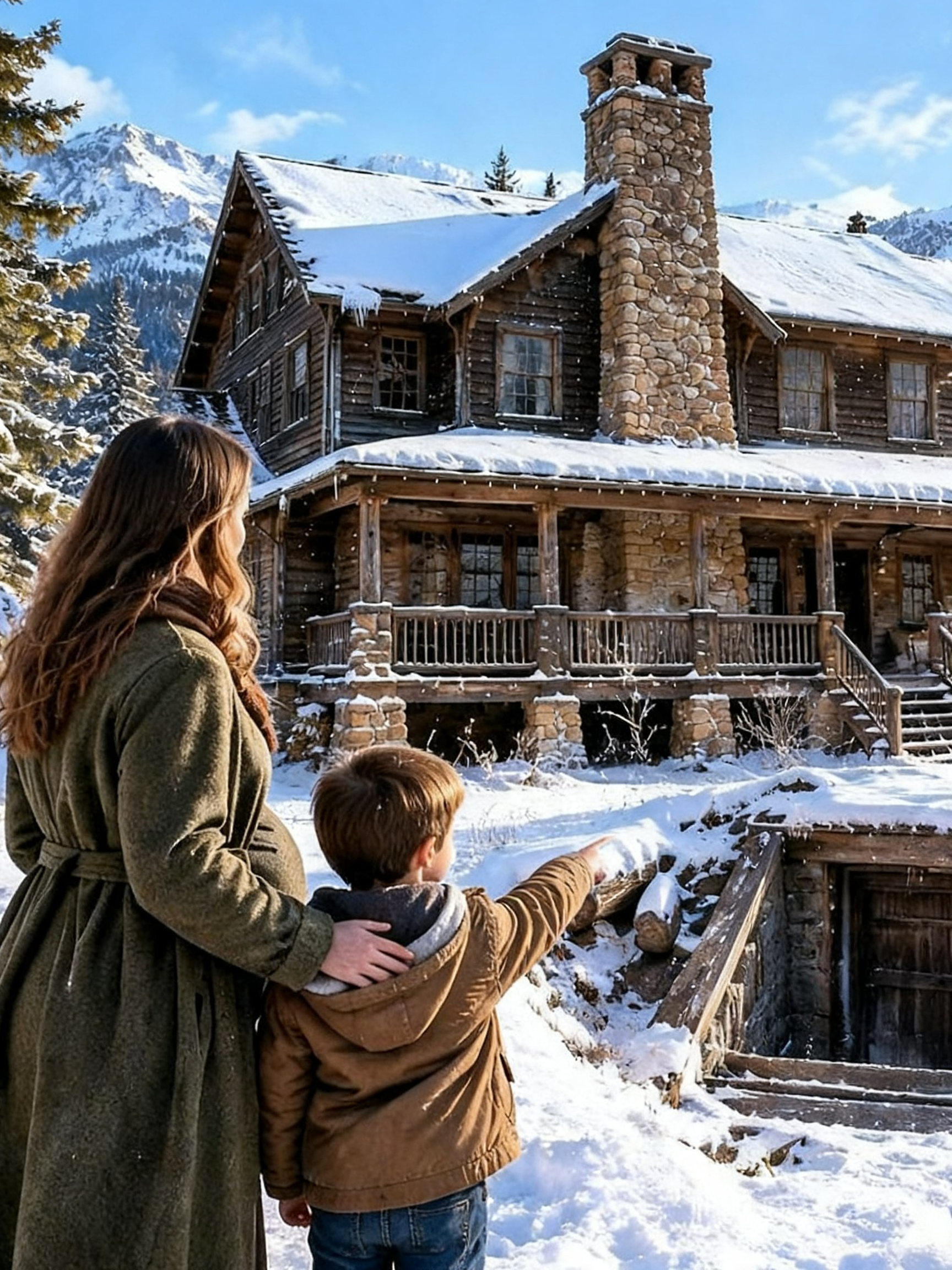
Pregnant and Homeless, She Took Refuge in Her Father’s Abandoned Lodge—Then Dug Up the Secret Her Family Had Buried
“Pack your things before my kids get home.”
Claire Bennett stared at her brother across the kitchen table, one hand resting on the curve of her seven-month belly.
She had been living in Mason’s house for four days.
That was apparently how long family loyalty lasted.
Mason didn’t look embarrassed.
His wife, Nicole, leaned against the granite island behind him with her arms folded, wearing the expression of a woman waiting for a delivery driver to remove an unwanted appliance.
“You said I could stay until I found somewhere,” Claire said.
Her voice was quiet.
That seemed to bother Nicole more than tears would have.
Nicole sighed dramatically.
“We didn’t realize you meant indefinitely.”
“Four days isn’t indefinitely.”
“We have children,” Nicole snapped. “We can’t have them watching this.”
Claire glanced down at herself.
“The whole situation.”
There it was.
The pregnancy.
The old duffel bag beside Claire’s chair.
The two plastic grocery sacks containing almost everything she still owned.
The rusted ten-year-old Subaru parked outside.
The fact that Claire had nowhere else to go.
Mason scratched the side of his jaw and refused to meet her eyes.
“Nicole means stability.”
“No,” Nicole said. “I mean consequences.”
Claire looked at her.
Nicole continued.
“You’re thirty-three years old. You made choices. We shouldn’t have to rearrange our lives because those choices didn’t work out.”
Something inside Claire became very still.
Three months earlier, her fiancé, Evan Cole, had driven to a pharmacy after dinner and never returned.
Not because he had died.
Claire sometimes wished the explanation had been that clean.
Instead, Evan had emptied their joint checking account, taken the emergency cash from the apartment, and left a note on the kitchen counter.
I’m not ready to be somebody’s father.
That had been the entire note.
Seven years together reduced to nine words.
Two weeks later, Claire had learned he was living in Phoenix with a woman from his office.
A month after that, Claire had been laid off from the small rehabilitation clinic where she worked when its owner sold to a regional healthcare company.
Then the landlord raised her rent.
Then her savings ran out.
Then her car needed a transmission repair she couldn’t afford.
One by one, the floorboards beneath her life had disappeared.
Still, she had not called Mason.
Not at first.
She had slept two nights in her Subaru behind a twenty-four-hour grocery store outside Asheville, North Carolina.
Seven months pregnant.
In October.
Only after a sheriff’s deputy tapped on the glass at in the morning and gently asked whether she had somewhere safe to sleep had Claire finally swallowed what was left of her pride and called her older brother.
Mason had sounded sympathetic.
Of course you can stay.
You’re my sister.
Four days later, Nicole was putting her out.
Claire pushed back her chair.
“All right.”
Mason blinked.
Nicole seemed almost disappointed.
“You’re not going to argue?”
She bent carefully and picked up the duffel bag.
Mason stood.
“Wait. I’m not saying we don’t care about you.”
Claire looked at him.
For the first time, Mason stopped talking.
There were years in that look.
Years he understood.
Years he hoped she had forgotten.
Claire had been nineteen when their mother’s rheumatoid arthritis became severe enough that someone needed to drive her to appointments.
Mason had been finishing graduate school.
Claire postponed community college.
When their father’s logging accident damaged his spine, it had been Claire who learned how to change dressings and organize medications.
When Mason married Nicole in Charleston, Claire spent three nights sewing table runners because the decorator had canceled.
When their mother died, Claire handled the funeral because Mason said grief made him “bad with details.”
When their father’s memory began slipping, Claire drove four hours each way from Asheville to take him to neurologists in Knoxville.
Mason visited twice.
Both times he brought his golf clubs.
Claire remembered everything.
She simply rarely mentioned it.
That had always been her mistake.
People confused silence with forgetting.
Nicole walked to the counter and picked up a white envelope.
“One more thing.”
She slid it toward Claire.
Claire didn’t touch it.
“What is that?”
“Dad’s property.”
Mason’s eyes moved sharply toward his wife.
Nicole ignored him.
“The lodge.”
Claire looked at Mason.
“What about it?”
Mason shoved his hands into his pockets.
“You’re technically listed as responsible for it.”
Claire almost laughed.
The old Bennett Lodge sat high in the Blue Ridge Mountains, almost an hour from the nearest decent grocery store.
Their grandfather had built it in 1968.
For decades, hunters, hikers, honeymooners, and families had stayed there.
Then tourism changed.
New resorts appeared closer to Asheville.
Maintenance costs rose.
A kitchen fire damaged part of the west wing.
Their father, Henry Bennett, closed the lodge twelve years ago and never reopened it.
Everyone in the family called it worthless.
Mason had called it “a rotting tax bill with a chimney.”
Their father had died eleven months earlier.
At the reading of the will, Claire had received almost nothing.
Some personal furniture.
A box of photographs.
Her mother’s wedding ring.
Mason received their father’s house, investment accounts, vehicles, and what the family attorney described as “remaining business interests.”
Claire had not challenged it.
Everyone assumed Henry had favored his son.
Claire had told herself the same thing.
But grief had exhausted her appetite for another war.
“What do you mean, responsible?” she asked.
Nicole tapped the envelope.
“County notices. Back taxes. Liability stuff.”
Mason finally spoke.
“It’s complicated.”
“How much?”
“Maybe a hundred eighty thousand.”
Claire stared at him.
Mason lifted both hands.
“Which is why I told Grant we should probably let the county take it.”
Their uncle.
Grant Bennett had been their father’s younger brother, his accountant for nearly thirty years, and executor of his estate.
Claire picked up the envelope.
The first page was not a tax notice.
It was an offer.
BLACKRIDGE MOUNTAIN DEVELOPMENT LLC.
PROPOSED ACQUISITION.
Claire read it twice.
Then looked at Mason.
“You have a buyer?”
“It’s not really a buyer.”
“It says acquisition.”
“The land is basically useless.”
Nicole rolled her eyes.
“It’s falling apart, Claire. They’re doing everyone a favor.”
“For two hundred forty thousand dollars?”
“Against nearly two hundred thousand in taxes,” Mason said quickly. “Plus demolition. Environmental cleanup. Legal expenses. There might be twenty grand left after everything.”
Claire studied the document.
Something felt wrong.
Not because of the amount.
Because of Mason’s face.
He was trying too hard to look bored.
Claire folded the papers and returned them to the envelope.
“Where are the keys?”
Nicole frowned.
“The keys?”
“To the lodge.”
“You can’t stay there.”
Claire looked at her.
Nicole hesitated.
For the first time that morning, Claire saw uncertainty.
Mason rubbed his neck.
“There might not even be electricity.”
“Where are the keys?”
“Claire, seriously.”
“I heard you.”
Mason stared at his sister.
Wearing a faded gray sweater she had owned for six years.
Standing beside everything she possessed.
He must have decided there was no possible danger in giving a defeated woman access to a ruined building nobody wanted.
He opened a kitchen drawer.
The key ring was old.
Three keys.
One had a square head.
One was long and narrow.
The third was tiny, almost like a mailbox key.
Claire held out her hand.
Mason placed them in her palm.
His fingers lingered around the ring.
“Just don’t do anything stupid.”
Claire closed her fist.
“What would count as stupid?”
“Thinking that place is some kind of inheritance.”
Claire met his eyes.
“I stopped expecting an inheritance from this family a long time ago.”
Mason let go.
Twenty minutes later, Claire was driving north.
She did not cry.
Not when Mason stood on the porch watching her leave.
Not when Nicole immediately closed the door.
Not when the fuel light came on halfway through Madison County.
Not even when her daughter kicked hard enough beneath her ribs that Claire had to pull over.
She parked at a scenic overlook.
October mountains rolled toward the horizon beneath a silver sky.
Red maples burned along the ridges.
The wind shook dry leaves across the pavement.
Claire rested both hands on her belly.
“I know,” she whispered.
The baby kicked again.
“I’m working on it.”
That was the closest Claire came to falling apart.
She had seventy-three dollars in her wallet.
Forty-two dollars in checking.
No partner.
And an abandoned mountain lodge with almost two hundred thousand dollars in alleged tax debt.
Yet as she pulled back onto the road, another feeling began pushing underneath the fear.
Her father had hated debt.
Henry Bennett had paid his credit card every Friday.
He paid property taxes early.
He once drove through a snowstorm because a bank mistakenly charged him a seventeen-dollar late fee and he wanted the manager to remove it in person.
A hundred eighty thousand dollars in unpaid taxes made no sense.
Claire remembered something else.
During the final year of his life, Henry’s memory had become unreliable, but there were strange moments of absolute clarity.
Once, while Claire was driving him home after an appointment, he had suddenly gripped her wrist.
“If anybody tells you I lost the mountain,” he had said, “they’re lying.”
Claire had thought he meant the lodge.
Then his expression had gone blank.
He asked where her mother was.
Her mother had already been dead for two years.
Claire had never mentioned the sentence to Mason.
Now she remembered every word.
If anybody tells you I lost the mountain, they’re lying.
The Bennett Lodge appeared shortly before sunset.
Claire almost missed the turn.
The wooden roadside sign had fallen sideways beneath wild vines.
The driveway climbed through dense forest for nearly a mile.
Branches scraped the Subaru.
Twice, Claire considered turning around.
Then the trees opened.
And there it stood.
Three stories of stone, dark timber, and enormous windows facing the mountains.
The west porch sagged.
Several windows were boarded.
Moss covered sections of the roof.
But the lodge did not look dead.
It looked asleep.
Claire parked beneath the old porte cochere.
Wind moved through the pines.
Somewhere deeper in the property, water rushed over rock.
Claire remembered summers here.
Her mother making pancakes for guests.
Her father splitting firewood behind the kitchen.
Mason flirting with girls by the swimming pond.
Claire carrying towels.
Always carrying something.
That had been her family role.
Claire carried.
Other people inherited.
She unlocked the front door.
The smell hit first.
Mouse droppings.
Something mineral from the fireplace.
Claire found an electrical panel near the office.
Half the labels had faded.
She flipped the main breaker.
Nothing happened.
“Wonderful.”
She used her phone flashlight.
The lobby remained surprisingly intact.
Leather chairs sat beneath white sheets.
A mounted elk head watched from above the fireplace.
Old brochures filled a rack near reception.
Bennett Lodge.
Where the Mountains Still Remember Your Name.
Claire stared at the slogan.
Her mother had written it.
She remembered that too.
Claire found lanterns in a utility closet and canned food in the old kitchen, all long expired.
There was bottled water in a storage room.
She chose a downstairs guest room near the lobby because climbing stairs made her hips ache.
The mattress smelled dusty but dry.
For dinner, she ate peanut butter crackers from a gas station and an apple Mason’s youngest son had slipped into her bag that morning.
At p.m., someone drove up the mountain.
Claire froze.
Headlights passed across the windows.
A black pickup stopped outside.
A man got out.
Baseball cap.
Heavy jacket.
Claire quietly reached for the fireplace poker.
The front door opened.
She had forgotten to lock it.
The man stepped inside.
Claire moved into the lobby.
He startled.
“Who are you?”
“Who are you?”
“I asked first.”
The stranger looked at the poker.
Then at Claire’s stomach.
He slowly raised both hands.
“Caleb Shaw.”
The name meant something.
Claire lowered the poker slightly.
“My dad used to maintain the lodge.”
Walter Shaw.
Claire remembered him.
A thin man who could fix generators, pipes, tractors, chimneys, apparently anything except his own old Ford truck.
“You’re Walt’s son.”
Caleb studied her face.
She nodded.
Caleb took off his cap.
“I heard somebody had come up the road.”
“From who?”
“My place is about a mile down the ridge. You can see headlights through the trees.”
His eyes moved around the lobby.
“I haven’t seen lights here in eleven years.”
“There aren’t any lights.”
Caleb smiled faintly.
“Figure of speech.”
He looked at her again.
“What are you doing here?”
“Apparently living.”
The smile disappeared.
“You shouldn’t be.”
Claire tightened her grip on the poker.
“Is that a threat?”
He glanced toward the door.
“It’s a warning.”
“From who?”
“Blackridge.”
Claire said nothing.
Caleb seemed to notice.
“You know about them?”
“I know they made an offer.”
“An offer.”
He laughed once without humor.
“That’s one way to put it.”
“What’s another?”
“They already think they own this place.”
A cold feeling moved through Claire.
“Mason said the sale wasn’t finished.”
“Your brother’s been bringing surveyors up here since July.”
Claire stopped breathing for half a second.
Caleb continued.
“Road engineers too. Soil crews. A guy from Raleigh with a drone. They marked trees all along the south ridge.”
Caleb looked surprised.
“You really don’t know?”
He walked toward the huge windows.
Beyond the glass, darkness covered the valley.
“They’re not buying the lodge for the lodge.”
“What are they buying?”
Caleb turned.
“The mountain.”
There was that word again.
Claire felt her father’s hand around her wrist.
If anybody tells you I lost the mountain, they’re lying.
“What mountain?”
Caleb stared at her.
“All of it.”
He pointed through the darkness.
“From Bear Creek on the west side almost to the Tennessee line.”
Claire almost smiled because the statement was absurd.
“My father didn’t own all of that.”
“That’s what everybody thought.”
“My dad didn’t.”
Claire stepped closer.
“What did your father know?”
Caleb looked toward the fireplace.
For several seconds, he said nothing.
Then he asked a strange question.
“Did Henry ever tell you about the winter of 1989?”
Caleb nodded slowly.
“Then I’m not the person who should.”
He put his cap back on.
“Get the generator running. Lock the doors. Don’t sign anything.”
“What happened in 1989?”
Caleb looked at the fireplace again.
“Your father buried something.”
Claire’s skin prickled.
“My dad never told me.”
“Then how do you know?”
“Because Henry made him help.”
Caleb opened the door.
Before leaving, he turned.
“And Claire?”
“If Grant Bennett comes up here pretending he’s worried about you, call somebody before you let him inside.”
The door closed.
Claire stood alone.
The silence of the lodge changed after that.
Every creak seemed intentional.
Every shadow seemed connected to something.
She locked the front door.
Then the back.
Then every downstairs window she could reach.
At eleven, exhaustion finally pulled her into bed.
At a.m., the baby woke her.
Not with a kick.
With pressure.
Claire sat up and breathed slowly until it passed.
Probably Braxton Hicks.
The doctor had warned her.
She drank water and walked into the lobby.
Moonlight came through the high windows.
The stone fireplace rose twenty feet above her.
Her father had built it with local granite.
Claire ran her fingers along the hearth.
Something caught beneath her nail.
A narrow groove.
She brought the lantern closer.
One stone on the lower right side was different.
Maybe half an inch.
She remembered being eight years old, sitting cross-legged on this floor while Henry repaired the fireplace.
Her father had joked that stone remembered everything.
At the time, Claire thought he meant heat.
Now she crouched awkwardly.
The stone moved.
Only slightly.
She pulled.
She searched a utility drawer and found a flathead screwdriver.
Thirty seconds later, the stone slid forward.
Behind it was darkness.
Claire stopped.
Her pulse thudded.
She reached into the cavity.
Her fingers touched metal.
She pulled out a cylindrical steel container about fourteen inches long.
The metal was scratched and blackened.
A rubber gasket sealed the lid.
Claire carried it to the front desk.
Inside were four things.
A brass key.
A folded map.
A small leather notebook.
And an envelope.
Her name was written in her father’s hand.
Her knees weakened.
She sat down.
For several minutes, she could not open it.
The last thing her father had ever said to her had been, “You always come when people call.”
He had been in hospice.
Half awake.
Claire had smiled.
“Somebody has to.”
Henry had stared at her with watery blue eyes.
Then, with surprising force:
“Not anymore.”
He died the next morning.
Claire opened the envelope.
Sweetheart,
If you are reading this, then things went the way I feared.
Claire stopped.
Her vision blurred.
She blinked hard.
She continued.
You were always the child who helped without asking what it would cost you.
Mason learned early that if he dropped something, you would pick it up.
Grant learned the same thing.
I am ashamed to admit I benefited from your goodness longer than a father should have.
Claire covered her mouth.
For years she had carried a private wound.
Her father knew.
Apparently he had always known.
She kept reading.
What I am leaving you is not compensation.
A father cannot repay a daughter for a life she delayed.
What I can do is correct a lie.
Grant has spent years telling people the lodge failed because I was stubborn.
That is only half true.
The lodge closed because I discovered what he and others were doing with the land company.
Do not trust any deed Grant shows you unless it is recorded before March 18, 2018.
Do not trust any tax statement Mason gives you unless you obtain it directly from Madison County.
Do not sign a quitclaim.
Do not sign an indemnity.
Do not sign anything prepared by Bennett & Cole.
If they claim the mountain was sold, ask one question:
Show me the original deed.
Claire read the sentence twice.
Then three times.
Bennett & Cole was Uncle Grant’s accounting and advisory firm.
Her father continued.
The map will show you the parcels.
The key opens box 417 at Blue Ridge Community Bank in Marshall.
You have legal authority to access it.
Proof is in the notebook.
Walter Shaw knows enough to help but not enough to be endangered by knowing everything.
I kept it that way on purpose.
What happened in 1989 matters.
So does what happened in 2018.
Do not let them separate those two things.
And Claire—
The mountain is not an inheritance.
It is a witness.
Her father had underlined the final sentence.
Claire lowered the letter.
Outside, wind moved through the trees.
For years, she had believed Henry Bennett had died disappointed in her.
She had been the daughter who never finished college.
The daughter who came home.
The daughter who borrowed money once at twenty-six and paid it back in three months.
The daughter whose fiancé never married her.
Mason had always looked successful.
Large house.
Two children.
Country-club membership.
Claire was the one carrying bedpans at a rehabilitation clinic.
She had assumed that was why Henry had left Mason nearly everything.
Now another possibility began forming.
Maybe what Mason received was what Henry was willing to let him touch.
And maybe what Claire received had been hidden precisely because it mattered more.
At sunrise, she unfolded the map.
The property boundaries were drawn in red.
Claire’s breath caught.
The lodge parcel itself was only fourteen acres.
But surrounding it were dozens of tracts.
Timber land.
Watershed acreage.
Old mining claims.
Creek corridors.
A former railroad spur.
Altogether, according to Henry’s notes, 4,860 acres.
Across the bottom, he had written:
BENNETT MOUNTAIN HOLDINGS TRUST.
Claire opened the leather notebook.
The first pages contained dates, parcel numbers, and names.
Then she found a photocopy of what appeared to be a trust certificate.
Trustee: Henry Thomas Bennett.
Successor Trustee: Claire Anne Bennett.
Claire sat very still.
A vehicle approached outside.
This time there were two.
A silver Mercedes SUV.
A black Range Rover.
Uncle Grant stepped out of the Mercedes.
Mason emerged from the second vehicle.
Behind them came another man Claire did not recognize.
Expensive coat.
Polished shoes.
Grant entered without knocking.
She was standing beside the fireplace.
The steel cylinder was already hidden upstairs.
The map was under her mattress.
The notebook was tucked inside her coat.
Her father’s letter rested against her ribs.
Claire gave them nothing.
No accusation.
Not even surprise.
Grant looked at the dusty lobby.
“Mason told me what happened.”
“How kind of him.”
Mason shifted.
“Claire, don’t start.”
“I haven’t.”
That was true.
Grant studied her.
He had the same blue eyes as Henry, but none of the warmth.
At sixty-four, Grant still wore his silver hair perfectly combed and dressed like every day might include an unexpected photograph.
“This isn’t safe,” he said.
“I’ll manage.”
“You’re pregnant.”
“I noticed.”
The stranger smiled faintly.
Grant gestured toward him.
“This is Richard Vale with Blackridge Mountain Development.”
Richard extended his hand.
Claire looked at it until he lowered it.
“Ms. Bennett,” he said smoothly, “I’m sorry we’re meeting under difficult circumstances.”
“Which circumstances?”
He hesitated.
“Your housing situation.”
Claire looked at Mason.
Mason looked away.
So he had told them.
Interesting.
Richard recovered quickly.
“Blackridge is prepared to solve several problems for your family.”
“My family seems to be doing fine.”
“Your father’s property carries substantial liabilities.”
“So I’ve heard.”
Grant removed a folder.
“You don’t need to burden yourself with this.”
He placed documents on the reception desk.
“I can handle it as executor.”
Claire looked at the signature line.
QUITCLAIM DEED.
Exactly the document Henry had warned her about.
Something almost like laughter rose in Claire’s throat.
She swallowed it.
“How much do I get?”
Mason blinked.
Grant smiled gently.
There it was.
They thought she was breaking.
Richard stepped forward.
“Blackridge can authorize twenty-five thousand dollars to you personally.”
Nicole had said twenty thousand might remain after expenses.
Now they were offering twenty-five.
“For a property worth two hundred forty?”
“The purchase includes debt assumption.”
“How much debt?”
Grant answered.
“One hundred eighty-seven thousand, roughly.”
“Taxes, penalties, environmental exposure.”
Claire nodded.
“And if I sign?”
“Blackridge takes responsibility.”
“For everything?”
Claire picked up the pen.
Mason exhaled.
Grant’s shoulders relaxed.
Richard’s eyes went to the signature line.
Claire held the pen over the paper.
Then stopped.
“I have a question.”
Grant’s face changed by less than a fraction.
“What question?”
Claire made herself look embarrassed.
Overwhelmed.
Exactly what they needed her to be.
“Could I see the tax bill first?”
Grant smiled.
“Of course.”
“The county one.”
“I can send you our accounting.”
Claire lowered her eyes.
“I mean the original county statement.”
Grant did not answer immediately.
Claire looked up.
“Is that a problem?”
“Not at all.”
She put the pen down.
“I’ll sign after I see it.”
Mason’s irritation flashed.
“Claire, why complicate this?”
“You need money now.”
“Then take it.”
Claire looked at him.
“You seem very worried about my finances suddenly.”
Mason flushed.
Grant intervened.
“We’ll bring the documents tomorrow.”
“I’ll be here.”
Richard gathered the papers.
As the men left, Claire heard Mason whisper something outside.
Grant responded sharply.
She could not make out the words.
But she saw Richard slam the Range Rover door harder than necessary.
They had expected a signature.
They had brought three men for one homeless pregnant woman because they expected a signature.
Claire watched their vehicles disappear.
Then she called Madison County.
The tax office opened at eight thirty.
A woman named Brenda pulled up the parcel.
“Bennett Lodge?”
“You’re Henry’s daughter?”
Claire’s grip tightened around the phone.
“You knew him?”
“Everybody knew Henry.”
Brenda clicked her keyboard.
“Property tax is current.”
Claire closed her eyes.
“How current?”
“Paid through this year.”
“Any delinquent balance?”
“No, ma’am.”
“Any penalties?”
Claire wrote it down.
“What about the surrounding parcels?”
“Parcel numbers?”
Claire opened Henry’s notebook.
She read six.
All current.
She read ten more.
Every parcel.
Every year.
Claire thanked Brenda.
Then she sat alone in the abandoned lobby and finally understood the size of the lie.
The supposed $187,000 tax debt did not exist.
But that was only the beginning.
At ten fifteen, Claire drove to Blue Ridge Community Bank.
Box 417 required two keys.
The tiny brass key from Mason’s kitchen ring opened the first lock.
Henry’s hidden key opened the second.
Claire nearly laughed.
Her brother had possessed half the secret for eleven months without understanding what it was.
Inside the deposit box were three folders, a flash drive, a sealed envelope, and a deed book wrapped in cloth.
The first folder contained the full Bennett Mountain Holdings Trust.
Created in 1989.
Amended several times.
Henry had placed thousands of acres into it over three decades.
Some parcels had been bought for almost nothing after timber companies collapsed.
Others came from old family holdings.
Several included water rights.
One contained a commercial easement connecting two major valleys.
And then Claire found the appraisal.
It was dated only fourteen months earlier.
Conservative market valuation:
$38.6 million.
Claire stared at the number until it lost meaning.
Thirty-eight million dollars.
Not two hundred forty thousand.
Not twenty-five thousand.
Thirty-eight point six million.
Another document estimated that if rezoned for resort use, sections could be worth more than sixty million.
Claire leaned back.
Her breathing changed.
The baby moved.
Claire pressed her palm against her stomach.
“We’re not sleeping in the Subaru tonight.”
Then she opened the second folder.
The money stopped mattering.
Inside were payroll records from the early years of Bennett Timber & Land.
Dozens of workers.
Many local families.
The Carters.
The Dominguezes.
The Whitakers.
People who had helped build roads, cut timber, restore streams, repair the lodge.
In 1989, Grant Bennett had attempted to restructure the company before a recession.
According to Henry’s notes, Grant wanted to transfer the workers’ profit-sharing land into a private corporation controlled by the Bennett brothers.
Henry refused.
A legal settlement created the mountain trust instead.
Part of its purpose was explicit:
Protect employee profit-sharing interests.
Preserve watershed access.
Prevent unilateral liquidation.
Provide educational and hardship grants for descendants of qualifying workers.
Claire read the clause twice.
This was not simply Henry’s land.
Hundreds of people had an equitable interest in what happened to it.
The third folder was worse.
Documents from 2018.
Grant had created several shell companies.
Blue Summit Holdings.
Madison Ridge Ventures.
Bennett Recreation Group.
Each appeared to claim small pieces of the mountain.
Transfers supposedly authorized by Henry.
The dates matched Henry’s first serious cognitive decline.
Then Claire noticed signatures.
Her father’s signatures.
Except they were wrong.
Henry always made the H in Henry with a long descending stroke.
These signatures did not.
The final document showed an option agreement.
Blackridge Mountain Development.
Projected resort.
Luxury hotel.
Golf course.
Gated residences.
Private ski slope.
A purchase price of $12.4 million.
Twelve million for land appraised above thirty-eight million.
Claire looked deeper.
There was also a consulting agreement.
Upon successful acquisition, Bennett & Cole Advisors would receive $2.1 million.
Another payment:
$1.4 million to MCB Holdings.
Mason Christopher Bennett.
Claire stared at her brother’s initials.
Her stomach tightened.
Not from pregnancy.
From betrayal.
Mason had not simply known.
Mason was being paid.
Her homeless brother.
Her pregnant sister.
Four days on a guest-room mattress.
And Mason was waiting for $1.4 million from the sale of land Claire legally controlled.
Claire opened the sealed envelope.
Inside was a letter from Henry to an attorney named Rebecca Sloan in Asheville.
If my cognitive decline advances before this matter is resolved, no transfer concerning trust property is valid without independent trustee verification.
Grant knows this.
If signatures appear without verification, presume fraud.
Claire stopped.
The next sentence was underlined.
Claire is the successor trustee because she is the only person in this family who has repeatedly chosen duty when no financial reward was available.
Her throat closed.
For the first time since Evan left, since losing her apartment, since Mason told her to leave, Claire cried.
Not loudly.
Not dramatically.
She sat alone in a bank vault room with one hand covering her mouth while tears ran down her cheeks.
Her father had seen her.
That was all.
After a lifetime of being treated as the extra pair of hands, the dependable daughter, the woman who could be inconvenienced because she rarely complained—
someone had seen her.
Henry had seen everything.
Her sacrifices.
Her disappointments.
Her quietness.
Her dignity.
Even his own failures toward her.
And he had trusted her with the one thing everyone else wanted.
Not because she was richer.
Not because she was smarter.
Because she had proven what she would not sell.
Claire wiped her face.
Then she called Rebecca Sloan.
The attorney answered on the fourth ring.
“My name is Claire Bennett.”
Not confusion.
“Where are you?”
“Marshall.”
“Are you safe?”
Claire felt cold.
“I think so.”
“Do not go back to your brother’s house.”
“I wasn’t planning to.”
“Do you have Henry’s notebook?”
“The trust?”
“The 2018 file?”
Rebecca exhaled.
“Thank God.”
“You knew?”
“I knew something existed. Your father stopped discussing details with me when he became convinced Grant had access to his mail.”
Claire looked at the vault door.
“Blackridge wants me to sign a quitclaim.”
“Claire, listen carefully. They cannot acquire trust property from the estate because the estate does not own it.”
Claire’s heart beat faster.
“So why do they need me?”
“Because they know that.”
Rebecca explained.
After Henry’s death, Grant filed probate documents listing the lodge as an individual asset.
He omitted the surrounding trust acreage.
Mason’s attorneys had then assembled a chain of purported assignments from the shell companies.
But there was a defect.
A massive one.
Henry’s trust amendment named Claire successor trustee automatically upon his death.
Without Claire’s authorization, the land could not legally transfer.
“They were hoping you would cure the defect for them,” Rebecca said.
“By signing the quitclaim.”
Claire remembered Mason’s kitchen.
Nicole handing her the envelope.
Take the abandoned lodge.
Take the debt.
Take the worthless problem.
They had not accidentally pushed Claire toward the lodge.
They needed her desperate.
They needed her homeless.
They needed her ashamed enough to accept twenty-five thousand dollars.
Claire understood then.
Throwing her out had been part of the strategy.
Not necessarily Nicole’s idea.
Maybe Grant’s.
Maybe Mason’s.
But someone had known that a woman sleeping in her car would sign almost anything for enough money to survive.
Claire’s anger did not explode.
It hardened.
That was more dangerous.
“What do we do?” she asked.
Rebecca paused.
“We let them keep believing you don’t understand.”
The following afternoon, Grant returned.
This time Nicole came with him.
So did Mason.
They brought the county tax printout Claire requested.
It was fake.
Claire knew immediately.
The formatting was wrong.
Brenda from the tax office had emailed Claire the real statement that morning.
Grant’s document listed $186,940.18 delinquent.
Claire studied it for almost a minute.
Then she nodded.
Mason looked relieved.
“You’ll sign?”
Claire sat at the dusty reception desk.
Nicole glanced around the lodge with disgust.
“I don’t know how you slept here.”
Claire looked at her.
“Better than I slept at your house.”
Nicole’s lips tightened.
Grant placed the quitclaim in front of her.
Claire picked up the pen.
“Rebecca Sloan called me once after Dad died.”
Grant went still.
Mason’s expression changed.
Nicole looked between them.
Claire continued casually.
“I never called her back.”
Grant smiled.
“She handled some old matters for Henry.”
“Should I talk to her before signing?”
Grant realized it too.
He softened his voice.
“I mean, you’re welcome to. But Rebecca hasn’t represented the family in years. This transaction is straightforward.”
Claire looked at the quitclaim.
“What exactly am I quitting my claim to?”
“The lodge.”
“Just the lodge?”
Grant hesitated.
“And any associated rights.”
“Like what?”
“Easements. Access. Old timber interests. Standard language.”
Claire nodded.
“Could you change it?”
Mason leaned forward.
“Change what?”
“Make it just the fourteen acres.”
Grant stared at her.
“That would create unnecessary title issues.”
“I don’t understand.”
Nicole sighed.
“Claire, for God’s sake, you are living in a condemned hotel with no power. Take the money.”
Claire looked up.
“I’m thinking about the baby.”
“Then sign.”
Claire returned her eyes to the document.
She let ten seconds pass.
Grant finally said, “We can increase the payment.”
Mason turned.
Grant ignored him.
“Thirty-five thousand.”
Claire looked surprised.
“Because I want this resolved.”
“You were offering twenty-five yesterday.”
“Circumstances change.”
Claire nodded slowly.
“What if I need more?”
Nicole laughed.
Mason looked furious.
Grant did not.
“How much?”
Claire pretended to think.
Mason stepped away.
“This is ridiculous.”
Claire watched him.
Grant silenced him with a look.
Then turned back to Claire.
“Fifty thousand.”
Claire breathed in as if stunned.
“And you’ll wire it today?”
Rebecca had told her to push them.
Not because Claire would accept.
Because desperation made guilty people careless.
“Can you write down that the money is for the lodge?”
Grant’s eyes narrowed.
“For taxes.”
“You won’t need to pay the taxes.”
“I know. But I want something showing what I’m selling.”
“It’s in the agreement.”
“I don’t understand the agreement.”
Nicole groaned.
Claire looked at Grant helplessly.
“Can you just write it simply?”
There it was.
The weak woman.
The unsophisticated woman.
The woman they had depended on.
Grant removed a legal pad.
Payment of $50,000 to Claire Bennett in exchange for release of any claim to Bennett Lodge and associated Bennett Mountain properties.
Claire read it.
“Associated Bennett Mountain properties?”
“Standard language.”
“How much property?”
Grant smiled.
“Mostly inaccessible timber acreage.”
“How many acres?”
Mason interrupted.
She looked at him.
“How many?”
Mason’s face hardened.
“Why does it matter?”
Claire placed the pen down.
“It probably doesn’t.”
“Maybe I should think overnight.”
Grant’s patience cracked.
“You have thought overnight.”
Claire looked startled on purpose.
Grant saw it.
Regained control.
“I’m sorry. But Blackridge has deadlines.”
Claire nodded.
“Tomorrow morning.”
The word came from Mason.
Everyone turned.
Mason stepped toward Claire.
“You either sign now or forget the offer.”
Claire looked at her brother.
“Why are you angry?”
“Because you do this.”
“Make everything harder than it needs to be.”
Claire almost smiled.
For thirty-three years, nobody had ever accused her of that.
Mason heard it too late.
He looked away.
Claire picked up the unsigned paper Grant had written.
“I’ll keep this.”
Grant reached for it.
Claire folded it first.
His hand stopped.
The room changed.
Just slightly.
Claire put the note in her pocket.
“I want one night.”
Grant stared at her.
Then he smiled.
“All right.”
He gathered his folders.
As they headed toward the door, Nicole turned.
“You know what your problem is?”
Claire waited.
“You think being a martyr makes you special.”
Mason whispered, “Nicole.”
But Claire answered.
Her voice remained soft.
“I think people get very comfortable around someone who never sends them a bill.”
Nicole’s face changed.
Claire looked at Mason.
For one second, her brother understood.
Not everything.
But enough to feel afraid.
The next morning, Blackridge began clearing trees.
They did not have permission.
Three excavators came through the southern access road shortly after dawn.
Claire heard engines from the lodge.
Caleb arrived minutes later.
“They’re moving.”
Claire already had Rebecca on speakerphone.
“Let them,” Rebecca said.
Caleb stared at the phone.
“Let them?”
“Document everything.”
Claire filmed the excavators crossing the boundary markers.
Workers unloaded fencing.
Survey crews placed stakes.
A Blackridge supervisor ordered Claire to remain near the lodge “for safety.”
Claire asked his name.
He refused.
She filmed that too.
By noon, Blackridge had cleared almost three acres.
By two, they hit the watershed parcel.
That was the mistake Rebecca had been waiting for.
At , two North Carolina Wildlife Resources vehicles arrived.
At , county environmental enforcement arrived.
At , an investigator from the state Attorney General’s office pulled in.
Grant arrived at .
He looked at the vehicles.
Then at Claire.
“What did you do?”
Claire stood on the lodge porch.
It was almost true.
Rebecca Sloan stepped out from behind her.
Grant stopped.
For the first time since Claire was a child, Uncle Grant looked genuinely frightened.
Rebecca smiled.
“Hello, Grant.”
Grant recovered quickly.
“This is a private property matter.”
Rebecca held up a binder.
“No. Parts of this acreage contain a protected watershed covenant tied to a worker-benefit trust.”
Richard Vale pushed through the gathering crowd.
“That trust is dissolved.”
Rebecca looked at him.
“According to whom?”
“We have recorded assignments.”
“From companies that never owned the land.”
Richard pointed toward Claire.
“She executed—”
He stopped.
Claire said nothing.
Richard looked at Grant.
Grant looked at Mason.
Claire felt the baby kick.
Rebecca opened the binder.
“Bennett Mountain Holdings Trust remains active. Henry Bennett was trustee until his death. Claire Bennett became successor trustee automatically.”
Richard’s face drained.
Grant stepped toward Claire.
“You knew.”
Claire met his eyes.
“How long?”
“Long enough.”
Mason arrived twenty minutes later.
Nicole was with him.
So was an attorney from Charlotte.
Then came a county commissioner.
Then a lender representative.
Then another attorney.
The system appeared one black SUV at a time.
Claire watched them gather in her father’s abandoned lodge.
Men in expensive coats.
Women carrying leather portfolios.
Developers.
Consultants.
Her family.
All of them had spent months treating the mountain as something already divided.
Already sold.
Already monetized.
They had engineering plans.
Financing projections.
Investor commitments.
Preconstruction deposits.
Blackridge had even presold eleven luxury homes on property it did not own.
Everyone had been counting money.
Except Claire.
The woman legally controlling the land had been sleeping in her car.
The irony was almost too perfect.
But the deeper truth came two weeks later.
Federal investigators became involved after Rebecca turned over Henry’s 2018 documents.
The allegedly forged transfers had crossed bank and interstate financing systems.
Signatures were examined.
Notary logs were subpoenaed.
Emails surfaced.
Mason’s inbox contained one from Grant sent nine months before Henry died.
We need Claire out of the chain. If she understands the trust language, everything stops.
Another read:
Her financial position may help us later.
And another:
Do not let her retain independent counsel.
Claire read that one in Rebecca’s office.
She felt nothing at first.
Then Rebecca handed her another page.
This email was from Mason.
Claire never fights over money. She’ll take whatever looks safe for the baby.
Claire stared at the sentence.
She’ll take whatever looks safe for the baby.
That hurt more than Grant.
Grant had always been cold.
Mason knew her.
Mason knew exactly why she made the choices she did.
He knew she had cared for their mother.
He knew she had missed shifts to take Henry to appointments.
He knew she had loaned him eight thousand dollars when his first business failed and never told Nicole because Mason had been ashamed.
He knew Claire’s deepest weakness was not greed.
It was responsibility.
And he had planned to use her unborn daughter against her.
Claire set the paper down.
Rebecca watched her.
“You can stop reading.”
She picked up the next page.
“Show me all of it.”
The final financial investigation took months.
Claire spent those months in the lodge.
Not the entire lodge.
Caleb repaired the generator.
Then a local electrician restored power to the east wing.
People from the mountain began showing up.
At first they came because they had heard Henry’s daughter was fighting Blackridge.
Then they came with things.
A used refrigerator.
Canned soup.
A rocking chair.
Someone fixed the water heater.
Walter Shaw, Caleb’s father, came up one Sunday leaning on a cane.
He was eighty-two.
Claire had not seen him since childhood.
Walter sat by the fireplace.
He stared at the stone where Claire found the cylinder.
“Your daddy worried you’d never come looking.”
Claire sat across from him.
“I didn’t know there was anything to look for.”
Walter smiled.
“That was Henry’s problem. Man thought he could protect people with secrets.”
“What happened in 1989?”
Walter’s smile disappeared.
He looked toward the fire.
“Grant tried to steal from us.”
Claire already knew pieces.
Walter gave her the rest.
Bennett Timber had nearly failed after a collapse in lumber prices.
Workers had deferred wages in exchange for profit-sharing interests in mountain acreage.
When land values began rising, Grant wanted to dissolve those agreements.
Most workers were poorly educated.
Several could barely read legal documents.
Grant prepared releases that would have paid each family a few thousand dollars.
Henry discovered it.
“They fought right where you’re sitting,” Walter said.
“Dad and Grant?”
“Worst fight I ever saw.”
Walter pointed toward the fireplace.
“Henry threw Grant through that coffee table.”
Claire blinked.
“My father?”
“Your father.”
Walter smiled faintly.
“Henry wasn’t always old.”
The dispute nearly destroyed the family business.
In the end, Henry created the trust.
Worker interests were preserved.
The land could produce income but could not be stripped without conditions.
Scholarship provisions were added.
Hardship support.
Environmental protections.
Grant never forgave him.
“And why bury the documents?”
Walter’s expression darkened.
“Because Henry found out Grant had copies of his office keys.”
The steel cylinder went into the fireplace cavity.
The bank documents were separated.
Different locations.
Claire finally understood.
Her father’s paranoia had not been paranoia.
It had been experience.
In January, Claire gave birth to a daughter.
She named her Grace Henry Bennett.
Grace after her mother.
Henry after the man who had finally told the truth.
Mason did not visit.
He sent a text.
Hope you and baby are healthy.
Claire read it once.
Then put the phone down.
She did not reply.
By March, prosecutors had enough.
Grant Bennett was charged with conspiracy, wire fraud, forgery-related offenses, and attempted fraudulent transfer of trust property.
Two business associates were charged with him.
A former notary agreed to cooperate.
Blackridge denied knowingly participating in fraud but withdrew from the project and later settled civil claims.
Mason was not arrested immediately.
His role was murkier.
He claimed Grant had misled him.
Then investigators found the compensation agreement.
Then they found the emails.
Then they found a recorded phone call.
Mason had asked Grant one question:
“What happens if Claire refuses?”
Grant answered:
“She won’t. People like Claire confuse surrender with goodness.”
Claire listened to the recording once.
After that, she never needed to hear it again.
Mason eventually pleaded guilty to a reduced conspiracy charge in exchange for cooperation.
He lost the house Henry had left him because he had borrowed against it to invest in the Blackridge development.
Nicole filed for divorce before sentencing.
Claire took no pleasure in that.
People expected her to.
Some openly encouraged it.
“Serves him right.”
“Bet Nicole wishes she hadn’t thrown you out.”
“You’re worth millions now.”
Claire disliked that sentence most.
Worth millions.
As though her worth had changed.
As though homelessness had made her lesser.
As though owning land made her more human.
The trust did not make Claire personally worth thirty-eight million dollars anyway.
That misconception spread after a newspaper article.
Claire could not simply sell everything and walk away.
Nor did she want to.
Henry had structured it differently.
The land belonged to a purpose.
And Claire finally understood why.
In April, she reopened the first floor of Bennett Lodge.
Not as a hotel.
As an office for the Bennett Mountain Community Trust.
Walter Shaw attended the opening in a wheelchair.
Caleb stood behind him.
Rebecca came from Asheville.
Families who had not received a trust distribution in years arrived carrying old paperwork.
Claire hired forensic accountants.
They discovered that Grant had suppressed benefits for almost fourteen years.
Scholarship money had been diverted.
Timber royalties had been misreported.
Access fees had disappeared.
Some descendants were owed a few thousand.
Some families were owed more than a hundred thousand.
Claire authorized the first restored distributions in June.
One went to a twenty-year-old named Luis Dominguez.
His grandfather had worked for Bennett Timber in 1989.
Luis wanted to attend Appalachian State University and become a civil engineer.
He had planned to drop out after one semester because his mother developed breast cancer.
The trust paid his tuition.
It also covered six months of his family’s mortgage under the hardship clause Henry had written decades earlier.
When Claire approved the check, she sat alone afterward.
That was when she finally understood her father’s last line.
The mountain is not an inheritance.
It is a witness.
Every acre remembered someone.
A logger who had accepted reduced wages.
A mechanic who repaired equipment through winter.
A woman who cooked at the lodge for thirty-two years.
A family whose creek access had been promised in writing.
A child whose grandfather had invested labor instead of cash.
Grant saw acreage.
Blackridge saw resort lots.
Mason saw $1.4 million.
Henry had eventually seen obligation.
And Claire?
Claire saw something different.
She saw what happened when quiet people finally had documents.
The lodge gradually came back to life.
Not polished.
Not turned into some sterile luxury resort.
Claire kept the old stone.
The massive fireplace.
Her mother’s slogan.
Where the Mountains Still Remember Your Name.
She reopened eighteen rooms for affordable family stays.
The old dining room became a community hall.
A rear conference room became a legal-aid clinic twice a month.
Caleb rebuilt the west porch.
Local contractors restored the roof.
Claire converted one cottage into temporary housing for pregnant women facing sudden homelessness.
That decision made Rebecca smile.
“Personal?”
Claire looked through the cottage window.
A crib sat against one wall.
A small kitchen filled the opposite corner.
There were rules.
Thirty days initially.
Case-management support.
No abusive partners.
No predatory contracts.
No questions designed to humiliate women for needing help.
On the first night the cottage opened, Claire stood outside holding six-month-old Grace.
A nineteen-year-old woman named Tessa arrived with two garbage bags and a swollen face from crying.
Her mother had thrown her out that morning.
Claire handed her the key.
Tessa whispered, “How much do I owe you?”
“Nothing tonight.”
“I can pay later.”
“We’ll figure things out later.”
Tessa looked suspicious.
People who had been hurt often became suspicious of kindness.
Claire understood.
“Why are you doing this?”
Grace stirred against Claire’s shoulder.
Claire looked toward the main lodge.
“Because four days shouldn’t be the difference between somebody having a family and having nowhere to sleep.”
Tessa started crying.
Claire did not tell her not to.
Sometimes tears were surrender.
Sometimes they were simply weather passing through.
By the following autumn, the lodge was financially stable.
Sustainable timber contracts produced revenue.
Conservation grants protected the watershed.
A small portion of non-sensitive acreage was leased for outdoor recreation.
Community distributions resumed.
The land’s valuation increased.
Claire still drove the old Subaru.
Caleb made fun of her.
“It sounds like a washing machine full of bolts.”
“It starts.”
“It started today.”
“You park downhill.”
“That’s called planning.”
Caleb laughed.
There was something between them by then.
Nothing rushed.
Nothing Claire trusted yet.
But something.
He never asked about her money.
Never asked how much acreage she controlled.
Never tried to rescue her.
He fixed things.
Handed Grace back when she cried.
Left when Claire wanted quiet.
Stayed when she asked.
That was enough.
The final hearing regarding Grant’s fraudulent land transfers took place fourteen months after Claire first entered the lodge.
Mason attended.
He looked older.
Gone were the expensive watch and tailored jacket.
He had not yet begun serving his sentence because of cooperation with prosecutors.
After the hearing, he waited for Claire in the courthouse corridor.
Grace slept against Claire’s chest.
Rebecca tactfully walked ahead.
Mason looked at his niece.
“She’s beautiful.”
Claire said nothing.
“You could at least answer.”
Mason nodded.
His eyes reddened.
“I was wrong.”
Claire waited.
“I got caught up in it.”
Still she said nothing.
“Grant made it sound like Dad cheated me.”
Claire looked at him.
Mason continued.
“He said Dad hid the valuable land because he didn’t trust me.”
“He didn’t.”
The words stopped Mason.
Claire shifted Grace gently.
“He trusted you with his house. His investment accounts. The company shares outside the trust. You received more than I did in ordinary probate.”
“You wanted the one thing he didn’t give you.”
Mason looked down.
“I thought the mountain should have been mine.”
“I’m his son.”
There it was.
Not the full confession.
But the oldest one.
Claire smiled sadly.
“And I was what?”
Mason closed his eyes.
“That’s not what I meant.”
“Yes, it is.”
“It’s all right.”
“It’s not.”
“No, Mason. I mean it’s all right that you finally said it.”
He looked at her.
Claire continued.
“You always thought being the son made you the heir. I thought being useful made me family.”
Mason winced.
“We were both wrong.”
She walked away.
Mason called after her.
“Do you hate me?”
Claire stopped.
For a moment, the courthouse hallway became completely quiet.
People expected answers to questions like that to be dramatic.
I forgive you.
I’ll never forgive you.
Claire had none of those.
She turned.
“I don’t organize my life around you anymore.”
Then she left.
That sentence reached Mason harder than hatred.
Claire knew because she saw it on his face.
Two months later, the Bennett Mountain Community Trust held its first annual public meeting.
More than three hundred beneficiaries and local residents came.
The old lodge could not hold everyone, so chairs filled the lawn.
Children ran beneath red maples.
Walter Shaw sat in the front row.
Rebecca stood beside the stage.
Caleb held Grace.
Claire presented scholarship numbers.
Watershed reports.
Restored worker distributions.
Housing assistance.
Financial statements anyone could inspect.
Then she announced the creation of the Henry and Margaret Bennett Opportunity Fund.
Not her name.
Her parents’.
Because justice did not require Claire to erase the people who had failed before they finally did something right.
Afterward, Walter found her near the fireplace.
“You ever think about selling?”
Claire smiled.
“Every week.”
Walter looked shocked.
She laughed.
“Don’t do that to an old man.”
Claire looked around the lobby.
Families were talking.
Children were climbing onto the old leather chairs.
Someone had started playing piano in the dining room.
Grace was asleep against Caleb’s chest.
The building her family called worthless was alive.
So was Claire.
“I used to think Dad left me the lodge,” she said.
Walter nodded.
“He didn’t.”
“What did he leave you?”
Claire thought about it.
“A chance to decide what kind of person I was after nobody could punish me for saying no.”
Walter smiled.
“That sounds like Henry.”
Claire looked at him.
“That sounds like something he learned too late.”
Winter returned.
Almost exactly sixteen months after Mason threw her out, Claire woke before dawn during the season’s first heavy snow.
Grace was sleeping upstairs.
The lodge was quiet.
Claire walked into the lobby wearing socks and an old robe.
Snow covered the mountains beyond the windows.
For several minutes, she stood beside the fireplace.
The loose stone remained slightly discolored from the years it had hidden Henry’s steel cylinder.
Claire had considered replacing it.
She never did.
Some scars deserved to remain visible.
She opened the old letter again.
The paper had softened at the folds.
You were always the child who helped without asking what it would cost you.
She read further.
A father cannot repay a daughter for a life she delayed.
Then the warning.
Do not sign.
Do not surrender.
Ask for the original.
Claire smiled.
A knock sounded at the front door.
It was too early for guests.
Caleb appeared outside holding coffee in one hand and a certified envelope in the other.
“You get strange mail.”
Claire opened the door.
“What is it?”
“Courier dropped it at my place by mistake.”
Claire examined the sender.
BENNETT & COLE ASSET RECOVERY.
The remnants of Grant’s old firm were being liquidated.
Inside was a request.
They wanted Claire to waive a final civil claim against a frozen account so remaining creditors could be paid.
The letter described her claim as disputed.
Caleb watched her read.
Claire smiled.
“Familiar.”
She called Rebecca.
By nine, they were reviewing the file.
The frozen account contained $612,000.
Investigators believed some of it came from diverted trust fees.
The liquidation attorney argued tracing the money would be expensive and suggested Claire accept $85,000 to release all claims.
Years earlier, Claire might have done it.
Not because she was weak.
Because she was tired.
Because tired people often buy peace at terrible prices.
Now she read every page.
At the bottom of the supporting documents, she saw something odd.
A transfer reference.
She recognized it.
Mountain Benefit Holdings.
The original employee profit-sharing entity from 1989.
The money did not belong to Claire personally.
It belonged to the workers’ fund.
Rebecca noticed Claire’s expression.
Claire turned the page.
“They’re trying to settle with the wrong person.”
Rebecca read it.
Then smiled.
The kind of smile lawyers rarely admit enjoying.
“This account may be outside Grant’s creditor pool entirely.”
Meaning the money could be returned to beneficiaries.
Claire looked at the settlement offer.
Eighty-five thousand dollars personally.
All she had to do was sign.
Caleb leaned against the office door.
“A year ago, that would’ve looked like a fortune.”
Claire thought of the Subaru.
The gas light.
The four days at Mason’s.
The gas-station crackers.
Sleeping behind the grocery store while seven months pregnant.
Eighty-five thousand dollars would have felt impossible then.
That was why people like Grant depended on desperation.
Not because desperate people were foolish.
Because desperation shrank time.
Rent due Friday.
Baby coming soon.
Car needs repair.
Predators built contracts around now.
Henry had given Claire something better than wealth.
He had given her enough time to read.
Rebecca closed the file.
“We fight?”
Claire looked at the signature line.
Then she thought of Luis Dominguez.
Walter Shaw.
Tessa in the cottage.
The dozens of worker families Grant once expected to silence with small checks.
She picked up her pen.
Rebecca watched.
Caleb raised an eyebrow.
Claire drew a line through the signature space.
Then she wrote four words across the offer.
SHOW ME THE ORIGINAL.
Months later, the court ordered the entire frozen account returned to the trust.
Every dollar.
That spring, Walter Shaw died peacefully in his own home.
Claire attended the funeral with Grace.
After the service, Caleb handed her an envelope his father had left behind.
Claire opened it that evening.
There were only three sentences.
Henry was proud of you long before he learned how to say it.
Don’t make his mistake with your little girl.
Tell her while you’re both here.
Claire sat beside Grace’s crib.
Her daughter was almost two.
Henry’s blue eyes.
Claire touched her tiny hand.
“You know what?”
Grace blinked sleepily.
“I’m proud of you.”
Grace smiled because she liked Claire’s voice, not because she understood.
That was fine.
Understanding could come later.
Love did not need to wait.
Claire finally sold the Subaru the following summer.
Caleb looked genuinely emotional.
“I thought you were going to be buried in that thing.”
“It had character.”
“It had tetanus.”
“It never quit.”
Caleb looked at her.
“Neither did you.”
Claire rolled her eyes.
“Don’t get poetic.”
Then helped her transfer Grace’s car seat into a practical used SUV.
Not luxury.
Not flashy.
Claire drove back up the mountain that evening.
The lodge appeared between the trees.
Lights glowed in almost every window now.
Guests filled the porch.
A family roasted marshmallows near the fire pit.
Three scholarship recipients were volunteering at a fundraising dinner.
The emergency cottage had a new resident.
A twenty-six-year-old woman with a toddler who had left an abusive husband two counties away.
She would stay until housing became available.
Nobody would ask why she had not left earlier.
Nobody would call her choices consequences.
Nobody would give her four days.
Claire parked.
Grace woke in the back seat.
“I’m here.”
Claire had spent most of her life proving them to other people.
Now she understood they were not enough.
Being there did not mean surrendering yourself.
Helping did not require disappearing.
Love without boundaries was not virtue.
Sometimes it was simply an invitation for selfish people to keep taking.
Claire lifted Grace from the car.
Snowmelt thundered through Bear Creek below the ridge.
Nearly five thousand acres stretched around them.
Land once called worthless.
Land men had tried to steal.
Land her father had hidden behind stone, steel, signatures, and one desperate hope that his quiet daughter would someday ask the right question.
Claire carried Grace toward the lodge.
Caleb waited on the porch.
Behind him, above the restored reception desk, they had rehung Margaret Bennett’s old wooden sign.
WHERE THE MOUNTAINS STILL REMEMBER YOUR NAME.
Claire stopped beneath it.
For most of her life, she had thought justice would arrive loudly.
A courtroom verdict.
A confession.
An apology.
Sometimes it did.
But the better justice had been quieter.
A tuition bill paid.
A widow keeping her home.
A pregnant teenager receiving a key instead of a lecture.
A worker’s grandson learning that his grandfather’s sacrifice had not disappeared.
A daughter discovering that being overlooked had never meant being without value.
Mason had believed Claire would sign because she was desperate.
Grant had believed she would surrender because she was gentle.
Blackridge had believed the mountain was theirs because everyone important had already agreed.
They had made the oldest mistake powerful people make.
They counted everyone in the room.
And forgot the quiet woman holding the key.
Claire kissed Grace’s forehead and stepped inside.
On the reception desk waited a package from the county archives.
Rebecca had requested it months earlier.
The clerk had finally found the document in an unindexed storage file.
The original 1989 trust deed.
The one Grant had claimed could not be located.
The one that proved Henry’s signature beyond dispute.
Claire opened the protective sleeve.
At the bottom were two witnesses.
Henry Bennett.
Walter Shaw.
And beneath them, unexpectedly, another signature.
Margaret Bennett.
Claire’s mother.
Claire stared.
Her mother had known.
She had not merely watched Henry create the trust.
She had helped protect it.
A handwritten sentence appeared beside her signature.
For the people who built this with us, and for whichever child remembers that ownership is not the same thing as deserving.
Claire closed her eyes.
Mason had spent his life believing the mountain belonged to him because he was the son.
Grant believed it belonged to him because he understood the paperwork.
Blackridge believed it belonged to whoever could finance it.
Henry eventually understood something better.
Margaret had understood it first.
Claire held her daughter close.
Outside, the mountains darkened beneath an autumn sunset.
One day Grace would inherit responsibility for something.
Maybe the trust.
Maybe nothing connected to land at all.
Claire would teach her that inheritance was not the same as entitlement.
That kindness required courage.
That silence could be dignity, but it should never become permission.
And that whenever somebody powerful placed a contract in front of her and insisted everything was simple, there was one small question she should never be afraid to ask.
Claire looked down at her mother’s signature, smiled softly, and whispered the question that had broken an entire system open.
“Could you just show me the original?”
✓ Lynn R. Adams
Pregnant and Homeless, She Took Refuge in Her Father’s Abandoned Lodge—Then Dug Up the Secret Her Family Had Buried “Pack your things before my kids get home.” Claire Bennett stared at her brother a…