Pregnant and Homeless, She Hid in Her Father’s Abandoned Lodge—Then Found the Secret Her Family Had Been Hunting for Years
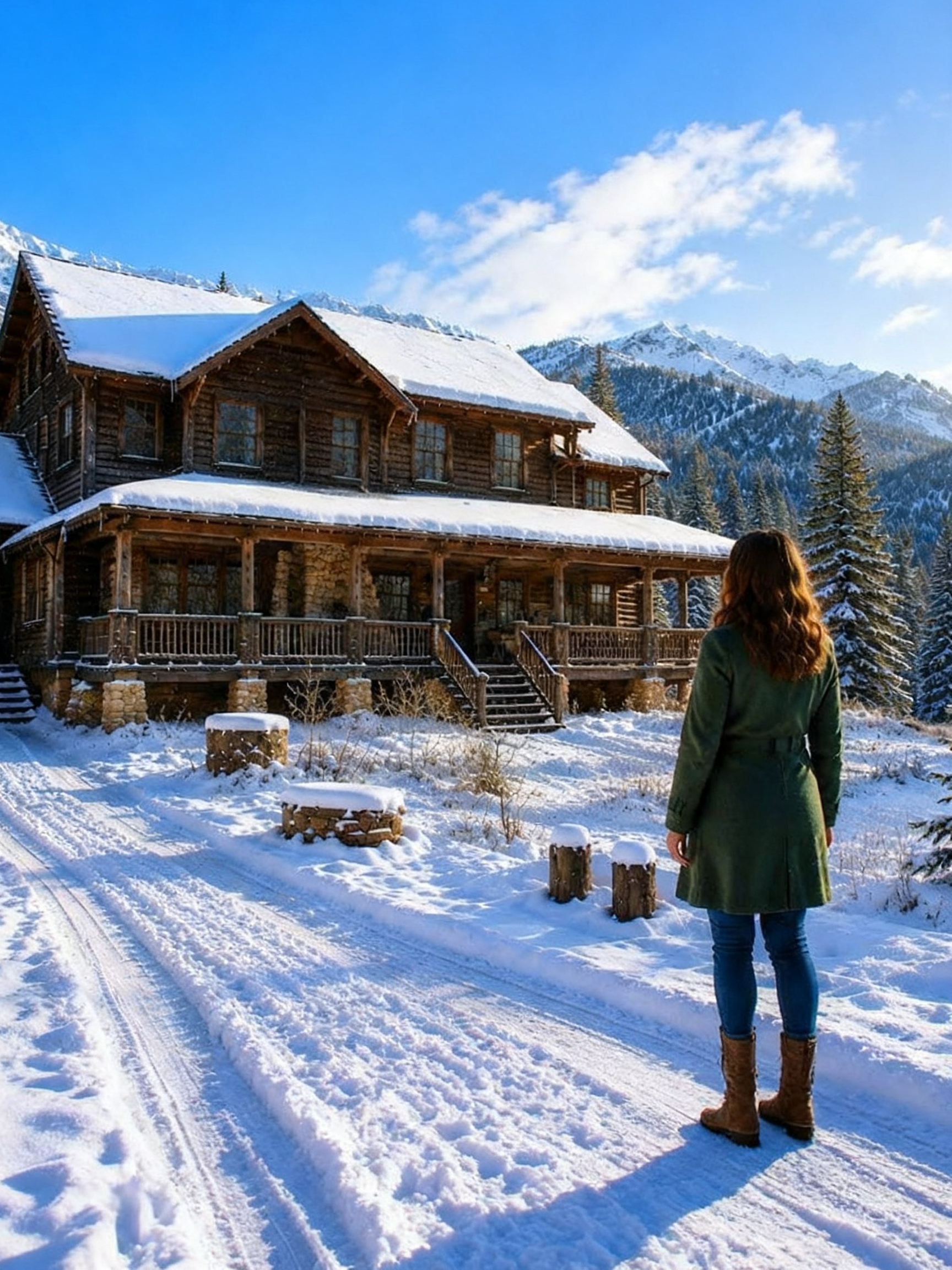
Pregnant and Homeless, She Hid in Her Father’s Abandoned Lodge—Then Found the Secret Her Family Had Been Hunting for Years
“You have until sundown to get your things out of my house.”
My brother said it while I was seven months pregnant, barefoot on our father’s old kitchen tile, holding a glass of water because the baby had been kicking hard enough to make me dizzy.
Then my aunt set my suitcase beside the front door.
That was how I learned my family had already packed for me.
No argument.
No warning.
Just one gray suitcase, my winter coat folded over the handle, and my father’s photograph shoved into the outside pocket as if he were junk mail.
My brother, Daniel Monroe, leaned against the marble island Dad had paid for fifteen years earlier and crossed his arms.
“You’ve had six days, Rachel.”
That was the number they had agreed made a pregnant woman sufficiently recovered from losing her apartment, her marriage, and almost everything she owned.
Six days after my husband emptied our joint account and disappeared with the woman from his office.
Six days after my landlord informed me that the rent hadn’t actually been paid in two months because my husband had been intercepting the notices.
Six days after I drove forty-three miles to the house where I grew up because my OB had told me not to sleep in my car again.
And now Daniel was discussing me like a delayed package.
His wife, Melissa, sat at the breakfast table scrolling through her phone.
My aunt Evelyn stood near the doorway in a cream cashmere sweater, her silver bracelets making tiny expensive sounds whenever she moved.
She didn’t look at my face.
That was almost worse.
“There’s a motel near Route 9,” she said. “They have weekly rates.”
I took a sip of water.
The baby rolled beneath my ribs.
I said nothing.
Daniel’s mouth tightened.
He had always hated my silence more than my anger.
Anger gave him something to defeat.
Silence made him wonder what I knew.
I set the glass on the counter.
“You’re making this uncomfortable.”
That almost made me smile.
Not because it was funny.
Because there are sentences so cruel they circle around and become absurd.
“I’m making it uncomfortable?”
Melissa finally looked up.
“Please don’t start.”
“I haven’t.”
And I hadn’t.
I hadn’t screamed when my husband vanished.
I hadn’t begged when the bank told me there were forty-three dollars left in my account.
I hadn’t called Daniel at midnight and demanded that he rescue me.
I hadn’t mentioned that I had spent three years driving our father to chemotherapy while Daniel visited twice.
I hadn’t mentioned that when Dad could no longer button his shirts, I did it.
I hadn’t mentioned that when Dad forgot which medication came before breakfast, I made charts and alarms and stayed awake.
I hadn’t mentioned that when Dad died, Daniel arrived forty minutes after the funeral home took him away and immediately asked whether the lake house had been appraised.
I had remembered.
That was different.
I had remembered who showed up.
I had remembered who disappeared.
I had remembered who held Dad’s hand when he was afraid.
I had remembered who asked about money before the sheets on his bed were cold.
I had remembered every sacrifice my family had mistaken for weakness.
And standing in that kitchen, with my child moving inside me and my suitcase already packed by someone else, I understood something that changed the temperature of the room.
They weren’t throwing me out because I was a burden.
They were throwing me out because something was happening.
Daniel walked toward the window.
Outside, parked beside his black Mercedes, was a dark green SUV I didn’t recognize.
A man in a charcoal coat sat behind the wheel.
Watching the house.
I looked at Daniel.
He caught me looking.
For half a second, something crossed his face.
Then it was gone.
“The lodge,” I said.
Nobody moved.
It was the first time I had spoken those two words since arriving.
Dad owned an old hunting lodge in northern Vermont, almost three hours from the family house in Massachusetts.
Owned was perhaps the wrong word.
The place had been abandoned for twelve years.
No heat that I knew of.
No reliable electricity.
A collapsing woodshed.
A stone chimney.
A roof Dad kept saying he would repair “next spring.”
He had bought the property before marrying my mother, back when he was twenty-six and had more ambition than cash.
For years, it was where we spent Thanksgiving.
Then my mother died.
Dad stopped going.
Eventually, the road grew over.
Daniel laughed.
“That dump?”
“Dad never sold it.”
“No one would buy it.”
Aunt Evelyn’s eyes flicked toward him.
Tiny movement.
Tiny mistake.
I had spent too many years sitting beside hospital beds, reading doctors’ expressions before they delivered bad news.
People reveal truth in fractions of a second.
“Then I’ll stay there,” I said.
Melissa lowered her phone.
“In November?”
“It’s practically in the mountains.”
“I know where it is.”
“It might not even be habitable.”
Daniel shrugged.
“Her choice.”
Much too fast.
Five minutes earlier, he had been worried about my responsibility.
Now he was perfectly happy to send his pregnant sister to an abandoned building in the Vermont woods before winter.
I looked toward the green SUV again.
The man inside was speaking on a phone.
“Who’s that?”
Daniel didn’t turn.
“He’s been sitting there since I came downstairs.”
“Probably somebody visiting the neighbors.”
Our nearest neighbor lived half a mile away.
I let the lie pass.
That frightened Daniel more.
He walked to the counter, pulled a ring of keys from a drawer, and tossed it toward me.
I caught it.
An old brass key hung between newer ones.
A strip of faded red tape circled the top.
I stared at it.
For years, Daniel had claimed he didn’t know where that key was.
Yet he had found it in less than ten seconds.
“Anything else?” I asked.
Aunt Evelyn spoke before he finished.
“Thomas kept papers up there.”
Daniel’s head snapped toward her.
Aunt Evelyn recovered quickly.
“Old tax papers. Receipts. Useless things.”
My father’s name had been Thomas Monroe.
He had been dead for eleven months.
And until that moment, nobody had mentioned the lodge since his funeral.
I slipped the keys into my coat pocket.
Daniel opened the front door.
Cold air came through the entryway.
I pulled the suitcase behind me.
He put on the expression he used when pretending to care.
“Don’t go digging around up there. The floors aren’t safe.”
There it was.
The warning.
So soft it might have passed for concern.
But Daniel had never worried about a floor in his life.
I stopped on the porch.
The man in the green SUV looked directly at me.
I looked directly back.
Then I asked my brother one question.
“Why would I dig?”
His jaw tightened.
I didn’t wait for his answer.
I loaded the suitcase into my twelve-year-old Subaru and drove north.
The green SUV followed me for eleven miles.
Then disappeared.
I didn’t call the police.
People think remaining calm means you aren’t afraid.
That isn’t true.
Fear was everywhere.
Fear sat beneath my ribs beside my daughter.
Fear lived in my nearly empty bank account.
Fear rode with me past gas stations where I calculated whether I could afford both fuel and food.
Fear whispered that I had no husband, no house, no mother, and now apparently no brother.
But fear is information.
Panic is what wastes it.
At a gas station outside Brattleboro, I bought bottled water, peanut butter, crackers, two flashlights, batteries, work gloves, and a cheap carbon monoxide detector.
Then I took out sixty dollars cash.
I had one hundred and fourteen dollars left.
I also called someone.
Not Daniel.
Not Evelyn.
Her name was Margaret Sloan.
She had been my father’s estate attorney for twenty-two years.
She had attended the funeral.
She had also been strangely absent when Daniel told me that Dad’s estate consisted mostly of the family home, retirement funds, and several investment accounts divided according to a trust Daniel managed.
Margaret didn’t answer.
I left a message.
“Ms. Sloan, this is Rachel Monroe. I’m going to Dad’s lodge. Daniel gave me the key. I need to know whether there is any legal reason I shouldn’t enter the property. Please call me.”
I hesitated.
Then added:
“And if my brother contacts you first, I’d rather you call me before answering any questions about me.”
At p.m., snow began falling.
Not heavily.
Just enough to whiten the branches along Route 100.
The turnoff to the lodge was easy to miss.
The wooden MONROE sign was gone.
Only two rusted bolts remained on the old cedar post.
I stopped the Subaru.
Took a photograph.
Someone had removed that sign recently.
The exposed wood beneath the bolts was pale.
I drove on.
The private road twisted almost a mile through maple and pine before the lodge appeared.
I remembered it being enormous.
That was childhood lying to me.
It was two stories, built from dark cedar logs on a fieldstone foundation, with a porch wrapping around three sides.
The porch sagged.
One shutter hung crooked.
Pine needles covered the roof.
But the chimney stood solid.
The windows were intact.
And there were tire tracks in the mud.
Fresh ones.
I parked twenty yards away.
For a full minute, I stayed inside the Subaru.
No movement.
I took out my phone and photographed the tracks.
Then I walked to the front door.
The brass key turned.
The lock opened.
Inside smelled like cedar, dust, and cold stone.
I remembered Dad carrying me through that doorway when I was nine after I fell asleep by the fire.
I remembered Mom making pancakes in the kitchen.
I remembered Daniel teaching me how to cheat at Monopoly and then telling Dad I had invented the rules.
Memory is cruelest when the room has survived but the people haven’t.
I closed the door.
The lodge was dusty, but not destroyed.
Furniture still stood beneath white sheets.
Dad’s old fishing rods leaned against a wall.
A black iron stove occupied one corner.
There was dry wood stacked beside it.
Not twelve-year-old wood.
Recently cut wood.
I touched the top log.
Someone had been maintaining the place.
I checked the kitchen.
Canned food.
Bottled water.
Blankets sealed in plastic bins.
A first-aid kit that expired the following year.
I stood very still.
Dad had stopped driving six years before he died.
Daniel claimed he hadn’t visited the lodge since college.
Aunt Evelyn hated the outdoors.
So who stocked it?
The answer came thirty seconds later.
My phone rang.
Margaret Sloan.
Her voice sounded breathless.
“Are you at the lodge?”
“Did anyone follow you?”
My skin went cold.
“Lock the doors.”
I walked to the front window.
Nothing outside but snow.
“Margaret, what is happening?”
“Lock them first.”
I locked the front.
Then the kitchen door.
Then the porch entrance.
Margaret exhaled.
“I have been trying to reach you for months.”
“You have my number.”
“I had your old number. Every letter I sent to Daniel’s address came back after Thomas died.”
I turned slowly toward the silent room.
“Daniel said you handled the estate.”
“I handled part of it.”
“What does that mean?”
“Your father maintained separate counsel for one specific asset.”
“The lodge?”
Another pause.
I sat down.
The chair beneath me creaked.
“Rachel, I need you to listen carefully. Your father gave me instructions that I was not permitted to disclose until one of two things occurred.”
“What things?”
“You voluntarily entered the lodge with the original key.”
I stared at the brass key in my hand.
“Someone attempted to transfer the lodge property without your signature.”
Outside, snow ticked softly against the window.
I felt my daughter kick once.
“Has someone attempted that?”
Margaret didn’t answer immediately.
That was the answer.
“Your brother submitted documents last month.”
My fingers closed around the phone.
“What documents?”
“A preliminary transfer declaration connected to a development project.”
“What development project?”
“Rachel, did you pass a sign for North Peak Resort construction when you came through Wilmington?”
Huge white boards beside the highway.
LUXURY MOUNTAIN RESIDENCES.
PRIVATE SKI ACCESS.
PHASE TWO COMING SOON.
Daniel had talked about North Peak at Christmas the year before.
He called it “the biggest real estate opportunity in southern Vermont.”
I had assumed he meant he had invested.
Margaret continued.
“Your brother’s company is involved.”
“How involved?”
I looked around the lodge.
The old furniture.
The stone fireplace.
The flannel curtains my mother sewed.
“This is about the land.”
“How much?”
“Your father’s original parcel is larger than you were told.”
“How large?”
“Rachel, find the fireplace.”
“I’m looking at it.”
“On the right side of the hearth, there are three stones with lighter mortar. Count upward from the floor.”
My heart began beating faster.
“Margaret—”
The third stone was slightly recessed.
I used both hands.
The stone shifted with a low grinding sound.
A narrow steel compartment appeared behind it.
Inside was a metal box.
About eighteen inches long.
Dark green.
A combination lock secured the front.
My mouth went dry.
“There’s a box.”
“What’s the combination?”
“Your mother’s birthday.”
I closed my eyes.
June 14, 1968.
The lock opened.
Inside were three sealed envelopes.
A flash drive.
A leather-bound ledger.
Two property deeds.
And an old Polaroid photograph of my father standing in front of the lodge with my mother.
Dad had written on the white border.
FOR RACHEL, WHEN THEY FINALLY FORCE HER HERE.
I stopped breathing for a second.
Margaret said my name.
I turned the photograph over.
More handwriting.
IF YOU ARE READING THIS, THEY BELIEVE THEY HAVE WON.
DO NOT CORRECT THEM YET.
I sat on the floor.
Not crying.
Not trembling.
Just reading the sentence again.
I whispered.
Margaret knew what I meant.
“Your father became suspicious of Daniel approximately four years ago.”
“Suspicious of what?”
“Financial pressure. Misrepresentation. Attempts to obtain signatures while Thomas was undergoing treatment.”
I thought of hospital rooms.
Daniel arriving with folders.
Dad waving him away.
Daniel telling me it was “insurance paperwork.”
I had been too busy changing Dad’s IV line dressing to read every document.
The guilt hit fast.
I pushed it away.
Guilt could wait.
Facts first.
“What did Dad own?”
“Read the first deed.”
I opened it.
The paper was old but protected in a plastic sleeve.
Parcel descriptions ran for pages.
Survey markers.
County stamps.
Then I saw the acreage.
2,416 acres.
“That can’t be right.”
“The lodge property was forty acres.”
“That is what Thomas allowed most people to believe.”
“Because most of the surrounding land was purchased through three holding companies beginning in 1989.”
My father had been a civil engineer before he built his consulting business.
He wasn’t flashy.
He drove pickup trucks until the doors rusted.
Daniel used to mock him for it.
“What’s on the land?”
“Forest, watershed, two old quarry parcels, and something North Peak Resort needs very badly.”
I looked at the second deed.
“The only legally recorded year-round access corridor to Phase Two of their project.”
I laughed once.
Not because it was funny.
Because suddenly the last six days made sense.
My brother hadn’t thrown a homeless pregnant woman out of his house.
He had pushed me toward the one place he desperately needed me not to understand.
Maybe he assumed I would arrive, see a freezing ruin, and run back begging.
Maybe he expected someone else to get here first.
Maybe Daniel believed desperation made people stupid.
That had always been his favorite mistake.
“How valuable is the access?”
Margaret was silent.
“Margaret.”
“North Peak has approximately sixty-two million dollars committed to Phase Two.”
I looked through the dusty window into the falling snow.
“And without this corridor?”
“They have no approved road wide enough for construction vehicles, emergency access, or permanent resident traffic.”
I opened Dad’s first envelope.
If you are reading this, then Daniel probably smiled while hurting you.
He has always believed cruelty is more intelligent when delivered politely.
I shut my eyes.
Even dead, he knew his son.
I continued.
You will be tempted to think this is about punishing him.
Justice done only for revenge becomes another kind of prison.
The land matters because of what it protects.
I bought the first parcel because your mother loved those woods.
I bought the second because a timber company planned to clear the ridge.
I bought the watershed because the town nearly lost it to industrial dumping.
I bought the access corridor because someday men with more money than memory would decide the mountain was empty simply because nobody rich lived on it.
Your brother now works with some of those men.
I warned him.
He called me sentimental.
He will probably call you emotional.
People who confuse restraint with weakness usually sign things they should have read.
I swallowed.
The next paragraph was underlined.
DO NOT SIGN ANY DEED, RELEASE, EASEMENT, OPTION, WAIVER, FAMILY SETTLEMENT, TRUST AMENDMENT, OR TEMPORARY ACCESS AGREEMENT.
NOT EVEN FOR ONE DOLLAR.
I looked at Margaret’s name printed below.
CALL MARGARET.
THEN OPEN THE LEDGER.
The ledger was thick.
Inside were dates.
Company names.
Meeting notes.
Copies of checks.
My brother’s name appeared repeatedly.
So did Aunt Evelyn’s.
And another name I recognized.
Charles Vane.
He was the man who had been sitting in the green SUV.
I had met him once at Daniel’s Christmas party.
A developer.
North Peak Holdings.
Now I understood why he had watched me leave.
“How bad is this?” I asked.
Margaret answered carefully.
“I cannot make accusations until the documents are independently examined.”
“That wasn’t my question.”
She sighed.
“If the ledger is authentic and complete, your father believed several people were attempting to obtain the access rights through false representations.”
“Several people.”
“Daniel. Evelyn. Charles Vane.”
“There are others.”
“How many?”
“Enough that you should stop reading tonight.”
I almost laughed again.
“That advice would work better if you hadn’t just told me half my family may have been trying to steal two thousand acres.”
“Rachel, you are alone and pregnant in an isolated building.”
“And someone has already been here.”
I told her about the fresh firewood.
The stocked food.
The tire tracks.
Margaret swore softly.
That frightened me more than anything else had.
She was seventy-one years old and had once responded to a courthouse bomb threat by finishing her coffee.
“Leave,” she said.
“The road is icing over.”
“Then call the sheriff.”
“Do we trust the sheriff?”
Her silence answered faster this time.
“Not all of the department,” she said.
I photographed every page I had opened.
Then I put the originals back in the box except Dad’s letter and the Polaroid.
“Margaret, who has duplicate records?”
“Thomas created backups.”
“I don’t know.”
“You don’t know?”
“That information was intentionally divided. He said no single person should be capable of compromising everything.”
Probably alive longer because of it.
“What do I do?”
“Tonight? Stay inside. Do not turn on exterior lights unless necessary. Do not post your location. Keep your car facing the road. In the morning, drive to Bennington. I will meet you at the office of attorney Samuel Keene.”
“Who is he?”
“Your father’s separate counsel.”
So Dad had another lawyer.
“Why didn’t he contact me after Dad died?”
“He tried.”
“They were signed for.”
I already knew.
Daniel’s house.
“I never saw them.”
“I suspected that.”
Something struck me.
“Margaret, Daniel handed me the lodge key.”
“If he knows what’s here, why would he do that?”
“He may not know exactly what is there.”
I looked at the hidden compartment.
“He knew enough to tell me not to dig.”
Another silence.
Then Margaret said something that stayed with me.
“Your father said Daniel knew there was a trap. He simply didn’t know what triggered it.”
I slept maybe ninety minutes that night.
Not from panic.
I inventoried everything.
Photographed serial numbers.
Copied the flash drive to my laptop.
Then copied it again to an encrypted cloud account my husband never knew existed.
At 11:42 p.m., headlights appeared between the trees.
I killed the lamp.
A vehicle stopped near the lodge.
The green SUV.
Charles Vane stepped out.
He wasn’t alone.
A second man came from the passenger side.
I stood upstairs behind a curtain with my phone recording.
They walked to the porch.
Tried the door.
Then Charles knocked.
Friendly voice.
Too friendly.
I didn’t answer.
“It’s Charles Vane. I’m a friend of your brother’s.”
Still nothing.
“We heard you were up here. Daniel’s worried about the weather.”
Interesting.
Daniel’s worry had improved remarkably since sunset.
Charles knocked again.
“We’ve got a generator and some propane. Just wanted to make sure you’re safe.”
The second man walked around the side of the lodge.
I called 911.
Gave the address.
Explained that two unknown men were attempting to enter.
The dispatcher said deputies were at least thirty minutes away.
Charles stopped knocking.
For several minutes, there was silence.
Then I heard metal scrape near the kitchen door.
I walked downstairs.
Not toward them.
Toward the old mudroom.
Dad kept tools there.
The same wall still held a red steel air horn we used to scare bears away from the trash.
I picked it up.
Beside it was an old can of fluorescent marking spray.
The kitchen doorknob moved.
Someone whispered outside.
The latch shifted.
The door opened three inches.
They must have found an old key.
Or brought one.
I slammed the door from inside, threw the deadbolt, then aimed the air horn through the narrow window and fired.
The blast was violent.
The man outside shouted and fell backward.
I switched on the porch floodlight.
Then held up my phone.
“You’re being recorded.”
Charles stood ten feet away.
His charming expression was gone.
“Jesus, Rachel.”
“What are you doing?”
“We were checking the door.”
“With a key?”
“It was open.”
“No, it wasn’t.”
He saw my phone.
His posture changed immediately.
Hands visible.
Reasonable man now.
“We don’t need drama.”
I kept recording.
“We need names. Who is the man with you?”
The second man turned his face away.
Charles smiled.
“You’ve had a difficult week.”
“His name.”
“You should call Daniel.”
“I called the police.”
The smile disappeared.
They left before deputies arrived.
But not before I captured the license plate.
The deputy who came forty-two minutes later was named Lauren Briggs.
Mid-thirties.
Tired eyes.
No nonsense.
She watched the video twice.
“Do you know Mr. Vane?”
“Any reason he’d have a key?”
She photographed the door.
Then found faint tool marks beside the strike plate.
She asked whether I wanted to file an incident report.
That surprised her.
People like Daniel survive because family members are trained to say, It’s complicated.
I had finished saying that.
Deputy Briggs handed me a card.
“If either man comes back, call immediately.”
“Do you know Vane?”
Her expression didn’t change.
“I know who he is.”
“Is that different?”
A faint smile.
Then she left.
At the next morning, my brother called.
I let it ring.
At , he called again.
At , Aunt Evelyn called.
At , Melissa texted.
Daniel is panicking. Please call him. Charles was only trying to help.
I saved the message.
At , Daniel sent:
WE NEED TO TALK BEFORE YOU DO SOMETHING STUPID.
I saved that too.
Then I ate peanut butter on crackers, packed Dad’s ledger inside my coat, and drove to Bennington.
Samuel Keene’s law office occupied the second floor above a pharmacy.
No glass walls.
No expensive receptionist.
Samuel himself opened the door.
He was maybe sixty.
Gray beard.
Red suspenders.
He looked at my stomach, then my face, and said:
“You have Thomas’s eyes.”
That nearly broke me.
Instead I shook his hand.
“Did my father know my brother was stealing from him?”
Samuel didn’t smile.
“Sit down.”
Margaret arrived ten minutes later carrying two banker boxes.
For the next three hours, they showed me what my father had spent four years building.
Not a fortune.
Something more difficult to steal.
The 2,416 acres were owned by Monroe Ridge Conservation Company.
Dad controlled it.
After his death, control did not automatically pass through the family trust.
It passed to a separate entity.
The Rachel Anne Monroe Land Stewardship Trust.
Established nine years earlier.
I stared at Samuel.
“I didn’t know this existed.”
“You weren’t supposed to.”
“How can I control something I didn’t know existed?”
“You didn’t. Not until activation.”
“What activated it?”
Samuel looked at the brass lodge key lying on the table.
“You entering the lodge voluntarily.”
I thought of Dad’s sentence.
WHEN THEY FINALLY FORCE HER HERE.
“Oh my God.”
Margaret nodded.
“He knew Daniel would throw me out?”
“No,” Samuel said. “He knew Daniel’s character.”
There is a difference.
A painful one.
Dad hadn’t predicted the exact betrayal.
He had simply prepared for the person capable of committing it.
“What does the trust do?”
Samuel opened a binder.
“Protects the land permanently from bulk development except under specific conservation-compatible uses.”
“So I can’t sell it.”
“You can sell limited parcels under certain conditions. But Thomas did not create this to make you wealthy overnight.”
That relieved me.
Which surprised me.
“Then why me?”
Samuel pushed another letter across the desk.
This one had my name in Dad’s handwriting.
You once asked me why I never sold the mountain when Daniel said we could make millions.
You were twenty-four.
I told you money wasn’t the only measure of value.
You said, “Then somebody has to be responsible for remembering the other measures.”
That is why.
My vision blurred.
I blinked until the words sharpened.
Samuel waited.
I continued.
The trust also created educational easements for the town.
Protection for the watershed.
Lease rights for three local family farms.
A timber-management cooperative employing fourteen people.
And a legal defense fund.
“For what?” I asked.
Margaret opened the ledger.
“For this.”
Dad had documented meetings in which Daniel, Charles Vane, Aunt Evelyn, and two North Peak executives pressured him to grant road access.
At first they offered money.
Then partnership shares.
Then they began presenting “temporary” documents.
Then, during chemotherapy, someone attempted to file a deed claiming Dad had transferred a ninety-foot access corridor to a company called MRC Land Services.
The deed was rejected because one notarization was defective.
My father had found out.
He never confronted Daniel directly.
Instead, he started building evidence.
“Why didn’t Dad go to the police?”
Samuel folded his hands.
“He intended to. Then his cancer returned.”
The room became very quiet.
I looked down at Dad’s notes.
One entry from eighteen months earlier:
DANIEL AGAIN. SAYS RESORT DEAD WITHOUT RIDGE ROAD. TOLD HIM NO. E. SAYS FAMILY SHOULD BENEFIT. C.V. THREATENED CONDEMNATION. CHECK STATUTE. RACHEL DROVE ME HOME. DID NOT TELL HER. SHE HAS CARRIED ENOUGH.
That sentence hurt worse than the eviction.
Because even dying, he had been trying not to put one more burden on me.
“What happens now?”
Samuel leaned back.
“That depends on what they have filed since Thomas died.”
He pulled up county records.
His expression changed.
Then Margaret stood and came around the desk.
Samuel turned the screen.
A filing dated twelve days earlier.
TEMPORARY CONSTRUCTION ACCESS EASEMENT.
Monroe Ridge Conservation Company.
Authorized representative:
Daniel T. Monroe.
Beneficiary:
North Peak Development Holdings LLC.
Recorded payment:
$3,850,000.
I felt no anger.
Only clarity.
“Daniel isn’t authorized.”
“Did North Peak pay him?”
“That is what this filing claims.”
“So they believe they bought the road.”
“When does construction start?”
Samuel clicked another document.
It was Thursday.
North Peak planned to move excavation equipment through my father’s land in four days.
“They think they own it.”
That was the first mini-victory.
But Samuel raised one finger.
“However, we cannot simply lock the gate and celebrate.”
“Because your brother filed a supporting corporate resolution claiming you voluntarily declined your position as successor trustee.”
I stared at him.
He printed it.
There was my name.
Rachel Anne Monroe.
There was a signature.
It looked almost perfect.
But whoever forged it had copied the careful version of my signature from my driver’s license.
Not the version I used in real life.
And beside it was a date.
Three months earlier.
The day listed was September 17.
I remembered September 17.
I had been in Massachusetts General Hospital beside my father.
He died the following morning.
I had signed multiple forms that day.
Hospital forms.
Hospice forms.
Medication forms.
Aunt Evelyn had repeatedly brought me coffee.
Daniel had repeatedly brought me papers.
My stomach turned.
“They got my signature that day.”
“Possibly.”
“Or copied it.”
“Can we prove it?”
Margaret’s eyes sharpened.
“I believe we can.”
She opened one of her banker boxes.
Inside was a hospital visitor log.
Dad had requested it before his death.
There were also copies of documents from his medical record.
At p.m. on September 17, a nurse documented that I was with my father during a procedure.
The fake corporate resolution was notarized in Wilmington, Vermont at p.m.
Two hours away.
I looked at Samuel.
“Is that enough?”
“It is enough to make today interesting.”
My phone rang.
I answered.
There was a pause.
He had expected voicemail.
“Where are you?”
I watched Samuel’s eyebrows lift.
“From the lodge?”
“Eventually.”
“Charles said you freaked out last night.”
“He was trying to help you.”
“He opened my locked door.”
“That place is technically part of the estate.”
“No?” Daniel repeated.
“Rachel, don’t start pretending you understand property law because you found some of Dad’s old paperwork.”
Confirmation.
He knew there was paperwork.
Samuel quietly started recording his own notes.
I kept my voice soft.
“Did Dad have paperwork there?”
Daniel exhaled.
“This is exactly what I mean. You’re exhausted. Pregnant. You’ve been through hell with Eric. Come home.”
Yesterday, I had been a burden.
Today, home suddenly reopened.
“No thanks.”
“I’m serious.”
He changed tactics.
“North Peak has crews scheduled. There are contracts involving that property. If you interfere because you’re angry at me, you could create financial liability you don’t understand.”
“Did you sign a road easement?”
Silence again.
“Who have you been talking to?”
There was the real Daniel.
No more worried brother.
“You need to stop.”
“Is that a yes?”
His voice lowered.
“Dad wanted the family taken care of.”
I stared at the forged document on the desk.
Daniel missed the meaning.
“We’re talking about enough money to change everyone’s life. Not some sentimental cabin in the woods. Evelyn has money invested. Melissa’s parents have money invested. I have guarantees tied to Phase Two.”
The system.
Not one villain.
A chain of people who had convinced themselves that inheritance meant entitlement.
He kept talking.
“We can fix this. You sign the documents. I’ll make sure you’re comfortable.”
“How comfortable?”
Then named a number.
“Five hundred thousand.”
Samuel wrote something on a legal pad.
I almost admired Daniel’s confidence.
The easement was supposedly worth $3.85 million.
The project behind it was worth more than sixty million.
And he was offering the pregnant sister he had evicted five hundred thousand dollars for control of land he already claimed she had declined.
“You said yesterday the lodge was worthless.”
“Then why are you offering me half a million dollars?”
I could feel Daniel recalculating.
He hated being forced to notice his own contradictions.
“Because I’m trying to help you.”
“Thank you.”
“For what?”
“For answering.”
I ended the call.
Samuel looked at me.
“That was exceptionally useful.”
“Will it hold up?”
“Maybe. But more importantly, he now knows you know something.”
Margaret shook her head.
“Not necessarily.”
She was right.
Forty minutes later, Samuel’s receptionist came in.
“Mr. Keene?”
“There are two men downstairs asking for Rachel Monroe.”
Charles Vane had found me.
He brought company counsel.
They didn’t come upstairs.
Samuel did.
Twenty minutes later, he returned with a proposed settlement.
North Peak would pay me $900,000 in exchange for immediate ratification of the access easement, mutual confidentiality, release of all claims, and confirmation that Daniel had valid authority when he signed.
“They went from five hundred to nine hundred in under an hour,” I said.
“They are not confident.”
“Can we say no?”
“We can say nothing.”
Dad’s warning echoed in my head.
DO NOT CORRECT THEM YET.
“Then say nothing.”
That afternoon, North Peak’s public relations team announced construction on Phase Two would begin Monday as scheduled.
They posted renderings online.
Luxury chalets.
A private club.
Mountain homes starting at $2.2 million.
They believed they had won.
Daniel sent me a screenshot of the announcement.
Then one sentence.
LAST CHANCE TO BE SMART.
I didn’t respond.
Friday morning, Samuel filed an emergency action challenging the easement and the forged corporate resolution.
But he did not immediately request a total construction injunction.
That was my decision.
Margaret hated it.
“Rachel, they could start clearing.”
“Not on Dad’s land.”
“They may try.”
Margaret stared at me.
“If they believe their documents are valid, let them behave accordingly.”
Samuel slowly smiled.
“You want evidence of reliance.”
“I want evidence of knowledge.”
The difference mattered.
We sent North Peak a formal notice at a.m.
It stated that ownership and access rights were disputed.
It included the correct trust name.
It included my status as successor trustee.
It included a demand that no equipment enter the Monroe Ridge parcel until title issues were resolved.
Charles Vane signed for it at 10:26.
At 11:04, North Peak emailed back stating our claims were “without merit.”
At 12:17, Daniel called me seven times.
At , Aunt Evelyn called.
I answered that one.
“Rachel, sweetheart.”
I had not been sweetheart since I was twelve.
“Hi, Evelyn.”
“Your brother says there’s some misunderstanding.”
“You know how complicated Thomas made everything.”
Dad hadn’t made things complicated.
Dad had made theft inconvenient.
“Your father wasn’t himself near the end.”
There it was.
The moral knife.
A dying man’s intelligence reduced to illness the second his choices became inconvenient.
“He knew me,” I said.
“Of course.”
“He knew Daniel.”
Evelyn recovered.
“This project is good for the region. Jobs. Taxes. Opportunity.”
“What about the watershed?”
“The resort has environmental consultants.”
“The farms?”
“What farms?”
I wrote that down.
She didn’t know.
Dad had hidden those lease protections well.
“The families leasing three parcels.”
Evelyn sighed.
“Rachel, your father gave sweetheart arrangements to people who had no business being there.”
One of those “people” was George Ellis, seventy-three, whose family had tapped maple trees on that mountain since 1954.
Another was Nina Alvarez, a widowed mother running an organic vegetable operation.
The third was the Benson family cattle farm.
Dad charged them almost nothing.
Daniel called that bad business.
I called it remembering human beings.
“If the resort gets the road, what happens to them?”
“They’ll be compensated.”
“North Peak.”
“How much?”
“That’s not really your concern.”
And there was the ethical reason I needed no lawyer to explain.
It wasn’t just my inheritance.
Dad had built protections for families who didn’t have developers at their dinner tables.
Daniel wasn’t only stealing from me.
He was converting promises into leverage.
“What do you want, Evelyn?”
“For you to stop fighting your family.”
“You packed my suitcase.”
The silence lasted longer this time.
“That was unfortunate.”
“You put it beside the door.”
“You were causing tension in Daniel’s marriage.”
“I slept in the basement.”
“You know what I think is interesting?”
“You all thought I was powerless when I had nowhere to live.”
“I never thought that.”
“Then why was Charles Vane outside the house before Daniel threw me out?”
Evelyn hung up.
That was another answer.
Saturday, Samuel showed me a document Dad had recorded with a private title service three years earlier.
A contingent conservation covenant.
If any trustee or unauthorized representative attempted to transfer the primary access corridor to a commercial development without approval, expanded conservation restrictions could automatically activate.
Including a prohibition against widening the road beyond agricultural and emergency-service dimensions.
“He built a legal land mine,” I said.
Samuel nodded.
“And Daniel stepped on it.”
“Has it activated?”
“We need a court ruling confirming the triggering event.”
“And if we get it?”
“North Peak doesn’t just lose the easement.”
Samuel turned the map toward me.
“They may permanently lose the ability to build their required access road here.”
For the first time, I understood why Dad’s letter told me not to correct them.
If Daniel had merely asked for permission, I could say no.
If he forged control and transferred the land anyway, he might have triggered restrictions far worse for the project.
Their greed had created the weapon.
Sunday afternoon, I drove back to the lodge with Deputy Briggs following for the last ten miles.
Not officially.
She said she happened to be “heading that direction.”
I didn’t ask questions.
When we reached the entrance road, we found the lock cut.
Fresh tracks crossed the snow.
Heavy ones.
Someone had already driven survey equipment onto the property.
I photographed everything.
At the lodge, the hidden fireplace compartment was open.
My heartbeat climbed.
Deputy Briggs drew her weapon.
We searched every room.
The steel box was gone.
All the originals.
Dad’s ledger.
For the first time since Daniel threw me out, panic tried to take over.
Then I put a hand against my stomach.
I had photographs.
Cloud copies.
Dad’s letter.
The Polaroid.
Samuel had certified scans from Friday.
The thieves had stolen originals after we had documented them.
That wasn’t a victory for them.
It was evidence.
Deputy Briggs photographed muddy footprints.
Behind the lodge, tire impressions led toward an old logging trail.
Then she found something half buried in snow.
A silver cuff link.
Initials engraved on the surface.
Charles Vane.
Too convenient?
Briggs nodded.
“Most people hand me the object they want to be guilty.”
“I want the person who was actually here.”
She looked at me differently after that.
“You really are Thomas Monroe’s daughter.”
“You knew him?”
“My father did.”
She pointed toward the forest.
“Thomas stopped a chemical storage company from buying part of this ridge twenty-five years ago. Their runoff would’ve reached our well field.”
Dad never told me.
Of course he didn’t.
He did good things the same way he repaired fences.
Then moved on.
Briggs looked toward the lodge.
“Some people around here remember.”
That evening, while an evidence technician processed the broken compartment, I searched Dad’s bedroom.
Then I remembered the Polaroid.
Dad and Mom outside the lodge.
Behind them was the old stone well.
Dad’s hand pointed downward.
Not posing.
I went outside.
Snow reached my ankles.
The well hadn’t functioned since I was a teenager.
Its stone cap was heavy.
Deputy Briggs helped me move it.
Underneath was no water.
Dad had sealed the well shaft with concrete years earlier.
Set into the concrete was a waterproof tube.
Inside the tube was another flash drive.
And one envelope.
BACKUP ONE.
I laughed so hard Briggs asked whether I was okay.
“Better than okay.”
Dad had expected the first box to be stolen.
Of course he had.
The second drive contained scanned originals.
Audio recordings.
And a clip dated eleven months before his death.
Dad sat at the lodge table.
Thin from chemotherapy.
Blanket around his shoulders.
But his voice was clear.
“If Daniel presents a document stating I approved commercial road access, that document is false unless Samuel Keene is physically present on the recording with me.”
He looked straight into the camera.
“I have refused North Peak seven times.”
Then he listed the dates.
Seven refusals.
Documented.
The last video was worse.
Daniel sat across from Dad in the lodge.
The camera angle was low, likely hidden.
Daniel’s voice carried clearly.
“You’re protecting dirt over your own family.”
Dad replied, “I’m protecting promises.”
“You could leave us generational money.”
“I already built you a company.”
“With restrictions.”
“With responsibility.”
“You always trusted Rachel more.”
“I trusted Rachel with sick people, scared people, poor people, and inconvenient people.”
My throat closed.
Dad continued.
“She never asked what helping them would pay.”
Daniel laughed bitterly.
“So she gets the mountain?”
Dad was quiet for several seconds.
“She gets the choice.”
The video ended.
Monday morning, North Peak sent equipment anyway.
Three excavators.
Six dump trucks.
Two survey vehicles.
They reached the Monroe Ridge gate at a.m.
I was there.
So were Samuel.
Deputy Briggs.
Two state land-use enforcement officers.
A local television reporter.
And forty-three people from town.
I hadn’t invited the crowd.
George Ellis had.
He stood beside his maple truck wearing insulated coveralls.
Nina Alvarez brought coffee.
The Bensons brought their adult children.
Dad’s fourteen forestry workers lined the shoulder.
Nobody shouted.
That mattered.
We simply stood there.
The North Peak foreman stepped from his truck.
Charles Vane arrived ten minutes later.
He wore a camel coat and the expression of a man whose private problem had suddenly acquired witnesses.
“This access is legally authorized,” he announced.
Samuel handed him a copy of the dispute notice he had signed three days earlier.
Charles barely looked at it.
“We are proceeding.”
One state officer stepped forward.
Charles’ eyes narrowed.
“You don’t have jurisdiction over title.”
“No. We have jurisdiction over protected watershed disturbance.”
Another mini-payoff.
Dad’s covenant covered more than ownership.
The excavators stopped.
Engines idling.
Daniel arrived at .
Black Mercedes.
He walked directly toward me.
“Rachel, can I speak to you privately?”
He glanced at the cameras.
“Don’t do this.”
“I’m standing on Dad’s property.”
“You’re humiliating the family.”
I almost admired that.
He threw me out.
Intercepted my mail.
Filed papers using my signature.
Tried to transfer Dad’s land.
And standing beside a road where his forged deal had stalled, Daniel decided humiliation was the crime.
“You should leave,” I said.
His face changed.
Just slightly.
The same expression he wore in Dad’s kitchen when we were teenagers and he realized I knew he had lied.
“You think you won?”
I looked at the excavators.
“I think they stopped.”
That was enough for the cameras.
Daniel walked away.
By noon, North Peak’s attorneys filed a motion demanding immediate access.
By p.m., Samuel filed our response.
By Tuesday, the judge scheduled an emergency hearing.
North Peak argued delay would cost more than $400,000 per day.
Samuel argued money did not transform invalid authority into valid title.
Their lawyer presented Daniel’s corporate resolution.
Samuel presented the hospital records.
Their lawyer presented the notarized signature.
Samuel presented proof I had been two hours away at the time.
Their lawyer called the discrepancy “administrative.”
Then Samuel played Dad’s video.
The courtroom changed.
Daniel sat at North Peak’s table, staring straight ahead.
Aunt Evelyn sat behind him.
Charles Vane looked at his lawyer.
Dad’s thin face filled the monitor.
“I have refused North Peak seven times.”
Seven dates.
Seven refusals.
Then came the second video.
“You always trusted Rachel more.”
“I trusted Rachel with sick people, scared people, poor people, and inconvenient people.”
I stared down at my hands.
That sentence was Dad’s real inheritance.
Not the acreage.
Not the road.
Not the millions.
A record that somebody had noticed.
Somebody had seen what I gave when everyone else treated it as expected.
Somebody understood that being the reliable daughter had cost me promotions, relationships, savings, sleep, and pieces of myself nobody applauded.
The court recessed.
When we returned, the judge temporarily invalidated the disputed easement pending full title review.
North Peak was barred from entering the property.
The conservation covenant remained enforceable.
And the forged corporate resolution was referred for investigation.
Daniel finally looked at me.
Not with anger.
With disbelief.
He had spent his life assuming I would absorb pain and continue being useful.
For the first time, the pain had consequences for him.
Outside the courthouse, reporters gathered.
I gave one sentence.
“This land was never empty, and neither were the promises attached to it.”
Then I left.
I didn’t celebrate.
Because rich companies do not vanish when a judge says no once.
They appeal.
They restructure.
They hire better lawyers.
They find new pressure points.
And family members who convince themselves they deserve something can become more dangerous after they realize asking politely has failed.
Three nights later, I moved into a small furnished apartment Samuel’s wife helped me find.
I paid the deposit myself.
That mattered.
I was still not rich.
The trust owned valuable land, but trust land is not a checking account.
I still had prenatal bills.
I still needed work.
I still woke sometimes at a.m. expecting my husband to walk through the door and explain why he vanished.
Justice does not instantly cure grief.
It simply stops one wound from being called normal.
The town placed temporary security cameras at the lodge entrance.
Deputy Briggs opened a formal investigation into the break-in.
North Peak suspended Phase Two.
Its investors began asking questions.
One lender froze future funding.
The Bensons kept their cattle fields.
Nina kept her lease.
George Ellis called me and said:
“Your dad would tell you not to get sentimental about this.”
“What would he say?”
“Probably ask why you hadn’t fixed the lodge gutters.”
So I fixed the gutters.
I hired somebody.
I was eight months pregnant by then and finally learning that responsibility did not require doing every dangerous job personally.
Two weeks after the hearing, Melissa came to see me.
She looked exhausted.
“I didn’t know,” she said.
I didn’t invite her inside.
“How much didn’t you know?”
Her eyes lowered.
“That he forged anything.”
“Did you know he intercepted my mail?”
“He said it was estate correspondence.”
“And you watched Evelyn pack my suitcase.”
Her face tightened.
“I thought you could stay somewhere else.”
That wasn’t the point.
She pulled an envelope from her purse.
“Daniel is moving money.”
I didn’t take it.
“Why are you telling me?”
“Because Charles is blaming him.”
That sounded plausible.
“And Daniel is blaming Evelyn.”
Even more plausible.
Melissa looked toward the parking lot.
“Your husband called Daniel before he left you.”
Everything inside me went still.
There are moments when shock is loud.
This wasn’t one.
This was a room suddenly losing oxygen.
“Three days before he emptied your account.”
I took the envelope.
Inside were printed emails.
Charles Vane.
At first the subject lines looked ordinary.
PROPERTY TIMING.
FAMILY STATUS.
SIGNATURE CONFIRMATION.
Then I saw one dated six weeks before Eric disappeared.
If Rachel becomes financially unstable, she will come here.
We control where she goes next.
I read it twice.
Melissa whispered:
“I’m sorry.”
I turned another page.
The lodge remains the complication. We need confirmation she does not activate whatever Thomas created.
What activates it?
Then keep her away from the lodge.
I looked up.
“Daniel told me to go there.”
Melissa’s face went pale.
“He handed me the key.”
“That doesn’t make sense.”
Unless Daniel had not been working from the same plan anymore.
Unless he wanted me to activate the trust.
Or wanted something else activated.
I read further.
The emails stopped ten days before Dad died.
Then resumed after.
One message from Charles to Daniel:
Did you find Thomas’s secondary instrument?
Then do not send her north under any circumstances.
My scalp prickled.
Daniel had done exactly that.
He had pushed me out.
Handed me the key.
Watched me drive north.
Had he betrayed Charles?
Had he wanted the easement exposed?
That didn’t fit the $3.85 million filing.
Unless Daniel was playing both sides.
I called Samuel.
Then Margaret.
Then Deputy Briggs.
Within an hour, the envelope was copied and secured.
Melissa left.
Before going, she turned back.
“Daniel hasn’t slept.”
“That isn’t my concern.”
“He keeps saying one thing.”
“He says everybody is looking at the wrong property.”
That night I returned to Dad’s video archive.
Every file.
Every date.
Every folder.
At a.m., I found a directory I had overlooked because it appeared empty.
BACKUP TWO.
Password protected.
I tried Mom’s birthday.
My birthday.
Dad’s birthday.
Then I remembered the line in his letter.
Somebody has to be responsible for remembering the other measures.
OTHERMEASURES.
The folder opened.
Dad appeared again.
But this recording was different.
He looked healthier.
Older than I remembered him before the cancer.
The timestamp showed six years earlier.
He sat beside my mother’s old cedar chest.
“Rachel,” he said, “if you are watching Backup Two, then the access corridor has probably been discovered.”
“The corridor is important.”
Another pause.
“But it was never the reason I protected Monroe Ridge.”
I leaned closer.
“There is something beneath the northern parcel.”
My breath stopped.
Dad glanced off camera.
Not frightened.
“Your mother found it first.”
I stared at the screen.
Mom had been dead seventeen years.
Dad continued.
“We agreed never to extract it, never to sell it, and never to allow anyone who valued money more than consequence to control it.”
My hands went cold.
“The surveys are not in the lodge. Neither are the original records.”
He leaned toward the camera.
“If Daniel knows about the access road, you can fight him in court.”
Then his expression changed.
“But if someone has found the northern survey, leave the lodge immediately and contact Samuel.”
A knock sounded in the recording.
Dad looked toward the door.
The video ended.
I called Samuel.
Straight to voicemail.
Then my phone lit up.
Unknown number.
A photograph arrived.
It showed the lodge.
Taken at night.
Taken minutes earlier.
The next photograph showed the old stone well.
The concrete cap had been smashed open.
Then a third image arrived.
A yellowed geological survey lay across someone’s gloved hand.
Across the top were the words:
MONROE RIDGE — NORTHERN PARCEL CONFIDENTIAL SUBSURFACE ASSESSMENT
Below that was a number.
Estimated commercial value.
$186,000,000.
But someone had circled a different line in red.
Not the valuation.
GROUNDWATER CONTAMINATION RISK — CATASTROPHIC IF DISTURBED.
My phone rang.
At in the morning.
I answered.
Neither of us spoke for several seconds.
Then my brother whispered:
“Rachel, listen to me carefully. Charles found the survey.”
A sound cracked somewhere behind him.
Or a gunshot.
Daniel breathed hard.
“You think I threw you out because I wanted the road.”
“Didn’t you?”
“At first.”
My fingers tightened around the phone.
“Then why did you give me the key?”
“Because Dad left me a letter too.”
“What did it say?”
Daniel’s voice dropped.
“That if Charles ever found the northern survey, the only person he trusted to stop him was you.”
Another sound.
Daniel whispered:
“Rachel, they know where you are.”
My apartment lights went out.
Every one of them.
The refrigerator stopped humming.
The hallway outside became black.
I stood slowly.
Eight months pregnant.
Barefoot again.
Calm again.
My father’s photograph on the table.
Deputy Briggs’s number already open on my second phone.
Then somebody knocked three times on my door.
I did not move.
Daniel was still breathing into the phone.
The knocking came again.
And I asked the quietest question I had asked since my brother put my suitcase beside his front door.
“Daniel… before I unlock anything, are you absolutely sure Charles found Dad’s only copy of that survey?”
✓ Lynn R. Adams
Pregnant and Homeless, She Hid in Her Father’s Abandoned Lodge—Then Found the Secret Her Family Had Been Hunting for Years “You have until sundown to get your things out of my house.” My brother sai…