PART 6: THE SCARRED COWBOY HAD NEVER KNOWN LOVE—UNTIL HIS MAIL-ORDER BRIDE CHANGED EVERYTHING 066
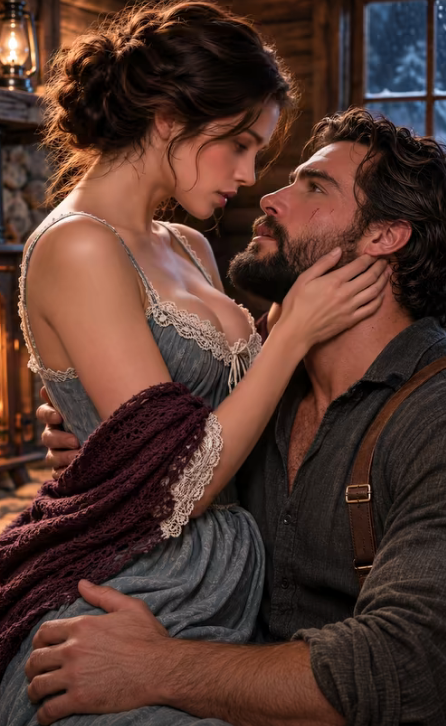
Clara James still had the package.
She found it in a cabinet marked **UNCLAIMED CORRESPONDENCE**.
“I wondered about this,” she said.
The brown paper bore Eleanor’s handwriting.
She felt something twist inside her as she touched it.
She had mailed the parcel from Baltimore after Henry’s death.
At the time, it had seemed meaningless.
One final errand for a man she had spent years trying to understand.
Now it sat on a desk in Alder Creek, tying together two families who had never known they were connected.
Caleb stood beside her.
“You don’t have to open it.”
Eleanor looked at him.
“Yes, I do.”
She untied the string.
Inside was a leather notebook.
The first page bore a name.
**Amos Rourke.**
Below it:
**Private Accounts.**
Clara inhaled sharply.
“My father wrote about him.”
Silas leaned over the table.
“That’s the original.”
Caleb looked at him.
“You’ve seen it?”
“Once. Rourke carried it everywhere.”
Eleanor opened the book.
The pages contained names.
Dates.
Loans.
Payments.
Additional false balances written after debts had been cleared.
Families had been charged repeatedly.
Land had been taken.
Livestock seized.
Caleb found his father’s name.
**Thomas Mercer.**
Initial loan: forty dollars.
Payment: forty.
Then another invented balance.
And another.
And another.
Eleanor turned pages.
Near the end, later entries appeared in different handwriting.
Henry’s.
She recognized it instantly.
“He found the book.”
Clara looked at her.
“How?”
“I don’t know.”
Eleanor scanned Henry’s notes.
He had traced property transfers.
Rourke had fled Colorado and spent years moving east under different names.
One alias appeared repeatedly.
**Arthur Rowe.**
Eleanor froze.
“I know that name.”
Caleb looked at her.
“How?”
“He invested with Henry.”
Pieces fell into place.
Not neatly.
Real life rarely offered neatness.
But enough.
Henry had not merely gambled recklessly on western ventures.
He had discovered that one of the men advising him was tied to fraudulent land schemes.
He had begun investigating.
Perhaps at first for selfish reasons.
Perhaps hoping to recover money.
But somewhere along the way, he found Rourke’s history.
Including Alder Creek.
Including the Mercers.
Caleb stood beside Eleanor, reading.
“So Henry knew about my family.”
“At the end, yes.”
“Did he know about you?”
“Not specifically.”
A voice came from the doorway.
Everyone turned.
A man stood beneath the church arch.
He was leaner than Caleb.
Slightly shorter.
His hair carried threads of gray.
But his eyes—
His eyes were unmistakable.
Caleb did not move.
Neither did the stranger.
Eleanor understood before anyone spoke.
Samuel Mercer had come home.
“Hello, Cal.”
Caleb’s face changed.
Seventeen years vanished and returned all at once.
He took one step.
Stopped.
Samuel smiled uncertainly.
“You got bigger.”
Caleb made a sound that was half laugh, half breath.
“So did you.”
“That usually happens.”
Caleb crossed the room.
For one terrible second Eleanor feared the weight of all those missing years might leave them unable to touch.
Then Caleb embraced his brother.
Samuel held him just as tightly.
No one spoke.
Clara quietly turned away.
Silas stared at the floor.
Eleanor felt tears rise.
Caleb finally stepped back.
His hands remained on Samuel’s shoulders.
“I looked for you.”
“I know.”
“For years.”
“I know.”
“Why didn’t you come?”
Samuel’s smile disappeared.
“Because by the time I remembered who I was, Father was dead.”
Caleb swallowed.
“And me?”
Samuel looked at him.
“I thought you blamed me.”
“For what?”
“Mother.”
Caleb stared.
Samuel’s voice weakened.
“I climbed out.”
“You were twelve.”
“I left her inside.”
“You were twelve.”
“I should have—”
“You were twelve.”
This time Caleb said it firmly.
Samuel looked at his brother.
Something inside him broke open.
Not loudly.
His shoulders simply dropped.
Caleb gripped them.
“You were twelve.”
Samuel closed his eyes.
“I’ve wanted to hear that for seventeen years.”
Caleb pulled him close again.
Eleanor turned toward the window.
There were moments too private even for those who loved the people inside them.
Later they sat beneath the cottonwood beside the ruined Mercer foundation.
Samuel told the story slowly.
He remembered smoke.
His mother on the floor.
The window.
Snow.
A man standing near the road.
Not his father.
Rourke.
Samuel had recognized him from the trading post.
“He didn’t see me,” Samuel said. “At least I don’t think he did.”
“What happened after you escaped?” Caleb asked.
“I followed the creek.”
“In January?”
Samuel smiled faintly.
“I was not making excellent decisions.”
Caleb almost laughed.
“A freight wagon found me the next day. I was half frozen. I knew my first name but little else.”
“And the compass?”
“I kept it.”
Samuel reached into his coat.
He held out a small brass compass.
The metal was worn smooth.
Caleb took it reverently.
His initials remained visible.
C.M.
“I remembered you because of this,” Samuel said. “Not your face at first. Just that someone named Caleb mattered.”
Caleb closed his fingers around the compass.
Samuel continued.
“My memories came back in fragments. By then I was ashamed.”
“Ashamed of surviving?”
Samuel looked toward the ruins.
“Yes.”
Eleanor understood that kind of shame.
The irrational kind.
The kind that grew in silence because no one else was allowed to challenge it.
“What about your father?” she asked.
Samuel sighed.
“I learned the truth later. After the fire, Thomas Mercer realized Rourke was responsible.”
“Then why stop the search?” Caleb asked.
“Because Rourke threatened you.”
Caleb became still.
Samuel looked at him.
“Father believed I was dead. Rourke told him that if he continued accusing him, you might be next.”
Caleb stared at the ground.
All those years.
All that anger.
His father’s silence had not been indifference.
It had been fear.
Misguided.
Destructive.
But fear.
“He never told me,” Caleb whispered.
“No.”
“He became harder afterward.”
“I imagine he did.”
Caleb rubbed the compass between his fingers.
“I hated him for giving up on you.”
Samuel looked at him.
“Perhaps he hated himself more.”
Caleb said nothing.
Eleanor sat beside him.
Their shoulders touched.
That was enough.
Henry’s notebook eventually reached federal investigators through a Denver attorney Margaret Vale trusted.
Rourke himself was already dead.
There would be no dramatic trial.
No courtroom confession.
No satisfying moment in which every wrong became undone.
But several fraudulent land claims were reopened.
Families learned the truth.
Some recovered property.
Others received only answers.
Caleb seemed surprised by how much answers mattered.
“They don’t change what happened,” he said one evening.
“No,” Eleanor replied.
“But they change what we carry forward.”
He looked at her.
“When did you become wise?”
“I have always been wise.”
“You shot soup across the kitchen yesterday.”
“That kettle was defective.”
“It was a spoon.”
“Defective spoon.”
He smiled.
She loved that smile now.
Loved how easily it came.
Samuel remained through spring.
He helped Caleb repair the barn roof.
The brothers argued about everything.
Roof pitch.
Fence posts.
Coffee.
Whether trout preferred shade.
Eleanor sometimes stood at the cabin window and watched them bicker across the yard.
Their arguments never frightened her.
There was affection underneath.
One afternoon Samuel came inside while Caleb repaired tack.
“He loves you,” Samuel said.
Eleanor nearly dropped the bread knife.
“What?”
Samuel stole a piece of bread.
“He won’t say it properly.”
“Have you made it your responsibility to interfere?”
“Yes.”
She slapped his hand away from the loaf.
“You are very comfortable for a man who arrived only six weeks ago.”
“Family privilege.”
“You are becoming intolerable.”
“Also family privilege.”
Eleanor smiled despite herself.
Samuel grew serious.
“He was lonely a long time.”
“So was I.”
“I know.”
She looked at him.
“Do you?”
“He talks about you.”
“Caleb?”
“Constantly.”
Her eyebrows rose.
“What does he say?”
Samuel imitated his brother’s voice.
“Eleanor says the fence is crooked. Eleanor thinks I need another shirt. Eleanor wants curtains. Eleanor says potatoes are not a complete supper.”
“They are not.”
“I told him the same.”
“Then you have one redeeming quality.”
Samuel grinned.
Before leaving, he paused.
“He is scared to tell you.”
“Tell me what?”
Samuel looked toward the barn.
“That he doesn’t want your gratitude.”
Eleanor became still.
Samuel left.
That evening Eleanor found Caleb beside the creek.
Sunset burned gold along the ridges.
She sat on a stone.
He handed her a wildflower.
A tiny blue blossom.
“For me?”
“It was growing there.”
“Of course.”
“I had nothing to do with it.”
“Obviously.”
She tucked it into her hair.
Caleb looked pleased despite himself.
“Samuel says you talk about me.”
Caleb nearly dropped the fishing line.
“He lies.”
“He claims it is constant.”
“He exaggerates.”
“He says you are afraid to tell me something.”
Caleb stared at the creek.
“Samuel should return to Denver.”
“Caleb.”
He sighed.
“Where did you go?”
He looked at her.
Then smiled faintly at their old question.
“Somewhere stupid.”
“Come back.”
He reeled in the empty line.
“I know why you came here.”
Eleanor waited.
“You needed security.”
“Yes.”
“I paid your debts.”
“Yes.”
“I gave you a house.”
“Yes.”
He looked at her.
“I keep wondering if that’s why you stayed.”
Eleanor felt her heart ache.
“Oh, Caleb.”
“I know we’re married. I know you’re kind to me. But sometimes I think maybe kindness and love can look alike from a distance.”
She stood.
He did too.
For all his size, he seemed once again like the uncertain man beside the locked cabin door.
Eleanor touched his scar.
“When I came here, I wanted safety.”
Caleb’s eyes lowered.
She continued.
“I thought safety meant money enough for food and a roof no creditor could take.”
He looked at her again.
“I was wrong.”
“About what?”
“Safety.”
She took his hand.
“Safety is asking where you went when you grow quiet.”
His expression softened.
“It is knowing the answer will not punish me.”
She placed his hand over her heart.
“It is laughing in bed because my husband is terrified of stealing the blanket.”
“I do not steal it.”
“You absolutely steal it.”
“I’m asleep.”
“That is not a defense.”
He smiled.
Eleanor stepped closer.
“Safety is being allowed to change.”
She swallowed.
“And love, I think, is discovering that you want to stay even after you no longer have to.”
Caleb’s face became very still.
“Eleanor.”
“I love you.”
He inhaled.
She smiled.
“You may breathe.”
He laughed.
Then he pulled her into his arms.
“I love you too.”
No hesitation remained.
No fear of saying the wrong thing.
Only two people beneath a Colorado sky, choosing one another without debt, obligation, or contract.
Summer transformed the Mercer place.
Eleanor planted beans.
Caleb built proper shelves.
Samuel traveled between Denver and Silver Hollow, each visit announced by an increasingly ridiculous gift.
A brass lamp.
A red rug.
Six matching spoons.
Eleanor held one up.
“Caleb. Look.”
He frowned.
“What?”
“A spoon without a hole.”
“I had those before.”
“You had one.”
“Enough for one person.”
She raised an eyebrow.
Caleb paused.
Then understood.
His expression changed.
The old cabin had been built for one.
Everything about it had assumed solitude.
One chair.
One cup.
One good spoon.
But now there were two chairs beside the fire.
Two cups drying near the basin.
Curtains at the windows.
Flowers on the table.
Samuel’s coat hanging beside the door whenever he visited.
Evidence everywhere that tomorrow was expected.
One September evening, Caleb came in carrying a piece of pine.
Eleanor looked up from sewing.
“What are you making?”
“Nothing.”
“That means something.”
He sat beside the hearth.
For an hour wood shavings fell around his boots.
Finally he handed her the finished carving.
A little house.
Smoke curled from its chimney.
Two figures stood on the porch.
And beside them, scarcely visible, was a third figure approaching along a road.
Eleanor traced the carving.
“Samuel?”
Caleb nodded.
Then she noticed words carved beneath the base.
Not initials.
A sentence.
**Where winter learns your name, no one is a stranger forever.**
Eleanor looked at him.
“That is beautiful.”
“It was already in the wood.”
She laughed.
He kissed her forehead.
Outside, the first early snow began drifting between the pines.
Eleanor stood beside the window.
Once, snow had meant loneliness.
Closed roads.
Silence.
Fear of being trapped.
Now she watched flakes settle over the porch Caleb had rebuilt, the barn roof Samuel had helped mend, and the path toward Silver Hollow.
Caleb joined her.
“Storm coming.”
“Bad?”
“No.”
She leaned against him.
“Good.”
He looked down.
“You like storms now?”
“Some of them.”
“Why?”
She thought about Baltimore.
About Henry.
About debts.
About fire.
About brothers lost and found.
About a frightened giant of a man who had promised, on their first night, that he would always stop if she asked him to.
And about all the times since when neither of them had wanted the other to leave.
“Because,” Eleanor said, “I know who I’m waiting out the storm with.”
Caleb smiled.
Then someone pounded on the door.
Eleanor jumped.
Caleb frowned.
“Expecting anyone?”
“No.”
He opened it.
Samuel stood on the porch beneath a blanket of snow.
Behind him waited Margaret Vale.
And beside Margaret stood a small boy of perhaps eight years old.
Caleb stared.
Samuel removed his hat.
“There’s someone you should meet.”
The boy stepped forward shyly.
Samuel placed a hand on his shoulder.
“This is Thomas.”
Caleb looked from the child to his brother.
Samuel smiled.
“My son.”
For one stunned second nobody moved.
Then Eleanor began laughing.
Caleb looked at her.
“What?”
She wiped tears from her eyes.
“One chair.”
“What?”
“You started with one chair.”
Samuel stepped into the cabin.
“I hope you built more.”
Caleb looked around his home.
At Eleanor.
At Samuel.
At the child carrying his father’s eyes.
Then he opened the door wider.
“I can build as many as we need.”
Snow fell beyond the threshold.
The fire burned bright.
And the little cabin that had once sheltered one lonely man made room for everyone.
**–THE END–PLEASE
Share your thoughts or feedback to motivate us to create more stories ♥️
✓ Lynn R. Adams
Clara James still had the package. She found it in a cabinet marked **UNCLAIMED CORRESPONDENCE**. “I wondered about this,” she said. The brown paper bore Eleanor’s handwriting. She felt something …