Part 6 – The Sapphire Crown-068
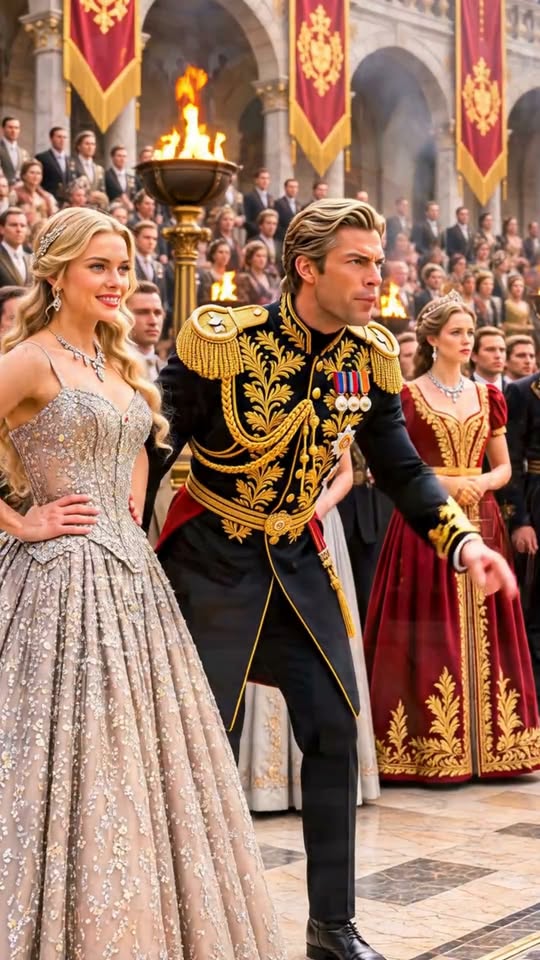
### END – The Crown We Chose
**Part 6**
For several seconds, Sir Edmund said nothing.
The conservatory had become quiet enough for me to hear the faint ticking of the irrigation system.
“Your brother?” I asked.
Sir Edmund stared at the signature.
“My grandfather signed the altered Covenant.”
Adrian pointed to the modern council roster.
“And your brother currently chairs the institution that inherited his authority.”
“Yes.”
It would have been easy to turn that discovery into accusation.
To imagine conspiracy continuing neatly from one generation to the next.
But my father’s voice returned to me.
_Don’t blame descendants for the choices of ancestors._
I looked at Sir Edmund.
“Does your brother know?”
“I don’t know.”
“Then we ask him.”
Adrian nodded.
No public confrontation.
No guards storming council chambers.
No dramatic accusation before the court.
Just a conversation.
Perhaps because, after everything we had learned, we finally understood that truth didn’t need spectacle to be powerful.
Lord Henry Carlisle arrived the following morning.
He was older than Sir Edmund by seven years and looked enough like him that there could be no doubt they were brothers.
He entered the Covenant Room, saw the documents spread across the table, and stopped.
“Oh,” he said.
Sir Edmund looked at him.
“You knew.”
Henry closed the door.
“Yes.”
The admission was so immediate that all the questions we’d prepared seemed unnecessary.
Adrian’s voice remained controlled.
“How much?”
“Not everything.”
“Enough.”
“Yes.”
Sir Edmund looked wounded.
“You let me search for thirty years.”
Henry sat down slowly.
“I was trying to protect you.”
Sir Edmund laughed bitterly.
“That sentence has caused nearly every problem we’ve uncovered.”
Henry accepted the criticism.
“Yes.”
I studied him.
He did not resemble a villain.
He looked tired.
Ashamed.
Human.
That made the truth harder and more believable.
“Tell us what happened,” I said.
Henry looked at me.
“You’re Thomas’s daughter.”
“Yes.”
“He spoke about you constantly.”
I wasn’t prepared for that.
“You knew him?”
“Very well.”
“Apparently everyone did except me.”
A faint sadness crossed his face.
“He wanted it that way.”
I sat opposite him.
“Tell me why.”
Henry folded his hands.
“Our grandfather inherited documents proving that the Ceremonial Council had manipulated the succession decades earlier. By the time Thomas discovered the discrepancy, my grandfather was dead.”
“So your family inherited the secret.”
“Yes.”
“And you continued hiding it?”
“For a time.”
Sir Edmund stared.
“How could you?”
Henry looked at his brother.
“Because Father made me believe revealing it would destroy confidence in the Crown.”
Adrian leaned forward.
“And did you believe that?”
“When I was young? Completely.”
“Later?”
Henry looked toward me.
“Thomas changed my mind.”
That surprised all of us.
“He came to me after discovering Eleanor’s child had survived. He believed the palace could survive the truth if it stopped trying to control the consequences.”
“Then why didn’t you reveal it?” I asked.
“Because we disagreed about timing.”
Of course.
Not good against evil.
Not truth against lies.
Timing.
Fear.
Judgment.
Human beings making choices they believed were responsible.
Henry continued.
“Thomas wanted to restore the entire Covenant immediately. I believed Eleanor’s child had to be protected first.”
“So you delayed.”
“Yes.”
“And then my father disappeared.”
Henry looked down.
“He didn’t disappear.”
Every muscle in my body tightened.
“What?”
“He left.”
Sir Edmund stood.
“You told me he vanished after confronting someone in the council.”
“He did confront someone.”
“You?”
“Yes.”
The room became very still.
Henry met his brother’s eyes.
“Thomas accused me of protecting the institution at the expense of the truth.”
“Was he right?”
“Yes.”
No defense.
No excuse.
Just yes.
“Then what happened?”
“We argued for six hours.”
Victoria, who had arrived quietly with Elena and Dr. Hart, blinked.
“Six?”
Henry almost smiled.
“You never argued with Thomas Bennett.”
I laughed despite myself.
“He once debated a parking ticket for three days.”
Henry’s smile became genuine.
“That sounds right.”
Then it faded.
“At the end, Thomas told me he was leaving the palace.”
“Why?” I asked.
“Because Margaret was pregnant.”
My breath caught.
“You.”
He looked directly at me.
“He chose you.”
Those three words changed something inside me.
“He believed the royal struggle had already consumed too much of his life. He refused to let it consume your childhood.”
My eyes burned.
“So he walked away.”
“Yes.”
“Why leave the clues?”
“Because he knew the truth might eventually matter again. But he wanted you to discover it only if you came here by your own choices.”
I looked around the Covenant Room.
For the first time, it no longer felt like a chamber full of secrets.
It felt like a room my father had deliberately left behind.
Not as a trap.
As a door.
One I could choose whether to open.
Adrian asked the question I couldn’t.
“My father signed the ledger with Thomas. Did he know Thomas was leaving?”
“Yes.”
“And he allowed the official history to remain false?”
Henry hesitated.
“Yes.”
Adrian looked away.
The disappointment on his face was unmistakable.
Henry continued.
“King Charles intended to reveal everything after Eleanor’s child was found. But Eleanor begged him not to risk exposing the adoption before her daughter was an adult.”
Elena spoke for the first time.
“So everyone waited for me.”
Henry turned.
His expression softened.
“You must be Elena.”
“I am.”
“I owe you an apology.”
She studied him.
“Were you the person who arranged my adoption?”
“No. That was done before I knew you existed.”
“Did you erase my records?”
“No.”
“Did you know they had been erased?”
“Eventually.”
“And you kept quiet?”
“Yes.”
Elena nodded.
“Then I’ll decide later whether I forgive you.”
Henry bowed his head.
“That is entirely fair.”
Something about Elena’s answer impressed me.
No instant forgiveness.
No dramatic condemnation.
Just ownership of her own decision.
Perhaps that was what all of us were learning.
The Crown had spent generations deciding what other people should know.
My father broke that pattern by leaving me a choice.
Eleanor broke it by leaving Elena one.
Now we had to decide what kind of institution remained.
Victoria placed another file on the table.
“My family archive contained this.”
Inside was a letter from her great-grandfather.
He had opposed the original alteration.
Not strongly enough to stop it.
But enough to leave a written objection.
Victoria read part of it aloud.
“_If we teach the royal house that dignity depends upon distance from ordinary citizens, one day it will discover it has become distant from the country itself._”
She lowered the letter.
“My family preserved this but never discussed it.”
Sir Edmund gave a tired smile.
“Another truth kept safely enough to become useless.”
Victoria nodded.
“Yes.”
Adrian stood.
He walked to the round table.
Half royal crest.
Half Guardian star.
For years, I had thought being royal meant possessing certainty.
Standing correctly.
Speaking carefully.
Knowing what to do.
Now I saw the opposite.
The people in that room were uncertain about almost everything.
But perhaps leadership wasn’t certainty.
Perhaps it was the willingness to make a choice without hiding from its consequences.
Adrian rested his hands on the table.
“Then we tell the truth.”
Henry looked up.
“All of it?”
“All of it.”
Sir Edmund watched him.
“Your father worried public confidence would suffer.”
Adrian nodded.
“It might.”
“The monarchy could lose prestige.”
“Then it will have to survive without pretending it never made mistakes.”
Nobody spoke.
He looked at me.
“What would the Guardian say?”
I considered the question.
Then shook my head.
“You’re asking the wrong person.”
His expression fell slightly.
“I haven’t accepted.”
“Right.”
And finally I understood my father’s final gift.
A choice was meaningful only if it could genuinely be refused.
“I need to know something first.”
“What?”
“If I become Guardian, do I still get to be Isabella?”
Adrian looked confused.
“You’ll have to explain.”
“I don’t want a ceremonial life where everyone suddenly pretends I never chopped onions for four years.”
Victoria smiled.
“You were very good at onions.”
“You’ve never seen me chop one.”
“I assume excellence.”
I continued.
“I don’t want people bowing because a fire changed color. I don’t want an apartment with twenty rooms. I don’t want every conversation to become protocol.”
Sir Edmund looked thoughtful.
“The office can be redesigned.”
“Can it?”
Adrian answered.
“Yes.”
“How do you know?”
“Because that’s the entire point of restoring it.”
I looked at him.
He smiled.
“Balance requires adjustment.”
My father’s words.
I laughed.
“You were listening.”
“To everything.”
Then I turned toward the Guardian’s Crown.
For the first time, I touched it.
The metal was cool.
Surprisingly light.
I didn’t put it on.
“Then I’ll do it.”
Sir Edmund inhaled.
Victoria smiled.
Adrian’s expression changed completely.
Not triumph.
Not possession.
Relief.
“But,” I added, “with conditions.”
Victoria whispered, “There she is.”
I ignored her.
“The Guardian’s office must publish its records except where personal privacy genuinely requires confidentiality.”
Adrian nodded.
“Agreed.”
“It must be independent of the Ceremonial Council.”
“Agreed.”
“No hereditary obligation. My future children, if I ever have any, inherit nothing automatically.”
Sir Edmund looked surprised.
Adrian didn’t.
“Agreed.”
“The Guardian is selected by merit after my tenure.”
“Agreed.”
I paused.
“And the ridiculous marriage restriction is removed.”
Silence.
Victoria’s smile widened.
Sir Edmund suddenly became fascinated by a bookshelf.
Adrian tried very hard not to look pleased.
“Constitutionally necessary?” he asked.
“Historically accurate.”
“Of course.”
“Also, don’t look so happy.”
“I am maintaining a neutral royal expression.”
“You’re failing.”
Victoria laughed.
Even Henry did.
Three months later, the palace released the Covenant Records.
Not as gossip.
Not as scandal.
As history.
The statement acknowledged that earlier generations had altered royal records, concealed elements of the succession, misrepresented the Guardian tradition, and allowed a ceremonial myth to replace its original purpose.
There was criticism.
There were debates.
There were newspapers with enormous headlines.
There were people who believed the monarchy should end.
Others who believed acknowledging the truth gave it new credibility.
For once, the palace didn’t try to control every reaction.
It simply answered questions.
Elena chose not to take a royal title.
She kept the name Elena Alvarez.
She also began having coffee with Daniel Hart every Sunday.
Sometimes Mrs. Alvarez joined them.
Sometimes she didn’t.
It wasn’t a fairy-tale reunion.
It was slower.
More awkward.
More beautiful.
Daniel learned that Elena hated olives, loved old jazz records and couldn’t cook anything more complicated than toast.
Elena learned that Daniel collected terrible neckties and cried during animated movies.
A relationship formed.
Not by replacing the family she’d had.
By adding to it.
Victoria withdrew from the queen-selection process before the palace formally canceled it.
She later accepted a position on the new historical transparency commission.
When I teased her about becoming a reformer, she looked horrified.
“Please don’t damage my reputation.”
But she became one anyway.
Sir Edmund and Henry rebuilt their relationship slowly.
Some conversations ended with laughter.
Others didn’t.
That, too, felt honest.
As for me, I moved out of the servants’ quarters.
Not into the royal wing.
Into a modest apartment overlooking the palace gardens.
I kept visiting the kitchen.
On my first morning as Guardian, Mrs. Alvarez handed me an apron.
“You still owe me six trays of breakfast rolls.”
“I have constitutional responsibilities now.”
“You have flour on your sleeve.”
Some institutions remained wonderfully immune to ceremony.
And Adrian?
Adrian began dating.
One woman.
Me.
Quietly at first.
Our first official date took place outside the palace.
No carriage.
No photographers.
No orchestra.
He wore a baseball cap that fooled absolutely nobody.
We ate at a small restaurant.
He ordered the most expensive item on the menu.
I ordered fries.
He stole half.
“You’re a prince.”
“And?”
“Buy your own.”
“They taste better from your plate.”
“This relationship has serious constitutional challenges.”
He laughed so loudly that people turned.
I realized I loved that sound.
Not yet him.
Not entirely.
Love deserved time.
But I loved the person he became when nobody expected him to behave like a prince.
Over the following year, we learned one another slowly.
He discovered I hated formal dances but loved old movies.
I discovered he was terrified of thunderstorms and pretended otherwise.
He learned that I became quiet when I missed my father.
I learned that every year on the anniversary of King Charles’s death, Adrian disappeared into the palace greenhouse because his father had taught him to grow roses there.
One evening, I found him tending a plant.
“Your father would be proud of you,” I said.
He looked at the leaves.
“You don’t know that.”
“No.”
I appreciated that he didn’t offer me certainty about my father either.
Instead he said, “But I think he’d be interested in who you’ve become.”
That was enough.
A year after the blue fire, we stood again in the royal courtyard.
This time there was no contest.
No women competing.
No mysterious challenge.
The Royal Ring of Fire had been preserved as a historical artifact.
The mechanism had been studied.
Scientists discovered that my bracelet had activated a coded electromagnetic trigger hidden in the ancient framework.
No magic.
Ingenious engineering.
The sapphire flame had been produced by mineral salts stored in a concealed chamber.
My survival had come from the protective mechanism, careful timing—
and, I insisted whenever Adrian retold the story, an excellent jump.
Hundreds gathered for the formal renewal of the Covenant.
I wore an emerald-green dress again.
Not because someone had selected it.
Because I liked it.
Adrian stood across from me.
The Guardian’s Crown rested between us.
Sir Edmund read the restored pledge.
“The Crown shall not fear counsel.”
Adrian answered.
“The Guardian shall not seek command.”
“The sovereign shall serve continuity.”
“The Guardian shall defend conscience.”
“Neither stands above the law.”
“Neither stands beneath the other.”
Then Sir Edmund looked at me.
“Isabella Bennett, do you accept?”
I thought of my father.
Never allow someone else to decide your limits.
For years, I believed he had been teaching me courage.
Only now did I understand.
He had been teaching me freedom.
“I accept.”
Three bells rang.
No fire changed color.
No hidden compartment opened.
Nothing supernatural happened.
And that made the moment even more meaningful.
Because this time, nobody had been chosen by a machine.
We had chosen one another.
The ceremony ended.
Guests moved toward the palace.
I remained beside the ring.
Adrian joined me.
“You’re staring at it.”
“I was remembering.”
“Were you afraid?”
“When I jumped?”
“Yes.”
“Terrified.”
He smiled.
“You didn’t look terrified.”
“That’s because I was busy looking elegant.”
“You were.”
I turned toward him.
“You shouted at me to stop.”
“I was worried.”
“You barely knew me.”
“I knew enough.”
There it was again.
That quiet sincerity that had first unsettled me beneath the palace.
I looked toward the place where my father might once have stood.
“I wish he could see this.”
Adrian waited.
Then said, “Maybe what matters is that he helped you reach it.”
I smiled.
“That was dangerously wise.”
“I’ve been practicing.”
He took my hand.
“There’s something I want to ask you.”
I narrowed my eyes.
“If this is a constitutional question, office hours ended fifteen minutes ago.”
“It isn’t.”
He reached into his coat.
My heart stopped.
“Adrian.”
He removed—
a small wooden box.
I stared.
People across the courtyard began noticing.
“Did you arrange an audience?”
“No.”
“Photographers?”
“No.”
“Did you tell the palace communications office?”
“Absolutely not.”
“Your mother?”
His face changed.
“Unfortunately.”
I laughed.
He opened the box.
A ring rested inside.
Simple.
Elegant.
No enormous royal jewel.
Just a sapphire set beside a tiny diamond.
The colors of flame and light.
“I’ve thought about giving you a speech,” he said.
“That sounds dangerous.”
“I wrote seven.”
“Seven?”
“Victoria rejected six.”
“And the seventh?”
“She said it sounded like legislation.”
I laughed so hard I nearly cried.
Adrian smiled.
“So I’m abandoning the speeches.”
He took my hand.
“Isabella, I don’t want a queen chosen by tradition.”
The courtyard had become quiet.
“I don’t want someone standing beside me because a ceremony said she should.”
His voice softened.
“I want the woman who argued with me in a basement archive.”
A few people laughed.
“The woman who still corrects my table manners.”
“You hold your fork incorrectly.”
“I know.”
“The woman who taught this palace that truth doesn’t have to destroy a family.”
My eyes filled.
“And the woman who reminded me that a crown is something you carry, not something that carries you.”
He knelt.
For once, I forgot every elegant response I had ever learned.
“Isabella Bennett, will you marry me?”
I looked down at him.
Then toward the Royal Ring.
Then toward Sir Edmund.
Victoria stood beside him.
She silently mouthed:
**Say yes.**
I laughed.
Adrian looked over his shoulder.
“Stop helping.”
“I spent years preparing to marry you. I deserve involvement.”
The courtyard erupted in laughter.
I looked at Adrian again.
The prince.
The man.
The person who had never once asked me to become smaller so he could remain larger.
“Yes.”
His face transformed.
“Yes?”
“Yes.”
He stood.
The courtyard applauded.
But I barely heard it.
He placed the ring on my finger.
Then whispered, “For the record, you frightened me half to death when you jumped through that fire.”
I whispered back, “For the record, I knew I’d make it.”
“You didn’t know.”
“I strongly suspected.”
He laughed.
Behind us, the old Royal Ring remained dark.
It would never again choose a Guardian.
It would never again pretend to choose a queen.
Future Guardians would be selected through service, judgment, independence and public trust.
Future royal marriages would be marriages.
Nothing more mysterious than two people making a promise and discovering, year after year, whether they could keep choosing one another.
Later that evening, after the celebrations ended, I returned alone to the Covenant Room.
My father’s letter remained in the archive.
I unfolded it one final time.
_If you walk away, I will still be proud of you._
_And if you stay…_
_Make them deserve you._
I smiled.
Then I took out a pen.
Beneath his words, I wrote my own.
**Dear Dad,**
**They didn’t need to deserve me.**
I paused.
Then continued.
**We needed to deserve one another.**
I placed the letter back inside the archive.
As I turned to leave, I noticed something carved beneath the table.
Words hidden where generations of Guardians must have seen them.
I bent closer.
The inscription was older than every document we’d uncovered.
**A crown does not make a kingdom strong.**
Below it:
**The courage to question it does.**
I touched my father’s bracelet.
For years, I’d thought the most important thing he taught me was how to jump.
It wasn’t.
He taught me how to land.
Not on a golden platform.
Not inside a palace.
But inside a life I had chosen for myself.
I climbed the stairs.
Adrian waited at the top.
“You disappeared.”
“I was saying goodbye.”
“To your father?”
I nodded.
He held out his hand.
“Ready?”
I looked behind me once.
At the archive.
At the past.
At every secret that had once seemed powerful enough to control our lives.
Then I looked forward.
“Yes.”
We walked toward the palace together.
Not because a fire had chosen us.
Not because history had demanded it.
Not because one of us was royal and the other had become worthy.
We walked together because after all the secrets, titles, expectations and inherited promises, we had finally discovered the simplest truth of all.
No one else gets to decide the limits of the life you are brave enough to choose.
Share your thoughts or feedback to motivate us to create more stories ♥️
**–THE END–PLEASE
✓ Lynn R. Adams
### END – The Crown We Chose **Part 6** For several seconds, Sir Edmund said nothing. The conservatory had become quiet enough for me to hear the faint ticking of the irrigation system. “Your brot…