Part 6 – The Promise at Dragoon-039
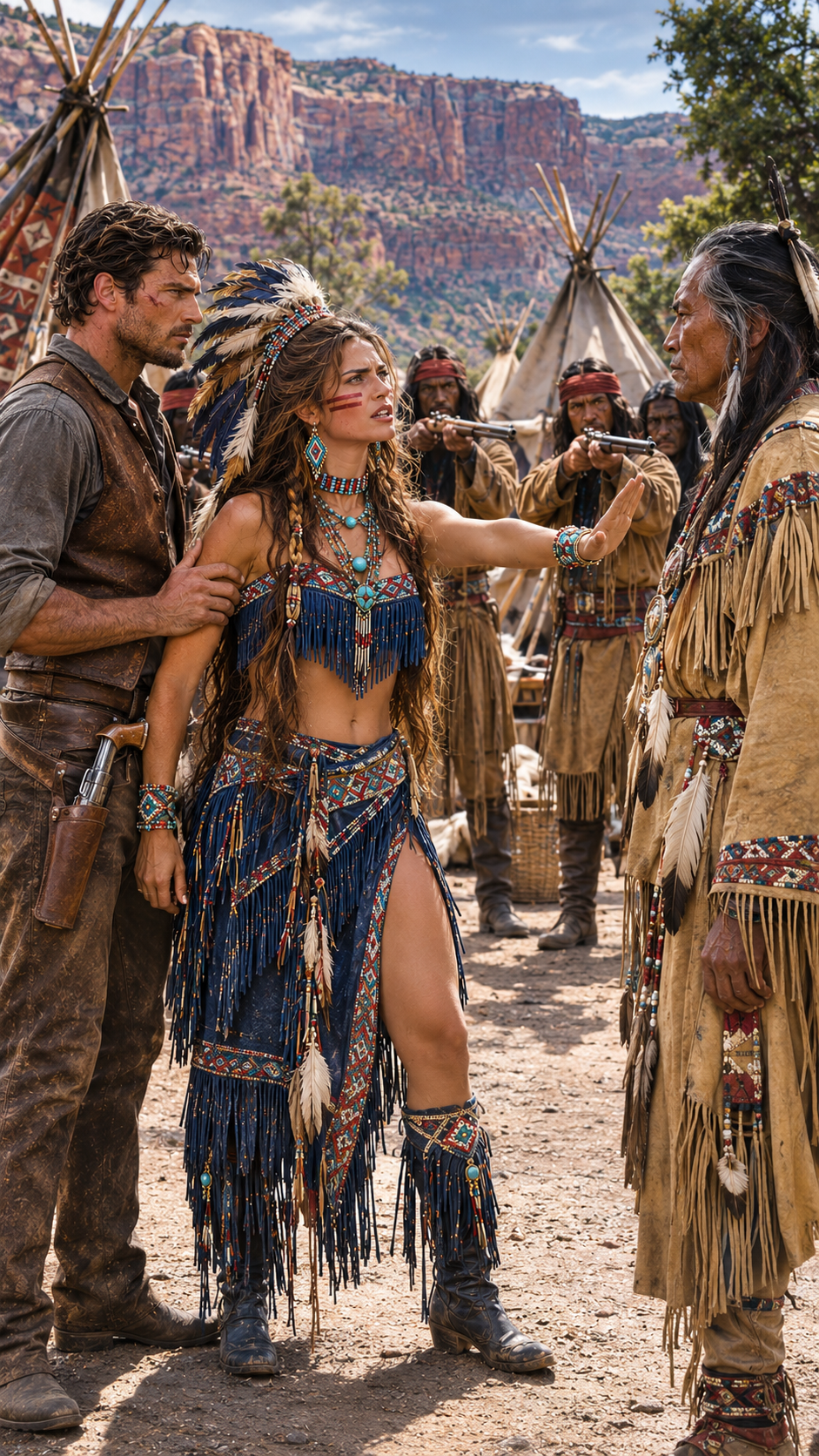
### END – The Road Home
Clara’s letter began without accusation.
That was what broke Silas.
Not anger.
Not blame.
Kindness.
She had received his message about the extra wages.
She told him the money would help through winter.
She told him Thomas had begun asking every evening whether his father might ride over the hill before supper.
Then came the sentence Silas had feared for three years.
_I wish you were here._
He stopped reading.
Sena sat beside him on the boarding house steps.
Night had fallen over Tucson.
Lanterns glowed behind windows.
Somewhere farther down the street, a piano played badly.
Ordinary life continued around them.
Silas stared at Clara’s handwriting.
“She wanted me home.”
Sena said nothing.
He continued.
Clara had heard reports of sickness farther east.
Nothing had reached their valley yet.
She told him not to panic.
She told him that if the drive needed him, he should finish his work and return safely.
Then, near the bottom of the second page, Clara wrote:
_But promise me something, Silas. When you come home, come all the way home. Your body has always arrived before your mind does._
Silas almost laughed.
It sounded exactly like her.
Sharp enough to sting.
Gentle enough to heal.
“She knew me,” he whispered.
“Yes.”
The final paragraph was shorter.
Clara wrote about Thomas sleeping with one of Silas’s old gloves beneath his pillow.
She wrote about repairing the porch.
About wanting another lilac bush.
Then the final sentence.
Silas read it silently first.
After a moment, he read it aloud.
“If life ever takes something from us, don’t spend the rest of yours standing beside the empty place.”
His voice failed.
Sena leaned against him.
Silas wept.
Not neatly.
Not quietly.
Three years of discipline failed at once.
He cried for Clara.
For Thomas.
For Sena’s brother.
For Dragoon.
For sixteen-year-old Silas leaving Missouri because he thought movement was the same thing as purpose.
For thirty-two-year-old Silas discovering that a man could cross half a continent without traveling one inch away from grief.
Sena remained beside him.
She did not tell him to stop.
She did not tell him Clara would want him happy.
She did not turn grief into permission.
She simply stayed.
Eventually Silas folded the letter.
He looked toward her.
“I loved her.”
“I know.”
“I still do.”
“I know.”
He swallowed.
“And I…”
He stopped.
Sena waited.
Silas smiled faintly.
“I’m trying to say something brave.”
“Try something true instead.”
He laughed through the last of his tears.
“I love you.”
Sena looked at him for a long moment.
“That was both.”
Several months passed.
The land claim disappeared first.
Mercer formally withdrew every parcel overlapping the valley spring.
He submitted a written confession concerning the forged signatures.
The magistrate recommended leniency because he had cooperated, though he lost his surveying appointment.
Before leaving Arizona, Mercer visited the chief.
Silas was present but remained outside the conversation.
Mercer stayed nearly an hour.
When he emerged, his face looked exhausted.
Sena later told Silas that her father had not forgiven him.
Nor condemned him.
He had simply told Mercer:
“Do not make your father’s pain your inheritance.”
Silas remembered that sentence.
So did Mercer.
Welch testified before an Army board.
The official Dragoon record was amended.
Not erased.
Changed.
The six dead were no longer listed collectively as hostile combatants.
The record acknowledged noncombatants had been present.
It acknowledged uncertainty over the first shot.
It acknowledged errors in the original investigation.
Small sentences.
Black ink.
Yet people had waited five years for them.
Samuel chose to remain in Arizona for a time.
He never abandoned the name Bennett.
“It belonged to people who cared for me,” he explained.
Sena understood.
He also began learning the language he had forgotten.
Slowly.
Awkwardly.
Children laughed at his mistakes.
He laughed with them.
When someone asked which name he preferred, he answered, “Both.”
Silas liked that.
A person did not always have to murder one life to enter another.
Offield moved his cattle route farther south.
It cost him nearly a day.
When Silas reminded him of their argument over the flooded creek, Offield scowled.
“Don’t get proud.”
“You finally took my advice.”
“I took geography’s advice.”
“Geography agreed with me.”
“Worst kind of geography.”
They remained friends.
Or something close enough that neither man needed to name it.
And then there was Sena.
Her proposal had never been forgotten.
The chief mentioned it exactly once.
Silas had been repairing a saddle near the cottonwoods when the older man sat beside him.
“My daughter still chooses you.”
Silas nearly dropped the awl.
“I know.”
“Do you choose her?”
“Yes.”
The chief considered him.
“Why?”
Silas had expected questions about land.
Work.
Whether he could provide.
Instead he received the most difficult question.
He thought before answering.
“Because she doesn’t let me hide.”
The chief grunted.
“That sounds unpleasant.”
“It often is.”
“Good.”
Silas looked at him.
The older man almost smiled.
Then his expression became serious.
“My daughter is not payment for Dragoon.”
“I know.”
“She is not proof that you are forgiven.”
“I know.”
“She will disagree with you.”
“Daily.”
“She will win arguments.”
“Usually.”
“Always.”
Silas decided not to challenge that.
The chief looked toward the valley.
“If you build your life with her, build forward.”
Silas understood.
“I will.”
They married quietly months later.
The legal ceremony took place in Tucson because Silas wanted Sena’s rights recognized in every place the territorial government would acknowledge them.
Afterward they returned to her family.
There was food.
Laughter.
Samuel played a fiddle badly enough to send several children running.
Offield attempted coffee.
Sena took the pot away from him.
“No.”
“I made an entire cattle crew coffee for eight years.”
“That explains much about cattle men.”
Silas almost fell from his chair laughing.
The chief watched from across the fire.
The look he gave Silas was not quite acceptance.
Not quite amusement.
Perhaps both.
Silas learned not to demand names for everything.
He and Sena did not settle inside the camp permanently, nor did they move far away.
They built a modest adobe home near the San Pedro where several roads met.
Silas took occasional cattle work.
Sena became invaluable to traders, travelers and officials because she understood several languages and, more importantly, understood when people were pretending not to understand each other.
Together they often traveled between communities.
Sometimes they helped settle disputes over grazing.
Sometimes they delivered letters.
Sometimes Sena simply wanted to visit her father.
Silas never objected.
He had learned the cost of assuming there would always be another month.
One spring morning, nearly a year after the storm that had thrown him into the wash, Silas stood beside a wooden shelf in their home.
Clara’s photograph rested in his hand.
He had finally taken it from his pocket.
For years he had carried it faced inward.
Now he looked.
Clara remained twenty-eight forever.
Serious eyes.
Hair pinned carefully.
The smallest hint of a smile.
Silas touched the edge of the photograph.
“Morning,” he whispered.
Sena entered carrying a basket.
She saw the picture.
Silas started to put it away.
Then stopped.
He placed it on the shelf.
Sena came beside him.
“She was beautiful.”
“Yes.”
“What was she like?”
Silas looked at her.
Nobody had asked him that.
People asked how Clara died.
When.
Where she was buried.
Whether Silas had remarried.
Nobody asked who she had been.
Silas smiled.
“She cheated at cards.”
Sena looked delighted.
“Did she?”
“Terribly.”
“Did she win?”
“Constantly.”
“Then perhaps she did not cheat.”
“She absolutely cheated.”
“You were simply bad at cards.”
“This conversation is over.”
Sena laughed.
Silas told her more.
About Clara’s lilacs.
Her stubbornness.
The way she sang while kneading bread.
How Thomas inherited her habit of tilting his head when suspicious.
The stories hurt.
They also made the room warmer.
When Silas finished, Sena placed a small object beside Clara’s photograph.
A carved wooden horse.
Silas recognized it.
“Samuel’s?”
“No.”
She held up another.
Nearly identical.
“My mother made three.”
“I thought there were two.”
“There were three.”
“For whom?”
Sena placed the third horse in Silas’s hand.
“I never knew.”
He turned it over.
The wood was old.
Smooth from years of handling.
On its underside was a tiny mark.
Silas stared.
A simple letter.
**S.**
“What?”
Sena frowned.
Silas walked toward the window where the sunlight was stronger.
“I’ve seen this.”
“Where?”
His heart began beating faster.
“Dragoon.”
Sena went still.
“When?”
“The day of the raid.”
He closed his eyes.
Memory returned.
Not the shooting.
Afterward.
A woman in the ravine pressing something into his hand.
She had spoken quickly.
Silas had not understood.
He had assumed she wanted him to give the toy to the wounded boy.
But before he could, Vale had ordered the patrol out.
Silas had placed it on a stone near the ravine.
“I thought it belonged to your brother.”
Sena shook her head.
“Samuel had his.”
“Then who—”
A voice came from the doorway.
The elder with the white-streaked hair stood outside.
He had arrived without either of them hearing.
He looked at the carved horse.
Then at Silas.
“That one was for you.”
Silas stared.
“What?”
“The woman you helped escape the ravine.”
Sena’s eyes widened.
“My aunt?”
The elder nodded.
“She carved the mark later.”
Silas looked at the letter.
“S?”
The elder smiled.
“Silas.”
He had misunderstood.
For five years, he believed the people at Dragoon remembered only the uniform he rode beside.
Yet someone there had remembered his name.
Not as forgiveness.
Not as repayment.
As memory.
Silas sat down.
The elder stepped inside.
“She returned weeks later. Found the horse where you left it. Kept it.”
“Why?”
“She said one day, if she saw the scout again, she would tell him something.”
Silas waited.
The elder’s eyes softened.
“She never did.”
“What did she want to tell me?”
The old man looked toward Sena.
Then back at Silas.
“That one terrible day does not get to name every day after it.”
Silas closed his hand around the wooden horse.
For a long while nobody spoke.
Outside, the San Pedro country stretched beneath an enormous blue sky.
A wagon rolled along the distant road.
Birds moved through the cottonwoods.
Somewhere near the corral, Samuel argued cheerfully with Offield over a lame horse.
Life.
Untidy.
Unfinished.
Still arriving.
That afternoon Silas saddled his horse.
Sena appeared on the porch.
“Where are you going?”
“Dragoon.”
She studied him.
“Why?”
Silas looked toward the mountains.
“I think I’m ready.”
Sena disappeared inside.
She returned carrying her hat.
“I am coming.”
Silas smiled.
“I assumed you would.”
Samuel rode with them.
So did the chief.
The four traveled mostly in silence.
Near sunset they reached the canyon.
Five years had changed it.
Grass covered places Silas remembered as bare earth.
A mesquite tree had grown beside the ravine.
Wind moved gently through the branches.
Silas stood where the first shot had once shattered an afternoon.
He expected ghosts.
Instead there was only the sound of grass.
Sena took her brother’s hand.
The chief stood beside them.
Silas walked toward the stones marking the dead.
He removed his hat.
He did not apologize again.
Some apologies became selfish when repeated only to ease the speaker.
Instead he spoke their names as the chief had taught him.
Slowly.
Carefully.
Then he placed the wooden horse beside the stones.
The chief shook his head.
“No.”
Silas looked at him.
The older man picked up the horse.
He handed it back.
“That is yours.”
Silas hesitated.
Then accepted it.
The chief turned away.
Samuel followed.
Sena remained.
Silas watched the sun descending behind the mountains.
“I spent years thinking I had to leave everything behind.”
Sena stood beside him.
“And now?”
He put the wooden horse in his pocket.
Beside Clara’s letter.
“Now I think carrying something and being trapped by it are different things.”
Sena took his hand.
They walked from the canyon together.
Not quickly.
There was no need.
The road home waited beneath the evening sky.
For the first time in sixteen years, Silas Cord was not running from anything.
And for the first time since Clara and Thomas died, the word _home_ did not describe a place he had lost.
It described the direction he was going.
Share your thoughts or feedback to motivate us to create more stories ♥️
**–THE END–PLEASE
✓ Lynn R. Adams
### END – The Road Home Clara’s letter began without accusation. That was what broke Silas. Not anger. Not blame. Kindness. She had received his message about the extra wages. She told him the …